
Ship from Colombia laden with food and other goods docks in Cuba to help ease crises
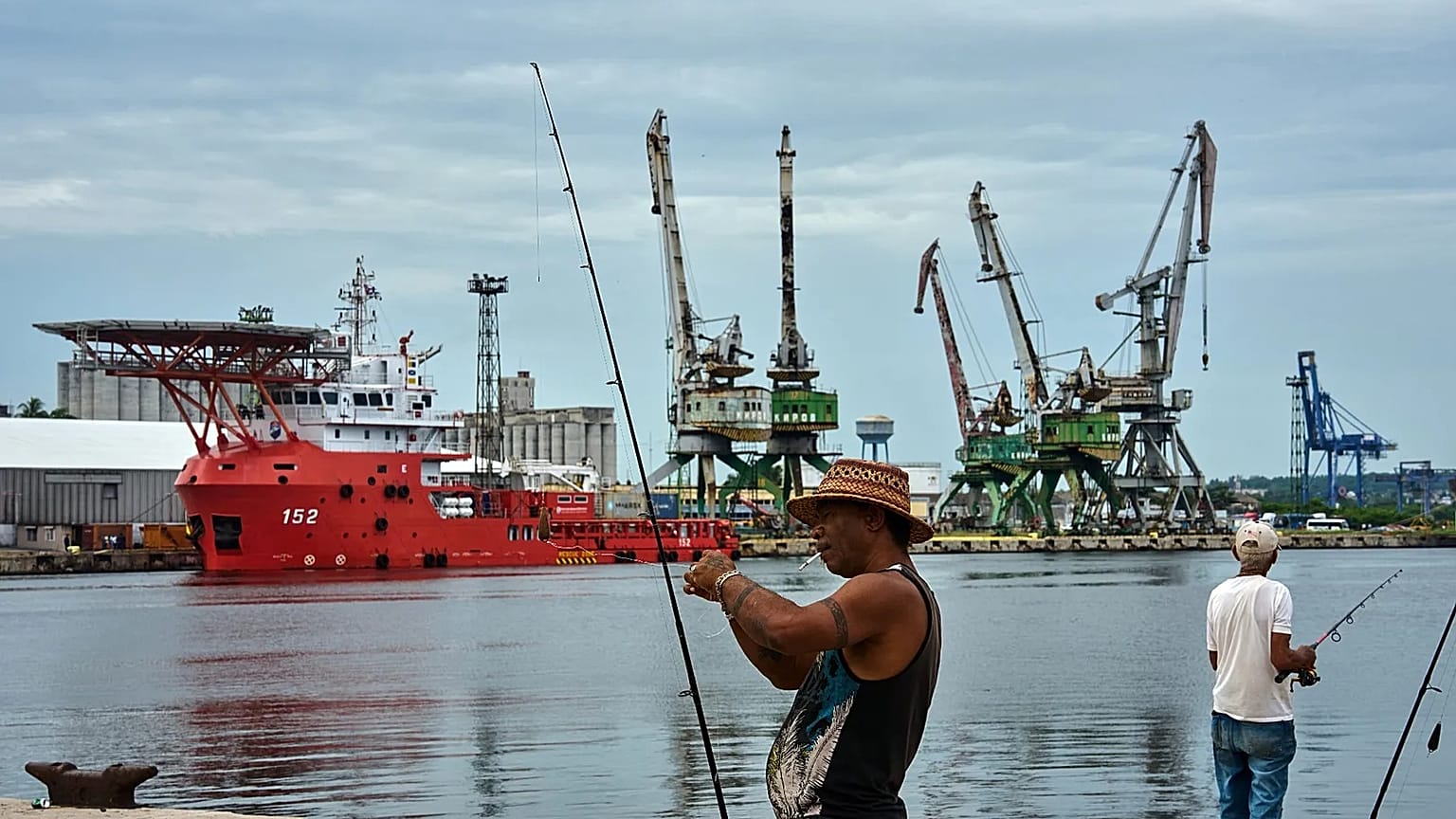
Regular power outages have intensified since US President Donald Trump threatened tariffs in late January on any country that sells or provides oil to Cuba.
A ship carrying nearly 100 tonnes of food and essential goods arrived in Cuba from Colombia on Friday as part of the humanitarian aid that several countries have sent to the island as a US energy embargo persists.
The ship, which departed Cartagena in early June, crossed the Havana Bay channel early in the morning flying the Colombian flag and escorted by a small Cuban auxiliary vessel.
The Colombian Presidential Agency for International Cooperation said that, on orders of President Gustavo Petro, the shipment included non-perishable food, medicine, hospital supplies, electrical materials, solar panels and other items.
The ship also carried seven tonnes of goods collected by solidarity groups.
Last weekend, another ship carrying 1,700 tonnes of essential goods from Mexico and Belize arrived in Havana.
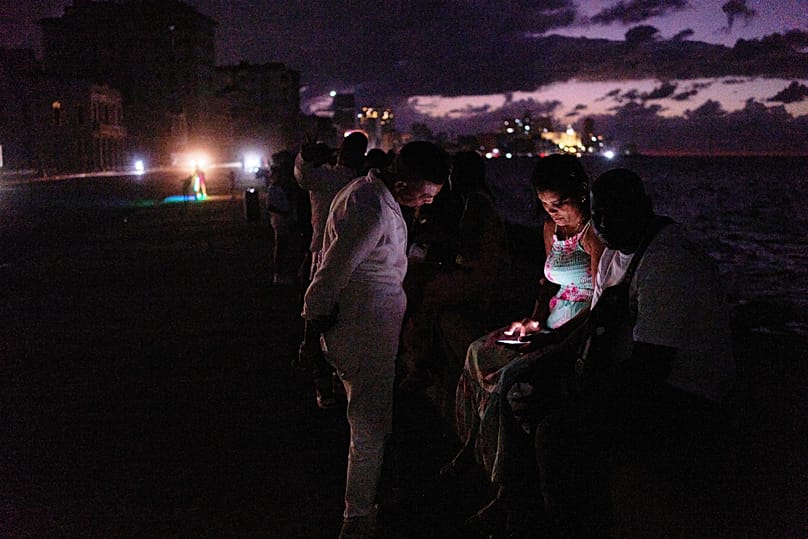
Sanctions on Cuba
Washington announced sanctions against Cuba’s state-owned oil and gas company on Thursday in a move expected to increase tensions between the two countries.
That announcement came almost a week after the US government sanctioned Cuban President Miguel Díaz-Canel and other officials, as well as several institutions.
Cuba is already struggling under a decades-old embargo and a lack of petroleum as the US keeps pushing for a change in its economic and political model.
Power outages, already common given the economic and energetic crisis gripping the island for the past five years, have only intensified since Trump threatened tariffs in late January on any country that sells or provides oil to Cuba.
Cuba's government said on Wednesday that the US oil blockade that has crippled the island is preventing the United Nations from distributing 170 containers of humanitarian aid.
Cuba's Foreign Minister Bruno Rodriguez said that 170 containers of UN aid worth $6.3 million (€5.4 million) "is not reaching beneficiaries due to the fuel shortage."
Writing on X, he stressed that the blockade was "not only hampering the performance of the Cuban economy" but also affecting the work of international organisations.
Both countries have acknowledged that they have held talks, but the scope of them is unknown.
Meanwhile, Trump has been threatening military action in Cuba ever since the US military invaded Venezuela and arrested former President Nicolás Maduro.
Last Thursday, Trump said Cuba has "sort of collapsed" and said "we're going to handle that as soon as we've finished" military operations in Iran.
The ‘Start of Summer’ Festival at the crossroads of Cuba’s political project
First published in Spanish at La Joven Cuba. Translation by LINKS International Journal of Socialist Renewal.
For many Cuban families, the start of summer this year is anything but a celebration. Most households lack an Ecoflow system to make the power outages less unbearable. For them, the arrival of these months can only mean heat, mosquitoes and sleepless nights, because they cannot keep a fan running to provide some relief from the increasingly hot tropical nights.
If you are responsible for maintaining or managing a low-income household, the days are no less gruelling. Instead of tanning, the June sun burns the skin of those who wait for hours for a municipal electric tricycle to take them to work, or those who walk for miles looking for the small business that sells the cheapest chicken.
As this school year draws to a close, children from working-class families, even those with good grades, will not be able to go on trips any further than wherever their feet can take them. There will be no beaches, no swimming pools, no trips to the countryside. Many of those who have worked themselves to the bone all year long to support their families will also be unable to enjoy accessible leisure activities. Cinemas, theatres, and state-run entertainment venues remain closed almost everywhere because of the energy crisis. The country is surviving US President Donald Trump and US Secretary of State Marco Rubio’s attacks, but, according to President Miguel Díaz-Canel, “with the heroic resistance of the Cuban people, we are defending our sovereignty and are committed to perfecting the enormous work of social justice that socialist construction has built in Cuba.”
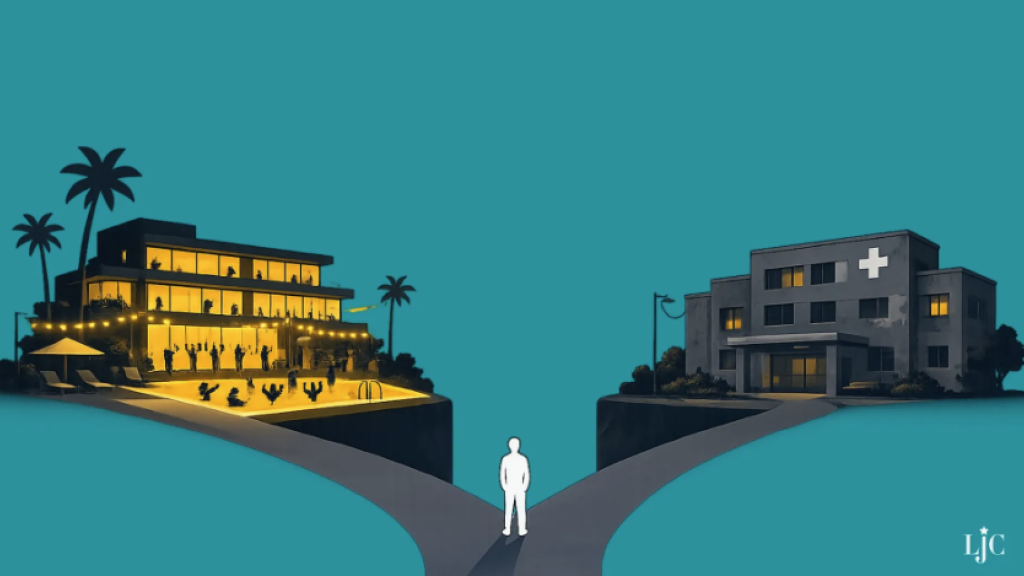
However, this “heroic resistance” is taking many different forms this summer. Some people cannot sleep because of the heat from an energy blackout, while others are dancing to the beat of reggaeton in a hotel pool. For them, the Start of Summer has a completely different meaning.
The “Start of Summer” festival took place between May 29–31 at the Resonance Musique Hotel in Varadero, although some of the festivities also extended to the Meliá Internacional hotel. According to reports in non-state media, it was organized by the Fiesta Havana and Rey Puma projects, with the media platform La Familia Cubana as its main promoter. There is no reliable information on what it cost to attend these events. Some advertisements on social media indicated a price of about US$170 a night for two people. These same sources also indicate that a table in the VIP area cost between $600 and $1000.
The event brought together such figures from the Cuban urban music scene as Yomil, Charly & Johayron, Ja Rulay, Wildey, Zurdo MC, El Micha, Hallel Génesis, Helabusador, and Rey Tony, among others. The La Familia Cubana influencer team documented every moment from the inside: backstage, interviews, concert clips… where everyone was having a fantastic time, everything was vibrant, abundant, and flowing…
Among the more “illustrious” attendees was the controversial influencer and business owner Sandro Castro, Fidel Castro's grandson, who shared images on his social media of lunches at the Xanadu Restaurant in Varadero, jet ski rides, beach parties, and a video showing the now-mythical, but increasingly less credible, beach sign that reads, “What is collected here is for the people.” Sandro Castro also took the opportunity to comment that the dolphins that protected Elián González on the high seas were now bringing people from Miami to Cuba to attend the Start of Summer festival. He also launched his new energy drink, Vampirash.
Anyone viewing the images without context might think that the event was taking place in Cancun or Punta Cana, and not in a “socialist” country where blackouts typically exceed 20 hours a day, water is scarce, medicines are nowhere to be found in pharmacies, and whose government has been asking for international aid for months to meet the basic needs of its population amid the US-imposed oil embargo.
Of course, the controversy was immediate. Anyone who does not know what Cuba is like might think that those who were outraged and attacked the opulence displayed amid the “resistance” were Communist militants, brandishing that maxim from the manuals on socialist transition, “to each according to their work.” But no. Granma, the Communist Party of Cuba’s official organ, remained silent on the matter. Those who expressed outrage were, generally, opposition journalists and influencers, the vast majority of whom are avowed defenders of the most neoliberal variant of capitalism, a model that accepts inequality not as a distortion, but as a fundamental mechanism of its operation.
A curious paradox, it seems that communist morality has switched sides. Today, it is the apologists for capital who are scandalised by its harshest consequences.
It is worth noting that it was not always like this. In the “socialist” Cuba of my childhood (the late 1990s and early 2000s), despite the lingering effects of the so-called Special Period1, many working families still had access to state-provided vacation options. Popular campsites — modest but affordable facilities located in beaches and natural areas throughout the country — allowed families to spend a few days away from home at reasonable prices. In addition, trade unions managed vacation villas that were allocated to “outstanding workers”. Transportation to beach areas was also increased during the summer, and inexpensive food stalls were set up so that workers and their children could enjoy the season without money being the sole deciding factor.
Of course, it was not perfect equality, it never was. The best popular campsites were almost always “reserved” for people with connections, there was favouritism in the allocation of villas, and you travelled like sardines in a can on the buses to the beach. Nevertheless, it was a system that compensated, through social transfers, for salaries that were not enough to afford a hotel stay. A system that recognised that summer, rest, the right for your children to see the sea, could not be privileges that only those who could afford them could enjoy.
Today that floor is gone. In 2010, Raúl Castro announced the elimination of so-called “unnecessary free services” as part of the process of updating the economic model. At the time many of us thought it was a reasonable step, since some of the subsidies distorted the economy and rewarded waste. But the decision was not followed by a cross-the-board rise in state workers’ income, and a social safety net was not created for those who could not afford to pay to replace these free services. On the contrary, driven by the state, the economy became increasingly dollarised while wages were frozen. Inflation did the rest.
In Cuba today, the public sector continues to have a dominant presence in such sensitive areas as health, education, science and other productive sectors. It employs the majority of workers. But those workers have been left in limbo, without fair wages or complementary benefits. A doctor, a teacher, a scientist, let alone a worker in a state-owned enterprise, cannot afford to take a vacation without help from family members abroad or supplemental income in foreign currency.
Judging by the videos, the Start of Summer festival in Varadero was not filled with foreign tourists. The vast majority of those present were Cubans, part of the same society in which thousands of families now struggle to survive the crisis. This inevitably raises the question: who can afford to attend such an event?
Here it is important to avoid falling into typical black-and-white thinking such as “all of them are the sons and daughters of the politicians and party leaders.”
At those VIP tables, there were Cubans from very diverse backgrounds. There were those who had been absent from the island for years, returning with the foreign currency they had saved in the “capitalist” system. There were the owners of private businesses who had genuinely prospered — and it is worth making the distinction, not just any business, but one profitable enough to allow them to spend hundreds of dollars on leisure. There were the “influencers” who are paid to promote those businesses. There were also those who knew how to capitalise on assets they acquired through social redistribution mechanisms, assets that for decades had no market value, such as a mansion in Vedado that can suddenly be sold or rented. And, we must not ignore it, there were also those who had accumulated wealth through the misappropriation of resources and corruption.
The truth is that, regardless of the reasons why each person has money — some legitimate and others not — today many Cubans are able to show that they can spend hundreds of dollars in hotels while others struggle to survive. I remember that when I was a child — this was before the expansion of the private sector in 2016 and the authorisation of private businesses in 2021 — there was still a certain fear of showing that one was living “beyond one’s means.” The system was designed to prevent accumulation, and if you did accumulate wealth, the suspicion that you were doing something outside of the ordinary soon surfaced. Even those who lived off remittances from abroad showed a certain discretion regarding what most people lacked.
Today the scenario is radically different. Inequality and class privilege are no longer something hidden, but rather something that is displayed with pride. When you see the sons and daughters of the country’s leaders on social media living the high life, who can feel ashamed of living above the means of “working people”? Paradoxically, inequality only becomes a topic of conversation when an event such as the Start of Summer festival confronts us with these contradictions, but generally speaking, the debate tends to take on a moralising tone and remain at that level. It rarely manages to go a step further and analyse the causes and consequences of this problem.
Sociologist Mayra Espina Prieto, who has been researching poverty and inequality in Cuba for decades, explained it clearly in an interview with La Joven Cuba. What is happening is not simply a reconcentration of wealth, but the result of a process that she calls social restratification. Until the 1980s, the revolutionary project achieved a real process of de-stratification — the social pyramid flattened, the distance between the base and the top decreased — but that advance was never complete, and from the 1990s onwards it began to be reversed. “With the aggravating factor,” she notes, “that those who advance to the new positions offering better opportunities are almost always groups that historically were already better off.”
Warning that these figures should be taken with caution — as they are estimated from mirror data, since Cuba does not publish figures on income poverty — Espina estimates that between 40-45% of the Cuban population are unable to cover their basic needs with their income, while a small group (no more than 11-13% of the population) can be ranked with incomes far above the average, with a real ability to live comfortably from day to day and, in some cases, display the advantages this income provides. Between these two extremes, there is an increasingly unstable intermediate fringe that can fall steeply with any blow: an illness, the loss of remittances, the death of a family member abroad, or whatever.
This re-stratification has effects that corrode the social fabric, since the confidence that effort leads to a dignified life disappears. It normalises that a few have access to what the majority lack and the sense of a common project is weakened.
In a society that for decades built its legitimacy on the promise of equality, that erosion has a political weight that transcends indignation when a show of opulence such as the Start of Summer appears. It means that more and more people stop believing the system they live in has something to offer them. This has a clear effect on the way Cuban families organise their daily lives amid the current situation in which inflation, the paralysis of public transport, blackouts and the gradual disappearance of social transfers have pushed each household to subsist on its own: an Ecoflow, so as not to depend on the electricity grid; a tricycle, so as not to depend on the bus; a parallel income, so as not to depend on the state salary; purchases in the private sector, because the supply in Cuban pesos is practically non-existent. These are individual solutions to collective problems.
In this trap lies perhaps the most silent effect of the current crisis — which in this sense is far from the one that occurred in the ’90s. Solutions are no longer sought in the collective project, but become a personal responsibility.
Meanwhile, in official discourse, there continues to be talk of resistance, social justice, popular sovereignty, socialism, when at the same time daily life is organised around the logic of everyone for themselves, fending for oneself and making the most of things. When a system forces people to exist in this way, it becomes increasingly difficult to convince them that they are still part of a collective project. And, one might ask, why should we?
To the worker who today “resists” the summer with 20 hours of blackout and one meal a day, how do you explain the fact that in that same country there are those who can celebrate surrounded by luxury? How do you convince him that he has to keep fighting to save socialism?
That is why it would be naïve to be scandalised that many Cubans no longer feel any attachment to the word socialism. From what concrete experience could they feel this attachment? From a state salary that just covers a carton of eggs and a bag of milk? From an endless blackout while the neighbour lights up with the solar panel sent to him by the family from “imperialism”? From seeing how rest, leisure, mobility, access to well-being, gradually become signifiers of class? What they want, then, is for the capitalism that de facto exists to be administered and managed better, so that they too can access the capital needed for a dignified life.
However, our political menu does not abound with alternatives either. The official left continues to cling to a rhetoric that no longer manages to name the real experience of the majority, invoking an egalitarian horizon while administering a society that is increasingly unequal, more fragmented and more dependent on private solutions to problems that were previously assumed to be collective. On the other hand, a large part of the opposition — mostly located on the right — justifiably denounces the official discourse’s hypocrisy, but usually does so from an idealised vision of capitalism, one where “everyone can make it” if they try hard enough. The problem is that they rarely stop to think about what happens to those who, despite their efforts, are unable to secure a minimum of dignity for themselves via the market, as is the case in underdeveloped capitalist countries.
What they propose, in most cases, is not a capitalism with redistribution mechanisms, strong public services, subsidies for vulnerable people, the elderly or poor families, or a model where private enterprise coexists with public institutions to guarantee a minimum floor for all. What they propose is, rather, that the state withdraw and that “Saint Market” regulates social life. In a society conceived by “classical liberalism,” it no longer matters too much that some can celebrate in Varadero while others do not have enough to eat, because in the end the one who celebrates would be seen as someone who earned it, and the one who does not succeed as someone who did not know how or want to succeed.
***
To those who are genuinely indignant over the Start of Summer, I say that it is nothing more than a symptom of the problem. Those hotels illuminated amid widespread darkness are a postcard that reflects the Cuban model’s main contradiction. One that has made socialism and social justice its banner, but that today can do nothing but mismanage a defective capitalism.
That is why there is no use in expressing one’s shock on networks or calling for a ban on the next edition. Covering up this spectacle would hardly serve to hide the marks of a society that has long been reorganising itself around privilege, inequality and individual capacity over the collective project. The most serious thing is that this reorganisation occurs without naming itself and without offering the mediations that, in other capitalist contexts, progressive governments have implemented to cushion the fall of those below or help them reach the middle.
The Cuban crisis, as it stands today, is unlikely to last much longer. Whatever its outcome, rebuilding the country, with this system or with the one that comes, will have to be a collective task of which people feel a part of. However, no reconstruction will be possible without facing up to the causes that brought us to this point, amid external asphyxiation and internal errors that have ended up emptying most of the promises, which for decades sustained the national project’s legitimacy, of their content.
Facing these contradictions implies putting an end to administering their symptoms, hiding them behind slogans or selling miraculous solutions. It means starting to honestly discuss what country really exists, what majorities are being left out, but, above all, what material, social and political conditions should be rebuilt to guarantee them a dignified life, and how to do it. Everything else — the passing scandal, the selective outrage and the easy promises — remains just another way of going around in circles.
Rubén Padrón Garriga has a degree in Social Communication from the Faculty of Communication of the University of Havana and has collaborated with various media outlets. He is a social communicator by training and journalist by hobby.
- 1
Translator's note: The Special Period refers to the economic crisis that hit Cuba in the 1990s after the collapse of the Soviet Union. It fall led Cuba to lose more than 80% of its imports and exports.


No comments:
Post a Comment