Brazil rare earth ambitions clash with strained mining regulator
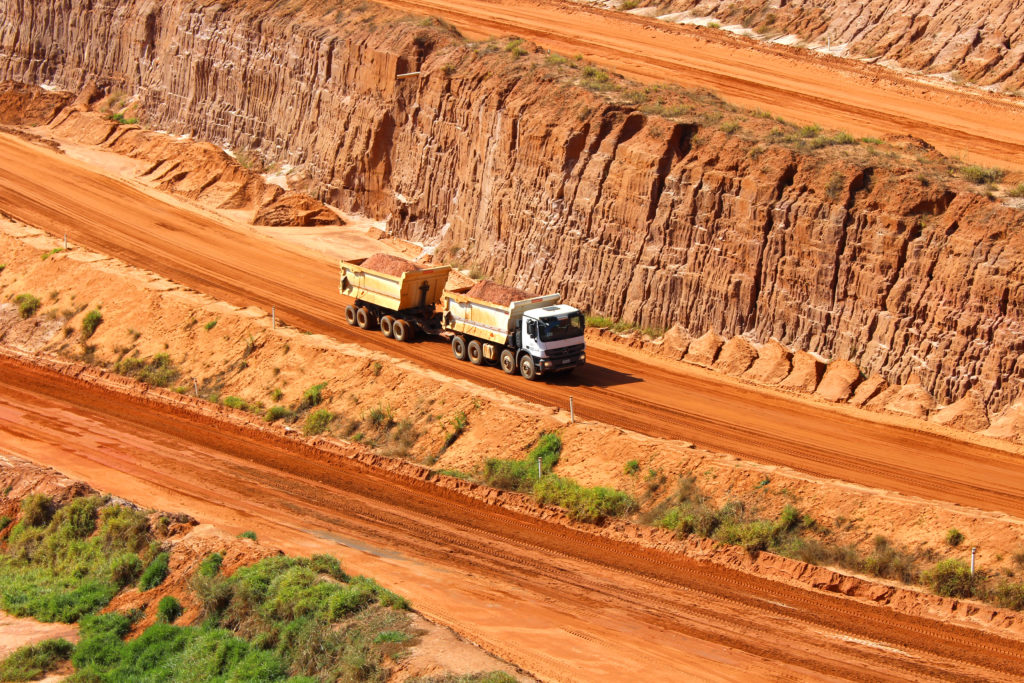
Brazil’s aim to become a leader in rare earths mining is running head-on into budget cuts and staffing shortages at the sector’s regulatory agency.

The Latin American nation is pursuing partnerships with other countries on critical minerals and rare earths, yet its National Mining Agency, or ANM, lacks the resources to keep up with inspections and meet international commitments, said director-general Mauro Sousa.
“It’s a contradiction at the heart of the Brazilian state,” Sousa told reporters Tuesday at an industry conference organized by mining group Ibram in Brasília.
Outside of China, Brazil has the world’s largest reserves of critical minerals. Brazil’s government recently cut funding for agencies including ANM, which oversees more than 255,000 active mining claims, inspects mining structures and handles permits for new projects.
The cuts also are affecting review of structures for mine waste materials called tailings dams in a country still marked by two major disasters at operations owned by Vale SA. The regulator’s workforce is less than half the level needed, and only four employees are dedicated to critical minerals, Sousa said.
Still, ANM is facing a boom in rare earth exploration applications — ones it will likely struggle to process. Since 2023, the agency has received 3,038 requests, compared with 745 filed between 1975 and 2022.
“ANM is currently on life support,” Sousa said.
(By Mariana Durao)
Schneider Electric, Torngat Metals ink rare earth MoU
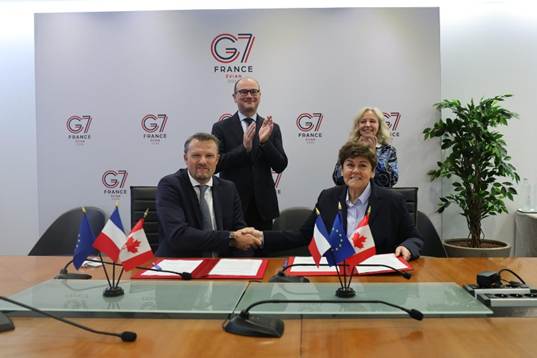
Schneider Electric and Torngat Metals announced Wednesday they signed a non-binding Memorandum of Understanding (MOU) to explore a strategic industrial partnership to support the development of a resilient rare earth value chain in Canada.
The partnership is anchored in the development of the Strange Lake rare earth project in Nunavik, with associated infrastructure in Labrador and a planned separation facility in Sept-Îles, Quebec.
The Strange Lake project is expected to produce both heavy and light rare earth elements essential to permanent magnets used in renewable energy, digital infrastructure, and advanced manufacturing.
The MoU is designed to support an integrated, end-to-end collaboration, connecting upstream resource development, technology integration, and future industrial demand, the companies said.
It is intended to support the development of a 360° partnership, to support the development of a next-generation mining and processing project, leveraging Schneider’s expertise in electrification, automation, digital systems and sustainable industrial design.
Strange Lake stands out among North American rare earth projects for its heavy rare earth content, particularly dysprosium and terbium—elements critical to permanent magnets used in electric vehicles, wind turbines and defence technologies.
An initial study by Quest Rare Minerals pegged indicated resources at Strange Lake’s main B-zone deposit at 278.1 million tonnes at 0.93% total rare earth oxides (TREO); 1.92% zirconium oxide and 0.18% niobium pentoxide. Inferred resources were 214.4 million tonnes of 0.85% TREO, 1.71% zirconium oxide and 0.14% niobium pentoxide.
The future collaboration represents a concrete step toward a trusted, end-to-end critical minerals value chain, the companies said.
“This partnership reflects a clear reality: the energy transition depends not only on technology, but on secure and responsible access to critical materials,” Schneider Electric Canada VP Sustainability Frederick Morency said in a news release.
“With Torngat Metals, we are aiming for a fully integrated approach, from resource to industrial use, that strengthens both project development and long-term supply resilience.”
The MOU was signed in Paris on the margins of the meeting on financing critical minerals supply chains in G7 and like-minded countries. The announcement was made in the presence of Sébastien Martin, French Minister Delegate for Industry, and Isabella Chan, Senior Assistant Deputy Minister at Natural Resources Canada and Canada’s Special Envoy for the Critical Minerals Production Alliance.
“Strange Lake is designed to become a key player in building a resilient and responsible rare earth supply chain,” Torngat Metals, interim CEO Maryse Bélanger said.
“Working with Schneider Electric will enable us to integrate world-class industrial technology designed with sustainability in mind in our future operations, while connecting our project to real downstream demand. This is an opportunity to build not just a mine, but a complete, future-ready value chain.”
MP Materials COO increases shareholding
MP Materials’ (NYSE: MP) chief operating officer Michael Rosenthal has added to his stake in the company amid overall weakness in the critical minerals mining sector.
In a securities filing dated June 10, Rosenthal, through his family trust, purchased an additional 10,000 shares at a price of $54.30 per share.
According to the SEC disclosure, Rosenthal now has 136,622 shares in MP Materials. For comparison, CEO James Litinsky holds about 11.8 million shares.
The stock closed at about $53 apiece on the day of the insider buy disclosure, for a market capitalization of $9.5 billion.
Since hitting an all-time high of $100.25 in October, MP Materials’ share price and market value have essentially halved.
However, compared to a year ago, the stock price has nearly doubled, owing to increased investor interest in the critical minerals sector, with MP Materials seen as a leading player for its status as the only rare earth miner in the US.
The company’s share price saw a significant jump last July after it announced a public-private partnership with the Department of Defense, which included a landmark $400 million equity investment.

No comments:
Post a Comment