Iran censured by nuclear watchdog over missing uranium stockpile
The United Nations nuclear watchdog censured Iran over failing to account for its stockpile of near-bomb-grade uranium, potentially escalating its military confrontation and diplomatic standoff with the Trump administration.

The US-led motion to rebuke the Islamic Republic passed with a 60% majority of the International Atomic Energy Agency’s board of governors on Wednesday in Vienna. China and Russia opposed the motion, which demands Iran immediately allow inspectors to verify the state and location of its uranium inventory.
The last time the IAEA’s board passed a resolution of censure against Iran in June 2025, Israel attacked the country 24-hours later in the opening act of the 12-day war. Iran’s nuclear facilities were targeted during that conflict and the US claims the stockpiles of highly-enriched uranium have been buried under rubble created by their bombardments.
Iran rejected the resolution, which carries mostly political weight, calling it a “hypocritical” stunt amid White House efforts to strike an interim agreement that would allow for follow-on nuclear negotiations.
The current war, which started in late February, was preceded by an IAEA report showing activities near Iranian nuclear sites. Missile and air-strike exchanges between the US and the Islamic Republic since the weekend have cast fresh doubt on the likelihood of a durable ceasefire between Washington and Tehran.
The censure represents an acknowledgment by the US that its bombing campaign on Iranian nuclear sites that are safeguarded by the IAEA created new problems of accounting. Before the June 2025 air assault and this year’s renewed fighting, Iran’s uranium stockpile was subject to weekly IAEA inspection to ensure it wasn’t diverted for weapons. That’s no longer the case.
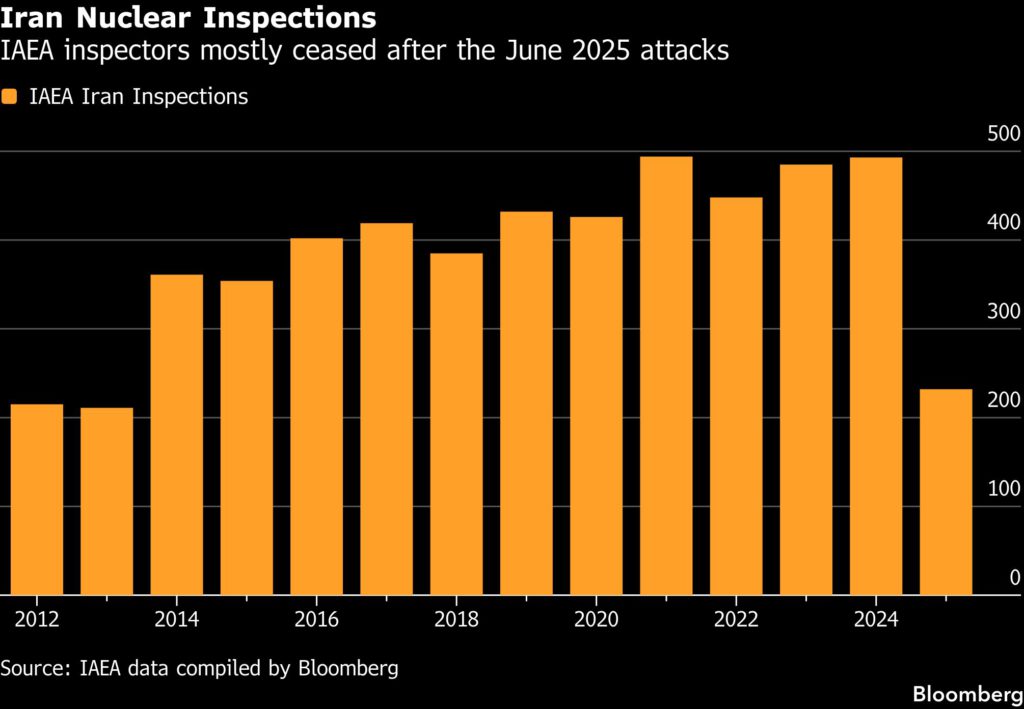
Inspections plummeted by more than half last year after Iran imposed new restrictions following the 12-day war.
Monitors have yet to return to damaged sites in Fordow, Isfahan and Natanz, where Iran’s 440.9 kilograms (972 pounds) and 8,599.6 kilograms of lower enriched material was last seen. The longer the material remains outside of IAEA safeguards, the higher the risks grow that the material could be diverted for non-peaceful uses, they said.
(By Jonathan Tirone)

No comments:
Post a Comment