Canada backs 25 critical minerals projects in G-7 initiative
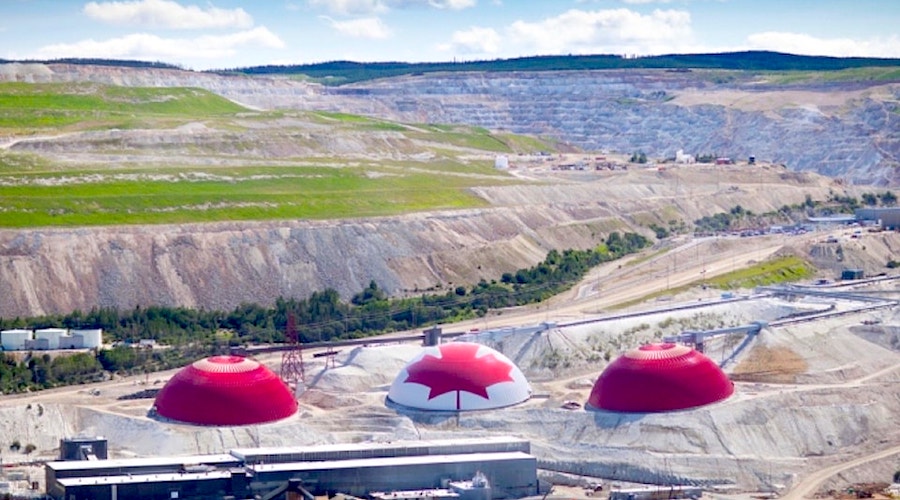
Rio Tinto Group and Nouveau Monde Graphite Inc. are among more than a dozen companies set to benefit from a Group of Seven initiative to strengthen access to critical minerals.

Canadian Prime Minister Mark Carney’s government announced 25 new investments, partnerships and measures totaling C$1.4 billion ($1 billion) at the Group of Seven energy ministers’ meeting in Toronto on Friday. The support is part of a G-7 initiative launched in June to focus on bolstering investments in raw materials key to defense, clean energy and advanced manufacturing.
“We have an incredible set of cards in our critical mineral resources. We have not effectively developed those in the past,” Canadian Energy Minister Tim Hodgson told reporters in Toronto. “These actions, with the support of our allies, are designed to do that and make sure Canada has all the cards it needs in a world where access to critical minerals is becoming a tool of political and geopolitical coercion.”
The deals aim to bolster projects across Canada, with an eye to securing supplies outside of China, which controls a large swath of the global supply chain for these strategic materials. The US and Canada, along with its allies, have sought to secure access to metals such as copper, lithium and nickel, as well as rare earth elements, that are key ingredients in manufacturing, electronics and military equipment.
The announcement includes C$25 million for a Rio Tinto plant in Quebec that will produce scandium, a niche metal used in aluminum alloys for aerospace and defense manufacturing. Ucore Rare Metals Inc. received a conditional C$36.3 million to expand its rare earths processing plant in Ontario. Other recipients include Northern Graphite Corp., Focus Graphite Inc. and Torngat Metals Ltd.
Nouveau Monde Graphite jumped as much as 24% following the announcement of a future supply deal with Canada, Panasonic Holdings Corp. and Traxys North America LLC, before paring gains to close 13% higher in Toronto. Shares of Northern Graphite, which operates North America’s only producing graphite mine, rose 29%.
Not all funding is guaranteed: Norway’s Vianode AS, which aims to build a synthetic graphite facility in Ontario, received a letter of interest for as much as $500 million in potential financing from Canada, along with $300 million from the German government.
Hodgson also said Canada issued an order designating critical minerals as essential to Canadian defense and national interests, enabling the nation to start its own stockpiling regime and support multilateral caching efforts.
Some of the announced deals include future supply contracts with the Canadian government that will allow the nation to stockpile minerals for use in sectors including automaking and the military. Hodgson said the government will stockpile three different types of critical minerals, without specifying which ones.
“These measures will strengthen our capabilities in strategic sectors and contribute to NATO and defense spending commitments,” Hodgson said in prepared comments. “By protecting domestic production under volatile global conditions, we ensure a secure supply of critical minerals to Canadian and allied defense industries.”
(By Jacob Lorinc and Danielle Bochove)
Japan’s Sojitz begins importing heavy rare earths from Australia
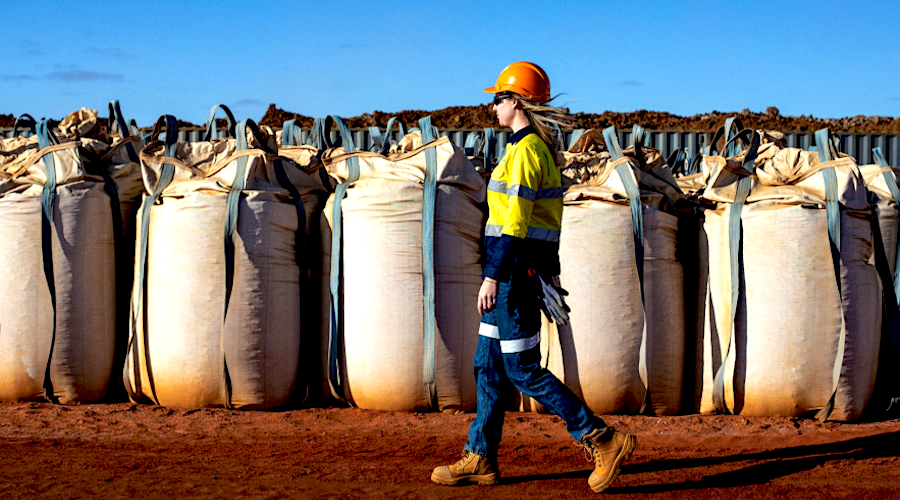
Japan’s Sojitz has begun importing heavy rare earths from Australia’s Lynas Rare Earths, Sojitz said on Thursday, the first such imports produced from Australian ore separated and refined in Malaysia.
The move aims to help Japan secure supplies of key materials used in electric vehicles and renewable energy from sources other than China, which dominates the market.
As Beijing tightens export controls on critical minerals, Japan, the United States, and their allies have been working to build supply chains outside China.
“We’ll continue promoting diversification of the rare earth supply chain and contribute to a stable supply of critical materials,” Sojitz CEO Kosuke Uemura told reporters.
The company declined to disclose import volumes or prices.
US President Donald Trump and Japanese Prime Minister Sanae Takaichi this week signed a framework agreement to secure the supply of critical minerals and rare earths through mining and processing.
Sojitz, with the state-owned Japan Organization for Metals and Energy Security, signed an exclusive sales deal with Lynas in 2011 for light rare earths such as neodymium used in magnets for the Japanese market.
They have since made multiple investments and provided financing to Lynas. In 2023, they secured supplies of heavy rare earths dysprosium and terbium, used in magnets.
“Through our partnership with Lynas, we have built a robust supply chain network,” Uemura said, noting that Sojitz has a market share of more than 70% of neodymium sales in Japan.
Sojitz has also established mass production systems for medium and heavy rare earths, scarce elements essential for next-generation energy and EV motors, in collaboration with Lynas, Uemura said.
Beyond rare earths, Sojitz is exploring the feasibility of producing gallium with Alcoa at the US company’s alumina refinery in Western Australia. Gallium is a critical mineral for semiconductor and defence technologies and is subject to China’s export controls.
Uemura said that government subsidies were needed, adding that China’s dominance distorts market mechanisms, sometimes making prices economically irrational relative to costs such as mining, separation, and wastewater treatment.
(By Yuka Obayashi; Editing by Clarence Fernandez and Mark Potter)
Malaysia’s ban on raw rare earths exports remains despite US deal
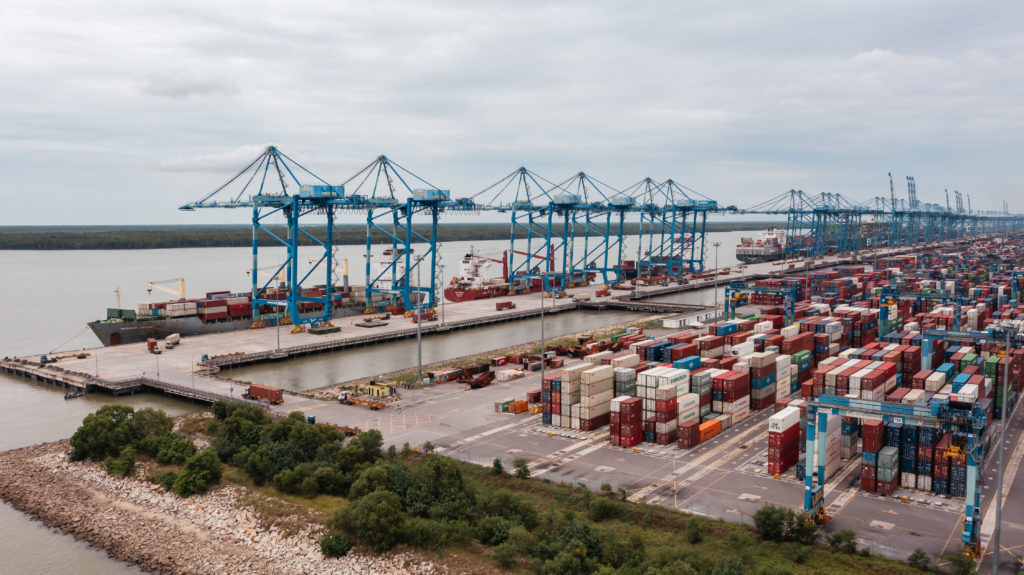 Klang, Malaysia. Stock image.
Malaysia will maintain a ban on the export of raw rare earths to protect its domestic resources, despite signing a critical minerals deal with the United States this week, the trade minister said on Wednesday.
Speaking in parliament, Minister Tengku Zafrul Aziz dismissed allegations that Malaysia will allow the export of critical minerals and rare earths to the United States in pursuit of immediate profits or strategic goals.
“We no longer want to be a country that only digs and ships out cheap raw materials like in the past,” Tengku Zafrul said, reiterating that Malaysia will instead encourage foreign investment and technology sharing for the mining and processing of raw rare earths.
“Our policy is not to prevent trade forever,” he said. “Our policy is to prevent the export of cheap unprocessed raw materials so that value is added to Malaysia.”
Malaysia has some 16.1 million metric tons of rare earth deposits, according to government estimates, but lacks the technology to mine and process them. Rare earth materials are essential for high-tech manufacturing, including electric vehicles, semiconductors and missiles.
Reuters reported earlier this month that Malaysia was in talks with China on rare earths processing, saying Malaysian sovereign wealth fund Khazanah Nasional would partner with a Chinese firm to build a refinery in Malaysia.
The United States signed separate deals with Malaysia and Thailand during US President Donald Trump’s visit to Kuala Lumpur on Sunday, seeking cooperation to diversify critical minerals supply chains amid competing efforts from China.
According to a joint statement by the United States and Malaysia, the Southeast Asian country agreed to refrain from banning or imposing quotas on exports of critical minerals or rare earth elements to the United States.
(By Danial Azhar; Editing by David Stanway)
Malaysia will maintain a ban on the export of raw rare earths to protect its domestic resources, despite signing a critical minerals deal with the United States this week, the trade minister said on Wednesday.
Speaking in parliament, Minister Tengku Zafrul Aziz dismissed allegations that Malaysia will allow the export of critical minerals and rare earths to the United States in pursuit of immediate profits or strategic goals.
“We no longer want to be a country that only digs and ships out cheap raw materials like in the past,” Tengku Zafrul said, reiterating that Malaysia will instead encourage foreign investment and technology sharing for the mining and processing of raw rare earths.
“Our policy is not to prevent trade forever,” he said. “Our policy is to prevent the export of cheap unprocessed raw materials so that value is added to Malaysia.”
Malaysia has some 16.1 million metric tons of rare earth deposits, according to government estimates, but lacks the technology to mine and process them. Rare earth materials are essential for high-tech manufacturing, including electric vehicles, semiconductors and missiles.
Reuters reported earlier this month that Malaysia was in talks with China on rare earths processing, saying Malaysian sovereign wealth fund Khazanah Nasional would partner with a Chinese firm to build a refinery in Malaysia.
The United States signed separate deals with Malaysia and Thailand during US President Donald Trump’s visit to Kuala Lumpur on Sunday, seeking cooperation to diversify critical minerals supply chains amid competing efforts from China.
According to a joint statement by the United States and Malaysia, the Southeast Asian country agreed to refrain from banning or imposing quotas on exports of critical minerals or rare earth elements to the United States.
(By Danial Azhar; Editing by David Stanway)

No comments:
Post a Comment