Euroviews. Elon Musk's SpaceX IPO: the capitalist space revolution begins
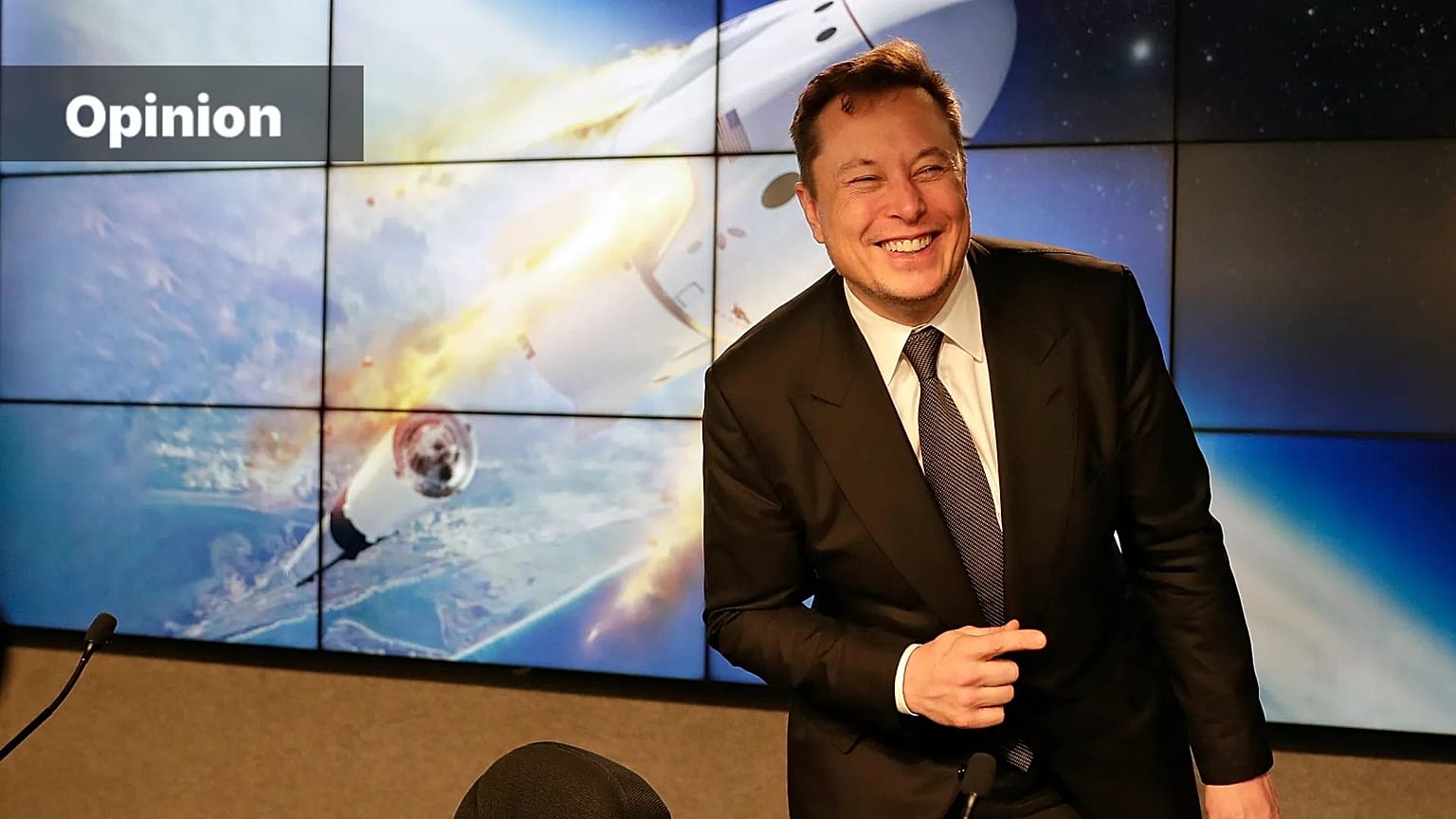
World’s biggest IPO: Elon Musk wants to raise $75bn for SpaceX, making him Earth’s first trillionaire, as Rainer Zitelmann explains in an opinion piece for Euronews how it came about and what happens next.
When I began researching, writing, and publishing on the subject of space capitalism several years ago, many people laughed. They asked why I had chosen such a niche topic and suggested that it sounded more like science fiction than reality.
Well, space capitalism is now a reality. Within a few hours, we will witness what is expected to be the largest IPO in history: Elon Musk’s company SpaceX aims to raise $75 billion. As a result, Musk is set to become the first trillionaire in history. Astute observers, including American politician and space enthusiast Ted Cruz, predicted more than a decade ago that the world’s first trillionaire would emerge from the space industry.
Let me begin with a disclosure. No question has been asked of me more often in recent days than whether I plan to buy SpaceX shares myself. The answer is no. First, because I write about the company and do not want to create any appearance of bias or conflict of interest. Second, because I am fundamentally a passive investor who allocates virtually all of his stock-market investments to globally diversified ETFs.
The most remarkable company of the past 50 years
At the same time, I believe that SpaceX is the greatest company founded in the past fifty years, and that Elon Musk is a visionary entrepreneur whose significance can be compared only to figures such as Thomas Edison or Henry Ford.
In the space industry, SpaceX occupies a unique position. According to the IPO-prospectus, since 2023 the company has transported more than 80 percent of all mass sent into orbit worldwide each year, while maintaining a Falcon 9 mission success rate exceeding 99 percent. One could make an additional comparison: if SpaceX were a country, it would have ranked first by a wide margin in successful rocket launches in 2024, 2025, and so far in 2026, ahead of China. Of the approximately 15,000 active satellites currently in orbit, around 10,000 are Starlink satellites.
In 2025, SpaceX conducted twenty times as many launches as Europe’s entire state-organized space program. More than a decade ago, the company developed the world’s first truly reusable orbital rocket, something no government space agency has yet achieved. Compared with the Space Shuttle, Musk’s company has reduced launch costs by roughly 95 percent.
From 1957 until today, all governments combined have launched 15,062 satellites into space. Elon Musk, by contrast, has placed 14,844 satellites into orbit within just a few years.
Musk’s visions
Yet this is only the beginning. Musk is pursuing ambitious projects, including the construction of data centers in space. Such orbital data centers could operate almost continuously on solar power while addressing some of the energy and land-use constraints faced by terrestrial facilities.
His truly grand objective, however, is the colonization of Mars. By settling humanity’s neighboring planet, Musk hopes to transform humanity into a multi-planetary species. His stated goal is to establish a population of one million people on Mars. Achieving this would require approximately 1,000 Starships carrying 100 settlers each during every launch window, which occurs roughly every 26 months.
Regarding the company’s long-term outlook, the prospectus states that SpaceX believes its current space activities could catalyze transformative breakthroughs, reshape terrestrial industries, and ultimately create entirely new trillion-dollar markets on the Moon, Mars, and beyond.
This is where many critics become skeptical. They fear that profits generated by businesses such as Starlink could be consumed by Mars-related projects that generate little or no financial return. The prospectus remains vague on this point. For example, it suggests that establishing a permanent presence on the Moon could enable annual growth in AI computing capacity on a terawatt scale, support deeper space exploration and industrialization, and serve as a stepping stone toward a civilization on Mars.
Musk’s goal: turning humanity into an interplanetary species
Musk also reiterates a theme he has emphasized for years: that humanity’s dependence on a single planet represents a major vulnerability and exposes civilization to existential risks. According to the IPO-prospectus, one of the company’s motivations is to ensure that humanity does not ultimately suffer the same fate as the dinosaurs.
The prospectus further describes SpaceX’s mission as developing the technologies necessary to make life multi-planetary, deepen humanity’s understanding of the universe, and extend conscious life beyond Earth.
Given these ambitions, and considering that SpaceX is currently reporting losses partly because of its approximately $15 billion investment in Starship while also indicating that it does not intend to pay dividends in the foreseeable future, critics such as University of Florida finance professor Jay Ritter argue that even if Starlink were eventually to generate tens of billions of dollars in annual profits, those funds might be spent on transporting people to Mars rather than being distributed to shareholders.
IPO prospectus: opportunities described too vaguely
Only in the later sections of the prospectus are potential future business areas mentioned, including space tourism, orbital manufacturing, passenger and cargo transportation to the Moon and Mars, and energy production beyond Earth. Asteroid mining is also mentioned, but only briefly.
What is absent, however, are the enormous opportunities associated with real estate. The 1967 Outer Space Treaty clearly prohibits nations from claiming ownership of celestial bodies or land on those bodies. Whether this prohibition also applies to private companies remains a matter of legal debate. Some space-law scholars argue that the treaty bans national sovereignty beyond Earth but does not necessarily prohibit private ownership. Their interpretation is based on the legal doctrine expressio unius est exclusio alterius: the explicit inclusion of one category implies the exclusion of others.
Legal uncertainties: who owns asteroids?
Admittedly, there is legal uncertainty here. But where there is uncertainty, there is also opportunity. Should SpaceX eventually acquire ownership rights to asteroids or land on the Moon or Mars, it could become the greatest real-estate story in history, potentially even creating space-based REITs that could be listed on stock exchanges. These opportunities may ultimately represent the company’s most significant long-term commercial prospects.
Because the primary purpose of an IPO-prospectus is to minimize legal liability through extensive discussion of risks rather than to highlight speculative opportunities, these possibilities receive little attention. I suspect the company’s legal advisers recommended avoiding anything that might appear overly science-fiction-like to investors.
Ironically, this restraint may produce the opposite effect. Because the potentially enormous commercial opportunities in areas such as space tourism and asteroid mining are merely mentioned rather than fully explained, and because real-estate opportunities are not discussed at all, readers unfamiliar with the subject may conclude that SpaceX intends to spend vast sums pursuing idealistic science-fiction dreams.
That interpretation is misguided. If there is one thing that can be said with confidence about Elon Musk, it is this: wherever there is an opportunity to create value and generate profits, he will pursue it.
Dr Dr Rainer Zitelmann is a historian and sociologist and the author of 31 books, which have been published in 35 languages. His book “New Space Capitalism” has just been released.

The Hidden Supply Chain
Behind Every SpaceX Launch
- Rothschild & Co Redburn raised its price target on Linde to $560 and reiterated Buy, citing the company's dominant position supplying liquid oxygen, helium, and cryogenic services for SpaceX launches.
- Starship burns roughly 10 times the oxygen of a Falcon 9, which analysts say could push Linde's revenue per launch from under $4 million in 2025 to nearly $6 million by 2028.
- SpaceX plans 140-160 launches in 2026, nearly all Falcon 9, but a shift toward Starship dominance and launch cadences potentially exceeding 1,000 per year by 2028 represents a major new demand lever for Linde's space business.
Ahead of the SpaceX IPO, Rothschild & Co Redburn analyst Tony Jones published a note on space propellant economics and identified an industrial-gases giant that is well positioned to dominate the market for rocket propellants and mission-critical launch gases as SpaceX's Starship launch cadence gains momentum and the broader space economy is set to double by 2035.
Jones and his team reiterated their "Buy" rating on Linde and raised their 12-month price target to $560 from $550, telling clients on Wednesday that the company has built a deep moat in the industrial gases business after powering America's rocket launches for the past six decades.

The team at the equity research arm of Rothschild & Co Redburn sees SpaceX's Starship as a "further demand accelerator," with higher launch cadence and heavier propellant loads creating a new growth lever for Linde's mission-critical gases business.

Jones estimates Linde generated just under $4 million of revenue per average space launch in 2025. By 2028, that number could approach $6 million as Starship launches are set to increase dramatically, driving demand for liquid oxygen, nitrogen, helium, cryogenic services, rare gases, and capacity fees.
Main points from the note:
- White Space. Linde has fuelled NASA for c60 years and now has capex set to ramp alongside SpaceX's Starbase. We delve into the economics and like what we see. Space sales are c2% group but could scale rapidly, as Starlink's ecosystem forms.
- Starship: a further demand accelerator. The transition to Starship as a dominant vehicle could transform the opportunity, burning c10x the oxygen of a Falcon 9 launch. Linde's revenue per launch could near $6m by 2028, from under $4m in 2025. This comes on top of potentially exponential launch cadence.
- Project and EPS optionality. Linde's space capex falls outside its gas backlog, lacking take-or-pay status. However, contracts seem likely and we see the backlog revised up as a clear valuation catalyst. EPS growth could accelerate. Linde is a rock-solid business with top-quartile management. We increase our 12-month PT to $560 per share (from $550) and reiterate our Buy recommendation.
Linde's earnings growth could accelerate if several growth levers hit at the same time...

Starship dominates propellant gas usage among space vehicle types this year.

"SpaceX has indicated that the 140 to 160 launches planned for 2026 will be almost all Falcon 9 flights. Starship launches will likely be test flights only, with the major milestone to successfully reach optimal range," Jones noted.
Linde revenue per average space launch – 2025

Linde revenue per average space launch – 2028

Musk has previously stated: "Starship should be doing >1000 Earth orbit flights per year by 2028. That is still low compared to what's needed to build a self-sustaining city on Mars and secure the future of consciousness."
By Zerohedge

No comments:
Post a Comment