Tuesday, June 23, 2026

QATAR

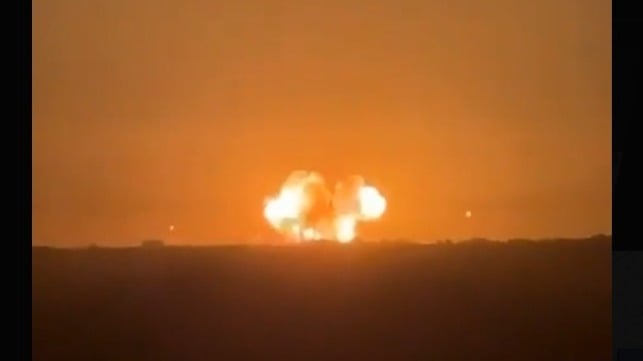
Giant Blast Kills 13 Workers at Ras Laffan Gas Plant

Blast Ras Laffan
The explosion was visible for miles around (via Qatari social media

Published Jun 22, 2026 4:05 PM by The Maritime Executive

A blast at the Ras Laffan gas complex has killed 13 workers and injured 66 more, Qatari officials say. 12 of the deceased were Indian nationals, plus one Pakistani citizen. 

The giant Ras Laffan Industrial City area is a vast complex for processing natural gas from Qatar's offshore wells, and it incorporates multiple elements, including power stations, desalination plants, gas-to-liquid plants, and the world's largest collection of liquefaction trains for producing LNG. The LNG complex was shut down during the U.S.-Iranian hostilities, and about 17 percent of its capacity was knocked out by an Iranian ballistic missile strike. Operator QatarGas has pledged to bring the liquefaction trains back online on a rapid timetable; Wood Mac estimates that it will take about 12 weeks to restore most production. 

Natural gas underpins the Qatari economy, and the loss of LNG exports has had an impact. Its GDP is on track to sink by about nine percent this year due to the shutdown and the broader effects of the conflict. 

The blast on Sunday occurred during restart operations at the Barzan gas processing facility, which is used to fulfill Qatar's own domestic energy requirements. It had a technical root cause, Qatari authorities reported, and was not an attack; it posed no threat to the broader public, but it startled residents as far as 45 miles away in the capital of Doha. 

Qatari state energy minister Saad al-Kaabi said Monday that it would not be a setback for efforts to relaunch full rate LNG output, nor is it expected to impact local gas supplies.


Pemex Wants Petrobras' Deepwater Magic

When you're drowning in debt, plagued by declining production, and running a refining business that seems chronically allergic to profits, buddying up with a more successful partner starts looking like a sound strategy.

That's essentially what just happened between Mexico's Pemex and Brazil's Petrobras.

The two state-controlled oil giants signed a memorandum of understanding this week to collaborate on exploration, production, refining, natural gas, petrochemicals, and more. But the headline item? Deepwater exploration in the Gulf of Mexico.

Petrobras is arguably the world's premier deepwater operator, having spent two decades perfecting the art of pulling oil from Brazil's massive pre-salt reservoirs buried thousands of feet beneath the ocean floor. Those discoveries transformed Brazil into an energy powerhouse and helped Petrobras build one of the most attractive offshore portfolios anywhere in the world.

Pemex, meanwhile, has been watching production decline as mature fields like Cantarell continue to fade. The company still carries roughly $80 billion in debt, posted another quarterly loss this year despite elevated oil prices, and remains heavily dependent on government support.

In other words, Pemex needs new barrels. Petrobras needs new opportunities. The timing makes sense for both.

Petrobras has been aggressively expanding its exploration portfolio, recently adding acreage in Namibia, Colombia, São Tomé and Príncipe, and elsewhere as it looks beyond Brazil for future growth. The company has also racked up a series of offshore discoveries and continues to generate some of the lowest-cost barrels in the industry.

For Mexico, the attraction is obvious. While the U.S. side of the Gulf of Mexico produces roughly 2 million barrels per day from deepwater fields, Mexico's side remains largely untapped.

The big question isn't whether the oil is there. It's who pays to find it.

Deepwater exploration can cost hundreds of millions of dollars before a single commercial barrel is produced. Given Pemex's financial condition, many analysts expect Petrobras would shoulder much of that burden if the partnership evolves into actual projects.

For now, it's only an MOU.

For Pemex, borrowing some deepwater expertise from Petrobras may be one of the more sensible ideas to emerge from the oil patch this year.

By Julianne Geiger for Oilprice.com

TRUMP WAR ON RENEWABLES

Trump Administration to Buy Back Four More Offshore Wind Leases

offshore wind farm
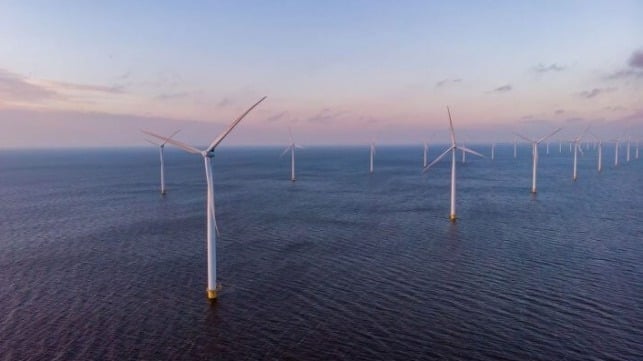
U.S. will buyback four more offshore wind leases in exchange for alternate investments in domestic energy (file photo)

Published Jun 17, 2026 3:22 PM by The Maritime Executive

Continuing its strategy of canceling offshore wind projects by buying back the leases in exchange for other energy investments, the Department of the Interior announced its third agreement. The administration has committed nearly $2.6 billion to canceling offshore wind leases even as the strategy is being challenged in court and by regulators.

Invenergy will voluntarily terminate four offshore wind leases it purchased in the past from the government and will redirect the investments toward other domestic energy sources, said the Department of the Interior. It valued the four leases at $765 million for one lease in the New York Bight for a New Jersey wind farm, two for floating offshore wind farms in Maine, and one off the coast of California.

The largest and most advanced of the projects was Leading Light Wind, which had submitted its offshore wind project bid to the New Jersey Board of Public Utilities (BPU) in August 2023. It called for up to 2.4 GW, which would have made it the largest in the United States. It would have been more than 40 miles off the coast near Atlantic City, New Jersey, and included a battery storage option that would provide 253 MW of advanced energy storage, but it had yet to submit a Construction and Operations Plan proposal to the Bureau of Ocean Energy Management.

The project was selected by New Jersey in January 2024. Citing problems with the supply chain and the changing economics, the company notified New Jersey in November 2025 that it was not moving forward with Leading Light Wind. The other leases in Maine and California were in early development stages, not having presented firm plans.

“The offshore wind leases were sold under the assumptions that taxpayers would indefinitely subsidize costly, unreliable projects and that no national security concerns were implicated - both assumptions have since been proven false,” asserted Secretary of the Interior Doug Burgum.

The Department of the Interior said the agreement provides for partial reimbursement. The company agrees to redirect that amount towards other domestic energy sources with the demonstrated capability to deliver reliable, affordable power, including the development of natural gas-fired power plants in Indiana, Wisconsin, Iowa, Kansas, and Missouri, and geothermal power generation projects in the Western U.S.

Critics, however, were quick to point out that the so-called swaps are not even exchanges, as they take power away from the coastal sites and redirect it to other areas of the country.

“Replacing coastal offshore wind with geothermal or natural gas infrastructure in another region does nothing to address rising ratepayer affordability concerns, reliability challenges, or potential gaps in power supply in the Northeast and mid-Atlantic,” said Hillary Bright, executive director of offshore wind advocacy group Turn Forward, in a statement to the Associated Press.

A coalition of states recently filed a court challenge to the first deal, which was struck with TotalEnergies to buy back nearly $1 billion invested in a lease in the New York Bight and a smaller one off North Carolina. The California Energy Commission has also subpoenaed information from Golden State Wind, a project planned by Ocean Winds, which is a partnership between Engie and EDP Renewables.

Critics are also questioning if the government has the legal right under the contracts to buy them back, and where the funds will come from. Members of Congress have also called for investigations of these transactions.

Earlier this week, the Trump administration withdrew an appeal in the courts over a judgment that blocks its suspension of the review of all wind energy leases. The order was imposed in January 2025 to review the leasing process, but the court found that it could not be an indefinite suspension. The administration has also been blocked by the courts in its efforts to place stop-work orders on the under-construction offshore wind farms. However, future development has been stopped by the administrations’ strong opposition to offshore wind energy.


ECOCIDE TOO

Santos Starts Continuous Oil Production at Alaska’s Pikka Project

Santos has started continuous production operations at the Pikka Phase 1 oil project on Alaska’s North Slope, marking a key milestone for one of the largest new oil developments in the United States.

The first production wells are now online and producing around 20,000 barrels of oil per day (bpd) on a gross basis. Santos said it plans to begin seawater injection in the coming weeks to provide reservoir pressure support before gradually bringing additional wells into operation. The company is targeting plateau production of approximately 80,000 bpd during the third quarter of 2026.

Pikka Phase 1 is expected to unlock around 400 million barrels of gross proved and probable (2P) reserves. The broader Pikka Unit also contains an estimated 600 million barrels of gross contingent resources (2C), providing a foundation for future expansion phases beyond the initial development.

Santos Managing Director and CEO Kevin Gallagher said the transition to continuous production represented an important step toward reaching full output later this year.

The project is operated through a joint venture between Santos and Spanish energy company Repsol. Santos has previously described Pikka as a low-cost, long-life oil asset capable of generating strong cash flow and supporting shareholder returns over an extended period.

Located on Alaska’s prolific North Slope, Pikka is one of the most significant conventional oil projects currently being developed in North America. The field is expected to contribute meaningful new production to the Trans-Alaska Pipeline System at a time when operators are seeking to offset declines from mature fields across the region.

According to Santos’ year-end 2025 reserves report, the company’s net share of Pikka resources includes 164 million barrels of 2P reserves and 252 million barrels of 2C contingent resources. The project is expected to provide economic benefits for the State of Alaska and Alaska Native corporations through royalties, taxes, and employment opportunities.

With production now underway and additional wells scheduled to come online over the coming months, Pikka is poised to become a major contributor to Santos’ oil portfolio and future cash generation.

By Charles Kennedy for Oilprice.com

ECOCIDE

Trump Admin Takes Aim at Oil, Gas Drilling Costs


  • The Trump administration plans to cut regulatory costs for oil and gas producers by reducing well-cleanup bonding requirements, easing methane rules, and accelerating federal leasing approvals.

  • The Interior Department says the changes could save drillers millions annually and encourage more development on federal lands as part of its "Energy Dominance" agenda.

  • Despite the regulatory relief, industry executives remain cautious about significantly increasing drilling activity, citing market uncertainty and concerns about future policy reversals.

The U.S. federal government will reduce costs for oil and gas drillers by slashing red tape for the industry, aiming to tempt drillers to expand on federal lands.

In a news release this week, the Interior Department said it would revise the Bureau of Land Management’s rule for federal land leasing for oil and gas drilling as well as the BLM’s waste prevention rule, by essentially loosening both to reduce the cost burden on energy companies.

Under the revised rules, the cleanup cost of an abandoned well will fall from $500,000 to as little as $25,000, the Interior said, reversing Biden-era regulations that, according to the current administration, were being “weaponized to penalize energy development.”

Indeed, the cost of plugging an idled well has been estimated at around $20,000, but during the Biden administration, companies were made to commit half a million per well in so-called bonds that are used to ensure these costs are covered, even if a driller goes bankrupt.

In another important move regarding “waste prevention”, the federal government would roll back methane tracking regulations, which were a fundamental—and expensive—part of the Biden administration’s energy policies that sought to make the energy industry reduce the emissions of carbon dioxide from its daily operations. According to the Interior, this rollback could save oil and gas drillers some $17 million annually.

“Energy Dominance requires regulatory clarity,” said Secretary of the Interior Doug Burgum. “These targeted updates cut through the red tape that has historically deterred investment, ensuring our public lands remain a reliable engine for economic growth and innovation.”

The expansion of the oil and gas industry is a cornerstone of President Trump’s agenda and his federal government has been working consistently since day one to dismantle the increasingly stifling regulatory regime that the previous administration established in accordance with its own agenda, which focused on a shift away from oil and gas and towards alternative energy sources such as wind and solar.

Among the specific steps that the Interior Department would take to advance the above agenda, the release listed shortening the review period for public participation in the oil and gas leasing procedure from 90 days to 10 days, and removing the expression of interest leasing preference review. The department will also limit lease suspension approvals to one year and offer the industry replacement lease sales whenever earlier offers get canceled or delayed, Interior said in its release.

“These reforms will further accelerate development, enhance clarity for operators, expand economic opportunity, and reinforce the nation’s enduring commitment to responsible stewardship and American energy leadership,” the department said.

It remains to be seen whether drillers will respond to these changes with an urge to drill more. The number of active rigs has been on the rise in the past few weeks, for sure, in response to the tighter oil supply situation, but at the same time, oil and gas companies have made it clear they are in no rush to start drilling at will just because oil is trading at higher prices. Caution remains the guiding principle of the industry, not least because of the absence of any certainty that in two years the next federal government will not start doing to Trump regulations what Trump is doing to Biden regulations.

Indeed, the latest Dallas Fed energy survey, published in the early days of the Middle East war when oil prices were skyrocketing, showed that the majority of executives had no plans to boost their drilling plans for the year in any significant way. In fact, half of them said they would not be drilling more than planned, with 21% saying they plan to drill slightly more than previously planned. The cost cuts planned by the Interior would certainly be welcome—just how welcome we will have to see.

By Charles Kennedy for Oilprice.com

Why the Next Billion Barrels of Oil Demand Could Come From Storage

  • The Hormuz crisis exposed the vulnerability of oil-importing nations, prompting countries such as India, Australia, Singapore, and Pakistan to expand strategic petroleum reserves and fuel storage capacity.

  • Filling existing and planned storage sites could require up to 1 billion barrels of crude and fuels over the coming years, creating additional demand and helping support global oil prices.

  • Major exporters are also responding, with Saudi Arabia considering expanded global storage facilities to maintain market access and reduce the impact of future supply disruptions.

The closure of the Strait of Hormuz and the stranding of more than 10 million barrels per day (bpd) of crude oil in the Persian Gulf was a wake-up call for import-dependent countries to expand their capacity to hold strategic and commercial reserves.

Many countries, especially in the Asia Pacific, are looking to build new reserve capacity to boost their energy security and never again be caught off-guard by a massive supply disruption like the one triggered by the closure of the most important oil and LNG chokepoint.

From India to Australia, energy importers are looking to expand capacity to hold crude and fuel reserves to be better prepared for the next energy crisis, which, in this fragmented geopolitical situation, is a matter of when, rather than if.

Major oil producers are also considering expanding their global reserve sites to be able to sell their crude when the next flare-up closes a critical chokepoint.

The Role of Reserves in Oil Price Moves

Before the Iran war, few policymakers and analysts expected the Strait of Hormuz to ever become inaccessible for tanker traffic.

Oil importers had become complacent that, despite the tinderbox the Middle East has always been, the Strait of Hormuz has never been closed before.

But here we are now—nearly four months of stalled traffic and uncertainty about how fast and how smooth the reopening will be have resulted in an energy crisis in Asia, depleted the U.S. Strategic Petroleum Reserve (SPR) to a 1983 low, and pushed stocks at Cushing, the delivery point of WTI, to the operational-stress level of just 20 million barrels.

Expanded reserve capacity could help cushion the blow in the next supply shock, whenever it occurs, softening the price spike impact in a future crisis.

On the other hand, expanded capacities will need hundreds of millions of barrels of crude and fuels to fill them, creating additional demand in the near to medium term and putting a floor under oil prices.

Storage Expansion Plans

India, Singapore, Australia, and Pakistan are all looking to boost their reserves capacities to avoid crises in the future. All storage plans aired in recent months could need about 500 million barrels of crude and fuels to fill the new capacities, according to Reuters calculations.

Furthermore, IEA member states will have to replace the 400 million barrels that were released in March, in the biggest coordinated oil stocks release in history. The need to restore the 400 million barrels in countries like the U.S. and Japan will also support demand. Even more barrels will be needed to reverse the current drawdown in global stocks amid peak summer demand, with inventories depleting despite the tentative reopening of the Strait of Hormuz.

All these needs to fill current and future storage sites could amount to about 1 billion barrels, spread over several years, per Reuters calculations. This will help global oil demand rebound from next year, assuming that the Strait of Hormuz traffic could normalize at some point in the second half of the year.

The first country moving to boost reserve capacity is India. Not an IEA member, it is the third-biggest crude oil importer. But unlike China, which has amassed more than 1 billion crude stocks, India’s underground Strategic Petroleum Reserve storage has a total capacity of 5.33 million metric tons of crude oil, equal to only 39 million barrels of crude oil, or just eight days’ worth of India’s oil consumption.

This one week of reserves laid bare India’s vulnerability during the Hormuz crisis. So the government has now reportedly asked state-owned Oil and Natural Gas Corp (ONGC) to build and fill a new site for strategic petroleum reserves, with an estimated investment of $1.6 billion.

Pakistan, for its part, is encouraging oil producers from the Persian Gulf to set up crude reserve buffers at a planned Energy City near the Gwadar Port.

“In case of emergencies like the breakout of war, Pakistan will have the first right to utilise the oil reserves,” a Pakistani official told local media in May.

Further east, Singapore, one of the world’s top oil hubs, said it would explore more underground spaces as options to increase its fuel reserves, Tan See Leng, Minister-in-charge of Energy and Science & Technology, said in April.

Australia, an IEA member but consistently failing to hold oil reserves equal to at least 90 days of its consumption, plans to spend AUS$10 billion, or US$7 billion, on building its fuel stock to avoid future supply squeezes.

During the current crisis, Australia turned to China for jet fuel supply as it was scrambling to ensure its fuel supply amid the global crunch, and one of its only two refineries was out of operation for months due to a fire.

Australia’s government now aims to establish a domestic fuel reserve through a minimum stockholding obligation and build additional storage capacity through the Boosting Australia’s Diesel Storage Program.

It’s not only importers that have vowed to increase storage capacity to minimize the impact of future crises.

The world’s top crude exporter, Saudi Arabia, is also considering expanding its global oil storage capacities, Aramco’s chairman Yasir Al-Rumayyan said last week.

Saudi oil giant Aramco has storage facilities globally, mainly in Asia, Al-Rumayyan said, adding, “We are thinking seriously of having larger storage facilities all over the world.”

By Tsvetana Paraskova for Oilprice.com

Big Business Urges Faster Electrification

A group of major international corporations has urged governments to speed up the electrification of business to reduce reliance on “volatile fuel markets”, Reuters reported today, citing a letter penned by the heads of the companies.

“Continued reliance on volatile fuel markets exposes economies to disruptions that drive price spikes, destabilise supply chains and delay investment,” the companies wrote in the letter. The group wrote. There were 112 signatories to the letter, including Ikea, Nestle, Volvo Cars, Nikon, Iberdrola, and Uber. The group has some $1.5 trillion in combined annual revenues, Reuters noted.

Calls for the electrification of everything have intensified since the start of the war between the United States, Israel, and Iran, with the motive changed from emission reduction to energy security. Proponents of electrification claim that reliance on electricity reduced energy supply uncertainty stemming from geopolitical developments.

While there is some merit to the argument in favor of electrification, reliable electricity - the kind that businesses need - still comes overwhelmingly from hydrocarbons plus nuclear, meaning the global energy system remains dependent on supply chains vulnerable to adverse geopolitical events.

Still, business leaders appear convinced that the successful and reliable electrification of the economy is only a question of government policies. “To reach the required scale, the transition to electrification notably needs to be accelerated through predictable and enabling policy frameworks,” according to H&M’s senior sustainability climate manager, Kim Hellström, as quoted by Reuters.

Last week, Reuters released a poll suggesting that the majority of global business leaders expect their operations to be “largely electrified” by 2035. The poll was conducted by Public First, under commission from three climate change-focused organizations among business leaders in 18 countries. The survey also found that 90% of respondents believe switching from hydrocarbons to wind and solar would be conducive to economic growth.

By Irina Slav for Oilprice.com


Europe’s Battery Storage Installations Set to Quadruple by 2030

further accelerate through 2030 as utility-scale projects lead growth, the SolarPower Europe association said in a new report on Tuesday.

Last year, the European battery storage market saw 36 gigawatt-hours (GWh) of new installations, up by 48% from 2024, when growth had slowed.

Installations rebounded strongly in 2025, and are set to continue accelerating. This year, annual installations are expected to top 50 GWh, SolarPower Europe said. The annual pace of new additions is then projected to jump to as much as 138 GWh in 2030, which would be a fourfold surge compared to 2025.

In the European Union, battery capacity is expected to jump six-fold by 2030 to reach 470 GWh by 2030, according to SolarPower Europe.

Yet, this would be below the 600 GWh SolarPower Europe has estimated the EU needs to align with its energy security, competitiveness, and decarbonization objectives.

“Europe’s battery market is moving in the right direction, but we are not yet where we need to be,” said Walburga Hemetsberger, CEO of SolarPower Europe.

In 2025, Europe’s three top battery storage markets, Germany, UK, and Italy, consolidated their leading positions in Europe, while Ukraine and Bulgaria – with the fastest growth – emerged to complete the top 5 markets across all Europe.

Overall, the top 5 markets accounted for 62% of all installations in Europe in 2025, while the top markets delivered almost 80% of yearly deployment in 2024.

“This underlines that that Europe’s battery storage expansion is diversifying, with a larger contribution from smaller markets,” SolarPower Europe said.

Europe’s renewables-plus-batteries market is also set to soar in the coming years, Aurora Energy Research said in a report last month.

Capacity installations of renewable energy co-located with batteries for storage are expected to surge in Europe from 6 gigawatts in 2025 to as much as 35 GW by 2030. Aurora Energy Research examined developments in 20 European markets in terms of attractiveness for co-location, and identified Germany, Great Britain, and Bulgaria as Europe’s most attractive co-location investment markets.

By Michael Kern for Oilprice.com

NatPower and Tesla Strike 25 GWh European Battery Storage Deal

NatPower has signed a multi-year agreement with Tesla covering the supply and deployment of more than 25 gigawatt-hours of battery energy storage systems across European markets, with initial projects planned in Italy and the United Kingdom.

Under the agreement, Tesla will provide its Megapack battery storage technology, engineering, procurement, and construction services, and energy trading optimization through its Autobidder platform. The projects will be owned and operated by NatPower.

The companies said the partnership extends beyond equipment supply by integrating project development, financing, construction, and energy trading into a single framework designed to accelerate large-scale battery deployment.

The first phase includes five projects in Italy and the UK and forms part of a broader development pipeline targeting more than 100 GWh of storage capacity. NatPower estimates the full program could represent $4 billion to $5 billion in construction value and generate more than $15 billion in revenue over a 20-year period.

The agreement highlights the growing importance of large-scale energy storage in Europe as power systems face rising electricity demand from electrification, renewable energy integration, and the rapid expansion of artificial intelligence infrastructure and data centers.

Battery storage has become a critical component of grid modernization, helping balance intermittent renewable generation while providing dispatchable power and grid stabilization services. Europe is expected to require substantial storage additions over the coming decade to support decarbonization goals and maintain grid reliability.

Tesla has emerged as one of the world's largest suppliers of utility-scale battery storage systems through its Megapack product, while NatPower has been expanding its position as a developer and operator of energy infrastructure projects across Europe.

According to the companies, the storage assets covered by the agreement will provide grid balancing services, optimize renewable energy output, and support electricity-intensive customers, including industrial facilities and data centers.

NatPower CEO Fabrizio Zago described the partnership as a shift from project development to large-scale execution, while Tesla Energy Vice President Mike Snyder said the agreement leverages Tesla's integrated hardware, software, construction and trading capabilities to accelerate battery deployments across Europe.

By Charles Kennedy for Oilprice.com

AUSTRALIA

Op-Ed: what the Scope Systems cyber attack reveals about mining’s digital fragility


Stock image.

The recent ransomware attack targeting Scope Systems’ enterprise resource planning (ERP) software stack, which disrupted operations at dozens of mostly Australian mining companies that rely on the company’s cloud services, is a timely reminder of the escalating cyber threat environment facing the mineral extraction industry today.

Notably, Rob Labbe, CEO and CISO-in-Residence at the Mining and Metals ISAC (MM-ISAC) threat intelligence sharing consortium, described the Scope Systems hack as the “broadest-reaching cyber event the mining industry has ever experienced in terms of the number of companies impacted by a single third-party breach.”

On May 5, Perth-based Scope Systems, which specializes in enterprise IT solutions for the mining sector, publicly disclosed that it had suffered a cyber incident. At the time, the company reported that the attack was “preventing customer access to Pronto Xi hosted on the Scope Systems Cloud,” the company’s “support portal, and Scope Systems hosted services, including APIs,” according to the breach notice.

The threat actor “accessed the Scope Systems network for a short period of time (less than 24 hours),” according to the company’s cyber incident FAQ. Additionally, Australia’s two biggest gold miners, Northern Star Resources and Evolution Mining, were impacted by the attack, the Australian Financial Review reported.

Pronto Xi is an integrated ERP platform developed by Pronto Software, another Australian-based firm. Scope Systems is the largest global reseller and implementation partner for Pronto Xi and— using it as their product foundation—markets itself as a leader in providing ERP software to the mining industry worldwide. In fact, “more than 400 mining mining companies worldwide depend on Pronto Software’s Pronto Xi ERP,” according to a Pronto-sponsored article published in MINING.COM last year.

It should be noted, however, that 100 of Scope Systems’ 180+ mining customers (as of 2021) are based in Australia. Additionally, a significant core of their customer base consists of “smaller mining services companies” in Western Australia, according to a 2021 company blog post. So, excluding ASX-listed Northern Star and Evolution, the immediate blast radius of this incident appears more regional than global, even though Pronto Xi itself is widely used across the international mining sector.

Regardless, ERP systems are vital to modern mining operations because they integrate complex, asset-intensive processes like exploration data, production planning, maintenance, supply chains, and regulatory compliance into a single, real-time operational picture. Industry research consultants like Farmonaut note that the mining industry is “undergoing digital transformation at unprecedented speed,” and that mining ERP systems are “central to this movement.”

Thus, an attack affecting a widely used mining-sector ERP reseller like Scope Systems highlights the potentially outsized cybersecurity and operational risks associated with third-party technology dependencies in the resource extraction industry.

While Scope’s latest cyber incident update (dated May 18) notes that their recovery team had successfully restored all client servers from backups, and that the still unknown attacker had failed to access client servers, they cautioned that the adversary exfiltrated data from their internal server. Questions remain about the true magnitude of the attack.

Lingering questions

Beyond the identity of the ransomware variant used in this attack, Scope Systems has also not yet disclosed the attack vector that enabled the threat actor to hijack its cloud environment. This lack of transparency about the culprit and the attack chain places Scope’s claim that it has “not identified that the threat actor accessed client servers” under higher scrutiny.

There are two key questions that arise. What visibility did Scope Systems have at the hypervisor, storage, and backup layers? And how are they defining “client servers” — as customer virtual machines, logical tenants, or as a subset of infrastructure components? As of yet, these questions have not been clarified by the victim.

Overall, Scope’s preliminary view that client servers were untouched appears limited to guest‑level access within customer virtual machine environments. In a multi‑tenant cloud environment, however, a sufficiently privileged adversary who has obtained control over the hypervisor, management plane or underlying storage systems can potentially snapshot or clone customer virtual machines and export them to attacker‑controlled infrastructure without leaving obvious traces inside the guest OS.

Notably, hypervisor and control-plane hijacking—often described as cloud conscious attacks— have become increasingly favored by big-game hunting (BGH) ransomware crews like Akira, Cactus, Royal, and Cl0p, along with access‑broker groups like Scattered Spider that work with multiple ransomware programs.

Former cybercriminal Peter “Severa” Levashov, a onetime operator of the Kelihos botnet that enabled global, industrial‑scale cybercrime campaigns, told our threat intelligence team that “VM cloning/export is not a widely documented, routine RaaS TTP in public incident reporting.”

“Most of the public ESXi/vCenter ransomware reporting still centers on hypervisor access for impact: shutting down VMs, encrypting VMDKs/datastores, deleting snapshots, killing backups, and using vCenter/ESXi as a fast route to domain-critical systems,” he added. But Levashov cautioned that “once an attacker has vCenter or ESXi administrative control, VM cloning, VMDK copying, snapshot abuse, and disk attachment become technically available paths.”

This attack scenario is illustrated by a 2024 Cyber Intelligence Briefing published by S‑RM that details the Akira ransomware group’s sophisticated privilege escalation techniques. Specifically, the report shows how threat actors can leverage virtualization platforms to copy and mount VM disk images in ways that effectively bypass guest‑level logging and many endpoint controls.

After exploiting a vCenter vulnerability, Akira operators created their own VM on an ESXi host, powered down a domain controller, copied its virtual disk files and attached those disks to the attacker VM in order to extract NTDS.dit and the SYSTEM hive for offline credential cracking.

Yelisey Bohuslavskiy, the co-founder of threat intel firm Red Sense, who is engaged in Akira-related investigations told me “the same ESXi and vCenter privileges Akira used to copy and mount those VMDKs could just as easily be used to snapshot, clone or export entire virtual machines, reinforcing that hypervisor‑level ransomware actors already possess the technical capability to perform the kind of VM‑level data theft this paper warns about.”

Most of these attacks are financially motivated, but in a sector central to critical‑mineral supply chains, criminal and state interests increasingly blur. Some notable cybercrime groups that have been observed targeting the global mining sector over the past few years include Lynx (an offshoot of INC), the Gentleman, Tengu, Medusa, DragonForce, 0APT, BianLian, and the now defunct BlackBasta.

This escalation is unfolding just as mining companies race through digital transformation initiatives like rolling out cloud‑hosted ERP, pursuing AI‑driven process optimization, and integrating IIoT‑enabled monitoring across mines and processing plants. These Fourth Industrial Revolution (4IR) technologies bind previously isolated IT and OT networks together, creating new pathways from office systems into haul trucks, crushers and concentrators.

In this environment, a single compromised supplier, cloud platform, ERP system, or remote‑access tool can become a conduit for both data theft and cyber‑physical disruption. Notably, a 2024 survey on mining sector cyber risk published by OT security vendor Claroty found that 76% of respondents disclosed that “one or more cyber attack – and nearly half (41%) said five or more attacks – originated from third-party supplier access” to the cyber-physical systems (CPS) environment.

A lesson in resilience

As Scope’s independent forensic investigation continues, Labbe told me that the key takeaway from this historic attack was the theme of resilience.

“What we’re seeing in the Scope incident is a really stark split between organizations that treated their hosted ERP as someone else’s problem and those that built resilience into the design,” said Labbe.

“The miners that maintained their own, well‑tested backups of Scope‑hosted Pronto Xi were able to restore quickly and keep production moving with minimal disruption. The ones that didn’t have independent copies or workable failover paths were effectively dead in the water—prolonged outages, operational chaos, and real production losses. Scope’s outage was the shock, but resilience, or the lack of it, ultimately determined the impact.”

What makes incidents like the Scope Systems breach particularly consequential is not just the immediate operational disruption, but the broader strategic context in which they are unfolding. Mining is no longer a peripheral industrial sector. This vital industry sits at the center of intensifying geopolitical and geo-economic competition, underpinning everything from energy transition supply chains to defense industrial bases.

As nations compete for access to critical minerals such as lithium, rare earth elements (REEs), gold, and copper, the digital infrastructure that enables extraction, processing, and logistics becomes an increasingly attractive target not only for cybercriminals, but also for state-aligned actors seeking strategic advantage.

At the same time, the industry’s rapid embrace of cloud platforms, ERP centralization, and IT/OT convergence is dramatically expanding the attack surface in ways that outpace traditional security models. Systems that were once isolated are now deeply interconnected, and third-party technology providers have become critical nodes in operational continuity.

The end result is a structurally more fragile environment, where a single point of compromise can cascade across multiple organizations, regions, or supply chains. In this context, cybersecurity in the mining sector is no longer just an IT or operational risk — it is a systemic risk with national and global implications, unfolding amid historic geopolitical and geo-economic competition over critical mineral supply chains.

The Scope Systems incident may be the first of its kind for the mining sector — but it is unlikely to be the last.


BIO: Mark Rorabaugh is the president and CEO of InfraShield, a critical infrastructure cybersecurity firm specializing in the protection of nuclear power plants and a former Nuclear Regulatory Commission inspector who helped write the very regulations that govern nuclear plant cybersecurity today.