Wednesday, June 17, 2026


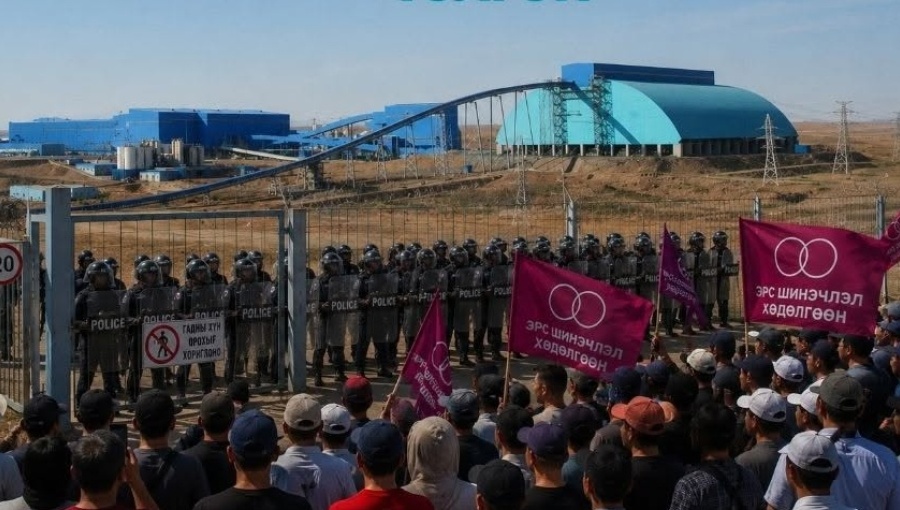
Rio Tinto’s giant Mongolia copper mine blocked by protesters, exports halted

Rio Tinto’s giant Mongolia copper mine blocked by protesters, exports halted
The demonstration halted trucks that were due to transport copper concentrate to China. / Mongolian Radical Reform Movement
By bne IntelliNews June 17, 2026

Protesters on June 17 blocked copper concentrate exports from Rio Tinto’s (ASX: RIO) giant Oyu Tolgoi mine in Mongolia’s Gobi Desert.

The Anglo-Australian miner confirmed shipments were disrupted in a statement posted on Facebook.

The demonstration was organised by the Radical Reform Movement. Mining.com reported that it temporarily halted traffic on a two-lane highway used by trucks hauling copper concentrate from the mine to the Chinese border. 

In terms of the outlook for global supplies of strategic metal copper, Oyu Tolgoi is one of the most important mines in the world. The project to develop it is costed at around $18bn.

There is a continuous debate in Mongolia as to whether ordinary people are benefitting enough from foreign miners’ development of the country’s vast mineral wealth and other natural resources.

The protesters said they were demanding a larger share of mining revenues for Mongolians. Photos posted online showed a small gathering of demonstrators grouped near a makeshift barrier. A white banner with the words “Stop Rio Tinto” was draped across a tree branch positioned over the roadway in front of a wall of tires. It remains to be seen whether the protest will turn out to have been a one-day demonstration or will evolve into a longer protest.

The Facebook message took the form of a statement from the copper-gold mine, partly owned by the state. It said the protest and blockade meant there was a “risk of not being able to fulfil contractual obligations”.

It added: “Oyu Tolgoi has always respected the right of citizens to freedom of association and expression, met with citizens and non-governmental organisations who raised concerns, responded promptly and emphasised practical communication.

“However, the current situation has the potential to cause significant disruptions to the state budget and to tarnish the reputation of Mongolia and the Mongolian mining sector in the international environment. Therefore, we urge everyone to uphold the common interests of Mongolia and not to hinder the normal and continuous operation of mining operations.”

Expanding industries, including those making electric vehicles (EVs), power grids, solar panels and wind turbines require copper. China is the largest consumer of the metal.

In March, IntelliNews reported on how the Mongolian government had informed Rio Tinto that it wanted a renegotiation of “unfair” commercial terms of the contract that applies to the development of the mine.

In May, IntelliNews Pro reported that Mongolia had struck an agreement with Rio Tinto to cut the project management fee on the development of the mine by half and eliminate overlapping charges.

The Government Media and Public Relations Department said that the agreement was expected to cut costs by $2.2bn and raise Mongolia’s benefits from the megaproject, on course to be one of the biggest copper producing investments in the world, by $1.5bn.

Prime Minister Uchral Nyam-Osor was quoted as stating that “the government has achieved its first successful outcome in the Oyu Tolgoi negotiations”.

Growing Water Shortages In Central Asia Threaten Region And Its Neighbors – Analysis


Border of Tajikistan and Kyrgyzstan


June 17, 2026
By Paul Goble

The water shortage in the five Central Asian countries continues to worsen. It has now reached the point where the “water surplus” upstream countries of Kyrgyzstan and Tajikistan no longer have sufficient water to send more downstream to the three other “water short” countries of Kazakhstan, Turkmenistan, and Uzbekistan (Window on Eurasia, March 3, 2024). That problem and its purported solution—one that drove policies in Soviet times, when Moscow controlled the distribution of water, and still dominates the thinking of many in the region and elsewhere—no longer apply (see EDM, April 9). Climate change, burgeoning population growth, and poor irrigation policies mean that there are no longer any “water surplus” countries in the region (Window on Eurasia, March 3, 2024). This new reality is something the international community is only slowly coming to recognize.

Even as the water crisis undermines the growth and stability of each Central Asian country, it is also increasing tensions among them. Each country is forced to look individually and collectively beyond the region as a whole, sounding ever more warnings that unless they get help and soon, there will be instability in Central Asia and massive refugee flows into these neighboring states (Window on Eurasia, December 6, 2025;RITM Eurasia, June 12).

Unless more comprehensive approaches are adopted, the ever-growing need for water in Central Asian countries and the impossibility of solving this problem on their own will be a major and growing cause of instability and conflict within and among them. Tensions will mount between them again individually and collectively, on the one hand, and Afghanistan, the People’s Republic of China (PRC), and the Russian Federation, on the other. Each of these countries has its own domestic water problems and agendas for using the water crisis in Central Asia to promote its national interests (see EDM, July 11, 2024;Fond Strategicheskoy Kul’tury; Vecherniy Bishkek; Spik.kz, June 8;Stoletie, June 10).

Drought conditions over the last several years have pushed the water crisis in Central Asia to unprecedented dimensions. Even those countries long identified as “water surplus” no longer have enough water to ensure that their major lakes will not disappear as the Aral Sea already has, that critical food crops will supply the growing cities, and that the latter will not begin to empty with their residents fleeing abroad to find water (Window on Eurasia, September 8, 2024, December 6, 2025; see EDM, April 9). This perfect storm is the result of the convergence of three factors, any one of which would be a challenge, but together pose a threat to the region. First, global warming has reduced the flow of water from the mountains where glaciers are melting at unprecedented rates (Window on Eurasia, June 11). Second, still-burgeoning population growth is occurring beyond the capacity of the governments there to cope with (Window on Eurasia, April 18). Third, water distribution systems both in cities and especially in agricultural areas remain both inadequate and wasteful (Window on Eurasia, December 21, 2025).


The countries of Central Asia are increasingly being forced to seek to obtain water from their neighbors. Most importantly, they are being forced to obtain water from the Russian Federation with talk about revisiting earlier plans to divert Siberian river water to Central Asia (seeEDM, April 1, 2025). They are also being forced to seek water from the PRC, some of whose river flows might be diverted to Central Asia (Window on Eurasia, July 31, 2025). Additionally, water is being sought from Afghanistan, where Central Asians are alarmed by a major Kabul water project that will further reduce the flow of water into Central Asia’s riverine system (see EDM, July 11, 2024). To date, progress on these fronts has been limited by two factors.

On the one hand, all three of these countries face mounting domestic water problems and oppose spending massive amounts of money to help others when they themselves need water (Window on Eurasia, June 27, 2025; see EDM, July 3, 2025). On the other hand, the Central Asian countries, instead of adopting a common approach, have adopted contrasting national programs. This is a choice that Moscow, Beijing, and Kabul have been quick to exploit, offering water to those who cooperate on other issues but not doing so for others who refuse (Window on Eurasia, December 6, 2025; RITM Eurasia, June 12).

The resulting impasse in turn has sparked increasingly apocalyptic talk about what will happen if the neighboring countries do not help Central Asia. Not only are there now increasing references to the possibility of economic and social collapse and the rise of extremism, but some in the region and elsewhere are now suggesting that as the countries of Central Asia run out of water, that by itself will force millions of the people there to flee to other countries, including Russia. One Uzbek scholar, Ravshan Nazarov, for example, has gone as far as to suggest that unless Central Asia gets more water from its neighbors and soon, as many as 100 million Central Asians will decamp from their homeland and create what would be the world’s largest refugee problem in the Russian Federation (Vostochniy Ekspress, December 8, 2023).


Especially ominous for many Russians now focusing on this issue is that international bodies such as the World Bank have echoed this apocalyptic vision and warned that steps must be taken now to avert it (Window on Eurasia, April 2, 2023; The World Bank, December 12, 2024). There have been three responses to such suggestions. First, some in Russia, for example, are now warning that Moscow has no choice but to give the Central Asians water lest more Muslims move into the Russian Federation. Second, others are saying that the Kremlin should beef up its military along the borders with Central Asia to prevent such an influx. Third, still others are saying that the water crisis is affecting more than just Central Asia and that Moscow should demand that the international community get involved to solve that rather than bear all the burdens of doing so by acting on its own in Central Asia (Window on Eurasia, December 13, 2023; see EDM, July 3, 2025; Stolitie, June 10). The PRC has a freer hand to act because it has less water at stake and thus has proved more willing to be cooperative (Window on Eurasia, July 31, 2025;Vecherniy Bishkek, June 8). Afghanistan has been willing to talk but has not scaled back its own water projects the way Central Asians would like, to their increasing annoyance and the two other countries as well (seeEDM, July 11, 2024; Fond Strategicheskoy Kul’tury, June 8).

There are few signs that Central Asia’s water problems will be resolved anytime soon (RITM Eurasia, June 12). As a result, the water problem in Central Asia is likely to explode, possibly as early as this fall, when harvests there fail. If that happens, this will affect not only the five Central Asian states and their three neighbors but the international community as a whole.


This article was published at The Jamestown Foundation

About Paul Goble
Paul Goble is a longtime specialist on ethnic and religious questions in Eurasia. Most recently, he was director of research and publications at the Azerbaijan Diplomatic Academy. Earlier, he served as vice dean for the social sciences and humanities at Audentes University in Tallinn and a senior research associate at the EuroCollege of the University of Tartu in Estonia. He has served in various capacities in the U.S. State Department, the Central Intelligence Agency and the International Broadcasting Bureau as well as at the Voice of America and Radio Free Europe/Radio Liberty and at the Carnegie Endowment for International Peace. Mr. Goble maintains the Window on Eurasia blog and can be contacted directly at paul.goble@gmail.com .


The Price Of Dissent: Russia’s Turn Toward Nationalist Authoritarianism – Analysis


June 17, 2026 

By K.M. Seethi


On the morning of 16 June 2025, Robert Kuzovkov — known to the world by his artistic name Semyon Skrepetsky — was shot dead near his home in Biała Podlaska, eastern Poland, close to the Belarusian border. The 44-year-old satirist had spent years producing caustic caricatures of Vladimir Putin, Ramzan Kadyrov, and the machinery of Russian nationalism. Days before his murder, he had stood outside the Russian embassy in Berlin holding placards comparing Putin to Stalin. Two Belarusian nationals were detained for questioning. Polish investigators opened a politically motivated murder inquiry. No formal charges had been announced at the time of writing.

The killing of Kuzovkov comes in a line of cases that have grown steadily across two decades. Alexander Litvinenko was poisoned with polonium in London in 2006. Anna Politkovskaya was shot in Moscow the same year. Boris Nemtsov was killed within sight of the Kremlin in 2015. Sergei Skripal survived a Novichok attack in Britain in 2018. Alexei Navalny — poisoned in 2020, imprisoned upon his return to Russia, and dead in a penal colony in February 2024 — became the most prominent symbol of what happens to those who make themselves ungovernable. Vladimir Kara-Murza, himself poisoned twice before his eventual imprisonment, is currently serving twenty-five years. Boris Kagarlitsky, a Marxist sociologist who condemned the invasion of Ukraine, was sentenced to five years in a penal colony in 2024. Alexander Skobov, a Soviet-era dissident who was already persecuted under the USSR, received sixteen years from a military court in St. Petersburg in March 2025, partly for anti-war statements — his case haunted by the historical detail that a young KGB officer named Vladimir Putin reportedly encountered him during an earlier investigation in Leningrad. These are glaring instances about what Russia has become.
Dissent and Societal Character

Any serious assessment of a political system must begin with how it treats its citizens, sociopolitical forces and critics. The imprisonment of Kagarlitsky, the death of Navalny, the long sentence handed to Gorinov for holding up a blank placard, the targeted killings abroad etc are not mere instances requiring individual explanation. Over years, if not decades, criticism of the state has been reclassified, gradually but unmistakably, as a threat to state security.

Whether one agrees with these individuals or not, all of them have the basic right to express their views. We know Kagarlitsky is a Marxist, Kara-Murza is a liberal, Navalny’s politics combined anti-corruption populism with moments of nationalism, and Skrepetsky was a provocateur with a paintbrush. Their ideological diversity is precisely the point. What they shared was a refusal to accept the terms of public life as the Russian state defined them. And it is that refusal that made them ‘dangerous’ in the eyes of power.


Freedom House classified Russia as “Not Free” in its 2026 report, awarding it 12 out of 100 points — 4 for political rights, 8 for civil liberties. That score places Russia among the world’s most restrictive systems by the methodological standards applied to every country in the index. The report describes courts, law-enforcement agencies, and “foreign agent” and “extremism” designations as instruments routinely deployed to silence dissent. A society measured at 12 out of 100 is one in which the indicator of political health has broken.
Construction of an Authoritarian System

Russia’s present condition was built, carefully and incrementally, over a quarter century. When Putin came to power in 2000, the context mattered enormously. The 1990s had been catastrophic for millions of Russians – the collapse of state institutions, hyperinflation, the Chechen wars, the accumulation of national assets by a narrow oligarchic class, and the humiliation of a superpower reduced to economic dependency. Against that background, the early Putin years offered something that a substantial portion of the population genuinely valued – order, rising incomes, and the restoration of state coherence. The bargain was stability in exchange for political deference, and for a time it appeared to function.


Over time, however, stability became its own justification, and the conditions attached to it multiplied. Power concentrated in the presidency. The Federation Council, the Duma, and the judiciary became instruments of the executive rather than counterweights to it. Regional governors, once elected, were replaced by appointed loyalists. Television networks were brought under state control. Opposition parties were permitted to exist but deprived of the resources and legal protections necessary to compete meaningfully.

What scholars of comparative politics describe as “electoral authoritarianism” — a system in which democratic institutions formally exist but operate under conditions that prevent genuine competition — describes contemporary Russia with increasing precision. Elections are held, opposition candidates are disqualified or harassed, state media presents a single narrative and the result is determined before the count.
War, Nationalism, and the Expansion of Control

The invasion of Ukraine in February 2022 showed a qualitative turn. Wars have historically served as accelerants of executive power. The argument is simple: emergency requires unity, unity requires discipline, and discipline requires the suppression of dissent. What distinguished Russia’s case was the speed and comprehensiveness with which this logic was institutionalised.

Within weeks of the invasion, new legislation criminalised the publication of “false information” about the armed forces, carrying sentences of up to fifteen years. The word “war” became legally hazardous and journalists were instructed to use “special military operation.” The category of “foreign agent” — already applied to NGOs, journalists, and civil society organisations before 2022 — was expanded and weaponised more aggressively. Terrorism-related charges were applied to anti-war statements. Alexei Gorinov received seven years for holding up a blank sheet of paper during a Moscow city council meeting. Kagarlitsky received five years for a social media post. Skobov received sixteen years for statements he made publicly about a war he opposed.


The Jamestown Foundation has documented how this repression has moved into the digital sphere. Hundreds of thousands of websites blocked, global platforms restricted, VPN services criminalised, and penalties extended not only to creators of dissenting content but to its consumers. The logic is systemic: the goal is not merely to punish those who speak but to prevent the formation of the social networks and informational environments in which opposition could organise.

Alongside legal repression, a coherent nationalist ideology hardened. Official discourse became centred on civilisational confrontation with the West, the defence of “traditional values,” the moral authority of Orthodox Christianity, and a historical memory constructed around the Great Patriotic War. Nationalism ceased to be merely a sentiment and became a political architecture — a source of legitimacy that simultaneously justified the concentration of power and the persecution of those who questioned it. Critics were branded as traitors, foreign agents, enemies of civilisation.
Why Authoritarianism Retains Support

Over years, Russian public life experienced the feel that repression is the sole mechanism of political control. However, authoritarianism in Russia draws support from genuine social experience, and any analysis that ignores this is incomplete.

The 1990s left deep marks. For many Russians, especially those over fifty, the comparison point is not liberal democracy but the chaos and poverty of the Yeltsin years. State capacity, the ability to pay pensions on time, to maintain territorial integrity, to project national dignity — these are not minor concerns, and Putin’s system delivered on enough of them, for long enough, to generate durable legitimacy.

The fragmentation of the opposition since Navalny’s death illustrates the difficulty of building an alternative. Figures such as Yulia Navalnaya, Mikhail Khodorkovsky, Garry Kasparov, and Ilya Yashin command international attention and run active media and investigative operations from exile. But they remain divided by ideology, strategy, and the fundamental question of whether the goal is military defeat of Russia in Ukraine, democratic transformation from within, or the construction of institutional alternatives for an eventual post-Putin order. Without organisational unity and a common political programme, the opposition cannot build the broad social coalitions that sustained democratic transitions elsewhere.

Many Russians who do not actively support repression, nonetheless, tolerate it because they associate political disruption with national catastrophe. State-controlled media reinforces this association constantly. Perceptions of Western hostility — amplified by genuine Western policy decisions as well as by systematic propaganda — provide additional justification. The result is a population in which active dissent is dangerous, and the space for genuine political deliberation has shrunk to near invisibility.

The Human and Institutional Costs

The costs of this system are clear enough – going far beyond the individuals who have been imprisoned, poisoned, or shot. When independent media is shuttered, universities are pressured to dismiss academics who deviate from approved narratives, NGOs are designated as “foreign agents” and driven out of existence, and lawyers who represent political defendants face disbarment and prosecution, the society loses something less visible but more consequential than any individual critic. And it loses the mechanisms by which errors are identified and corrected.

Political prisoners accumulate, and not only the prominent cases that attract international attention but the thousands of anti-war activists, protesters, and ordinary citizens swept up in the expanded repression since 2022. Self-censorship spreads further and faster than any law, because individuals learn to anticipate what is prohibited before it is formally prohibited. The attempt on Vladimir Osechkin, the founder of Gulagu.net who documents torture in Russian prisons and was reportedly targeted by a foiled assassination plot in France in 2025, illustrates that exile offers diminishing safety. The message to Russian critics living abroad is that distance is not protection.

Emigration fast tracks. Since 2022, hundreds of thousands of Russians -disproportionately educated, internationally oriented, and professionally mobile – have left the country. Among them are journalists, scholars, software engineers, medical professionals, and artists. A society can sustain this loss for a time and it cannot do so indefinitely without consequences for its capacity to innovate, to generate knowledge, and to sustain the institutional competence that modern economies require.

The Jamestown analysis identifies an additional paradox: the very extensiveness of repression may indicate growing anxiety. A regime that must monitor online searches and prosecute people for social media likes is a regime uncertain of its own social foundations.
Stability or Stagnation?

Russia’s greatest challenge may not come from external pressures such as sanctions, military support for Ukraine, or diplomatic isolation. It may emerge from the internal consequences of systematically suppressing the mechanisms through which a society learns about itself, addresses its failures, and adapts to change

Authoritarian systems often appear strong precisely because the weakness of opposition makes them appear uncontested. But the absence of visible opposition is not the same as the absence of discontent. Reports from within the Russian political elite — regional governors, Duma deputies, military commanders — suggest growing unease over the war’s costs, economic pressures, and the long-term trajectory of a system that concentrates risk at the top while distributing costs downward. Elite dissatisfaction does not threaten Putin’s control in the short term, the coercive apparatus remains intact, and there is no organised alternative within the state. But it is an indication that the system’s apparent stability depends on conditions that may not be reproducible indefinitely.


The longer-term question is one about political legitimacy and institutional capacity. A modern society requires the ability to identify policy failures, change course, generate new ideas, and sustain the social trust that makes complex institutions function. All of these capacities depend, in different ways, on the freedom to criticise — to say that something is wrong, that a decision was mistaken, that a course of action is failing. When criticism is criminalised, these feedback mechanisms are severed. The system continues to function, after a fashion, but it does so with diminishing information about its own condition.

This is the greater significance of cases like Kuzovkov, Skobov, Kagarlitsky, and Navalny. Their persecution, documented across a widening catalogue by organisations from TRT World to Deutsche Welle is seriously human rights crisis. It is evidence of a political system that has concluded, fatally, that it can afford to silence its critics. History suggests that systems which reach this conclusion are often the last to learn how wrong they were.

The repression of dissent in contemporary Russia is a window into the transformation of the Russian state from a managed democracy into a nationalist-authoritarian system whose apparent stability may come at the cost of political freedom, institutional flexibility, and long-term social development. The killing of a satirist in Poland, the imprisonment of a Soviet-era dissident for the second time in his life, the foiled assassination plot in France, the digital surveillance of ordinary citizens, etc are manifestations of a political order in which dissent is increasingly treated as a threat to state security and national unity.


About K.M. Seethi

K.M. Seethi is is Director, Inter University Centre for Social Science Research and Extension (IUCSSRE), Mahatma Gandhi University (MGU), Kerala. He also served as ICSSR Senior Fellow, Senior Professor of International Relations and Dean of Social Sciences at MGU. One of his latest works is "ENDURING DILEMMA Flashpoints in Kashmir and India-Pakistan Relations."

View all posts by K.M. Seethi →
INDIA

Industrial Revolution In Mewar 1,000 Years Ago: New Light In Mines Of South Rajasthan – Essay


June 17, 2026 
By Raju Mansukhani


Marking 486 years of Maharana Pratap

“Zawar is the beginning of the Industrial Revolution,” said Dr Paul T Craddock, the Emeritus Researcher, Conservation and Scientific Research at The British Museum, London. He was referring to Zawar mines of south Rajasthan in India, and the real beginnings of chemical industry a thousand years ago! “It looks like they were taking a lab technique and slowly developing that into a viable industrial process. By the time we get to about a 1000 years ago, we have the first proper industrial unit,” he explained in an interview to The Hindu in Udaipur, published on 15 March 2019.

With 17 June 2026 marking the 486th anniversary of Maharana Pratap of Mewar, it is time to join the historical dots, unfolding fascinating new facts that bring together metallurgy and military history, regional and imperial politics on the same page. Maharana Pratap in the 16th century CE emerged as a Warrior-King of Mewar, defending his kingdom with its fort-cities and ancient temples, his hardy people, and the natural and mineral wealth which the Mughal Empire sought to capture.

Dr Craddock’s reports titled ‘Early Indian Metallurgy – The Production of Lead, Silver and Zinc through Three Millennia in North West India’ (with KTM Hedge, LK Gurjar and L. Willies) and ‘The production of lead, silver and zinc in ancient India’ (with IC Freestone, LK Gurjar, A Middleton, L Willies and KTM Hegde of MS Baroda University) are great starting points to delve deep into the mines of Mewar.

“Our project began in the 1980s between Hindustan Zinc Ltd, the British Museum, the M. S. University of Baroda, and the Peak District Mining Museum, Derbyshire to investigate the remains of early zinc production at Zawar, which lies 45 kms south of Udaipur in the Aravalli hills of Rajasthan,” said the soft-spoken archaeo-metallurgist, adding “Hindustan Zinc had previously recognised that their two other lead/zinc mines in Rajasthan, Rajpura-Dariba near Chittor and Aampura-Agucha about 40 kms south of Ajmer were also potentially of great interest, and had obtained radiocarbon dates which showed that Dariba was exploited well over 2500 years ago. After the first season’s work it was realised that these other mines were not worked for zinc, and that even at Zawar lead and possibly silver were also exploited. The lead, silver and zinc ores occur together and their exploitation is an integrated story which could not be understood in isolation.”

HV Paliwal, one of the senior-most mining engineers of Hindustan Zinc played a major role in highlighting the significance of Zawar and heritage mines of Mewar since the 1960s. His 2011 monograph ‘Contribution of Mewar in the development of metal science’ is invaluable for its depth of reference material and the geographies covered. Along with HV Kharakwal and LK Gurjar, Paliwal kept the focus on the time-line of the ancient mines, providing archaeological, numismatic, literary and documentary evidence at every stage. In fact, Dr Craddock’s paid his tribute in ‘Early Indian Metallurgy’ by dedicating the report to HV Paliwal.

Harappa sites and Ahar

Negotiating the technical reports prepared by Dr Craddock and the legion of historians, archaeologists, and scholars it is clear that mining and metallurgy in India have considerable antiquity. It takes us back to the Harappan age, and closer to Udaipur, to Ahar. In the early second millennium BCE, evidence of copper smelting has been found at Ahar. Said Dr Craddock, “At Zawar, due to the different mineralisation and distinct formation, zinc smelting was developed here exclusively. The reports provide technical details of our archaeo-metallurgical work. It would suffice to say that in India by the 12th century CE, the production of zinc at Zawar was beginning on an industrial scale. It would seem that the mines at Zawar were always worked predominantly for zinc, with lead recovered as a byproduct. There is no evidence that silver was every produced, thus confirming Zawar as the earliest known zinc mine in the world. Although no occupation sites have been located at Zawar, it would seem likely that these mines were also controlled by the Mauryan Empire, and again after its collapse, production ceased. However, the story at Zawar was to be different from then on.”

By the 7th century CE, the mines were back in production, and by the 12th century CE zinc metal was being produced industrially. Already in the late 14th CE production was on a considerable scale, and perhaps it is not surprising that the first direct historic reference to Zawar dates from the 1380s CE when Rana Lakha of Mewar (period of reign 1382 – 1421 CE) was credited with founding the mines. Production continued on a major scale for about four centuries before ending during the wars and famine which plagued Rajasthan in the early 19th CE, and in the face of western competition. Ironically, the western technology was almost certainly derived from Zawar.


The remains excavated at Zawar are of the developed industrial process. Though Zawar cannot have been the only source of zinc in India (other sources probably in Kashmir and Afghanistan were also producing zinc), Zawar does seem to have been the major producer as nothing on that scale has been noted elsewhere. “A furnace block, could have produced between 20 to 50 kilograms of zinc per day, depending on the furnace type and on the retort capacity, and an overall production through five or six centuries of the order of 50,000 tonnes is estimated by us,” pointed out Dr Craddock.
Homage to Rana Pratap

The imposing statue of Maharana Pratap at the Udaipur airport (named after him) is a befitting tribute to one of the greatest Warrior-Kings of pre-modern India. The statue was unveiled on 30 June 2009 by the President of India Smt. Pratibha Devi Singh Patil in the august presence of the Rajasthan chief minister, senior officials and His late Highness Maharana Arvind Singh Mewar. The 15 feet-high statue adorns a 10-feet high pedestal and weighs almost 3 tonnes (3000 kilograms). Significantly it has been created using gun-metal, that is, copper with the alloys of zinc, tin and lead. In many ways, the statue represents the mineral wealth of Mewar.

“Rana Pratap is to be seen not just as a protector of Mewar but a custodian of its natural wealth,” said Dr Shri Krishna ‘Jugnu’, a renowned Sanskrit scholar-teacher and writer, whose roots lie in the region of which he is immensely proud. “The Kingdom had silver, zinc mines which had been yielding enormous revenues since the 12th century CE. The attention of Mughal armies was to first capture silver mines at Dariba. They were successful for a short while, and carted away the silver which was used to mint imperial coins. At Zawar, the Rana ensured that zinc mines were safe from Mughal clutches. He strategically used the geography of the area, support of the Bhil tribes and Meenas and kept the Mughal armies at bay, year after year,” explained Dr Shri Krishna in an interview with AIR Central English Features unit conducted by Basudha Banerji in 2020. The feature was aptly titled ‘Beyond Haldighati’.

No wonder that the armies of the Delhi Sultanate and later, the Mughals, were making frequent inroads into this region, laying siege to fort-cities like Chittaurgarh and Kumbhalgarh. Innumerable battles were fought, diplomatic alliances formed and broken to not just territorially extend the empires but to control lucrative land-to-coast trade routes, capture natural resources, and get a lion’s share of produce from fertile farm-lands and forests. From the depths of zinc and silver mines to the plains and foothills of Mewar, the Mughal Empire was invariably circling the Mewar territories, wanting to impose their rule on Mewar. Scholars like Dr Shri Krishna have gone beyond political and military history and highlighted why Mewar’s mineral wealth mattered to the Mughals. “Original works in Sanskrit are available in archives in Ajmer, Bikaner, Udaipur besides the Bhandarkar Oriental Research Institute which are shedding new light on these aspects of Mewar’s history,” he said.

Keeping legacies alive

“There is no denying the pioneering achievements of Maharana Pratap. Yet he is often seen in a unidimensional way. It is the battle of Haldighati, and his stance against the Mughal Empire, which remains in popular history and imagination,” said His late Highness Maharana Arvind Singh Mewar, whose family is directly descended from Maharana Pratap. “We have not given equal attention to other facets of this great leader’s life and times. His deep concern about the environment, agriculture and agricultural practices are domains which have not been given its due.”

Maharana Pratap Smarak Samiti in Udaipur is working towards the realization of several objectives of the Rana. “Ecology, environmental protection and afforestation are major objectives for us,” said Shriji Huzur Dr Lakshyaraj Singh Mewar who is the 77th Custodian of the House of Mewar and chairman and managing trustee of Maharana of Mewar Charitable Foundation. He is working on sustainable development initiatives in heritage cities like Gogunda, Chavand where the legacy of Rana Pratap continues to remain alive.

End note: Dr Paul T Craddock was honoured on 10 March 2019 with the Colonel James Tod Award by the Maharana of Mewar Charitable Foundation at The City Palace, Udaipur, for his outstanding contribution to the understanding of the spirit and values of Mewar.


About Raju Mansukhani

Raju Mansukhani, based in New Delhi, is a researcher-writer on history and heritage issues; a media consultant with leading museums, non-profits, universities and corporates in India and overseas. Contributing regular columns, book reviews and features in the media he has drawn attention of the new generations to critical issues and personalities of Indian and Asian history. Over the last three decades he has authored books on diverse subjects including the media, palace architecture, sports and contemporary history. Through in-depth documentaries, he has profiled leading Asian public figures highlighting their research and publications.
View all posts by Raju Mansukhani →


Newcomers are buying homes faster as Canadian-born ownership rates decline: StatCan


Updated:


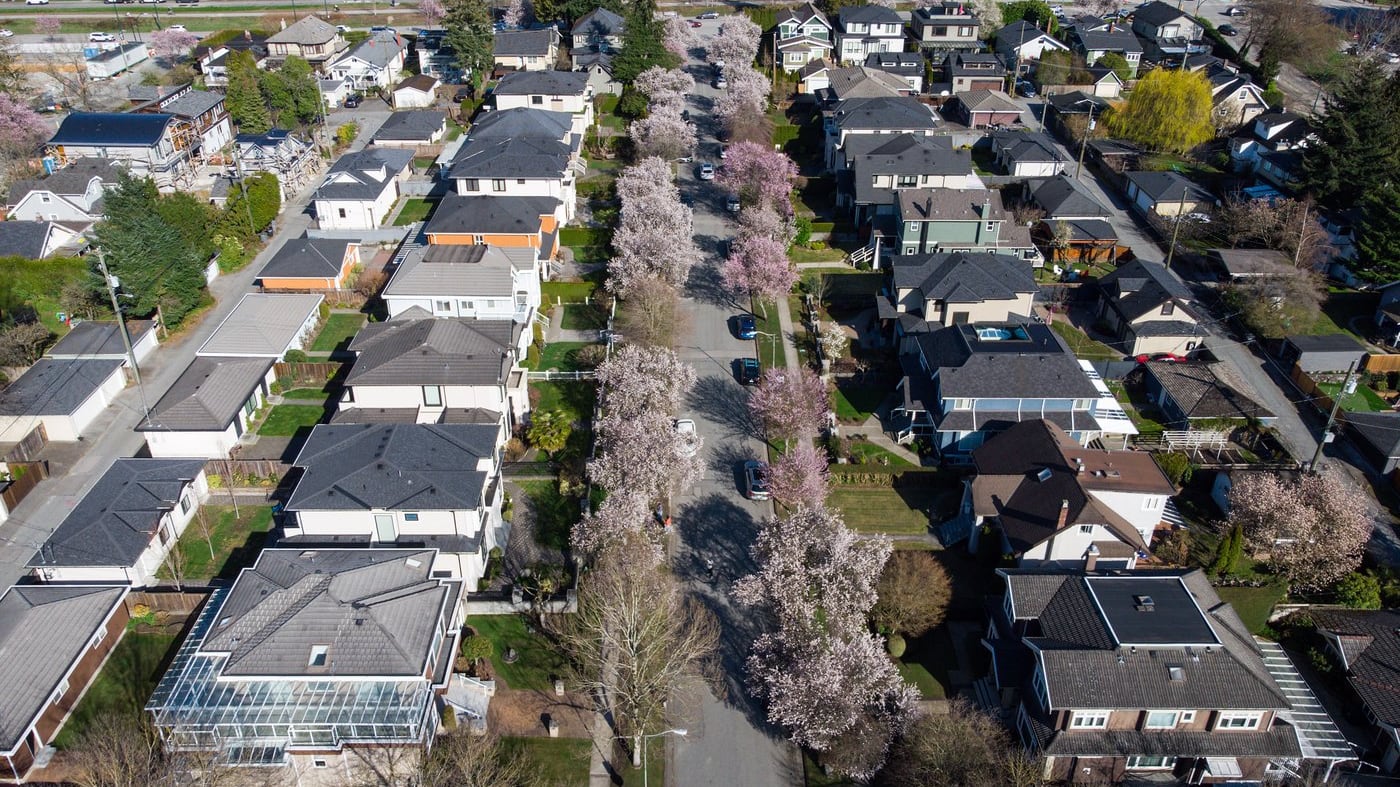
Cherry blossom trees line a residential street in Vancouver, on Tuesday, April 4, 2023. THE CANADIAN PRESS/Darryl Dyck

Recent immigrants to Canada are increasingly becoming homeowners, with new data from Statistics Canada showing that homeownership rose between 2018 to 2021, even as rates declined among Canadian-born individuals.

The findings, released Tuesday by StatCan, examined how immigrants admitted as permanent residents between 2017 to 2021 progressed toward homeownership in their first five years after arriving in Canada.

The report analyzed homeowners across seven provinces and found that newcomers are entering the housing market faster than previous cohorts, despite rising prices and affordability challenges.

In Ontario, the homeownership rate among immigrants in their fifth year after admission climbed from 35.7 per cent in 2018 to 40.2 per cent in 2021.

During the same period, the rate among Canadian-born residents aged 25 to 54 fell from 50.7 per cent to 47.8 per cent.

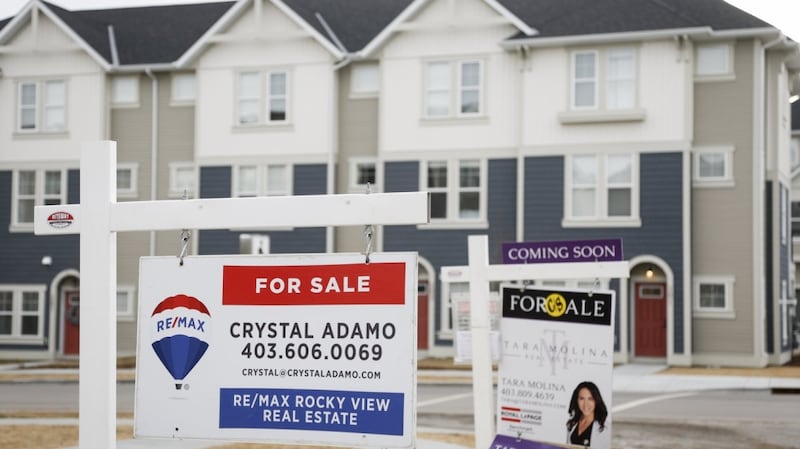
A Toronto home for sale is shown on July 15, 2023. THE CANADIAN PRESS/Graeme Roy

The study found that the time spent in Canada plays a critical role. Most immigrants begin by renting, building credit histories and increasing their earnings before purchasing homes.

By their fifth year in Canada, economic class immigrants had ownership rates approaching those of Canadian-born residents. In British Columbia, for example, economic immigrants recorded a homeownership rate of 40.1 per cent, compared with 43.3 per cent among Canadian-born residents.

Regional differences also emerged, as recent immigrants in the Maritime provinces and Manitoba had homeownerships rates comparable to those of Canadian-born residents, while newcomers in Ontario, Alberta and B.C. continued to lag behind, reflecting higher housing costs in those provinces.

The study found that more than 85 per cent of immigrants who owned homes during their first year as permanent residents had already spent time in Canada as international students, temporary foreign workers or asylum claimants, before obtaining permanent residency.

Homeownership patterns also varied by immigration class and place of birth. Economic-class immigrants posted the highest ownership rates, followed by family-sponsored immigrants, while refugees had the lowest rates.

Houses for sale in a new subdivision in Airdrie, Alta., Friday, Jan. 28, 2022. (THE CANADIAN PRESS/Jeff McIntosh)

Among regions of origin, immigrants from East Asia recorded some of the highest homeownership levels in Ontario, Alberta and B.C.

Despite achieving homeownership, recent immigrants often faced greater financial strain. First-time immigrant homebuyers generally earned lower incomes than Canadian-born buyers, but purchased more expensive properties.

In B.C., the median home purchase price for recent immigrants reached $660,000, compared with $580,000 for Canadian-born buyers.

The report suggests many newcomers rely on larger mortgages and prioritize home equity over retirement savings. Recent immigrant buyers were significantly less likely to contribute to Registered Retirement Savings Plans (RRSPs) in the year they purchased a home.

The study concluded that while homeownership remains a key role indicator of economic integration, recent immigrants may be more financially exposed to fluctuations in housing markets, due to higher debts levels and lower retirement savings.

Dorcas Marfo

Dorcas Marfo

Opens in new window

Journalist, CTVNews.ca

Watchdog says Canada's tax code is 'completely nuts' and calls for simplification, automation


NO INCOME TAX FOR THOSE EARNING $100, 000 OR LESS


Updated:


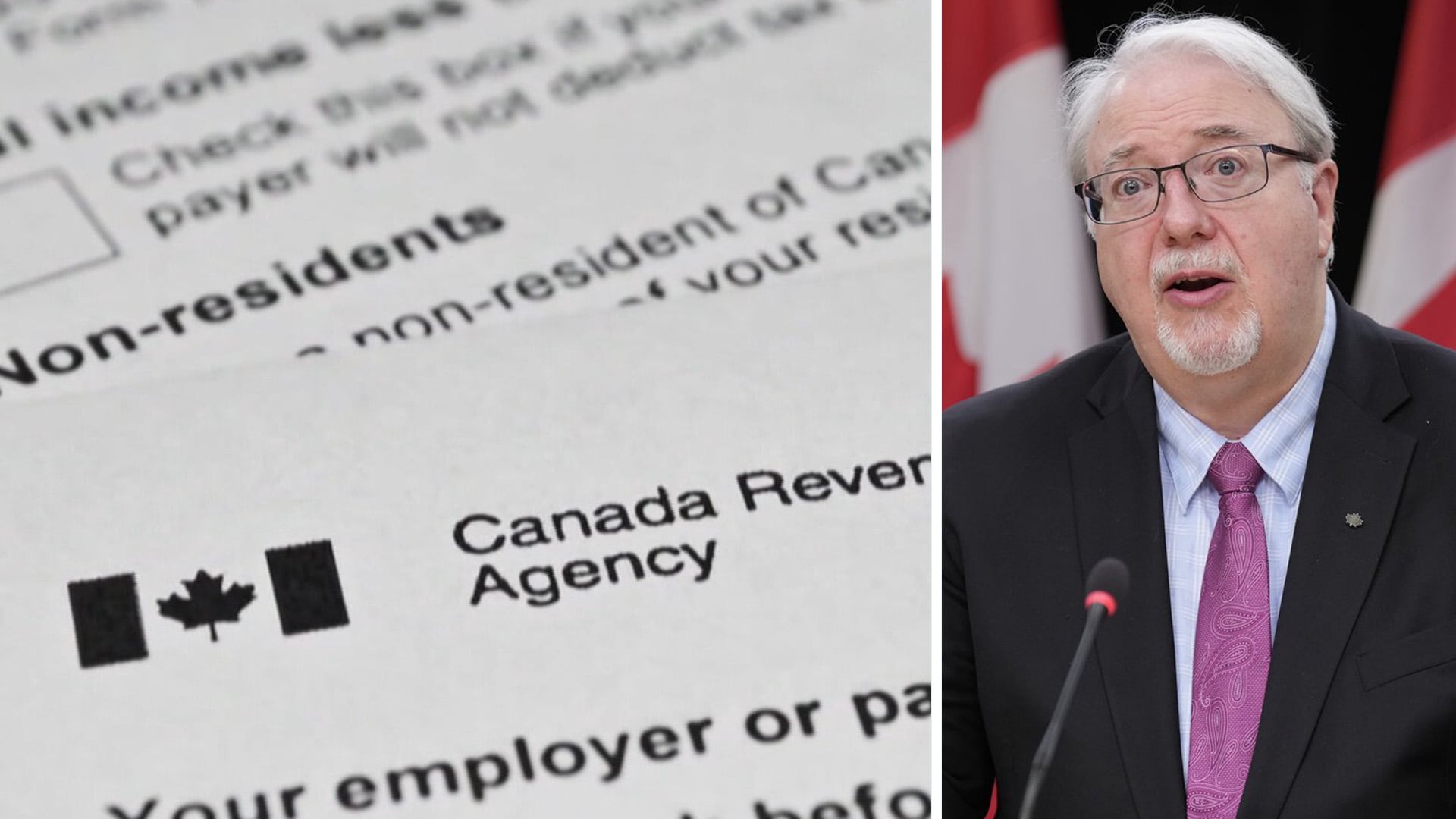
Francois Boileau, Canada’s taxpayers' ombudsperson, attends a news conference in Ottawa on Tuesday, June 16, 2026. THE CANADIAN PRESS/Adrian Wyld

OTTAWA -- Taxpayers’ Ombudsperson Francois Boileau is pushing for simplified, automated tax filing as his office faces its highest number of complaints in three years.

Boileau released a new report Tuesday showing his office saw a 27 per cent year-over-year jump in complaints in 2025-26, driven mainly by Canadians upset with Canada Revenue Agency service delays.

He told reporters the 100-day improvement plan the federal government introduced last fall lit a fire under CRA bureaucrats and helped to boost service this past tax season, but now he wants to see more regular reporting from the agency on how it’s living up to expectations.

Boileau also said the CRA could make better use of AI chatbots to answer Canadians’ questions online. He said he wants to ensure AI is used equitably and that human agents are still the ones making decisions on Canadians’ tax accounts.

“Whether I like it or not, it’s the way of the future,” Boileau said.

“If it can help contact centre agents to have a better understanding of the issue at hand and what has been said consistently with other similar situations, that might be helpful.”

Boileau’s report includes seven recommendations to improve CRA’s services, including letting Canadians request a callback without calling a centre first.

His office also calls on Ottawa to expand its automatic tax filing pilot to all individuals “in a simple tax situation,” not just those with low incomes.

The federal government started work to simplify tax filing for thousands of low-income households back in 2024. It offered a SimpleFile option for eligible households to auto-fill parts of their tax returns online or by phone.

The Liberals announced in Budget 2025 they plan to offer pre-filled tax returns to one million Canadians starting next year, and to scale that up to 5.5 million taxpayers by 2029.

Asked Tuesday about the CRA’s push to scale up automatic tax filing, Boileau said the size and complexity of the Income Tax Act could pose a barrier.

“It’s completely nuts … Maybe it’s time to streamline a little bit,” he said.

John Fragos, spokesman for National Revenue Minister Francois-Philippe Champagne, pointed to the CRA’s 100-day plan as proof the federal government is dedicated to improving service for Canadians.

He said in a statement to The Canadian Press that scaling up automatic tax filing will help Canadians get access to the benefits they’re entitled to while safeguarding confidential taxpayer information and improving tax fairness.

By Craig Lord

This report by The Canadian Press was first published June 16, 2026.