Canada hits Trump where it hurts
REUTERS/Chris Tanouye
President Donald Trump’s escalating trade war with Canada is creating headaches for Republicans ahead of November’s midterms as high prices remain a top concern among voters.
Responding to Trump’s increased tariffs, Canadian officials have said they’re deliberately targeting goods from states where there are close elections. And GOP candidates in Kansas, Maine and Ohio among others have been forced to balance supporting Trump with defending local manufacturers.
Trump has repeatedly targeted Canada, traditionally a close American ally, since returning to the White House last year. But his August move to impose 50% tariffs on billions of dollars of Canadian imports has heightened tensions, pushing Canada to retaliate with its own tariffs on hundreds of American-made products that went into effect Tuesday.
Nearly $28 billion in U.S. exports to Canada now carry up to 50% tariffs, a dollar-for-dollar match on Trump’s taxes on Canadian goods imposed last month, according to Canadian officials.
Trump has long argued that Canada is taking advantage of the United States because of a longstanding trade deficit — meaning more Canadian products are imported here than American products are exported to Canada.
“They don’t pay for anything, and they want to be treated like a state, but they’re not a state,” Trump said last month after trade talks fell apart.
The fallout could affect consumers and businesses across the country, but Canada targeted many of its tariffs to inflict political pain just ahead of the crucial U.S. midterm elections that will determine control of Congress.
The trade standoff has put Republican candidates in a tough position with an electorate already fed up with high prices and underscores ongoing concerns about how federal trade policy will affect American business and state economies.
On Labor Day, Trump threatened to halt sales of the Canadian airplane manufacturer Bombardier, saying its planes weren’t good enough and the company was treating America as a “piggybank.”
That became immediate political fodder in Kansas, home to Bombardier’s U.S. headquarters and competitive races for governor and U.S. Senate this year. The company employs more than 1,000 people in Wichita, the state’s most populous city that calls itself the “Air Capital of the World” with a local economy dominated by aerospace and aviation manufacturing.
The state’s senior Republican U.S. Sen. Jerry Moran immediately defended Bombardier, as did Ty Masterson, the Republican nominee for governor and current state Senate presidentBut the issue has put pressure on the state’s junior Sen. Roger Marshall, a close Trump ally running for reelection in a competitive race.
“We cannot allow this chaotic economic policy to continue to hurt Kansans; they deserve so much better. As your Senator, I will always stand up for Kansas workers,” the Democratic nominee in the race, Adam Hamilton, wrote on X Monday.
On Tuesday, Marshall said he would fight to keep Bombardier’s jobs in Kansas, posting on social media, “I’ve already taken that concern inside the Oval Office.” Marshall said he agreed with Trump’s aim of bringing more manufacturing jobs, particularly in Bombardier’s case because the company sells half its products in the United States.
Tariffs on Canadian and American goods are poised to especially hurt Northern and Midwestern states, according to an analysis from Oxford Economics. It identified North Dakota, Montana, Michigan, Illinois and Vermont as the states most likely to be affected because they trade the most with Canada.
Minnesota State Auditor Julie Blaha, a Democrat, said the trade feud is just the latest federal move to push up costs for businesses, consumers and local governments. Her office oversees some $56 billion in local government spending through financial integrity audits and budget analyses. She said Minnesota cities and townships have had no choice but to raise property taxes as they encounter rising prices.
“It’s just one wave after another. And it’s piling up,” she said. “All these rising costs are just coming home to roost, and they’re hitting Main Street.”
Minnesota shares a 547-mile border with Canada. Blaha said the state’s crucial agricultural industry is especially threatened as businesses constantly send products back and forth for processing. She highlighted General Mills, the maker of well known cereals, including Cheerios. The firm buys Canadian grain that is processed in Minneapolis before being distributed to domestic cereal plants and sold across the U.S. and Canada.
Grain is not on Canada’s list of targeted products for retaliatory tariffs, but the country did enact new tariffs on agricultural equipment, dairy and other food products.
“These tariffs have a bigger impact than just one just one hit on a price,” she said.
Canada’s political pressure
Canada’s retaliatory tariffs were aimed at pressuring the White House by targeting certain states and industries.
“We’re being wise and strategic to put political pressure,” Canada’s Industry Minister Mélanie Joly said last week.
Canadian data show countermeasures will hit Ohio harder than any other state, the Canadian Broadcasting Corporation reported. Ohio is home to one of the most competitive Senate races this cycle as Republican Sen. Jon Husted defends his seat from former Democratic Sen. Sherrod Brown.
Husted has largely defended Trump’s tariffs in the Senate. In an August interview with MS Now, he acknowledged the president’s decision-making was not in line with how he would negotiate, but declined to second guess Trump’s stance on Canada.
“It depends on how it ends,” the senator said. “If we get a good deal, both Canada and America can come out of this well, but it’s going to require both sides.”
Canada is Ohio’s biggest export market, sending $17.5 billion in goods across the border — roughly a third of the state’s total exports. More than half of the state’s exports to Canada come from the equipment and machinery and the transportation industries. Ohio is a leading producer of automobiles, an industry deeply affected by tariffs because of interconnected supply chains that span American, Canadian and Mexican factories.
Trump’s tariff “decision is going to make it very difficult for folks in the automobile supply chain to be able to succeed in Ohio,” Rob Moore, principal at public policy firm Scioto Analysis, told the Ohio Capital Journal.
While Canada’s countermeasures were politically targeted, they will sweep across the country, affecting solidly conservative and liberal states.
Connecticut State Treasuer Erick Russell, a Democrat, said the trade war will especially hurt New England states that trade more with Canada. He said the tariffs could raise prices of everything from electricity to consumer goods.
Though tariffs will hit businesses and consumers first, Russell said they will eventually put more strain on local and state government budgets.
And the president’s on-and-off-again history with imposing and rescinding tariffs injects more uncertainty for both business and government, he said.
“Where things are right now, there isn’t any certainty or clarity around where this is ultimately going to land,” he said. “What is consistent through all of this is that consumers in Connecticut and all across the country are going to continue to pay for this tariff war.”
Concerns across New England states
The trade standoff could further hurt New England’s tourism industry that depends on steady Canadian traffic.
In New Hampshire, Maine and Vermont, tourism is big business year-round as travelers flock to beaches in the summer, leaf peeping in the autumn and skiing in the winter. Those businesses have suffered a drop in Canadian visitors amid Trump’s ongoing aggression with the country.
Steve Wright, general manager of Jay Peak Resort in Vermont’s Green Mountains, recently assured Canadians that they were welcome to the resort that sits just a few miles from the border and a roughly two-hour drive from Montreal.
“The border may feel different right now,” Wright wrote online. “We do not. You are our neighbors. You are our friends. You are part of this place.”
Vermont Republican Gov. Phil Scott recently characterized the president’s executive order to rename Lake Ontario to Lake America as “petty and disappointing.” Scott, who is favored in polls to win reelection in November, said the trade war harms communities on both sides of the border.
“Further escalating tensions does nothing to help American or Canadian families and businesses,” he added.
In neighboring Maine, U.S. Sen. Susan Collins has criticized the tariffs and urged the administration to resolve its dispute with Canada. A Republican in a competitive race for reelection, Collins grew up just 20 miles from the Canadian border.
Troy Jackson, her Democratic opponent, has blamed Collins for not stopping Trump’s trade policies.
Last week, Collins told reporters that the White House viewed tariffs in a macro sense without appreciating how damaging they are to border states such as Maine. Collins said Trump’s tariffs were already hurting local governments that rely on Canada for imported salt to treat roads in winter and could further hurt the state’s crucial lumber and blueberry industries.
While Maine’s important lobster industry was spared retaliatory tariffs, Canada did impose 50% tariffs on wood products and agricultural products.
“Canada is not China. It is not an adversarial nation,” Collins said. “It is our closest ally, our neighbor, our friend. And our economy is so intertwined with Canada that I am very worried about what the impact will be.”
US bans Canadian alcohol, motorcycles and dairy products as trade spat escalates
The US and Canada escalated a bitter trade dispute on Tuesday, with Washington imposing new import bans on Canadian alcohol, motorcycles and dairy products as Ottawa's retaliatory tariffs on US goods took effect.
Issued on: 09/09/2026
By: FRANCE 24

The United States banned a broad swath of Canadian alcoholic beverages, motorcycles and dairy products from import on Tuesday, sharply escalating an already acrimonious trade spat.
The import bans, which go into effect on September 29 and were published on the White House's website, came after Canada's own retaliatory tariffs on US goods took effect after midnight on Tuesday.
Those Canadian levies themselves followed 50 percent tariffs that the United States imposed on some $20 billion of Canadian goods last month, after several rounds of negotiations collapsed.
The breakdown has widened a rift between the longtime allies, who have blamed each other for the failed talks, spurred Canadian Prime Minister Mark Carney to urge a further shift away from Canada's biggest trading partner, and cast doubt on the viability of the US-Mexico-Canada Agreement.
"We have everything we need to pivot and prosper," Carney said on Tuesday in a video posted on YouTube.
"That pivot will come at a cost. There's always a cost to action. But it doesn't come close to the cost of standing still," he said.
The US bans appeared to cover most alcohol products, including beer and various types of wine, whisky, bourbon, rum, vodka, vermouth, tequila, mezcal, and brandy. The dairy ban covers whey protein, invert molasses, cane molasses and non-alcoholic beer, per notices on the White House's website.
In addition to the import bans, various cheese products were added to a list of products subject to a 50 percent tariff, but not banned outright. Some paper, aluminium, wood, furniture, lighting and other products were also added to the list.
A US official said President Donald Trump's pre-existing threat to increase tariffs on Canadian autos from 25 to 50 percent on January 1 remained in effect. The official added that US Trade Representative Jamieson Greer had spoken with Dominic LeBlanc, Canada's minister responsible for bilateral US trade, over the past couple of days, and the pair were expected to speak again in the coming days to see if there was an alternative path for the two countries.
In a social media post on Tuesday night, LeBlanc criticised the latest US measures and said he was in contact with Greer regarding a path forward.
"As has been the case for the last 18 months, our first priority remains on protecting and supporting Canadian workers, farmers, families, and businesses from these unjustified actions," he wrote.
Ottawa strikes back
Ottawa's retaliatory measures, which in turn provoked Washington's move on Tuesday night, were designed to put economic and political pressure on Washington, Canadian government officials said.
Those counter-tariffs cover some $20 billion of US goods, with duties ranging from 15 to 50 percent across products from steel and furniture to clothing and electronics, and are expected to hit sectors in some competitive states such as Michigan and Ohio, ahead of US midterm elections in November.
While the tariffs affect a small amount of exports compared with total trade between the US and Canada, some analysts worry the standoff could destabilise the US-Mexico-Canada Agreement, the free-trade pact that succeeded NAFTA. Together they have underpinned commerce across North America for decades.

07:04
"What we are worried about is an escalatory spiral," said Michael Harvey, executive director of the Canadian Agri-Food Trade Alliance and a member of Carney's advisory committee on bilateral US economic relations.
"But at the same time, we totally understand that the prime minister needs to find areas of leverage."
Trump has been lobbing various attacks at Canada on Truth Social in recent days.
On Monday, he said Canadian private jet maker Bombardier would no longer be allowed to sell its planes in the United States unless it started manufacturing in the country.
He also shared a map of North America draped in the US flag, including Canada and Mexico, and an AI-generated image reviving a running jab at Carney, calling him "Governor", a reference to his repeated taunt that Canada should become the 51st US state.
On Tuesday, hours before the latest import bans, Trump directed the General Services Administration, a US government body responsible for providing services for the federal government, to coordinate with the US Trade Representative and "REMOVE Canadian-origin products from GSA’s Multiple Award Schedules unless Canada restores full and fair reciprocity for American Farmers and Companies."

05:16
Trump's tariffs implemented last month hit sectors including wine, furniture, dairy products, cement, clothing, fishing rods and hockey equipment, covering $20 billion, or 5 percent, of Canadian exports to the US.
According to Canadian and US government data, Canada has shipped almost 68 percent of total exports to the US this year, out of which roughly 80 percent moved duty-free due to exemptions under the USMCA pact. Protections under the agreement have provided the domestic economy some resilience.
Last month's tariffs, imposed under a Depression-era US law, do not allow Ottawa to exercise USMCA exemptions.
Concerns about the USMCA's future have fuelled uncertainty about investment and growth, as Canada wages a trade war against an economy 13 times its size.

01:48
Polls also show Carney has broad support from Canadians, but that could disappear within months as the consequences of the trade war sink in, according to political analysts.
A new poll from Angus Reid on Tuesday showed that approval of Carney's performance jumped 11 points to 62 percent from an August poll.
Meanwhile, just 20 percent of Americans approved of Trump's tariffs on Canadian goods, a Reuters/Ipsos poll found.
Trump threatened last month to raise US tariffs on all cars, trucks and automotive parts from Canada to 50 percent starting January 1, and signed an executive order renaming Lake Ontario as Lake America.
(FRANCE 24 with Reuters)
Trump takes aim at Canadian alcohol in latest trade war escalation
The US president has escalated his standoff with Ottawa with new tariffs and an alcohol ban, prompting Carney to warn there will be a price to pay for standing firm.
Move over "Lake America." Donald Trump has opened a fresh front in his running battle with Canada, and this time the target is the drinks cabinet.
The US president on Tuesday escalated his trade war against Ottawa, banning imports of alcohol and other goods and hiking tariffs elsewhere, with the dispute showing no sign of cooling.
Canadian Prime Minister Mark Carney stood firm, acknowledging that loosening economic ties with the United States would come at a cost but insisting the benefits would outweigh the pain.
A range of Canadian products, from mattresses to motorboats and golf carts, will face a 50% surcharge from 15 September, according to Trump's executive order issued late Tuesday.
A separate import ban targeting various alcoholic beverages as well as dairy products such as whey will take effect on 29 September, under other executive orders issued at the same time.
Canada's retaliatory tariffs came into effect earlier on Tuesday, applying to C$27.6bn (€17.1bn) in US imports, including steel and aluminium products and dairy goods such as cheese, in response to duties Washington announced on 22 August.
Canada has "everything we need to pivot and prosper," Carney said in a video address. "That pivot will come at a cost. There's always a cost to action. But it doesn't come close to the cost of standing still."
Contracts on the chopping block
Responding to the latest Canadian levies, Trump pledged to bar Canadian companies from securing US government contracts.
In a social media post earlier on Tuesday, Trump said he was directing officials to "REMOVE Canadian-origin products" from the General Services Administration (GSA)'s Multiple Award Schedules programme for long-term contracts.
Such schedules account for more than $50bn (€43bn) a year in contracts, Trump added.
On Monday, Trump threatened to try to block sales of Canada's Bombardier Aviation unless the Quebec-based planemaker moves manufacturing to the United States.
In response, the aerospace company pointed to the tens of thousands of jobs it has created across the US, with direct employment in more than 20 states, including Kansas, Texas, Arizona and California.
The two Republican senators representing Kansas said they had conveyed their concerns to the White House.
"I'm going to fight to keep Bombardier's more than 1,200 Kansas jobs. I've already taken that concern inside the Oval Office," Senator Roger Marshall posted on X, with Senator Jerry Moran posting similar comments.
US tariffs pose a modestly negative risk to Canada's overall economy, analysts say, though the impact is sharper on central Canada's manufacturing sector.
A war of memes and maps
"I don't believe in escalating the conflict. That's not constructive," Carney said in his video statement on Tuesday. "But our tariffs are necessary to protect our workers, protect our companies, and protect our communities. This is about who we are as Canadians."
Canada's minister in charge of trade with the United States, Dominic LeBlanc, said late on Tuesday that Ottawa was "assessing the latest tariff measures".
Negotiations between the two sides broke down on 21 August after days of talks in Washington.
At the time, Carney said US negotiators had introduced restrictions on Canadian trade deals with other countries at the eleventh hour, along with unacceptable "threats" to the French language and "Quebec culture".
Ottawa and Washington have not resumed talks since.
On Sunday, Trump posted an illustration of himself towering over Carney as they played ice hockey, captioned "Get up, governor" — a nod to his ambition to turn Canada into another US state.
In August, he also signed an order renaming Lake Ontario, on the border with Canada, as "Lake America," sparking fury north of the border amid a broader wave of patriotism triggered by the US president's hostility.
Although Carney is backed by Canadian public opinion, his country remains reliant on its neighbour with nearly 60% of Canada's imports coming from the United States, and about 70% of its exports going to the US market.
Canada's government has unveiled an aid package worth C$7.5bn (€4.65bn) to help businesses and workers weather the fallout.
Trump slams door on Canadian goods in
escalating trade war: 'No reciprocity!'
Erik De La Garza
September 8, 2026
RAW STORY

U.S. President Donald Trump participates in a Steel Across America event featuring a 21-foot steel beam recovered from the World Trade Centre South Tower, on the Ellipse near the White House in Washington, D.C., U.S., September 8, 2026. REUTERS/Evan Vucci
President Donald Trump ratcheted up his trade fight with Canada on Tuesday, threatening to cut Canadian products out of a massive U.S. government purchasing program.
The new threat came on Truth Social, where Trump accused Canada of running a “trade scam” by shutting American farmers and businesses out of its markets while enjoying broad access to government contracting in the United States.
“Everyone knows that Canada doesn’t let our Great Dairy Farmers sell into the Canadian Market,” Trump wrote Tuesday on his social media platform. He also claimed that Canada only produces automobiles “because of previous disastrous Trade Agreements while other Presidents were in Office.”
“Canada has been ripping us off for years, but what many do not realize is that the Canadian Government, including Canadian Provinces, have banned American Small Businesses and Companies from selling into their Government Procurement Markets,” he added.
“That is not reciprocity; it is a Canadian Trade Scam,” Trump declared. “From now on, NO RECIPROCITY – NO ACCESS!”

Trump said he was directing the General Services Administration and the Office of the U.S. Trade Representative to remove Canadian products from federal purchasing schedules unless Canada gives American farmers and companies “full and fair reciprocity.”
Trump said those schedules account for more than $50 billion annually before taking a familiar swipe at President Joe Biden.
“This should have been cut off years ago, by other Administrations, like it was by mine, only to (sic) reinstituted by Sleepy Joe Biden,” he wrote.
The threat came as Canadian retaliatory tariffs took effect Tuesday.
Canada relishing chance to deny Trump
electricity: 'Nothing would make me
happier'
Bennito L. Kelty
September 7, 2026
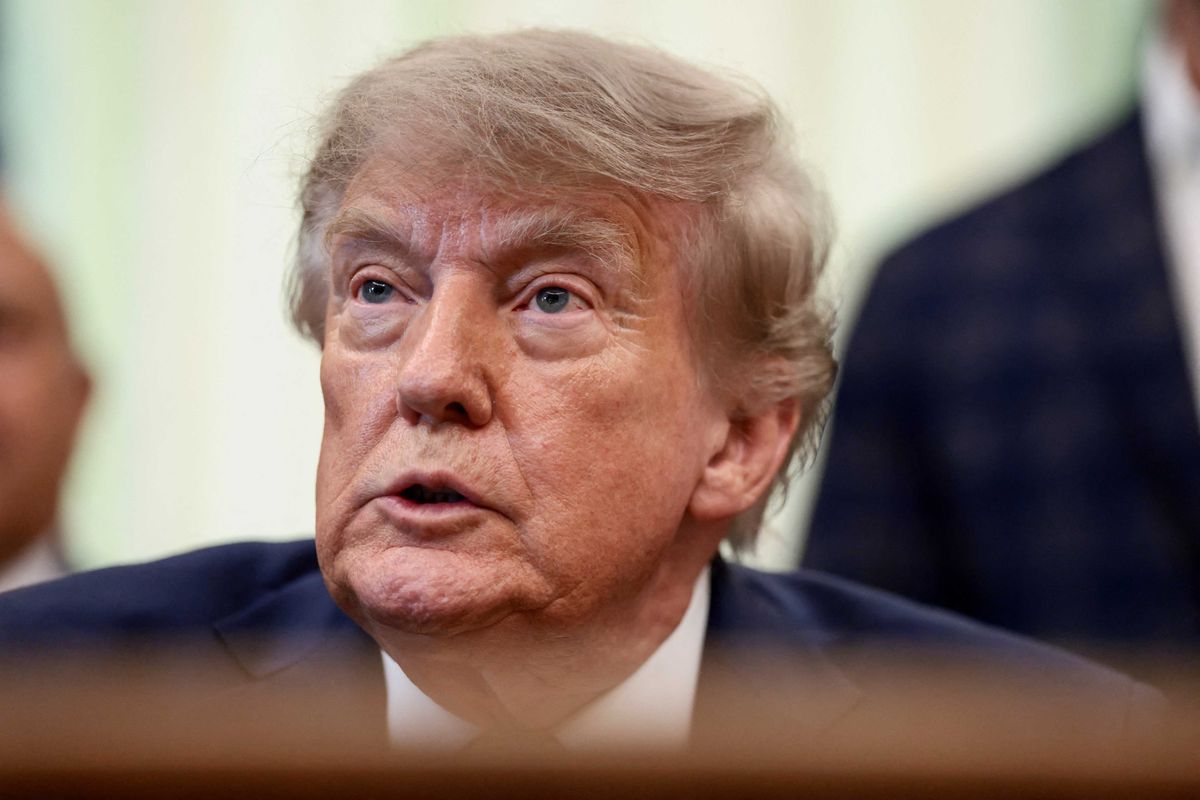
U.S. President Donald Trump speaks during an event to sign executive orders related to beef, in the Oval Office of the White House, in Washington, D.C., U.S., September 4, 2026. REUTERS/Evelyn Hockstein
Canada's energy minister is relishing the prospect of telling the United States "no" if it comes begging for more electricity.
According to an article by Politico, Canadian Energy and Natural Resources Minister Tim Hodgson said that his government is racing to build mines and electricity projects in response to President Donald Trump's economic aggression. Hodgson said that Canada doesn't plan to share the resources from those projects.
"Nothing would make me happier than when the United States asks us for more electricity to say, 'You know what, we've got a lot of mines we need to develop in northern British Columbia,'" Hodgson said. "Nothing would make me happier than just saying, 'You know what, we're going to use all our electricity here. We're going to build new mines, new processing facilities.'"
The defiance comes as Washington leans on Canadian resources despite Trump's insistence otherwise, Politico reported. Canada supplied more than 80 percent of U.S. electricity imports in 2025, according to the Canada Energy Regulator.
Canada just broke ground on the North Coast Transmission Line in Prince George, British Columbia. The line is an expanded grid that would double electricity capacity in British Columbia to power mines near the Alaskan border and liquefied natural gas shipments to Asia, according to Politico.
U.S. Ambassador to Canada Pete Hoekstra told Politico last year that Trump was "very interested" in Canada's energy and critical minerals, despite Trump's current conflict and tariff war with the country. According to Politico, Washington sees Canada's stockpiles as a defense against Chinese dominance of the global market in critical minerals, which are essential to defense, quantum computing, artificial intelligence, and almost every piece of technology.
"The president continues to denigrate and insult the massive contribution that British Columbians and Canadians make to American energy security," British Columbia Premier David Eby said, per Politico.
Now, Hodgson is looking for payback, telling Politico, "I don't get mad. I get even."
'Everyone is upset!' Red state candidate
calls Trump's jet threat a 'no-win' move
Erik De La Garza
September 8, 2026
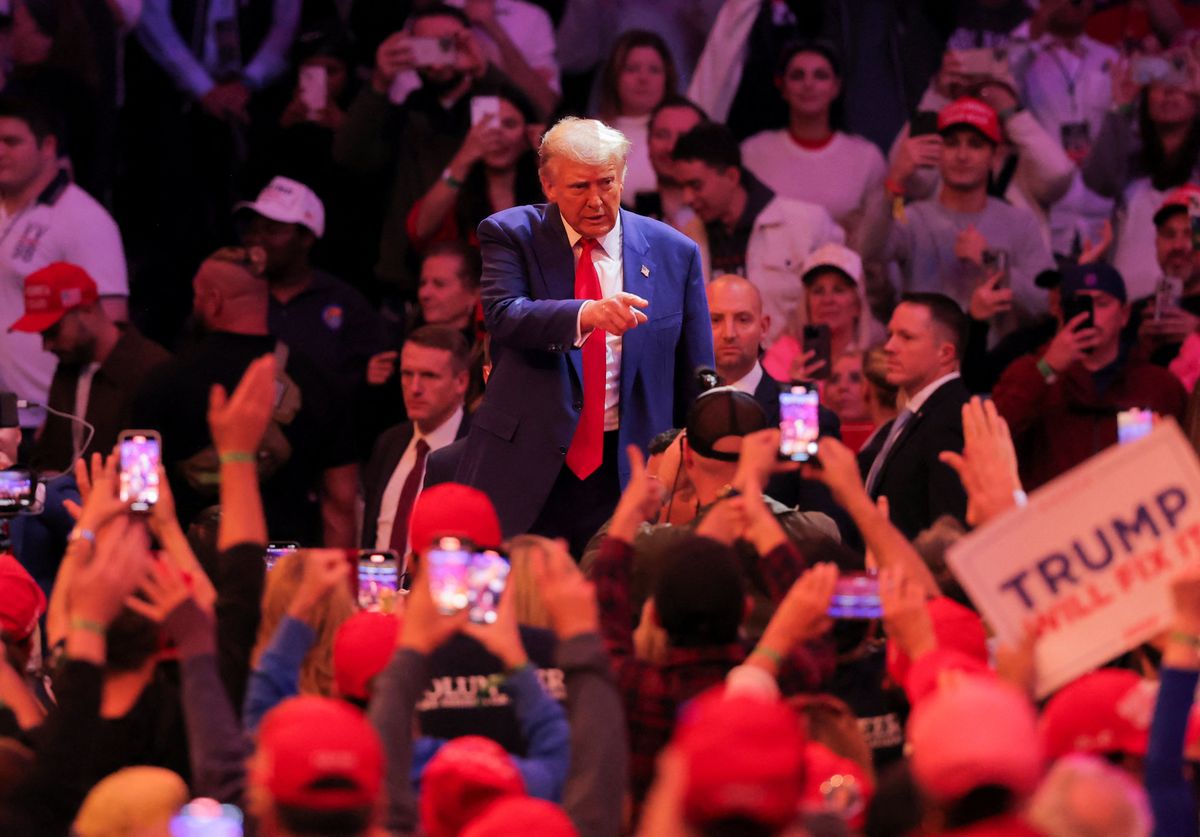
Rally for Republican presidential nominee and former U.S. President Donald Trump, in New York Source: REUTERS
President Donald Trump’s threat to ban a Canadian aircraft manufacturer from the American market would be “a disaster” for workers in deep-red Kansas, the state’s Democratic Senate nominee warned Tuesday.
“Everyone is upset about this!” Adam Hamilton told CNN’s Jake Tapper.
Trump threatened Canadian jetmaker Bombardier in a Truth Social post over the holiday weekend, saying the company must manufacture its aircraft in the United States to keep access to American buyers.
Bombardier maintains its U.S. headquarters in Wichita and employs more than 1,000 people in Kansas. Hamilton warned that many additional jobs depend upon those workers.
“A thousand, 1,200, 1,500 Kansas working for Bombardier, their headquarters in the United States in Wichita, and then every one of those has a whole series of other jobs that are dependent upon them,” Hamilton said. “It’s a disaster.”
Hamilton, a former pastor who is challenging Sen. Roger Marshall (R-KS), also criticized his opponent’s response to Trump’s threat. He argued that Marshall should have challenged the president, but instead offered only a “tepid response.”
“He should have been fighting for the people of Kansas, not fighting for the president and his erratic way of imposing tariffs and threatening our best trading partners,” Hamilton said Tuesday.
Hamilton also warned that the state’s trade relationship with Canada could be jeopardized.
“Four billion dollars’ worth of trade comes from Kansas into Canada every year, and this is at risk,” Hamilton said.
“It’s a no-win for Kansas,” he concluded.

.jpg)