Robert Davis
November 16, 2025
RAW STORY
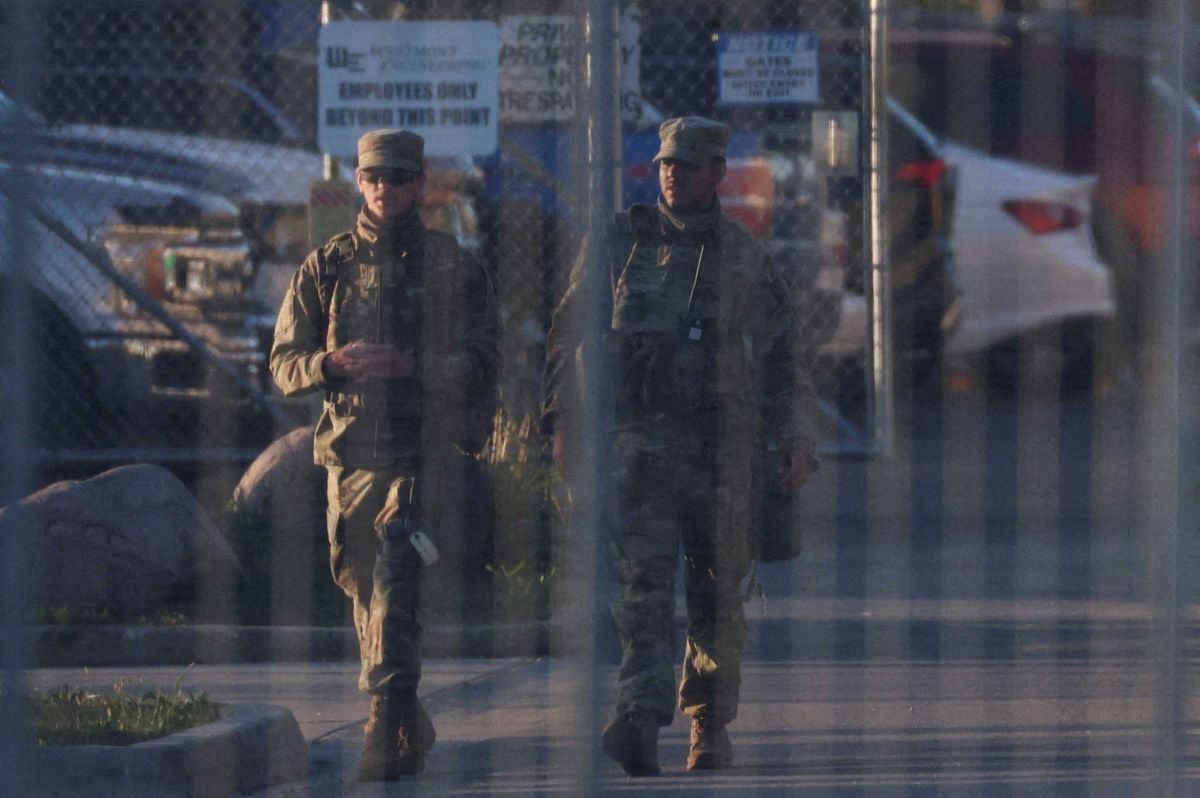
FILE PHOTO: National Guard members walk at the U.S. Immigration and Customs Enforcement (ICE) Broadview facility in Chicago, Illinois, U.S., October 9, 2025. REUTERS/Jeenah Moon/File Photo
President Donald Trump's administration conducted an immigration crackdown on Sunday in Charlotte, North Carolina, that some protesters described as "causing unnecessary fear and uncertainty."
The Trump administration announced on Saturday that it was "surging" immigration agents into Charlotte as part of an operation it dubbed "Charlotte's Web." Homeland Security official Tricia McLaughlin said that the operation was being conducted because local law enforcement was not honoring DHS' detention requests for more than 1,400 people.
The actions generated outrage and protests on Sunday, according to reports.
FILE PHOTO: National Guard members walk at the U.S. Immigration and Customs Enforcement (ICE) Broadview facility in Chicago, Illinois, U.S., October 9, 2025. REUTERS/Jeenah Moon/File Photo
President Donald Trump's administration conducted an immigration crackdown on Sunday in Charlotte, North Carolina, that some protesters described as "causing unnecessary fear and uncertainty."
The Trump administration announced on Saturday that it was "surging" immigration agents into Charlotte as part of an operation it dubbed "Charlotte's Web." Homeland Security official Tricia McLaughlin said that the operation was being conducted because local law enforcement was not honoring DHS' detention requests for more than 1,400 people.
The actions generated outrage and protests on Sunday, according to reports.
An advocacy group called Siembra NC decried the government’s actions as “a day of shame," according to a report by The Charlotte Observer. They added that more immigrants were arrested on Saturday than on any other day in the city's history.
People who witnessed immigration agents arresting community members also spoke out. For instance, two men were arrested outside of Dany’s Supermarket off The Plaza after they tried using an ATM there, The Observer reported.
“They were behaving," Grover Stinson, who witnessed the event, told the outlet. They weren’t doing anything,”
Read the entire report by clicking here.
Dozens reportedly arrested in Charlotte, North Carolina, amid immigration crackdown
Issued on: 17/11/2025 - FRANCE24
US President Donald Trump has ramped up immigration arrrests in Democratic-led cities in recent months in Chicago, Los Angeles and Washington. This weekend federal agents made arrests in the Decmocratic-run city of Charlotte in North Carolina. Nicholas Rushworth tells us the latest.
Video by: Nicholas RUSHWORTH
Issued on: 17/11/2025 - FRANCE24
US President Donald Trump has ramped up immigration arrrests in Democratic-led cities in recent months in Chicago, Los Angeles and Washington. This weekend federal agents made arrests in the Decmocratic-run city of Charlotte in North Carolina. Nicholas Rushworth tells us the latest.
Video by: Nicholas RUSHWORTH
At least seven faith leaders arrested at Broadview ICE facility protest
(RNS) — 'I've got bruises all over my body,' the Rev. Michael Woolf, who was thrown to the ground and arrested by police, told RNS.
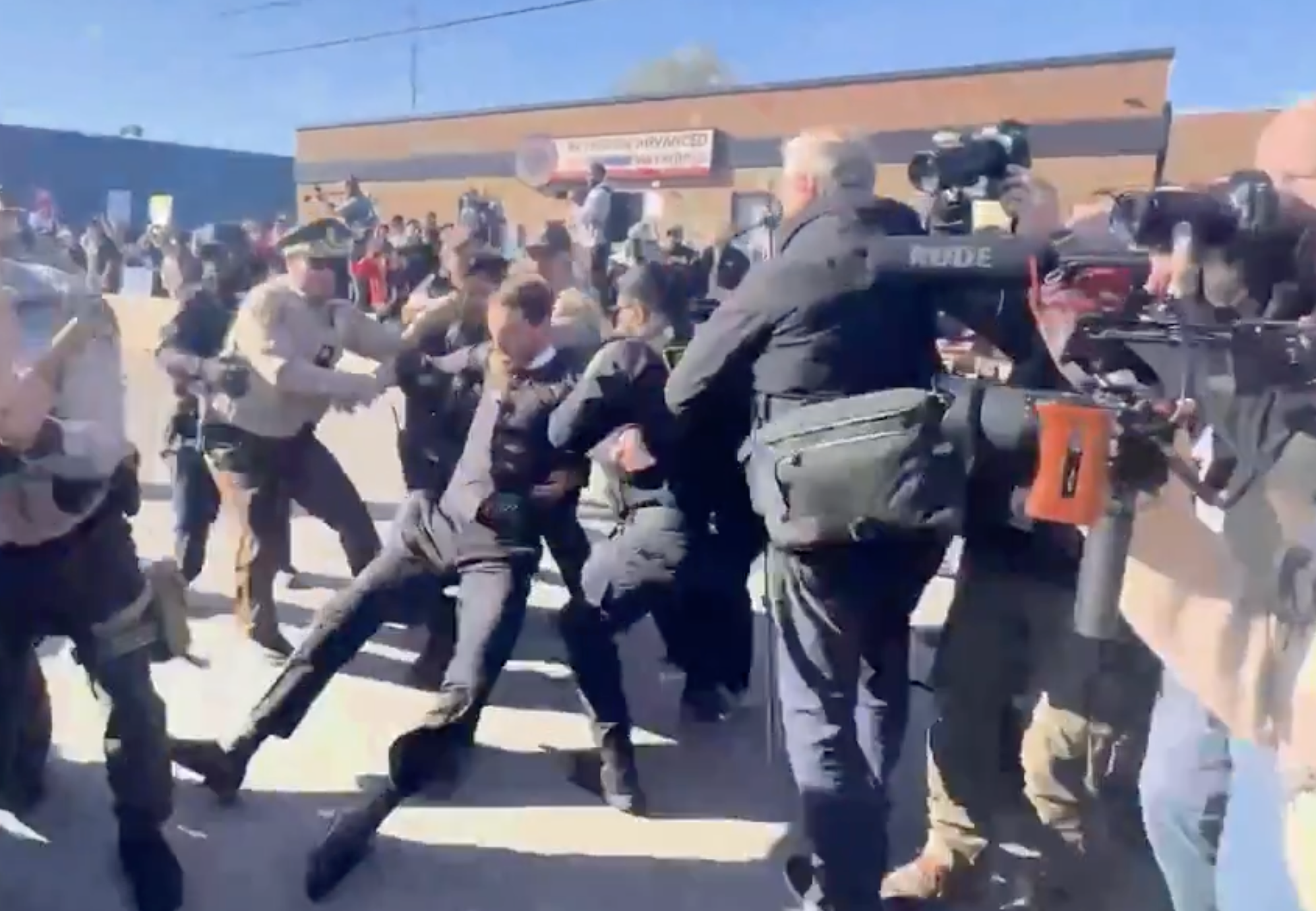
The Rev. Michael Woolf, center, is pulled from a group of demonstrators by police officers outside the U.S. Immigration and Customs Enforcement detention facility in Broadview, Illinois, Nov. 14, 2025.(Video screen grab)
Jack Jenkins
November 15, 2025
RNS
(RNS) — In video recorded on Friday (Nov. 14) outside the embattled U.S. Immigration and Customs Enforcement facility in Broadview, Illinois, the Rev. Michael Woolf stands alongside fellow protesters, fiddling awkwardly with his backpack as faith leaders and other protesters chant slogans at a line of police officers. A moment later, one officer can be seen walking forward, grabbing Woolf by the wrist and yanking.
Demonstrators attempted to hold on to Woolf, who was wearing a clerical collar, but four officers wrenched him from the crowd and tossed him to the ground. After turning him onto his stomach, officers proceeded to arrest Woolf, and removed him to the Cook County Sheriff’s Office in Maywood, Illinois.
“I’ve got bruises all over my body,” Woolf, an American Baptist minister who is pastor of Lake Street Church of Evanston, Illinois, told Religion News Service. He was speaking in his first interview since being released Friday afternoon after about seven hours in custody.
Woolf said when he asked the arresting officers to loosen the plastic handcuffs that were causing his hands to go numb, an officer replied: “Nobody wants to talk to you — shut the f–k up.”
“It’s part of the dehumanizing nature of it, and it gives me a lot of clarity around what’s happening here,” said Woolf, who has been active in protests against ICE. “It’s really a spiritual emergency.”
Footage and images of Woolf’s arrest were shared widely on the internet on Friday, drawing attention to the demonstration at the ICE facility, where protests have become commonplace in recent weeks. Organizers said at least 100 faith leaders of various faiths and denominations came to the Broadview facility, providing a climax to religious pushback to “Operation Midway Blitz,” a mass deportation effort that has rounded up hundreds of undocumented immigrants and other Chicago residents since it was launched in September. Recent reports say that many immigration agents who have been operating in the city, particularly U.S. Border Patrol officers, are being transferred to Charlotte, North Carolina.
Cook County Police said 21 people were arrested at the demonstration, all but one of whom were charged with “Obstruction/Disorderly Conduct/Pedestrian Walking on Highways.” Participants said at least seven of those arrested were faith leaders from Presbyterian, Lutheran, Baptist, Unitarian Universalist, and Jewish traditions.
The Department of Homeland Security’s X feed seemed to mock the protest participants in an X post on Friday, saying, “Womp womp, cry all you want. These criminal illegal aliens aren’t getting released.”
The post called the demonstrators “violent rioters” and “imbecilic morons” who need to “get a job.”
Asked about the DHS statement, Woolf said he and other protesters were “demanding constitutional and due process rights” for detainees, adding, “I believe that justice will come in this life or the next.”
“I know which side I choose. I choose the gospel,” he added.
“This is our job,” said the Rev. Kristina Sinks, a United Methodist pastor who helped organize a worship service, in reply to the DHS post. Sinks also rejected the suggestion that demonstrators were violent. She later explained via text message that she believes it is the job of clergy to “advocate for the oppressed, the vulnerable, and those dehumanized by any forces of evil and oppression.”
Sinks added: “Why does DHS feel threatened by clergy praying? What are they hiding?”
In a statement sent to RNS Saturday evening, DHS Assistant Secretary Tricia McLaughlin dismissed inquiries about remarks from Woolf and Sinks as a “ridiculous line of questioning.” She then insisted that “you can clearly see rioters attacking police” in “the video.” McLaughlin did not specify which video she was referring to.
“We will always condemn lawlessness and violence against our law enforcement,” McLaughlin said. “We urge faith leaders across the country to do the same.”
Organizers called the protest one of the largest in a series of demonstrations at the Broadview site, many of which have been led by religious leaders who allege federal authorities are mistreating the detainees at the facility. The treatment of the detainees is the subject of an ongoing class-action lawsuit.
Sinks said faith leaders began Friday with a multi-faith service outside the Broadview facility to “bear witness to the suffering inside the facility.” The participants held daily hygiene products, bread, and clean water to “symbolize needs not met” by the government agents who run the facility.
Faith leaders from various traditions — Christian, Jewish, Hindu and others — then presented police with a letter from clergy offering spiritual care to the detainees. Organizers, Sinks said, sent DHS an identical letter a week before.
Offers of pastoral care and Communion for detainees at the facility have been offered multiple times, only to be rebuffed, as they were on Friday. Religious leaders have raised the issue as a religious freedom concern, with U.S. Catholic bishops, backed by comments by Pope Leo XIV, condemning authorities for depriving detainees of sacraments — something some religious leaders have been allowed to do in the past.
After clergy were denied access again on Friday, MS Now footage from the protest showed Woolf and other faith leaders attempting to approach the facility, marching arm-in-arm. The demonstrators were quickly mobbed by police, who began pushing them back. A short time later, police began arresting demonstrators.
Several faith leaders at the demonstration expressed shock at the intensity of the police response. The Rev. Quincy Worthington, a Presbyterian Church (USA) minister who has been active in protests against ICE and was in the crowd on Friday, said he tried to help up people who had fallen or pushed down who were “being crushed or beaten.”
Similarly, the Rev. Hannah Kardon, a United Methodist minister who was thrown to the ground and arrested at a previous demonstration in Broadview, said in a text message that she saw “overwhelming and unnecessary violence” from “multiple police forces” at the facility.
“I saw knees on necks,” she wrote. “I saw people pulled and dragged. I saw people slammed to the ground. Faith leaders were brutalized today for wanting to offer spiritual care to their stolen neighbors. It was horrific.”
Clergy have been vocal critics of “Operation Midway Blitz” since it began, and have been repeatedly met with force by federal, state and local police forces. At least five local clergy, including Woolf, Kardon and Worthington, say they have been shot with pepper balls fired by Department of Homeland Security forces. Footage of agents shooting the Rev. David Black, a Presbyterian minister from Chicago, in the head with pepper balls was widely shared on social media.
As state and local police have become the main force guarding the facility in recent weeks, activists have accused Illinois Gov. JB Pritzker, a critic of Trump and his mass deportation policies, of protecting ICE agents.
The treatment of faith-based protesters is part of the class-action lawsuit as well as a separate case that includes Black as a plaintiff. The latter case resulted in a temporary restraining order limiting federal agents’ ability to use violence against protesters, including “religious practitioners.”
Woolf said that after he was arrested, he and other participants continued to pray and worship during the hours they were detained together. They sang songs such as “We Shall Overcome,” and some even recited poetry.
The pastor added he has been reflecting on “the dehumanizing nature” of his experience, but that “the cruelty that goes on at that facility … must be 100 times worse.”
This post has been updated to include a statement from DHS.
(RNS) — 'I've got bruises all over my body,' the Rev. Michael Woolf, who was thrown to the ground and arrested by police, told RNS.
The Rev. Michael Woolf, center, is pulled from a group of demonstrators by police officers outside the U.S. Immigration and Customs Enforcement detention facility in Broadview, Illinois, Nov. 14, 2025.(Video screen grab)
Jack Jenkins
November 15, 2025
RNS
(RNS) — In video recorded on Friday (Nov. 14) outside the embattled U.S. Immigration and Customs Enforcement facility in Broadview, Illinois, the Rev. Michael Woolf stands alongside fellow protesters, fiddling awkwardly with his backpack as faith leaders and other protesters chant slogans at a line of police officers. A moment later, one officer can be seen walking forward, grabbing Woolf by the wrist and yanking.
Demonstrators attempted to hold on to Woolf, who was wearing a clerical collar, but four officers wrenched him from the crowd and tossed him to the ground. After turning him onto his stomach, officers proceeded to arrest Woolf, and removed him to the Cook County Sheriff’s Office in Maywood, Illinois.
“I’ve got bruises all over my body,” Woolf, an American Baptist minister who is pastor of Lake Street Church of Evanston, Illinois, told Religion News Service. He was speaking in his first interview since being released Friday afternoon after about seven hours in custody.
Woolf said when he asked the arresting officers to loosen the plastic handcuffs that were causing his hands to go numb, an officer replied: “Nobody wants to talk to you — shut the f–k up.”
“It’s part of the dehumanizing nature of it, and it gives me a lot of clarity around what’s happening here,” said Woolf, who has been active in protests against ICE. “It’s really a spiritual emergency.”
Footage and images of Woolf’s arrest were shared widely on the internet on Friday, drawing attention to the demonstration at the ICE facility, where protests have become commonplace in recent weeks. Organizers said at least 100 faith leaders of various faiths and denominations came to the Broadview facility, providing a climax to religious pushback to “Operation Midway Blitz,” a mass deportation effort that has rounded up hundreds of undocumented immigrants and other Chicago residents since it was launched in September. Recent reports say that many immigration agents who have been operating in the city, particularly U.S. Border Patrol officers, are being transferred to Charlotte, North Carolina.
Cook County Police said 21 people were arrested at the demonstration, all but one of whom were charged with “Obstruction/Disorderly Conduct/Pedestrian Walking on Highways.” Participants said at least seven of those arrested were faith leaders from Presbyterian, Lutheran, Baptist, Unitarian Universalist, and Jewish traditions.
The Department of Homeland Security’s X feed seemed to mock the protest participants in an X post on Friday, saying, “Womp womp, cry all you want. These criminal illegal aliens aren’t getting released.”
The post called the demonstrators “violent rioters” and “imbecilic morons” who need to “get a job.”
Asked about the DHS statement, Woolf said he and other protesters were “demanding constitutional and due process rights” for detainees, adding, “I believe that justice will come in this life or the next.”
“I know which side I choose. I choose the gospel,” he added.
“This is our job,” said the Rev. Kristina Sinks, a United Methodist pastor who helped organize a worship service, in reply to the DHS post. Sinks also rejected the suggestion that demonstrators were violent. She later explained via text message that she believes it is the job of clergy to “advocate for the oppressed, the vulnerable, and those dehumanized by any forces of evil and oppression.”
Sinks added: “Why does DHS feel threatened by clergy praying? What are they hiding?”
In a statement sent to RNS Saturday evening, DHS Assistant Secretary Tricia McLaughlin dismissed inquiries about remarks from Woolf and Sinks as a “ridiculous line of questioning.” She then insisted that “you can clearly see rioters attacking police” in “the video.” McLaughlin did not specify which video she was referring to.
“We will always condemn lawlessness and violence against our law enforcement,” McLaughlin said. “We urge faith leaders across the country to do the same.”
Organizers called the protest one of the largest in a series of demonstrations at the Broadview site, many of which have been led by religious leaders who allege federal authorities are mistreating the detainees at the facility. The treatment of the detainees is the subject of an ongoing class-action lawsuit.
Sinks said faith leaders began Friday with a multi-faith service outside the Broadview facility to “bear witness to the suffering inside the facility.” The participants held daily hygiene products, bread, and clean water to “symbolize needs not met” by the government agents who run the facility.
Faith leaders from various traditions — Christian, Jewish, Hindu and others — then presented police with a letter from clergy offering spiritual care to the detainees. Organizers, Sinks said, sent DHS an identical letter a week before.
Offers of pastoral care and Communion for detainees at the facility have been offered multiple times, only to be rebuffed, as they were on Friday. Religious leaders have raised the issue as a religious freedom concern, with U.S. Catholic bishops, backed by comments by Pope Leo XIV, condemning authorities for depriving detainees of sacraments — something some religious leaders have been allowed to do in the past.
After clergy were denied access again on Friday, MS Now footage from the protest showed Woolf and other faith leaders attempting to approach the facility, marching arm-in-arm. The demonstrators were quickly mobbed by police, who began pushing them back. A short time later, police began arresting demonstrators.
Several faith leaders at the demonstration expressed shock at the intensity of the police response. The Rev. Quincy Worthington, a Presbyterian Church (USA) minister who has been active in protests against ICE and was in the crowd on Friday, said he tried to help up people who had fallen or pushed down who were “being crushed or beaten.”
Similarly, the Rev. Hannah Kardon, a United Methodist minister who was thrown to the ground and arrested at a previous demonstration in Broadview, said in a text message that she saw “overwhelming and unnecessary violence” from “multiple police forces” at the facility.
“I saw knees on necks,” she wrote. “I saw people pulled and dragged. I saw people slammed to the ground. Faith leaders were brutalized today for wanting to offer spiritual care to their stolen neighbors. It was horrific.”
Clergy have been vocal critics of “Operation Midway Blitz” since it began, and have been repeatedly met with force by federal, state and local police forces. At least five local clergy, including Woolf, Kardon and Worthington, say they have been shot with pepper balls fired by Department of Homeland Security forces. Footage of agents shooting the Rev. David Black, a Presbyterian minister from Chicago, in the head with pepper balls was widely shared on social media.
As state and local police have become the main force guarding the facility in recent weeks, activists have accused Illinois Gov. JB Pritzker, a critic of Trump and his mass deportation policies, of protecting ICE agents.
The treatment of faith-based protesters is part of the class-action lawsuit as well as a separate case that includes Black as a plaintiff. The latter case resulted in a temporary restraining order limiting federal agents’ ability to use violence against protesters, including “religious practitioners.”
Woolf said that after he was arrested, he and other participants continued to pray and worship during the hours they were detained together. They sang songs such as “We Shall Overcome,” and some even recited poetry.
The pastor added he has been reflecting on “the dehumanizing nature” of his experience, but that “the cruelty that goes on at that facility … must be 100 times worse.”
This post has been updated to include a statement from DHS.
Methodist pastors march into courtroom to support 'boring suburban dad' indicted for protesting
CHICAGO (RNS) — ‘If you come for one United Methodist, you have come for all of us,’ said a Chicago area UMC pastor.
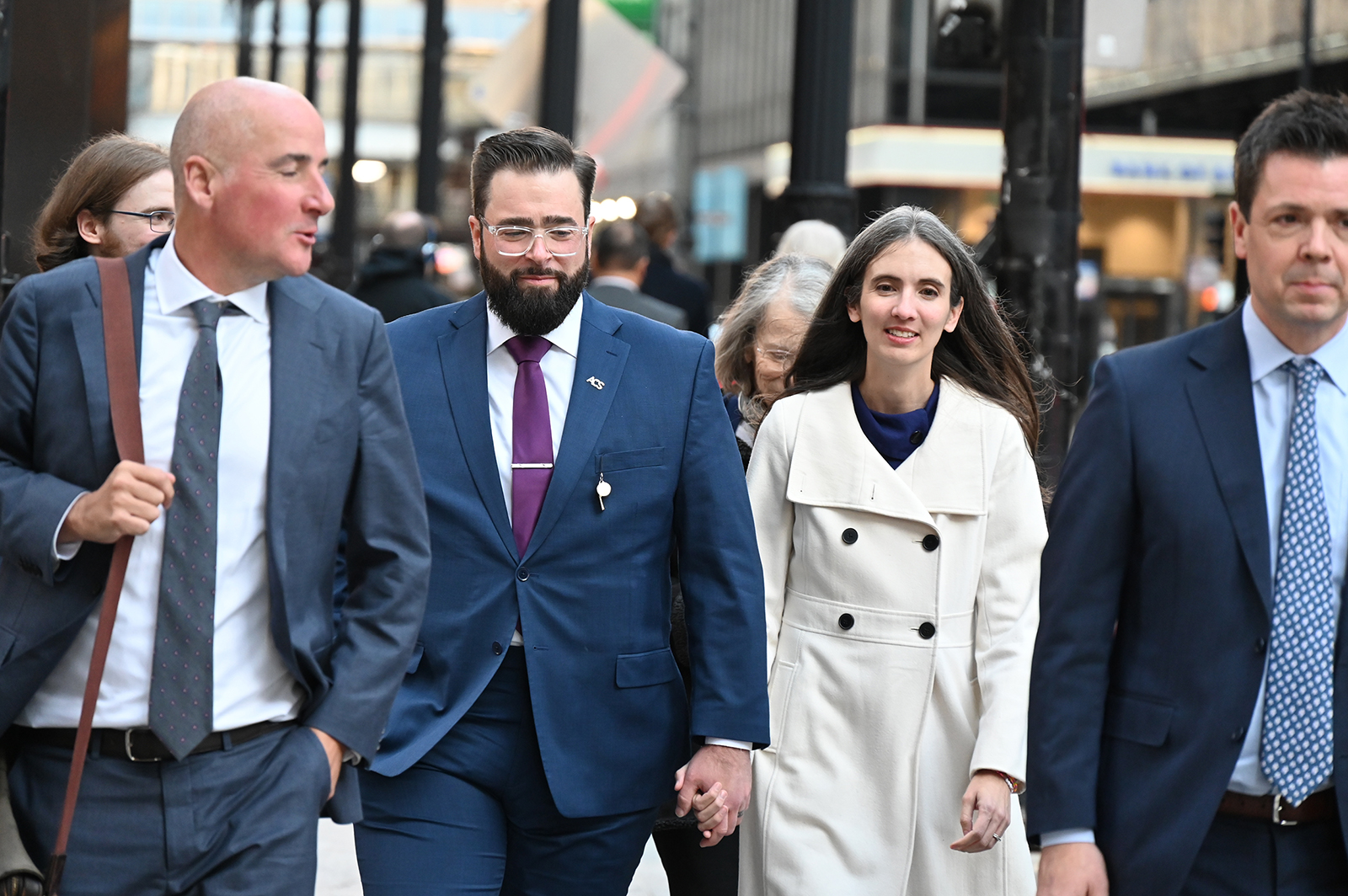
Brian Straw holds hands with his wife, Shannon Craig Straw, while leaving the Everett McKinley Dirksen federal courthouse after his arraignment, Nov. 12, 2025, in Chicago.
Jack Jenkins
November 13, 2025
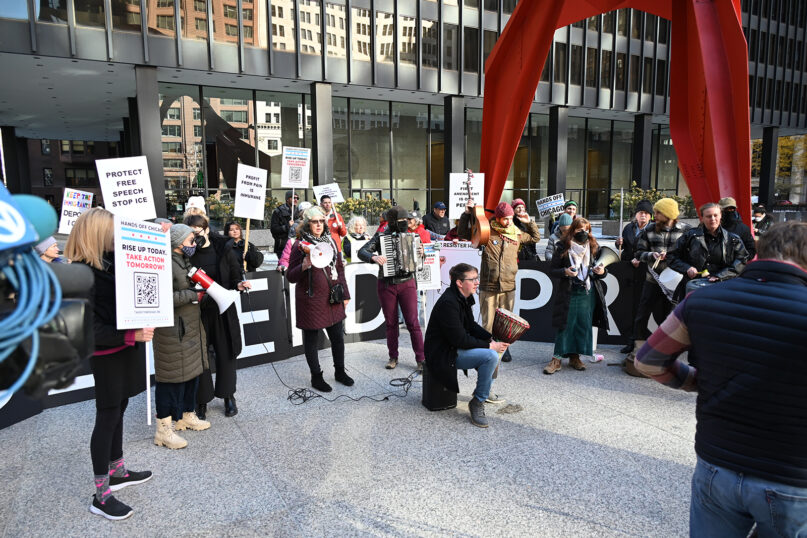
People demonstrate against U.S. Immigration and Customs Enforcement actions and policy outside the Everett McKinley Dirksen federal courthouse, Nov. 12, 2025, in Chicago. (RNS photo/Jack Jenkins)
At one point during the proceeding, Straw’s lawyer challenged a request that his client turn over his passport, insisting that Straw, a “boring suburban dad” by Straw’s own description, wasn’t “going anywhere.” He noted that part of the reason he participated in protests outside the Broadview facility was because he opposed the government demanding “papers” from immigrants.
Straw’s lawyer said that while immigrants detained by ICE can’t “stand up to the government,” Straw can.
After the judge explained she would not require defendants to turn over their passports, the overflow room burst into applause.
The Rev. Betty Jo Birkhahn-Rommelfanger, a retired UMC pastor who felt strongly that the case should be dropped, said she had come in part to register her own objection to the alleged mistreatment of immigrants in the Broadview facility. “These are God’s people that are in that detention center, and they won’t even let religious leaders come in and pray with them, or offer Communion, or in any way give pastoral care,” Birkhahn-Rommelfanger said. “It is just wrong.”
A separate class action lawsuit on behalf of Broadview detainees has been filed, arguing that they are being denied access to religious rites such as Communion.
The clergy who came to support Straw included leaders from other faith traditions, but Joyce said a group of UMC pastors is dedicated to showing support for other Chicago-area Methodists who are facing legal battles amid the administration’s ongoing mass deportation effort.
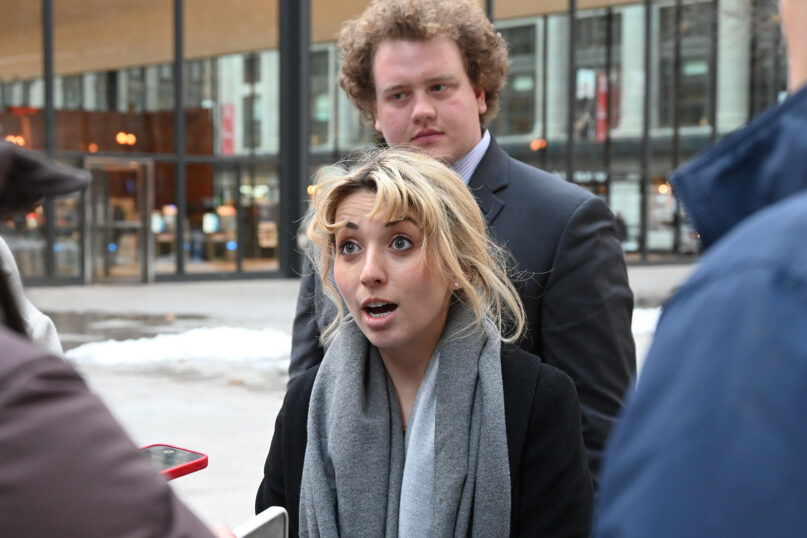
Kat Abughazaleh, a Democratic candidate for Congress, speaks to media outside the Everett McKinley Dirksen federal courthouse after her arraignment, Nov. 12, 2025, in Chicago. (RNS photo/Jack Jenkins)
Joyce said she and others would show up for immigrant families, as well as for the Rev. Hannah Kardon, a fellow UMC pastor who also showed up to support Straw. Kardon faces an impending court date on state-level charges stemming from her arrest while protesting at the Broadview facility last month.
“Any United Methodist, any of my people who are deported, detained and arrested for standing up to this — I’m going to show up for them, because that’s what faith means to me right now,” Joyce said.
Straw did not comment as he left the courtroom, but he pulled from his pocket a copy of the U.S. Constitution and a New Testament. He opened the latter to a bookmarked passage in the Gospel of Matthew in which Jesus preaches the Beatitudes.

CHICAGO (RNS) — ‘If you come for one United Methodist, you have come for all of us,’ said a Chicago area UMC pastor.
Brian Straw holds hands with his wife, Shannon Craig Straw, while leaving the Everett McKinley Dirksen federal courthouse after his arraignment, Nov. 12, 2025, in Chicago.
(RNS photo/Jack Jenkins)
Jack Jenkins
November 13, 2025
RNS
CHICAGO (RNS) — Like his five fellow defendants, Brian Straw was flanked by supporters as he entered the courtroom at the Everett Dirksen federal courthouse on Wednesday (Nov. 12) for his arraignment on charges related to protests that have taken place for weeks outside an immigrant processing facility in Broadview.
But unlike Straw’s fellow “Broadview Six” defendants, who include Democratic congressional candidate Kat Abughazaleh and Cook County Board candidate Catherine “Cat” Sharp, his supporters wore clerical collars — because most were United Methodist pastors.
“He’s one of ours,” said the Rev. Lindsey Long Joyce, a pastor at Grace Church of Logan Square, who was among the clergy who showed up at the courtroom, clearly visible among the dozens of supporters of all six defendants.
“In the United Methodist tradition, we have something called connectionalism, which, in this moment, we are saying means: If you come for one United Methodist, you have come for all of us,” said Joyce, who also serves the Northern Illinois UMC conference as a cooperative parish strategist, helping congregations work together to increase their local impact.
Straw, 38, an attorney and trustee of the Village of Oak Park, a Chicago suburb, is the husband of Shannon Craig Straw, who has long worked with liberal-leaning religious groups as a communications adviser and who also accompanied him on Wednesday.
The Broadview Six case is focused on confrontations between federal agents and protesters at a U.S. Immigration and Customs Enforcement facility in Broadview, just west of Chicago. After President Donald Trump’s administration launched “Operation Midway Blitz,” a mass deportation effort, in the city, religious leaders joined the resistance, gathering at the Broadview ICE detention center on a daily basis.
Straw and his fellow defendants were arraigned Wednesday on charges that stem from a Sept. 26 protest outside Broadview. According to the indictment, defendants surrounded an ICE vehicle attempting to leave the facility, banged on the hood and damaged it in various ways. The driver was then forced to drive slowly, the indictment alleges.
Straw, like all of the defendants, pleaded not guilty.
CHICAGO (RNS) — Like his five fellow defendants, Brian Straw was flanked by supporters as he entered the courtroom at the Everett Dirksen federal courthouse on Wednesday (Nov. 12) for his arraignment on charges related to protests that have taken place for weeks outside an immigrant processing facility in Broadview.
But unlike Straw’s fellow “Broadview Six” defendants, who include Democratic congressional candidate Kat Abughazaleh and Cook County Board candidate Catherine “Cat” Sharp, his supporters wore clerical collars — because most were United Methodist pastors.
“He’s one of ours,” said the Rev. Lindsey Long Joyce, a pastor at Grace Church of Logan Square, who was among the clergy who showed up at the courtroom, clearly visible among the dozens of supporters of all six defendants.
“In the United Methodist tradition, we have something called connectionalism, which, in this moment, we are saying means: If you come for one United Methodist, you have come for all of us,” said Joyce, who also serves the Northern Illinois UMC conference as a cooperative parish strategist, helping congregations work together to increase their local impact.
Straw, 38, an attorney and trustee of the Village of Oak Park, a Chicago suburb, is the husband of Shannon Craig Straw, who has long worked with liberal-leaning religious groups as a communications adviser and who also accompanied him on Wednesday.
The Broadview Six case is focused on confrontations between federal agents and protesters at a U.S. Immigration and Customs Enforcement facility in Broadview, just west of Chicago. After President Donald Trump’s administration launched “Operation Midway Blitz,” a mass deportation effort, in the city, religious leaders joined the resistance, gathering at the Broadview ICE detention center on a daily basis.
Straw and his fellow defendants were arraigned Wednesday on charges that stem from a Sept. 26 protest outside Broadview. According to the indictment, defendants surrounded an ICE vehicle attempting to leave the facility, banged on the hood and damaged it in various ways. The driver was then forced to drive slowly, the indictment alleges.
Straw, like all of the defendants, pleaded not guilty.
People demonstrate against U.S. Immigration and Customs Enforcement actions and policy outside the Everett McKinley Dirksen federal courthouse, Nov. 12, 2025, in Chicago. (RNS photo/Jack Jenkins)
At one point during the proceeding, Straw’s lawyer challenged a request that his client turn over his passport, insisting that Straw, a “boring suburban dad” by Straw’s own description, wasn’t “going anywhere.” He noted that part of the reason he participated in protests outside the Broadview facility was because he opposed the government demanding “papers” from immigrants.
Straw’s lawyer said that while immigrants detained by ICE can’t “stand up to the government,” Straw can.
After the judge explained she would not require defendants to turn over their passports, the overflow room burst into applause.
The Rev. Betty Jo Birkhahn-Rommelfanger, a retired UMC pastor who felt strongly that the case should be dropped, said she had come in part to register her own objection to the alleged mistreatment of immigrants in the Broadview facility. “These are God’s people that are in that detention center, and they won’t even let religious leaders come in and pray with them, or offer Communion, or in any way give pastoral care,” Birkhahn-Rommelfanger said. “It is just wrong.”
A separate class action lawsuit on behalf of Broadview detainees has been filed, arguing that they are being denied access to religious rites such as Communion.
The clergy who came to support Straw included leaders from other faith traditions, but Joyce said a group of UMC pastors is dedicated to showing support for other Chicago-area Methodists who are facing legal battles amid the administration’s ongoing mass deportation effort.
Kat Abughazaleh, a Democratic candidate for Congress, speaks to media outside the Everett McKinley Dirksen federal courthouse after her arraignment, Nov. 12, 2025, in Chicago. (RNS photo/Jack Jenkins)
Joyce said she and others would show up for immigrant families, as well as for the Rev. Hannah Kardon, a fellow UMC pastor who also showed up to support Straw. Kardon faces an impending court date on state-level charges stemming from her arrest while protesting at the Broadview facility last month.
“Any United Methodist, any of my people who are deported, detained and arrested for standing up to this — I’m going to show up for them, because that’s what faith means to me right now,” Joyce said.
Straw did not comment as he left the courtroom, but he pulled from his pocket a copy of the U.S. Constitution and a New Testament. He opened the latter to a bookmarked passage in the Gospel of Matthew in which Jesus preaches the Beatitudes.