Monday, May 26, 2025

Japan invests big in LNG despite climate-friendly promises

Chermaine Lee
DW
May 25, 2025

Japan is a world leader in funding natural gas projects, while at the same time leading a forum in Asia calling for a fossil fuel phase-out.


Japan is investing in all areas of LNG supply chains from extraction to transport
Image: Kyodo/picture alliance


Japan is one of the world's biggest public financiers of gas and oil production, despite a pledge to halt all such funding for fossil fuel at the G7 summit in 2022.

From 2013 to 2024, Japanese public financial institutions provided $93 billion (€82 billion) worth of investments for oil and gas projects, according to a report from the South Korea-based Solutions for Our Climate (SFOC). Overseas liquefied natural gas (LNG) development projects amounted to $56 billion worth of this financing.

In the same period, the report estimates $24.5 billion in funding was provided for clean energy projects.

"Japan's international influence in energy financing, and specifically fossil fuel financing, is enormous," Walter James, a private consultant focusing on Japan's climate and energy policies, told DW.

"It's really across the fossil fuel supply chain … all the way from exploration, production, transportation to actual use and power plants."

In what the Institute for Energy Economics and Financial Analysis (IEEFA), a US-based research center, calls the "Japanese model" of LNG investment, decades of policy development by Japan to "encourage direct overseas investment in LNG export projects," have turned Japan into the main driver of LNG development in the Asia Pacific.

A report by the IEEFA says that Japan benefits in two ways: By having more access to the LNG supply for its domestic energy needs, and improved access to "demand centers where Japan can resell surplus LNG."

"Japan's LNG resales to overseas markets have reached record highs, indicating a shift in its role within the global LNG market," from a consumer to an exporter, the IEEFA report says.

Another IEEFA report shows Australian LNG as the top source of supply for Japanese LNG shipments to third countries.

At the same time, Japan depends on energy imports to fuel its economy, with little domestic access to fossil fuels. Oil, coal and LNG make up more than 83% of Japan's primary energy mix, according to data cited by the Asia Natural Gas and Energy Association.

Japanese 'greenwashing' with LNG?

After Japan's fossil fuel pledge at the 2022 G7 summit to halt financing fossil fuel projects, it launched the Asia Zero Emission Community (AZEC) with partner countries in Asia to provide a platform for cooperation on "net zero emissions in the Asia region."

In August 2024, a total of 70 Memorandums of Understanding (MOUs) were signed with 11 nations, including Australia, Brunei, Cambodia, Indonesia, Laos, Malaysia, the Philippines, Singapore, Thailand and Vietnam.

However, many of the projects focus on developing natural gas, ammonia and carbon capture storage (CCS) technology.

LNG is deemed a "transitional fuel" for Japan's partner countries in AZEC.

A 2024 study from Cornell University, however, found that LNG involves 33% more emissions than coal, when processing and shipping are considered.

Loopholes in Japan's G7 pledge allow for investment in LNG projects, even though it contributes to greenhouse gas emissions, according to Hiroki Osaka, development finance and environment campaigner at Friends of the Earth Japan, an NGO.

Osada said Tokyo's pledge was based on "unabated fossil projects," so if countries decide the projects are "abated" like the ones with use of CCS, they can go ahead.

"Unabated" refers to using fossil fuels without taking any measures to reduce greenhouse gas emissions, such as CCS. Abated fossil fuels, on the other hand, use measures to reduce emissions.

"It's a form of greenwashing," Osada told DW. "Another loophole is that even if the projects are regarded as 'unabated,' if they say they align with the 1.5-degree energy plan [Paris Agreement] or are necessary for energy security and diplomacy, they are justified."
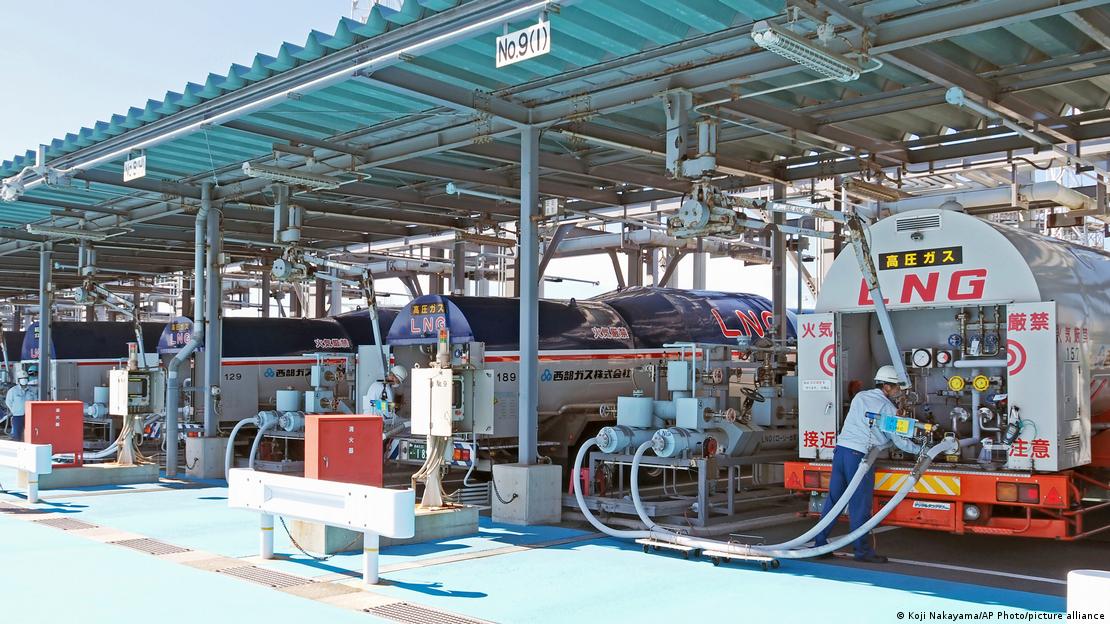
LNG is natural gas cooled into a liquid form for transport
Image: Koji Nakayama/AP Photo/picture alliance


Indonesia as an example


Indonesia signed a deal in November 2022 to mobilize $20 billion in public and private finance for energy transition at the G20 summit, led by the US and Japan.

According to Osada, Japan "helped write" Indonesia's long-term energy plan "so there would be a demand for gas."

"There's a lot of renewable potential available and it's actually cheaper and more beneficial for the whole of Southeast Asia, while LNG is too costly and they can't import if there's a blackout," she said.

Natural gas in Indonesia costs more than renewables, according to the calculations from the Institute for Essential Services Reform, an Indonesian energy and environment policy research center.

Indonesia is also the world's largest coal exporter, and coal comprises over 40% of its energy consumption. To phase out coal and oil, Indonesia in March rolled out a $1.5 billion LNG distribution project to feed power plants.

However, Wicaksono Gitawon, policy strategist at the Indonesian NGO CERAH, told DW that more overseas investment in LNG would hamper Indonesia's future transition to renewable energy.

"I genuinely think Japan should skip investment in gas [in Indonesia] and push for renewables," Gitawon said.

"We already have a coal infrastructure locked in. They are now pushing for gas, and gas is a big investment, so it would be another lock-in. If we have a gas infrastructure in Indonesia, I don't think we would be able to achieve energy transition."

Energy policy consultant James said that Japan is also meeting demand for technology and investment from countries like Indonesia.

"Indonesia came up with their own energy transition strategies and include things like natural gas and LNG, coal firing with ammonia and hydrogen — all the things Japan would love to sell and invest," he said.

The third AZEC meeting is slated to be held in Malaysia this September.


Edited by: Wesley Rahn
What role does your money play in the climate crisis?
DW
MAY 25, 2025

What roles do our pensions, investments and banking decisions play in supporting fossil fuel projects? And how green are the sustainable alternatives?


There is a growing appetite for green and sustainable pension and banking options
Image: Andrii Yalanskyi/Zoonar/picture alliance


Personal finance is a climate blind spot for many — lagging behind decisions on things like diet, travel or shopping when it comes to individual action.

Yet when it comes to lowering a personal carbon footprint, moving to a sustainable pension provider can be 20 times more effective than the combined impact of giving up flying, going vegetarian or switching energy provider, according to analysis from UK campaign group Make My Money Matter.


What role do banks have in funding fossil fuels?

The world's 60 biggest banks are estimatedto have committed $705 billion (€619 billion) to the fossil fuel industry in 2023, and $6.9 trillion since the Paris Agreement was reached in 2015.

Much of this is funding expansion plans that fly in the face of science's unequivocal climate warnings.

"We all have pots of money that are contributing to this in various ways without our knowledge a lot of the time," said Adam McGibbon, campaign strategist at US-based research and advocacy organization Oil Change International, adding that it could be in the form of current accounts, pensions or insurance policies that are reinvested into the fossil fuel industry.

Yet experts note the difficulty in precisely quantifying personal finance's contribution to fossil fuel funding due to complex financial systems and individual circumstances.

This is largely because it is through the corporate rather than retail side of a bank's operations — where individual customers' money is held — that they usually lend money or underwrite bonds for companies developing fossil fuel projects, explained Quentin Aubineau, policy analyst at BankTrack, an international NGO documenting the financial activities of commercial banks.

However, McGibbon added that banks are still using our money to grow their business, create more revenue and attract investors. He said our savings might at the very least be "used to inflate the balance sheet of a bank, which will then allow them to service corporate clients" with links to fossil fuels.

Is there a link between our cash and rising global temperatures?

When it comes to investments, some personal finances go directly into the fossil fuel industry via stocks or bonds, said Carmen Nuzzo, executive director of the Transition Pathway Initiative Centre in the UK, which researches progress made by the financial and corporate world to low-carbon economy.

"This includes investment in oil and gas companies, which have been very attractive and profitable in recent years ... as well as investment in other companies that rely heavily on fossil fuel for their production or service provision, such as steel or aviation," said Nuzzo.

Many people will also be funding fossil fuels through savings going into pension funds that invest in "brown" companies — those within the highest greenhouse gas and carbon-emitting industries. Pensions are usually held and controlled by either the state, employers or private companies.


"You pay into a pension pot, that money is invested on your behalf and some of that may end up being invested in companies that make sure that your retirement will be one where you live in an unstable, difficult world," said McGibbon.

Recent studies have estimated that in a world of 4 degrees Celsius (7.2 degrees Fahrenheit) warming, an average person will be 40% poorer and that pension fund returns in the US and Canada could fall up to 50% by 2040, due to the exposure of assets to extreme climate events.

Pension funds are among the world's largest investors in fossil fuels, with an estimated $46 trillion plowed into the industry and holding 30% of its shares, according to Climate Safe Pensions, a divestment campaign based in the US and Canada. They were also found to be among the leading funders of fossil fuel expansion across Africa.

In 2023, the German investigative platform Correctiv revealed that 10 out of 16 German federal states invested pension funds in fossil fuel activities.


What are green finance alternatives?


While green banks don't always have the most favorable conditions, among climate-conscious people there is a growing appetite for sustainable financial alternatives, said Katrin Ganswindt, a finance researcher at the German NGO Urgewald.

Among the growing pool of green banks are those that pledge to stop lending to fossil fuel companies and invest in climate-friendly activities.

Online tools such as bank.green have also emerged to help consumers compare the environmental credentials of different banks.

​​​​​​
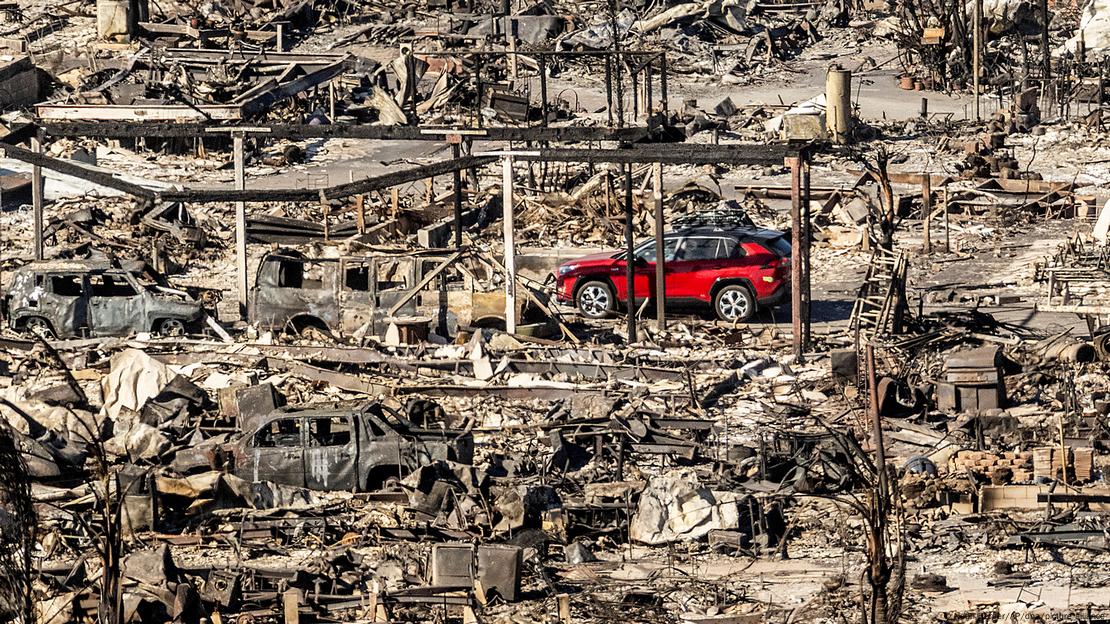
One study predicts that the hotter the world becomes, the harder it will impact personal affluence
Image: Noah Berger/AP/dpa/picture alliance

But overcoming a lack of financial knowledge is still one of the key challenges, explained Nuzzo.

"In the countries where most people have a pension, individuals do not keep track of where their pension assets are being invested .... or they might not review their options regularly."


Things such as pensions that invest in the long-term are effective places to make a change, said Ganswindt. "Pension funds have a big effect because they invest large sums."

Make My Money Matter estimated that the UK's pension industry could invest €1.2 trillion into renewable energy and climate solutions by 2035.


The green pension landscape is, however, evolving.


In the Netherlands, pension funds for civil servants and teachers as well as health care workers have divested from fossil fuel companies, and in the UK, large pension schemes are also now required to report their climate risks.

What is 'green' and 'sustainable,' and what is 'greenlaundering'?

Yet despite growing awareness and green finance options, there is still a lack of standards and regulation in this space, said Franziska Mager, senior researcher at Tax Justice Network, a UK advocacy group working against tax avoidance.

"Even if you're banking with a 'green' bank, you might be surprised to find out where your money is invested — if you're able to find out, that is. Let alone what the big players define as sustainable," she said.

A recent paper she co-authored on "greenlaundering" in the banking industry said the existence of opaque financial practices — including the use of secrecy jurisdictions, a type of tax haven — obscure the true scale of fossil fuel financing.


There has been a lack of regulation for green finance products, according to some expertsImage: Jan Haas/picture alliance

When it comes to ETFs — a type of investment fund traded on the stock market — you have been able to say it is "green" and it can mean nothing," said Ganswindt.

There has, however, been recent progress when it comes to transparency, she added, pointing to new EU guidelines that will regulate which companies are allowed into funds that are labeled green or sustainable.

Ultimately, personal finances likely make up a small fraction of the enormous sums of funding fossil fuels — but that is not the point of actions like switching your bank to a greener provider, explained Ganswindt. It's about sending a message.

"Certainly, there's some power as customers, but we have way more power as citizens," said McGibbon. "So great to move to a greener bank, great to move to a greener pension scheme. But ultimately, we could have much more power as citizens, changing the way we vote, demanding the politicians regulate the financial sector."

Edited by: Sarah Steffen

Holly Young is a climate reporter on DW’s Environment desk based in Berlin, Germany.


Malawi-Israel health workers deal: Who benefits the most?

Malawi churns out more nurses from college than it can employ. A new deal to send health workers to Israel promises jobs and relief, but will it drain Malawi's already fragile health care system?

Cai Nebe | George Mhango in Blantyre
DW
MAY 25, 2025

Malawian healthcare workers who move to Israel could earn nearly 15 times more per day but critics worry about the impact of losing skilled workers
Image: Thoko Chikondi/AP Photo/picture alliance

With high unemployment among health care professionals, an agreement between Malawi and Israel will see the Southern African nation send trained nurses and midwives to Israeli health institutions. The Malawian government says the bilateral deal, signed in April, will benefit health care workers by giving them a job, new skills and a way to support their families through remittances.

This offers a chance for unemployed Malawian nurses, like Christina Jere, who is enthusiastic about the prospect.

"I would definitely go. I have been qualified for three years and I haven't even been called for an interview," Jere told DW.

"Malawi is my home, but why would I stay in a country where I have spent so much on college fees without a job?


Elizabeth Gondwe—another trained nurse—has similar aspirations. "I've stayed here for a long time without being employed. I'm so excited because here in Malawi I was unable to help my family," Gondwe explained to DW, adding that she eventually envisions returning to Malawi with more skills and experience.
Criticism of the Malawi-Israel health care workers' deal

Not everyone is thrilled about the idea of sending skilled health care workers abroad. A similar deal agreed in 2023, in which Malawians went to work in Israel's agricultural sector, caused uproar amid reports of exploitation, poor working conditions, and Malawian workers being deported for breaching their work contracts.

Critics also say Malawi's health system is under-resourced and cannot afford to lose trained personnel. Malawi's nurse-to-patient ratio is about one-third below that of the World Health Organization's (WHO) recommended ratio of at least one nurse per 1,000 patients.

While the deal has been seen as a win for the Malawian government, Malawian observers have also questioned the government's motives, seeing this as a political move, rather than taking the interests of Malawian citizens into account.


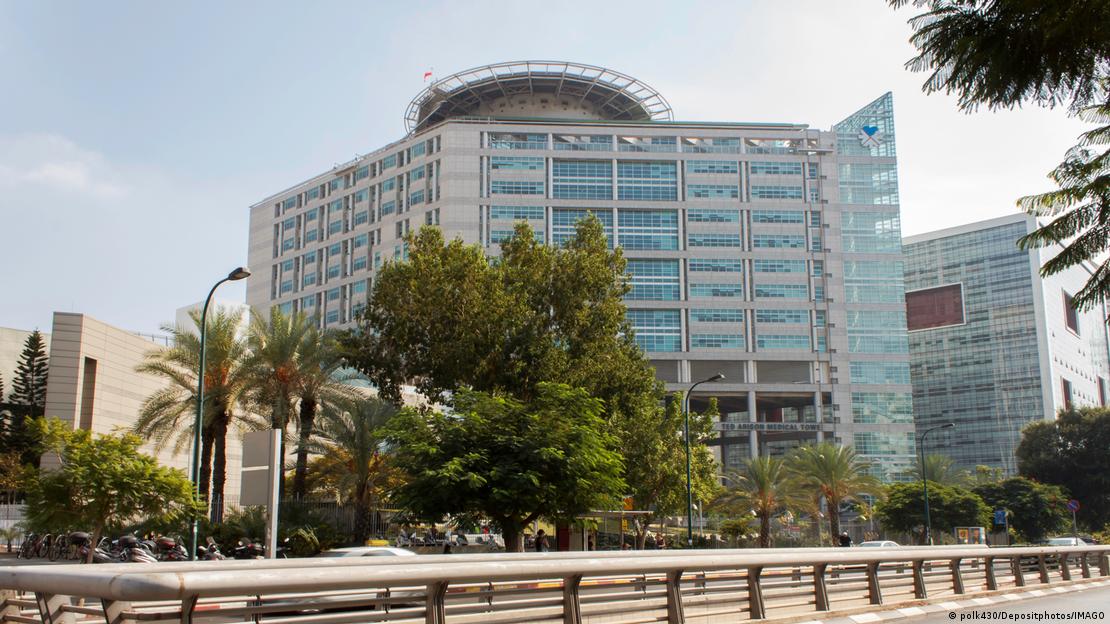
Malawian healthcare workers could soon be working in hospitals such as this one in Tel Aviv
Image: polk430/Depositphotos/IMAGO

In addition, Malawi's policies regarding Israel break with the existing trends of other countries in the Southern African Development Community (SADC). Notably, South Africa has accused the Israeli leadership of war crimes in Gaza during Israel's war on Hamas. In contrast, Malawi opened an embassy in Tel Aviv in 2024 and is seen by Israel as a strong ally on the continent.

Lastly, watching the Malawian government invest in training health care workers only to see them encouraged to move abroad, taking their skills and knowledge with them, has stirred debate in Malawi. However, Mercy Mwalilino, a practicing midwife in Malawi, told DW that some nurses are earning as little as 3,453 Malawian Kwacha ($2, €1,75) a day. According to Mwalilino, only a quarter of qualified nurses have found employment within Malawi's health care system.

How will Malawian health care workers fare in Israel?

Concerns have also been raised about working conditions in Israel and whether proper protections are in place for the Malawian workers.

The previous initiative, which saw Malawian agricultural workers go to Israel, was stopped after the workers complained of difficult working conditions, left their jobs to work in the informal sector, or sought asylum in Israel. In contrast, this bilateral deal for the nurses was driven by private labor recruiters.


For Mercy Mwalilino, the bilateral agreement between Israel and Malawi gives a sense of security to the deal.

"The Malawi government is finalizing this deal in conjunction with the National Organization of Nurses and Midwives of Malawi, which is responsible for looking into all those conditions for the nurses before sending them there," she told DW, adding that those willing to go can earn $200 to $300 a month.

When asked about the possibility of Malawians potentially working in a dangerous part of Israel threatened by war, Mwalilino admitted this was a concern. "Those in dilemma because of the security risks will not be forced to go."

Will Malawian health care workers return?

Other potential candidates, like Esther Malanga, are more circumspect about working in the Middle Eastern country.

"Adapting to a new language, culture and work environment could be a challenge, and could impact my personal life. Initially I would consider working in Israel for one to two years."

Malawian officials justified the policy by saying nurses and midwives would be upskilled in Israel before coming back when their contracts are over. For Malanga, that would be an attractive option.


"Going to Israel would help me improve patient care and learn about different health systems, approaches and technologies that I could bring back to Malawi," she told DW.

However, others like Christina Jere are not sure about returning. "Going to Israel is something exciting, and I don't think I would come back."


Josephine Mahachi contributed to this article

Edited by: Chrispin Mwakideu

Cai Nebe Producer, podcaster and reporter for DW Africa

George Mhango George Mhango is an award winning multimedia journalist based in Blantyre, Malawi.@GeorgeM51574124
Nord Stream: Could Germany return to Russian gas imports?

DW
MAY 25, 2025

For months, there has been speculation that the United States and Russia want the Nord Stream gas pipelines repaired and flowing again. The question remains whether Germany might agree.


Germany always called Nord Stream a strictly commercial project. Now the pipelines are fraught with politics
Image: Nikolai Ryutin/Nord Stream 2

As the war in Ukraine grinds into its fourth year, the idea that Russia could pump gas to the European Union via Germany again is not as outlandish as it might have been a few months ago.

With efforts ongoing to end the war, speculation continues over the possible reintegration of Russian gas into the European Union's energy mix.

For months, some members of Germany's center-right Christian Democratic Union (CDU), which leads the government, have been hinting strongly at support for such a proposal, particularly the Nord Stream pipelines. The latest came from Saxony's CDU state premier, Michael Kretschmer.

In an interview with German newspaper Die Zeit, he described the Nord Stream pipelines as a possible "opening for talks with Russia." He even specified how much of Germany's gas supply should come from Russia — 20%.

In March, some of his colleagues welcomed the idea of repairing both pipelines of the damaged Nord Stream 1 and the single damaged pipeline on Nord Stream 2. The three were damaged after an act of sabotage in September 2022.

Nord Stream 1 brought gas to Germany before the Ukraine war began, while Nord Stream 2 was finished in September 2021 but never actually entered service.

However, even if some in the German government are keen, many are not. New German Chancellor and CDU leader Friedrich Merz has made it clear he supports EU plans to prevent the reactivation of the pipelines as part of the next sanctions package against Russia. Amid the rumors about the possible repair of the pipelines, the European Commission is currently consulting member states about permanently banning the use of Nord Stream.

US and Russia reportedly keen on Nord Stream deal

However, both Russia and the United States are reportedly keen on a deal to get gas flowing through the pipelines again.

Russian Foreign Minister Sergei Lavrov said recently that discussions with the US have included Nord Stream. Meanwhile, several reports say US investors are interested in buying Nord Stream 2 AG — the Swiss-based subsidiary of the Russian state-owned energy giant Gazprom which owns the Nord Stream 2 pipeline.

In January, bankruptcy proceedings against Nord Stream 2 AG were delayed until May, with a redacted court document showing that Gazprom argued that the Trump administration could "have significant consequences on the circumstances of Nord Stream 2."

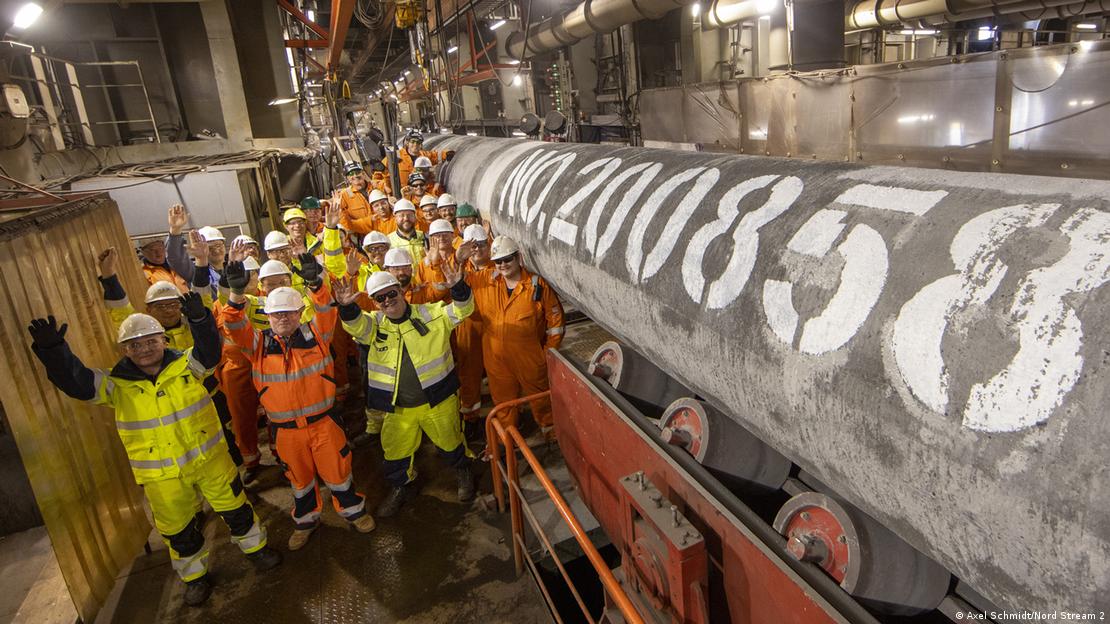
Finished in September 2021, the two pipes of Nord Stream 2 never went into service
Image: Axel Schmidt/Nord Stream 2

Chris Weafer, an investment adviser who has worked in Russia for more than 25 years, told DW that there are serious discussions taking place regarding a US purchase of the company.

"There are proposals on the table from US buyers that want to buy the infrastructure, where they could act as a cut out between the source of gas, which is Gazprom, and the buyers of gas, which would be German utilities," he said.

However, Ben Hilgenstock from the Kyiv School of Economics says it is not the US or Russia's place to decide what energy Europe buys.

"Whatever Russia and the United States negotiate with regards to Nord Stream 2 or 1 is entirely meaningless," he told DW. "It is Europe's decision in specific countries, to be fair, whether they want to purchase Russian pipeline gas through Nord Stream 1 and 2 again."

German business suffers under energy costs


So, is there any way Europe would want to buy Russian pipeline gas again?

Europe's diversification away from Russian gas and oil after the full-scale invasion was the main factor that led to a surge in energy costs throughout 2022 and 2023. Although costs have come down significantly from those highs, the re-emergence of Russian energy into the mix would likely push costs down further.

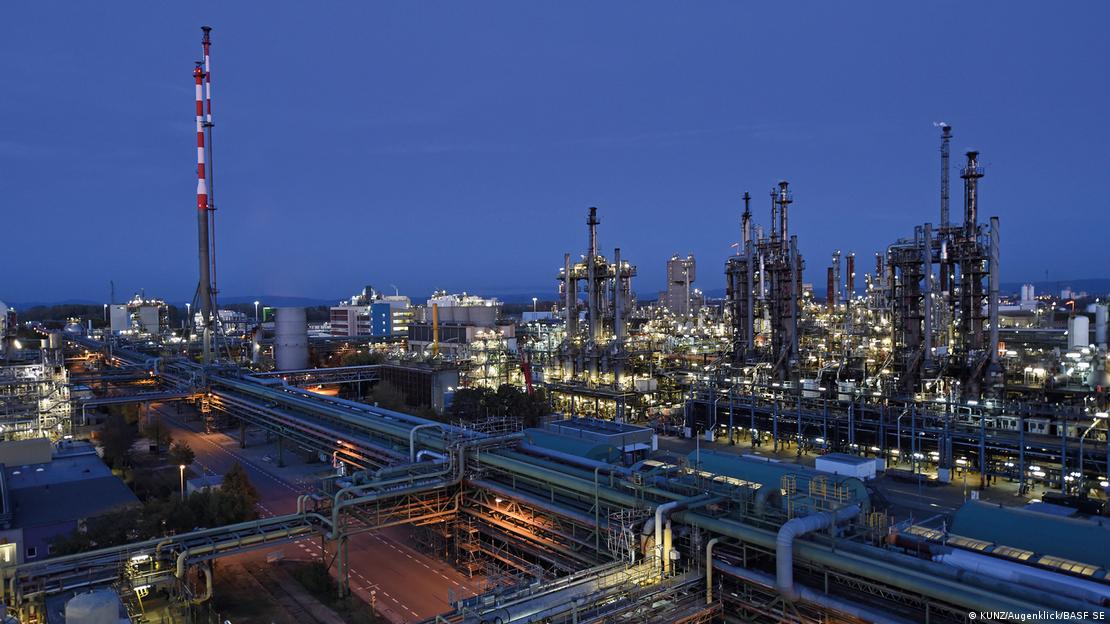
German companies such as the chemical giant BASF bore the brunt of soaring energy costs in recent years. A spokesperson for the company told DW it would not speculate on any possible deals regarding Russian energy, but it did emphasize it was not the only factor affecting its business.

"The increased gas price is only one factor affecting BASF's competitiveness," the spokesperson said. "Other important reasons are the current weak demand and increasing import volumes."

Germany's energy-intensive companies like BASF are suffering from high energy costs
Image: KUNZ/Augenklick/BASF SE

Wolfgang Große Entrup, managing director of Germany's Chemical Industry Association (VCI), told DW that his members "welcome measures that reduce excessively high energy prices," but he emphasized the importance of "reliable partners."

"Supplies via Nord Stream 1 were unilaterally suspended by Russia in August 2022," he said. "With a major effort, it has been possible to ensure security of supply even without Russian oil and gas. We should not fall back into old, supposedly comfortable, habits and avoid excessive dependence on individual countries in the future."

Five things you need to know about Nord Stream  01:03


However, Hilgenstock cautions that the lure of cheaper energy will always be capable of directing the discussion in some quarters.

"There is this vision out there of cheap Russian gas that can propel us back wherever," he said. "That's where the political pressure is coming from."
A complicated route

Yet political opposition to a restoration of supply remains fierce in Europe. The EU Commission has repeatedly reiterated its strong stance against, in keeping with its current sanctions plans.

"Nord Stream 2 is not a project of common interest, it does not diversify the EU's energy sources," an EU Commission spokesperson said at a press briefing on March 3.

Project of Common Interest (PCI) status is given to energy infrastructure projects, allowing them to benefit from an accelerated approval process and more flexible regulation.

The EU has pledged to quit all Russian fossil fuels by 2027 and the European Commission released a detailed strategy and roadmap on May 6 as to how it plans to achieve this.The roadmap mentions the stopping of all imports of Russian gas by the end of 2027 and says new contracts to supply any kind of Russian gas will be stopped by the end of 2025.

In this context, Hilgenstock thinks supporting the restoration of Nord Stream would be "absolutely bizarre and grotesque."

"I think we would demonstrate that we're fundamentally not serious about Russian sanctions. Turning around on this, specifically, means we are absolutely not serious about restraining Vladimir Putin's ability to continue his war in Ukraine and threaten peace and prosperity in Europe. It would be an absurd development," he said.

Even if some in the German and European political establishment were in favor of restoring one or both Nord Stream pipelines, argued Hilgenstock, there are "multiple technical obstacles."
The EU says it wants to be free of Russian fossil fuels by 2027
Image: picture alliance / Inderlied/Kirchner-Media

The Nord Stream 2 pipeline has never been legally certified by Germany, for one, and Hilgenstock said he doesn't see the new German government doing that.

Then there's the significant repair work, which Chris Weaver believes could start relatively quickly if the US were able to convince the EU of the merits of a deal.

"Those discussions are definitely taking place, and they are credible," he said, adding that he expects some Russian gas going back to Europe, "but probably no more than 50 % of the volume that was sold before the invasion" in February 2022.

However, Hilgenstock believes it is vital that the EU makes it clear to the US that the re-opening of the Nord Stream pipelines is not up for discussion.

"We just have to say, this is not happening. And whatever bullying you're attempting, we are not undermining a fundamental element of our policy to constrain Russia," he said.

Edited by: Uwe Hessler

Editor's note: The article, which was originally published on April 25, has been updated to include recent developments in the Nord Stream debate.


Arthur Sullivan Reporter and senior editor focused on global economic stories with a geopolitical angle.

India, Canada move to repair ties after Trudeau-era tensions
MAY 25, 2025

The first call between Indian top diplomat Subrahmanyam Jaishankar and Canada's new Foreign Minister Anita Anand raises hope of improvement in ties between Delhi and Ottawa that deteriorated over a Canadian Sikh's death.

India's foreign minister spoke to his Canadian counterpart in a call on Sunday, taking the first step to mend the strained bilateral relations between the two countries.

India's Subrahmanyam Jaishankar said he had "discussed the prospects of India-Canada ties" with Canada's newly appointed Foreign Minister Anita Anand, and he "wished her a very successful tenure."

In a post on X, Anand, whose parents hailed from India, described the conversation with Jaishankar as productive and said she looked forward to "strengthening Canada-India ties, deepening our economic cooperation, and advancing shared priorities."


The telephone call on Sunday between India's Jaishankar and Canada's Anand marks the highest diplomatic contact between Ottawa and New Delhi since Mark Carney became Canadian prime minister in March.

The call between Jaishankar and Anand raises hope of improvement in ties between India and Canada that deteriorated over a Canadian Sikh's death during former Canadian Prime Minister Justin Trudeau's time in office.

New Delhi and Ottawa are looking at “restoring their High Commissioners by June this year,” according to Indian newspaper The Indian Express.

Why did relations between India and Canada sour?

Canada has the largest Sikh population outside of India, and includes activists supporting the formation of "Khalistan" — a separatist movement seeking an independent state for Sikhs who are a religious minority in India.


Relations between the two countries hit rock bottom after Ottawa accused India of orchestrating the 2023 killing in Vancouver of 45-year-old naturalized Canadian citizen and a prominent Khalistan supporter, Hardeep Singh Nijjar, and of targeting other Sikhs associated with the movement.

India denied all allegations. The relations between India and Canada deteriorated to the point where both countries expelled a string of top diplomats.


The Khalistan movement remains a contentious subject for India's diplomatic relations with Western countries that have large Sikh populations, as India demands stricter action against the Khalistan movement, which is banned in India.

Edited by: Wesley Dockery
Midhat Fatimah Writer and reporter based in New Delhi
CRIMINAL CAPITALI$M
4 ex-VW managers guilty of fraud over diesel test scandal

Four former Volkswagen executives have been found guilty of fraud in a criminal trial relating to the "Dieselgate" scandal.

Richard Connor with AFP, dpa, DW
MAY 25, 2025


Image: Moritz Frankenberg/dpa/picture alliance


The Braunschweig Regional Court in northern Germany on Monday convicted four former Volkswagen executives of fraud over the "Dieselgate" scandal.

The verdict brings a massive trial to an end after almost four years. The scandal surrounding the manipulation of diesel car emissions tests came to light in September 2015. The Wolfsburg-based automaker had shortly before admitted to false test results in the US.
Prison time for Volkswagen executives

Two of the executives were sentenced to several years in prison, with two other former employees receiving suspended sentences.

A former head of diesel engine development was sentenced to four and a half years in prison. The former head of drive electronics received two years and seven months in prison.

The highest-ranking defendant, a former member of the Volkswagen brand's development board, received one year and three months' probation. A former department head was sentenced to one year and ten months' probation.

The global scandal, widely known as Dieselgate, plunged the Wolfsburg-based carmaker into a deep crisis.

Volkswagen has faced countless lawsuits and estimated the total cost of the scandal at more than €30 billion ($34 billion).

The public prosecutor's office had demanded between two and four years in prison and considered probation appropriate in only one case. The defense, however, pleaded for three acquittals and one warning.
Proceedings against former CEO unclear

Former chief executive Martin Winterkorn was originally due to stand trial alongside the four, but proceedings against him were suspended for health reasons before they began in September 2021.

Winterkorn has since appeared in court as both a witness and a defendant, repeatedly denying any responsibility for the scandal.


A recent accident and hospitalization further interrupted his case, and it remains unclear if or when the proceedings against the now 78-year-old will resume.

Winterkorn, once Germany's highest-paid executive, resigned shortly after the scandal broke but has denied any personal responsibility. Prosecutors alleged in court that he knew about the illegal software as early as May 2014—well before the timeline he has acknowledged.

Edited by Wesley Dockery
Richard Connor Reporting on stories from around the world, with a particular focus on Europe — especially Germany.
Amid calls for arms embargo, who supplies Israel's weapons?
DW
MAY 25, 2025

Spain calls for arms embargo on Israel as Gaza violence escalates — but real pressure would require action from three major weapons exporters.

Spain has asked European countries to suspend arms shipments to Israel as international condemnation grows over its conduct in Gaza.

At a meeting of the "Madrid Group" hosted by the Spanish government, the host country's Foreign Minister Jose Manuel Albares called for an immediate suspension of Europe's cooperation deal with Israel.

He also called for an embargo on arms shipments.

"We must all agree on a joint arms embargo," said Albares prior to the conference. "The last thing the Middle East needs right now is weapons."

Among those at the meeting were representatives from Germany, France, the UK, Italy, Egypt, Jordan, Saudi Arabia, Turkey, Morocco and Brazil and several intergovernmental organizations.

However, only a fraction of the nations represented at the Madrid Group meeting actually supply Israel with armaments.

Israel is also one of the world's top exporters of armaments, so it has a powerful internal supply of weaponry as well.

The Stockholm International Peace Research Institute (SIPRI) in March reported that Israel is the 15th biggest importer of arms globally, despite it being actively involved in conflict, accounting for less than two percent of global imports.

Its imports have also dropped by around 2.3% in the last five years, compared to the preceding period.

Crucially, three nations account for almost all of Israel's weapons supply: the United States, Germany and Italy.

United States is Israel's biggest arms supplier

By far, the US is the biggest arms supplier to Israel, both since the October 7 attacks and also historically.

Though its proportional supply has reduced over the last decade, it still accounted for about two-thirds of Israel's imports from 2020-2024, according to SIPRI.

This includes aircraft, armored vehicles and guided bombs.

Israel is also the top recipient of US aid historically, according to the US-based, nonpartisan Council on Foreign Relations (CFR).

As well as a substantial economic contribution between 1946 and 2024, Israel has received $228 billion in military support from the US.

Today, most US foreign aid to Israel is military spending. This includes an existing agreement to provide $3.8 billion in support until 2028. Most aid provided by the US must be spent on the purchase of American military equipment and services, according to the CFR.

It's unlikely that the US will change its support for Israel. Attempts led by independent senator Bernie Sanders to withhold billions in military sales to Israel were rejected by the US Senate in both April 2025 and November 2024.

Germany will continue to provide Israel weapons


Germany is a long-time diplomatic and military supporter of Israel. From 2020-2024, Germany accounted for about a third of Israel's incoming arms supply, mostly naval frigates and torpedoes.

SIPRI researcher Zain Hussain told DW via email that "Israel has relied on Germany for […] naval capabilities" and that Israel has an incoming submarine order from Germany.

Germany's arms supply to Israel has also included armored vehicles, trucks, anti-tank weapons and ammunition.

And that is unlikely to change, despite Spain's calls for an embargo.

"As a country that understands Israel's security and existence as a core principle, Germany is always obliged to assist Israel," said German Foreign Minister Johann Wadephul.

Those comments came as German chancellor Frederich Merz told public broadcaster WDR he "no longer understands” Israel's objective in Gaza and that its actions could "no longer be justified by a fight against Hamas."

Despite his remark, any future restriction on Germay's arms supply would be a significant development. Germany provided more than €131 million ($137 million) in arms exports in 2024, according to government statistics. The figure in 2023 was €326 million.

Italy accounts for 1% of Israel's arms


Italy contributes around one percent of Israel's arms. But by Italian law, it is prohibited from doing so given the conflict.

The Italian government has been critical of Israel's actions, however reports last year found it continued to supply Israel following the commencement of hostilities in October 2023. That reportedly included €2.1 million ($2.4 million US) in the last quarter of 2023, during which Israel's offensive was under way. That was despite assurances from the Italian government that shipments had ceased.

Analysis performed on government accounts by Italian news outlet Altreconomia found Italy supplied €5.2 million in arms to Israel last year.


Some EU nations have reduced their exports

Israel has no shortage of armaments either produced domestically or through its major backers. Despite pressure from European nations to adopt an arms embargo, Hussain said the most effective block would requires Israel's primary armorers to join.

"The USA and Germany are the most important suppliers of major arms to Israel. For there to be maximum pressure on Israel's major arms capabilities, these states would have to be involved in an arms embargo," Hussain said.

Some European nations have either stopped the supply of weaponry, or have suspended export licenses. These include France, Spain and the UK, though their contributions are less than 0.1% of Israel's total intake. However, a study of UK trade data, cited by The Guardian in May, found that the country sent Israel thousands of military items despite export ban.

However for Germany to heed Spain's call, a major change in US foreign policy would be required, said Catherine Gegout, an international relations researcher at the University of Nottingham, UK.

"I think there would be much more pressure on Germany if the US changed as well," Gegout told DW. "But I'm not sure the rest of the EU states [opposing arms] will be enough to change that special relationship with Israel."

Despite Germany's long-standing commitment to Israel, Gegout said its ongoing weapons supply is becoming a problem for the European Union.

"I think it's a gigantic problem for the EU that Germany is sending so many weapons," Gegout said.

She said Spain's attempt to implement an arms embargo serves both a direct and symbolic purpose for countries that may oppose Israel's activities in Gaza.

Edited by: Jess Smee

Matthew Ward Agius 
Journalist reporting on politics, health, history, science, climate and environment.

A sea of controversy as Trump stirs old tensions over Persian Gulf name

Ahead of a May tour of the Middle East, US President Donald Trump revived a long-running dispute over the name of the body of water between Iran and the Arabian Peninsula – should it be called the Persian Gulf, the Arabian Gulf or just the Gulf?

The sun rises over the Persian Gulf in Al Wakrah, 30 kilometres from Doha. 
AFP - KARIM JAAFAR

Issued on: 24/05/2025 - RFI

A few days before the trip that took him to Saudi Arabia, Qatar and the United Arab Emirates (UAE), Trump reportedly floated the idea of renaming the Persian Gulf the "Arabian Gulf".

It echoed an earlier decision to rename the Gulf of Mexico the "Gulf of America" in an executive order signed hours after he took office in January.

In the end, Trump gave up on the idea during his week in the Middle East, resorting to realpolitik – perhaps wary of upsetting the Iranians even if it meant disappointing his Arab partners.

The sea – bordered by Iraq, Kuwait, Saudi Arabia, Bahrain, Qatar, the UAE and the Musandam Peninsula (an exclave of Oman) on one side, and Iran on the other – has been at the centre of a naming dispute for decades.

Centuries of use

The 251,000 km² gulf in the Indian Ocean has been known as the Persian Gulf since at least the time of Alexander the Great in the 4th century BC. The name refers to the Achaemenid Empire, the first Persian empire in history.

Greek and Roman geographers, including Ptolemy in the 2nd century, later referred to the Persian Gulf or the Persian Sea. Renowned Arab historians such as Ibn Al-Athir and Ibn Khaldun used this toponymy in their history books in the 12th and 15th centuries AD.

By the 18th and 19th centuries, the name Persian Gulf appeared in treaties signed by regional leaders and the British, who dominated the area at the time.

Arab nationalism in the 20th century gave rise to the term Arabian Gulf – even though when the Egyptian Gamal Abdel Nasser came to power in the early 1950s, the slogan "One nation from the Atlantic Ocean to the Persian Gulf" was all the rage.

The term Arabian Gulf also appeared earlier in history. The Greek historian Strabo used it in the 1st century AD, but he was referring to what is now known as the Red Sea, on the western side of the Arabian Peninsula.

In today's Arab press, the Persian Gulf is usually referred to as Al-Khaleej, which means simply "the Gulf". The countries of the Gulf Cooperation Council – Saudi Arabia, Kuwait, the UAE, Qatar, Bahrain and Oman – all use the term Arabian Gulf.

Today, Google Maps uses the term Persian Gulf, with Arabian Gulf in brackets. For years, the US military has unilaterally referred to the Persian Gulf as the Arabian Gulf in its statements and images.

'A denial of history'

The body of water is linked to the Indian Ocean by the Strait of Hormuz and holds around 60 percent of the world’s oil reserves and 40 percent of its gas. The area is a vital shipping route and has seen many disputes between Arab states and Iran.

In 1970, a journalist from the French monthly newspaper Le Monde Diplomatique wrote an article in which he used the term Arabian Gulf when reporting on the latest clashes in the region between "traditionalist elements and revolutionary forces".

The Iranian embassy in France responded with a letter calling the term “a denial of history”.

The letter said: “The gulf in question has been called the Persian Gulf for over 2,000 years... All the geographers and historians of antiquity knew the Gulf only as the Persian Gulf... From the 16th century onwards, in the great atlases... it was referred to exclusively as the ‘Sinus Persicus’ [Persian Gulf in Greek].

The statement noted that until around 1960, even Arab schoolbooks used the Farsi name Kha-Lidj Al Farsi – Persian Gulf. It ended with the question: “So why the change in terminology?”

Iran has taken strong action against publications and organisations using the term Arabian Gulf. In 2004, National Geographic was banned after placing "Arabian Gulf" in brackets next to "Persian Gulf". The Economist faced a similar ban in 2006.

In 2010, Iran cancelled the Islamic Solidarity Games – a Saudi-led initiative – after it emerged that the medals and logos would say Persian Gulf. That same year, Iran warned that foreign airlines using the term Arabian Gulf could be banned from its airspace.
National pride

In 2006, a commission of UN experts, geographers, geologists, archaeologists and historians concluded, after analysing more than 6,000 maps of the area, that the term Persian Gulf was historically the most widely used designation.

It remains the term officially recognised by the UN, the International Hydrographic Organisation and the International Maritime Organisation.

For Iran, it is not just about history – it is a matter of national pride.

“Politically motivated attempts to alter the historically established name of the Persian Gulf are indicative of hostile intent toward Iran and its people, and are firmly condemned,” foreign minister Abbas Araghchi posted on X after Trump's intentions were revealed.

He added: “I am confident that @realdonaldtrump is aware that the name PERSIAN Gulf is centuries old and recognised by all cartographers and international bodies... any short-sighted step in this connection will have no validity or legal or geographical effect. It will only bring the wrath of all Iranians from all walks of life and political persuasion in Iran, the US and across the world.”

Exiled Crown Prince Reza Pahlavi also weighed in on X. “The Persian Gulf is not just a name but a historical reality... The reported decision by President Trump to abrogate history, should it be true, is an affront to the people of Iran and our great civilisation.”

With nuclear negotiations under way between Tehran and Washington, Trump’s decision to back down on renaming the Gulf has been seen in Iran as a sign of restraint.

This article was adapted from the original version in French.
Trump’s aid cuts prompt African leaders to embrace self-reliance


International report
Issued on: 26/05/2025 - RFI
By: Zeenat Hansrod

Some African leaders regard United States President Donald Trump’s decision to halt aid to the continent as an opportunity to foster self-reliance. They have already initiated plans to mobilise the necessary resources to reshape Africa’s aid landscape.


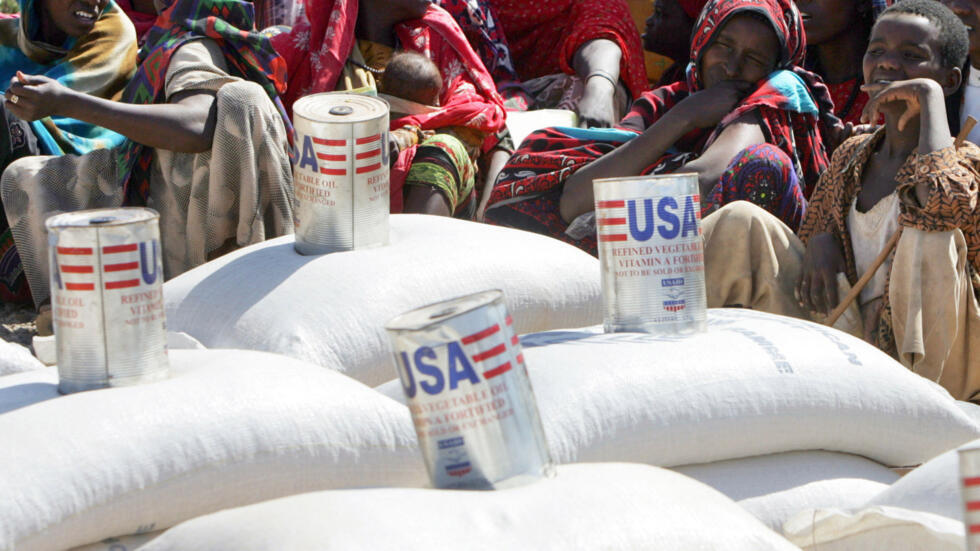
Internally displaced Somalians watch as food aid arrives for distribution at an IDP camp in Wajid, in 2005. The U.N.'s World Food Programme delivered a USAID shipment. © AP/Antony Njuguna

“Trade, not aid, is now the pillar of our policy in Africa,” said United States ambassador Troy Fitrell, from the Bureau of African Affairs, in a speech on 14 May at business summit in Abidjan.

The declaration settles any doubts over the Trump administration’s position on aid towards Africa. The US – the world single largest aid donor in the world, according to the United Nations – no longer wants to disburse billions in foreign aid, despite the fact that it represents a small percentage of its entire budget.

In 2023, the US spent $71.9 billion in foreign aid, which amounts to 1.2 percent of its entire budget for that fiscal year.

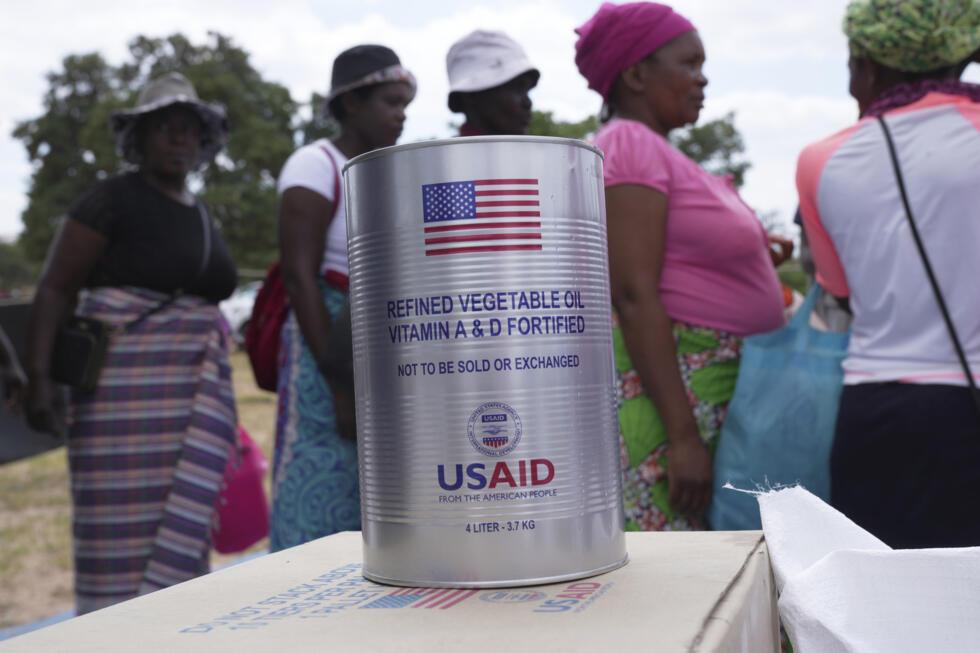
Women queuing up to receive USAID food aid in Zimbabwe after drought left millions facing hunger in southern Africa, 2024. © AP/Tsvangirayi Mukwazhi

President Donald Trump repeatedly stated that aid is a waste. For years, Africa has been the region receiving more funding from the United States than any other.

Across the African continent, Trump’s executive orders were initially met with shock, anger, and despair — but also with a renewed determination to change course and place African resources at the heart of African healthcare.

In February, at an African Union summit, Rwandan President Paul Kagame announced that the AU’s health institutions, including the Centres for Disease Control, would take the lead in seeking alternatives to US funding.

“Africa now finds itself at a crossroads. The health financing landscape has shifted dramatically.

“I propose that, over the next year, we work together to define new mechanisms for concrete collaboration on healthcare among governments, businesses, and philanthropies,” he told African leaders.

“The work of building our continent, including our healthcare systems, cannot be outsourced to anyone else.”

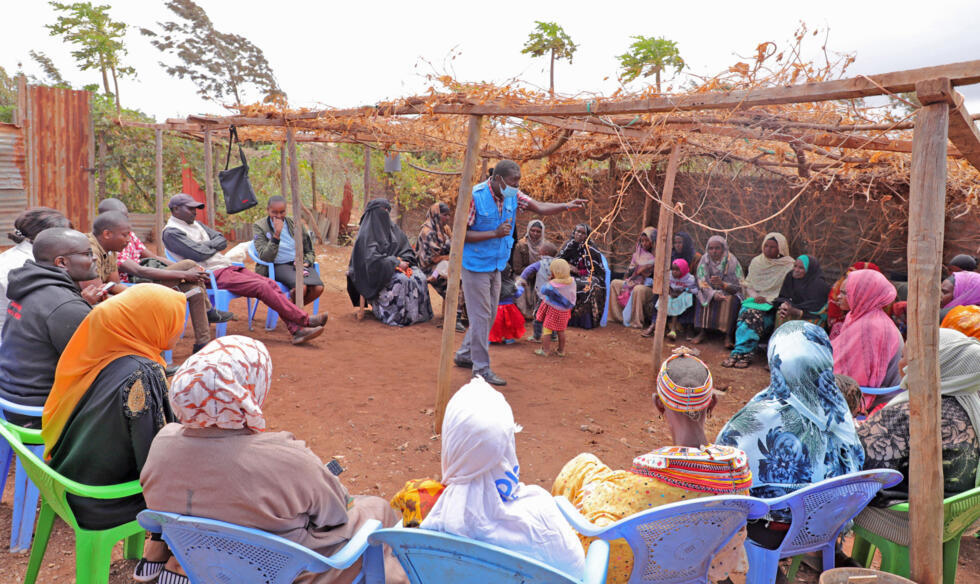
Health official from Kisumu Medical and Education Trust talking about safe abortion to a community in Marsabit, Kenya. © RFI/KMET/Emmanuel Oyier

To untangle what is going on, for this edition of Interntional Report, RFI interviewed Eric Olander, editor-in-chief of the China-Global South Project; Chris Milligan, former foreign service officer at USAID, in Washington; Mark Heywood, human rights and social justice activist in South Africa, co-founder of the Treatment Action Campaign (TAC); Onikepe Owolabi, vice president of International research at the Guttmacher institute in New York; Monica Oguttu, founding executive director of KMET, Kisumu Medical and Education Trust, in Kenya.


Land pollution is drowning the oceans in plastic, French experts warn

Marseille – Ahead of the United Nations Ocean Conference in June, the research schooner Tara docked in Marseille for a day dedicated to tackling plastic pollution in the oceans.


02:4
1On board the scientific research schooner Tara, moored at the Mucem museum in Marseille. © RFI

By: Isabelle Martinetti
Issued on: 23/05/2025 - RFI

With global plastic production doubling in less than 10 years, reducing it is key for protecting the ocean, according to findings at the Reducing Plastics: A Vital Issue for the Ocean conference, held in Marseille on Monday.

French and European scientists and policymakers gathered at the Mucem museum in Marseille for the summit – organised by the Tara Ocean Foundation and the French branch of the Interparliamentary Coalition to End Plastic Pollution.

"Today, we are facing a plastic crisis, which is a major crisis affecting the oceans and the environment in all its dimensions – climate change, pollution and biodiversity loss,” Henri Bourgois-Costa, head of public affairs for the Tara Ocean Foundation, told RFI.

French schooner Tara charts a course for change ahead of UN oceans summit

The Tara is seen moored near the Mucem museum in Marseille on 19 May. 
© RFI/I. Martinetti


Recycling not the (only) solution

Today, at a global level, 50 percent of plastics are landfilled, 14 percent are recycled, 17 percent incinerated and 19 percent are poorly managed, explained Fabienne Lagarde, an environmental chemist at Le Mans university.

"Recycling is the tree that hides the forest, because the end of life of plastic is also polluting," she said.

Moreover, 98 percent of plastics today are not biodegradable, and two-thirds are not recyclable, Lagarde pointed out.

France pushes for action as high seas treaty hangs in the balance

"Most of our waste is either buried or incinerated, leading to a major environmental leak that originates primarily from land,” explained Jean-François Ghiglione, a researcher from the French National Centre for Scientific Research and the scientific director of the Tara Microplastics mission 2019, whose initial results were published in April.

"And more than 80 percent of plastics that end up in the sea come from the land," he added.

The study published last month, which focused on nine major European rivers, showed that 100 percent of these rivers were polluted by microplastics arriving directly from land.

Jean-François Ghiglione, scientific director of the Tara Microplastics Mission 2019.
 © RFI/I. Martinetti

"Microplastics come from the breakdown of large waste. A large piece of waste – through abrasion, friction and UV exposure – breaks into smaller and smaller pieces, almost infinitely," explained Ghiglione.

These microplastics measure between 0.025mm and 5mm, and are invisible to the naked eye.

The study also showed that 85 percent of plastics in the sea are in microplastic form.

These microplastics are also found throughout the food chain, affecting 1.4 million birds and 14,000 mammals every year. Doctors are now investigating the consequences for human health.

"We absolutely must reach a global plastics treaty that reduces the quantity of plastics, because we have scientifically shown that the more plastic is produced, the more pollution there is. The relationship is linear," concluded Ghiglione.

Earlier this week, France urged countries around the world to ratify the landmark High Seas Treaty before the UN Ocean Conference, which opens in Nice on 9 June.

The treaty was adopted in June 2023 by 193 countries but cannot take effect until it is ratified by 60 countries. So far, only 21 have done so.
METRIC SYSTEM

The Metre Convention: a milestone that's changed modern life immeasurably


France – and the majority of the rest of the world – is marking 150 years since the Metre Convention first united them in a shared language of measurement, laying the foundations for international scientific cooperation.


Issued on: 25/05/2025
RFI

Prototype 35 – the 1 kilogram weight that helped the world understand mass.
 © AFP

There aren't many 136-year-old metal cylinders tucked away in Paris basements that can claim global fame.

Yet "Prototype 35" – a shimmering iridium-platinum artefact – quietly changed the course of modern life.

At just 39 millimetres high and wide, this unassuming 1 kilogram weight helped anchor the world’s understanding of mass – and with it, the uniformity of measurement that underpins everything from baking a cake to building a bridge.

This week marked the 150th anniversary of the Metre Convention, signed in Paris on 20 May, 1875 by 17 nations eager to bring order to a chaotic patchwork of global measurements.

The treaty established a universal system of units – ushering in consistency, accuracy, and international cooperation in science, industry and daily life

As the French national metrology institute posted in celebration on X: "This international convention laid the foundations for scientific cooperation to harmonise measurements across the world".

Revolutionary beginnings

Before the Convention, the world was a confusing place.

A pound of wheat in Marseille didn’t weigh the same as one in Brest, and a yard in one city might be a foot in another.

The French Revolution, with its rallying cry for equality, prompted scientists to invent the metric system, based not on arbitrary traditions but on nature itself, with the metre originally defined as a fraction of Earth’s meridian.

Louis de Broglie's quantum leap that changed physics forever

What began as a revolutionary idea soon gained traction beyond France. The 1875 Convention established the International Bureau of Weights and Measures and marked the beginning of a truly global system.

Today, more than 150 countries use the International System of Units, which comprises seven base measurements: the metre, kilogram, second, kelvin, candela, ampere and mole.

Far from being stuck in the past, this system is constantly evolving.

Gone are the days of relying on physical objects such as Prototype 35 as ultimate standards. Instead, modern definitions rest on fundamental constants of nature. The metre, for example, is now linked to the speed of light and the kilogram to Planck’s constant, a cornerstone of quantum physics.
International cooperation

These definitions require practical application, and that’s where national metrology institutes such as France’s LNE come in.

At its laboratory in Paris, scientists including Florian Beaudoux meticulously calibrate masses, lasers and gauge blocks, ensuring precision across industries. "Even a microscopic miscalculation can affect everything from engineering to medicine," he explained to French news agency AFP.

Their work ensures that a litre of petrol in Lyon matches one in Lagos, that an aircraft part built in Toulouse fits seamlessly with another from Hamburg, and that a blood test result is identical whether processed in Tokyo or Toronto.

Towering Scientists: Foucault’s pendulum and Earth’s rotation

International cooperation is at the heart of what they do. As Maguelonne Chambon, director of research at LNE, said: "We need to compare ourselves, understand differences and agree on how to resolve them."

With climate, altitude and even gravity varying across the globe, collaboration is not a luxury but a necessity.

(with newswires)