In Congo, a Newly Complex Ebola Emergency

KINSHASA, DRC — When people first began dying in the dusty hills of Mongbwalu, a gold-mining town in the Democratic Republic of Congo’s Ituri province, few suspected Ebola. It all started in late April, when a nurse returned to Bunia, the 1.5-million people capital of Ituri. He fell ill and died a few days later.
As is tradition in many communities in the region, relatives, neighbors and loved ones then gathered in nearby Mungbwalu to pay their last respects. The nurse’s wife, who had cared for him and taken part in the funeral rites, became sick and died shortly after. Several other mourners came into direct contact with his and her bodies during the ceremonies. Within two weeks, 15 people from one family alone died in Mongbwalu. Still, no one suspected the Ebola virus.
“Many thought fetishes or a supernatural phenomenon were involved. No one imagined it could be Ebola,” said Bunia resident Isaiah Katavu.
Now, over the past six weeks, the battle to contain Congo’s Ebola outbreak has only faced more obstacles — from misinformation, to limited health supplies and the impact of cuts to the U.S. Agency for International Development, to extreme poverty, with millions in the area facing severe hunger. Healthcare workers also describe the precariousness of transporting teams and equipment amidst divided territorial control, armed conflict and massacres.
But the key to fighting the epidemic is quickly finding those exposed to the virus, said professor Jean-Jacques Muyembe, a microbiologist who co-discovered the Ebola virus in 1976 as well as an antibody treatment and who now serves as director general to the National Institute of Biomedical Research in Kinshasa. But, he adds, the various economic, health and conflict challenges are making that very difficult.
Late detection
In Ituri, the attribution of the Ebola deaths to mystical practices and forces allowed the virus to spread undetected. The death toll rose as families buried loved ones without knowing what had killed them.
Health authorities, meanwhile, struggled to identify the source of the illness. Thirteen tissue and body fluid samples were eventually sent to Kinshasa for analysis, but it wasn’t until May 15 that the results confirmed the return of Ebola to the east of the country. By then, more than 60 people had already been reported dead.
The delay exposed deeper issues in the system of surveillance in place to detect the virus. The diagnostic test, GeneXpert, detects a different Ebola strain than the one now circulating, and had come back negative. A disruption in the supply chain prevented the refrigeration of samples intended for analysis. Various officials, including healthcare professionals and politicians, did not raise the alarm. Reductions in humanitarian aid also hampered surveillance work.
On May 18, further samples confirmed additional infections. Among those was Peter Stafford, a U.S. citizen who had been working at the Nyankunde hospital, about 40 kilometers from Bunia, since 2023. On June 6, after several weeks of care, doctors at a Berlin hospital declared him cured of the virus.
Ebola, which provokes a highly contagious hemorrhagic fever, is still spreading. As of June 21, the country’s health ministry has reported 956 cases and 247 confirmed deaths, and there are also 19 confirmed cases in Uganda.
June 14 saw a record-breaking increase in cases, and stopping the epidemic is proving difficult for a variety of reasons. The current outbreak differs from previous ones because it is caused by the Bundibugyo strain, not by the Zaire strain responsible for several previous outbreaks. There is currently no approved vaccine or targeted treatment for the Bundibugyo strain.
Ituri province, at the center of the outbreak, is one of the most complex regions in the DRC. Rich in gold deposits, it has been scarred for years by armed conflict, mass displacement and a humanitarian crisis. Violence by armed groups has displaced a total of more than 900,000 people across the province.
Misinformation undermines a coordinated response
Containing Ebola in Ituri has also become a struggle against misinformation. Viral social media posts are claiming there is no Ebola in the region, and an estimated 1 in 3 people in Ituri don’t believe Ebola exists at all.
Historical distrust in health authorities is augmented by the generally unsafe environment, political tensions and inequality, as well as by concerns about organ trafficking and the promotion of unvalidated treatments.
Reliable information is rare and residents depend on word of mouth for updates, which can distort the facts. Some residents see Ebola as a ploy designed to attract international funding.
“In several remote villages, many see Ebola as a business,” Katavu says. “Some say that these are microbes brought by white people to inject into Africans.”
Horrible past experiences also underlie the mistrust around this 17th Ebola outbreak in Ituri. The “Ebola business” belief dates back to the 2020 outbreak, when three ambassadors of countries providing public aid denounced corruption in Congo. Inflated payroll lists showed 4,000 staff members were reportedly assigned to the Ebola response to deal with some 120 contaminations.
According to a report by the Groupe d’Etude sur le Congo (Congo Research Group), armed groups also monetized violence. Some were found to have been bought off by the Riposte — Congo’s political, institutional, infrastructural and financial assemblage responding to the outbreak — and to have prolonged the epidemic in order to continue to profit from the crisis.
Such mistrust has sometimes degenerated into violence. On May 21, at the Rwampara Treatment Center on the outskirts of Bunia, people attacked an isolation center for Ebola patients. Protesters contested the circumstances of a relative’s death and demanded the body be returned. The situation quickly escalated, with police intervening and firing warning shots. Two isolation tents were set on fire and several aid workers fled.
“The biggest weakness of the response remains the lack of community support,” Augustin Bedidjo, coordinator of the Association of Artisanal Miners for the Pacification and Reconstruction of Ituri, tells Truthdig.
“Many families still distrust health teams,” Bedidjo says. “Some even conceal sick relatives, or refuse to report suspected cases.”
Every unreported case makes contact tracing more difficult, he explains. “When a family hides a sick person, teams cannot quickly identify those who have been exposed. Every delay increases the risk of transmission.”
Families across several villages have continued observing their funeral rituals while also living in precarious conditions due to water shortages, overcrowding in their homes and the need to work every day in order to survive. As a result, they struggle to observe basic health precautions such as hand-washing, limiting contact with the sick and ensuring safe burial practices.
“We face several obstacles,” Bedidjo adds, “A lack of community support, the economic vulnerability of the population and above all, the lack of funding for local organizations.”
The economic vulnerability is compounded by healthcare shortfalls. Both of these factors are hallmarks of a bitter paradox in Congo, which is one of the world’s richest mineral-producing countries, yet ranks among the top 10 poorest countries. Although the country has untapped mineral resources estimated at $24 trillion, most mining companies in Congo are foreign, and much of that wealth never reaches ordinary Congolese people, who must try to survive on less than $3 per day. (Congo has one doctor on average per 5,000 people; England, by comparison, has one for every 350 people.)
Healthcare workers treating Ebola in Congo say they lack individual isolation tents for patients as well as sufficient protective gear for workers. Currently, multiple-person isolation tents are overflowing, and there are no available beds in hospitals in the affected region.
Further, Bedidjo says U.S. President Donald Trump’s decision to cut USAID funding in early 2025 has had a significant impact on governmental and nongovernmental organizations in the country, further weakening on-the-ground capacity for awareness-raising and monitoring.
In 2024, the U.S. sent $1.4 billion in aid to Congo. By 2026, it had fallen to $146 million. As a result, programs designed to detect Ebola cases, warn communities about new infections and distribute response kits have seen their funding slashed. Humanitarian organizations — often the groups with the best access to local communities — have been forced to reduce staff while attempting to maintain operations.
“They are the ones who can convince families, explain health measures in local languages and reduce mistrust,” Bedidjo says. “But without financial or logistical support, their ability to act is limited,” he added.
Armed conflict inhibits the Ebola response
As with previous outbreaks, the threat of violence remains one of the biggest challenges for the response. Parts of Ituri near the affected areas are still plagued by bloodshed. On June 4, four people were killed in the village of Tchelo, in Djugu district, during an attack attributed to militiamen from the Cooperative for the Development of Congo (CODECO). CODECO is a rebel network of Lendu fighters. Active in the resource-rich Ituri province, the group is regularly accused of attacks against civilians and mining sites.
Members of the Allied Democratic Forces rebel group, linked to the Islamic State, have also kept up their deadly incursions in the Mambasa Territory, also in Ituri, where Ebola cases have been confirmed. Their most recent incursion took place on May 31 and reportedly killed 21 people in one night.
For healthcare professionals, these attacks significantly complicate epidemiological surveillance.
“When there is an attack, people flee in all directions,” said Louis Mutuza, a physician based in Beni, just south of Bunia, who participated in the Ebola Riposte between 2018 and 2020. “We then lose track of people who may be carrying the virus.”
In this fraught context, identifying contacts and tracing transmission chains becomes a challenge. “This epidemic is more complex than previous ones because there are now a multitude of armed actors on the ground,” Mutuza says.
“Some areas report to government authorities,” he adds, “while others are under the control of armed groups. This greatly complicates coordination.”
In several parts of the nearby provinces of North Kivu and South Kivu, state authority remains limited. Some areas of those provinces, notably around the cities of Goma and Bukavu, are de facto controlled by armed groups. This fragmentation of territorial control and governance slows down the deployment of medical teams and disrupts logistical operations.
“Working in these areas is a very high-risk job,” Mutuza says. “Every morning, we leave without knowing if we will return in the evening. Medical teams can be attacked, kidnapped or find themselves in the middle of clashes.”
For Mutuza and his colleagues who participated in the 2018-20 Riposte, memories of that epidemic are reminders of what can go wrong. He recalls how moving around in some areas required lengthy negotiations with armed groups. Sometimes, health teams had to explain their mission for several days before being granted permission to access certain areas.
“In the most dangerous areas, operations were sometimes conducted under the escort of the United Nations Organization Stabilization Mission in the Democratic Republic of the Congo or the Congolese forces,” Mutuza says. However, despite these precautions, some regions remained virtually inaccessible.
“But there were places where no escort could enter,” he adds. “In those cases, you had to follow locally imposed rules to be accepted.”
The key is detecting all cases
In response to the epidemic, Rwanda and Uganda have closed their borders, and the nearby Goma airport remains paralyzed. According to Mutuza, humanitarian aid deliveries have been severely disrupted by the lack of flights and personnel in the region, now classified as a “red zone” because of security concerns.
“The main challenge of this response will be to detect all contacts and quickly isolate those who develop symptoms,” says Muyembe, the microbiologist, noting that past experience demonstrates the lengths to which some patients would go to avoid authorities.
“Some even sought refuge with armed groups to avoid healthcare teams,” he says.
“We were generally able to engage in dialogue with these groups,” Muyembe adds. “We explained to them that if they kept the sick with them, the epidemic would eventually reach them as well.”
This approach made it possible to open humanitarian corridors and to continue monitoring activities in otherwise inaccessible areas. “We will apply the same method today,” he insists.
Ebola in Congo Is Also a Crisis of Trust, Not Just a Health Emergency
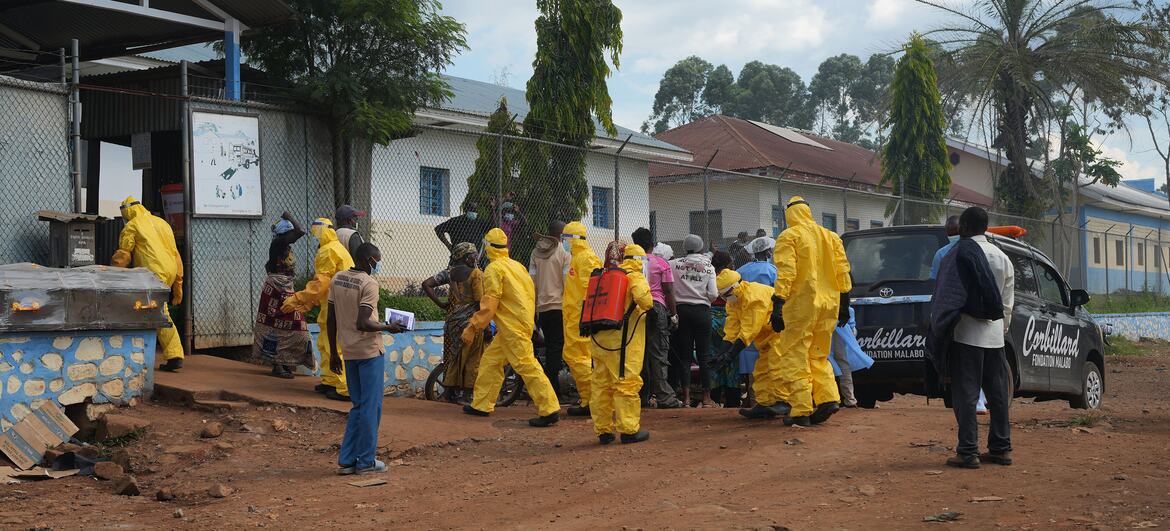
During the 2018–2020 Ebola outbreak in eastern Democratic Republic of the Congo (DRC), attacks on treatment centres, resistance to contact tracing, and widespread distrust of responders repeatedly undermined efforts to contain the virus. A World Health Organization survey found that only around a third of respondents trusted Ebola responders, illustrating how fragile relationships between institutions and communities became part of the outbreak itself.
The latest Ebola outbreak in the DRC is a public-health emergency. But it is also a warning that epidemics spread fastest where institutions are weak, conflict drivers are unresolved, communities feel abandoned, and trust has been damaged. On 15 May, 2026, Congolese authorities confirmed a new Ebola outbreak in the conflict-affected eastern part of the country. On 17 May, 2026, the World Health Organization declared the outbreak a public health emergency of international concern, citing concerns about regional spread and major uncertainties. Within weeks, cases had spread beyond Ituri Province into neighbouring areas, raising concerns about wider regional transmission. As of June 14, 2026, the Ministries of Health of the DRC and Uganda had reported 782 confirmed cases and 178 deaths in the DRC, alongside 19 confirmed cases and 2 deaths in Uganda, while hundreds of suspected cases remained under investigation.
The biological threat is serious. The outbreak is caused by the Bundibugyo species of Ebola virus, for which there is currently no widely available licensed vaccine. But biology alone does not explain why Ebola repeatedly finds fertile ground in eastern Congo. The virus is moving through communities already burdened by armed conflict, displacement, poverty, fear, and fragile public services. At its heart, this is a question of trust. Who do people believe when they are told to report symptoms, isolate from loved ones, or allow health teams into their communities?
The DRC has lived with Ebola longer than any other country. Since the virus was first identified near the Ebola River in 1976, the country has experienced multiple outbreaks. The devastating 2018–2020 epidemic infected thousands of people and claimed more than 2,000 lives. Yet one of its most important lessons was that successful outbreak control depends as much on public trust as on medical expertise.
Communities do not reject science simply because they misunderstand it. People interpret health messages through their lived experiences and realities. Where clinics often lack medicines, roads are unsafe, clean water is scarce, and government services are unreliable, emergency interventions can be viewed with suspicion. Rumours in such contexts are often symptoms of distrust rather than ignorance.
This matters because Ebola control relies heavily on cooperation. Early detection, contact tracing, testing, safe burials, infection prevention, and treatment all require people to work with health authorities. Families must believe that reporting illness will lead to care rather than stigma; and that isolation measures are designed to protect families rather than punish them. Also, communities must trust that health responders are there to protect them rather than impose decisions from outside.
Eastern Congo’s wider humanitarian crisis makes this challenge even harder. Years of armed violence and repeated displacement have weakened both infrastructure and confidence in public institutions. WHO Director-General Tedros Adhanom Ghebreyesus recently warned that insecurity is constraining Ebola response efforts and called for improved humanitarian access.
For many communities, the arrival of an Ebola response is not taking place in a vacuum. It occurs against a backdrop of insecurity, unmet needs, and longstanding grievances. In such settings, every institution is judged not only by what it says but by what people have experienced over time.
That is why the response cannot focus solely on emergency measures. Laboratories, treatment centres, and surveillance systems remain essential. But if communities do not trust the institutions delivering these services, even the most sophisticated interventions may struggle to achieve their full impact.
A more effective response begins with local leadership. Community health workers, faith leaders, women’s groups, youth networks, traditional authorities, and Ebola survivors possess relationships and credibility that outside actors often lack. These groups should not be treated merely as messengers after decisions have been made. They should be partners in shaping and implementing the response from the start.
The outbreak also highlights the need to strengthen basic services beyond emergency periods. Communities without reliable access to clean water, sanitation facilities, functioning clinics, and social protection face greater vulnerability during health crises. Investing in these systems is not only a development priority; it is one of the most effective forms of epidemic preparedness.
There are reasons for optimism. The DRC possesses some of the world’s most experienced Ebola experts. Congolese scientists, clinicians, community responders, and survivors have repeatedly helped bring outbreaks under control. Their knowledge and leadership remain among the country’s greatest assets.
But there are also lessons that should not be forgotten. Heavy-handed security responses can deepen suspicion. Large emergency budgets that fail to produce visible community benefits can fuel resentment. Communication strategies that lecture rather than listen can increase resistance rather than cooperation.
COVID-19 reinforced a lesson that applies equally to Ebola: trust is not a secondary concern in public health. It is part of social contract that determines whether people follow advice, seek treatment, and support collective action during a crisis.
The choice facing the DRC and its international partners is clear. They can treat Ebola as another temporary emergency and move on once case numbers decline. Or they can recognise that outbreaks expose deeper weaknesses in governance, service delivery, and state-society relations.
Stopping Ebola requires medicine, logistics, and financing. But it also requires something far harder to deliver in an emergency: trust. Until communities trust the institutions asking them to report symptoms, change burial practices, and seek treatment, Ebola will remain not only a viral threat but also a symptom of deeper governance failures. The most durable Ebola response is therefore not only a health intervention. It is an investment in peacebuilding, stronger institutions, resilient communities, and trusted relationships that can help prevent future outbreaks and crises.


No comments:
Post a Comment