
Dr. Avi Loeb (Wiki Commons)
On Tuesday President Donald Trump appointed a famous and controversial Harvard theoretical physicist, cosmologist and astronomer to lead a group of scientists to investigate UFOs and whether they pose a national security threat.
Dr. Avi Loeb, who led Harvard’s astronomy department until 2020 and is widely respected for his research into black holes, was publicly tapped by the Trump administration on Tuesday, according to a report by the Associated Press. In 2022, Dr. Ethan Siegel, an astrophysicist and science writer who frequently criticized Loeb’s work, told this journalist for Salon that Loeb’s research into a mysterious space object that crashed into the ocean, ‘Oumuamua, was a “travesty.” By contrast, Loeb is very popular among the lay UFO fan community, and more than three dozen scientists co-authored a 2023 paper with him in the scientific publication Journal of Astronomical Instrumentation advocating his recommended methods for learning more about UFOs (unidentified flying objects) and UAPS (unidentified anomalous phenomena).
Speaking to AlterNet about his recent appointment, Loeb broke down how he learned about his appointment and what he believes it could mean for American politics.
“I was contacted by the office of the Director of National Intelligence and was asked to lead a council that will advise that office, the ODNI, the White House, the FBI, and the intelligence community, and of course the All-domain Anomaly Resolution Office in the Pentagon, providing scientific advice to figure out the nature of unidentified anomalous phenomena, UAP,” Loeb told AlterNet. “And it looks like, if they were sure that they're dealing with human-made objects, they would have a classified memo exchange within the Pentagon or the intelligence agencies. But the fact that they're reaching out to the scientific community for help implies that they cannot really tell that some of these things are definitely human-made. And obviously, if they're human-made, there would be concern for national security, given that these objects are found near strategic assets.”
Because the Trump administration reached out to Loeb, he believes this means that “they really need advice.” He continued by explaining how he will apply the scientific method to his directives.
“First we have to review any information that they can share with us, with the council,” Loeb told AlterNet. “So I first assembled a team of 15 scientists who are exceptional, who have expertise in the physics of oceanography, statistics, and psychology, because these objects are interacting with humans. And we need all these aspects to understand the reported events. And we already submitted, since I assembled this team — and it's really an exceptional team, people who have a fresh mind with respect to the phenomena, I deliberately did not select people with an agenda or baggage regarding their views on the subject, because we need to provide scientific advice — and we already submitted a request for more than 50 items of information on specific incidents, and perhaps materials that the US government might have, and we should see what we hear in response.”
Because Loeb and his scientific team will only analyze unclassified information, they will be able to share their findings with the public, guaranteeing transparency about a subject that is often contentious. Coincidentally, he noted that he recently examined materials released on June 12th of this year, the same day as the Steven Spielberg movie “Disclosure Day,” which explicitly discusses how humanity could be brought together by the revelation that extraterrestrial life exists.
While Loeb admitted that he is not a fan of science fiction “because very often it violates the laws of physics,” he admitted that he feels the sense of wonder and hope captured by Spielberg’s motion picture.
“I feel like a kid in a candy store, in a way, as long as we receive sufficient information that is substantive — because the quality of our deliberations, our analysis, will reflect the quality of the data that we receive,” Loeb told AlterNet. “Science is guided by data. So what I say is, let's keep our eyes on the orbs, not on social media. It's not a matter of opinions — we just need the data, the evidence, just like a detective. So it's a great privilege for me to be involved in figuring things out.”
He added, “Of course, if we find a non-human-made technological object, the implications would be huge for our future. Because, first, we might learn about new science, new technologies. Second, it might imply that we're not at the top of the food chain, cosmologically speaking.
And my hope is that it'll be just like a knock on the door — when all family members in the house hear a knock on the door by a neighbor, all the loud arguments quiet down. So it'll change our priorities from conflicts, which you find every day in the news, to cooperation and response to this neighbor that we just found. It's sort of akin to finding a sibling in our family of intelligent civilizations. And for those people who have religious beliefs, they should not necessarily assume that God is a parent who can attend to only one child.”
Also like “Disclosure Day,” Loeb believes that the discovery of alien organisms could help humanity overcome the differences that sharply divide us. When asked about whether he has yet met President Trump (he said has not), he pivoted to that subject.
“The interesting aspect of this is that both Republican and Democrat members of the House and the Senate are working together on this subject of disclosure, and everyone is excited,” Loeb told AlterNet while laughing. “It's a reminder that science is better than politics. What do I mean by science is better than politics? It brings people together rather than separating them. So in an age where you have a lot of polarization as a result of social media, as a result of political upheaval and so forth, it's really refreshing to find a subject where everyone comes together.”
He then observed, “I was in the US Senate on Thursday for the UAP Disclosure Forum, and there were members of Congress there — you could see half of them were Republicans, half were Democrats, and they were all rooting for it. I find that very refreshing. And I think that is a reflection of what will happen if we do find that we are being visited, because then the mindset will change. People will stop arguing with each other on relatively mundane matters when they realize something cosmologically important — that we are not alone. And it'll change everything.”
Responding to a question from AlterNet about Loeb’s appointment, Siegel reiterated the disdain for Loeb he first expressed to this journalist four years ago.
“This is extremely typical and to be expected of the Trump Administration,” Siegel told AlterNet. “Legitimate science conducted by those who value truth, facts, and the common good of humanity has repeatedly been rejected by this Presidential Administration in favor of sensationalism, grift, and self-enrichment. On those metrics, there is no better qualified astronomer in the country than Avi Loeb, who will no doubt find himself surrounded by like-minded individuals like Dr. Oz, Lee Zeldin, and RFK Jr. in the quest to destroy what remains of the American scientific enterprise entirely, and to replace it with Lysenko-esque policies that will lead to both long-term and short-term harm to all.”
Unlike Siegel, Dr. Franck Marchis — the CEO of and an astronomer at the SETI Institute (Search for Extra-Terrestrial Intelligence) — had a mixture of praise and criticism for Loeb.
“I also think Avi too often starts with the exciting explanation before the data are strong enough to support it,” Marchis told AlterNet. “That is not how science works. Science is not about making a bold assumption first and then looking for evidence to confirm it. Science is about collecting calibrated data, sharing it, letting other teams verify it, and being ready to change your mind.”
He added, “I also disagree with the idea that scientists are somehow hiding the truth. Most scientists, including my colleagues at the SETI Institute, I know are open, curious, imaginative, and very happy to be surprised. We just know that extraordinary claims need extraordinary evidence. Check our recent discussion with Jill Tarter [a fellow SETI astronomer] for instance. This is exactly why we are building SkyMapper and SkySphere. The goal is to observe the sky all the time, from many places, with instruments that can produce time-stamped and verifiable data.”

Religious groups are more prepared for aliens than you think
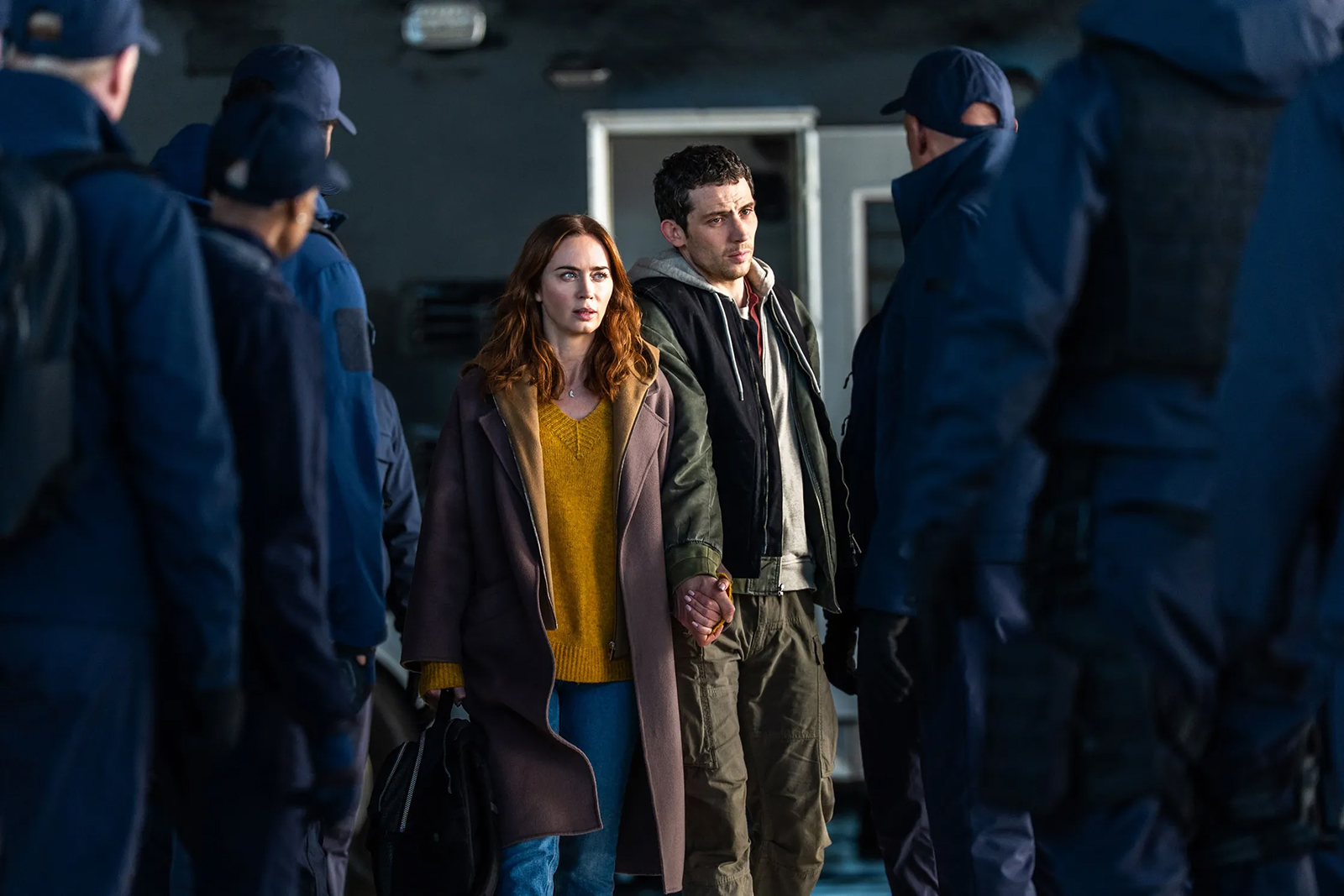
(RNS) — Roughly a third of the way into Steven Spielberg’s new blockbuster film “Disclosure Day,” which focuses on the theoretical release of evidence documenting the existence of alien life, a conversation between the two main characters takes a sudden turn toward the spiritual.
One of the characters, who is Catholic, begins fretting over what the release of such information would mean for religious people, worrying many will “stop believing in God.” People who believe in “superior beings,” she says, will balk at news of “actual” superior beings — namely, technologically advanced aliens.
“People can’t handle both,” she concludes.
Her implicit question is left hanging, like a flying saucer hovering over the horizon, for most of the film: If intelligent life were to be discovered beyond Earth, would it shatter religious traditions?
But for all the profound implications of intelligent extraterrestrial life, experts say the possibility is far less bracing for many religious practitioners across the globe. In fact, scholars argue many major faith groups have not only been thinking about the prospect of aliens for some time, some have even outlined extensive theological answers to the question of extraterrestrial life — or even fully embraced the idea.
“That question is packed with drama, but it doesn’t correspond to the lived realities of people,” said Diana Pasulka, a religious studies professor at University of North Carolina Wilmington and author of the book “American Cosmic: UFOs, Religion, Technology.”

Diana Pasulka on a podcast in 2025. (Video screen grab)
Pasulka, who has also published a book focused on Catholic theology and history, noted that despite the framing of Spielberg’s film, Catholics in particular have long been interested in extraterrestrial life. The idea was already showing up in the 15th century, when a German Catholic cardinal insisted on the prospect of life on other stars. What’s more, she noted that multiple heads of the Vatican observatory have openly discussed the prospect of intelligent life elsewhere in the universe, with one saying he would baptize an alien “if she asks.”
When it comes to Catholics, she argued, aliens are simply “not a problem for them.”
Paul Gutjahr, a professor at Indiana University Bloomington and author of the forthcoming book “Faith in Space: American Religious Belief in Extraterrestrial Life,” said the situation is similar for other religious traditions. He noted that in the early 1700s, prominent Puritan clergyman Cotton Mather — a major figure in Colonial-era Massachusetts — was already opining about life on other worlds: Mather, Gutjahr explained, believed that God was “so capacious, so big” that life elsewhere was seemingly inevitable.
“It’s a sign of his greatness, his omnipotence, his ubiquity,” Gutjahr said. “There has to be life on all these stars.”
There was also a surge of discourse about aliens in the 20th century, particularly during the space race. In the 1960s, at least one rabbi wrote and extensive academic article on the topic, pointing to Jewish texts some argue have long pointed to the existence of other worlds.
Pasulka said religion also often comes up when she interviews people who claim to have seen Unidentified Flying Objects, or UFOs, also known as or UAPs.
“I’ve met Orthodox Jewish people who had those experiences, and they’re fascinated by the public conversation, but it doesn’t shake their faith,” she said.
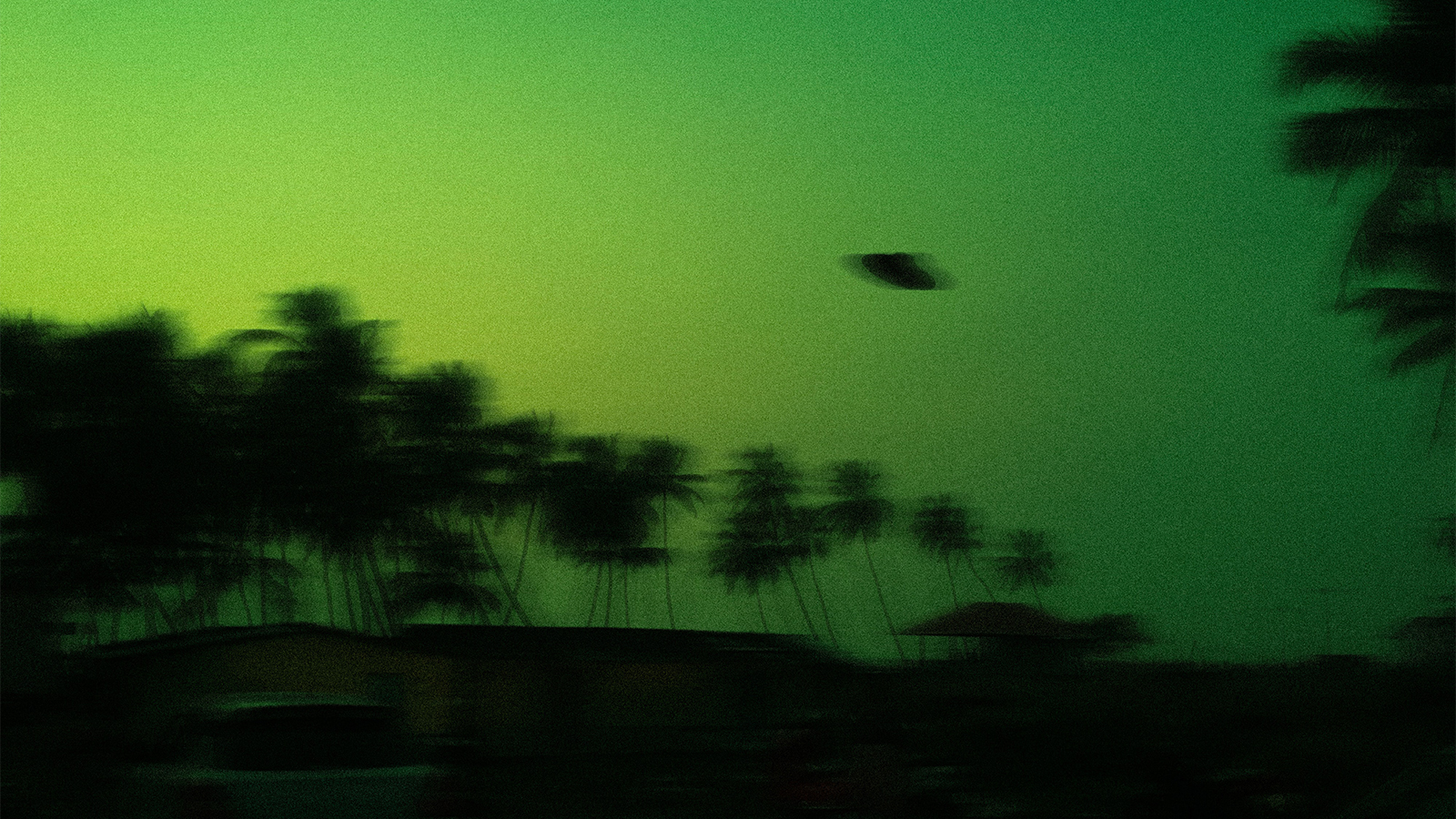
(Image by Albert Antony/Unsplash/Creative Commons)
Pasulka added that many religious people interpret the prospect of aliens through their own religious beliefs. She said that includes Muslims she has met who say they have encountered UFOs, some of whom have described their experiences by referencing jinn — supernatural beings in Islam and some other religious traditions.
Others have claimed that UFOs may be evidence of demons or “preternatural” beings such as angels, Pasulka said. It’s a belief that has garnered attention in recent months, with Vice President JD Vance referencing the idea in a March interview. But it has also proven controversial: on June 3, Catholic authorities announced the removal of an exorcist from his post in the Archdiocese of Washington, with church leaders justifying the move by citing the monsignor’s claim that UFOs are demons. Cardinal Robert McElroy, who oversees the archdiocese, said such statements “gravely undermine” church teachings.
“That belief has been around since the early twentieth century,” Pasulka said, referring to the association of UFOs with demons.
But while the spectrum of views about religion and aliens is wide, belief in their existence is fairly common among religious Americans. A 2021 Pew Research poll found that while religious people in the U.S. are less likely than others to believe intelligent aliens exist on other planets, most Protestants and Catholics still said their best guess is that intelligent life is out there. Among the groups polled, the only outlier was white evangelicals, with only around 40% assuming intelligent life exists.
And even then, there are prominent exceptions. In Congress, among the more vocal believers in aliens and UFOs is Rep. Tim Burchett of Tennessee, who is an evangelical Christian. Speaking to Religion News Service in December 2024, he said he saw evidence of UFOs in a passage from the biblical book of Ezekiel that describes a “wheel within a wheel.”

Military pilots have encountered unidentified aerial phenomena (UAP). (Image courtesy DOD/U.S. Navy)
“He saw the wheel, and the wheel at that time was the most technologically advanced mechanized item that they had,” Burchett said, referring to the prophet Ezekiel. “He described basically what I would say (is) a traditional flying saucer.”
Debate over aliens can be especially intense within Christianity, as one of the big questions surrounding the prospect of intelligent life on other planets is what that revelation means for Jesus Christ. Christians typically see Jesus as having died for the forgiveness of human sins, which raises a question: If aliens are real, did Jesus die for their sins too? Or do aliens have their own alien version of Jesus who dies for their sins?
By at least the 1880s, some Christian groups already had their answers. Gutjahr noted that Ellen G. White, the co-founder of the Seventh-day Adventist tradition, wrote extensively about alien life at the time, including the question of what it means for salvation.
“One of her takes was the Earth is the only fallen planet,” said Gutjahr, referring to the Christian concept of humanity being sinful. “There is life elsewhere, but none of it fell — only Earth, so Earth was the only planet Jesus needed to die on to redeem humanity.”
According to White, Gutjahr said, the result is that life elsewhere in the universe observes Earth as a sort of “giant amphitheater” to witness “God’s saving action.”

Paul Gutjahr. (Photo courtesy of Indiana University)
He added: “We become like a visual aid to the entire universe that you know about God’s mercy.”
For his part, when Burchett was asked whether extraterrestrials would have their own alien versions of Jesus who died for their sins, he didn’t hesitate.
“The Bible’s pretty clear about there being one (Jesus),” he said. “Jesus died for them just like everybody else.”
As for Spielberg’s film, it ultimately showcases a more multifaceted vision for what the existence of aliens would mean for religion than its early lines would suggest. Gutjahr found that unsurprising: He recalled that when he first started his book on religion and aliens, he expected documented moments of religious discourse regarding the prospect of aliens to be few and far between.
But as he began researching, he said, he was suddenly overwhelmed by the sheer volume of examples.
“It turns out that the whole freaking world has thought about life on other planets,” Gutjahr said, laughing.

No comments:
Post a Comment