Plans for a luxury tourism development linked to US President Donald Trump’s son-in-law Jared Kushner on Albania's Adriatic coast risk becoming a precedent for large-scale construction across the country's protected coastal areas, environmental groups and European lawmakers have said, arguing the project threatens one of the Mediterranean's most important wetlands.
MEPs and campaigners say the proposed resort inside the Vjosa-Narta Protected Landscape is not simply a single investment but a test case that could pave the way for further development inside Albania's protected areas following changes to environmental legislation last year.
"What this would cause is much bigger than a single project because it's a gate-opener project," Joni Vorpsi of Albanian conservation group PPNEA told a webinar on July 6.
"It is the first one, and it will be followed by others that are already published or planned inside the same area. The name of Jared Kushner is being used to open the gate to transforming the most important protected coastal wetland we have in Albania into a new city."
Kushner announced plans in 2024 to develop a luxury resort on the Albanian coast through his investment firm, Affinity Partners. The project has become one of the country's most controversial developments, with critics arguing it threatens a protected ecosystem while supporters say it will attract investment and boost tourism.
Construction activity has already begun in parts of the site, before the completion of environmental procedures. Vorpsi said heavy machinery entered the protected area in early May "without any public consultation, without any discussion about the environmental impact assessment”.
"The first thing we noticed was that it entered during the breeding season of the sea turtles. Bulldozers were going over the dunes and flattening them," he said.
"In one of the most important sites for sea turtles in Albania, at the beginning of the breeding season, we had bulldozers running over the dunes."
He said campaigners later observed forest clearance and drainage works behind newly erected fencing, making it increasingly difficult to monitor activity inside the site.
According to PPNEA, the proposed development would extend across about six kilometres of coastline and include around 10,000 rooms, many of them residential properties.
"It is the size of a new city," Vorpsi said. "The project is made attractive through the renderings published on the government's website and on Jared Kushner's pages, but what hides behind those pictures are 10 to 15 years of construction work inside the most important coastal wetland Albania has.
"This means hundreds of trucks, bulldozers and workers inside this fragile ecosystem. We are wiping out nature to develop the coastline."
The dispute has rapidly evolved from an environmental campaign into a broader protest movement, with demonstrators raising concerns about transparency, corruption and the rule of law.
"What started with people asking for transparency and stopping the project has grown into a new phase where people want more accountability, more transparency," Vorpsi said.
"Different groups have joined to bring their own cases and talk about other social issues that are not going right in Albania."
He said the movement had emerged after campaigners felt official concerns about the environmental impact were being ignored.
"What we were facing was the complete disregard for our data," he said. "Experts spent hours in the field monitoring this internationally important site."
Initially, environmental groups struggled to attract public attention, but awareness spread, demonstrations grew larger.
"There was a big interest. People were completely against this. Then what you all know happened. Local people protested against the fences and there were acts of violence."
He said the movement subsequently expanded beyond organised environmental groups. "People were no longer waiting for any coordination. A peaceful revolution started."
European lawmakers say the dispute highlights broader concerns about governance as Albania seeks membership of the European Union.
Jutta Paulus, a German member of the European Parliament, said Albania had previously adopted strong environmental legislation in preparation for EU accession but that amendments approved in recent years had weakened protections.
"They used to have very good environmental protection laws," she said. "But two years ago a number of amendments were made. The governing majority imposed changes excluding five-star luxury resorts, allowing them to build in protected natural areas without paying compensation and giving them access to land that previously could not be developed."
Paulus said the Vjosa-Narta Protected Landscape was among Albania's most valuable natural areas, combining internationally important wetlands with a largely undeveloped stretch of Mediterranean coastline.
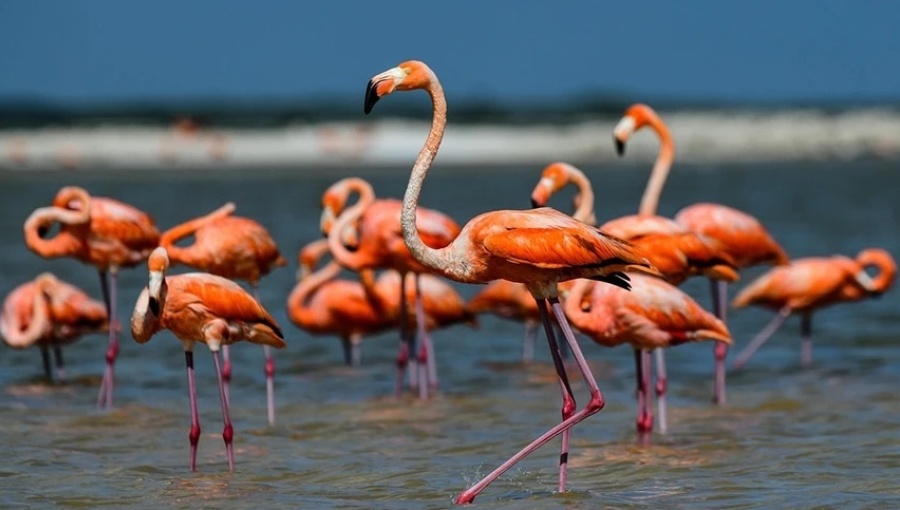
"It is a beautiful region on the coast," she said. "There are flamingos, pelicans, loggerhead turtles and Mediterranean monk seals that give birth there. It is one of Albania's natural crown jewels."
She said residents had become increasingly alarmed after fencing was erected around parts of the site. "They started putting up fences to enable construction and locked out people living in the surrounding areas," she said. "Shepherds could no longer take their animals there, for example, and people started to protest."
Paulus said tensions escalated after private security guards were deployed. "Private security was called in and took action, while the police just stood there and watched. That escalated the situation."
She argued that the dispute reflected a wider debate over Albania's future development model. "Albania has beautiful natural resources which are in stark contrast to much of the rest of the European Union because they are still untouched," she said. "It is not necessary to restore nature. It is about preserving it — clean water, good soil, clean air. Everything needs to be protected because Albania still has a lot of it … It would be more than a great shame if this were lost because of short-term financial interests."
Environmental groups argue that Vjosa-Narta deserves protection not only under Albanian law but because of its international ecological significance.
The protected landscape encompasses the delta of the Vjosa River, widely described as Europe's last major wild river, which flows into what campaigners say is the Mediterranean's most intact river delta.
"This site is a mosaic of habitats," Vorpsi said. "A recent study shows it is the most intact delta in the Mediterranean, leaving a lot of space for wildlife to flourish. It is an exceptional area."
Because of its ecological importance, he said, the site is recognised internationally as an Important Bird Area, a Key Biodiversity Area and a candidate Emerald Network site, with the expectation that it will eventually become part of the EU's Natura 2000 network once Albania joins the bloc.
The wetlands are one of the Adriatic flyway's most important stopping points for migratory birds. The wetlands also support breeding flamingos, while the lagoon, coastal dunes, marshes and centuries-old pine forests create a rare combination of habitats.
Campaigners reject accusations that they oppose economic development. "What we are facing is being portrayed as people who are against development," Vorpsi said. "But what we are really talking about is the rule of law, protecting protected areas and protecting ecosystems that are already recognised as nationally and internationally important."
He said recent legal changes allowing development inside protected areas had created concern among conservationists that further industrial and tourism projects could follow.
"Recently we have been finding information suggesting that industrial sites are also being planned inside protected areas," he said. "So this is about much more than one resort."
The dispute has also drawn attention in Brussels, where some members of the European Parliament argue the issue should form part of Albania's EU accession negotiations.
Daniel Freund, a German MEP, said Albania could not expect to move towards membership while weakening environmental protections.
"If a country wants to join the European Union, it has to abide by the rule of law, fight corruption and protect nature," he said. "If Albania does not do that because its government does not do that, then accession is under threat."
Freund said concerns extended beyond environmental protection to transparency surrounding the investment. "Today it is difficult to know who is behind these projects and who is paying for them," he said. "There are very complicated company structures, companies owning other companies, and all of this is used to hide who is actually behind it. That contributes to a high level of frustration."
He added that many Albanians believed wealth and political influence had allowed normal procedures to be bypassed. "If you have enough money and political support, suddenly all the laws, the rule of law and the usual procedures can be undermined," he said.
Campaigners say the protests have already achieved one important objective by drawing international attention to the issue.
"The first victory is that everybody now knows Albania is about to destroy the most important coastal wetland it has," Vorpsi said.
"The second is that the Albanian people are giving an example and are actually showing the way to Europe. The government has obligations to align with the EU environmental acquis, but it is not doing so. The people of Albania are asking for those obligations to be respected."

No comments:
Post a Comment