Refusing Non-Existence
Despite renewed efforts to criminalize and erase queerness, LGBTQ Africans continue to challenge the myth that their lives and identities are somehow un-African.
As an African feminist pushing against how systems of oppression endeavor to constrain and diminish, I am concerned with the functions of violence. Violence in its myriad forms serves to inscribe who is deemed human and who is not, who is considered deserving of dignity and who must be stripped of it. It is a language of demarcating society’s status quo and the bounds of acceptable identities and behaviors. When understood this way, violence against queer African bodies is particularly insidious as it is designed to brutally mold queer people into heteronormativity—in life and sometimes in death.
African queers are often confronted by the claim that their existences are un-African; a detestable product of Western influence. And so African leaders and others expend considerable energy in attempting to do away with queerness through various tools of violence: rhetorical, legal, political, physical, religious, and sexual. At the same time that queer Africans are subjected to violence and live with the unrelenting spectre of it, they must also find ways to resist. It is a liminal existence, but one that demonstrates that queer Africans are permanently fixed within the continent’s bounds despite concerted efforts to effect their erasure.
In the legal arena, African leaders and states untiringly expand the intended project of queer erasure through violent laws. In March, Senegal’s President signed into law a bill that doubles prison terms for same-sex relations and criminalizes pro-queer advocacy. Recently, Ghana’s parliament resurrected and subsequently passed the Human Sexual Rights and Family Values Bill, which intensifies the existing laws, including through criminalizing queer identity and advocacy. It awaits signing by President John Mahama. Despite legal efforts to undo it, the harsh 2023 Anti-Homosexuality Act remains in force in Uganda. Through this law, people who engage in same-sex activities face the risk of life imprisonment and the death penalty for “aggravated homosexuality.” Under President Ibrahim Traoré’s bold and Pan-Africanist rule, Burkina Faso criminalized homosexuality in 2025.
The legal reforms are emboldened and accompanied by the fiery speeches of African leaders who return faithfully to the mantra that queerness is un-African. Defending Senegal’s new anti-LGBTQ law, President Ousmane Sonko recently stated: “There is a kind of tyranny. There are eight billion human beings in the world, but there is a small nucleus called the West which, because it has resources and controls the media, wants to impose it [homosexuality] on the rest of the world.” When Traoré’s government criminalized homosexuality, Edasso Rodrigue Bayala, the Minister of Justice and Human Rights, explained that this development was “a historic reform” reflecting “respect for cultural values and the will to build a Burkinabé family.” At the end of 2023, Burundian President Évariste Ndayishimiye commented that queer Burundians should be stoned, should go and live in Western countries because they choose “satan.”
The African leaders are perhaps unconscious of the fact that they are building on and concretizing a particular brand of homophobia calcified through colonial rule when same-sex relations were criminalized. They perhaps do not know that they are leaning into and cementing the idea of a homogenous Africa, which again feeds into an earlier Western project of seeing Africa through simplified lenses. Moreover, they ignore the fact that modern-day anti-rights forces consist of networks between African politicians, religious leaders, Christian fundamentalist groups from the US, Europe, and elsewhere.
But this is the function of violence. It is an imprecise instrument that effects repression to sustain power structures. Anti-queerness especially reinforces patriarchy. This is why, even in countries such as South Africa, where constitutional rights present the illusion of freedom for sexual orientation and gender identity minorities, there are special horrors reserved for Black queer women. They are raped, mutilated and murdered for daring to step outside of the patriarchal mould. Sometimes this violence is committed by friends or sanctioned by family members.
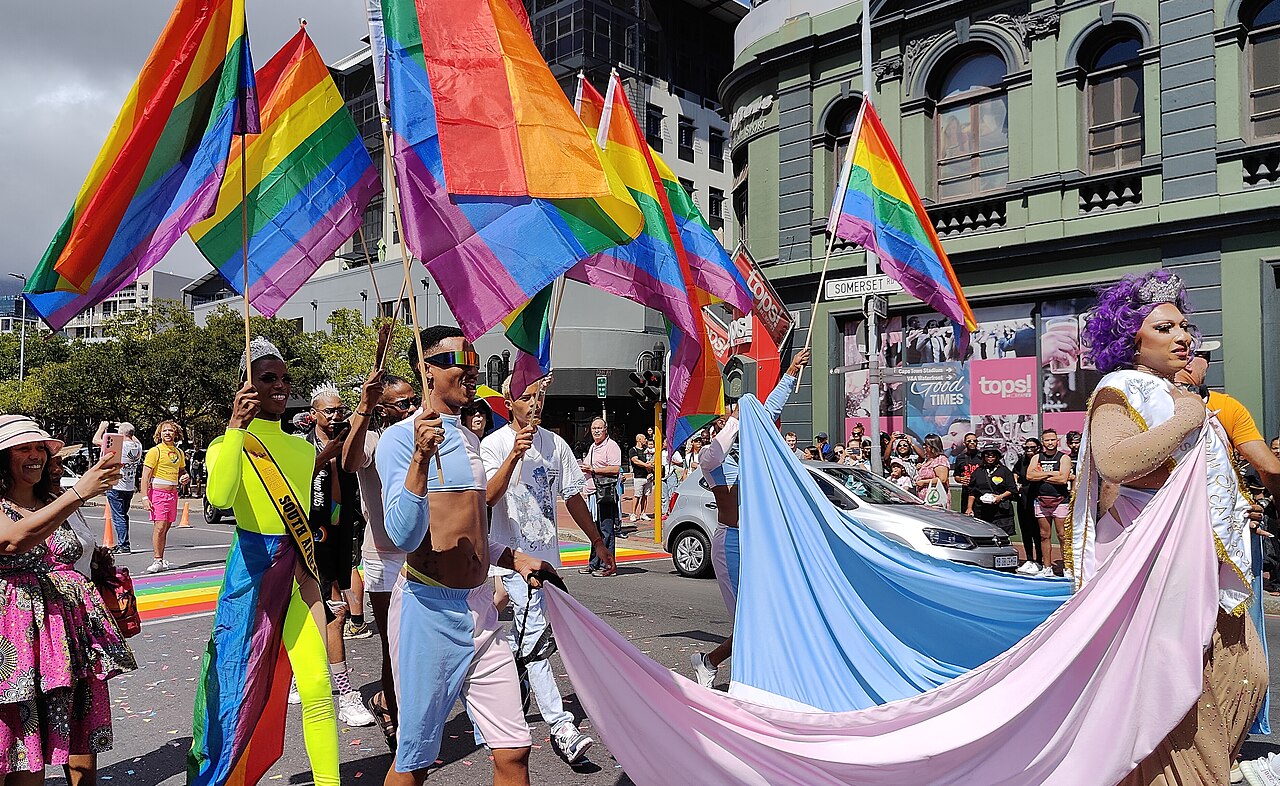
In juxtaposition to legitimized violence, queer Africans enact multifaceted forms of political resistance that cast queerness into registers of African humanity. In Uganda, Clare Byarugaba founded the first local chapter of Parents and Families of LGBTIQ children (P-FLAG). Though she constantly lives in a state of vigilance and risk as one of the few openly queer activists in the country, she maintains that “I fight because I want those who come after me to have a softer landing, to know a different Uganda.” In Bostwana, a case initiated by 24-year-old Letsweletse Motshidiemang and supported by Lesbians, Gays and Bisexuals of Botswana (LEGABIBO), succeeded in decriminalizing homosexuality in 2019 by demonstrating to the court the very dire impacts of criminalization. In February this year, an array of queer people proudly paraded through Cape Town city to celebrate Pride, but also to call attention to hate crimes and inequality experienced by Black queer people.
Activist scholarship forms another critical part of queer resistance. We see this through Stella Nyanzi’s ethnographic research contextualizing how Ugandans proudly claim being both African and same-sex loving by affirming their locally-cultivated identities and names, heeding ancestral callings, and recalling documented pre-colonial same-sex practices in the Buganda kingdom. This research is a vital counter-argument to claims that African queerness did not exist before colonialism and that the marker of African-ness is the heterosexual and patriarchal family unit.
I cite these examples not to make a happy check-list of queer African activism, but to demonstrate the slow, exhausting, and often unseen work of refusing violence that is taken as normal and viable. This unsettling of the status quo is a critical means of reclaiming African identities from within, debunking the distracting and illegitimate claims of Western origins and influence, and forging marginalized African solidarities. There is no neat conclusion, but only an incremental shuffling forward in resistance to imposed “non-existence.”
My Confrontation with Rainbow Capitalism and the Pride Industrial Complex
Photograph Source: Syced – Public Domain
I grew up very Queer in a very small and very conservative town in Central Pennsylvania. I didn’t have the word ‘Queer’ or really any word to properly describe my feelings of visceral otherness, but I couldn’t seem to hide it either. Not from the Catholic priests who saw a child deeply disturbed by their own body as an opportunity for a good time or from their loyal parishioners who seemed to hold biennial conventions at my parochial school over the existential question of ‘what should be done with the Reid child?’
I have spent the better part of my life trying to come up with an answer to that question and even once I did, the answer didn’t exactly make things much easier. By the time I finally figured out that the ‘Reid child’ is a transfeminine genderqueer dyke molested into obedience by Vatican protected predators, she had developed five personalities just to deal with the weight of that post-traumatic reality and found herself bumped up to the top tier of the Fox News hierarchy of scapegoats, somewhere between undocumented communists and mouthy Black chicks in hijabs.
On the other hand, I also managed to uncover the fact that I wasn’t the only damnable pervert in the holler, forging a small found family of neurodivergent genderfuck hicks to smoke dope and shoot tin cans with. On top of that, it turned out that the college town about thirty minutes down the road from me had a fairly sizeable LGBTQ+ organization, one of the largest in the state, as fate would have it.
So, once the dust finally cleared from my shattered closet, I decided to pack up my five personalities and get a volunteer job in the big, wicked city with this non-profit in hopes that I might be able to convince someone over there to help my people over here.
The mission seemed to begin with promise. The people at this organization appeared to be very supportive on the surface and had even acquired a government grant to set up a program to provide services for Queer youth in rural areas like mine along with a paid employee to help run them. This was what I had wanted more than anything. The youngest member of my found family is the non-binary child of two of my best friends who calls me Auntie Anarchy and kind of restored my faith humanity after decades of people shielding their children from me like some kind of ghoul.
This child would become my beloved nibbling (a non-binary term for niece/nephew) and trying to provide them and others like them with the modicum of community and safety that could have shielded me from mountains of trauma when I was their age became a kind of jihad.
Sadly, it didn’t take long for me to recognize that the big college town LGBTQ+ center didn’t quite share my passion. In fact, they seemed to spend most of their time organizing one of Pennsylvania’s largest Pride parades every June. I would take my nibbling to some of these decidedly family friendly events just to show them that they weren’t alone, but I was never quite comfortable with the level of police presence at these crowded spectacles or the level of performative gladhanding from the state’s Democratic Party for that matter.
Still, I held my nose for what I believed to be the greater good and I largely did the same thing with my new volunteer job at what I came to call the Center; coming in week after week and harassing the awkwardly placed straight woman who ran their physical location downtown about the progress of what they had promised to what I came to call ‘my kids.’
But it was just one excuse after another from that woman. Just week after week of “soon, be patient” even though these people supposedly already had all the resources they needed. Somehow, those resources just never seemed to find their way to my broken neck of the woods.
Then Trump got reelected and I lost patience. Within days of that vile child molester’s inauguration, he was passing executive orders targeting Queer kids and my nibbling’s school life went from bad to unbearable; receiving death threats that their teachers couldn’t seem to be bothered to even address while their friends filtered in and out of various institutions after failed suicide pacts.
To make matters even more maddening, my straight supervisor at the Center seemed to vanish into her office around this time, spending every waking minute on the phone with the door barricaded from the inside. I hoped that maybe at least some of that attention was being spent on the kids on the frontlines, but it never reached mine, so I took actions into my own fragile hands.
I found a safe location at a volunteer bookstore for the rural youth group to operate from and even offered to provide transportation, but the Center’s employed operator never seemed to show when anyone was actually watching. Tensions finally came to a head when my incessant bitching finally got me a meeting with the chairwoman of the whole damn organization.
I did my best. I told her about the small town I grew up in and the nibbling that I loved, about the pain of seeing someone you care about reliving the worst moments of your childhood for the first time in slow motion. I begged her to give us just a fraction of the time and money she splurged on cop-infested parades and bougie gaylas, and even told her that I was a Queer person on disability who would gladly run the program myself if she’d just give me a hand. That’s when things got ugly.
The moment this woman learned that I had been diagnosed with dissociative identity disorder, she began to lay into me with ableist microaggressions and straight-up insults. When I finally cut the shit and asked her if she was actually telling me that my neurodiversity should preclude me from being around kids like my nibbling, that elderly white lesbian gently told me, “Well, we need to think about the children.”
It was the Catholic Church all over again, only this time the bigots had dressed themselves in rainbow camouflage.
A series of increasingly infuriating events unfurled very rapidly after that dreadful heart-to-heart that made the true colors of this supposedly inclusive organization grotesquely clear.
I overheard my straight supervisor talking trash about me with half a dozen of the organization’s board members in her office, so I stopped coming into the Center and began working at the bookstore instead where I discovered that the person being paid to run the rural outreach programs was a literal fraud who was simply pocketing the checks without even showing up to what they were supposedly paying for. Upon informing them of this discovery, the Center replaced this charlatan with another straight white woman and then moved the bitch and her virtually non-existent group to a closed location when I continued asking questions.
But perhaps the most despicable development of them all was my discovery that the first thing my supervisor had done after Trump’s reelection, what she was too busy with doing in her locked office to even speak to me, was getting on the phone with straight corporate sponsors to make sure that they didn’t pull their floats from the Pride parade after Trump’s crackdown on trans-everything. This was what took precedence over suicidal children and executive child abuse.
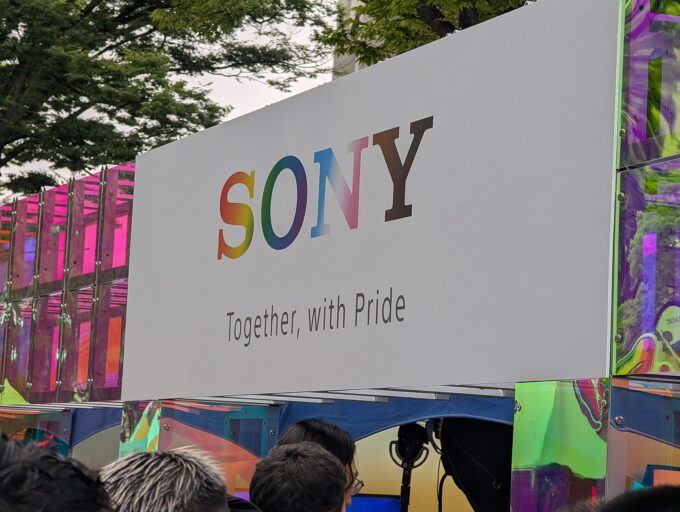
I was infuriated but not even a fraction as infuriated as I became upon learning that one of those blessed sponsors was none other than Raytheon, a company using its support for Pride parades to cover up its ongoing involvement in profiting off of the slaughter of other poor people’s children.
This! Dearest motherfuckers! Is the Pride Industrial Complex! A network of once-benevolent LGBTQ+ organizations, operated by rich old white lesbians, spending most of their time and millions of your donation dollars on throwing parades just so they can raise enough money to throw more goddamn parades, all of which serve little other purpose than to offer diabolical corporations and two-timing politicians’ platforms to celebrate themselves celebrating diversity while they murder entire populations behind the rainbow flag.
What more can I say without literally smashing things? Big money does hideous things to beautiful people and beautiful things for hideous operations. Just please do me one big goddamn favor, keep it all the fuck away from my children and don’t make me tell you twice.
As for me, I ended up running the youth group myself out of the bookstore because no one else could be bothered to give a fuck about rural Queer kids when the cameras weren’t rolling. I was too busy organizing to even think about indulging in another parade this year. I helped organize a block party in that very small and very conservative town with Food Not Bombs instead. My kids were there and I’m proud to say that not one red cent was exchanged for anything during the entire affair.
The only Pride parade I’m still interested in marching in is the one that leads to the White House and ends with that temple of Raytheon being burned to the ground once and for all. That would be one fabulous spectacle that I’d like to think we could all take pride in. Until then, the pink jihad rides on.


No comments:
Post a Comment