Sunday, September 14, 2025

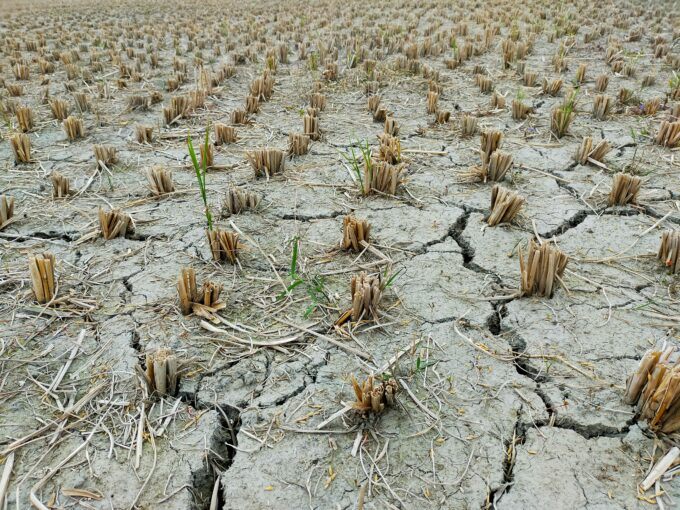
Mega-Dryness Spreads Throughout Northern Hemisphere
 September 12, 2025

“The continents are drying, freshwater availability is shrinking, and sea level rise is accelerating… Combined, they send perhaps the direst message on the impact of climate change to date.” (Unprecedented Continental Drying study, see below)

Human-generated climate change, the result of enormous quantities of CO2 spewing into the atmosphere from burning fossil fuels (in 2024, the CO2 annual rate set a new all-time record of 3.75 ppm or an 18,600% increase over natural variability of 0.02 ppm per annum, according to paleoclimate pre-industrial data) causing widespread interconnectivity merging of dry regions of the planet. This is a new feature of global warming.

“Our entire infrastructure and civilization are based around a climate that no longer exists.” (John Marsham, professor Atmospheric Science, University of Leeds)

Dry areas of the planet are merging into massive mega-dry behemoth regions reflective of how far advanced climate change has progressed, with global warming turning hotter, and hotter, especially 2023-24 when global mean temperature increased by 0.3°C or 10-fold in one year, ushering in a full year of 1.5°C above pre-industrial. According to Johan Rockström of Potsdam Institute for Climate Impact, this kind of big increase in only one year has never happened before. Scientists are still bewildered.

Recent studies show mega-drying mergers advancing at alarming rates. Huge swaths of the planet are starting to resemble the science fiction world of Frank Herbert’s Dune (1965) with its desert ecosystem and water scarcity central to the plot, as actual climate change in today’s world adopts a science fiction veneer.

“We use NASA GRACE/GRACE-FO data to show that the continents have undergone unprecedented TWS (terrestrial water storage) loss since 2002. Drying areas of the planet increased by twice the size of California annually, creating ‘mega-drying regions’ across the Northern Hemisphere.” (Famiglietti, et al, Unprecedented Continental Drying, Shrinking Freshwater Availability, and Increasing Land Contributions to Sea Level Rise, Science Advances, July 25, 2025)

Multi-dimensional factors are found within mega-dryness: “Since 2002, 75% of the population lives in 101 countries that have been losing freshwater. Furthermore, the continents now contribute more freshwater to sea level rise than the ice sheets, and drying regions now contribute more than land glaciers and ice caps. Urgent action is required to prepare for the major impacts of results presented,” Ibid.

Alarmingly, four continental-scale mega-drying super-regions have formed a new feature for the planet. These super regions are all in the Northern Hemisphere (1) northern Canada (2) northern Russia (3) a contiguous region inclusive of southwestern North America and Central America (4)  the massive, tri-continental region spanning from North Africa to Europe, through the Middle East and Central Asia, to northern China and South and Southeast Asia, which owes its expansion to the recent European drought.

In short, like The Blob (1958) of film fame, mega-dryness is spreading across the Northern Hemisphere. The consequences are only too obviously a fundamental shift in the foundations of civilization. Thousands of years of foundational development are now at risk from a measly couple of hundred years of burning fossil fuels.

Areas of the planet “getting wetter” and experiencing “wet extremes,” are another new feature but decreasing in size (area) while increasing intensity. This decrease in area, or size, of wetness but increase in intensity paradoxically serves to complement dryness leading to extreme mega-dry regions with serious vulnerability to wildfires. For example, the years 2023 and 2024 were record-setting for forest fires, burning more than double the annual average of the previous two decades. Last year was the first time that major fires raged across both tropical and boreal forests (NASA and World Resources Institute).

“The implications of continental drying for freshwater availability are potentially staggering. Nearly 6 billion people, roughly 75% of the world’s population, live in the 101 countries that have been losing freshwater over the past 22 years,” Ibid.

Scientists say this challenges world leaders to take immediate steps to curb fossil fuel burning emissions at any and all costs. After all, it’s burning up the planet.

“The expansion of continental drying, the increase in extreme drying, and the implications for shrinking freshwater availability and sea level rise should be of paramount concern to the general public, to resource managers, and to decision-makers around the world. The robustness of the trends reported here, along with a critical shift in the behavior of TWS and continental drying following the major El Niño beginning in 2014, may well mean that reversing these trends is unlikely. Combined, they send perhaps the direst message on the impact of climate change to date. The continents are drying, freshwater availability is shrinking, and sea level rise is accelerating,” Ibid.

According to another journal, Science/Alert d/d August 18, 2025: Earth’s Continents Are Drying Out at an Unprecedented Rate: “This means terrestrial water is, on the whole, diminishing with devastating effects worldwide. That includes freshwater sources on the surface, like lakes and rivers, and also groundwater stored in aquifers deep below Earth’s surface. The majority of the human population, 75% of us, live in the 101 countries where fresh water is being lost at increasing rates.”

A significant part of this issue is where the water goes… mostly into the ocean, and it exceeds meltwater from the world’s ice sheets. In continents without glaciers, 68% of loss of terrestrial water is attributed to human groundwater depletion. Extreme droughts in Central America and Europe have contributed considerably. Scientists believe these events will become more frequent and more severe with the ongoing climate crisis.

According to another science journal, LiveScience, December 2024: ‘An Existential Threat Affecting Billions’: Three-quarters of Earth’s Land Became Permanently Drier in Last 3 Decades: Drylands now cover 40.6% of the land on Earth. According to the study, aridity is now impacting 40% of the world’s agricultural land with intensified wildfires, and agricultural collapse in areas hard hit, including a lot of Europe, the western US, Brazil, eastern Asia, and central Africa.

Scientists say fossil fuel CO2 emissions must be reduced as quickly as possible to zero to halt the continent-wide creeping devastation of the dryness peril, as well as adopting much better uses of land and water resources.

The merging of drying regions into mega-dry super regions has been largely unrecognized by society on a local level and may be the least recognized yet most damaging impact of climate change on a global scale. Scientists believe it demands the earliest attention via (1) governmental science agencies (2) mitigation policies (3) academic advice for major developed nations that most directly impact global warming, especially the US, China, Russia, India, and the EU, which are the top CO2 emitters.

The leadership of science has never been more essential than it is today.

Robert Hunziker lives in Los Angeles and can be reached at rlhunziker@gmail.com.


From Detroit, a Defiant Call for Palestinian Liberation


Jonathan Urmeneta
September 12, 2025


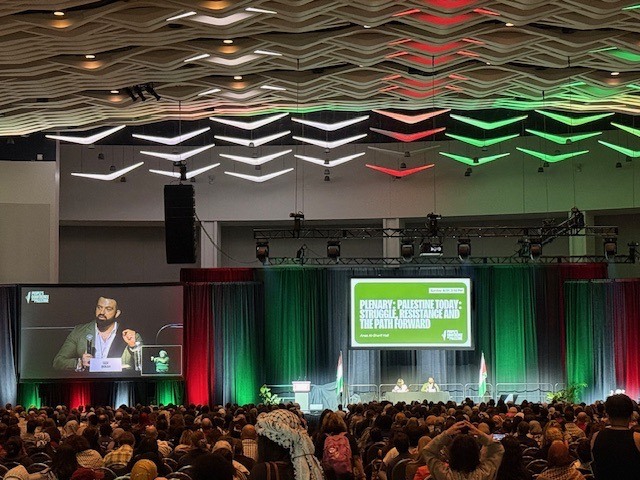
2nd Annual People’s Conference for Palestine. Photo by Jonathan Urmeneta.

The Heartbeat of Solidarity


Thousands gathered in Detroit for the 2nd Annual People’s Conference for Palestine. Established doctors, activists, journalists, political leaders, and people of conscience convened in Detroit, Michigan, to discuss humanity’s most pressing issue: the Gaza Genocide. The conference was a three-day event that featured daily workshops and discussions on advancing liberation efforts. Vendors were also on hand, selling Palestinian merchandise and promoting politically motivated organizations. Even Palestinians from the West Bank, who face this daily burden, were well represented at the conference after struggling to get a Visa. In many ways, this conference was an extension of the Palestinian resistance and the moral core of America.

Doctors Stand with Palestine

Many prominent figures lent their voices to the conference. One of these well-known figures was former Green Party Presidential Candidate and Anti-Zionist Jew, Jill Stein. Throughout her candidacy, she was one of the most staunch critics of the Israeli government and the Gaza genocide. She was even arrested during the student protests at Washington University and charged with assaulting a police officer. At the People’s Conference for Palestine, she spoke on a panel of fellow doctors representing Doctors Against Genocide, including a doctor who served in Gaza: Dr. Thaer Ahmed.

Stein offered a simple message of hope and defiance: “In the court of public opinion, we have won, we have won!” She also said that a vital decision in the United Nations is coming that could change the reality on the ground in Gaza, giving Palestinians a lifeline.

“A year ago, they [the UN General Assembly] gave Israel one year to comply with the rulings of the International Court of Justice to end genocide, end occupation, end ethnic cleansing and at that time the General Assembly said Israel had one year and they were going to face consequences. Well, that date is coming up. That is around the corner, it’s September 18. Starting on that date and even before, the UN can impose…severe and serious policies on Israel including comprehensive sanctions, military embargo stripping Israel of its credentials in the General Assembly as it was done to South Africa and sending in a peace force to protect civilians and distribute aid and food,” Stein said.

Among the voices at the conference was Basma Karaja, a retiree from Cleveland, Ohio. She rejected reliance on international bodies and instead highlighted the power of people-led initiatives as the way forward.

“She [Jill Stein] referred to the General Assembly and the UN for most of her speech. I don’t rely on either one of them, I feel that it has no jurisdiction to impose any sanctions or arm embargo against Israel. They are just an extension of the White House. ⁠She said the United States can not be changed. Anything could be changed, I believe. Otherwise, nothing is impossible. She talked about her website, Lifeline for Palestine. It’s a great idea to have a website for Palestine to keep people informed and engaged in helping people in Gaza and Falasteen to stay on their land,” said Karaja.

Student Activism: Mahmoud Khalil Leads the Way

A voice to transcend the political divide and create social movements, student activist Mahmoud Khalil made his presence felt at the conference. He commanded droves of students to rise to confront his university’s complicity in the Gaza genocide. This did not come without a cost. After spending several months in ICE detention for his activism at Columbia University, through a vigorous legal battle, he emerged triumphant. At the conference, he riled up the crowd of 4,000 before giving his speech, with the crowd chanting “Disclose! Divest! We will not stop, we will not rest!”

“This is our moral duty to speak up in a time of genocide. Palestine is the compass, but here’s the thing, what does it mean? It cannot just be a slogan, it must guide us. How we act and how we build,” Khalil said.

Another attendee at the event was asked how she viewed Khalil’s speech and the months of repression he faced for his activism. Walan Kanan, a psychotherapist from Toledo, Ohio, is a staunch advocate for her people and sees Khalil as a conduit for Palestinian liberation.

“Mahmoud Khalil’s speech was inspiring, grounding, and put law into perspective. I feel as though many of us, who actually have the privilege of citizenship, often shy away from advocacy efforts, because we are worried about some type of backlash we may get. But Mohamoud on the other hand, who truly has more at risk than many of us, chose to not stay silent, even after his detention. He showcases that there’s no room for selfishness in this movement and that the reality is, if they’re coming for one of us, it’s more productive for us to understand that they are coming for us all,” Kanan said.


Jonathan Urmeneta is a writer and researcher involved in the Palestinian solidarity movement. He has traveled extensively, denouncing and exposing U.S. imperial machinations from Silicon Valley to Russia to the Middle East. His work focuses on the intersection of power, geopolitics, and resistance, with a particular emphasis on the Global South. Jonathan can be reached on his Instagram account at humanr1ghtspulse or via email at jurmeneta@protonmail.com

GREEN FASCISM

In Israel’s Warped Logic, Veganism and Genocide Go Hand in Hand


 September 12, 2025

For Aziz 

People around the world are waking up to the outlandish tenor of Israeli propaganda. It’s deranged to legitimize occupation and genocide on the grounds of self-defense. Or to cast refugees burned alive and forcibly starved to death as imperiling Western civilization. Or to frame the colonial entity’s armed forces – which gleefully brag about murdering children and destroying homes, and post trophy photos clad in the lingerie of women they murdered – as “the world’s most moral army.” 

Yet the discursive acrobatics do not end there. A lesser-known element of Israel’s disinformation campaign is its self-proclaimed status as the leading nation in animal rights. A rich body of scholarship addresses the paradoxical relationship of veganism and animal liberation to colonialism in so-called Israel. On the one hand, the settler colony dehumanizes Palestinians, mobilizing the species divide to legitimize their erasure. On the other, it boasts of providing plant-based meals and synthetic combat wear to vegan soldiers. This framing perverts vegan ethics, which repudiate killing, confinement and the use of force against living beings. As Ahmad Safi, co-founder of the Palestinian Animal League, challenges, “What good is it if an Israeli soldier is vegan and wears leather-free boots if his gun is aimed at Palestinians?”   

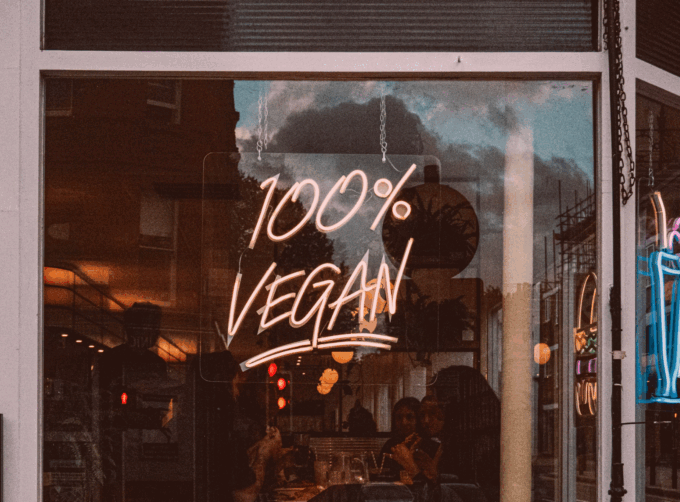
This reality-distortion is known as veganwashing. Vegans for Palestine, a Global South abolitionist collective, exposes links between vegan businesses, apartheid and the ethnic cleansing of Palestinians. It unmasks Zionism’s entrenchment in everything from VeganFriendly branding to PETA, Mercy for Animals and the American Vegetarian Association. Vegans for Palestine has further investigated Israel’s pioneering “lab-grown” vegan food tech, mobilized as part of its constructed image as uniquely altruistic, eco-conscious and technologically cutting edge. Touted as the first head of government to taste cultivated meat, Benjamin Netanyahu declared “Israel will become an alternative meat superpower” and “It’s delicious and guilt-free.” In this aberrant reasoning, lab-grown meat enshrines the settler colony’s innocence, despite the apocalyptic slaughter it wreaks.

While animalization and racialization merge to produce unspeakable violence in Palestine, manifestations of anticolonial, transspecies solidarity subvert this bleak matrix. In the West Bank, the Palestinian Animal League approaches nonhuman animal liberation as a fundamental component of decolonization. The Black Palestinian led Sulala Animal Society is the only such organization struggling to operate in Gaza. In one pointed video, Sulala’s founder, Saeed al-Err, smashes apart a donkey cart after liberating the severely beaten creature from a massive tangle of chains and leather bindings. Plant the Land is a vegan food justice and community projects team whose mission is buying and distributing vegan food, planting food forests on public land and providing Gaza’s farmers with seeds and farming tools. Subsequent to Gaza’s devastation, Plant the Land has concentrated on supplying water and food to the starved and displaced. Whereas prominent Western animal advocacy organizations remain silently complicit with Zionist rhetoric, notable exceptions include Mothers Against Dairy, Wild Country Farm Sanctuary, Institute for Animal Happiness and Animal Healthcare Workers Against Genocide.

Veganism’s coupling with genocide is logically untenable. Critical examination of this insidious deceit is essential for neutralizing the settler’s colony’s strategic deception. Yet our concern cannot rest merely on the “animal” as a rhetorical figure of the settler imaginary. Twenty-two months into the genocide, by August 2025, Israel had killed approximately 97% of Gaza’s animals. In addition to bombardment, orchestrated famine, habitat destruction and looting, there are also numerous videos of Israeli soldiers sniping animals, including horses and sheepand settlers massacring infant sheep and goats. One video of severed donkeys’ heads mounted by settlers on the wall of Al-Aqsa Mosque went viral. The Israeli armed forces participate in the long history of weaponizing dogs against non-Europeans in the service of Western empire-building, routinely using trained military dogs to assault and rape detainees. Israeli priests periodically film “practice” ceremonies in which they burn red heifers alive.   

Despite this, the Western animal rights movement has turned a blind eye or commented sparingly on the unfathomable destruction in Gaza, corroborating the longstanding critique that mainstream animal advocates align with white supremacy. When not mutely complicit, the animal rights movement has been overtly pro-genocide. For example, animal rights guru Gary Yourofsky declared that “Palestinians are the most psychotic people on the planet” and “F**k human rights.”  

 An upcoming Israeli animal studies symposium, “Entangled in Crisis: Human-Animal Relations in Times of Conflict and Upheaval” (12.11.25), likewise sanitizes Israel’s holocaust. The call for papers encourages analyses of events that “challenge established boundaries” and “expose systemic inequalities,” articulating a commitment to “multispecies lifeworlds.” It is peppered with oblique references to “political unrest,” “armed conflicts,” “crisis” and “upheaval,” but does not name the annihilation of life currently underway. To buy into the call for papers’ twisted logic requires full suspension of disbelief. It asks participants to join in its gaslighting denialism.

The hypocrisy is laid bare by the event’s organizers, whose ties to Israel’s military apparatus invalidate any commitment to justice. “Entangled in Crisis” is sponsored by the Community for Human-Animal Studies Israel and the Israeli Anthropological Association in collaboration with the Coller-Menmon Animal Rights and Welfare Program at the Buchmann Faculty of Law, Tel Aviv University. Tel Aviv University actively collaborates with the military. It houses the prestigious “Erez” B.A. program for officers in combat military units. 

The Department of International Law plays an increasingly pivotal role in Israeli military decision making. Its jurists routinely council top commanders on how to plan and carry out operations. Their role extends beyond offering legal advice, since they determine the interpretation of wartime law and the deployment of military violence. Tel Aviv University appointed Sharvit Baruch as a lecturer in its Faculty of Law – he went directly from overseeing the 2008-9 offensive on the Gaza Strip to teaching a course on international law the following semester. The symposium’s co-sponsor, the Israeli Anthropological Association, joined reactionary opposition to the adoption of Boycott, Divestment and Sanctions against Israel, including the American Anthropological Association’s adoption of BDS. The website of its other co-sponsor, the Community for Human-Animal Studies Israel (HASI), refers to crisis and war but contains zero references to Gaza or Palestine.  

White aligned, single-issue animal advocacy is irreconcilable with the intersectional ethic of groups like Vegans for Palestine. Veganism that condemns certain forms of slaughter while normalizing others is an oxymoron. Fortunately, not all animal studies scholars support this pernicious symposium. Critics see through Israel’s doublespeak. They comprehend that humans’ oppression of animals is inextricable from the animalization of Black and Brown humans. I contributed to a letter calling upon academics to boycott “Entangled in Crisis,” underscoring that it normalizes the annihilation of Palestinian humans under the auspices of liberating animals. The letter indicts Israel’s false claim to “vegan friendliness,” given its catastrophic destruction of animal life. 

Alongside outrage at the perversion of animal advocacy, the letter’s signers recognize the danger the settler colony poses to education. The two issues are inseparable: twisting concern for animals to sanction genocide aligns with Israel’s all-out assault on truth, with particular impact on higher learning. Israel’s decimation of Gaza’s infrastructure includes scholars’ targeted assassinations and the obliteration of educational institutions, constituting scholasticide. Israel has systematically destroyed or rendered unusable every university, college and high, elementary and nursery school in Gaza. Refaat Alareer, a distinguished poet and professor of English literature and creative writing, is the most prominent of countless scholars and intellectuals executed by Israel since October 2023, perpetuating a century-long practice of eliminating influential Palestinian thinkers, artists and public figures. In addition to executing academics, Israel’s “right to exist” hinges on the sublimation of indigenous cultural practices and systems of knowledge. Israeli voices and perspectives are amplified while Palestinian perspectives are silenced, a form of erasure known as epistemicide. 

The assault on Palestinian education and knowledge production extends beyond Gaza’s borders. Signers are concerned with the rights of students and scholars everywhere to intellectual freedom and political dissent without exception and without undue state interference, repression, and military violence, including research and public speaking about the U.S.-Israeli genocide of Palestinians and in support of the boycott, divestment, and sanctions movement. Shadow banning, doxxing, the long-practiced “Palestine exception” — academic freedom with the exception of Palestine — and the militarization of campus protest policing are rampant globally. Palestine solidarity activists have been brutally beaten, losing their diplomas, fellowships and visas, while faculty speaking out against the genocide have lost appointments, grants, visas, and publication and speaking opportunities. 

Animal studies scholars understand that the human/animal divide is a discriminatory invention wielded to justify denying moral consideration to members of any species. Displacement from the Human realm relegates all living beings to the same lethal vulnerability. Mohammed El-Kurd observes that Palestinians need be “defanged” and “declawed” to elicit Westerners’ empathy. To be “humanized” is to be delivered from barbarism. Unless they passively surrender to obliteration, Palestinians are no better than killable beasts. 

At times, the beyond-human world appears to resist this cruelty. Perhaps it was precisely such injustice that led a wild desert lynx to attack Israeli soldiers in the Naqab desert last March. The strike led some social media commentators to quip that the feline was guilty of antisemitism, but that aspect of Israeli hasbara warrants a separate discussion. It is related to a convoluted spin combining Jews’ unparalleled victimization with a 4,000 year old divine covenant. For now, let’s just say “it’s complicated.”

To sign the letter, click here. 

Alexandra Isfahani-Hammond is Associate Professor Emerita of Comparative Literature and Luso-Brazilian Studies at the University of California, San Diego. She works at the intersection of critical animal studies, decolonial studies and comparative race and slavery studies, with publications  including White Negritude: Race, Writing and Brazilian Cultural Identity (2008),  The Masters and the Slaves: Plantation Relations and Mestizaje in American Imaginaries (2005) and numerous book chapters, articles, essays and poems. Her current work blends theory with creative nonfiction to meditate on caregiving, end of life and the transformative potential of bereavement.


HE WAS A VEGETARIAN & ANIMAL LOVER


Libcom.orgfiles.libcom.org/files/2023-08/beasts of burden antagonism.pdf

Beasts of. Burden. Capitalism · Animals. Communism as on ent ons. s a een ree. Page 2. Beasts of Burden: Capitalism - Animals -. Communism. Published October ...