Fortescue begins construction on 690MW solar farm in Pilbara
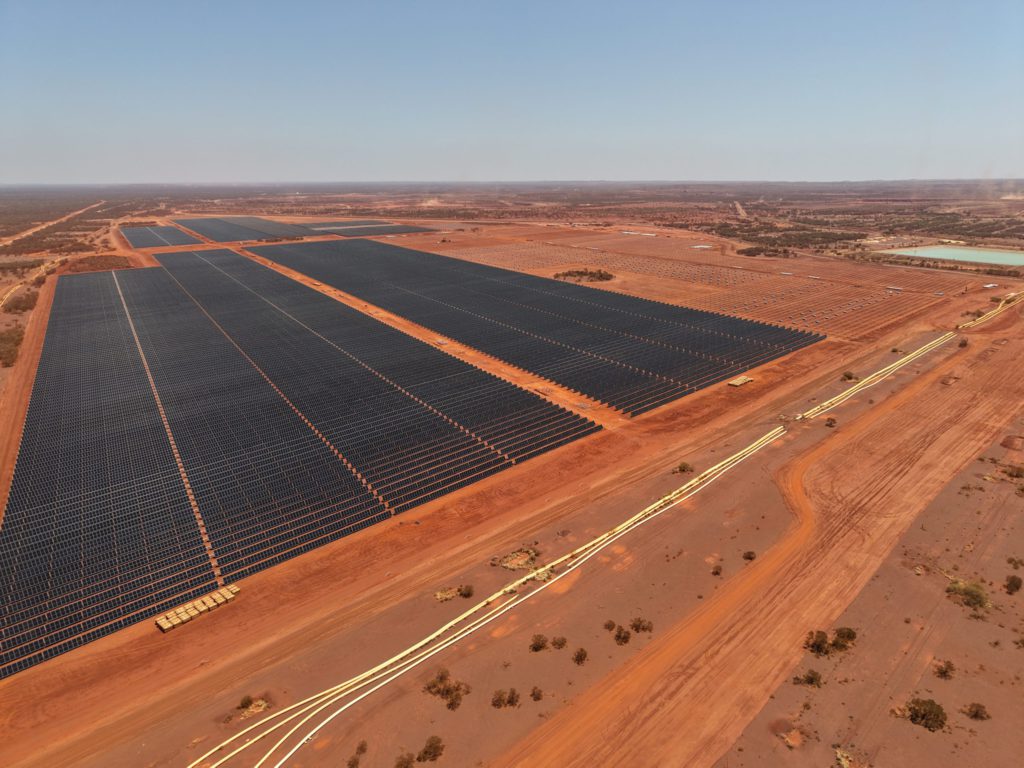
Fortescue (ASX: FMG) has begun construction on the 690MW Turner River solar farm in the Pilbara region, as well as the 650MWh battery energy storage system (BESS) at its flagship Cloudbreak mine.

These projects form part of Fortescue’s rapidly expanding integrated renewable energy ecosystem to power its Pilbara operations, the Australian iron ore miner said in a press release on Monday.
According to Fortescue, the Turner River solar farm represents the final solar installation required to deliver the company’s Real Zero decarbonization plan. Once complete and combined with the Solomon Airport (440MW), Cloudbreak (190MW) and North Star Junction (100MW) solar farms, Fortescue will have delivered all solar generation required to achieve Real Zero across its terrestrial iron ore operations.
Together, the projects will generate more than 1.4GW of renewable energy capacity – enough to power around half a million Australian homes, the company said. Construction of the Turner River solar farm is expected to be complete in 2028, with over 1 million solar panels to be installed during the build.
Meanwhile, the Cloudbreak BESS is targeted for completion in the 2027 fiscal year, delivering 74MW of power for a period of approximately eight hours. The system is expected to comprise 124 battery units integrated directly into the Cloudbreak solar farm.
Fortescue also completed commissioning of two battery energy storage systems at Eliwana and North Star Junction, strengthening the delivery of firm renewable power across its Pilbara operations.
Fleet electrification
At the same time, Fortescue is rapidly electrifying its mobile mining fleet, with 16 electric excavators and an electric drill already operating across its iron ore operations. Around half of the company’s excavator fleet will be electric by the end of 2026, it said.
Fortescue’s first battery electric haul truck is also expected to be operational before the end of the year. Its first in-house developed 6MW fast charger has commenced commissioning and will support the rollout of battery electric haul trucks across the Pilbara, the company said, adding that the charger will be capable of fully charging a haul truck in approximately 30 minutes.
Facility testing of XCMG’s prototype battery electric wheel loader, dozer, grader and water cart is also in the final stages, with the equipment preparing to make the journey from China to the Pilbara for site testing, it added.
Decarbonization efforts
“While others are still debating whether decarbonization is possible, Fortescue is getting on with building what’s needed to do it,” Fortescue’s metals and operations CEO Dino Otranto said in a news release.
“The technology is here. The economics are improving every year. And anyone watching global fuel markets can see exactly why electrification and renewable power matter more than ever.”
Construction also continues on the 133MW Nullagine wind farm, which will further diversify Fortescue’s renewable energy mix, the company noted.
Fortescue has already constructed more than 480 kilometres of high-voltage transmission infrastructure across the Pilbara. Once complete, the network is expected to extend beyond 620 kilometres, physically connecting Fortescue’s renewable energy assets to its mines, rail and port operations.
“Our solar farms, transmission lines, wind generation and batteries are being built right now across the Pilbara. We are moving first because the economics, the technology and the national interest are all pointing in the same direction,” Otranto said.
Fortescue at loggerheads with peers over diesel, decarbonization
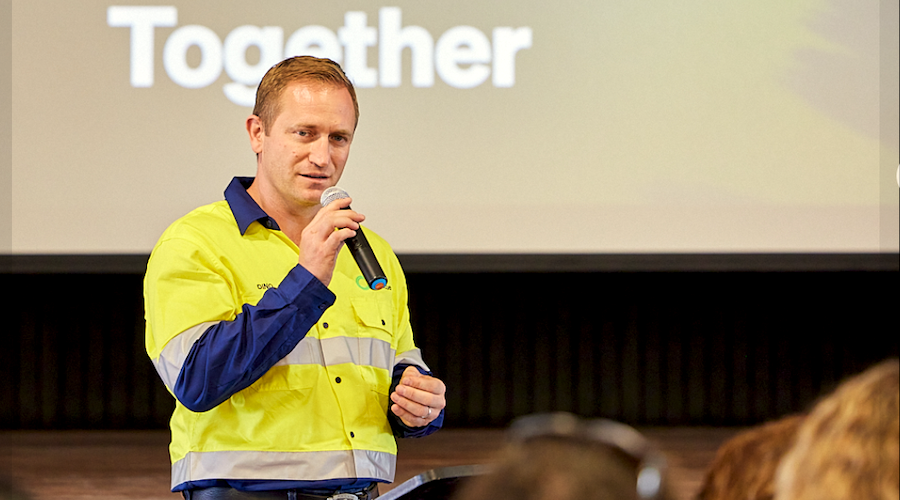
Simmering tensions between Fortescue (ASX: FMG) and larger peer BHP (ASX: BHP) came to a head on Wednesday when executives from both companies appeared at a mining industry event in Perth.
On Monday, the ABC’s Four Corners program aired an investigation into BHP’s decarbonization efforts, claiming the company had deferred billions of dollars worth of green projects. BHP blamed the delays on insufficient technology, a position Fortescue disputed during the program.
BHP WA Iron Ore asset president Tim Day told the AFR Mining Summit on Wednesday that battery-electric haul trucks were “not quite ready yet”.
During a fireside chat with Fortescue Metals CEO Dino Otranto at the event, the interviewer pointed to advertising commissioned by BHP citing research that its emissions fell 36% over five years while Fortescue’s rose 24%.
Otranto conceded the figures were accurate but attributed the increase to Fortescue’s energy-intensive Iron Bridge magnetite operation, adding that emissions across its hematite business had declined.
“Our total portfolio will go down over the next couple of years as we bring on these trucks that don’t exist,” Otranto said in a pointed jab at BHP.
Otranto also took aim at criticism surrounding Fortescue’s ambitious 2030 target to achieve real zero emissions.
“In the mining industry, we have been hammered for deployment of capital,” he said. “We’ve been named as wasting capital, so generally we become ultra conservative (…) So, there’s no way that somebody is going to risk what we’re doing at Fortescue.
“Now, we have a very different risk appetite. And over the years, it’s proven to be the best value return for the shareholder.”
Otranto defends diesel stance
In April, Fortescue launched a national advertising campaign calling for reform of the Australian government’s diesel tax “handout”.
Australian miners are major beneficiaries of the Fuel Tax Credit Act 2006, which refunds diesel excise to off-road fuel users.
Otranto defended the campaign, saying it cost only “a couple hundred thousand dollars”.
“The size of the campaign, in terms of relative media campaigns and support for media outlets, it’s kind of a drop in the ocean,” he said.
“To be honest, running a few TV ads — it’s been blown up as this major propaganda campaign.
“What are we actually advocating for? I know that I’m bucking the trend, and I’m standing out from the crowd, but we firmly believe that the current disincentives to align with both state and federal government to go green is absolutely not good enough.”
Fortescue remains isolated in its position, with miners including BHP and industry lobby groups campaigning against changes to the legislation.
Otranto took particular issue with Chamber of Minerals and Energy of Western Australia CEO Aaron Morey describing any change to the diesel rebate as “really bad tax policy”.
He said the comments left him “a bit hot under the collar” and prompted him to write a letter to the CME, of which Fortescue is a member.
“The peak industrial body here in WA, I don’t think adequately consulted, irrespective of the outcome of a position,” Otranto said.
“There was no consultation on that. Period. And I thought it was, to be honest, the weirdest thing I’ve ever seen in my life.”
Federal Resources Minister Madeleine King also weighed in, telling ABC Radio the government was not considering changes to the diesel rebate.
“What I find concerning is how we have companies wanting to use government policy to create an advantage over their competitors,” she said.
“Now, I think competition is a really good thing in any market and the same goes for iron ore, but to see campaigns waged throughout the media is, I think, a bit off when companies should perhaps look in their own backyard and monitor their own behaviour.”