Travis Gettys
August 19, 2025
RAW STORY
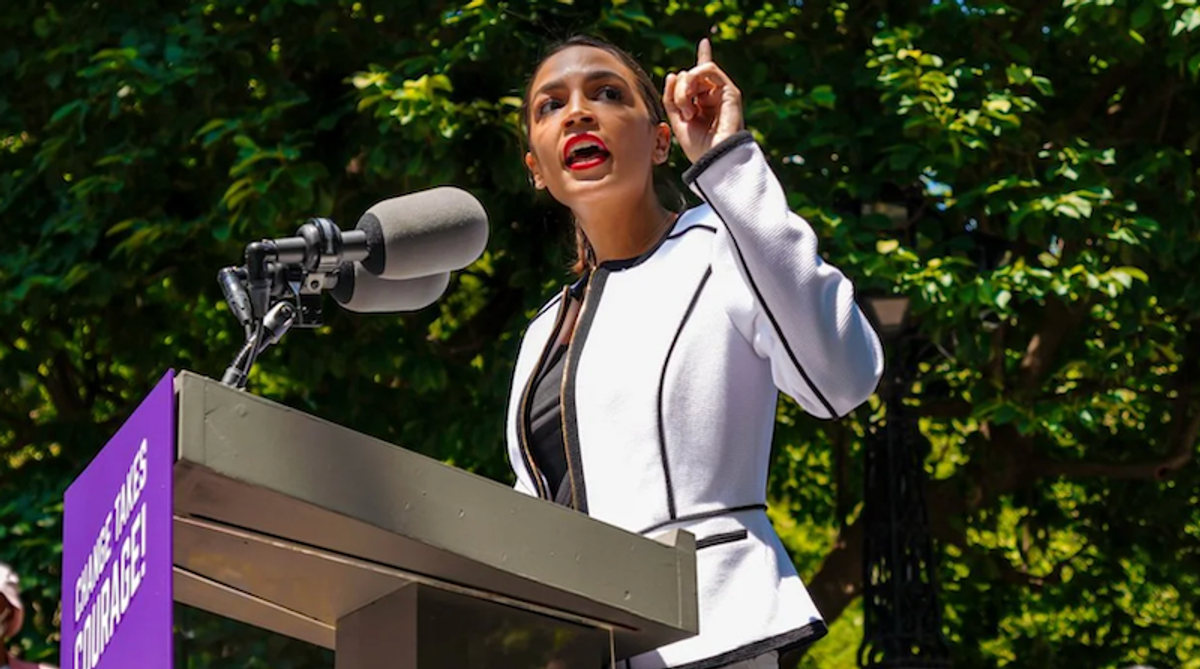
Alexandria Ocasio-Cortez Image via Daniel Lehrhaupt/Shutterstock
A Lutheran pastor in Wisconsin intended to test new Internal Revenue Service rules and endorse a candidate from the pulpit before his plan went wrong and left him without a church.
The Rev. Jonathan Barker had planned to throw his support behind a Democratic candidate after the IRS appeared to carve out an exception to federal law prohibiting churches from making political endorsements, saying that should not apply to preachers speaking to their own congregations. Instead he lost his flock, reported the New York Times.
"Pastor Barker, an outspoken liberal, was ready for the change," the Times reported. "He had written a sermon urging Representative Alexandria Ocasio-Cortez, Democrat of New York, to run for president in 2028. His denomination, the Evangelical Lutheran Church in America, was not so ready."
"As a result, when Sunday came, Pastor Barker was no longer the pastor of Grace Lutheran," the newspaper added.
The pastor gave his sermon that Sunday, describing Ocasio-Cortez as a “what-would-Jesus-do candidate," but in a borrowed event space to a congregation of nine instead of his former church across town in Kenosha.
“I am very proud, as a pastor, to endorse AOC to be the love-your-neighbor presidential candidate,” he told the small gathering.
Two churches in Texas and a group of religious broadcasters had sued the IRS last year seeking to invalidate the 1954 Johnson Amendment revoking their tax-exempt status for endorsing political candidates, and the agency agreed to settle the case after President Donald Trump took office, loosening restrictions on individual pastors – which religious conservatives interpreted as a green light to activism.
“There’s 18,000 that’s ready to go,” Barker said, referring to the number of preachers the Family Research Council is trying to organize before next year's midterm elections, "and there’s none of us ready to go.”
The 41-year-old Barker had been trying to rejuvenate his church, which had dwindled from 1,500 attendees in the 1950s to 20 or 30 people on most Sundays, by focusing on liberal causes, and he did not provide advance notice to church leaders about his plan but instead sent out a news release to reporters, hoping to encourage other progressive-minded pastors to join him in advocacy.
“I said, ‘Jon, we just agreed as a group that this is not a good idea,’” said Bishop Paul D. Erickson, who oversees churches in southeast Wisconsin, after catching wind of the plan.
Erickson urged Barker to reconsider because his advocacy could potentially jeopardize the tax exemption for the denomination’s other churches.
“You are putting them at risk without their knowledge or consent,” Erickson said he told the pastor.
Instead, Barker resigned, leaving Erickson to face questions from the rest of their congregation.
"Their questions were not about politics," the Times reported. "Who had keys to the front door? Who knew the Facebook password? Would the diaper bank be discontinued? Was the church going to survive?"
"Bishop Erickson said they would figure the answers out together," the paper added.
This Wisconsin pastor wrote a sermon endorsing AOC for president — then he lost his job
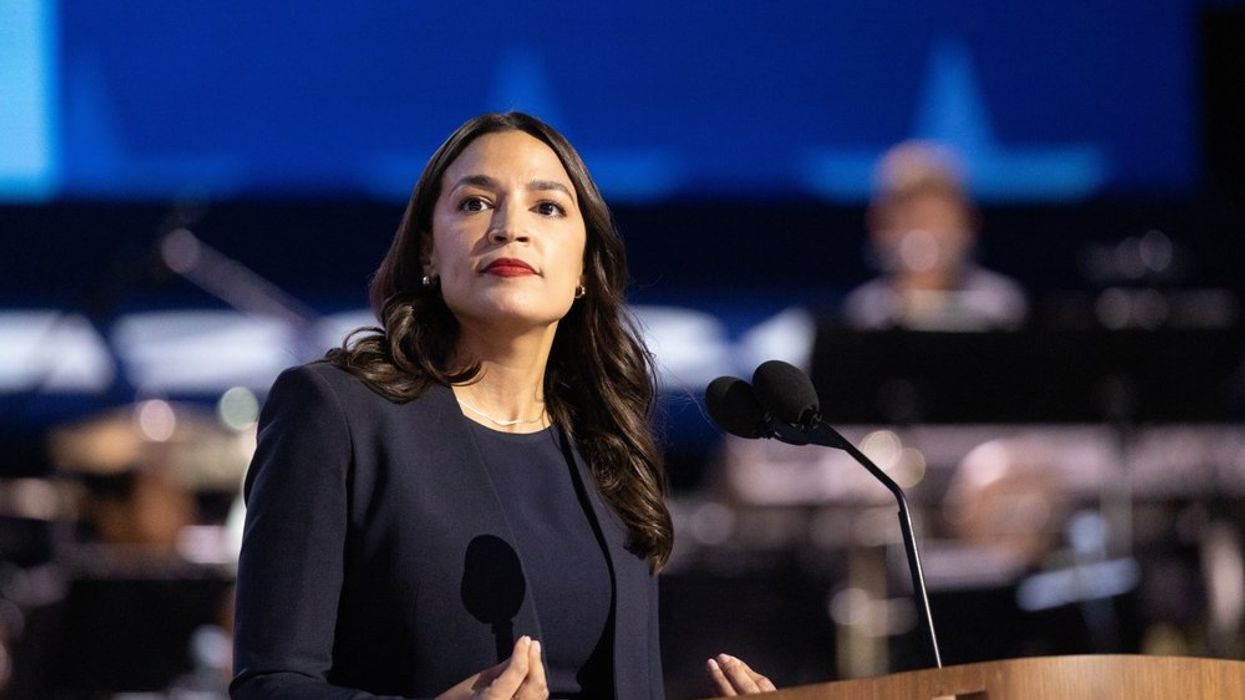
Rep. Alexandria Ocasio-Cortez (D-New York) at the 2024 Democratic National Convention in Chicago on August 19, 2024 (Maxim Elramsisy/Shutterstock.com)
August 19, 2025
ALTERNET
Far-right white evangelicals are applauding a new Internal Revenue Service (IRS) rule that allows pastors to make political endorsements in the pulpit, including the Family Research Council. But Christianity is far from monolithic, and individual churches don't necessarily approve of the practice even though the IRS is now allowing it.
In Kenosha, Wisconsin, the Rev. Jonathan Barker found that out the hard way.
Barker, until recently, preached at the Grace Lutheran Church, where the liberal/progressive Mainline Protestant pastor planned to give a sermon endorsing Rep. Alexandria Ocasio-Cortez (D-New York) for president in the United States' 2028 election. But when the church objected — regardless of the new IRS rule — he ended up resigning, according to the New York Times.
READ MORE: 'Complete 180' and 'hot mic moment': Brutal CNN supercut reveals how Trump got played by Putin
Barker still gave the pro-AOC sermon, but not in the Grace Lutheran Church pulpit.
In an article published on August 19, Times reporters David A. Fahrenthold and Elizabeth Dias explain, "The odd battle that played out last week over one sermon for one Lutheran congregation in Kenosha, an industrial city on Lake Michigan, was an illustration of the sharply different ways that American churches have responded to the IRS' surprise reinterpretation of the decades-old law. It may have also foreshadowed many similar fights to come."
The journalists continue, "The fight was set in motion by a lawsuit that two Texas churches and a group of religious broadcasters filed against the IRS last year, seeking to invalidate a 1954 law called the Johnson Amendment. That law, introduced by then-Sen. Lyndon B. Johnson, said that churches and charities could lose their tax-exempt status if they endorsed candidates for office. The plaintiffs said it was an unconstitutional limit on free speech."
Back in 1993, the late Rev. Jerry Falwell Sr.'s show "The Old-Time Gospel Hour" was fined $50,000 by the IRS and lost its tax-exempt status for two years because of his overtly political activity in the pulpit. Falwell, founder of the Moral Majority and father of former Liberty University President Jerry Falwell Jr., was a leading religious right figure who drew scathing criticism from the late Sen. Barry Goldwater (R-Arizona) — an influential conservative who believed that Falwell and other far-right evangelicals were terrible for the GOP and the conservative movement.
Fahrenthold and Dias note that Christian churches are hardly in lockstep when it comes to political endorsements.
"The Family Research Council, an advocacy group that promotes conservative values, is already trying to organize 18,000 pastors for next year's midterm elections," the Times reporters explain. "But leaders of the Roman Catholic Church and some Mainline Protestant denominations, including the Evangelical Lutherans, have told their pastors to refrain from endorsements, maintaining their earlier practices. Many said they worried that endorsing candidates would drive away members, and drag their divine lessons into the mud of earthly politics."
Read the full New York Times article at this link (subscription required)
In Kenosha, Wisconsin, the Rev. Jonathan Barker found that out the hard way.
Barker, until recently, preached at the Grace Lutheran Church, where the liberal/progressive Mainline Protestant pastor planned to give a sermon endorsing Rep. Alexandria Ocasio-Cortez (D-New York) for president in the United States' 2028 election. But when the church objected — regardless of the new IRS rule — he ended up resigning, according to the New York Times.
READ MORE: 'Complete 180' and 'hot mic moment': Brutal CNN supercut reveals how Trump got played by Putin
Barker still gave the pro-AOC sermon, but not in the Grace Lutheran Church pulpit.
In an article published on August 19, Times reporters David A. Fahrenthold and Elizabeth Dias explain, "The odd battle that played out last week over one sermon for one Lutheran congregation in Kenosha, an industrial city on Lake Michigan, was an illustration of the sharply different ways that American churches have responded to the IRS' surprise reinterpretation of the decades-old law. It may have also foreshadowed many similar fights to come."
The journalists continue, "The fight was set in motion by a lawsuit that two Texas churches and a group of religious broadcasters filed against the IRS last year, seeking to invalidate a 1954 law called the Johnson Amendment. That law, introduced by then-Sen. Lyndon B. Johnson, said that churches and charities could lose their tax-exempt status if they endorsed candidates for office. The plaintiffs said it was an unconstitutional limit on free speech."
Back in 1993, the late Rev. Jerry Falwell Sr.'s show "The Old-Time Gospel Hour" was fined $50,000 by the IRS and lost its tax-exempt status for two years because of his overtly political activity in the pulpit. Falwell, founder of the Moral Majority and father of former Liberty University President Jerry Falwell Jr., was a leading religious right figure who drew scathing criticism from the late Sen. Barry Goldwater (R-Arizona) — an influential conservative who believed that Falwell and other far-right evangelicals were terrible for the GOP and the conservative movement.
Fahrenthold and Dias note that Christian churches are hardly in lockstep when it comes to political endorsements.
"The Family Research Council, an advocacy group that promotes conservative values, is already trying to organize 18,000 pastors for next year's midterm elections," the Times reporters explain. "But leaders of the Roman Catholic Church and some Mainline Protestant denominations, including the Evangelical Lutherans, have told their pastors to refrain from endorsements, maintaining their earlier practices. Many said they worried that endorsing candidates would drive away members, and drag their divine lessons into the mud of earthly politics."
Read the full New York Times article at this link (subscription required)

No comments:
Post a Comment