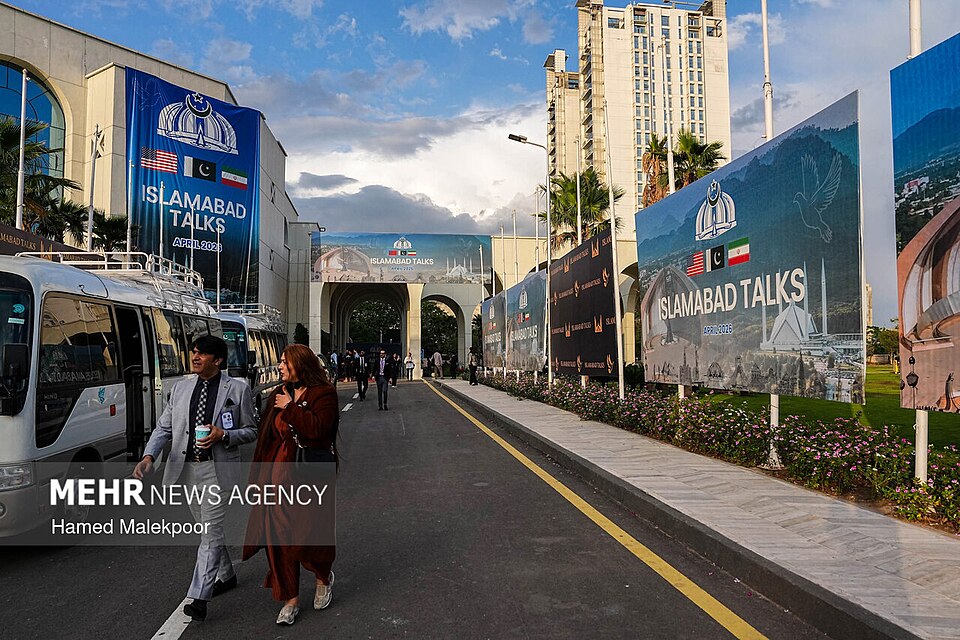
With the Iran-US ceasefire all but retired to the infirmary of international politics, Washington has conducted air strikes on Iran for a third straight night. On early July 14, Iran’s state-run IRNA news agency reported explosions in the southern port city of Bandar Abbas and six explosions on Kish Island, with further blasts on Qeshm Island.
Prior to those strikes, President Donald Trump told reporters at the White House that, “We’re attacking them tonight, and we’re taking out all their capability for anything having to do with the Strait of Hormuz”. That bit of wishful thinking was also accompanied by the hope that a diplomatic agreement with Tehran might still be reached, despite the latest mayhem. US Central Command (CENTCOM) then posted a note confirming that a “third consecutive night of strikes against Iran” had been ordered at Trump’s direction. “These strikes will continue to impose a heavy cost on Iranian forces and degrade their ability to attack innocent civilians and commercial shipping in the Strait of Hormuz.”
In a reversion to old positions, CENTCOM also announced that it would “resume blockading maritime traffic entering and exiting Iranian ports on July 14 at 4 p.m. ET.” The US military would continue supporting “traffic flow through regional waters for all vessels not violating the blockade.” The previous blockade by US naval forces, lasting from April 13 to June 18, saw the redirection, if we are to rely on CENTCOM’s figures, of over 140 compliant vessels, the disabling of nine recalcitrant ships, and the permitted transit of “over 50 commercial vessels supporting humanitarian aid”.
Trump, ever burdened by an estranged idea of the factual record, also took to Truth Social (it tends to be neither), his preferred medium of miscommunication, blustering that, “The Hormuz Strait is OPEN, and will remain OPEN, with or without Iran.” (This was at odds with the reporting of Iranian state media on July 11, declaring that the Strait was closed “until further notice”.) The president went on to announce a reinstituting of the blockade of Iran’s shipping and customers “from entering or leaving. All other countries will have fair and open use of the Strait.” Never one to be shy about the matter of might, the president also bellowed that the US would be “from this point forward, known as ‘THE GUARDIAN OF THE HORMUZ STRAIT,’ but as such, as a matter of FAIRNESS, will be reimbursed, at the rate of 20% on all cargo shipped, for any and all costs necessary to do the job providing safety and security to this very volatile section of the World.”
For students of maritime transit fees, Trump’s assertions remain pure babble. A fee structure applicable for such transit ways as the Panama Canal or Suez Canal involve sophisticated structures of administration, billing and tariff schedules shaped by decades of practice. The Trump fee proposal is the stuff of ether, lacking any mechanism of collection, let alone enforcement. His position also deliciously contradicts statements made by his own aides. Consider these June 23 remarks to the press by US Secretary of State Marco Rubio made in Abu Dhabi: “No country is allowed to charge tolls or fees on an international waterway. That’s existing international law. That’s the way it is in international waterways all over the world, and that’s the way we expect it’ll be here.”
To Trump’s shouty remarks, Iran’s response was needling. “POTUS is absolutely right,” chortled Iran’s foreign minister, Seyed Abbas Araghchi. “Whoever provides secure and safe passage of commercial vessels through the Strait of Hormuz should be compensated for this service.” Reiterating the critically affirmed importance of the waterway to Tehran, the foreign minister went on to declare that “Iran has always been the GUARDIAN of the Strait and will remain so FOREVER.” There would be some budging on a 20% fee, as it was “too much. We will be fair.”
Colonel Ebrahim Zolfaqari, that sternest of spokesmen for the Khatam al-Anbiya Central Headquarters, was more severe in reproaching “America’s repeated adventurism and malicious acts to interfere in the management of the Strait of Hormuz”. These had “seriously endangered regional security, international trade, and the passage of oil tankers and commercial vessels.” With notable menace, Zolfaqari also rebuked “the cooperation of some regional countries” as an incitement to a further widening of the war. “Regional heads of state are warned that any cooperation with America and any logistical support for its aggressive army will be considered an act of war against Iran’s sovereignty and national security.”
The Iranians, true to form, have continued their barrages against various Gulf states and various vessels. On July 13, they were accused by the United Arab Emirates of a “brazen” attack on two tankers in the Strait, killing an Indian crew member and wounding eight, four seriously. This was, according to the UAE Ministry of Defence, “a serious violation and a clear breach of international law, threatening the security and stability of the region.” While such claims are hard to dispute, they should be placed in the context of an imbecilic, illegal war that began on February 28, conducted by two hubristic monomaniacs in the form of Trump and Israel’s Benjamin Netanyahu against an Iranian regime that promises to be more durable and ruthless than ever. All bets, be it in terms of security for the Gulf states or any equilibrium in energy markets, are off.
Trump’s Hormuz Toll Could Upend Global Energy Trade
- A proposed 20% U.S. toll on cargo transiting the Strait of Hormuz could add more than $100 billion a year to global oil and gas trade, driving up energy costs, inflation, and shipping expenses.
- The proposal would challenge long-standing principles of free navigation, setting a precedent that could encourage other countries to impose charges at major maritime chokepoints.
- Higher costs for Gulf oil and LNG could inadvertently accelerate the energy transition, making renewables and electrification more competitive by raising the cost of fossil fuels.
A proposed 20% charge on cargo passing through the Strait of Hormuz would violate the basic principles of international navigation, raise energy costs and undermine the stated purpose of restoring stability. It could also do more to accelerate the global energy transition than many conventional climate policies.
Donald Trump’s proposal to charge ships 20% of the commercial value of cargo passing through the Strait of Hormuz is difficult to understand as an energy policy. The disruption of the strait has already driven up oil and gas prices, increased insurance premiums and forced governments to search for ways to restore normal trade. The apparent objective of months of military and diplomatic activity has been to reopen one of the world’s most important energy corridors and prevent a regional conflict from becoming a global economic crisis.
Imposing a charge equivalent to one-fifth of the cargo’s value would achieve almost exactly the opposite. It would transform a temporary geopolitical disruption into a permanent structural cost, replacing the risk of an Iranian blockade with an American toll that could be just as damaging to energy markets. After spending enormous political, military and financial resources trying to preserve freedom of navigation, Washington would effectively begin charging the world for the freedom it claims to have restored.
The idea is legally questionable, economically incoherent and strategically dangerous. From the perspective of the energy transition, however, it may be one of the most consequential policies the Trump administration has proposed.
A Toll Measured in Hundreds of Millions Per Day
Before the conflict, approximately 21 million barrels of oil and petroleum products passed through the Strait of Hormuz each day. At an illustrative value of $70 per barrel, that represents cargo worth around $1.47 billion every day. Applying a 20% charge would therefore add approximately $294 million per day, or more than $107 billion annually, to oil shipments alone.
The exact amount would fluctuate with prices and volumes. At $60 per barrel, the annual charge on oil would still approach $92 billion. At $80, it would exceed $122 billion. These figures exclude roughly 10 billion cubic feet of LNG that passed through the strait each day before the disruption, primarily from Qatar. Valued at a relatively conservative $10 per million British thermal units, the proposed charge on LNG would add another $7.5 billion annually.
The resulting levy on oil and gas could therefore approach $115 billion per year under fairly moderate assumptions, before including petrochemicals, fertilizers, containerized goods and other commercial cargo. This would not be a conventional shipping toll based on the cost of providing a service or maintaining infrastructure. It would be an ad valorem charge on some of the most important commodity flows in the global economy.
The comparison with climate policy is unavoidable. At the European Union’s recent carbon price levels, a charge of this magnitude would correspond to the annual cost of hundreds of millions of tonnes of carbon dioxide emissions. Yet unlike the European Emissions Trading System, the proceeds would apparently not be linked to decarbonisation, infrastructure investment or compensation for affected consumers. It would simply be the price of passing through a waterway that international law treats as open to transit.
Replacing a Blockade With a Tax
The legal problem is unusually clear. Under the principles governing international straits, ships have a right of transit passage that bordering states should not obstruct. The International Maritime Organization has been explicit that there is no legal basis for a country to impose tolls, payments or discriminatory conditions on passage through an international strait.
The United States is not itself a coastal state bordering Hormuz. Its claim to impose a charge would therefore be even more extraordinary than an attempt by Iran or Oman to levy one. Washington would effectively be asserting that military protection of an international shipping route creates a right to collect a percentage of the goods passing through it.
That principle would have implications far beyond the Gulf. If naval protection creates a right to tax commercial cargo, other military powers could make similar claims around contested maritime routes. The distinction between securing freedom of navigation and monetizing control over navigation would become dangerously blurred.
It would also make the entire intervention increasingly difficult to explain. The original justification for military action and naval deployments was that Iran could not be allowed to close or extort payment from an international waterway. Replacing an Iranian toll with an American one would make the conflict look less like a defence of free navigation and more like a dispute over who gets to collect the money.
The Charge Would Not Stop at 20%
Even if the charge were never implemented exactly as announced, the proposal itself could increase costs. Shipping companies, insurers and commodity traders do not price only confirmed events; they price uncertainty. A waterway subject to military confrontation, competing toll claims and rapidly changing access rules becomes more expensive long before the first invoice is issued.
The direct 20% payment would therefore be only the beginning. War-risk insurance premiums would remain elevated, while shipowners could demand additional compensation for crews and vessels entering the region. Financing costs would increase because cargoes exposed to possible seizure, delayed payment or changing regulations would become riskier collateral. Traders would build larger margins into contracts, and buyers would seek supplies from routes not subject to arbitrary charges.
For oil, some exports could be redirected through pipelines that bypass Hormuz, including routes connecting Saudi Arabia and the United Arab Emirates to terminals outside the Gulf. Those systems, however, have limited capacity and cannot replace the full volume normally passing through the strait. LNG faces even fewer alternatives because Qatar’s exports are overwhelmingly dependent on maritime access through Hormuz.
The charge would therefore not merely transfer money from producers or traders to the United States. Much of it would eventually appear in higher prices for refiners, utilities, manufacturers and consumers. Producers would absorb part of the cost, shipping companies another part, but import-dependent economies would ultimately pay a substantial share.
America’s Accidental Carbon Border Tax
From a decarbonisation perspective, the proposal begins to look remarkably effective. Oil and LNG from the Gulf would immediately become less competitive relative to supplies that avoid the strait, while all fossil-fuel-consuming economies would receive a new incentive to reduce exposure to internationally traded hydrocarbons.
Renewable electricity would not pay the Hormuz charge. Neither would nuclear power, domestic hydropower, batteries or energy-efficiency measures. Electric vehicles would become more attractive relative to combustion vehicles as oil costs rose, while heat pumps would offer greater protection against volatile LNG prices. Industrial electrification, renewable hydrogen and alternative feedstocks would gain value not because their underlying technology had suddenly changed, but because the geopolitical premium attached to fossil fuels had increased.
This is precisely how a carbon price is supposed to function. It changes relative costs and encourages consumers and investors to move away from carbon-intensive energy. The proposed Hormuz charge would be far less rational and much more disruptive than a properly designed carbon tax, but its market signal could be stronger because it would arrive suddenly and affect an enormous volume of internationally traded energy.
The administration has withdrawn from the Paris Agreement, constrained federal support for clean energy and attempted to halt wind projects. Yet those interventions may pale beside a policy capable of adding more than $100 billion annually to the cost of Gulf oil and gas. Climate policy advocates spent decades trying to make fossil fuels reflect more of their external costs. Trump may now achieve something similar by treating a strategic waterway as a revenue opportunity.
The Fastest Route to Demand Destruction
The oil and gas industry can absorb moderate taxes when prices are high and production costs are low. A 20% charge on commercial value is different because it rises automatically with the value of the cargo. When oil prices increase, the absolute toll rises with them, reinforcing rather than moderating the shock.
This creates a potentially destructive feedback loop. Disruption raises oil prices, higher prices increase the toll, the toll makes shipments more expensive, and greater uncertainty pushes insurance and financing costs higher still. Consumers then reduce demand, governments accelerate diversification and investors begin questioning whether new production dependent on Hormuz will remain commercially viable over its full operating life.
Not every Gulf project would immediately become unprofitable. Saudi Arabia, Qatar and the United Arab Emirates possess some of the world’s lowest-cost hydrocarbon resources, and a portion of the charge could be passed on to consumers. Nevertheless, long-term investment decisions are based not only on extraction costs but also on market access, political stability and confidence in predictable trading rules. A permanent or recurring 20% levy would damage all three.
The greatest effect might therefore be felt not in current production but in future capital allocation. Importing countries would have another reason to invest in domestic electricity generation and reduce fuel imports, while producers would face growing pressure to develop alternative export routes or diversify their economies. The measure would accelerate the very transition away from hydrocarbons that the administration claims to oppose.
A Climate Policy Disguised as Energy Dominance
There is an obvious contradiction at the centre of the proposal. The United States has repeatedly presented lower oil prices as a strategic and economic objective. It has encouraged production, pressured exporters and argued that affordable energy is essential for controlling inflation. Charging 20% of the value of cargo crossing Hormuz would undermine that objective more directly than almost any renewable-energy mandate or conventional carbon tax.
It would also expose the weakness of defining energy security primarily through military control of supply routes. A navy can escort tankers, clear mines and deter attacks, but it cannot make imported fossil fuels immune to political decisions. Once access to energy depends on a narrow maritime chokepoint, every new conflict, toll or insurance premium becomes part of the final price.
Renewables offer a fundamentally different form of security because their fuel does not need to pass through a strait. Solar panels do not require naval escorts, and wind farms do not pay war-risk premiums. Their output varies, and their integration requires grids, storage and flexibility, but their operating costs are not determined by which government controls a shipping lane thousands of miles away.
For that reason, supporters of the energy transition may eventually look back on the proposed Hormuz charge with unexpected gratitude. By making one of the world’s largest oil and gas corridors structurally more expensive, unpredictable and legally contested, the administration could accomplish more for renewable energy than many carefully designed climate programmes.
Withdrawing from Paris and obstructing wind projects may slow the transition at the margins. Making a fifth of global oil shipments substantially more expensive could accelerate it at the centre. If the proposal is implemented, Donald Trump may inadvertently become one of the most effective carbon tax advocates the world has ever seen.
By Leon Stille for Oilprice.com
Trump Scraps Hormuz Toll Plan as U.S.-Iran Conflict Deepens
- Trump scrapped plans for a 20% Strait of Hormuz transit fee, opting instead to pursue trade and investment deals with Gulf states while maintaining the U.S. blockade on Iranian shipping.
- Fighting intensified across the Gulf, with renewed U.S. strikes on Iran, Iranian missile attacks on regional countries, and the U.S. formally reinstating its naval blockade of Iranian ports.
- Prospects for a peace deal deteriorated, as negotiations stalled, Iran rejected navigation proposals, and both Washington and Tehran hardened their rhetoric over control of the Strait of Hormuz.
US President Donald Trump has walked back his plan to charge a 20 percent fee on cargo shipped through the Strait of Hormuz, replacing it with proposed trade and investment agreements with Persian Gulf states while maintaining a blockade on Iranian shipping.
“Based on highly productive conversations with Middle East leadership, I have decided to replace the 20% United States Reimbursement Fee with Trade and Investment Deals that the various Gulf States will be making into the United States,” Trump wrote on Truth Social.
He provided no details of any commitments by Gulf governments but said the investments would be “MASSIVE.”
The policy shift came as US forces continued striking targets across southern Iran and enforcing the renewed blockade.
Explosions rocked parts of Iran through the day on July 14 as the US military hit targets inside the country, while Tehran launched missiles around the Persian Gulf.
Iranian state media reported that five explosions were heard around the port city of Bandar Abbas, near the Strait of Hormuz, which has been at the center of renewed fighting between the United States and Iran. The port city of Bushehr, home to Iran's sole nuclear power plant, also came under attack.
Blasts were also reported on several islands off of Iran's southern coast, including Kish, Qeshm, and Abu Musa.
Jordan and Bahrain said they had intercepted barrages of Iranian ballistic missiles and the United Arab Emirates reported attacks on vessels in the strait that left one crew member dead and at least eight others wounded.
US Central Command (CENTCOM) said a naval blockade against maritime traffic entering and exiting Iranian ports would be reinstated from 4 p.m. Eastern Time on July 14
"CENTCOM forces will enforce the blockade against vessels transiting to or from Iranian ports and coastal areas. The U.S. military continues to support traffic flow through regional waters for all vessels not violating the blockade," CENTCOM said in a statement.
The strikes are the latest sign of the unraveling of an accord signed last month setting out conditions under which the two sides would negotiate a peace deal.
Over the weekend, Trump notified Congress that the United States was once again at war with Iran, starting a 60-day period during which he could order military strikes without having to seek formal approval from lawmakers.
Speaking to reporters at the White House late on July 13, Trump said the attacks were aimed at disabling Iran's ability to disrupt maritime traffic in the strait.
He added that despite the renewal of attacks on Iran, a deal to end the fighting is still possible.
"Yeah, I think a deal is possible. Sure, I do," Trump told reporters in the Oval Office. "We had a deal with them two days ago and then they said 'Oh we can't make that deal. We have to negotiate it further.'"
Earlier on July 13, Trump told Fox News that the United States may take control of the strait, which during peacetime handles about one-fifth of the world's energy transit and has become one of the main battlegrounds of the conflict.
Later that day, Trump declared in a social media post that the United States was “THE GUARDIAN OF THE HORMUZ STRAIT” and proposed charging a 20 percent fee on cargo shipped through the waterway before abandoning the plan a day later.
Iran's Islamic Revolutionary Guards Corps (IRGC) had said in a statement just before Trump's announcement that the only way to restore regular shipping traffic through the strait was to end US military intervention in the waterway.
Iran's top joint military command later said the US had no role in determining the future of the strait, warning countries cooperating with Washington "bear full responsibility for all insecurity and the escalation of the war in the region."
Iranian Foreign Minister Abbas Araqchi also reacted to Trump's social media post, saying that "Iran has always been the GUARDIAN of the Strait and will remain so FOREVER."
The military escalation has raised fresh questions about the fate of the agreement that had offered hopes of a negotiated settlement.
Trump said last week the Memorandum of Understanding was void in his mind, though he added that negotiators could continue to hold talks if they felt progress could be made on a peace accord. But a weekend of attacks has dimmed those prospects even further.
Iranian Foreign Minister Abbas Araqchi met Omani Foreign Minister Sayyid Badr Albusaidi over the weekend to discuss mechanisms for ensuring safe navigation through the Strait of Hormuz, according to Tehran.
Earlier, Oman said discussions with Iran would continue at both the technical and political levels in an effort to reach agreements consistent with international law regarding navigation through the waterway.
No US officials took part in the discussions.
RFE/RL learned from diplomatic sources that Omani mediators handed proposals to the Iranian delegation aimed at resolving disputes over maritime navigation. Senior officials declined to comment on the substance of the proposals.
According to diplomatic sources familiar with the discussions, Iran left the negotiations saying it would return after reaching a unified internal position on proposals that would have allowed freedom of navigation through Omani waters in the southern part of the strait without tolls.
Shortly afterward, Iran's national security apparatus responded by firing on a commercial vessel and announcing the closure of the waterway.
In recent months, Trump has promoted what he has called the "Southern Highway" -- a shipping route that keeps vessels closer to Oman's coastline and farther from Iranian territorial waters.
Tehran has repeatedly insisted that only its preferred route, running closer to the Iranian coast, is considered safe and has previously been accused of targeting vessels using the Omani route.
War Of Words Raises Risks
The latest confrontation unfolded against an increasingly volatile political backdrop.
Iran's new Supreme Leader Mojtaba Khamenei vowed revenge for the killing of his father and predecessor, Ali Khamenei, saying retaliation "must inevitably be carried out."
Ali Khameini, who was killed in US and Israel air strikes on February 28 as the war broke out, was buried on July 9 at the Imam Reza shrine in Mashhad.
"This matter depends neither on my personal existence nor on that of other officials. Whether we are present or not, it will come to pass," he said, adding that Iran had compiled a list of individuals to be targeted.
Hours earlier, Trump warned that any assassination attempt against him would trigger overwhelming US military retaliation.
By RF/ERL
Trump Drops Hormuz Protection Fee Saying Gulf States Will Invest in US
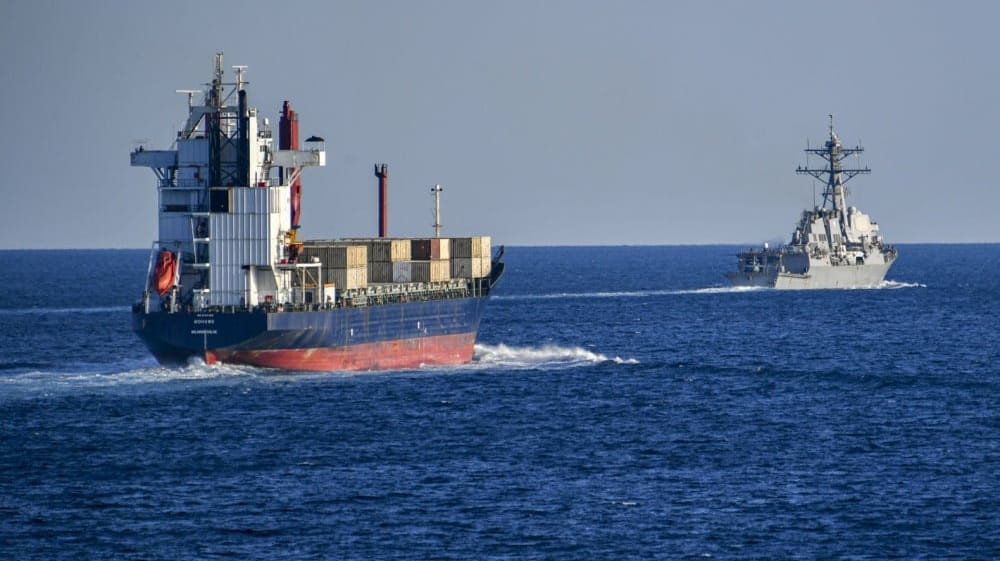
The United States is resuming its blockade of shipping related to Iran today, July 14, but in a reversal of course, Donald Trump now says the Gulf States will pay for protection by investing in the United States. While still asserting “it’s not fair” that the United States is protecting the Strait for the entire world, he announced after calls from Gulf States that he would replace the 20 percent “reimbursement fee” with investment deals.
Trump appeared to surprise everyone on Monday when he announced in a social media posting, and to the media in the Oval Office, that the U.S. would require a 20 percent reimbursement fee as compensation for providing security. He announced the U.S. would become the “Guardian of the Hormuz Strait.”
His comments were immediately met with commendation, and questions about a reversal of position after Trump, as well as Secretary of State Marco Rubio and Treasury Secretary Scott Bessent, in the past, said fees were wrong. When pressed by the media about how the fees would work and who would pay, Trump responded that the Gulf States are rich.
The global shipping community also openly rejected the proposed fees, citing international law. Hapag-Lloyd made a public statement calling the fees “fundamentally wrong,” while shipping groups ranging from BIMCO to the European Community of Shipowners’ Association and others also rejected the idea in statements to CNBC.
The International Maritime Organization has also repeatedly rejected fees. Even the Iranians used it as a propoganda tools. Iranian Foreign Minister Abbas Araghchi said 20 percent was too much and that Iran would be fair with its fees.
The Omani government, a strong ally of the United States, also issued a formal statement. “The Sultanate of Oman continues its transparent and neutral cooperation with all parties to restore freedom of navigation in the Strait, fully in line with international law,” they wrote, calling on all parties to respect international law.
“Based on highly productive conversations with Middle East leadership, I have decided to replace the 20 percent United States Reimbursement Fee with Trade and Investment Deals that the various Gulf States will be making into the United States. Those investments will be MASSIVE but, at the same time, extraordinarily good for them, and their future,” Trump wrote today on social media.
Trump continues to assert, “Oil is flowing like never before.” He wrote that the Strait is open to all shipping except Iran. He says ships were moving through the Strait.
Data, however, continues to show a strong decline in transits. Kpler said there were just 10 verified crossings on July 13, “marking a further slowdown.” It reported crossings were down by six versus a day earlier and that 9 of the 10 crossings were on the Iranian route.
Windward AI reported that only five vessels made the crossing overnight. It was up by two from the day before, but it said one of the five was a tanker loaded with Iranian oil repositioning deeper into the Gulf.
Other tankers appeared to be rushing to make their exit before the U.S. blockade resumes. TankerTrackers.com spotted one tanker carrying Iranian oil moving at between 14 and 16 knots.
Global oil markets also remained jittery after Iran attacked three more oil and gas tankers overnight. The price of oil is up more than 11 percent in the past five days, with the benchmark briefly exceeding $80 a barrel on Tuesday. Traders continue to watch as the fluid situation continues to evolve.
Iran Piles on Pressure and Targets Tanker off Omani LNG Terminal
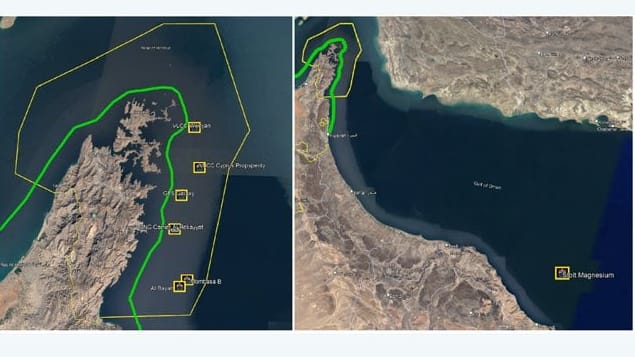
Oman has been sent a new signal by the IRGC, following drone attacks on ground targets in the Musandam, Batinah, and Al Wusta governorates on July 12. It followed the attacks on tankers in Omani territorial waters using the southern route through the Strait of Hormuz which began on July 6.
The new attack was carried out late on July 13 on the Liberian-flagged chemical product tanker Stolt Magnesium (27,600 dwt), 40 nautical miles northeast of Qalhat, the Omani LNG terminal near Sur. There were no injuries aboard the tanker, nor any rupture of tanks, but the crew subsequently was fighting an engine room fire.
The attack was far from the Omani Coastal route in the Strait of Hormuz, on which the IRGC has concentrated its attacks in recent days. Last night's other attacks, the Liberian-flagged crude oil tankers Al Bahyah (299,425 dwt) and Mombasa B (299,392 dwt), were near the Strait of Hormuz. The attack on the Stolt tanker is raising concerns, and perhaps threatening, that LNG tankers loading at the Qalhat terminal could be vulnerable to attack in the near future.
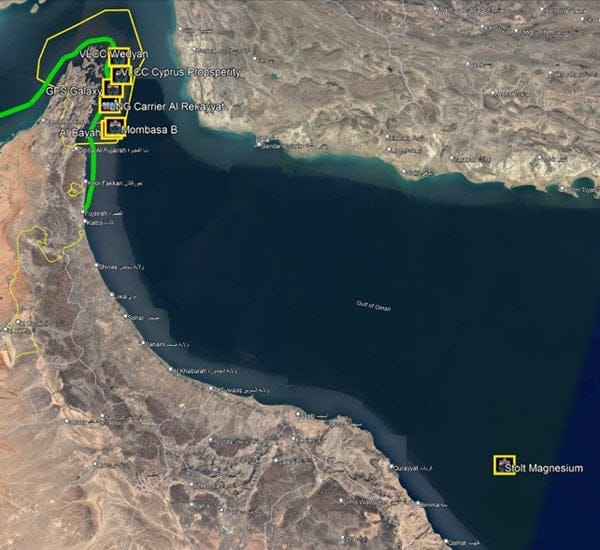
The pattern of IRGC attacks July 6-13 in the Strait (top left) and the attack late on July 13 (right)
(Google Earth/CJRC)
The Omani authorities have not announced what ground targets were attacked on July 12, but The Maritime Executive understands that the targets included coastal radar sites in Musandam covering the Strait of Hormuz, logistic stores at an airbase in central Oman, and bunkering facilities in Duqm. There have been no reported casualties, and Omani authorities appear keen to downplay the attacks, with no mention of the incidents either in newspapers or on social media. The pattern of events suggests that, notwithstanding the attacks, Oman is keen to continue its dialogue with Iran, with whom it believes it is making progress towards a long-term solution. In an interview with Le Monde on July 12, Sayyid Badr Al Busaidi, the Omani Foreign Minister, said that “complex talks have begun to shape a lasting framework guaranteeing freedom of navigation in the Strait of Hormuz.”
Nonetheless, it appears that Iran is upset and is attempting to pressure Oman into dropping its insistence that a final solution to the Hormuz transit issue should be compliant with international law and UNCLOS, and should not involve paying passage fees. Donald Trump’s announcement that he proposes to charge 20 percent of the value of cargoes transiting through the Strait has enabled Oman to restate its principles – a solution within UNCLOS and without passage fees – that applies equally to both Iranian and American attempts to disturb the status quo.
It is apparent that Trump’s 20 percent levy was announced without pre-consultation with Oman, through whose territorial waters ships transiting the Strait must pass. Moreover, the Musandam Peninsula is dependent in daily life on coastal traffic travelling through the Strait to reach settlements otherwise unreachable by road. The Trump pronouncement is evidently unworkable from a practical perspective, but its most long-lasting impact may be to upset countries whose sovereign rights are implicitly ignored by his proposal. While Iran is threatening logistic and bunkering facilities in Oman, which all nations make good use of now that such facilities within the Gulf are no longer available, President Trump’s proposal is also a good cause to withdraw those facilities.
Iran Attacks Two Emirati Tankers Off Oman, Killing One Crewmember
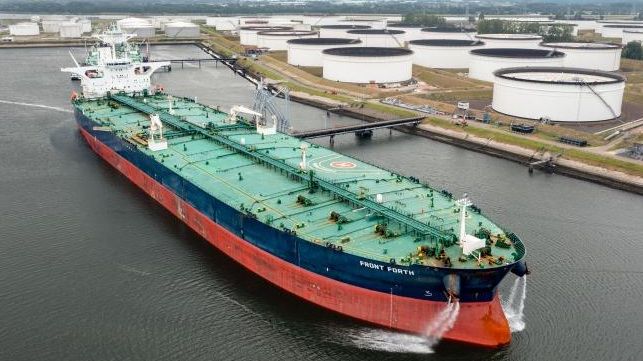
The UAE's defense ministry says that two tankers connected to its oil industry were attacked by Iran while transiting the Strait of Hormuz - the latest targets in Tehran's campaign to wrest control of all shipping through the waterway.
According to the UAE Ministry of Defense, the tanker "Mombasa" (likely the VLCC Mombasa B, IMO 9739501) and "Bahia" (likely the VLCC Al Bahyah, IMO 9937799, but also reported as the similarly-named LNG carrier Al Bahiya) were each hit by an Iranian cruise missile while transiting the southern Strait of Hormuz route through Omani waters. Eight crewmembers aboard the ships were injured, including four who sustained serious injuries. One of Mombasa B's crewmembers, an Indian national, was killed in the attack.
Fires broke out on both vessels following the strikes, but the blazes have been successfully brought under control, the ministry said.
"The Ministry of Defense condemns this brazen attack, which constitutes a serious violation and a clear breach of international law," the ministry said. "The state reserves its full right to respond to this escalation and to take all necessary measures to protect its territories, people, and residents."
Following Iran's renewed hostilities with the United States and the reimposition of the U.S. blockade of Iranian shipping, Tehran has declared the closure of the strait to all traffic. The Omani route - which has U.S. overwatch, and is where the two Emirati tankers were operating - has been in Iran's crosshairs, as the Islamic Revolutionary Guard Corps views its existence as a direct challenge to Iranian control of the strait.
The UAE has been one of the biggest and best-publicized users of the Omani lane, operating tankers as shuttles to move oil out of the Arabian Gulf to an anchorage off Khor Fakkan, in the Gulf of Oman. At this location, the oil is transferred onto other ships for onward shipment to the final destination. Mombasa B and Al Bahyah were both engaged in this trade in June and early July, but have been operating dark since last week, according to their AIS records.
Top image: Mombasa B, 2024 (VesselFinder / Rush2112)
Kuwait Reports Attack on Offshore Oil Platform as US and Iran Trade Fire
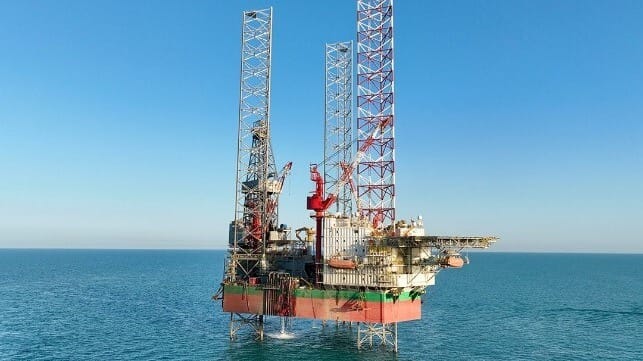
Kuwait's ministry of defense has reported a drone attack on an offshore drilling platform operated by the state-owned Kuwait Petroleum Company near Shuwaikh Port, causing substantial damage to the rig and injuring one worker. In a statement, the ministry called the strike a "criminal" act.
The platform strike - a likely but unconfirmed operation by Iranian forces - is among the first attacks on energy infrastructure in the GCC states since the ceasefire began. The recent Iranian missile and drone volleys have focused on U.S. military bases and the nations that host them, without the damage to oil and gas facilities seen in the first round of intense hostilities in March and April.
Dozens of targets around the region were hit over the weekend. After Iran struck and damaged a container ship in the Strait of Hormuz on Saturday, Iranian and American forces traded fire on July 11-12 - the most intense exchange since the beginning of the ceasefire agreement last month, with extensive damage reported on both sides.
In addition to the Kuwaiti platform strike, Iranian attacks or attempted attacks have been reported in Oman, Qatar, Bahrain and Jordan. Open-source intelligence researchers have spotted apparent impact sites via Sentinel-2 low-resolution satellite imaging, notably at Prince Hassan Air Base in Jordan, one of the staging points for long range U.S. Navy-operated surveillance flights near Iran. The extent of any damage at the air base remains unconfirmed, but satellite imaging shows clear visual changes in the vicinity of one large hangar and a nearby apron.
U.S. strikes hit 140 Iranian targets overnight Saturday, according to U.S. Central Command. Targets included Iranian missile and drone launch sites, naval units, ammunition storage sites, communications systems and coastal surveillance locations.
Additional follow-up strikes on Sunday night included more attacks on air-defense systems, coastal radars, and small boats. For the first time ever reported, the U.S. military used "one-way attack sea drones" in combat, Central Command said.
Satellite imaging also appears to show impact damage on the site of Iran's Bushehr nuclear power plant complex, though the timing of the damage is unclear; satellite data suggests a physical event occurred sometime between July 7-12, and caused damage to a building located several hundred yards from the main reactor. Residents in the Bushehr region reported strikes and air defense activity overnight July 11-12.
In a statement carried by state media, the Atomic Energy Organization of Iran dismissed reports of an attack on the Bushehr nuclear site, claiming that "the plant remains fully operational, secure, and stable, with all systems running continuously and without any disruption."
Bushehr is undergoing a planned expansion with the addition of two more Russian-built reactors. The project has been delayed by the conflict, which prompted state atomic agency Rosatom to withdraw its advisors and workers in March, but Rosatom director Rosatom Director General Alexei Likhachev has said that both Russia and Iran remain committed to completing the reactors. An attack on an Iranian nuclear site - if confirmed - would mark a major escalation.
Oman Makes Most Unequivocal Statement Yet on Hormuz Transits
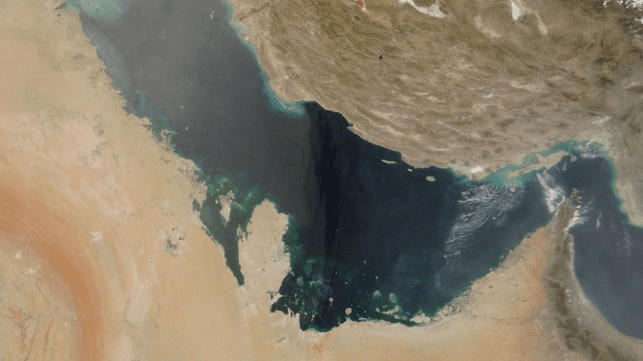
Oman has made its most unequivocal statement yet on its attitude to free passage navigation in the Strait of Hormuz.
Emerging from Council Meeting 137 on July 9 at the International Maritime Organization headquarters in London, the statement said that 'The Sultanate of Oman reiterates that the right of transit passage through straits used for international navigation is guaranteed under international law. Oman remains fully committed to these legal principles and does not support the imposition of transit fees on vessels passing through the Strait of Hormuz'. Earlier the IMO Secretary General had issued his own statement condemning the 'reckless attacks' on 'commercial ships and innocent seafarers' in the Strait in recent days.
There has been some misunderstanding caused by Oman's attempts to achieve a consensus with Iran over navigation in the Strait, developed in routine conversations between the respective foreign ministries, but also by direct talks in Muscat on May 24 and June 29. In these discussions, Oman tabled proposals to review charges raised for provision of lighthouses, channel markings, traffic control and emergency response, known as Navigation Dues, as are customarily charged elsewhere, for example by Trinity House in UK and Irish waters, but rejected the concept of passage fees. In these discussions, Iran held out for controlling navigation on both northern and southern sides of the Strait, for vetting permissions to transit, and for charging passage fees. Misunderstandings were reinforced by the well-established Iranian custom of releasing their own views on how discussions have gone, and not an agreed version of events.
Oman's Foreign Minister Sayyid Badr Al Busaidi set the record straight with an interview on July 1 with Monte Carlo Doualiya, France's Arabic language radio station. He outlined Oman's position:
· Any bilateral understanding between Iran and Oman must fall within international law and UNCLOS.
· Oman is "not in favor of imposing transit fees. That is prohibited under international law and we are committed to those rules."
· Oman is considering with Iran how environmental protection, navigational services and emergency response can be improved in the Strait, drawing on the models in operation covering the Strait of Malacca and Singapore. Proposed future arrangements would be discussed and agreed with the international maritime community.
· Responsibility for mine clearance in the Strait rests with Iran, who should approach others for support if it was unable to fulfill its commitment to clearance of the Strait under the 14 Point MoU signed with the United States.
Sayyid Badr's statement made it clear that while the scope and fee scale for services provided and charged for as Navigation Dues had been discussed between Iran and Oman, charging tolls for passage, in effect creating a reconstruction fund, would be unacceptable to the Sultanate.
Following the series of attacks on ships in Omani territorial waters, Oman's patience appears to have snapped, and the statement made at the IMO today is noticeably tauter and more direct, driven by Iran's duplicitous behavior and by the attacks on ships and sailors in recent days in Omani territorial waters. The attacks on Saudi and Qatari ships in Omani territorial waters caused considerable outrage.
It remains to be seen if Iran reacts to Oman's tougher position by coming back to the negotiating table. If Oman were to abandon the neutral stance it has taken so far, in the hope of drawing Iran into fruitful discussions, then the confrontation in the Strait could take on a different character. Qatar had tried the same approach, trying to tempt Iran into consensus-building discussions, but now appears also to have given up on the Iranians, in the wake of the attack on the Nakilat-owned and Marshall Islands-flagged LNG tanker Al Rekayyat (IMO 9397339) which had loaded at Ras Laffan.

No comments:
Post a Comment