It’s possible that I shall make an ass of myself. But in that case one can always get out of it with a little dialectic. I have, of course, so worded my proposition as to be right either way (K.Marx, Letter to F.Engels on the Indian Mutiny)
Saturday, November 15, 2025
Turkey seizes another crypto exchange over money laundering allegations
The new boss at Coino is Turkey’s deposit insurance fund TMSF. / Coino.com.tr
An Istanbul penal (sulh ceza) court has appointed Turkey’s deposit insurance fund TMSF as trustee at cryptocurrencyexchange Coino, the Istanbul chief prosecutor’s office (@istanbulCBS) said on November 14.
The company is accused of money laundering.
Since February, Turkey’s government has launched a wide range of judicialoperations. Each day, people are arrested and companies are seized.
(See the latest situation with company seizures here and in political operations here).
More Borsa Istanbul companies
Also on November 14, the prosecutor’s office said that TMSF took over Borsa Istanbul-listed Verusa Holding (VERUS), Pamel Elektrik (PAMEL), Aciselsan Acipayam Seluloz (ACSEL), Verusaturk Girisim Sermayesi Yatirim Ortakligi (VERTU) and Innosa Teknoloji (INTEK), in addition to some other companies.
On November 5, TMSF took over Investco Holding (INVES) and Hat Holding over market manipulation allegations. The companies that were taken over on November 14 are related to these holding companies.
Drug trade
Separately, the prosecutor’s office said on November 14 that TMSF took over four more companies, namely Diamond Group Emlak, Karci Ic ve Dis Ticaret, Mavi Okyanus Denizcilik and Karci Lojistik as part of a drug trade prosecution.
Ekoturk TV sold
Local media reports suggested on November 14 that TMSF has sold local television channel Ekoturk TV to NegmarDenizcilik for a consideration of Turkish lira (TRY) 26mn ($0.6mn).
In August, Ekoturk TV was seized under the Papara operation. In May, TMSF took over the management of local fintech Papara. On October 30, the central bank revoked Papara’s licence.
In October, local media reports suggested that Flash TV, seized in March as part of an illegal betting operation, was sold to Oz Er-ka Insaat, owned by Esref Keles.
Fuel retailer files for bankruptcy protection
On November 12, local media reports suggested that fuel retailer TP Petrol has filed for bankruptcy protection, known as "concordato" in Turkey.
In October, directors of local fuel retailer Turkiye Petrolleri (TP Petrol) Dagitim were arrested over a complaint filed by STAR Refinery.
Fourth ‘detention wave’ at Grand Bazaar
On November 11, local media reports suggested that the Istanbul chief prosecutor’s office conducted a fourth detention wave at the Grand Bazaar as part of a money laundering prosecution.
MUSK FANTASY, CHINA REALITY
China deploys an army of humanoid robots to car factories
"CHINA WILL WIN THE AI RACE"
THAT NVDIA GUY IN THE LEATHER JACKET
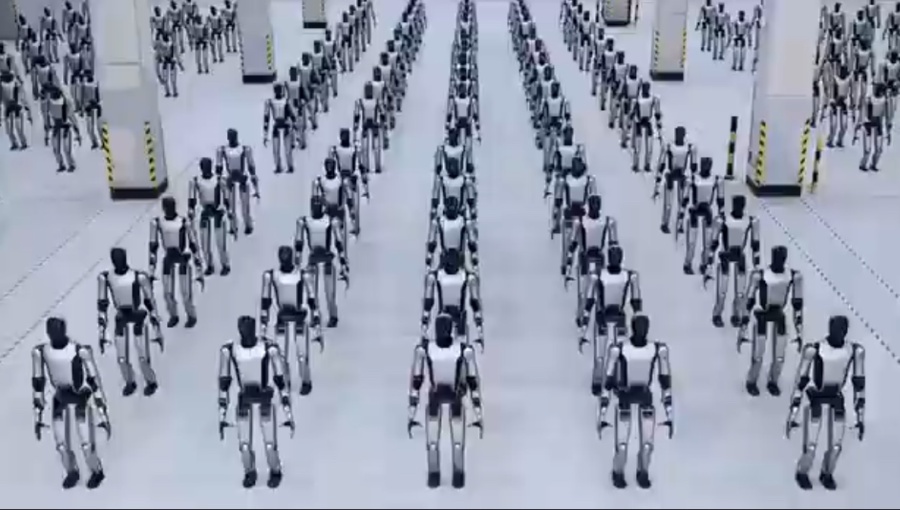
In what looks like a scene straight out of the iRobot movie, China is rolling out an army of car factory robot workers that could revolutionise the manufacturing sector. / bne IntelliNews
It looks exactly like a scene out of the Hollywood movie iRobot, depicting the Isacc Asimov classic sci-fi novel: a warehouse filled with gleaming white robots standing in a precise military grid, moving in unison as their controller gives them orders. (video)
That future has arrived. China unrolled the first mass deployment of robots to take the places of workers in car factories across the country. This army can work 24/7, will never go on strike, don’t want tea-breaks, and don’t even need to be recharged, as they can change their own batteries.
If the experiment is successful, the Chinese robo-factory worker could transform the face of manufacturing. China already enjoys a massive per unit cost advantage over the West – the average cost of producing a widget is roughly a third of that in the West – but robo-workers will slash labour costs and could double productivity, simply because robots can work all night.
Well ahead in robot development, these humanoid robots have been sent to industrial production lines, marking a milestone in Beijing’s push to dominate the global robotics sector. Hundreds of robots developed by UBTECH Robotics, a Shenzhen-based firm, have been deployed across major automotive plants, including those operated by leading car-makers, BYD, Geely, FAW-Volkswagen, Dongfeng, and Foxconn.
In a departure from conventional automation systems, the humanoid machines are designed to literally replace humans on production lines, rather than the robot-orientated production lines that are in wide use now. The robots are designed for flexible factory work and require minimal human supervision. According to UBTECH, as the robots are capable of autonomously swapping their own batteries, the production lines can operate continuously.
“This is the first real industrial use of humanoid robots at scale,” the company said, emphasising the shift from experimental robotics to fully integrated deployment. Unlike the traditional robotic arms, or fixed-position machinery, humanoid robots can adapt to a variety of tasks and physical layouts, offering manufacturers greater flexibility and cost efficiency over time. Currently, lines of fixed-position machinery have to be reengineered to cope with any modification to design or the introduction of a new model. However, the robo-work force can just be taught to deal with any changes to the production line or the introduction of new components or parts cheaply and quickly, like any human worker.
The move comes as Beijing accelerates its broader industrial strategy to lead in advanced manufacturing, a key pillar of the “Made in China 2025” initiative. As bne IntelliNews reported, China now produces more industrial robots than the rest of the world combined, with domestic players rapidly gaining ground in both hardware and AI-driven control systems.
China is moving beyond being just the largest market for robots — it is becoming the core of global robot production. Chinese firms accounted for over 60% of global robot output in 2024, driven by subsidies, procurement programmes, and access to vast domestic datasets for training machine learning models.
According to the Ministry of Industry and Information Technology, China aims to achieve “breakthrough use of humanoid robots in key sectors” by 2027.
UBTECH’s humanoids represent the cutting edge of this trend. Initially known for educational and consumer robots, the company has shifted aggressively toward industrial applications in recent years. Its robots feature vision recognition, mobility in three-dimensional space, and multi-tool manipulation, making them suitable for tasks traditionally reserved for human workers.
As bne IntelliNews reported, China has already emerged as a global manufacturing powerhouse, but the introduction of robot workers takes things to a new level. The deployment is likely to fuel further discussion over labour displacement and the future of work in China’s manufacturing sector, particularly as demographic pressures and wage inflation accelerate the search for alternatives to manual labour.
Across Europe, a new generation of agri-biotech innovators is redefining how we grow food under pressure from climate change.
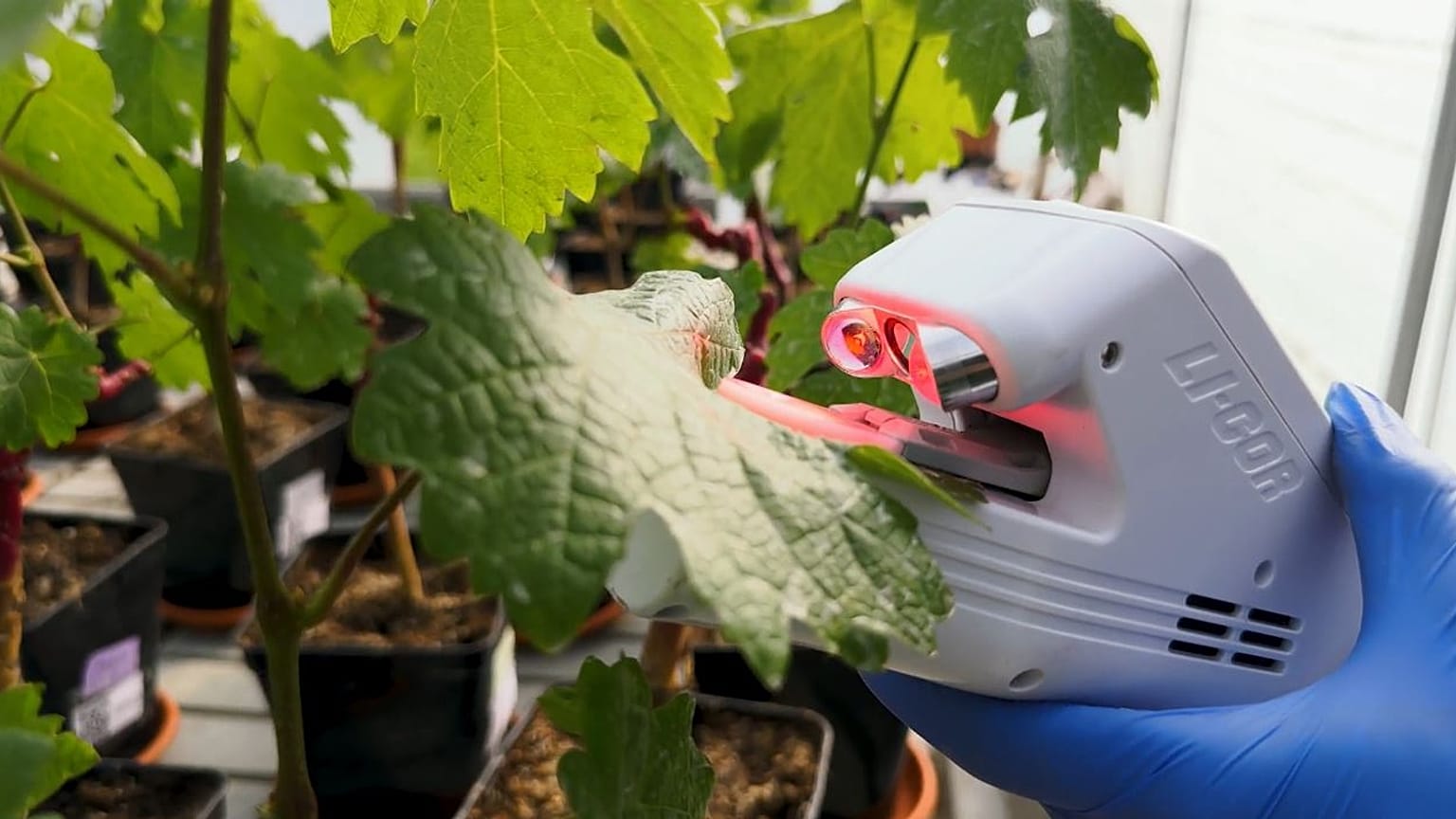
Elicit Plant is a French startup that has gained international recognition for helping crops cope with water shortages — a challenge that’s becoming critical for farmers worldwide.
The company’s breakthrough started with phytosterols. Aymeric Molin, agronomy engineer and Chief Operations Officer at Elicit Plant, explains:
“Phytosterols are natural molecules found in all plants. They help regulate how easily substances pass through the plant’s cells, enabling the plant to adapt to the different stresses it encounters.”
Elicit Plant’s headquarters function as both a research centre and a testing ground, equipped with biology and chemistry labs and a small production unit. An international team of scientists works here to turn research into practical solutions that can be deployed quickly in the field.
“We work on a wide range of crops — mainly maize, soybeans, sunflower and cereals. Our field experiments have shown that treated maize plants use 20% less water on average than untreated ones,” says Magdalena Kutnik, Head of Laboratories
Biostimulants, the category of products to which Elicit Plant’s innovations belong, first appeared in the 1990s. Since 2022, they have been regulated under European legislation.
“We received one of the first European authorisations, which allows us to distribute across all EU countries under the same authorisation. It’s an extraordinary opportunity,” notes Molin.
As droughts and extreme weather become more frequent, solutions that help crops use water efficiently are no longer optional — they’re essential. Elicit Plant’s work shows how European agri-biotech can deliver both scientific innovation and a tangible impact in the field.
Delhi’s pollution is a crisis of democracy as much as public health, citizens say
ANALYSIS Citizens in the Indian capital of New Delhi say that the government’s inaction against the pollution-driven public health crisis signals both a struggling democracy and hypocrisy, as India leads talks on climate action in the Global South at COP30.
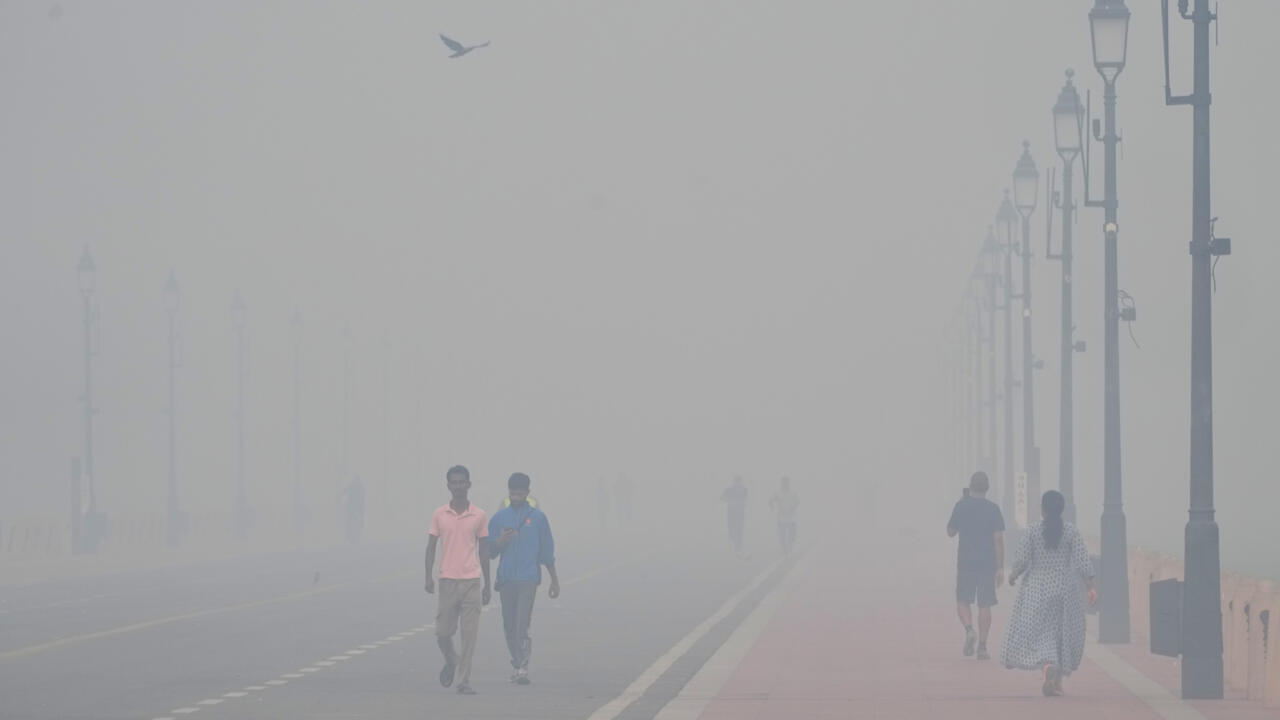
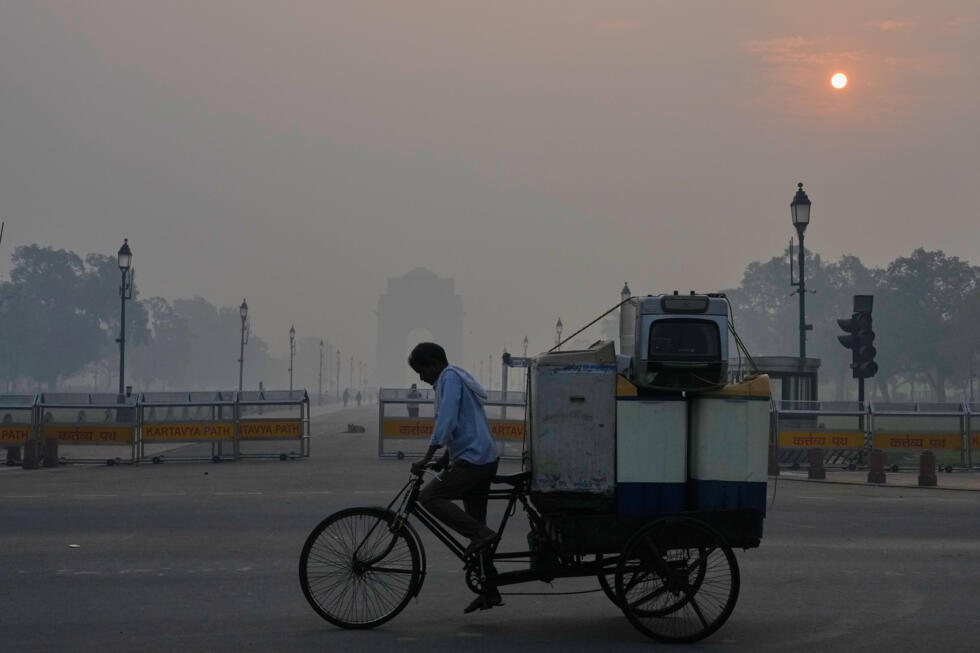
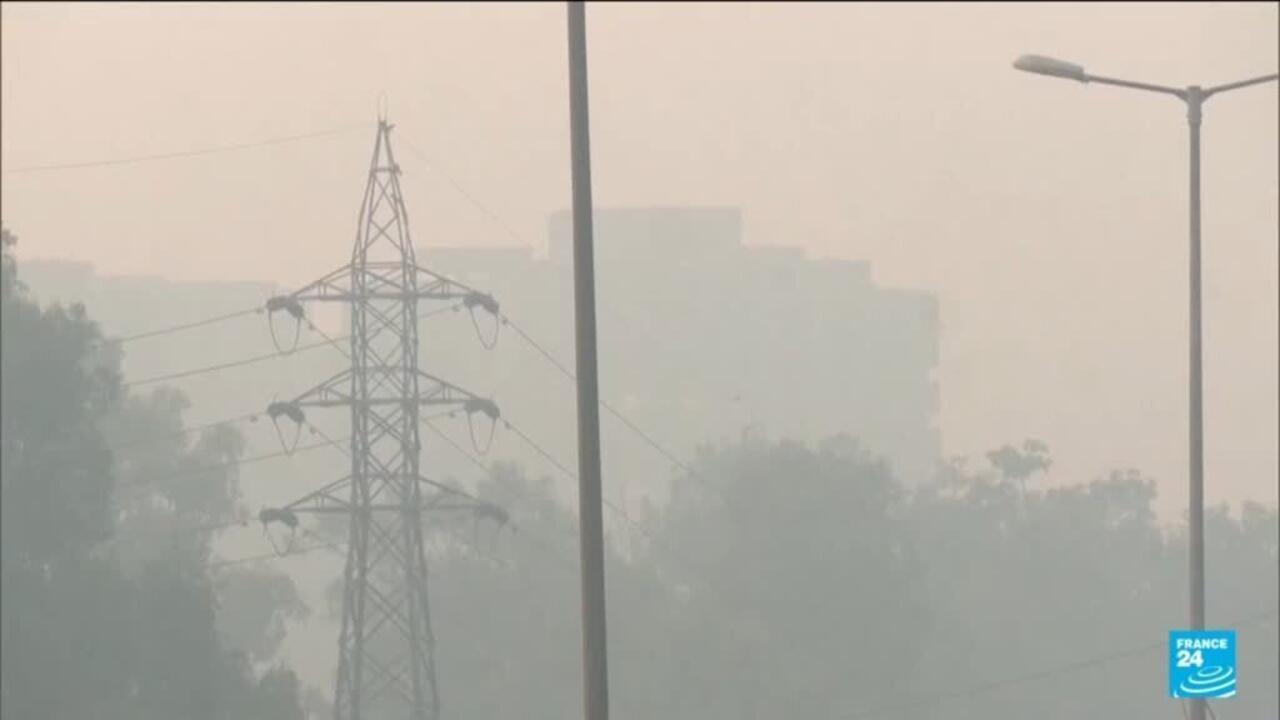
Between October and November each year, New Delhi transforms for the worse. Its skies are shrouded by a dense, grey-yellow haze with an acrid smell that sticks to the roof of the mouth. Visibility plummets so intensely that public transport and air travel are often put on hold, and grand monuments vanish into blankets of thick air. Year after year, hospitals are overburdened by the number people – young, old and in between – who need care for severe respiratory illness.
Some reports have likened the pollution to smoking tens of cigarettes a day, but the reality is actually worse.
This year, pollution hit 30 times the safe limit set by the WHO, despite the Indian government’s "Graded Response Action Plan" that was created in early October to limit it, particularly after the Indian festival of Diwali, where many still light firecrackers.
Aside from the expected onslaught of respiratory illness, long-term exposure to contaminated air can cause cognitive impairment, increase the risk of cancer and cause long-term, chronic illness in children. India has the largest pollution-related death toll in any country in the world. According to Lancet Planetary Health, air pollution accounted for 17.8 percent of all deaths (1.67 million) in the country in 2019.
Delhi's airborne slurry is made up of particulate matter, smoke, fog, sulphur dioxide (which mixes with water droplets to create sulphuric acid) and a host of other compounds which float suspended under a lid of cold, stagnant air. The lid traps toxins and pollutants and allows a quick build-up of smog that can only be alleviated by winds or heavy rain – weather phenomena which do not naturally occur during the still, cold winter months.
Delhi’s middle and upper classes can save themselves – to an extent – by staying home in air-purified rooms, but lower-income households and the many citizens living on the streets in abject poverty have no way to escape.
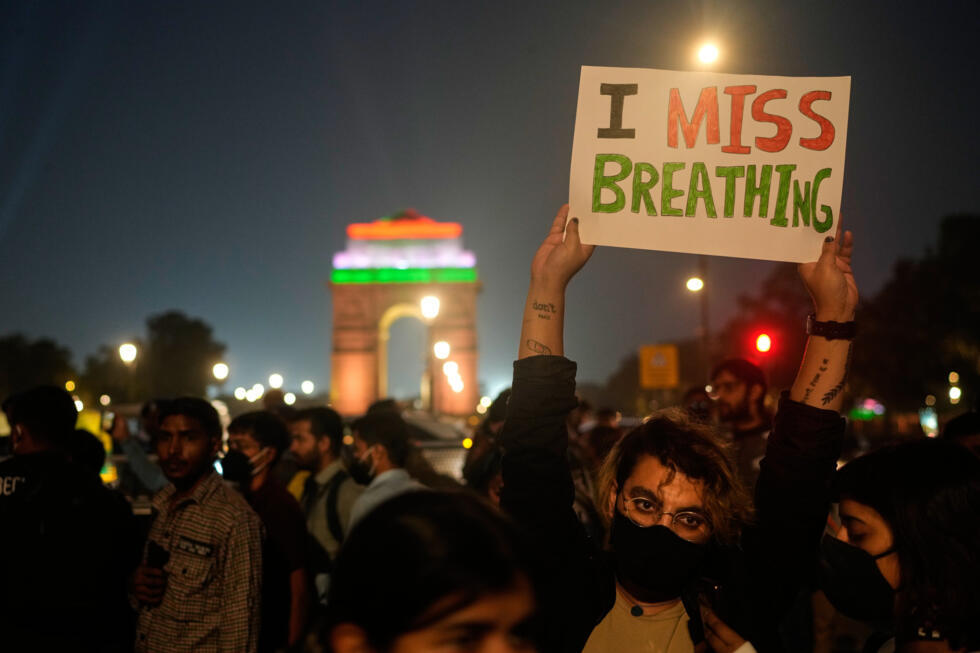
After years of this cyclical, air pollution-driven public health emergency, a handful of the 20 million residents in and around Delhi made a rare attempt at protest. But any hope of change was quickly quelled by police, as more than 80 demonstrators were arrested less than an hour into the protests on November 9.
Journalist and environmental activist Saurav Das was one of the first people to amplify the call to protest, which spread largely on WhatsApp and via social media.
“I had been vocal about the pollution for two years before, but the bronchitis diagnosis really pushed me because I was leading a healthy lifestyle… aside from living in Delhi.”
Das was present at the protest and has been repeatedly harassed and intimidated by the police since then.
In the past, inaction was largely blamed on infighting between the central and Delhi government. But this year, it’s increasingly being seen as a failing of Indian President Narendra Modi’s Bharatiya Janta Party (BJP), since it was voted back in to rule Delhi after 27 years.
“People felt betrayed because they voted in the BJP with expectations of change," says Das. "But the pollution issue cuts across party and ideological lines. Everyone deserves clean air, regardless of who you voted for.”
The ruling party also made the controversial decision earlier in October to approach India’s Supreme Court to revoke a ban on "green crackers" and allow "regulated and time-bound" use after having previously banned all fireworks, whether low-emission versions or not. The subsequently heavy use of fireworks this year during the festival significantly contributed to the deteriorating air quality index (AQI).
However, a few hours into Diwali, the government’s open-access websites that provide real-time monitoring of air quality blacked out for several hours. Opposition parties and concerned citizens also accused the Delhi government of "manipulating" air quality data, with a video of water being sprayed around an AQI measurement system in order to lower the numbers. The BJP denied the allegations.
“They compromised the integrity of the data, destroyed civic spaces, used unnecessary force – even against women, children and the elderly. Our democratic spaces are shrinking, our voices are not being heard and we cannot breathe,” Das says. Choosing optics over real change
India earlier this year announced a set of special measures known as the Graded Response Action Plan (GRAP), that would be executed in stages according to the severity of pollution.
But the GRAP wasn’t implemented until pollution levels had already hit severe levels, and Das says that the measures that were taken came too late. “The health warnings were only issued after the protests. Even schools and workplaces had stayed open. The government focussed on crisis management, not prevention.”
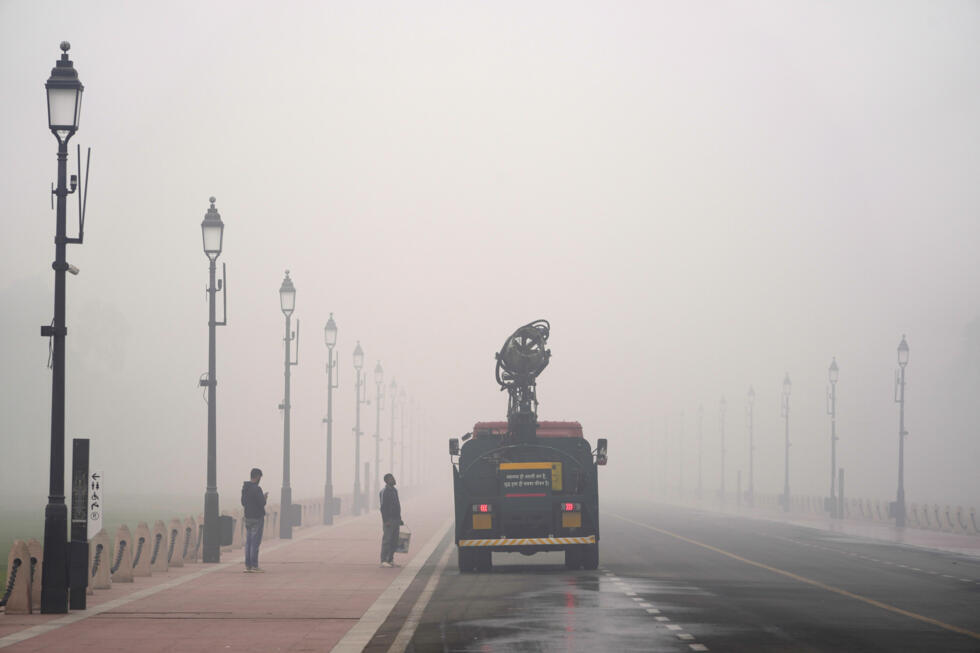
A Delhi government vehicle sprinkles water to control air pollution amid a thick layer of smog in New Delhi, India, Monday, November 18, 2024.
Delhi has been making some dubious attempts to reduce the pollution. "Anti-smog guns" – water jets attached to a truck – run all over Delhi using the logic that water will trap some of the pollutants and improve the air quality. A huge green "smog tower" in the heart of the city was supposed to act like a city-wide air purifier. Neither approach was at a scale large enough to make any real change, and the government opted for more drastic measures.
Just over two weeks ago, the city made its first attempt at cloud seeding, a method whereby small particles of silver iodide and salt are fired into the air by (in this case) a Cessna aircraft to induce artificial rain. The falling droplets of water would bind onto the airborne particles and chemicals and clean the air as they fell to the ground – allowing citizens at least a short period of respite.
But there simply wasn’t enough moisture in Delhi’s dry winter skies to allow precipitation. “The anti-smog guns and cloud seeding are band aid methods,” Das says. “They’re more focussed on perception management because these are not long-term solutions.”
Citizens cry hypocrisy
For locals, Delhi’s toxic air has become a symbol of a struggling democracy – and as India leads talks for the Global South COP30, a sign of bitter irony as well.
Indian representatives are right now in Belin in Brazil to lead the talks of climate justice and reducing emissions, but the air quality at home will not be a part of the conversation.
Avantika Goswami, a researcher at the Center for Science and Environment, will be joining the Indian delegates at COP30 in Belin. She says that air quality is a major issue in New Delhi, but it cannot undermine the role that India will play at the COP.
“One of the primary objectives is discussing Article 9.1 of the Paris agreement, which talks about financial resources from developed countries to assist developing countries to adhere to climate policies.”
“It can’t be an either-or situation… Delhi’s pollution has to be tackled. We need better, long-lasting policies.”
“At the same time, India needs to be at COP30 to fight for climate justice for the Global South. Both things are important,” she adds.
But Das has a more critical outlook towards India’s participation at COP30, as citizens in the capital gear up for worsening pollution. “I think it’s hypocritical to be there talking about climate change when people can’t breathe here. That hypocrisy will not go unnoticed.”
Scorched vines and shrinking incomes drive French winegrowers to the streets
Winegrowers across south-west France are preparing to demonstrate on Saturday amid mounting anger over climate shocks, collapsing incomes and stalled political support.
Thousands of winegrowers in southern France's Occitanie region are set to march in the city of Béziers to highlight the plight of the wine industry in the face of climate change.
"It's seen as a last-ditch protest. We're not far from despair," said Jean-Pascal Pelagatti, a winegrower near Béziers and a local secretary-general of the FDSEA farmers union, who added he was hoping for turnout of between 5,000 and 6,000 growers.
Fabien Mariscal, who cultivates 45 hectares of vines in the Aude region, said he would be among them.
"On 15 August, temperatures rose to 45 or 46 degrees Celsius, accompanied by a hot north wind. Everything was burned, the grapes dried up and remained glued to the vines during the harvest. I lost 50 percent of my production on this plot," he told French news agency AFP.
The winegrower, who took over his vines from his father, says he has seen costs skyrocket while price of wine stagnates. "We lose money as soon as we get up in the morning, without even going to work," Mariscal said.
In August, a few kilometres from his village of Douzens, a fire swept through 17,000 hectares, affecting some 200 farms, mainly vineyards. According to the government's forest fire database, it was the worst fire in at least 50 years in the French Mediterranean region.
"Occitanie, France's leading wine-growing region with 257,000 hectares, is bearing the brunt of climate change: repeated droughts and water shortages are causing yields to fall by 30 to 40 percent. Our winegrowers have some of the lowest incomes in the country," said Denis Carretier, president of the Occitanie Regional Chamber of Agriculture.
This year, he warned, is shaping up to be the smallest wine harvest since a severe frost wiped out grapes in 2021.
"Without water, there is no agriculture, and without agriculture, the whole region collapses," Carretier said.
Several unions and other organisations representing farmers have put forward some 20 joint demands ahead of Saturday's march, including resisting "abusively low wine prices", cutting red tape, ensuring access to water and the reform of a law prohibiting wine advertising.
The location of the protest is symbolic, as Béziers was where the great wine revolt of 1907 began – one of the largest social movements of the 20th century in France, which began when southern growers protested against competition from cheap imports and adulterated wines.
"There is growing anger. We are feeling the same unrest as in 1907, in that winegrowers are no longer able to make ends meet," said Fabien Castelbou, a winegrower and vice-president of a cooperative near Montpellier.
Some union leaders are hoping that a major wine fair coming up in Montpellier at the end of the month will see officials announce a new policies for the industry – though political decisions have been stalled amid the leadership crisis that has already toppled three governments in one year.
"We don't feel there is any political will to promote wine, respond to Trump's attacks, help us return to the Chinese market, or establish an ecosystem that is favourable to the economy and people," said Ludovic Roux, president of the Aude chamber of agriculture, pointing to a proposal to stop selling wine at the national parliament's bar as a symbol of government disinterest.
(with AFP)
“Motherfuckin’ Windfarms”: Samuel L. Jackson at the Seaside
Caspar David Friedrich, The Monk by the Sea, 1808-1810. Alte Nationalgalerie, Berlin. Public domain.
Screenings in Berlin cinemas begin with about ten minutes of advertisements that come before the previews of upcoming feature films. These show-before-the-show-before-the-show mini-films and silly spots hawk all kinds of wares, from candy bars to high culture, from beer brands to Beethoven.
Normally, one casually tunes in and out of these marketing medleys, pays desultory bits of attention, maybe laughs at a few on-screen gags, but otherwise chats away with friends or concentrates on fighting through the packaging of the goodies bought at the concession counter.
But when Samuel L. Jackson suddenly appeared, pitching offshore wind farms before a screening of the North Sea island anti-idyll Amrum, I practically choked on my popcorn. The celebrated American actor’s laser eyes and melodious yet abrasive voice jolted me upright in my soft cinema seat. “Motherfuckin’ windfarms!” he seethed, spitting out his words like those bullets that whizzed by him in Pulp Fiction thirty years ago.
Before Jackson speaks, the ad shows a rocky coast lashed by waves. A lone figure strides towards the sea, his back to the viewers. His dark clothes are nearly the color of the slick, surf-sprayed shelf of stone he walks on, with a swath of green algae farther along the point. The palette of water and sky lightens towards the cirrus-strewn horizon notched by a dozen giant windmills.
The composition is poached from the German Romantic painter Caspar David Friedrich, who often depicted solitary souls in silhouette from behind, staring out to sea, waiting. This masterful painter of many more shades of melancholy than fifty sometimes put ships on the swell, or a foundering fishing boat. But the masts of these schooners seemed fragile, easily overturned, like the human soul—not the forever-straight, inexorably at-work, storm-proof masts of today’s wind machines.
The task of admen painting their moving pictures across the cinema canvas is to find—and flog—the romance of three-armed industrial ogres set out in precise, regimental formation. It’s a tough sell. There’s no tougher seller than Samuel L. Still, the soundtrack will have to ride to the rescue.
Amrum tells the tale of a young boy in the last days of World War II. He begins to sense, if falteringly, the depravity of his perfect Aryan family’s faith in the Führer. The island has windswept dunes; wide mudflats alongside white beaches; abundant avian and aquatic life; rough fields ploughed by horses; and whitewashed, thatch-roofed houses that appear unchanged since Caspar David Friedrich’s day.
All this beauty and more is captured in gorgeous, often long-held shots from cinematographer Karl Walter Lindenlaub’s camera. The gorgeous photography seems all the more impossible given the wartime horrors inflicted on the mainland so close across the water. I’d seen the movie preview already, ogling its sumptuous images that seemed folded into a widescreen travel brochure extolling the scenic wonders of the North Sea islands. Amrum’s current economy relies heavily on the tourist trade.
Off the low-lying land, there are no turbines to spoil the cinematic view, or to be dabbed out by CGI, as Friedrich used solvents. About 25 miles west of Amrum is a group of 80 turbines owned by the German multinational RAE, too distant to be seen.
Samuel L. Jackson is not working for RAE, but for the huge Swedish corporation Vattenfall. In 2023, the concern committed to building Germany’s largest offshore wind park 100 kilometers out to sea, changing the undertaking’s name from the unsexily techie “N 7.2” to the picturesque (one might even say C. D. Friedrich-ian) “Nordlicht I”—now to be joined by Nordlicht II (that is Northern Lights I and II). The rebrand, says project manager Matthias Buko, is meant to show how the “fossil-free electricity produced there [will be] symbolically in harmony with the generation of light.” By 2027, the wind park will supply energy for a million German households. As in Amrum the movie, the ghosts of the war need to be exorcized. Last month, Vattenfall proudly announced that it had cleared several unexploded Nazi mines from the seabed as construction on the project proceeded. Vattenfall is sonically sensitive: “To mitigate underwater acoustic impact, the company deployed a 90-metre bubble-curtain system via a dedicated vessel to reduce shockwave transmission and protect marine life.” (Wind turbines are getting quieter, but another, devastating, take on their output—and its acoustic, political, cultural impact—can be heard and seen at an engrossing, aggrieved, frightening yet still uplifting video and sound installation currently at the Munch Museum in Oslo, called Zifzafa by Lawrence Abu Hamdan.)
In the Vattenfall pre-movie spot, the opening distant view is brutally cut away from to a close-up of Jackson chucking something into his mouth and crunching it down, then raising a pair of binoculars to his scowling face. What he sees prompts those scalding alliterative Fs: “Motherfuckin’ windfarms.” Over the sound of the surf and the wind, he continues his litany of complaint: “Loud, ugly, harmful to nature.” But then he lowers the glasses and shakes his head at such idiotic notions. “Who said that?”
Above the gentle symphony of nature, the music starts in, a mini–Big Ben-like melody as from an off-screen, offshore wind chime. The environmental encomium gathers momentum. Jackson gestures towards the turbines with his bag of chips and assures us that “these giants are standing tall against fossils, rising up out of the ocean like a middle finger to CO₂.” The electro-acoustic melodies tumble and twirl benignly around his words. The synthesis begins to swell into a meta-human chorus raising a sacred hymn with Saint Samuel of Offshore Salvation: “Deep beneath the waves they can become artificial reefs creating habitats for sea life to grow.”
The seasoned huckster, with campaigns for Capital One, Adidas, and Apple on his richly remunerated résumé, turns to the camera, now brandishing his bag of “Vattenfall Windfarm Seaweed Snacks.” The music rises in benediction of all that megawattage as the celebrant holds out an algae-green wafer of absolution toward the cinema supplicants. We can’t take the holy snack from him, so he pops it into his own mouth, delighted. “Mmm! Mmm! Serious gourmet shit!”
Nourished by spiritual food and the turbines of redemption, he’s ready to repeat the antiphon: “So what’s it gonna be?” First, he delivers that opening liturgical line angrily—“Motherfuckin’ windfarms?!”—shouting it into the relentless breeze. Then he repeats it in a tone of beatific praise, turning his face toward the camera, repositioned so that the turbines spread out behind him like a field of revolving crosses: “Motherfuckin’ windfarms!” The choral intimations now cogenerate an ecstatic chop of percussion, like self-flagellating blades propelled by shimmering, synthesized harmony rising upwards toward forever, to that place where the lights are always on.
The initial pictorial composition is returned to. The lone figure strides back down the beach, presumably to his off-screen e-limo and thence to the airport for the long flight back to California’s distant, ever-narrowing shores.
David Yearsley is a long-time contributor to CounterPunch and the Anderson Valley Advertiser. His latest albums, “In the Cabinet of Wonders” and “Handel’s Organ Banquet” are now available from False Azure Records.