Friday, December 12, 2025

US lawmaker questions Ivanhoe Atlantic’s China ties

Ivanhoe Mines executive co-chair Robert Friedland. (Credit: The Northern Miner.)

A senior US lawmaker is pressing the State Department over what he calls troubling links between Ivanhoe Atlantic and Chinese state interests.

In a letter to Secretary of State Marco Rubio, Representative John Moolenaar, who chairs the House committee focused on China, said the department has backed companies with “concerning ties” to the Chinese Communist Party.

He named Ivanhoe Atlantic as one example and pointed to what he called its “well-documented” connections to Chinese state-owned enterprises.

Ivanhoe Atlantic’s majority shareholder is I-Pulse Inc., a US firm founded and chaired by mining billionaire Robert Friedland, who also founded and co-chairs Canadian miner Ivanhoe Mines (TSX: IVN). Since 2018, Ivanhoe Mines has sold portions of its holdings to Chinese groups CITIC and Zijin Mining, which together owned about 39.5% of the copper miner as of 2020.

Moolenaar linked those relationships to a $1.8 billion infrastructure agreement signed in July between Ivanhoe Mines and Liberia to rehabilitate a key rail line used to ship iron ore from Guinea. He argued the deal advanced China’s influence in West Africa and said some US officials pushed it in ways that undercut American strategic interests.

He wrote that he supports expanding US commercial activity in Africa but wants to ensure “commercial diplomacy is free from entanglements with the CCP.”

Separate entities

Ivanhoe Atlantic rejected the allegations, noting the company and Ivanhoe Mines are completely separate entities. It also said its iron ore project in Guinea is intended to counter China’s tightening control over critical minerals in the Simandou region. The company said all future production is earmarked for US and allied supply chains. CEO Bronwyn Barnes said none of the ore will be exported through China’s Trans-Guinean Railway.

Political allies of Donald Trump have also raised similar concerns. Political activist Laura Loomer urged senior Republicans in July to intervene. She shared an article that accused US officials of pushing Liberia to transfer control of the Yekepa-to-Buchanan railway from ArcelorMittal to Ivanhoe Atlantic.

Ivanhoe Atlantic called attempts to link the two companies “grossly incorrect and misleading” in comments to Reuters. Ivanhoe Mines did not respond to requests for comment.

Moolenaar, who described Ivanhoe Mines and Ivanhoe Atlantic as sister companies, argues that minority stakes held by CITIC and Zijin in Ivanhoe Mines illustrate how China secures access to critical minerals through indirect investment.

The lawmaker noted that the US Federal Communications Commission has deemed CITIC’s telecom services a national security risk and that Zijin was added in 2025 to the Uyghur Forced Labor Prevention Act entity list.

Falling inventory behind silver price surge: Sprott

Stock image.

Silver this week crossed the $60-an-ounce mark for the first time, as momentum continues to build in one of the best-performing commodities of the year. Analysts at Sprott believe the main driver behind silver’s recent record-setting run has been a dwindling free-trading inventory.

In Sprott’s December precious metals report, analysts led by Paul Wong wrote that the global silver inventory has reached a point where any further demand is “creating price convexity” — when price changes speed up as the metal’s supply tightens.

“In prior commentaries, we have noted that global silver inventories were being reduced to the point where the free float of silver availability would likely result in a possible silver price spike,” Wong wrote, in reference to past reports published by Sprott.

For the year, silver has nearly doubled in value against a backdrop of supply tightness and macroeconomic tailwinds. And despite a violent sell-off of silver in mid-October, that did not lead to further downside, and silver prices stayed above their 50-day moving average.

Silver’s bullish cup and handle. Credit: Sprott

Sprott, in its latest report, highlighted a multitude of reasons behind silver’s strong performance:

Supply deficit

Silver mine production and recycling, according to Sprott’s estimates, have remained essentially flat for over a decade. On the other hand, industrial demand, especially from solar panels and electronics, continues to surge, which has created a persistent and growing supply deficit.

That deficit is set to reach a fifth consecutive year, with a forecast shortage of approximately 125 million oz. in 2025, taking the cumulative deficit since 2021 to nearly 800 million oz., the firm said.

Tight physical market

In London, silver inventories have plunged since their 2021 peak, reaching a low in 2025. A rapid drawdown signals tightening liquidity and a physical market under stress, which often precedes sharp price moves.

Market dislocation

Meanwhile, uncertainties surrounding tariffs have triggered arbitrage flows into New York, which raised the odds of a localized squeeze such as that seen in London. Silver’s recent addition to the USGS critical minerals list has heightened concerns about future tariffs and raised worries that US silver inventories will not be available to balance prices.

ETF investment

By Sprott estimates, global ETF silver holdings are currently well below their peak (830 million oz. vs. 1 billion oz. in 2021). A return to previous highs would absorb a large share of the current London stocks, potentially overwhelming available metal and accelerating price gains, it said.

Macro factors

The Sprott report also highlighted several macroeconomic factors contributing to silver’s rise, namely the dynamics of the debasement trade and heightened geopolitical risks that have bolstered the appeal of precious metals.

A steepening yield curve, driven by rising long-end bond yields globally, signals escalating risk, which could lead to currency devaluation and a flight to real/hard assets, Wong wrote.

Meanwhile, China has announced strict new export controls on silver for 2026, which has fueled a rush to secure the metal before the restrictions take effect.

Column: Maritime logistics at the sharp end of the critical minerals race 

AI-generated stock image by khonkangrua.

Beijing and Washington’s competing – and occasionally adversarial – critical mineral policies have turned resource security into a new type of battleground where traditional shipping models are tested.  

Beijing still accounts for around 70% of global rare earth mining and roughly 90% of processing as well as a dominant share of advanced magnet manufacturing – the highly sought after and valuable end product for crucial industries.  

In April this year, China imposed export controls on seven rare earth elements (REEs) and related products, a move that caused disruptions across valuable industries, including the EV, defense and AI sectors. Those controls still remain in place today. 

And then in early October came an expansion of these restrictions covering additional REEs, magnets, lithium battery materials and related resources. That escalation created a serious risk of supply bottlenecks for Western manufacturers and placed stress on their shipping partners. In early November, after the Trump–Xi meeting, China agreed to suspend its October expansions for roughly a year and to issue general licenses covering a basket of critical materials for U.S. end users and their global suppliers.  

While the European Union has welcomed the agreement and is working with Beijing on a licensing system of its own, EU and US entities still face the older April rules and the possibility of controls snapping back after 2026. 

For shipping operators and commodity traders, volume and routing changes are new considerations in addition to regulatory ones. Meanwhile, Western governments are pouring capital into new upstream opportunities in Central and Southern Africa, Brazil, Australia and Ukraine – and even into seabed mining pilots in the Pacific.  

Every tonne that is diverted away from China-centric flows has to travel along longer and more complex maritime routes to refiners and manufacturers in North America, Europe, Australia and allied Asia.  

At the same time, the UN Trade and Development (UNCTAD) Review of Maritime Transport notes that bulk and container freight rates in the past two years have been volatile and elevated due to geopolitical shocks in the Red Sea, Black Sea and the primary canals. Critical mineral routes are beginning to intersect with exactly these chokepoints. The result is a market that demands more ships, flexibility and sophisticated logistics management rather than simply more bulk capacity. 

This is where the large trading houses with embedded logistics operations are coming into their own. BGN Group, Traxys and Gerald Group in particular illustrate how traders are evolving into integrated maritime logistics platforms for the energy transition. 

BGN Group, widely considered a fast-growing crude, LNG and LPG player, has diversified in 2025 by building a dedicated metals and minerals trading desks aimed at energy transition materials — including copper, cobalt and potential rare earth exposure. The Geneva-based firm has also entered into a pivotal critical minerals agreement in Africa focused on traceable exports of cobalt and other strategic metals. Its U.S. arm, BGN USA, has established a centralized digital commodity hub for large buyers that supplies highly sought-after AI and defense-led demand for African critical minerals.  

For maritime logistics this new and sudden reality appears to favor those operating a hybrid operations model. On one end of the chain BGN, for example, deals with major and highly automated deepwater hubs that are designed to handle very large gas carriers (VLGCs). On the other, it must lift material from comparatively shallow or infrastructure-limited ports in developing regions that it operates in. That requires a mix of smaller bulk and multipurpose ships, flexible storage arrangements, and a routing model that is comfortable combining analog ports with fully digital ones. 

Beyond BGN, a broader set of metals-centric traders is emerging as the connective tissue of the new supply chain order. Traxys, a mid-tier global trader headquartered in Luxembourg, has built an integrated battery minerals portfolio including copper, lithium, graphite, cobalt, and rare earths. Traxys isn’t only a middleman. It helps producers in remote areas by arranging transport, storage, shipping and the financing needed to get their minerals to market. That allows mines in places such as Central Africa and Latin America to plug directly into global refineries, cathode plants and OEM supply chains well before traditional infrastructure would normally allow. 

Similarly, Gerald Group – the world’s largest independent, employee-owned metal trading house – has been re-expanding its presence in copper, concentrates and allied battery metals. Gerald leverages its longstanding experience in moving industrial metals across diverse and sometimes fragile trade lanes. Its renewed push into energy-transition metals provides mid-tier mines with access to reliable freight capacity, port handling, and risk-management structures that can be difficult for individual producers to obtain on their own. Together, these traders illustrate how the metals sector – not just energy traders – is becoming a central architect of diversified critical mineral flows. 

Global container lines are also playing a key role. Maersk and Evergreen now sit at critical pinch points in these supply chains. Maersk’s routing decisions – such as whether to transit or avoid the Red Sea due to security conditions – directly affect lead times, freight costs and insurance premiums for containers carrying lithium chemicals, permanent magnet alloys and intermediate battery components moving between Africa, the Middle East and Europe. Evergreen, meanwhile, has ordered 14 new LNG dual-fuel containerships, an expansion that boosts long-haul Asia–Europe capacity and offers lower-emission transport options. For automakers and tech OEMs seeking to decarbonize their upstream logistics, such fleet upgrades matter as much as mining outputs or refinery capacity. 

Are these firms, and the maritime sector more broadly, genuinely ready for the freight that a full-scale diversification away from Chinese processing would imply? They may already be ahead of the curve but the task in front of them is certainly not small.  

First, new mines often sit in infrastructure poor regions with limited accessibility. Until rail spurs, roads and power are in place, ships cannot lift meaningful volumes. Second, refiners in friendly jurisdictions still lag China in scale and scope. Even if raw materials sail from Africa or Latin America to Europe or North America, midstream processing capacity may remain the bottleneck. Third, the regulatory environment is fluid. China’s April controls remain in force, and the current suspension of the October package is explicitly time limited. 

Yet the direction is clear. Critical minerals are now firmly embedded in national security strategies from Washington to Canberra and Brussels. Governments are funding new corridors through both upstream and downstream investments in ways that create long-term demand visibility for maritime transport. Trading houses and container lines are pivoting their shipping portfolios toward metals and critical minerals and also experimenting with hybrid shipping models and flexible fleets, as they enter this rapidly growing market. 

The current pause in Chinese export controls has provided breathing space but not certainty. Over the next year, maritime logistics decisions will be crucial in determining whether Western diversification plans for critical minerals turn into physical reality. The companies that can align ships, ports, data and finance in a coherent way are already emerging as key architects of this new supply chain order, and their choices will ripple through freight markets well beyond rare earths and battery metals. 

Saiid Bakir is a MENA energy researcher based in Dubai

Critical Metals inks another offtake deal for Tanbreez rare earth concentrate

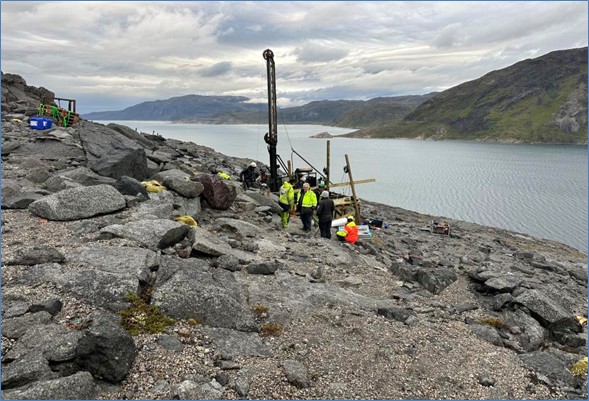
Drilling at the Tanbreez project in Greenland. Credit: Critical Metals

Critical Metals (Nasdaq: CRML) announced Tuesday it has executed a term sheet for creating a joint venture with Romanian state-owned Fabrica de Prelucrare a Concentratelor de Uraniu (FPCU), which specializes in the processing of uranium and other strategic mineral concentrates.

The term sheet provides CRML with long-term offtake rights for half of the entire concentrate production from its Tanbreez project in Greenland — host to one of the world’s largest heavy and medium rare earth deposits.

The joint venture, the company said, outlines the development, financing and commissioning to build and operate a rare earth processing plant in Romania. Under the agreement, CRML will supply 50% of the Tanbreez project’s premium rare earth concentrates to the Romanian JV through the life of mine.

The JV formation follows a letter of intent that CRML signed in October with US-based rare earth processor REalloys for a 10-year offtake agreement covering 15% of production from Tanbreez.

The envisaged JV in Romania would establish a highly resilient Europe-centric supply chain, reducing reliance on China — which currently controls more than 80% of global rare earth processing — and protecting the EU against geopolitical vulnerabilities, CRML said.

This ensures a secure, NATO-aligned feedstock for high-value downstream European industries, it added.

The company noted it will not be issuing either debt nor equity for the JV, and will hold a 50% stake on a carried interest basis. Also, it will have no capital expenditure requirements to build the processing facility.

Rare earth metals and advanced materials will be used for direct use within the European Union — strategically strengthening national security, advanced manufacturing, electrification and defense technologies, CRML said.


Ford suppliers receive China’s new streamlined rare earth licences

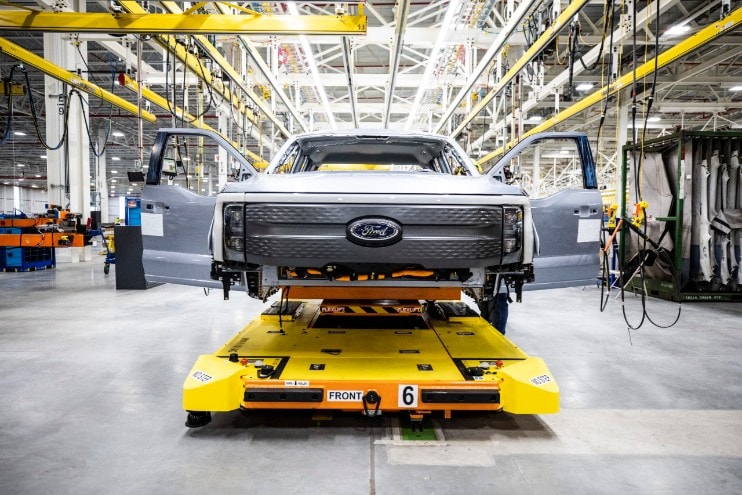
Ford F-150 Lightning pre-production at Rouge Electric Vehicle Center. Credit: Ford

Chinese rare earth magnet suppliers to US automaker Ford Motor were included in the first batch of new export licenses issued by Beijing to boost shipments and reduce shortages of the vital components, the carmaker said on Wednesday.

The so-called general licenses were agreed after Presidents Xi Jinping and Donald Trump met in South Korea and will reportedly allow larger shipments with fewer hurdles under year-long permits for individual customers.

China’s introduction of rare earth export controls in April forced companies to apply for licenses for every shipment, creating shortages that brought parts of the auto supply chain to a halt and handed Beijing enormous leverage in trade talks with Washington.

Reuters reported last week that three Chinese magnet suppliers had licenses issued, but Ford appears to be the first foreign customer to acknowledge that suppliers have received approvals under the streamlined system.

China has said little publicly about the new licenses, how they will work or who will receive them, raising fears among non-US diplomats and producers that the licenses will be for US customers primarily.

Those concerns were heightened this week when Germany’s Foreign Minister Johann Wadephul said that the country’s automakers were not included in this first round. Many of those manufacturers, such as Volkswagen, have had ties with China for many years.

Wadephul said that “quite a lot of work” was still needed to persuade Beijing to grant the new licenses to German companies.

BMW said it is monitoring the issue of general licenses along with its suppliers. VW said its rare earths supply is stable and it is not experiencing any shortages. “Our suppliers are continuously working with their subcontractors to obtain the necessary export licenses,” the automaker said.

While the system agreed between Xi and Trump should accelerate exports for some customers, it remains to be seen how widely Beijing will issue licenses and whether customers in more sensitive sectors such as aerospace or semiconductors will qualify. China’s rare earth exports jumped in November.

“While we are pleased that some of our suppliers have secured these approvals, we urge the US and Chinese governments to continue their collaboration to fully resolve supply chain issues,” Ford said in its statement to Reuters

(By Lewis Jackson, Nora Eckert and Christoph Steitz; Editing by Mike Colias, David Goodman and Nick Zieminski)


Vietnam curbs exports of refined rare earths, reaffirms ban on ore trade

Stock image.

Vietnam’s parliament on Thursday approved a revised law that restricts exports of refined rare earths and reaffirms a ban on ore exports, in a bid to support a domestic industry that has struggled for decades to exploit its substantial reserves.

Vietnam has some of the world’s largest deposits of rare earths, according to the US Geological Survey, though the government agency earlier this year significantly lowered its estimate of the country’s reserves to 3.5 million metric tonnes from 22 million tonnes.

Changes to the existing law on minerals state that “deep processing of rare earths must be associated with building a modern industrial ecosystem to improve the domestic value chain and ensure autonomy,” which indirectly restricts the export of refined rare earths.

The West is scrambling for alternatives to China’s refined rare earths, used in cars, renewable infrastructure and other sensitive industries. Beijing, which dominates global supplies, introduced export controls in April at the height of its trade war with the US.

Vietnam’s restrictions will have no immediate impact as the country has virtually no refining capacity at the moment.

It has banned the export of rare earth ores since at least 2021. But regulatory hurdles have long prevented the exploitation of its reserves by local enterprises and foreign partners.

The new law reaffirms the ban on exporting ores and stresses that “exploration, exploitation and processing activities must be strictly controlled.”

(By Francesco Guarascio and Khanh Vu; Editing by Thomas Derpinghaus)

Myriad ups stake in Wyoming uranium project to 75%

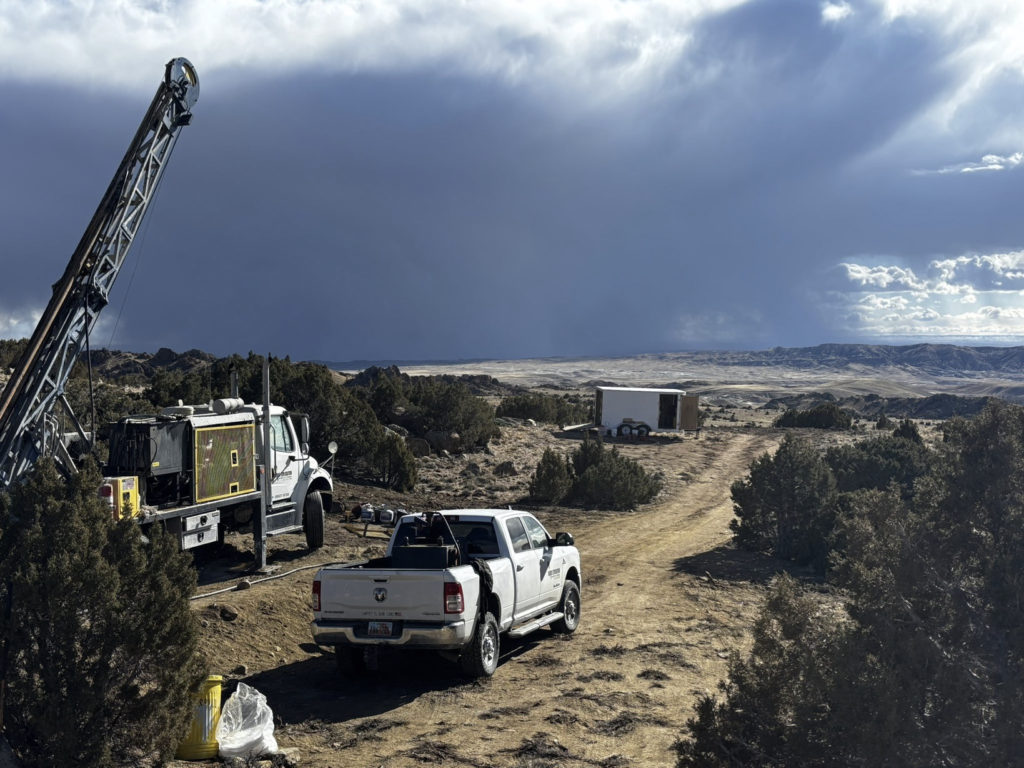
Looking south from the Canning deposit at Copper Mountain, Wyoming. Credit: Myriad Uranium

Vancouver-based Myriad Uranium (CSE: M) has earned a 75% interest in the Copper Mountain uranium project in Wyoming by spending over $5.5 million on eligible expenditures under the property option agreement with Rush Rare Metals Corp.

Myriad’s 75% interest and Rush’s 25% interest in the project are subject to certain underlying NSR royalties, the company said.

In October, Myriad obtained a new permit to expand drilling at the project where a past owner spent $25 million ($100 million today) in the late 1970s, before the Three Mile Island nuclear accident crashed prices for the heavy metal.

Union Pacific (NYSE: UNP) railroad outlined six open pits in a study at the time for the Copper Mountain project that sought to tap 245 million lb. uranium oxide (U3O8).

“Reaching the 75% expenditure threshold is an important milestone for the company, and it comes at a moment when the scale and potential of Copper Mountain are becoming increasingly clear,” Myriad CEO Thomas Lamb said in a news release.

“Our first phase of drilling and exploration has significantly exceeded expectations and the project has the potential to be one of America’s largest.”

Wyoming has once more become a centre of activity for United States uranium, with operating in-situ recovery mines, licensed capacity and a regulator base accustomed to the commodity, Lamb told MINING.COM sister publication The Northern Miner in an interview.

Chile raises mining investment forecast through 2034 to $105 billion


The increase represents the highest investment forecast since the 2016-2025 period.

Escondida mine in Chile. (Image courtesy of Microsoft | BHP.)

Chile’s mining investment is expected to reach $104.549 billion from this year through 2034, state-run agency Cochilco said on Thursday, up 26% from last year’s forecast.

Chile is the world’s largest producer of copper and second-largest of lithium, a key ingredient of rechargeable batteries.

The increase represents the highest investment forecast since the 2016-2025 period.

New investment includes an expansion at BHP’s Escondida, the world’s biggest copper mine, and new concentrators at Collahuasi, a copper mine jointly owned by Anglo American and Glencore.

The 2024–2033 investment portfolio was estimated at $83.181 billion.

“In this portfolio, we are seeing how new copper and lithium projects are consolidating as drivers of future development,” mining minister Aurora Williams said in a presentation of the Cochilco report.

(By Fabian Cambero and Daina Beth Solomon; Editing by Gabriel Araujo and Aida Pelaez-Fernandez)


Ioneer eyes bid for Rio Tinto’s US boron unit


The Boron mine site in California. (Image courtesy of Rio Tinto.)

Australian mining firm Ioneer Ltd. is interested in bidding on a bundle of Rio Tinto Group’s US assets that produce boron, a critical mineral used in fertilizer, according to its top executive.

Chief executive officer Bernard Rowe said he sees an opportunity to consolidate Ioneer’s boron-and-lithium project in Nevada with Rio’s boron operations in California that it’s seeking to sell. Bloomberg reported in late November on Rio’s plans to soon start a sales process to divest the assets.

“There are a lot of synergies between our two deposits,” Rowe said in a Friday interview. “We of course will be interested in looking.”

Boron, an element mineral with few producers, was added to the US list of critical minerals last month. It has a wide variety of industrial applications including in fertilizer, glass and ceramics manufacturing, fiberglass insulation and to strengthen metal alloys. It’s also used in rare earth magnets found in motors and electronics.

Rio’s boron assets include a mine and processing operation in the Mojave Desert town of Boron, as well as a refinery and shipping facility in Los Angeles port and its Owens Lake mining operation near Sierra Nevada. Rio’s California operations meet about 30% of global demand for boron, according to the company’s website.

Ioneer owns Rhyolite Ridge in Nevada, one of two advanced lithium projects in the US that has financial backing from the government. Rhyolite Ridge faced a setback in February after South African firm Sibanye Stillwater Ltd. scrapped plans to take a major stake in the project.

Rowe said the company is now looking for new investors with the help of Goldman Sachs Group Inc. The company is in talks with a range of prospective partners, including private equity groups and chemical makers, and expects to secure new investment in the first half of 2026.

“We think we’ll be more successful with a consortium-style equity funding, rather than a single partner,” he said.

(By Jacob Lorinc)


AME calls on BC Premier to appeal court decision on Indigenous rights in mineral claims staking

Banks Island, British Columbia, is one example of mining claims granted to a private entity without the nation’s knowledge or consent. Credit: Gitxaala Territorial Management Agency.

The Association for Mineral Exploration (AME) on Friday called on British Columbia Premier David Eby to appeal the Gitxaala Nation v. British Columbia (Chief Gold Commissioner), 2023 BCSC 1680 decision to the Supreme Court of Canada.

On Dec. 5, the British Columbia Court of Appeal (BCCA) determined in a new ruling that the province’s Declaration on the Rights of Indigenous Peoples Act (DRIPA) incorporates the United Nations Declaration on the Rights of Indigenous Peoples (UNDRIP) and creates legally enforceable obligations.

The BCCA case was a partial appeal by the Gitxaala and Ehattesaht First Nations, following the 2023 BCSC decision that ruled the province’s automatic online mineral claim system breached its constitutional duty to consult, but had limited interpretation of DRIPA.

The case began when Gitxaala Nation filed a legal challenge in 2021 in the Supreme Court seeking to overturn the province’s granting of multiple mineral claims from 2018 to 2020 on Banks Island, in their territory. The issue centered around whether the Mineral Tenure Act is consistent with UNDRIP.

AME’s position

The AME is also calling on the BC government to recall the legislature to bring forward substantive amendments to the Declaration on the Rights of Indigenous Peoples Act and section 8.1 of the Interpretation Act.

The approach, AME said, that the Court of Appeal has taken in the Gitxaala case has cast confusion on business and reconciliation in the province, and maintains the decision must be appealed and the two laws substantially changed.

“Government must be crystal clear about their focus on amending both DRIPA and the Interpretation Act. These changes cannot just be window dressing. They must be substantial, otherwise we are headed to a place where DRIPA and the government’s reconciliation goals are unworkable,” AME CEO Todd Stone said in a news release.

The AME also said that while the Dec. 5 case decided that the previous mineral tenure regime did not consult First Nations prior to awarding mineral tenure, it does not invalidate the Mineral Tenure Act.

The decision, the Association said, did not consider as relevant the MCCF that was implemented on March 25, 2025, in response to the BCSC’s decision that the Mineral Tenure Act is constitutionally valid but that the province must amend the process under the Mineral Tenure Act.

“The implications and related public reaction to the BC Court of Appeal decision demonstrate that the public interest is not met by having these issues dealt with by the courts, and that a path forward should be found by government, industry and Indigenous Nations working towards reconciliation together,” AME said.

“It is in the public interest that legislation is in place to guide our province’s future. DRIPA and the Interpretation Act (s. 8.1) require significant amendments to address the issues brought forward by the case and the public. If these changes are not substantive the problem will only get worse as courts are left to interpret UNDRIP as ‘a complex, multi-faceted international instrument’ and decide what laws must be changed and how.”

In its press release, AME stipulated a deadline of Feb. 16, 2026, for the appeal.


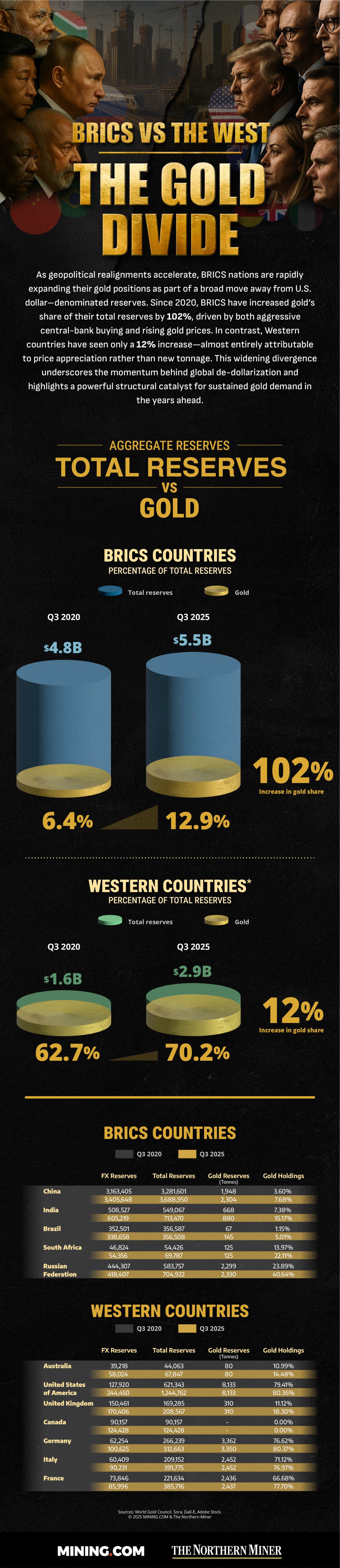
Infographic: BRICs vs the West – the gold divide

As geopolitical realignments accelerate, BRICS nations are rapidly expanding their gold holdings as part of a broad shift away from US-dollar-denominated reserves. Since 2020, BRICS countries have increased gold’s share of their total reserves by 102%, driven by both aggressive central-bank buying and rising metal prices. In contrast, Western nations have seen only a 12% increase – growth almost entirely attributable to price appreciation rather than new tonnage.

This widening gap underscores the momentum behind global de-dollarization and highlights a powerful structural catalyst for sustained gold demand in the years ahead.


AU

Illegal miners are digging gold at a $4.8B Newmont site in Peru

AI-generated stock image by Athena.

A multi-billion-dollar gold project owned by the world’s biggest bullion producer has been invaded by illegal diggers in northern Peru, according to a top government official.

Newmont Corp.’s stalled Minas Conga project in the Cajamarca region “is being partially exploited by illegal mining,” Prime Minister Ernesto Alvarez told reporters Friday. Newmont didn’t immediately comment.

Denver-based Newmont is the latest global company to face informal miners as near record prices increase incentives for diggers in poor rural areas of the country. Southern Copper Corp., First Quantum Minerals Ltd. and MMG Ltd. have said illegal miners are operating on their concessions, delaying progress.

Development at the estimated $4.8 billion Conga project was halted shortly after receiving environmental permits in 2010 in the wake of farmer opposition that spiraled into violent protests. Newmont still holds the mineral rights.

“When legal mining that meets high standards is not developed, it cedes the space to illegal mining, which pollutes and uses violence,” said Alvarez, the top deputy to interim president Jose Jeri.

Peruvian authorities are grappling with how to deal with the surge in illegal mining. The government supported the extension of a controversial permit known as Reinfo that allows informal diggers to operate with loose requirements. Peru’s mining industry chamber SNMPE heavily opposes Reinfo.

“It was said about Conga that it shouldn’t happen because local communities preferred agriculture,” Alvarez said. “Now, the rivers that originate in the Conga area are being contaminated by the mercury used in illegal mining. It’s a macabre situation.”

(By Marcelo Rochabrun)


Mali returns possession of seized gold to Barrick

Credit: Barrick

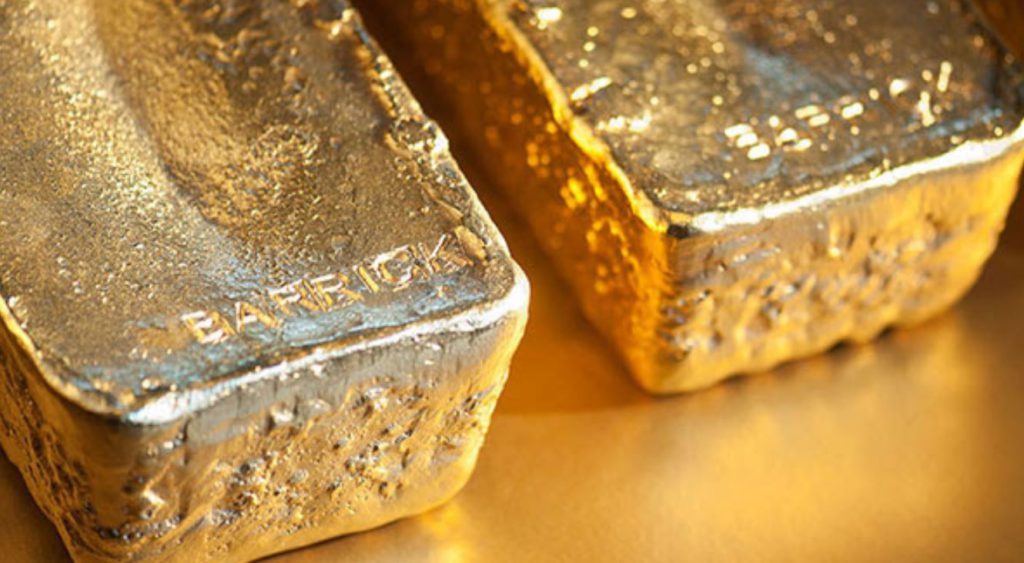
A Malian judge has ordered the return of possession of 3 metric tons of gold seized nearly a year ago from Barrick Mining’s Loulo-Gounkoto complex to the Canadian miner, according to two people familiar with the matter.

The gold, worth about $400 million, was seized by a military helicopter in January following a confiscation order from a Malian judge. It has remained at the BMS bank in Mali’s capital, Bamako, since then, according to both sources.

While the judge ordered possession of the gold to be returned to Barrick, the miner will be responsible for transporting the gold out of the bank vaults, they said.

The two sides reached an agreement last month to resolve their dispute over Barrick’s operations in the West African country after two years of negotiations. The disagreement, over the implementation of a new mining code introduced by the military-led government, led to Barrick suspending operations of its gold mining complex in January, and a Malian court-appointed provisional administrator taking control in June.

Barrick agreed to a settlement worth $430 million, one of the two sources and a third person said. The provisional administration is set to return control of the mining complex to Barrick next week, all three sources said.

A spokesperson for Barrick declined to comment, while a spokesperson for Mali’s mines ministry did not immediately respond to a request for comment.

Four Barrick employees who had been in prison since November 2024 were released last month as part of the agreement, while Barrick dropped its international arbitration case against Mali.

(By Portia Crowe and Divya Rajagopal; Editing by Tomasz Janowski)

Mali clears domestic arrears after back payment from miners

Fekola mine, Mali.(Image courtesy of B2Gold.)

Mali has ordered the payment of 312 billion CFA francs ($554 million) to local companies to clear arrears for services provided in 2023 and 2024, after state finances were bolstered in the wake of recovering 761 billion CFA francs from miners in the application of a new mining code.

The settlement will also include some invoices for this year, Minister of Economy and Finance Alousséni Sanou said on national television.

“This significant payment is the logical continuation of an operation that began in September 2024,” Sanou said. “It comes on the heels of the payment of an important amount of money received from mining companies in the country, in line with an operation for the application of the 2023 new mining code.”


Sanou said earlier this month that the country had recouped the 761 billion CFA francs in back payments as a result of asking miners to move to the new mining code.

The country upped the ante on international mining companies as it sought ways to fund a growing fight with Islamist insurgents after cutting military ties with the West, including the European Union.

(By Kamailoudini Tagba)


Indonesia to levy gold export duties from December 23

Jakarta, Indonesia. (Stock image)

Indonesia will impose duties on exports of gold products from December 23, a regulation on the finance ministry’s website showed on Wednesday, a step that could earn revenue of $180 million next year for the southeast Asian nation.

Duties ranging from 7.5% to 12.5%, depending on the type of gold product, will kick in when the government-set reference price falls between $2,800 and $3,200 a troy ounce.

The duties will rise to between 10% and 15% once the reference price reaches $3,200 per troy ounce.

Minted bars will face the lowest duties, while the highest duties are set for dore, or semi-pure ingots, the website showed.

The reference price is to be set periodically by the trade ministry based on benchmark prices of gold, it added.

On Monday, Finance Minister Purbaya Yudhi Sadewa said the gold export tax could earn revenue of as much as 3 trillion rupiah ($180 million) in 2026.

($1=16,680.0000 rupiah)

(By Fransiska Nangoy, Bernadette Christina Munthe and Ananda Teresia; Editing by John Mair and Clarence Fernandez)

Chinese gold miner to buy 50% of St Barbara unit for $245M


Simberi consists of an open cut mine on the northernmost island in the Tabar group of islands in the province of New Ireland in Papua New Guinea. Credit: Sun Engineering

Australia’s St Barbara said on Wednesday that Chinese gold producer Lingbao Gold Group will buy a 50% stake in its subsidiary St Barbara Mining for A$370 million ($245.5 million) in cash.

St Barbara Mining owns the Simberi Gold Company, which will hold an 80% stake in Simberi gold project in Papua New Guinea (PNG).

The remaining 20% stake will be acquired by Kumul Minerals, the state nominee for PNG’s share of minerals projects in the country, for A$100 million.

Kumul’s investment comesas the PNG government seeks to expand national ownership of key resource projects.

Meanwhile, Australian gold producers have been enjoying rapid equity gains, boosted by surging gold prices, prompting companies to unlock value from quality assets both domestically and overseas.

“With Lingbao, we have a committed, experienced and a well-funded partner,” St Barbara CEO Andrew Strelein said, adding that Kumul’s participation in Simberi helps align the interests of key stakeholders.

“St Barbara is now fully funded for its expected share of the development costs of the Simberi gold project.”

The company aims to reach a final investment decision on the Simberi expansion project in the third quarter of fiscal 2026.

($1 = A$1.5072)

(By Nichiket Sunil; Editing by Sumana Nandy and Subhranshu Sahu)