Thursday, December 11, 2025


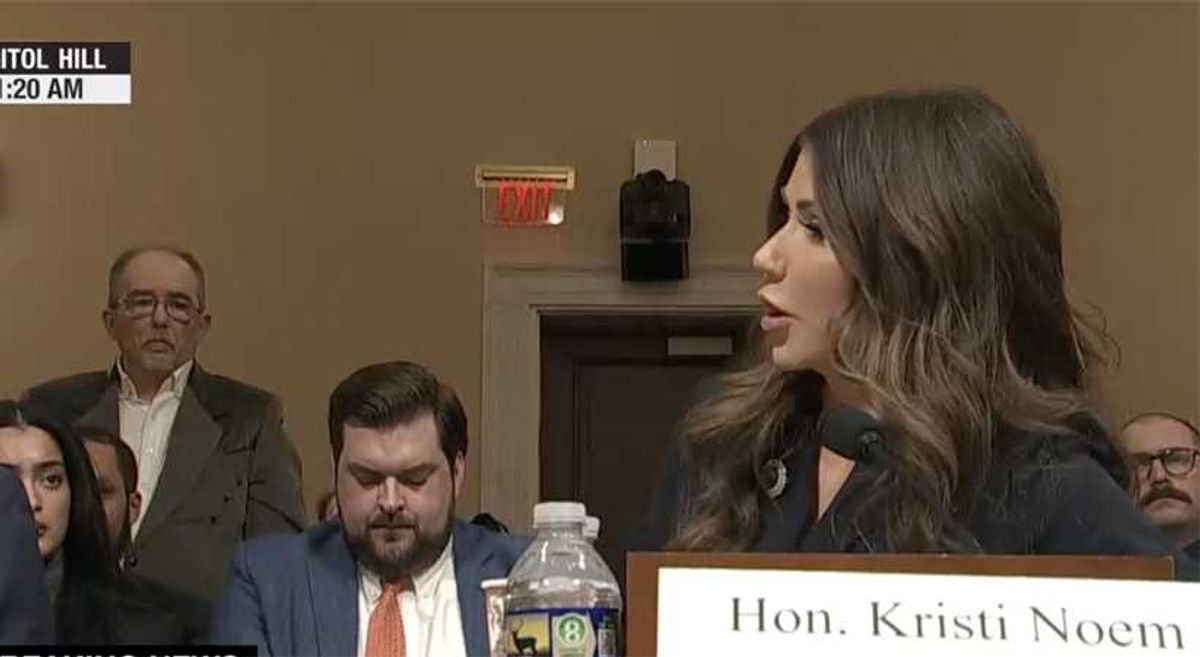
If Trump Is Serious About Peace, Marco Rubio Has to Go


Donald Trump campaigned on ending endless wars and now boasts that he has resolved eight wars. In reality, this claim is delusional, and his foreign policy is a disaster. The United States remains mired in ongoing wars in the Middle East and Ukraine, and now Trump is careening blindly into new wars in Latin America.

The dangerous disconnect between Trump’s delusions and the real-world impacts of his policies is on full display in his new National Security Strategy document. But this schism has been exacerbated by putting U.S. foreign policy in the hands of Secretary of State Marco Rubio, whose neocon worldview and behind-the-scenes maneuvering has consistently undercut Trump’s professed goals of diplomacy, negotiated settlements and “America First” priorities.

The eight wars Trump claims he has ended include non-existent wars between Egypt and Ethiopia, and Serbia and Kosovo, and the war between Armenia and Azerbaijan that ended in 2023, after Azerbaijan invaded and ethnically cleansed the ancient Armenian community of Nagorno-Karabakh. Trump stole credit for peace between Thailand and Cambodia, which was actually mediated by Malaysia, while India insists that it ended its war with Pakistan without help from Trump.

Trump recently invited the presidents of Rwanda and the DRC to Washington to sign a peace deal, but it’s only the latest of many agreements that have failed to end decades of war and proxy war that rage on in the eastern Congo.

Trump even claims to have brought peace to Iran, which was not at war until he and Netanyahu plotted to attack it. Now diplomacy with Iran is dead—torpedoed by Trump’s treacherous use of negotiations as cover for the U.S.-Israeli surprise attack in June, an illegal war right out of Rubio’s neocon playbook.

Rubio has undermined diplomacy with Iran for years. As a senator, he worked to kill the JCPOA nuclear agreement, framed negotiations as appeasement, and repeatedly demanded harsher sanctions or military action. He defended the U.S. and Israeli attacks in June, which confirmed the claims of Iranian hardliners that the United States cannot be trusted. He makes meaningful talks with Iran impossible by insisting that Iran cease all nuclear enrichment and long-range missile development.  By aligning U.S. policy with Israel’s, Rubio closed off the only path that has ever reduced tensions with Iran: sustained, good-faith diplomacy.

Trump’s eighth claimed peace agreement was his Gaza “peace plan,” under which Israel still kills and maims Palestinians every day and allows only 200 truckloads per day of food, water, medicine, and relief supplies into Gaza. With Israeli forces still occupying most of Gaza, no country is sending troops to join Trump’s “stabilization force,” nor will Hamas disarm and leave its people defenseless. Israel still calls the shots, and will only allow rebuilding in Israeli-occupied areas.

As secretary of state, it was Marco Rubio’s job to negotiate peace and an end to the occupation of Palestine. But Rubio’s entire political career has been defined by unwavering support for Israel and corrupted by over a million dollars from pro-Israel donor groups like AIPAC. He refuses to speak to Hamas, insisting on its total isolation and destruction.

Rubio even refuses to negotiate with the weakest, most compromised, but still internationally recognized, Palestinian Authority. In the Senate, he worked to defund and delegitimize the PA, and now he insists it should play no role in Gaza’s future, but he offers no alternative. Contrast this with China, which recently convened fourteen Palestinian factions for dialogue. With a U.S. secretary of state who won’t talk to any Palestinian actors, the United States is only supporting endless war and occupation.

Ukraine is not on Trump’s list of “eight wars,” but it is the conflict he most loudly promised to end on day one. Trump took his first steps to resolve the crisis in Ukraine with phone calls with Putin and Zelenskyy on February 12, 2025. War Secretary Pete Hegseth told a meeting of America’s NATO allies in Brussels that the U.S. was taking Ukraine’s long-promised NATO membership off the table, and that “we must start by recognizing that returning to Ukraine’s pre-2014 borders is an unrealistic objective. Chasing this illusionary goal will only prolong the war and cause more suffering.”

Zelenskyy and his European backers are still trying to persuade Trump that, with his support, they can win back at the negotiating table what Ukraine and its western allies lost by their tragic decision to reject a negotiated peace in April 2022. Russia was ready to withdraw from all the land it had just occupied, but the U.S. and U.K. persuaded NATO and Ukraine to instead embark on this long war of attrition, in which their negotiating position only grows weaker as Ukraine’s losses mount.

On November 21st, Trump unveiled a 28-point peace plan for Ukraine that was built around the policy Trump and Hegseth had announced in February: no NATO membership, and no return to pre-2014 borders. But once Rubio arrived to lead the U.S. negotiating team in talks in Geneva, he let Zelenskyy’s chief of staff, Andriy Yermak, and the Europeans put NATO membership and Ukraine’s pre-2014 borders back on the table.

This was a poison pill to deliberately undermine the basic concept of Ukrainian neutrality that Russia insists is the only way to resolve the security dilemma facing both NATO and Russia and ensure a stable and lasting peace. As a European official crowed to Politico, “Things went in the right direction in Geneva. Still a work in progress, but looking much better now… Rubio is a pro who knows his stuff.”

Andriy Yermak, who led Ukraine’s negotiating team in Geneva, has now been fired in a corruption scandal, reportedly at Trump’s behest, as has Trump’s envoy to Kyiv, Keith Kellogg, who apparently leaked Trump’s plan to the press.

Trump is facing a schism in his foreign policy team that echoes his first term, when he appointed a revolving door of neocons, retired generals and arms industry insiders to top jobs. This time, he has already fired his first National Security Advisor, Mike Waltz, several NSC staff, and now General Kellogg,

Trump’s team on Ukraine now includes Vice President J.D. Vance, Steve Witkoff, Jared Kushner, Deputy National Security Advisor Andy Baker and Army Secretary Dan Driscoll, who all seem to be on board with the basic policy that Trump and Hegseth announced in February.

  But Rubio is keeping alive European hopes of a ceasefire that postpones negotiations over NATO membership and Ukraine’s borders for a later date, to allow NATO to once again build, arm and train Ukrainian forces to retake its lost territories by force, as it did from 2015 to 2022 under cover of the MInsk Accords.

This raises the questions: Does Rubio, like the Europeans and the neocons in Congress, still back the Biden-era strategy of fighting a long proxy war to the last Ukrainian? And if so, is he now in fact working to undermine Trump’s peace efforts?

Ray McGovern, the founder of Veteran Intelligence Professionals for Sanity, thinks so, writing “…we are at the threshold on Ukraine, at the beginning of a consequential battle between the neocons and Europeans on one side, and Donald Trump and the realists on the other. Will Trump show the fortitude to see this through and overcome his secretary of state?”

But it’s perhaps in Latin America where Rubio is playing the most aggressive role. Rubio has always promoted regime-change policies, economic strangulation, and U.S. interference targeting left-leaning governments in Latin America. Coming from a conservative Cuban familiy, he has long been one of the most hard-line voices in Washington on Cuba, championing sanctions, opposing any easing of the embargo, and working to reverse Obama-era diplomatic openings.

His position on Venezuela is similar. He was a leading architect of the Trump administration’s failed “maximum pressure” campaign against Venezuela, promoting crippling sanctions that devastated civilians, while openly endorsing failed coups and military threats.

Now Rubio is pushing Trump into a catastrophic, criminal war with Venezuela. In early 2025, Trump’s administration briefly pursued a diplomatic track with Venezuelan President Nicolás Maduro, spearheaded by envoy Richard Grenell. But Marco Rubio’s hard-line, pressure-first approach gradually overtook the negotiation channel: Trump suspended talks in October 2025, and U.S. policy shifted toward intensified sanctions and military posturing.

Rubio’s hostility extends across the region: he has attacked progressive leaders in Colombia, Chile, Bolivia, Honduras, and Brazil, while supporting authoritarians aligned with U.S. and Israeli interests. While Trump has warmed to Brazil’s president Lula and craves access to its reserves of rare earth elements, the second largest after China’s, Lula has no illusions about Rubio’s hostility and has refused to even meet with him.

Rubio’s approach is the opposite of diplomacy. He refuses engagement with governments he dislikes, undermines regional institutions, and encourages Washington to isolate and punish rather than negotiate. Instead of supporting peace agreements—such as Colombia’s fragile accords or regional efforts to stabilize Haiti—he treats Latin America as a battleground for ideological crusades.

Rubio’s influence has helped block humanitarian relief, deepen polarization, and shatter openings for regional dialogue. A Secretary of State committed to peace would work with Latin American partners to resolve conflicts, strengthen democracy, and reduce U.S. militarization in the hemisphere. Rubio does the reverse: he inflames tensions, sabotages diplomacy, and pushes U.S. policy back toward the dark era of coups, blockades, proxy wars and death squads.

So why is Trump betraying his most loyal MAGA supporters, who take his promises to “end the era of endless wars” at face value? Why is his administration supporting the same out-of-control American war machine that has run rampant around the world since the rise of neocons like Dick Cheney and Hillary Clinton in the 1990s?

Is Trump simply unable to resist the lure of destructive military power that seduces every American president? Trump’s MAGA true believers would like to think that he and they represent a rejection of American imperialism and a new “America First” policy that prioritizes national sovereignty and shared domestic prosperity. But MAGA leaders like Marjorie Taylor Green can see that is not what Trump is delivering.

U.S. secretaries of state wield considerable power, and Trump is not the first president to be led astray by his secretary of state. President Eisenhower is remembered as a champion of peace, for quickly ending the Korean War – then slashing the military budget – and for two defining speeches at the beginning and end of his presidency: his “Chance for Peace” speech after the death of Soviet premier Josef Stalin in 1953; and his Farewell Address in 1960, in which he warned Americans against the “unwarranted influence” of the “military-industrial complex.”

For most of his presidency though, Eisenhower gave his Secretary of State, John Foster Dulles, free rein to manage U.S. foreign policy. By the time Eisenhower fully grasped the dangers of Dulles’ brinksmanship with the U.S.S.R. and China, the Cold War arms race was running wild. Then Eisenhower’s belated outreach to the Soviets was interrupted by his own ill-health and the U-2 crisis. Hillary Clinton had a similarly destructive and destabilizing impact on Obama’s first-term foreign policy, in Afghanistan, Iran, Libya, Syria and Honduras.

These should be cautionary tales for Trump. If he really wants to be remembered as a peacemaker, not a warmonger, he had better make the necessary personnel changes to his inner circle before it is too late. War with Venezuela is easily avoidable, since the whole world already knows the U.S. pretexts for war are fabricated and false. Rubio has stoked the underlying tensions and led this escalating campaign of lies, threats and murders, so Trump would be wise to replace him before his march to war crosses the point of no return.

This would allow Trump and Rubio’s successor to start rebuilding relations with our neighbors in Latin America and the Caribbean, and to finally change longstanding U.S. policies that keep the Middle East, and now Ukraine, trapped in endless war.

Medea Benjamin and Nicolas J.S. Davies are the authors of War in Ukraine: Making Sense of a Senseless Conflict, published by OR Books, November 2022.  Medea Benjamin is the cofounder of CODEPINK for PEACE, and the author of several books, including Inside Iran:  The Real History and Politics of the Islamic Republic of Iran. Nicolas J.S. Davies is an independent journalist, a researcher for CODEPINK and the author of Blood on our Hands:  The American Invasion and Destruction of IraqRead other articles by Medea Benjamin and Nicolas J.S. Davies.


Pakistan’s Packed Prisons


Prisons in Pakistan are overcrowded and jam-packed with thousands of inmates living under conditions that take away their health, dignity, and hope. Behind the bars lies a human rights crisis that goes well beyond the mandate of official reports or the business of courtroom debate.

Pakistan’s prisons now confine around 102,026 inmates despite being built to hold only about 65,811. This means the system operates at 152 percent of its capacity. Punjab alone houses more than 61,000 prisoners in space designed for just 37,000. Sindh prisons run at 161 percent, while Khyber Pakhtunkhwa and Balochistan exceed safe limits by 20 to 30 percent. The Justice Project Pakistan calls this overcrowding “one of the country’s most urgent and ignored humanitarian failures.” More than 74 percent of those behind bars are under-trial detainees still waiting for their first hearing. They are the forgotten faces of a justice system that moves too slow and punishes before proving guilt.

Deeply entrenched within the foundations of the very system lies the root cause of this crisis. The slow pace of the courts makes a glacier’s movements look fast, with delays for months or years on hearing dates. The police rush to effect arrests; bail is nonexistent or is set so high that it becomes unaffordable for many. The National Commission for Human Rights has called it a “silent crisis of neglect.” Old laws inherited from colonial times still favor detention over release. Governance failures and limited budgets only worsen the pressure. Political promises of reform appear and vanish, leaving cells more crowded than ever. Pakistan’s rate of pre-trial detention is among the highest in South Asia, even surpassing India and Bangladesh, according to UNODC data.

Inside the walls, conditions are grim. Inmates often share one toilet for fifty people. Meals are meager and medical care is rare. Human Rights Watch has described prisons as “nightmare zones for health and dignity.” Tuberculosis, skin infections, and HIV spread unchecked in cramped cells. Outbreaks at the Adiala Jail have become national concerns, but normal health care is rarely allowed. The harsh realities are even more so for female inmates. Two hundred inmates are cramped into one women’s jail in Lahore, which was originally built for half that number. Reports of harassment by staff are common. Pregnant women receive no special care, and survivors of abuse rarely get counseling. Juvenile offenders share space with hardened criminals, turning confinement into a school of crime rather than a chance for reform.

Overcrowding also destroys any hope of rehabilitation. Workshops, education, and counseling programs rarely function. Guards are overworked and untrained, and violence among inmates is frequent. Drugs circulate freely, and fights break out daily. According to Penal Reform International, more than sixty percent of prisoners reoffend within a year of release. Jails that should reform instead produce more hardened criminals. Society pays the price through rising crime, mistrust, and fear. In Karachi, a prison designed for 2,400 people now confines about 8,500. Three inmates died in violent clashes last year alone.

Courts have occasionally intervened. During the pandemic, the Supreme Court of Pakistan ordered the release of 25,000 under-trial prisoners to ease congestion. Yet numbers climbed back quickly. However, the prison reform panel remains unactive, which the Wafaqi Mohtasib (Federal Ombudsman) had formed in 2015. None of the bail reforms or alternative sentencing have been implemented yet as part of the National Jail Reform Policy 2024. Such a debate was stalled in Parliament in 2023 over the plea bargains and parole under the distracting political environment. Provincial budgets are shrinking with prison funds cut by 10 percent this year. Without consistent political will, even sound policies turn into paperwork.

There are practical ways forward. Bail reform must take priority. Judges should grant bail for minor, non-violent offenses unless a real flight risk exists. Introducing plea bargains and fast-track trials could cut delays significantly. Parole boards could free low-risk prisoners after serving part of their sentences.

Community service and fines should be imposed instead of imprisonment for petty crimes. With such non-custodial measures and justice reforms in India have had limited success. This burden could be eased through rehabilitation interventions for drug users instead of imprisonment. Norwegian practice may provide an appropriate example for local adaptation, emphasizing rehabilitation instead of punishment. UNODC continues to promote these alternatives in South Asia with an emphasis on human rights and economic benefits.

The civil society is the lifeline of prison reforms. Amnesty International, Justice Project Pakistan, and independent lawyers have filed petitions and written detailed reports about many grave violations and conditions of inhumanity. There is also the media, which is beginning to make a difference; a Dawn investigation in 2024 led to a review of Punjab’s overcrowded prisons. Such successes, however, have been few and far between; for instance, part of the creation of secure bail for 500 women was the result of concerted efforts from human rights groups in 2022. So far, limited change has come from sustained activism, the involvement of the religious sector in seeking rehabilitation funding, and pressure from the public.

The overcrowding in prisons in Pakistan reveals deeper moral and administrative failure. It’s not just about poor infrastructure, in fact it lies deep inside justice and humanity. To neglect those who are in jail threatens both prisoners and society.

Disease, violence, and radicalization fester in these broken spaces. Building more prisons will not solve anything unless the present system learns to dispense justice speedier and fairer.

Conclusion

Pakistan is at a juncture, and prison overcrowding is no longer a bureaucratic issue at this point: it has now become a matter of national conscience. In order to restore the balance of justice, state action must be immediate and urgent: speedier trials, changes in the laws governing bail, and humane forms of punishment to replace imprisonment. No longer time for promises. Every day of delay adds to the mute suffering of thousands. True justice cannot exist while its foundations remain trapped behind bars.

Syed Salman Mehdi is a freelance writer and researcher with a keen interest in social, political, and human rights issues. He has written extensively on topics related to sectarian violence, governance, and minority rights, with a particular focus on South Asia. His work has been published in various media outlets, and he is passionate about raising awareness on critical human rights concerns. Read other articles by Syed.


“The Days of the United States Propping Up the Entire World Order Like Atlas Are Over.”


Trump’s National Security Strategy document was released late on Thursday

On Thursday, the White House released the new National Security Strategy for the United States. Others may well give it a different read, but here is my quick take:

The document is ghoulish, abhorrent, repetitious, and sometimes incoherent, but I found its honesty refreshing. The mask is torn off sanctimonious bullshit, tall tales about spreading democracy and caring about human rights. The US is “not grounded in traditional political idealism,” but by “America First.” (P.8) A bit of the usual boilerplate is here, but for the most part, the ideological cover is gone.

Dan Caldwell, onetime advisor to Defense Secretary Pete Hegseth, applauded the new American military restraint, saying, “For too long, delusion undergirded our foreign policy, delusion about America’s role in the world, delusion about our interests, and delusion about what we can achieve through military force. This is a reality-based document in that regard.” (NY Times,12/7/2025)

In place of pretense, the document spells out what US policy has always been about: undisguised economic nationalism — whatever benefits American grifter capitalism. All this unexpected candor required the New York Times to lamentably and hypocritically describe the new doctrine as “Security Strategy Focused on Profit, Not Spreading Democracy.” Going further, General Wesley Clark, former NATO Commander, joined in by saying that “The United States has sacrificed the magic of America. For 250 years, America lived the dream that we gave to all mankind. And we acted to protect that. The rules-based international order has served us so well.” Yes, he actually said that…

Here are a few specifics from a document that, without explicitly saying so, recognizes that the US is a declining power and must accommodate that reality

Ukraine: The US must press for an “expeditious cessation of hostilities.” This is as clear a public admission that we’re going to see from Trump that the US proxy war is lost. Ukraine will not be joining NATO; the organization must cease being a “perpetually expanding alliance.” The US should also “re-establish strategic stability with Russia.” This section states that “The days of the United States propping up the entire world order like Atlas are over.” One detects Vance’s input here.

The Middle East: The US will recede from the Middle East. There will be “No more” decades of nation-building wars, even as the area remains an area of “partnership, friendship, and investment.” The document also states that “We seek good and peaceful relations with other countries without imposing on them democratic or other changes that differ widely from their traditions and histories.” This falls under a section called “Flexible Realism.”

Europe: The US evidences contempt for Europe. As recently as last Wednesday, Trump said, “The European Union was founded to screw the United States.” The document asserts that Europe faces “civilization erasure” in 20 years, in large measure because immigration will make it “non-European.” Further, Europe must learn to “stand on its own feet” and “We expect our allies to spend far more on their Gross National Product (GDP) on their own defense to start making up for the enormous imbalances over decades of much greater spending by the United States.” This refers to Washington’s demand that European allies spend 5% of their GDP on defense.

Latin America: The United States will reassert its preeminence in the region, a development referred to as “The Trump Corollary” to the 1823 Monroe Doctrine. Hemispheric competitors will be prevented from owning and controlling energy facilities, ports, and telecommunication networks. The goal is to make the Western Hemisphere an increasingly attractive market for American commerce and investment. In accordance with this objective, US diplomats in the region are to seek out “major business opportunities in their country, especially major government contracts.” And they should be “sole-source contracts for our companies.” I sense that profits from the Western Hemisphere are expected to offset a shortfall elsewhere. There is an unmistakable message here that Latin American countries will no longer retain their sovereignty.

China: As nearly as I can tell, the document cautions that war over Taiwan should be avoided because it would have “major implications for the US economy.” Further, “Our allies must step up and spend — and more importantly do — much more for collective defense.” The document refers to establishing a “mutually advantageous relationship with China.”

Gary Olson is Professor Emeritus at Moravian College, Bethlehem, PA. Contact: glolson416@gmail.com. Per usual, thanks to Kathleen Kelly, my in-house ed. Read other articles by Gary.


The Colby Review, AUKUS and Lopsided Commitments


In one of his many cutting observations about the fallibility of politicians, H. L. Mencken had this to say about the practical sort: “It is his business to convince the mob (a) that it is confronted by some grave danger, some dreadful menace to its peace and security, and (b) that he can save it.” Regarding Australia’s often provincial politicians, that grave danger remains the Yellow Peril, albeit it one garbed in communist party colours, while the quackery they continue to practise involves the notion the United States will act as shield bearer and saviour in any future conflict.

The AUKUS trilateral security pact between Australia, the United Kingdom and the United States has turned the first of these countries into an expectant vassal state, mindful of security guarantees it does not need from a power that can, and would at a moment’s notice, abandon it. But more dangerously, the expectation here is that Canberra, awaiting Virginia Class (SSN-774) nuclear-powered submarines from the US, will offer unconditional succour, resources and promises to the projection of Washington’s power in the Indo-Pacific. Without any guarantee of such submarines, Australian money is underwriting US submarine production, which remains consistently tardy. (Currently, 1.3 boats are being produced annually, when 2.3 are needed.)

The 2023 National Defense Authorization Act makes it irrefutably clear that Congress shall be notified that any transfer of boats “will not degrade the United States underseas capabilities”. Pursuing AUKUS still entailed “sufficient submarine production and maintenance investments” on the part of the US to meet undersea capabilities, with Australia advancing “appropriate funds and support for the additional capacity required to meet the requirements” along with Canberra’s “capability to host and fully operate the vessels authorized to be transferred.”

This true steal for US diplomacy, and sad tribute to Homo boobiens on the part of the Australians, has continued with the review of AUKUS conducted by Undersecretary of Defense Policy Eldridge Colby. The review is not available for public eyes, but Colby had previously released smoke signals that the AUKUS pact would only “lead to more submarines collectively in 10, 15, 20 years, which is way beyond the window of maximum danger, which is really this decade.”

The Australian Defence Minister Richard Marles told reporters on December 4 that the review had been received. “We’re working through the AUKUS review, and we very much thank the United States for providing it to us.” (Surely that’s the least they could have done.) He had identified unwavering support for the pact. Pentagon spokesman Sean Parnell also released a statement to the media expressing enthusiasm. “Consistent with President Trump’s guidance that AUKUS should move ‘full steam ahead,’ the review identified opportunities to put AUKUS on the strongest possible footing.” No doubt opportunities have been identified, but these are likely to be consistent with the lopsided arrangements Australia has had with the US to date.

Australia has so far provided A$1.6 billion in funding to the US submarine base, with the promise of more. What remains unclear is how much of this is also going into training Australian personnel to operate and maintain the vessels. “There’s a schedule of payments to be made,” explained Australian Prime Minister Anthony Albanese in July. “We have an agreement with the United States as well as with the United Kingdom. It is about increasing their capacity, their industrial capacity.” As part of such arrangements, “we have Australians on the ground, learning those skills.”

The joint fact sheet on the 2025 Australia-US Ministerial Consultations (AUSMIN), held between US Secretary of State Marco Rubio, US Secretary of War Pete Hegseth and their Australian counterparts Penny Wong and Marles in Washington, makes one reference to AUKUS and nothing in terms of substance to Colby’s recommendations. There is, however, this bit of unpardonable gibberish: “In line with President Trump and Prime Minister Albanese’s direction to move ‘full steam ahead’ on AUKUS, the [ministers] recognised the work underway to deliver priority infrastructure works and workforce uplift plan in support of an enhanced trilateral submarine industrial base.”

Given such statements, it is hard to see what opportunities identified in the Colby report could possibly be advantageous to Australia, a mere annexure of the US imperium. There is bound to be continued pressure on Australia to increase its defence spending. There are also unaddressed concerns about how sovereign the SSNs in Australian hands are going to be when and if they ever make it across the Pacific. In a conflict involving the United States, notably in the Indo-Pacific, Canberra will be expected to rush in with that mindless enthusiasm that has seen Australian soldiers die in theatres they would struggle to name for causes they could barely articulate.

Even the confident opinion of Joe Courtney, a Democrat member of the House Armed Services Committee and representative of Groton, Connecticut (the “Submarine Capital of the World”), should be viewed warily. “The statutory authority enacted by Congress in 2023 will remain intact, including the sale of three Virginia-class submarines starting in 2032,” comes his beaming assessment. The Colby review “correctly determined that there are critical deadlines that all three countries have to meet. Therefore, maintaining disciplined adherence to schedule is paramount.” That degree of discipline and adherence to schedules is unlikely to be an equal one. It is bound to favour, first and foremost, Washington’s own single perspective.

Binoy Kampmark was a Commonwealth Scholar at Selwyn College, Cambridge. He lectures at RMIT University, Melbourne. Email: bkampmark@gmail.comRead other articles by Binoy.


Denmark’s Ritual of Militarisation


The Copenhagen Security Summit 2025


On December 8, 2025, the Copenhagen Security Summit convenes at Falkoner Centret in Frederiksberg. With 35 speakers and more than 1,200 participants, it is one of Denmark’s largest gatherings on geopolitics and security. Organised by Danish Industry (DI), Ernst and Young, Poul Schmith (The Chamber Attorney), Danske Bank, and Børsen, the summit features high‑profile figures such as Yulia Navalnaya, Mike Pompeo, and Lars Løkke Rasmussen.

The agenda moves through political framing, corporate responsibility, critical infrastructure resilience, and transatlantic dialogue. Its declared purpose is to explore “the role of business in a breaking world order,” explicitly linking corporate actors to Europe’s historically unique militarisation.

MIMAC in Action
The summit exemplifies the Military‑Industrial‑Media‑Academic Complex (MIMAC):

  • Military: NATO officials, Pompeo, and Danish policymakers anchor the summit in alliance politics and defence spending. (Pompeo is a former CIA director, on video for being proud of lying, cheating and stealing, the inventor of the lies about genocide in Xinjiang and a fundamentalist hater of Russia and China…).
  • Industrial: CEOs of Vestas, Terma, Danske Bank, Ernest & Young, and others are cast as “frontline actors” in security, normalising the militarisation of business.
  • Media: Børsen is not merely reporting but co-organising, ensuring promotional coverage rather than critical journalism.
  • Academic/Expert: Analysts and compliance specialists provide intellectual legitimacy, reframing militarisation as “resilience” and “risk management.”
  • Legal: Kammeradvokaten’s presence ties the summit directly to the Danish state, embedding militarisation in law and governance.

This fusion dramatises a “breaking world order” where security is equated with militarisation, and business is enlisted into NATO’s orbit.

What Is Absent
Such a large‑scale, elite‑driven event would never be arranged around other pressing European or global challenges:

  • Conflict resolution and peacebuilding: No panels on mediation, dialogue, or conflict analysis – in short, a forum of conflict‑ and peace‑illiterates who can only speak in military terms.
  • Civilian roles in security: The EU’s civilian conflict‑management instruments and the UN’s peacekeeping and diplomacy are completely absent.
  • Global challenges: Climate change, environmental degradation, and global governance are ignored, despite being existential threats.

The summit’s anti‑Russia character is explicit: Navalnaya symbolises resistance to Moscow, while Pompeo reinforces transatlantic confrontation. Yet no space is given to exploring diplomatic solutions, common security, trust-building, or peaceful coexistence.

Denmark’s Role
This summit is also a reflection of how Denmark, under Prime Minister Mette Frederiksen, has spearheaded militarisation. By hosting and promoting such events, Denmark positions itself as a loyal NATO member, implicitly endorsing further arming of Ukraine and a policy that leaves little room for stability with Russia. The emphasis is on confrontation and deterrence, not dialogue or coexistence – let alone peace.

Condemnation and Call to Action
The Copenhagen Security Summit is therefore not a neutral dialogue but a ritual of militarisation, staged by elites with vested interests in weapons production, defence procurement, and the securitisation of business. It condemns itself by omission: refusing to engage with peace, conflict resolution, or the civilian role of international institutions.

It is the ritual of the kakistocrats – an alliance of military, industry, media, and academia steering without a compass toward peace.

What is needed is a counter‑summit of peace and coexistence: a gathering where conflict analysts, peace researchers, environmental voices, and civil society can articulate alternative visions. Europe must reclaim the agenda from MIMAC and insist that security is not only about weapons, but about diplomacy, sustainability, intelligent/educated conflict-management and long-term trust-building.

Without such initiatives, Denmark risks being remembered not as a bridge‑builder, but as a spearhead of militarisation in Europe.

Jan Oberg is a peace researcher, art photographer, and Director of The Transnational (TFF) where this article first appeared. Reach him at: oberg@transnational.orgRead other articles by Jan.