Sunday, November 16, 2025


India’s Refiners Turn to the U.S. in Break from the Gulf

India’s state-run refiners have locked in their first-ever long-term deal to import U.S. liquefied petroleum gas (LPG), awarding tenders to Chevron, Phillips 66, and TotalEnergies Trading for delivery beginning in 2026—a move that marks a geopolitical and commercial break from the Middle East and a step toward appeasing Washington.

The deal covers around 2 million metric tons of LPG—some 48 very large gas carrier cargoes—jointly purchased by Indian Oil, Bharat Petroleum, and Hindustan Petroleum. It’s the first time the three refiners have banded together for long-term U.S. supply of the fuel, which is still subsidized at home. While pricing details haven’t been disclosed, the contracts give suppliers leeway to source one in four cargoes from outside the U.S., a flexibility likely designed to manage logistics and pricing swings.

India currently imports about 65% of its LPG consumption—roughly 31 million tons annually—nearly all of it from Middle Eastern suppliers such as Saudi Arabia, Kuwait, Qatar, and the UAE. The shift toward the U.S. reflects both energy security diversification and trade diplomacy: Washington’s 50% tariff on Indian goods has become a sore point for Prime Minister Narendra Modi, and buying more American energy is part of New Delhi’s effort to rebalance that ledger.

It’s also a message to Riyadh. Saudi Aramco recently cut official selling prices for propane and butane to two-year lows after India signaled plans to diversify away from Gulf dependence. For producers like Aramco and ADNOC, the loss of India’s long-term security as a captive market comes just as China’s demand has slowed.

Behind the trade shuffle lies realpolitik. Trump’s administration has pushed India to curtail Russian crude purchases, and in return, Washington has opened its export gates to U.S. LPG. For India, securing cleaner, affordable fuel while easing tariff pressure is a diplomatic two-for-one deal—one that quietly redraws the map of global LPG flows.

By Julianne Geiger for Oilprice.com

Enbridge Moves to Rewrite North America’s Heavy-Crude Map

Enbridge has approved a $1.4 billion expansion across its Mainline and Flanagan South systems that will push more Canadian heavy crude into the U.S. Midwest and down to the Gulf Coast—right where coking refineries are built to run it. Phase 1 of the Mainline Optimization (MLO1) adds 150,000 bpd on the Mainline and 100,000 bpd on Flanagan South, with in-service targeted for 2027. The uplift comes through pump and terminal expansions on Flanagan South and upstream optimizations on the Mainline, backed by long-term take-or-pay commitments from Edmonton to Houston.

The timing lines up cleanly with Canada’s production trajectory. Oil sands output is on track for a record this year and is projected to approach 3.9 million bpd by 2030, driven by low-decline, high-efficiency expansions rather than new megaprojects. Extra pipeline capacity keeps barrels moving to the highest-value markets and reduces the risk of the painful differential blowouts Canada has seen whenever egress tightens.

Enbridge is already running close to the ceiling. Mainline throughput averaged a record 3.1 million bpd in Q3—evidence of how little spare capacity remains and why incremental debottlenecking is the only realistic near-term solution. The company has also been exploring the 200,000 bpd “Southern Illinois Connector” to move more crude from Illinois toward the Gulf Coast, a sign of continued pull from heavy-capable U.S. refiners.

The regulatory backdrop has softened slightly. The U.S. Army Corps of Engineers recently approved Enbridge’s 41-mile Line 5 reroute around the Bad River Reservation in Wisconsin. The project remains politically explosive, but the approval removes one regulatory unknown for shippers who depend on Enbridge’s network for multi-year planning.

Market-wise, more Canadian heavy into PADD 2 and the Gulf tends to narrow WCS-Houston versus Maya or Arab Medium and can tighten regional heavy-light spreads when barrels land consistently. For U.S. refiners, added reliability of heavy feedstock is a strategic advantage in a world where Venezuelan flows remain constrained and Mexico is increasingly reserving its crude for domestic refining. For Canadian producers, additional egress helps stabilize upstream planning and supports the capex-light growth model that has defined the post-2018 oil sands.

Enbridge’s most recent results also showed that liquids performance can ebb and flow depending on how individual lines are running and what shippers are nominating. Flanagan South and Spearhead brought in less than they did a year earlier, which isn’t unusual given how sensitive those systems are to refinery maintenance, crude quality swings, and downstream congestion. Even so, the company is plainly leaning into a long-term plan: get more capacity out of the rights-of-way it already controls, secure firm commitments, and give both producers and refiners a clearer view of how barrels will move after 2027. The barrels will be there—MLO1 is about making sure the path is too.

By Julianne Geiger for Oilprice.com


Chile’s presidential elections: Who is running and what is at stake

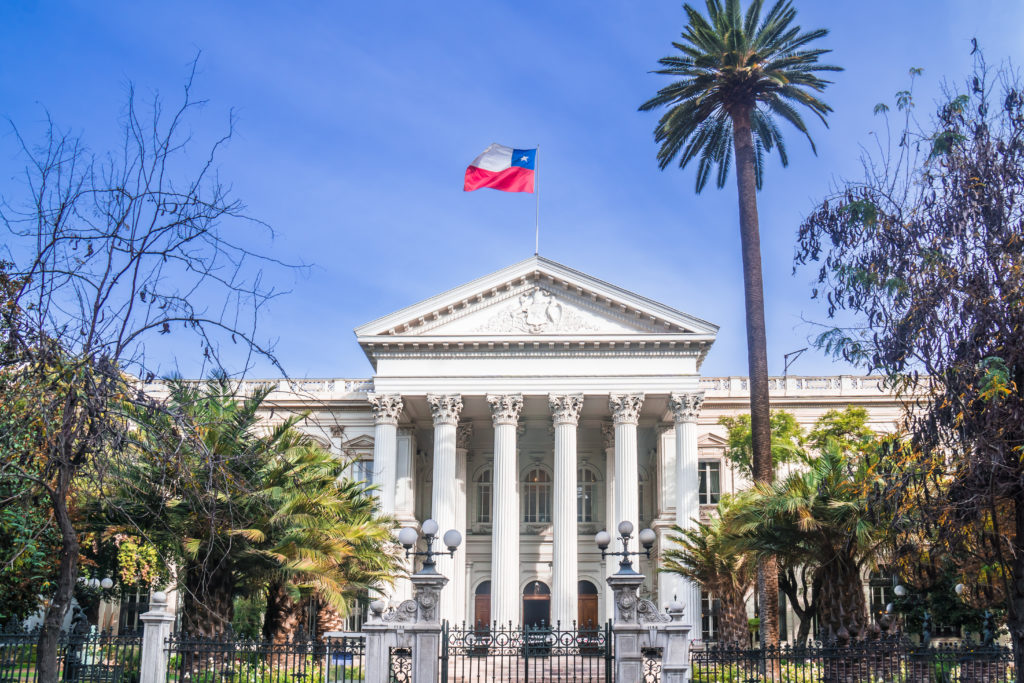
Former Congress Building in Santiago de Chile. Stock image.

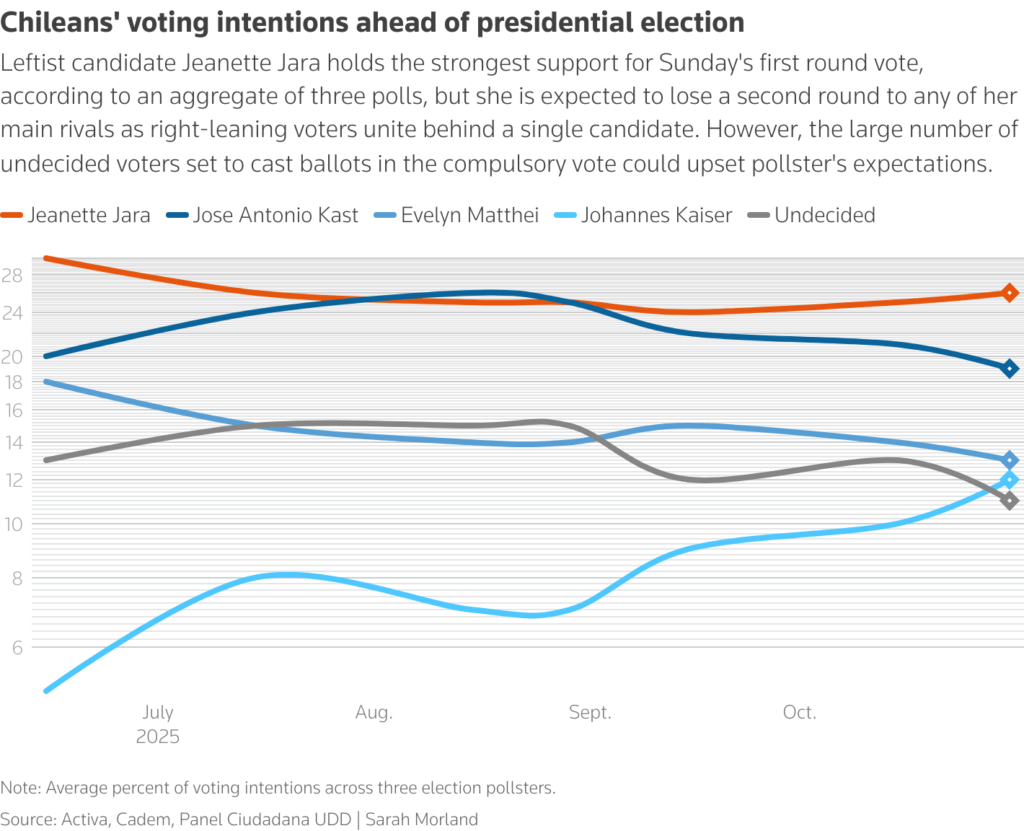
Chileans will head to the ballot box on Sunday to elect a new president in a vote that is pitting the governing leftist coalition against an array of right-wing candidates at a time when crime and immigration are at the top of voters’ minds.

This will be Chile’s first presidential election since 2012 where voting will be mandatory – those who do not vote face a fine.

The country of some 16 million voters saw an abstention rate of 53% in the first round of its 2021 presidential election, and the large amount of apathetic or undecided residents set to cast ballots adds a wild card to Sunday’s vote.

None of the eight candidates in the running are expected to reach the majority needed to win outright, likely triggering a run-off election on December 14.

Here’s what’s at stake and who’s in the running to be Chile’s next president:

Jeannette Jara

Jara, 51, is a member of the Communist Party and coalition candidate for the current administration. Jara is leading the polls and is expected to progress to a run-off, but she faces obstacles including the unpopularity of current President Gabriel Boric, who isn’t allowed to run for consecutive reelection, and her Communist Party membership.

The former labor minister is seeking to boost minimum wages, shore up workers’ rights and boost the lithium industry. She has also highlighted the importance of security, pledging to build new prisons and modernize the police.

Jose Antonio Kast

Kast, 59, is a lawyer and three-time presidential candidate who lost the 2021 run-off to Boric. Founder of the far-right Republican Party, Kast has put immigration and securityat the top of his agenda with proposals to mass deport undocumented migrants, and add maximum security prisons.

The son of a German army lieutenant who fled to South America after World War Two, his father’s Nazi Party membership undermined him last race as well as his brother’s minister role during the Augusto Pinochet dictatorship.

Johannes Kaiser

Kaiser, 49, shares Kast’s German-Chilean heritage, education in law and was once a member of his Republican Party, before breaking off to form the National Libertarian Party.

The congressman, who rose to fame as a YouTuber, would close the border with Bolivia, deport undocumented migrants with criminal records to El Salvador, slash spending and dramatically reduce the size of the state. Kaiser would also leave the regional human rights court and Paris Agreement to fight climate change.

Evelyn Matthei

Matthei, 72, is a moderate-right conservative who was an early frontrunner but has since dipped in the polls.

An economist, former mayor and labor minister, this is Matthei’s second presidential run after losing with 38% to the Socialist Party’s Michelle Bachelet in 2013.

The legislature and run-off scenario

Polls show Jara and Kast are the most likely to advance to the December vote, with Kast and other right-wing candidates favored to beat Jara in a run-off.

The December race will also have a new legislative composition. Chile’s governing leftist coalition has a minority in both chambers of Congress and the entire 155-member lower house and 23 of the country’s 50 Senate seats are up for grabs.

If Chile’s right wins the presidency and control of both legislatures, it would be the first time since the end of the Pinochet dictatorship in 1990 that the right would control all three.

If the right-wing coalition achieves a four-sevenths majority in both chambers – 89 in Congress and 29 in the Senate – it would be able to pass through constitutional reforms.

What about mining?

Chile is the world’s largest copper producer and second-largest lithium producer and candidates share broad support for the sector. Jara has said she would push state-run copper giant Codelco to take an even bigger role in lithium while Kast has said he would audit the company at the start of his presidency.

Mining companies are pressing candidates to streamline environmental permitting so they can more quickly expand their mines and boost production.

(By Sarah Morland, Fabian Cambero, Natalia Ramos and Daina Beth Solomon; Editing by Alexander Villegas and Diane Craft)


Chinese battery material makers push for higher prices as cobalt rally hits supply chain

Chinese engineer working on EV car battery cells module in a electric vehicle factory. Stock image.

Suppliers to China’s electric-vehicle battery makers are pushing for higher prices for key cobalt-based materials, aided by a sharp rebound in cobalt and a tightening market for raw materials in batteries.

Makers of nickel-manganese-cobalt (NCM) precursors, the feedstock used to produce cathodes for NCM batteries, which are used in roughly a fifth of Chinese EVs, have sought higher offers for long-term contracts in recent weeks, according to three traders and producers who spoke on the condition of anonymity.

NCM precursors are normally priced at a fixed discount to spot cobalt sulfate in China, typically at around 10%, but producers are now pushing for discounts closer to 5%, the sources said.

Some are also seeking to further reduce discounts on spot orders next year, one source added.

Whether buyers will accept higher-than-desired offers is unclear and the sources said negotiations could be difficult because major NCM battery makers can choose from a wide pool of suppliers.

The price push is the first in nearly two years and comes as cobalt markets rebound, with prices more than doubling this year after export restrictions were imposed by the Democratic Republic of the Congo, the world’s top producer.

Cobalt traded near $24 a pound on Thursday, up from around $10 per pound before Congo’s export ban was rolled out in late February, helping to end a three-year slump for the battery metal.

The higher offers also coincide with signs of an uptick in China’s battery market after a downturn, which started in 2023, was sparked by excess capacity.

“The rebalancing of supply and demand has slightly increased battery and supply chain pricing from trough levels,” said Yuqian Ding, head of China autos research at HSBC, in a November 11 note.

Lithium-ion batteries using NCM chemistries are favoured in longer-range and performance-focused EVs, while lithium iron phosphate batteries dominate the mass-market segment.

(By Dylan Duan, Lewis Jackson and Zoey Zhang; Editing by Thomas Derpinghaus)


Swiss gold refiners interested in setting up in US, says official

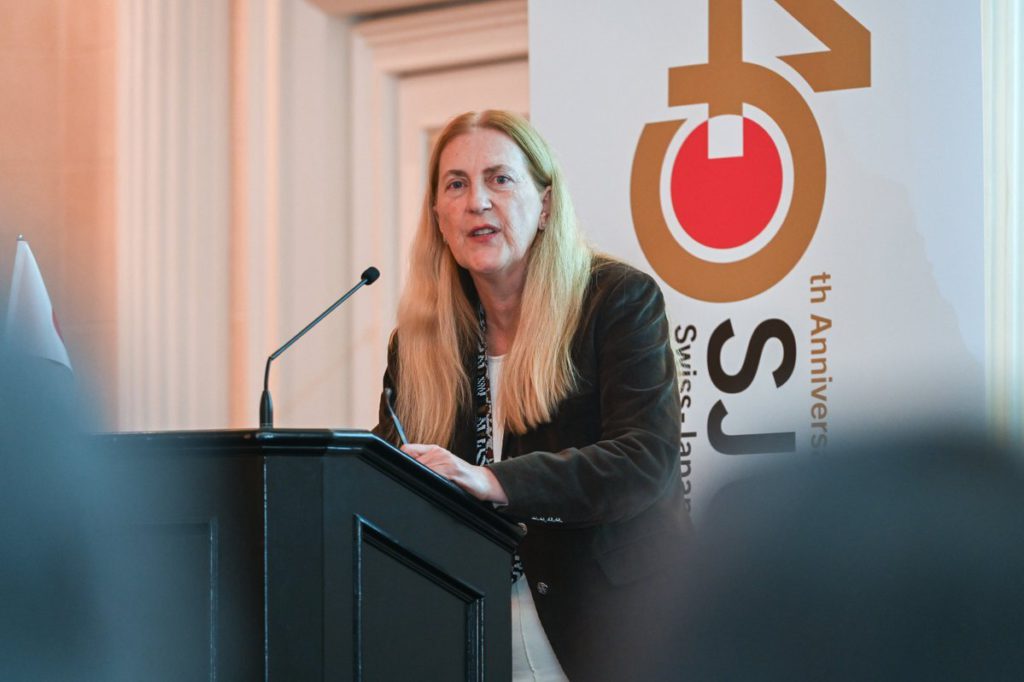
Helene Budliger Artieda, director of the State Secretariat for Economic Affairs (SECO). Image source: Helene Budliger Artieda | X

Swiss gold refiners are interested in setting up shop in the United States in the future, said a senior Swiss economic affairs official on Friday at a press conference after a tariff agreement was reached with Washington.

Switzerland exported nearly 53 billion Swiss francs’ ($66.83 billion) worth of gold to the United States in 2024, a major contributor towards the European country’s overall trade surplus of 39 billion francs with the US.

However, gold is not very profitable for Switzerland, with a “very, very small” margin of perhaps 1% or less, said Helene Budliger Artieda, director of the State Secretariat for Economic Affairs (SECO).

“But I believe it’s important for them. For the US, it’s crucial to strengthen its gold market,” Budliger added.

The precious metal, which is imported to Switzerland from elsewhere and then resized for the US market, remains exempt from US tariffs.

The United States will reduce its tariffs on goods from Switzerland to 15% from a crippling 39% under a new framework trade agreement that includes a pledge by Swiss companies to invest $200 billion into the US by the end of 2028, the Swiss government said on Friday.

($1 = 0.7931 Swiss francs)

(By Miranda Murray; Editing by John Revill)


Zimbabwe’s spodumene exports jump 27% despite weak lithium prices

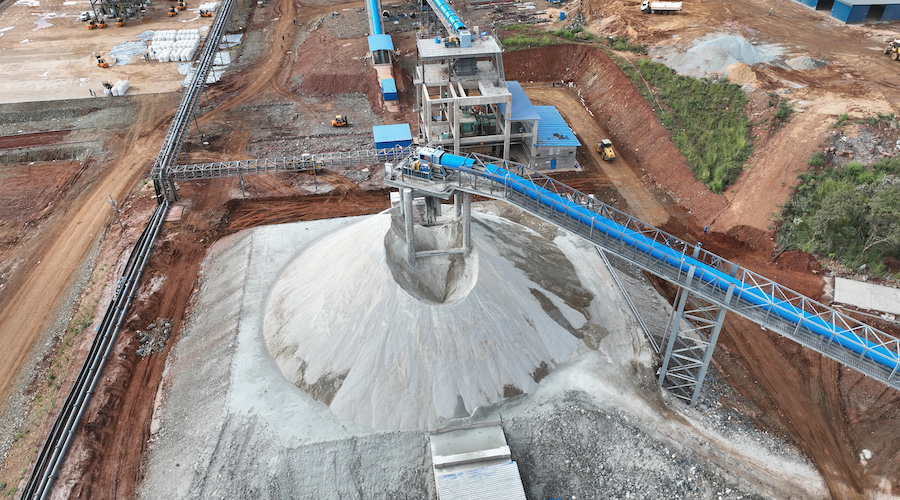
The Arcadia lithium mine, which began production in 2023. (Image courtesy of Huayou Cobalt.)

Zimbabwe’s exports of spodumene concentrate, a lithium-bearing mineral essential for battery production, jumped 27% in the nine months to September despite weak global lithium prices, official statistics showed.

Africa’s top lithium producer exported 1 million metric tons of spodumene concentrate between January and September, compared to 784,746 tons during the same period last year, according to statistics from the Minerals Marketing Corporation of Zimbabwe (MMCZ) obtained by Reuters on Friday.

Prices for lithium — a key component in batteries powering renewable-energy technologies — remain well below their 2022 peaks due to oversupply. Spot prices for lithium carbonate recently slid to around $11,000 per ton, from highs near $70,000 per ton in early 2023.

“Despite the rise in tonnage, export value declined by 11%, from $432.4 million in 2024 to $386.9 million in 2025, largely due to lower international spodumene prices,” the MMCZ statement said.

Chinese firms in the lead

China’s Zhejiang Huayou Cobalt, Sinomine, Chengxin Lithium Group, Yahua Group and the Tsingshan Group mine and produce lithium concentrates in Zimbabwe and export them to China.

According to the MMCZ, these firms have collectively invested more than $1.4 billion since 2021 to purchase and develop lithium assets in the country.

Zimbabwe will ban the export of lithium concentrates starting in 2027 to encourage more local processing.

Huayou, which shipped 400,000 tons of lithium concentrate from the country in 2024, has built a $400 million plant in Zimbabwe, which will start producing 50,000 tons of lithium sulphate next year.

Sinomine has also unveiled plans to develop a $500 million lithium sulphate facility at its Bikita mine in Zimbabwe.

(By Chris Takudzwa Muronzi; Editing by Nelson Banya and Rod Nickel)


Canada plans mining, rare earths stakes to combat China


Tim Hodgson, Canada’s Minister of Energy. Credit: Tim Hodgson | X

Canada plans to buy stakes in projects that will produce and process key minerals, the country’s natural resources minister said, as part of a broader effort to secure supplies of materials that are controlled by China.

Tim Hodgson said the government has already started studying projects that will receive these equity investments, including mining operations and processing facilities. Those entities would be “deemed in the national interest, but for some reason they aren’t able to find the equity,” he said in a Thursday interview with Bloomberg News.

“For example, some of the rare earths processing facilities that are being talked about — unless they receive equity-like support, given the stranglehold that certain countries have on those markets, they’re unlikely to happen.”

Critical minerals like lithium and graphite, along with rare earth metals like terbium and dysprosium, are essential to motor engines, consumer electronics and weapons manufacturing. But the bulk of the mining and processing of these materials is controlled by China.

It’s an unusual move for the Canadian government to make equity investments, but it follows the Trump administration’s decision to buy stakes in miners including MP Materials Corp., Lithium Americas Corp. and Trilogy Metals Inc. this year to expand production of rare earth minerals and other metals on domestic soil. The latter two of those companies are headquartered in Canadian mining hub of Vancouver.

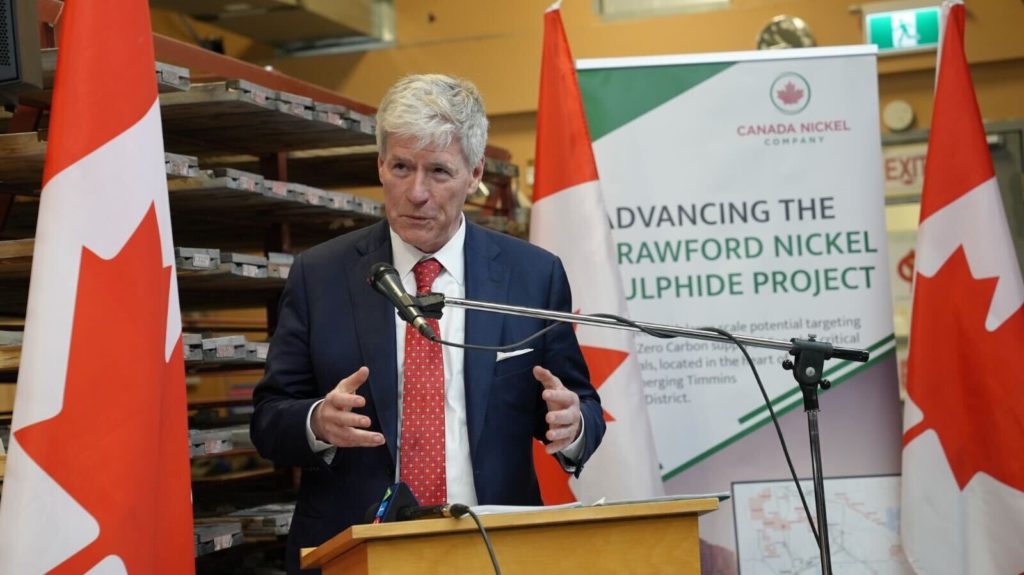
Canada has unveiled a suite of measures to shore up access to critical minerals, including fast-tracking mining projects deemed to have national importance. The government said Thursday it will try to accelerate the approval of projects including the Nouveau Monde Graphite Inc. phase 2 project in Quebec, Canada Nickel Co.’s Crawford project in Ontario and a tungsten and molybdenum mine in New Brunswick.

Nouveau Monde shares are on pace for a 20% weekly gain while Canada Nickel is heading for a 57% jump in the same period.

Prime Minister Mark Carney’s government also introduced a C$2 billion ($1.4 billion) “critical minerals sovereign fund” in its latest budget that will provide the money for equity investments, loan guarantees and offtake agreements to support mining projects. Hodgson said the Canada Growth Fund, a separate investment vehicle, has started studying projects eligible for equity investments.

The minister said the government will look to expand stockpiling of minerals to support producers of niche metals dominated by China. Canada has already begun stockpiling scandium and graphite, he said, and is now looking at other minerals. Group of Seven allies last month announced measures aimed at securing mineral supplies outside of China.

“We’re doing a whole mapping exercise, looking at what Canada’s needs are relative to what Canada’s production and sourcing capability is,” Hodgson said. “Where we see a significant deficit, we will absolutely look at stockpiling as a way to protect Canadian industries and the economy.”

(By Jacob Lorinc)


Medical Compliance at Sea: Why it Matters for Yachts, Cruises & Vessels

ANP Pharma

Published Nov 15, 2025 4:03 PM by The Maritime Executive


[By: ANP Pharma]

Medical supply company ANP Pharma is taking the lead in helping mariners stay on the right side of medical compliance through its in-house consultancy service.

“Failure to comply with medical regulations carries significant consequences,” says Ella Isiraojie, Business Development Manager at ANP Pharma. “Beyond financial penalties and reputational damage, in the most serious cases non-compliance can result in legal actions such as criminal prosecution and imprisonment of responsible individuals.”

For mariners, compliance covers almost every aspect of living and working on board a vessel. But when it comes to medical compliance, the requirements are complex and often misunderstood.

Ella explains: “Medical compliance is frequently overlooked due to the complexity of varying regulations and requirements across Flag States, the differing knowledge base and training of crew on board and the absence of medical personnel on many private and commercial vessels.

ANP Pharma’s consultative role is to fully understand the detailed legislation that applies to each type of vessel, enabling the worldwide medical equipment supplier to ensure ship operators always remain medically compliant.

She continues: “As one of the world-leading maritime suppliers of pharmaceuticals, surgical and medical equipment, medical consumables, first aid supplies and kits, our work includes ensuring that each vessel has on board the correct medical stores for its type, usage, its flag state and its route or itinerary.”

Cruise ships which often carry hundreds or even thousands of passengers and crew, must comply with Flag State regulations while also benchmarked against the American College of Emergency Physicians (ACEP) Cruise Ship Healthcare Guidelines. They are required to carry advanced diagnostic and lifesaving equipment, maintain a larger onboard pharmacy, and ensure the presence of medically trained personnel to safeguard life at sea. Depending on the vessel, the medical team may range from a single doctor to a full complement of doctors, nurses, and paramedics, all of whom must operate within their scope of practice. As itineraries vary, they must also prepare and stock their medical supplies accordingly.

Commercial vessels such as tankers and cargo vessels are governed by the IMO and Flag State requirements. As they carry a much smaller crew, often only 18-30 people, then there is no requirement to have a registered medical professional onboard. In this situation the responsibility falls to the Master of the vessel who can then designate responsibility to another member of the crew who holds the requisite STCW qualifications in Medical Care to manage the inventory.

Some of these vessels also carry hazardous cargo, in which case they are also subject to International Maritime Dangerous Goods Code regulations (IMDG), requiring a specialist first aid kit to deal with first aid emergencies associated with dangerous or hazardous cargo. Ella explains: “Yachts and leisure vessels often exist in a grey area when it comes to medical compliance, as this depends on several factors including crew size and sailing distance says Ella. Yachts generally follow simplified yacht codes developed by their flag states, which adapt IMO standards to suit recreational or limited charter use. While commercial vessels must fully comply with all applicable IMO conventions and undergo stricter flag state inspections and certification under merchant shipping regulations.

At ANP we work with the management team or owner to educate them of the importance of a structured and compliant medical response onboard which helps to minimize risk and prevent situations arising that could cause unnecessary diversions, or poor patient outcomes.”

She continues: “Every commercially operating vessel is advised to maintain a compliant medical chest, and medical chest certificate. This annual certification confirms that the onboard medical stores comply with IMO and ILO requirements established under the Maritime Labour Convention (MLC, 2006), as well as the flag state’s regulations, ensuring full alignment with international maritime standards. The process involves an inventory audit by competent personnel and a certification of compliance with international and Flag State standards. Ongoing responsibility is with the ship’s medical officer (or Master’s delegate) to maintain compliance through checks and records.

ANP Pharma provides guidance and support to its clients which ensures a seamless service is delivered to its clients by working with partners such as Red Square Medical in providing training and medical support services to shipping companies. Often it is found during the audit and crew training process that common issues such as poor management of controlled drugs is due to genuine lack of understanding and inadequate medical supplies resulting from misinterpretation of Flag State minimum requirements.

Liz Baugh, Lead Medical Consultant at Red Square agrees: “This leaves them open to potential issues with the Port State when their medical inventory is being checked. Plus, incomplete medical record keeping; if any medication is given to a person, then a medical record of that interaction must be opened and maintained. This is an important requirement.”

Medical compliance at sea is not optional - it is both a legal obligation and a critical safeguard for everyone on board, concludes Ella. “While cruise ships and commercial vessels face different operational challenges, the principle remains the same: maintaining compliance protects lives, reputations, and livelihoods.”

The products and services herein described in this press release are not endorsed by The Maritime Executive.


Bulla Regia Begins Her Journey: Med Marine Completes 1st Delivery For OMMP

Med Marine

Published Nov 15, 2025 4:11 PM by The Maritime Executive

[By: Med Marine]

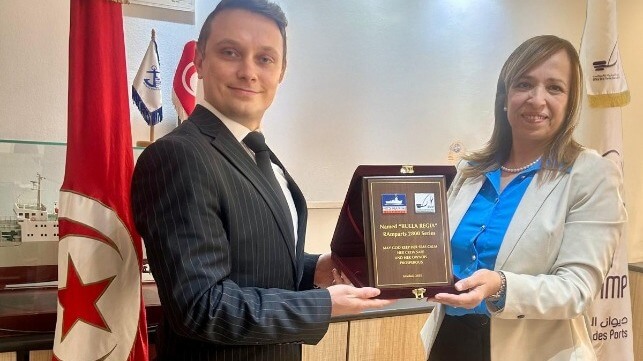
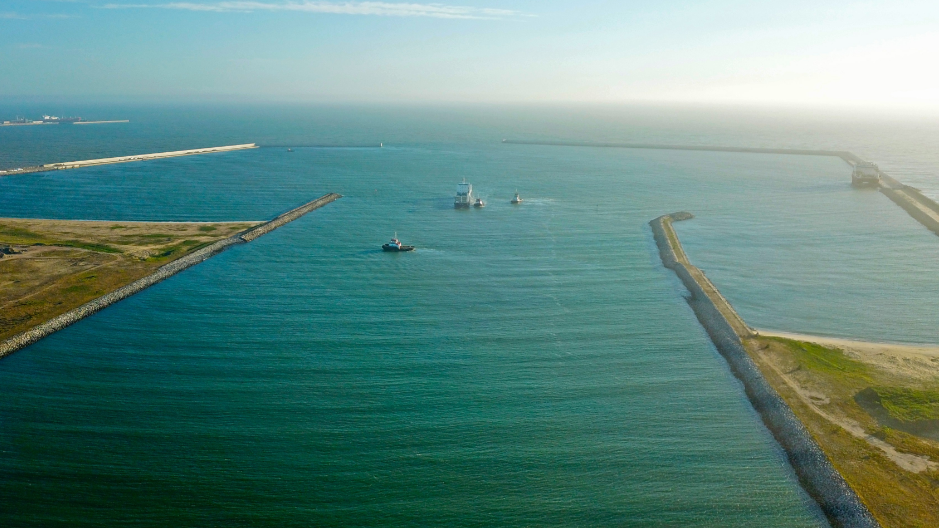
Turkey’s leading shipbuilder and tug operator, MED MARINE, proudly announces the successful delivery of BULLA REGIA, the first of six state-of-the-art RAmparts 2800 series ASD tugboats built for Tunisia’s prominent port authority, OMMP. The delivery, completed in early October, marks a significant milestone in the ongoing fleet program established under the contract signed between OMMP and MED MARINE in November 2023.

Named after the ancient Tunisian city renowned for its enduring strength and heritage, BULLA REGIA embodies the same spirit of resilience and excellence. Measuring 28 meters in length and designed by the internationally acclaimed naval architecture firm Robert Allan Ltd., this next-generation tug delivers a 60-tonne bollard pull ahead and meets Class FIFI-E standards—ensuring both power and safety in every operation.

Powered by twin medium-speed diesel engines and equipped with an open aft deck designed to accommodate two 10-foot containers, BULLA REGIA is tailored for a wide range of demanding missions including towing, mooring, escorting, pushing, and firefighting. Her advanced design and superior manoeuvrability make her a reliable asset for OMMP’s expanding port operations across Tunisia.

The delivery of BULLA REGIA not only represents the successful completion of the first vessel in this six-tug program but also reaffirms the enduring partnership between MED MARINE and OMMP—two maritime forces united by a shared vision of progress, safety, and innovation.

Technical specifications of the tugboat:
Length: 28,20 m
Beam: 11,50 m
Depth: 5,49 m
Draft: 5,40 m
Gross Tonnage: 428
Bollard Pull: 60 tons
Speed: 12 knots @ 80% MCR
Crew: 8

The products and services herein described in this press release are not endorsed by The Maritime Executive.


Brazil’s Prumo sells stake in joint venture with Anglo American

Porto do Açu is a major Brazilian seaport and industrial hub. Image: Porto do Açu

Brazilian logistics firm Prumo said on Friday it agreed to sell its 50% stake in Ferroport, a joint venture with miner Anglo American that operates an iron ore terminal at Rio de Janeiro’s Acu Port.

The Ferroport stake is being sold to investment firm 3Point2, which had financial support from lender BTG Pactual, Prumo said in a statement.

Financial details were not disclosed.

Closing of the deal still depends on some conditions, Prumo added.

“The transaction is in line with Prumo’s strategy of simplifying its corporate structure and optimizing its capital structure,” it said.

(By Rodrigo Viga Gaier; Editing by Natalia Siniawski)


TIPC Diversified Investment Businesses

Taiwan International Ports Corporation 

Taiwan International Ports Corporation
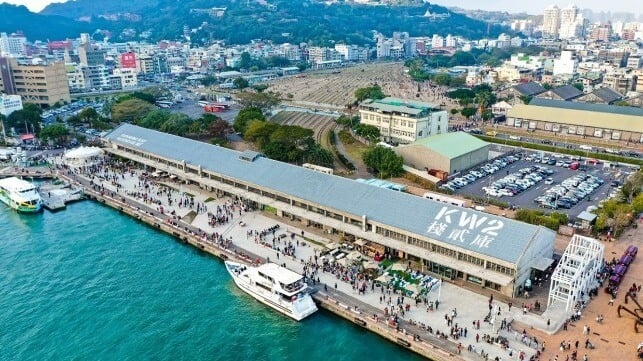
Kaohsiung Port Warehouse No.2 (KW2)

Published Nov 15, 2025 4:20 PM by The Maritime Executive


[By: Taiwan International Ports Corporation]

Established in 2012 by the Ministry of Transportation and Communications ROC, Taiwan International Ports Corporation (TIPC) is in charge of seven international ports in Keelung, Taipei, Suao, Taichung, Kaohsiung, Anping, Hualien, and operates two domestic commercial ports in Budai and Penghu.

TIPC’s main business includes specializing in international commercial port management, container and bulk cargo loading and unloading, freight warehousing, international cruise terminals and other core port businesses. In line with international port management trends, TIPC seeks to diversify business scope through asset development, reinvestment, and international expansion.

TIPC has actively developed investment businesses since 2014 and now holds more than 20% of the equity in a total of 7 investment affiliates and subsidiaries, focusing on the main port industry such as harbor towage service, warehousing & logistics, land development around the port area to create higher economic value.

In addition, in accordance with offshore wind power policies, TIPC has developed offshore wind power related business such as “O&M”, “logistics & warehousing” “wind power talent cultivation”, and “heavy cargo transportation”.

Meanwhile, in response to government’s New Southbound Policy and TIPC’s investment strategy, TIPC has worked with affiliates to explore countries in Southeast Asia with economic development potential and cargo sources, and deployed port-related and extended industries in ports, logistics and terminals in order to promote the diversified development.

Outreach core competencies of port business and capacity

Working Vessels & Operations and Maintenance
Founded in 2014, TIPC Marine Corporation (TIPM) is TIPC 100% subsidiary. The main business projects are shipping related services in commercial port areas such as vessel entry and exit and berthing operations, and high-quality ship repair services.

TIPM has provided vessels and onshore facility services for major offshore wind developers and EPCI (Engineering, Procurement, Construction, and Installation) companies, earning recognition for its high service quality since 2017.

The fleets of TIPM include CTVs, tugs, and barges. TIPM has participated in the construction of most offshore wind farms in Taiwan, providing personnel transportation, heavy cargo transport, guard vessel services and onshore facility leasing.

Notably, TIPM has built long-term partnership and project collaboration with offshore wind developer. Additionally, TIPM manages Taiwan's largest offshore wind O&M base at Taichung Port to form the industrial cluster.

Heavy Cargo Transportation
Taiwan International Ports Heavy-Machinery Corporation (TIPH), established in 2020 as a joint venture between TIPC and Giant Heavy Machinery Service Corporation, specializes in heavy cargo transportation and offshore wind project management.

TIPH offers customized logistics planning, construction method design, and equipment support, including cargo-specific assessments, lifting and transport equipment configuration, and route planning — all delivered through an integrated approach to ensure high safety and execution quality.

TIPH has actively participated in numerous Taiwan’s offshore wind farm projects to transport key components such as pin piles, jackets, blades, towers, and nacelles.

TIPH will take a more proactive role in clean energy industry projects in the future.

With abundant experience and strong execution capability, TIPH is dedicated to becoming the hub for heavy cargo transportation and port engineering in the Asia-Pacific region.

Logistics Services
Taiwan International Ports Logistics Corporation (TIPL), as a joint venture between TIPC and 3 private enterprises, was established in 2014.

TIPL operates warehousing and logistics businesses in Kaohsiung, Taichung and Taipei Ports, with leased warehouses located in the Free Trade Zone. TIPL takes advantage of the Free Trade Zone to mainly provide various high value-added logistics services.

TIPL operates “Maritime Cargo Express Service” in Taipei Ports for the demand of goods in real time and small quantities. The service provides fast and efficient logistics solution for cross-border logistics in the Asia region.

In recent years, to meet the demand of offshore wind energy industry, TIPL has been actively seeking offshore wind energy business opportunities since 2021, and provide indoor/ outdoor storage area at Taichung Port for offshore wind farm O&M parts storage.

The end customers include offshore wind energy developers and equipment suppliers. In the future, TIPL will also seek to become an O&M Base of offshore wind energy operator.

Waterfront Development
Kaohsiung Port Land Development Corporation (KPLD) was established in 2017.

The main business services are to promote the development of the old port areas of Kaohsiung Port and the surrounding areas, and combine the resources and platforms of TIPC and Kaohsiung City Government to achieve the goals and benefits of regional development.

Nowadays, KW2 and Kaohsiung Port Depot have been iconic landmarks in Kaohsiung city. With the collaboration of port and city, KPLD demonstrates successfully resilience of ports from cargo transportation to waterfront recreation.

Bridging Asia Pacific Region

New South Bound
TIPC actively promotes internationalization and expands overseas investment business in line with the government's New Southbound Policy. PT. Formosa Sejati Logistics (FSL) and Taiwan Foundation International Pte. Ltd (TFI) were established in 2018.

FSL mainly operates container distribution and logistics warehousing in Surabaya, Indonesia, and also provides container consolidation, container maintenance, inland and ocean freight, and third-party logistics operations (integrated logistics).

TIPC sets up TFI in Singapore by cooperating with domestic shipping, port and logistics business operators, in order to evaluate suitable targets in Southeast Asiancountries to carry out investment planning and management business in ports, international logistics and other industries.

Talent Cultivation
Founded in 2018, Taiwan International Windpower Training Co., Ltd. (TIWTC) is a joint venture between TIPC and several state-owned and private enterprises affiliated with the offshore wind industry.

TIWTC is committed to cultivating offshore wind professionals who meet international standards. As one of the largest offshore wind training centers in the Asia-Pacific region, TIWTC operates advanced training facilities and delivers safety and technical training modules accredited by the Global Wind Organization (GWO).

TIWTC also offers Dynamic Positioning (DP) courses certified by the Nautical Institute (NI), providing a broad range of specialized maritime training programs.

Training more than 1,000 participants annually, TIWTC has successfully cultivated over 10,000 offshore wind professionals to date. It has held the highest number of GWO certifications in Asia for four consecutive years and was honored with the GWO “Training Team of the Year – Asia Pacific” award in 2024, in recognition of outstanding training performance on the international stage.

In 2025, TIWTC was nominated for the fifth time as the GWO “Training Team of the Year – Asia Pacific. In 2024, TIWTC established a subsidiary in Japan, further strengthening regional presence and reinforcing role as a key connector of global offshore wind talent.

Future Prospects
TIPC aims to become a world-leading port management group. Due to the changes and increasingly intense competition in the international port ecosystem, in order to overcome the challenge in its core business, TIPC draws on the experience of international benchmark port groups to enhance corporate value and competitiveness through diversification and conglomeration.

The products and services herein described in this press release are not endorsed by The Maritime Executive.