Landmark Deal Gives North America Its First Heavy Rare Earth Refinery

REAlloys, which is in the process of merging with Blackboxstocks Inc. (NASDAQ: BLBX), has moved to the front of the rare earth sector with a new agreement that gives it control over the lion’s share of North America’s upcoming heavy rare earth production.
Its partnership with the Saskatchewan Research Council (SRC) brings commercial volumes of dysprosium, terbium, and high-purity NdPr into the region for the first time, directly targeting the largest bottleneck in Western magnet manufacturing.
Reuters described the transaction as a “rare earths tie-up with strategic implications for the North American supply chain” because policymakers have their eyes glued to this space in light of 2027 procurement rules.
As new U.S. sourcing laws tighten, REAlloys now holds the supply position that downstream defense and advanced-manufacturing buyers will depend on, the Globe & Mail heralding the SRC facility as “North America’s first vertically integrated rare-earth processing complex–capable of separation and smelting at commercial scale”.
This is the segment of the supply chain the United States has been trying to rebuild for nearly two decades.
Heavy rare earths are the performance elements. They dictate whether a magnet can withstand heat, acceleration, and EMI without losing stability. These are all capabilities that extend far beyond defense. They are central to electric-vehicle motors, high-efficiency industrial equipment, medical imaging, renewable-energy generation, satellites, aerospace controls, and precision manufacturing. In short, they sit at the core of technologies that underpin both modern economies and military readiness.
And until now, North America has had no commercial-scale ability to refine them.

REAlloys, which is in the process of merging with Blackboxstocks Inc. (NASDAQ: BLBX), has moved to the front of the rare earth sector with a new agreement that gives it control over the lion’s share of North America’s upcoming heavy rare earth production.
Its partnership with the Saskatchewan Research Council (SRC) brings commercial volumes of dysprosium, terbium, and high-purity NdPr into the region for the first time, directly targeting the largest bottleneck in Western magnet manufacturing.
Reuters described the transaction as a “rare earths tie-up with strategic implications for the North American supply chain” because policymakers have their eyes glued to this space in light of 2027 procurement rules.
As new U.S. sourcing laws tighten, REAlloys now holds the supply position that downstream defense and advanced-manufacturing buyers will depend on, the Globe & Mail heralding the SRC facility as “North America’s first vertically integrated rare-earth processing complex–capable of separation and smelting at commercial scale”.
This is the segment of the supply chain the United States has been trying to rebuild for nearly two decades.
Heavy rare earths are the performance elements. They dictate whether a magnet can withstand heat, acceleration, and EMI without losing stability. These are all capabilities that extend far beyond defense. They are central to electric-vehicle motors, high-efficiency industrial equipment, medical imaging, renewable-energy generation, satellites, aerospace controls, and precision manufacturing. In short, they sit at the core of technologies that underpin both modern economies and military readiness.
And until now, North America has had no commercial-scale ability to refine them.
A Midstream Capability the Region Has Never Had
SRC’s facility in Saskatoon is North America’s first rare-earth complex designed to integrate monazite processing, separation, and metal production at a commercial scale. That’s a capability the region has lacked for decades.
The new agreement with REAlloys accelerates that evolution by adding a full heavy rare earth line, transforming the site from an advanced separation plant into the continent’s only integrated source of dysprosium, terbium, and high-purity NdPr metals.
Under the partnership, REAlloys will invest approximately $21 million to expand SRC’s refining capacity, increasing heavy rare earth throughput by roughly 300% and boosting NdPr metal output by about 50%.
When the upgraded system enters production in early 2027, SRC expects to deliver 30 tonnes of dysprosium oxide, 15 tonnes of terbium oxide, and 400-600 tonnes of high-purity NdPr metal annually.
REAlloys has secured 80% of this expanded output under a long-term offtake arrangement, a position that gives the company the dominant share of the first commercial heavy rare earth production run in North America.
According to the announcement, the redesigned system will also include “AI-driven separation and smelting infrastructure,” enabling SRC to move directly into metal production rather than stopping at oxide, a step most Western facilities historically have been unable to achieve.
This changes where REAlloys sits in the market. It is no longer a magnet manufacturer with upstream ambitions. Instead, it’s the principal customer of the only heavy rare earth refining platform in the region, and one of the few companies globally positioned to supply high-performance magnet metals into compliant supply chains.
The timing is highly strategic.
Beginning January 1, 2027, the U.S. Department of Defense will be barred from sourcing rare earth metals, magnets, and components from China, Russia, Iran, or North Korea. Federal buyers will shift procurement to domestic or allied suppliers. And for heavy rare earth metals, SRC’s upgraded facility–with REAlloys as its primary offtake partner–will be the only operation ready to meet that requirement at commercial scale.
SRC’s facility in Saskatoon is North America’s first rare-earth complex designed to integrate monazite processing, separation, and metal production at a commercial scale. That’s a capability the region has lacked for decades.
The new agreement with REAlloys accelerates that evolution by adding a full heavy rare earth line, transforming the site from an advanced separation plant into the continent’s only integrated source of dysprosium, terbium, and high-purity NdPr metals.
Under the partnership, REAlloys will invest approximately $21 million to expand SRC’s refining capacity, increasing heavy rare earth throughput by roughly 300% and boosting NdPr metal output by about 50%.
When the upgraded system enters production in early 2027, SRC expects to deliver 30 tonnes of dysprosium oxide, 15 tonnes of terbium oxide, and 400-600 tonnes of high-purity NdPr metal annually.
REAlloys has secured 80% of this expanded output under a long-term offtake arrangement, a position that gives the company the dominant share of the first commercial heavy rare earth production run in North America.
According to the announcement, the redesigned system will also include “AI-driven separation and smelting infrastructure,” enabling SRC to move directly into metal production rather than stopping at oxide, a step most Western facilities historically have been unable to achieve.
This changes where REAlloys sits in the market. It is no longer a magnet manufacturer with upstream ambitions. Instead, it’s the principal customer of the only heavy rare earth refining platform in the region, and one of the few companies globally positioned to supply high-performance magnet metals into compliant supply chains.
The timing is highly strategic.
Beginning January 1, 2027, the U.S. Department of Defense will be barred from sourcing rare earth metals, magnets, and components from China, Russia, Iran, or North Korea. Federal buyers will shift procurement to domestic or allied suppliers. And for heavy rare earth metals, SRC’s upgraded facility–with REAlloys as its primary offtake partner–will be the only operation ready to meet that requirement at commercial scale.
Integrating the Chain From Source to Magnet
This agreement fits into a larger structure REAlloys has been putting in place across the rare-earth chain.
At the upstream level, the company anchors its plans in Hoidas Lake in Saskatchewan, a deposit with roughly 2.15 million tonnes of measured and indicated TREO and one of Canada’s most significant rare-earth resources. It gives REAlloys a defined long-term feedstock, supported by additional allied and recycled material sources that broaden the supply base.
The midstream is defined by the Saskatchewan Research Council’s separation and metal-making operation, now being expanded with AI-driven separation and smelting systems to create North America’s first commercial-scale heavy rare earth production line. Under the new agreement, REAlloys becomes the primary offtake partner for this upgraded capacity, securing 80% of the heavy rare earth output and effectively linking its upstream resource base to a domestic refining platform capable of producing dysprosium, terbium, and high-purity NdPr metals at meaningful scale.
Downstream, the Euclid Magnet Facility in Ohio forms the final step in the chain. Established in 2013 to serve U.S. Department of Defense and Department of Energy customers, the facility produces advanced alloys and magnet materials, holds SBIR status that permits sole-source federal procurement, and has earned multiple R&D 100 awards and associated materials-science distinctions. Together, these assets give REAlloys something Western operators have struggled to assemble: a vertically aligned system that spans ore, metals, alloys, and magnets inside a single continental corridor.
Adding to this structure is a clear signal from Washington.
The U.S. Export-Import Bank issued a $200 million Letter of Interest in support of REAlloys’ integrated mine-to-magnet strategy, underscoring federal recognition of the need for a domestic magnet industry as procurement rules tighten.
Piece by piece, the company has begun to build the architecture of a supply chain that has been missing from North America for decades and is now central to reindustrialization efforts on both sides of the border.
This agreement fits into a larger structure REAlloys has been putting in place across the rare-earth chain.
At the upstream level, the company anchors its plans in Hoidas Lake in Saskatchewan, a deposit with roughly 2.15 million tonnes of measured and indicated TREO and one of Canada’s most significant rare-earth resources. It gives REAlloys a defined long-term feedstock, supported by additional allied and recycled material sources that broaden the supply base.
The midstream is defined by the Saskatchewan Research Council’s separation and metal-making operation, now being expanded with AI-driven separation and smelting systems to create North America’s first commercial-scale heavy rare earth production line. Under the new agreement, REAlloys becomes the primary offtake partner for this upgraded capacity, securing 80% of the heavy rare earth output and effectively linking its upstream resource base to a domestic refining platform capable of producing dysprosium, terbium, and high-purity NdPr metals at meaningful scale.
Downstream, the Euclid Magnet Facility in Ohio forms the final step in the chain. Established in 2013 to serve U.S. Department of Defense and Department of Energy customers, the facility produces advanced alloys and magnet materials, holds SBIR status that permits sole-source federal procurement, and has earned multiple R&D 100 awards and associated materials-science distinctions. Together, these assets give REAlloys something Western operators have struggled to assemble: a vertically aligned system that spans ore, metals, alloys, and magnets inside a single continental corridor.
Adding to this structure is a clear signal from Washington.
The U.S. Export-Import Bank issued a $200 million Letter of Interest in support of REAlloys’ integrated mine-to-magnet strategy, underscoring federal recognition of the need for a domestic magnet industry as procurement rules tighten.
Piece by piece, the company has begun to build the architecture of a supply chain that has been missing from North America for decades and is now central to reindustrialization efforts on both sides of the border.
A Shift in Market Dynamics
Demand for high-performance magnets continues to accelerate across defense, electric mobility, automation, satellites, and clean energy. Still, the bottleneck has always been the same. Even when Western miners produced rare earth concentrate, they still depended on China for metal-making and heavy rare earth preparation.
That pressure point is now tightening under new procurement rules. Beginning January 1, 2027, the U.S. Department of Defense will be barred from sourcing rare earth metals, magnets, and components from China, Russia, Iran, or North Korea.
This shift forces federal buyers to transition toward domestic or allied supply. Most manufacturers are not ready for that deadline.
REAlloys, through its partnership with SRC, is now one of the only groups positioned to supply dysprosium, terbium, and NdPr metals at the volumes required by the U.S. and Canadian industrial base.
Heavy rare earths remain the least substitutable inputs in magnet production. They determine stability under heat, acceleration, magnetic load, and environmental stress–all the things that define missile guidance accuracy, aircraft efficiency, EV motor durability, satellite maneuvering, and industrial automation reliability. For nearly 15 years, every Western supply chain assessment has identified heavy rare earths as the system’s most acute vulnerability.
With this agreement, that vulnerability lessens. REAlloys and SRC are establishing the first commercially scaled heavy rare earth production line in North America, and for the first time, a significant portion of that output is contracted directly to a domestic magnet producer.
Demand for high-performance magnets continues to accelerate across defense, electric mobility, automation, satellites, and clean energy. Still, the bottleneck has always been the same. Even when Western miners produced rare earth concentrate, they still depended on China for metal-making and heavy rare earth preparation.
That pressure point is now tightening under new procurement rules. Beginning January 1, 2027, the U.S. Department of Defense will be barred from sourcing rare earth metals, magnets, and components from China, Russia, Iran, or North Korea.
This shift forces federal buyers to transition toward domestic or allied supply. Most manufacturers are not ready for that deadline.
REAlloys, through its partnership with SRC, is now one of the only groups positioned to supply dysprosium, terbium, and NdPr metals at the volumes required by the U.S. and Canadian industrial base.
Heavy rare earths remain the least substitutable inputs in magnet production. They determine stability under heat, acceleration, magnetic load, and environmental stress–all the things that define missile guidance accuracy, aircraft efficiency, EV motor durability, satellite maneuvering, and industrial automation reliability. For nearly 15 years, every Western supply chain assessment has identified heavy rare earths as the system’s most acute vulnerability.
With this agreement, that vulnerability lessens. REAlloys and SRC are establishing the first commercially scaled heavy rare earth production line in North America, and for the first time, a significant portion of that output is contracted directly to a domestic magnet producer.
Execution Will Define the Next Step
North America’s rare earth problem has never been about geology. It has always been the absence of a functioning midstream, the refining and metal-making steps that turn mined material into usable inputs. This gap has forced the United States and Canada to depend on offshore supply even when domestic or allied resources were available.
Heavy rare earths have been the hardest of all to source, leaving defense, aerospace, and advanced manufacturing exposed to single-country dependence for the materials that determine thermal stability, precision, and performance.
SRC’s expansion arrives as North America finally confronts the part of the rare earth chain it never built: the part rare earths are converted into usable critical materials. Beginning in 2027, U.S. defense buyers must shift away from Chinese supply, but the region has had no commercial-scale source of dysprosium, terbium, or NdPr metals, prompting Reuters to note that the SRC upgrade is the first step toward filling that gap.
The REAlloys agreement doesn’t close the loop, but it does create the first steady flow of heavy rare earth metals inside the U.S.-Canada system. For defense, auto manufacturing, and advanced industrial applications, it marks a shift from theoretical supply to material that can be contracted, scheduled, and built into production plans.
What happens next depends on execution. If SRC delivers its upgraded capacity on schedule and if downstream buyers adapt to the new procurement landscape, 2027 could mark the first time North America has had a functional heavy rare earth channel of its own. It would not eliminate vulnerability, but it would begin to narrow the exposure that has shaped every rare earth strategy discussion since the early 2000s.
Other companies to watch in the resources sector:
North America’s rare earth problem has never been about geology. It has always been the absence of a functioning midstream, the refining and metal-making steps that turn mined material into usable inputs. This gap has forced the United States and Canada to depend on offshore supply even when domestic or allied resources were available.
Heavy rare earths have been the hardest of all to source, leaving defense, aerospace, and advanced manufacturing exposed to single-country dependence for the materials that determine thermal stability, precision, and performance.
SRC’s expansion arrives as North America finally confronts the part of the rare earth chain it never built: the part rare earths are converted into usable critical materials. Beginning in 2027, U.S. defense buyers must shift away from Chinese supply, but the region has had no commercial-scale source of dysprosium, terbium, or NdPr metals, prompting Reuters to note that the SRC upgrade is the first step toward filling that gap.
The REAlloys agreement doesn’t close the loop, but it does create the first steady flow of heavy rare earth metals inside the U.S.-Canada system. For defense, auto manufacturing, and advanced industrial applications, it marks a shift from theoretical supply to material that can be contracted, scheduled, and built into production plans.
What happens next depends on execution. If SRC delivers its upgraded capacity on schedule and if downstream buyers adapt to the new procurement landscape, 2027 could mark the first time North America has had a functional heavy rare earth channel of its own. It would not eliminate vulnerability, but it would begin to narrow the exposure that has shaped every rare earth strategy discussion since the early 2000s.
Other companies to watch in the resources sector:
Vale S.A. (NYSE: VALE)
Vale S.A. continues to aggressively decouple its base metals operations from its traditional iron ore business to capture higher valuations in the green energy market. The Brazilian mining giant has formally structured Vale Base Metals as a distinct entity tasked with managing its vast nickel and copper assets in Canada, Brazil and Indonesia. This strategic separation allows the unit to operate with the agility of a growth-focused company while leveraging the massive capital resources of its parent.
Vale is currently executing a $25 billion to $30 billion capital investment program aimed at increasing its copper production to 900,000 metric tons per year and its nickel output to 300,000 metric tons per year by 2030. The company’s operations in Sudbury, Ontario, and Voisey’s Bay in Labrador remain the linchpins of this strategy, providing low-carbon nickel rounds and pellets that Western automakers prioritize for their compliance with inflation-reduction incentives and ESG mandates.
Beyond simple extraction, Vale has deepened its downstream integration to secure its role as a direct supplier to the battery supply chain. The company is advancing joint ventures in Indonesia to process laterite nickel ore using high-pressure acid leaching technology, a method essential for producing the mixed hydroxide precipitate required for battery cathodes. Simultaneously, Vale has solidified long-term supply agreements with major automotive partners, including General Motors and Tesla, ensuring that a significant percentage of its high-grade Class 1 nickel is allocated directly to North American and European electric vehicle production.
Energy Fuels Inc. (NYSE American: UUUU)
Energy Fuels Inc. has successfully transitioned from a pure-play uranium miner into a diversified critical minerals processor, leveraging its White Mesa Mill in Utah to bridge a critical gap in the U.S. supply chain. As of late 2025, the company is processing commercial volumes of monazite sands—a radioactive byproduct of heavy mineral sand operations—to recover both uranium and rare earth elements.
The White Mesa Mill is the only facility in the United States with the existing licenses and tailings capacity to handle the radionuclides associated with monazite, giving Energy Fuels a distinct regulatory advantage. The company has moved beyond producing a mixed rare earth carbonate and is now operating Phase 1 separation circuits to produce commercial quantities of separated neodymium and praseodymium oxides. This operational shift effectively bypasses the historical necessity of shipping American feedstocks to China for separation, creating a nascent but vital domestic pathway for magnet materials.
To secure sufficient feedstock for this expansion, Energy Fuels has aggressively acquired heavy mineral sand projects in the Southern Hemisphere, including the acquisition of Base Resources and its Toliara Project in Madagascar, as well as the Bahia Project in Brazil. These acquisitions provide the company with a vertically integrated supply of monazite, insulating it from spot market volatility. The company is utilizing its "crack and leach" capacity to extract the rare earths while simultaneously recovering uranium for the nuclear fuel market, creating a dual-revenue model that lowers the effective cost of production for both commodities.
MP Materials Corp. (NYSE: MP)
MP Materials Corp. has completed its multi-year strategy to restore the full rare earth magnet supply chain to the United States. While the company continues to maximize output at its Mountain Pass mine in California, its strategic focus has shifted heavily toward midstream and downstream manufacturing.
In 2025, MP Materials ramped up commercial production at its magnet manufacturing facility in Fort Worth, Texas. This facility is now actively producing finished neodymium-iron-boron magnets, sourcing the metal alloy directly from the company’s own separated oxides. This vertical integration allows MP Materials to control every step of the process, from the open pit in California to the finished component in Texas, effectively insulating its customers from the geopolitical risks associated with the Chinese supply chain. The Fort Worth plant is designed to produce approximately 1,000 tonnes of finished magnets annually in its initial phase, with plans to scale significantly to meet demand from General Motors and other automotive partners.
MP Materials has secured substantial backing from the Department of Defense to refine heavy rare earths as well, acknowledging that a complete magnet supply chain requires dysprosium and terbium. The company is currently fulfilling a contract to supply rare earth materials to the Pentagon, underscoring the dual-use nature of its products. By successfully closing the loop between mining and manufacturing, MP Materials has established itself not just as a mining firm, but as the foundational industrial anchor for the American electrification and defense sectors.
Vale S.A. continues to aggressively decouple its base metals operations from its traditional iron ore business to capture higher valuations in the green energy market. The Brazilian mining giant has formally structured Vale Base Metals as a distinct entity tasked with managing its vast nickel and copper assets in Canada, Brazil and Indonesia. This strategic separation allows the unit to operate with the agility of a growth-focused company while leveraging the massive capital resources of its parent.
Vale is currently executing a $25 billion to $30 billion capital investment program aimed at increasing its copper production to 900,000 metric tons per year and its nickel output to 300,000 metric tons per year by 2030. The company’s operations in Sudbury, Ontario, and Voisey’s Bay in Labrador remain the linchpins of this strategy, providing low-carbon nickel rounds and pellets that Western automakers prioritize for their compliance with inflation-reduction incentives and ESG mandates.
Beyond simple extraction, Vale has deepened its downstream integration to secure its role as a direct supplier to the battery supply chain. The company is advancing joint ventures in Indonesia to process laterite nickel ore using high-pressure acid leaching technology, a method essential for producing the mixed hydroxide precipitate required for battery cathodes. Simultaneously, Vale has solidified long-term supply agreements with major automotive partners, including General Motors and Tesla, ensuring that a significant percentage of its high-grade Class 1 nickel is allocated directly to North American and European electric vehicle production.
Energy Fuels Inc. (NYSE American: UUUU)
Energy Fuels Inc. has successfully transitioned from a pure-play uranium miner into a diversified critical minerals processor, leveraging its White Mesa Mill in Utah to bridge a critical gap in the U.S. supply chain. As of late 2025, the company is processing commercial volumes of monazite sands—a radioactive byproduct of heavy mineral sand operations—to recover both uranium and rare earth elements.
The White Mesa Mill is the only facility in the United States with the existing licenses and tailings capacity to handle the radionuclides associated with monazite, giving Energy Fuels a distinct regulatory advantage. The company has moved beyond producing a mixed rare earth carbonate and is now operating Phase 1 separation circuits to produce commercial quantities of separated neodymium and praseodymium oxides. This operational shift effectively bypasses the historical necessity of shipping American feedstocks to China for separation, creating a nascent but vital domestic pathway for magnet materials.
To secure sufficient feedstock for this expansion, Energy Fuels has aggressively acquired heavy mineral sand projects in the Southern Hemisphere, including the acquisition of Base Resources and its Toliara Project in Madagascar, as well as the Bahia Project in Brazil. These acquisitions provide the company with a vertically integrated supply of monazite, insulating it from spot market volatility. The company is utilizing its "crack and leach" capacity to extract the rare earths while simultaneously recovering uranium for the nuclear fuel market, creating a dual-revenue model that lowers the effective cost of production for both commodities.
MP Materials Corp. (NYSE: MP)
MP Materials Corp. has completed its multi-year strategy to restore the full rare earth magnet supply chain to the United States. While the company continues to maximize output at its Mountain Pass mine in California, its strategic focus has shifted heavily toward midstream and downstream manufacturing.
In 2025, MP Materials ramped up commercial production at its magnet manufacturing facility in Fort Worth, Texas. This facility is now actively producing finished neodymium-iron-boron magnets, sourcing the metal alloy directly from the company’s own separated oxides. This vertical integration allows MP Materials to control every step of the process, from the open pit in California to the finished component in Texas, effectively insulating its customers from the geopolitical risks associated with the Chinese supply chain. The Fort Worth plant is designed to produce approximately 1,000 tonnes of finished magnets annually in its initial phase, with plans to scale significantly to meet demand from General Motors and other automotive partners.
MP Materials has secured substantial backing from the Department of Defense to refine heavy rare earths as well, acknowledging that a complete magnet supply chain requires dysprosium and terbium. The company is currently fulfilling a contract to supply rare earth materials to the Pentagon, underscoring the dual-use nature of its products. By successfully closing the loop between mining and manufacturing, MP Materials has established itself not just as a mining firm, but as the foundational industrial anchor for the American electrification and defense sectors.
Critical Metals Corp. (NASDAQ: CRML)
Critical Metals Corp. is advancing its "trans-Atlantic" strategy to supply strategic materials to Western markets through its flagship assets in Austria and Greenland. The company’s Wolfsberg Lithium Project in Carinthia, Austria, has moved through the definitive feasibility stage and is positioning itself as the first fully permitted lithium mine in Europe.
Located roughly 170 miles from major battery manufacturing hubs, Wolfsberg offers a logistical advantage that reduces transportation emissions and aligns with the European Union’s Critical Raw Materials Act. The project is designed as an underground mine to minimize surface disruption, a key factor in securing local community support and regulatory approval in an environmentally sensitive region. Critical Metals has signed binding offtake agreements with top-tier partners like BMW, ensuring that the lithium hydroxide produced at Wolfsberg has a guaranteed route to market as soon as commercial production begins.
In parallel, the company is developing the Tanbreez Rare Earth Project in Greenland, which hosts one of the largest known deposits of heavy rare earth elements and zirconium in the world. The Tanbreez asset differs from many competitors because its mineralization is hosted in kakortokite rather than carbonatite, which allows for different processing metrics and a potentially lower acid consumption profile.
USA Rare Earth, Inc. (NASDAQ: USAR)
USA Rare Earth, Inc. is executing a strategy centered on the revitalization of the American magnet manufacturing sector, anchored by its new facility in Stillwater, Oklahoma. Unlike peers that focus primarily on extraction, USA Rare Earth prioritizes the downstream production of sintered neo magnets, the highest-performance category of permanent magnets used in electric vehicle traction motors and defense systems.
The Stillwater plant has commenced initial qualification runs, utilizing equipment and intellectual property acquired from former Hitachi Metals facilities in North Carolina. This approach has allowed the company to leapfrog the typical research and development timeline, deploying proven commercial-scale technology to meet immediate demand. The company aims to scale production to meet a substantial portion of the U.S. defense industry's annual requirement, reducing the Pentagon's exposure to foreign supply shocks.
To support this manufacturing capacity, USA Rare Earth is developing the Round Top Heavy Rare Earth and Critical Minerals Project in West Texas. Round Top is a unique geological deposit containing a wide suite of magnetic rare earths alongside lithium, beryllium and gallium. The company is piloting a continuous ion exchange processing method to efficiently separate these materials from the rhyolite host rock. While the mine development continues, the company has secured intermediate feedstock supplies to ensure the Oklahoma plant can operate independently of the mine’s timeline.
Lynas Rare Earths Ltd. (OTC: LYSDY)
Lynas Rare Earths Ltd. remains the most significant producer of separated rare earth materials outside the People’s Republic of China, providing the global market with a proven non-Chinese supply of NdPr oxide. The Australian firm has substantially reconfigured its industrial footprint to mitigate regulatory risks and expand capacity.
The company’s new cracking and leaching facility in Kalgoorlie, Western Australia, is now fully operational. This plant processes the lanthanide concentrate from the Mt Weld mine locally, removing radioactive waste material before shipping a mixed rare earth carbonate to Malaysia for final separation. This operational change was necessitated by tightened environmental regulations in Malaysia but has ultimately strengthened the company’s supply chain by retaining the most hazardous waste handling within the mining jurisdiction of Australia.
Simultaneously, Lynas is constructing a heavy rare earth separation facility in Seadrift, Texas, a project partially funded by the U.S. Department of Defense. This facility is designed to process heavy rare earth feedstock to produce separated dysprosium and terbium, materials that are currently sourced almost exclusively from China.
General Motors Company (NYSE: GM)
General Motors Company has fundamentally altered its procurement strategy to become an active participant in the mining sector, recognizing that raw material availability is the primary bottleneck for its "Ultium" electric vehicle platform. The automaker is investing directly in resource development to secure the lithium, nickel, cobalt and manganese required for its battery cells. GM’s $650 million equity investment in Lithium Americas Corp. has facilitated the development of the Thacker Pass mine in Nevada, the largest known lithium source in the United States. This deal grants GM exclusive access to the Phase 1 production from Thacker Pass, ensuring a domestic supply of lithium carbonate that enables its vehicles to qualify for full consumer tax credits under the Inflation Reduction Act.
Beyond lithium, GM has forged a web of direct supply agreements for other battery metals, bypassing traditional intermediaries. The company has multi-year contracts with Glencore for cobalt and with Vale for low-carbon nickel sulfate from Canada. GM is also constructing a localized cathode active material supply chain through a joint venture with POSCO Chemical in Quebec, which will process materials sourced from GM’s mining partners. The automaker is heavily investing in a closed-loop battery recycling ecosystem through its collaboration with Li-Cycle, aiming to recover up to 95 percent of the critical minerals from end-of-life batteries and manufacturing scrap.
Critical Metals Corp. is advancing its "trans-Atlantic" strategy to supply strategic materials to Western markets through its flagship assets in Austria and Greenland. The company’s Wolfsberg Lithium Project in Carinthia, Austria, has moved through the definitive feasibility stage and is positioning itself as the first fully permitted lithium mine in Europe.
Located roughly 170 miles from major battery manufacturing hubs, Wolfsberg offers a logistical advantage that reduces transportation emissions and aligns with the European Union’s Critical Raw Materials Act. The project is designed as an underground mine to minimize surface disruption, a key factor in securing local community support and regulatory approval in an environmentally sensitive region. Critical Metals has signed binding offtake agreements with top-tier partners like BMW, ensuring that the lithium hydroxide produced at Wolfsberg has a guaranteed route to market as soon as commercial production begins.
In parallel, the company is developing the Tanbreez Rare Earth Project in Greenland, which hosts one of the largest known deposits of heavy rare earth elements and zirconium in the world. The Tanbreez asset differs from many competitors because its mineralization is hosted in kakortokite rather than carbonatite, which allows for different processing metrics and a potentially lower acid consumption profile.
USA Rare Earth, Inc. (NASDAQ: USAR)
USA Rare Earth, Inc. is executing a strategy centered on the revitalization of the American magnet manufacturing sector, anchored by its new facility in Stillwater, Oklahoma. Unlike peers that focus primarily on extraction, USA Rare Earth prioritizes the downstream production of sintered neo magnets, the highest-performance category of permanent magnets used in electric vehicle traction motors and defense systems.
The Stillwater plant has commenced initial qualification runs, utilizing equipment and intellectual property acquired from former Hitachi Metals facilities in North Carolina. This approach has allowed the company to leapfrog the typical research and development timeline, deploying proven commercial-scale technology to meet immediate demand. The company aims to scale production to meet a substantial portion of the U.S. defense industry's annual requirement, reducing the Pentagon's exposure to foreign supply shocks.
To support this manufacturing capacity, USA Rare Earth is developing the Round Top Heavy Rare Earth and Critical Minerals Project in West Texas. Round Top is a unique geological deposit containing a wide suite of magnetic rare earths alongside lithium, beryllium and gallium. The company is piloting a continuous ion exchange processing method to efficiently separate these materials from the rhyolite host rock. While the mine development continues, the company has secured intermediate feedstock supplies to ensure the Oklahoma plant can operate independently of the mine’s timeline.
Lynas Rare Earths Ltd. (OTC: LYSDY)
Lynas Rare Earths Ltd. remains the most significant producer of separated rare earth materials outside the People’s Republic of China, providing the global market with a proven non-Chinese supply of NdPr oxide. The Australian firm has substantially reconfigured its industrial footprint to mitigate regulatory risks and expand capacity.
The company’s new cracking and leaching facility in Kalgoorlie, Western Australia, is now fully operational. This plant processes the lanthanide concentrate from the Mt Weld mine locally, removing radioactive waste material before shipping a mixed rare earth carbonate to Malaysia for final separation. This operational change was necessitated by tightened environmental regulations in Malaysia but has ultimately strengthened the company’s supply chain by retaining the most hazardous waste handling within the mining jurisdiction of Australia.
Simultaneously, Lynas is constructing a heavy rare earth separation facility in Seadrift, Texas, a project partially funded by the U.S. Department of Defense. This facility is designed to process heavy rare earth feedstock to produce separated dysprosium and terbium, materials that are currently sourced almost exclusively from China.
General Motors Company (NYSE: GM)
General Motors Company has fundamentally altered its procurement strategy to become an active participant in the mining sector, recognizing that raw material availability is the primary bottleneck for its "Ultium" electric vehicle platform. The automaker is investing directly in resource development to secure the lithium, nickel, cobalt and manganese required for its battery cells. GM’s $650 million equity investment in Lithium Americas Corp. has facilitated the development of the Thacker Pass mine in Nevada, the largest known lithium source in the United States. This deal grants GM exclusive access to the Phase 1 production from Thacker Pass, ensuring a domestic supply of lithium carbonate that enables its vehicles to qualify for full consumer tax credits under the Inflation Reduction Act.
Beyond lithium, GM has forged a web of direct supply agreements for other battery metals, bypassing traditional intermediaries. The company has multi-year contracts with Glencore for cobalt and with Vale for low-carbon nickel sulfate from Canada. GM is also constructing a localized cathode active material supply chain through a joint venture with POSCO Chemical in Quebec, which will process materials sourced from GM’s mining partners. The automaker is heavily investing in a closed-loop battery recycling ecosystem through its collaboration with Li-Cycle, aiming to recover up to 95 percent of the critical minerals from end-of-life batteries and manufacturing scrap.
Southern Copper Corporation (NYSE: SCCO)
Southern Copper Corporation is leveraging its position as the holder of the world’s largest copper reserves to meet the structural supply deficit projected for the late 2020s. The company operates open-pit mines in Peru and Mexico that are among the lowest-cost producers in the industry, allowing it to generate robust cash flows even during periods of price volatility.
A major development for the company is the advancement of the Tía María project in the Arequipa region of Peru. After more than a decade of social and political delays, the company has commenced construction on the $1.4 billion greenfield mine. Tía María is expected to produce 120,000 tons of copper cathodes annually using solvent extraction and electrowinning technology, which eliminates the need for a smelter and reduces the environmental footprint. The successful activation of this project signals a significant improvement in the company’s ability to navigate complex community relations in Peru.
In Mexico, Southern Copper is investing heavily to expand its Buenavista Zinc and Pilares projects, aiming to increase its total production capacity to over 1.2 million tons of copper per year. The company is also advancing the massive Michiquillay project in Cajamarca, Peru, a world-class deposit that is currently in the exploration and social baseline study phase. Southern Copper’s strategy focuses on organic growth through the development of its own extensive concession portfolio rather than through expensive acquisitions.
Southern Copper Corporation is leveraging its position as the holder of the world’s largest copper reserves to meet the structural supply deficit projected for the late 2020s. The company operates open-pit mines in Peru and Mexico that are among the lowest-cost producers in the industry, allowing it to generate robust cash flows even during periods of price volatility.
A major development for the company is the advancement of the Tía María project in the Arequipa region of Peru. After more than a decade of social and political delays, the company has commenced construction on the $1.4 billion greenfield mine. Tía María is expected to produce 120,000 tons of copper cathodes annually using solvent extraction and electrowinning technology, which eliminates the need for a smelter and reduces the environmental footprint. The successful activation of this project signals a significant improvement in the company’s ability to navigate complex community relations in Peru.
In Mexico, Southern Copper is investing heavily to expand its Buenavista Zinc and Pilares projects, aiming to increase its total production capacity to over 1.2 million tons of copper per year. The company is also advancing the massive Michiquillay project in Cajamarca, Peru, a world-class deposit that is currently in the exploration and social baseline study phase. Southern Copper’s strategy focuses on organic growth through the development of its own extensive concession portfolio rather than through expensive acquisitions.
Piedmont Lithium Inc. (NASDAQ: PLL)
Piedmont Lithium Inc. is establishing itself as a multi-jurisdictional supplier of lithium hydroxide, balancing near-term revenue generation with long-term domestic development. The company’s Carolina Lithium project in Gaston County, North Carolina, has received its state mining permit, a crucial regulatory victory that clears the path for construction. This fully integrated project is designed to mine spodumene ore and convert it into battery-grade lithium hydroxide on the same site, minimizing logistics costs and carbon emissions.
However, recognizing the time required to build such a facility, Piedmont has executed a strategy to secure lithium units earlier through international partnerships. The company holds a supply agreement and equity interest in Sayona Mining’s Quebec operations, where production is already underway at the North American Lithium complex. This partnership allows Piedmont to sell commercial shipments of spodumene concentrate to the global market while its U.S. assets are developed.
Piedmont is also advancing the Ewoyaa Lithium Project in Ghana in partnership with Atlantic Lithium. The company is funding the development of this asset in exchange for a 50 percent interest in the project’s production. The Ewoyaa material is intended to serve as a primary feedstock for Piedmont’s proposed conversion facility in Tennessee, known as Tennessee Lithium. This merchant plant aims to process foreign concentrate into domestic lithium hydroxide, further expanding the U.S. refining base.
Piedmont Lithium Inc. is establishing itself as a multi-jurisdictional supplier of lithium hydroxide, balancing near-term revenue generation with long-term domestic development. The company’s Carolina Lithium project in Gaston County, North Carolina, has received its state mining permit, a crucial regulatory victory that clears the path for construction. This fully integrated project is designed to mine spodumene ore and convert it into battery-grade lithium hydroxide on the same site, minimizing logistics costs and carbon emissions.
However, recognizing the time required to build such a facility, Piedmont has executed a strategy to secure lithium units earlier through international partnerships. The company holds a supply agreement and equity interest in Sayona Mining’s Quebec operations, where production is already underway at the North American Lithium complex. This partnership allows Piedmont to sell commercial shipments of spodumene concentrate to the global market while its U.S. assets are developed.
Piedmont is also advancing the Ewoyaa Lithium Project in Ghana in partnership with Atlantic Lithium. The company is funding the development of this asset in exchange for a 50 percent interest in the project’s production. The Ewoyaa material is intended to serve as a primary feedstock for Piedmont’s proposed conversion facility in Tennessee, known as Tennessee Lithium. This merchant plant aims to process foreign concentrate into domestic lithium hydroxide, further expanding the U.S. refining base.
Nouveau Monde Graphite Inc. (NYSE: NMG)
Nouveau Monde Graphite Inc. is nearing the completion of its "ore-to-anode" business model, aimed at providing a carbon-neutral alternative to Chinese synthetic and natural graphite. The company is constructing the Matawinie Mine in Saint-Michel-des-Saints, Quebec, which is notable for being the world’s first open-pit mine designed to operate with an all-electric fleet of mining equipment. This electrification strategy allows the company to produce graphite concentrate with a significantly lower carbon footprint than competitors. The extracted material will be transported to the company’s advanced manufacturing plant in Bécancour, Quebec, a dedicated battery materials industrial park. Here, the concentrate will be shaped and purified to produce the coated spherical graphite required for lithium-ion battery anodes.
The company has solidified its commercial viability through multi-year offtake agreements with anchor customers General Motors and Panasonic Energy. These contracts cover the vast majority of the company’s projected Phase 1 production, providing the revenue certainty needed to secure project financing. Nouveau Monde has also attracted strategic capital investments from Mitsui & Co. and Pallinghurst Resources, partners that bring both financial strength and logistical expertise.
Nouveau Monde Graphite Inc. is nearing the completion of its "ore-to-anode" business model, aimed at providing a carbon-neutral alternative to Chinese synthetic and natural graphite. The company is constructing the Matawinie Mine in Saint-Michel-des-Saints, Quebec, which is notable for being the world’s first open-pit mine designed to operate with an all-electric fleet of mining equipment. This electrification strategy allows the company to produce graphite concentrate with a significantly lower carbon footprint than competitors. The extracted material will be transported to the company’s advanced manufacturing plant in Bécancour, Quebec, a dedicated battery materials industrial park. Here, the concentrate will be shaped and purified to produce the coated spherical graphite required for lithium-ion battery anodes.
The company has solidified its commercial viability through multi-year offtake agreements with anchor customers General Motors and Panasonic Energy. These contracts cover the vast majority of the company’s projected Phase 1 production, providing the revenue certainty needed to secure project financing. Nouveau Monde has also attracted strategic capital investments from Mitsui & Co. and Pallinghurst Resources, partners that bring both financial strength and logistical expertise.
Perpetua Resources Corp. (NASDAQ: PPTA)
Perpetua Resources Corp. has achieved a historic regulatory milestone for its Stibnite Gold Project in central Idaho, securing a Final Record of Decision from the U.S. Forest Service. This approval authorizes the company to proceed with the restoration and redevelopment of the brownfield site, which was abandoned by previous operators decades ago. The project is unique in that it contains one of the largest economic reserves of antimony not controlled by China.
Antimony is a federally designated critical mineral essential for the production of munitions, specifically as a hardening agent for lead in bullets and in the primers of small-caliber ammunition. It is also increasingly vital for large-scale liquid metal batteries used in grid energy storage.
Recognizing the national security implications of the project, the U.S. Department of Defense has awarded Perpetua Resources nearly $75 million in funding through the Defense Production Act and other initiatives to accelerate the project's development. This government backing effectively de-risks the permitting and construction timeline, validating the project's strategic necessity.
Perpetua’s plan involves reprocessing historical tailings to recover gold and antimony while simultaneously repairing the environmental damage left by World War II-era mining, including the restoration of fish passage for native salmon populations.
By. Michael Scott
The AI boom is triggering an unexpected and unprecedented bull run in natural gas and power stocks. If you aren't paying attention to the energy demands of data centers, you will miss the biggest energy story of the decade. The smart money is already quietly moving into the few companies prepared to power the trillion-dollar AI machine.
Oilprice Intelligence brings you the inside view on where the next gains will come from, breaking down the market's biggest growth driver with analysis from veteran oilmen and experts. Click here to get this crucial intel for free
Important Disclosure: The owner of Oilprice.com owns shares and/or stock options of the company and therefore has an incentive to see the company’s stock perform well. We encourage you to conduct your own due diligence and seek the advice of your financial advisor or broker before investing.
Perpetua Resources Corp. has achieved a historic regulatory milestone for its Stibnite Gold Project in central Idaho, securing a Final Record of Decision from the U.S. Forest Service. This approval authorizes the company to proceed with the restoration and redevelopment of the brownfield site, which was abandoned by previous operators decades ago. The project is unique in that it contains one of the largest economic reserves of antimony not controlled by China.
Antimony is a federally designated critical mineral essential for the production of munitions, specifically as a hardening agent for lead in bullets and in the primers of small-caliber ammunition. It is also increasingly vital for large-scale liquid metal batteries used in grid energy storage.
Recognizing the national security implications of the project, the U.S. Department of Defense has awarded Perpetua Resources nearly $75 million in funding through the Defense Production Act and other initiatives to accelerate the project's development. This government backing effectively de-risks the permitting and construction timeline, validating the project's strategic necessity.
Perpetua’s plan involves reprocessing historical tailings to recover gold and antimony while simultaneously repairing the environmental damage left by World War II-era mining, including the restoration of fish passage for native salmon populations.
By. Michael Scott
The AI boom is triggering an unexpected and unprecedented bull run in natural gas and power stocks. If you aren't paying attention to the energy demands of data centers, you will miss the biggest energy story of the decade. The smart money is already quietly moving into the few companies prepared to power the trillion-dollar AI machine.
Oilprice Intelligence brings you the inside view on where the next gains will come from, breaking down the market's biggest growth driver with analysis from veteran oilmen and experts. Click here to get this crucial intel for free
Important Disclosure: The owner of Oilprice.com owns shares and/or stock options of the company and therefore has an incentive to see the company’s stock perform well. We encourage you to conduct your own due diligence and seek the advice of your financial advisor or broker before investing.


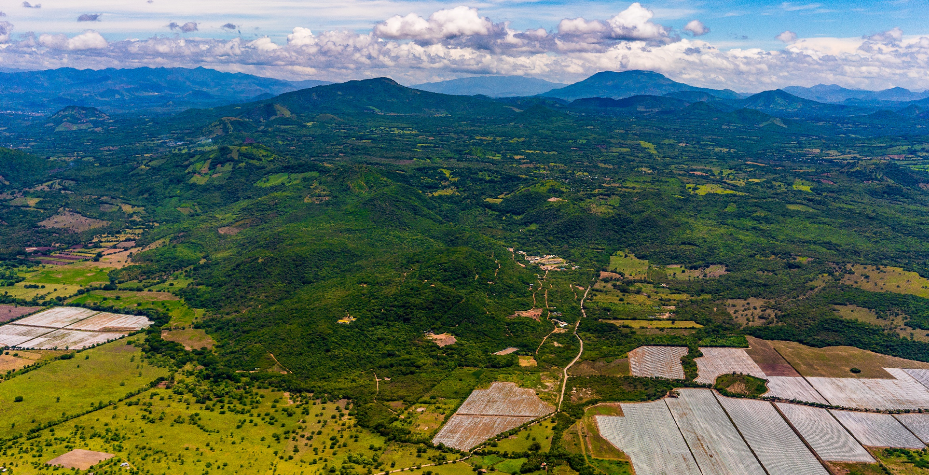 The Era Dorada project marks the expansion of Aura’s operations in Central America. Credit: Aura Minerals