“Immaturity masquerading as strength is the defining personal characteristic of our age,” said one critic in response.

Joe Lonsdale speaks onstage at TechCrunch Disrupt NY 2013 at The Manhattan Center on May 1, 2013 in New York City.
(Photo by Brian Ach/Getty Images for TechCrunch)
Brad Reed
Dec 07, 2025
COMMON DREAMS
Venture capitalist Joe Lonsdale, a co-founder of data platform company Palantir, is calling for the return of public hangings as part of a broader push to restore what he describes as “masculine leadership” to the US.
In a statement posted on X Friday, Lonsdale said that he supported changing the so-called “three strikes” anti-crime law to ensure that anyone who is convicted of three violent crimes gets publicly executed, rather than simply sent to prison for life.
“If I’m in charge later, we won’t just have a three strikes law,” he wrote. “We will quickly try and hang men after three violent crimes. And yes, we will do it in public to deter others.”
Lonsdale then added that “our society needs balance,” and said that “it’s time to bring back masculine leadership to protect our most vulnerable.”
Lonsdale’s views on public hangings being necessary to restore “masculine leadership” drew swift criticism.
Gil Durán, a journalist who documents the increasingly authoritarian politics of Silicon Valley in his newsletter “The Nerd Reich,” argued in a Saturday post that Lonsdale’s call for public hangings showed that US tech elites are “entering a more dangerous and desperate phase of radicalization.”
“For months, Peter Thiel guru Curtis Yarvin has been squawking about the need for more severe measures to cement Trump’s authoritarian rule,” Durán explained. “Peter Thiel is ranting about the Antichrist in a global tour. And now Lonsdale—a Thiel protégé—is fantasizing about a future in which he will have the power to unleash state violence at mass scale.”
Taulby Edmondson, an adjunct professor of history, religion, and culture at Virginia Tech, wrote in a post on Bluesky that the rhetoric Lonsdale uses to justify the return of public hangings has even darker intonations than calls for state-backed violence.
“A point of nuance here: ‘masculine leadership to protect our most vulnerable’ is how lynch mobs are described, not state-sanctioned executions,” he observed.
Theoretical physicist Sean Carroll argued that Lonsdale’s remarks were symbolic of a kind of performative masculinity that has infected US culture.
“Immaturity masquerading as strength is the defining personal characteristic of our age,” he wrote.
Tech entrepreneur Anil Dash warned Lonsdale that his call for public hangings could have unintended consequences for members of the Silicon Valley elite.
“Well, Joe, Mark Zuckerberg has sole control over Facebook, which directly enabled the Rohingya genocide,” he wrote. “So let’s have the conversation.”
And Columbia Journalism School professor Bill Grueskin noted that Lonsdale has been a major backer of the University of Austin, an unaccredited liberal arts college that has been pitched as an alternative to left-wing university education with the goal of preparing “thoughtful and ethical innovators, builders, leaders, public servants and citizens through open inquiry and civil discourse.”

U.S. Navy Hires Palantir to Reorganize Shipbuilding Supply Chain With AI
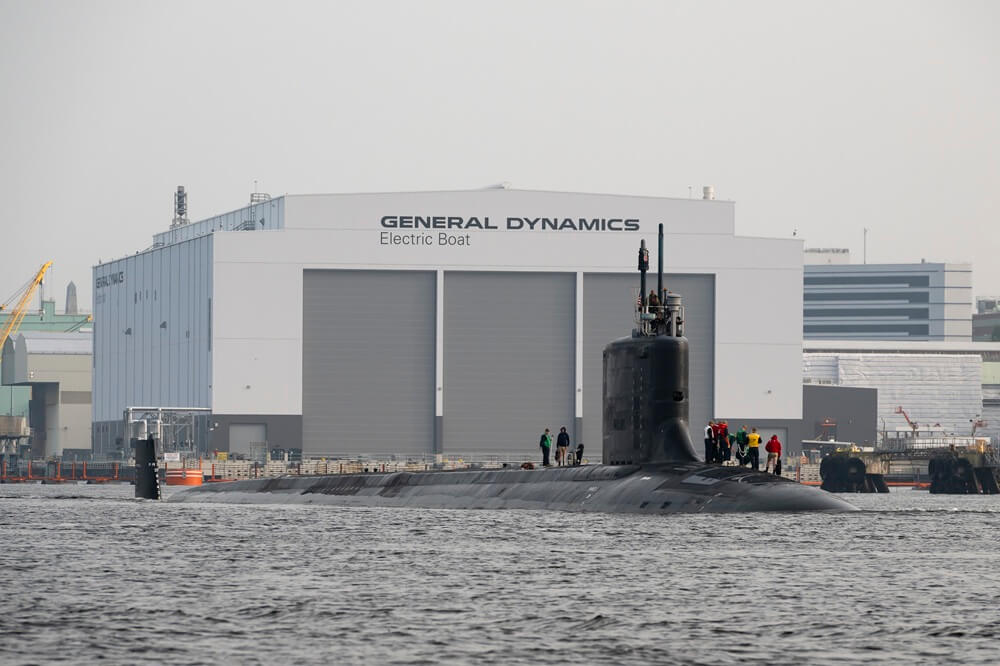
The U.S. Navy has awarded a contract worth nearly $450 million to the technology company Palantir to reorganize the submarine supply chain with advanced AI tools.
Palantir is a leading defense tech contractor with tools for analyzing and organizing manufacturing activity, sorting through intelligence, and aiding the process of targeting. It built the mission command platform for U.S. Special Operations Command, and it has carried out countless sensor integration and data projects for the U.S. Army. For the Navy, it will be building Ship OS, a system to organize parts ordering and delivery for the nuclear sub prime contractors (Huntington Ingalls and GD Electric Boat) and three public shipyards that conduct submarine repairs. More than 100 suppliers will be hooked up to the company's inventory management system in the initial rollout.
"This investment provides the resources our shipbuilders, shipyards, and suppliers need to modernize their operations," Navy Secretary John Phelan said. "By enabling industry to adopt AI and autonomy tools at scale, we're helping the shipbuilding industry improve schedules, increase capacity, and reduce costs."
The rollout builds on early trials funded by the BlueForge Alliance at GD Electric Boat and HII Newport News, initially dubbed "Warp Speed for Warships" and based on Palantir's Foundry product. The Navy said that these testbed applications yielded hundreds of hours in labor savings for production scheduling and material reviews.
The Ship OS program will be overseen by the Navy's Maritime Industrial Base (MIB) program, a government initiative to support, subsidize and reorganize private industry in support of Navy needs. The most pressing need is in the overstressed submarine supply chain, and MIB hopes that Palantir's help will yield cost and efficiency savings that will offset the expense of the initial investment. More importantly, it hopes to shave critical months off of the delayed production timetable for submarine programs and help get manufacturing and repair work back on schedule - a key consideration for national security. Once proven in the sub supply chain, Ship OS will be rolled out for surface ship programs as well.
Last year, the Navy also announced plans to award Palantir a $920 million, five-year IDIQ contract for a variety of software, hardware and consulting services.

No comments:
Post a Comment