No data, no risk? How the monitoring of chemicals in the environment shapes the perception of risks
image:
Monitoring particularly toxic chemicals in environmental samples requires sensitive ultratrace analytical methods
view moreCredit: RPTU, Karin Hiller
Several hundred thousand chemicals are considered as potentially environmentally relevant. Scientists from the RPTU Kaiserslautern-Landau in Germany show that monitoring data for surface waters are only available for a very small fraction of these chemicals. In their article, published in the latest issue of Science, the authors also demonstrate that the environmental risks of highly toxic chemicals might be overlooked, because these chemicals affect ecosystems at concentrations that cannot be detected on a regular basis.
“We analyzed a very extensive US database for the presence of chemicals in the US surface waters and compared it with the toxicity data of these chemicals for aquatic organisms, such as plants, insects or fish”, says Ralf Schulz, environmental scientist from Landau and senior author of the article. “This way, we could assess how the dataset reflects chemical risks of the last six decades.”
According to the article, the major problem for comprehensive risk evaluations today is the insufficient chemical coverage of monitoring.
Only less than 1% of the 300,000 chemicals, which the US Environmental Protection Agency lists as potentially environmentally relevant, has been in fact monitored.
The article reveals interesting patterns by linking 64 million monitoring records for 1,900 chemicals, 300,000 sites and the time span from 1958 to 2019 with toxicity thresholds indicating risks for aquatic organisms. For example, it shows increased numbers of threshold exceedances throughout the US in 1970s for a relatively small number of chemicals, including heavy metals, such as copper, lead and zinc. But it also shows that the subsequent measures for emission control led to a decline of threshold exceedances of these inorganic chemicals.
In the 2000s, another peak of threshold exceedances can be observed, but this time spread out over a much larger number of mainly organic chemicals, such as pharmaceuticals and pesticides. The number of the exceedances has dropped since then, too. However, because the monitoring of these chemicals was stopped, it is not possible to state whether the environmental risks of these chemicals decreased as well. “If you stop monitoring a problematic chemical, you lose the capability to track its actual presence in the environment. Without the monitoring information, it becomes very hard to understand how potential risks are developing”, comments Sascha Bub, environmental scientist and lead author of the article.
The article also presents the evaluation of 37 million records of analytical limits from the US database. Analytical limits describe the lowest concentration at which a chemical can be found in the environment. For inorganic and most organic chemicals, the analytical limits are low enough to detect them at all concentrations that affect aquatic organisms. However, for some pesticides, and especially some insecticides, typical analytical limits are not sufficient to cover all concentrations that are associated with risks, because their analytical limits are close to their toxicity thresholds. As a result, some concentration ranges that are associated with risks for aquatic organisms cannot be captured, and potential effects on the ecosystem remain undetected. One group of insecticides, pyrethroids, which play an important role in today’s agricultural practice and belong to the most toxic chemicals for aquatic organisms, has conspicuous analytical limits that are almost entirely above the toxicity thresholds. The actual environmental risk of pyrethroids can, therefore, only be assessed to a very limited extent.
According to the authors of the article, their results can presumably be transferred to many other regions of the world. However, the data for the conduction of similar analyses is most often missing. Sascha Bub emphasizes: “Our results illustrate the importance of analyzing the environmental data on large temporal and spatial scales. We need such analyses to be able to guide the monitoring and assessment of the rapidly increasing number of chemicals in use.”
Journal
Science
Method of Research
Meta-analysis
Subject of Research
Not applicable
Article Title
Limitations of chemical monitoring hinder aquatic risk evaluations on the macroscale.
Article Publication Date
19-Jun-2025
Current chemical monitoring data hinders global water risk evaluations
Summary author: Walter Beckwith
A large-scale analysis of U.S. water quality data reveals that most toxic chemicals remain poorly characterized or undetected in routine monitoring. This is largely due to sparse risk assessment data, as well as detection limits that are too high to capture ecologically relevant concentrations, researchers report. The findings suggest that the true scale of chemical risk to biodiversity and ecosystems may be significantly underestimated. Chemical pollution is widely recognized as a major threat to biodiversity, human health, and the stability of ecosystems worldwide. However, the accelerating rate at which new chemicals are introduced into the environment outpaces the current ability to fully assess their ecological risks. Large-scale risk assessments depend on both knowing where chemicals are present and understanding how harmful they are to living organisms, yet for most substances, such data are lacking. While new computational and lab-based approaches can estimate toxicity, they are still constrained by limitations in environmental monitoring, especially when extremely toxic substances are present in concentrations too low to be reliably detected.
To better understand how gaps in monitoring data affect risk assessments, Sascha Bub and colleagues analyzed 112 million chemical monitoring records for nearly 2,000 substances in U.S. surface waters spanning 62 years, alongside 78 million records of environmental conditions. Bub et al. compared these data with established toxicity thresholds for over 170,000 chemicals, derived from laboratory and computation studies, that indicate concentrations likely to cause ecological harm. According to the findings, large-scale assessments of chemical risks in U.S. surface waters are primarily constrained by the lack of monitoring data. While regulatory toxicity thresholds are available for over 170,000 chemicals and span a wide range of potencies, only a small fraction of these substances – less than 1% – have corresponding environmental monitoring records. What’s more, routine water monitoring programs are often unable to detect many chemicals, including highly toxic and widespread agricultural pesticides, because the detection thresholds are set too high relative to the concentrations known to be ecologically damaging. These shortcomings suggest that a large portion of chemical risks may remain hidden, especially for substances that are highly potent at low doses.
Journal
Science
Article Title
Limitations of chemical monitoring hinder aquatic risk evaluations on the macroscale
Article Publication Date
19-Jun-2025
Pesticides: a life ruined by glyphosate
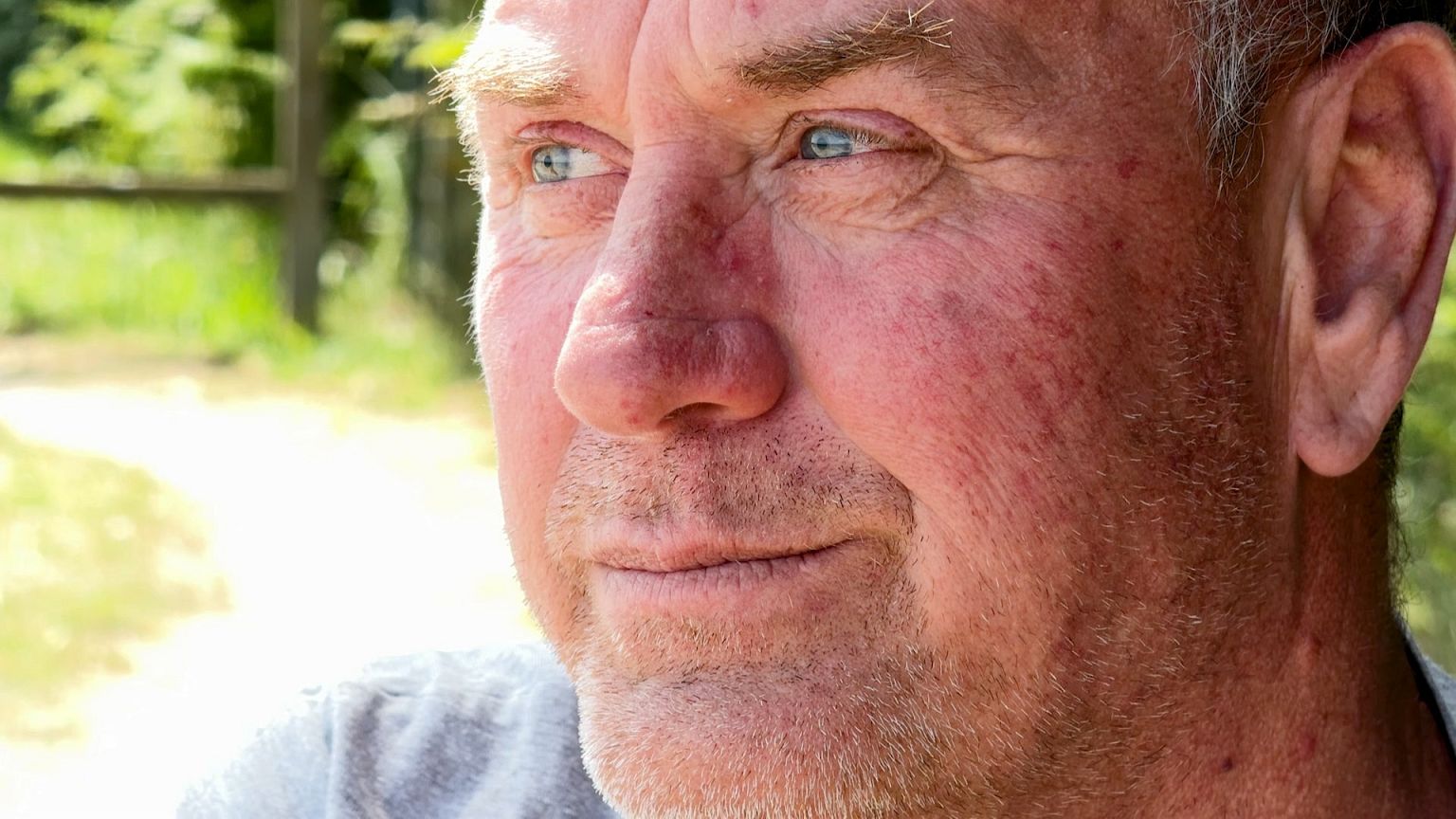
Copyright Euronews
By Valérie Gauriat & Valérie Gauriat
Published on 18/06/2025
Ludovic Maugé, a former landscaper, thought he would live happily for many years to come on the coast of Brittany in France, where our reporter Valérie Gauriat met him.
But 30 years of exposure to glyphosate has shattered his dreams and his existence. He was diagnosed five years ago with an intravascular B-cell lymphoma, a rare form of cancer. It has been recognised as an occupational disease.
Glyphosate is the most widely used herbicide in the world and also the most controversial. It has been classified as “probably carcinogenic” by the International Agency for Research on Cancer (IARC) since 2015. More recent studies from research institutes such as the French National Institute of Health and Medical Research (INSERM) have established a likely link between exposure to the chemical and certain forms of cancer.
Yet, the European Union has extended its authorisation until 2033, relying on studies by EFSA and ECHA, the European authorities for food and chemical safety.
Several environmental and consumer rights organisations challenged the decision before the European Court of Justice last April.
The gap between assessments results from the methodologies used by research institutes and European regulatory agencies, according to Xavier Coumoul, a toxicologist and researcher at Inserm in France. “When a pesticide manufacturer wants to market a product, the regulatory agencies require the manufacturer to conduct its own tests to prove the product is safe,” he explains.
This process raises many questions surrounding the independence of these surveys.
“EFSA gives little consideration to epidemiological studies and relies considerably on what the industry provides, whereas Inserm or IARC rely much more on the academic literature and monitoring real-life product use.”
Ludovic Maugé, whose life now hangs by a thread, is among those for whom the product’s toxicity is undeniable. After undergoing more chemotherapy than is usually permitted, his last hope, he says, is a transplant using his own modified stem cells. It’s a vanishingly small chance. “As my oncologist told me, we can no longer speak of a cure,” he confides.
Since his cancer was recognised as an occupational disease, Ludovic receives a modest social allowance, along with monthly compensation of 180 euros from Bayer-Monsanto — which manufactured the product that poisoned him.
“It’s a pittance, but I don’t care. What mattered most to me was to see my illness recognised as work-related.”
Despite his daily ordeal, Ludovic, who can no longer work, wants to take his fight further. “What I want is to spread the message to everyone. Glyphosate destroyed my life — it poisoned me. These products destroy people and destroy nature,” he insists. He is outraged by the EU’s decision to renew glyphosate’s authorisation.
“When I see politicians reauthorising these products, it makes me furious. It’s the pesticide lobby. Unfortunately, we can’t do anything against these politicians and Bayer-Monsanto. If I had one thing to say to the European Union, it’s this: just ban these products. That’s it.”
At the time of the broadcast of this report, several associations launched a mobilization against a bill of law aimed at easening the use of pesticides in France.


No comments:
Post a Comment