It’s possible that I shall make an ass of myself. But in that case one can always get out of it with a little dialectic. I have, of course, so worded my proposition as to be right either way (K.Marx, Letter to F.Engels on the Indian Mutiny)
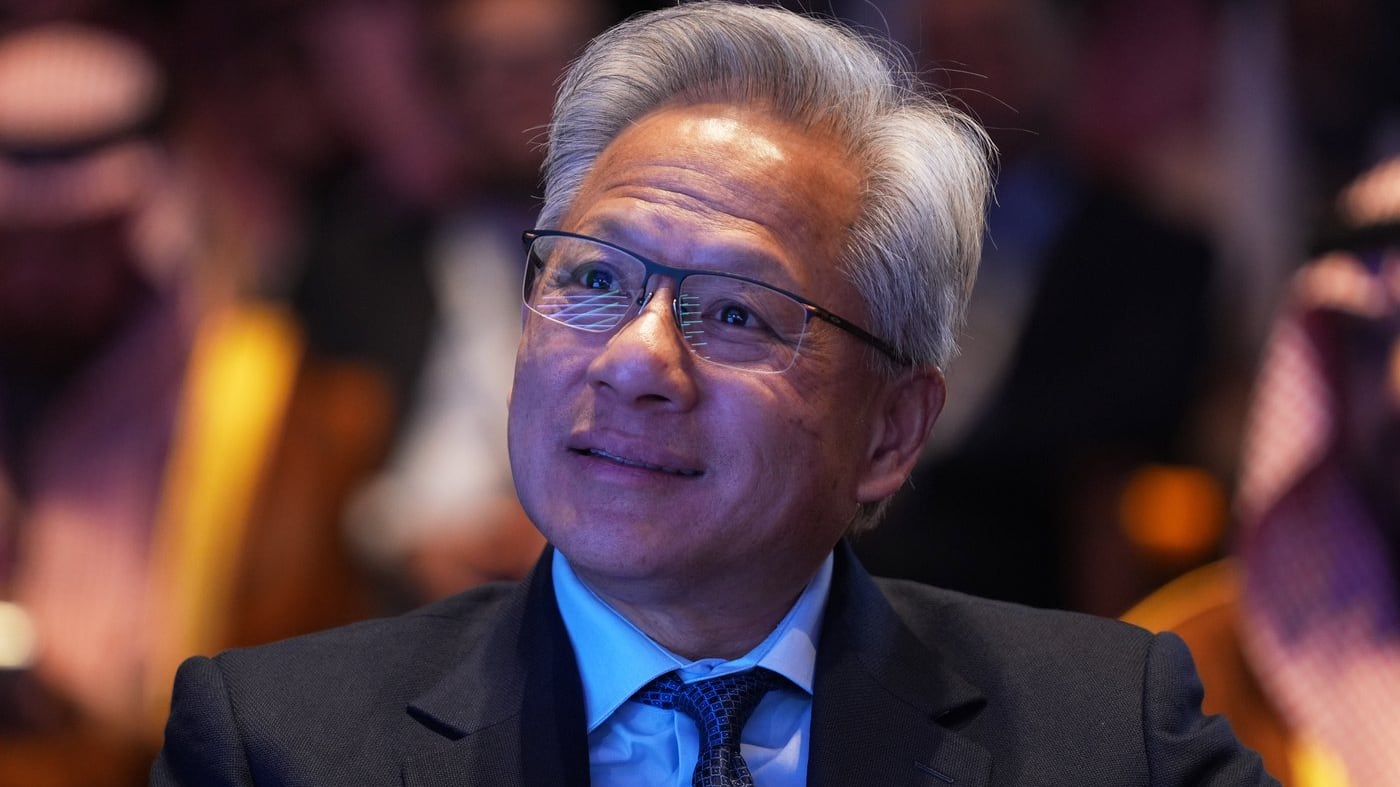
Nvidia CEO Jensen Huang listens as President Donald Trump speaks during the Saudi Investment Forum at the Kennedy Center, Wednesday, Nov. 19, 2025, in Washington.
The most prominent figures in artificial intelligence are stepping back from dire predictions about mass unemployment, as the industry faces growing public hostility over AI’s promised transformation of the workplace.
Nvidia chief executive Jensen Huang and OpenAI CEO Sam Altman, whose comments have stoked anxiety about AI’s potential effects on society, are now arguing that doom-laden warnings were overblown or, in some cases, disingenuous.
Speaking to Channel News Asia on Monday, Huang took direct aim at fellow executives who have publicly blamed AI for workforce reductions.
“The narrative that connects AI to job loss, for many of the CEOs that are doing it -- it is just too lazy,” he said.
“AI has just arrived. How is it possible they’re already losing jobs?”
Huang, who has long argued that AI will create as many jobs as it displaces, pushed back against the doom-and-gloom forecasts of some industry insiders, saying that the recent wave of corporate layoffs was not driven by AI.
“How is it possible that AI became productive and useful only six months ago, and they were somehow laying people off two years ago because of AI? It doesn’t make any sense,” he said.
“It was just a way for them to sound smart, and I really hate that. I think we’re scaring people and that’s irresponsible,” he said.
Altman’s mea culpa
Last week, British bank Standard Chartered announced plans to axe thousands of jobs by 2030 as artificial intelligence replaces employees in a range of administrative roles.
The tech firm behind social network Snapchat cut 1,000 jobs last month, saying AI is boosting efficiency as it pushes towards profitability.
Altman, meanwhile, offered a mea culpa.
Speaking at the Commonwealth Bank of Australia’s Accelerate AI Conference in Sydney, he said rapid AI development would not produce the “jobs apocalypse that some of the companies in our space advocate or talk about” -- including his own.
“I thought there would have been more impact on entry-level white-collar jobs being eliminated by now than has actually happened,” he told the conference on Tuesday, as reported by The Australian.
“I think I understand more about why that wasn’t done -- obviously gratefully -- but that is an area where my intuitions were just off.”
Anthropic boss Dario Amodei has also softened his tone, predicting recently that even if 90 percent of jobs are automated, the remaining 10 percent would be handled by human workers who would be vastly more productive.
Amodei has long drawn criticism from fellow industry figures who regard him as an AI doomer, even as Anthropic has become a highly successful company, with Huang saying last year he “pretty much disagrees with almost everything he says.”
The reversals from rivals Altman and Amodei come as their companies -- OpenAI and Anthropic -- are expected to embark on high-profile IPOs that will require broad buy-in from investors to succeed.
But earlier doom-laden statements have now come to haunt the AI industry as the public, notably in the United States, voices serious discontent in polling over the disruption that tech companies and political leaders predict from AI.
Most economic institutions, most recently the European Central Bank, say that artificial intelligence has had only minor effects on employment so far.
From the future of gig work to sovereignty: Canadian tech leaders opine
Toronto Tech Week has drawn thousands to the city to participate in 600 events featuring business leaders, politicians and startups.
The buzziest event came Wednesday, when event organizers hosted Homecoming, a one-day conference featuring talks from some of the industry’s biggest names.
Here’s what some of the speakers had to say:
Andrew Macdonald, Uber’s president and chief operating officer
The executive says technology, like artificial intelligence, will create demand for new jobs people haven’t even thought of today.
But he admitted that revolution could endanger some of the work Uber drivers and couriers are already carrying out.
“I can’t specifically tell you what the 10.5 million people who earn money on Uber today are going to be doing in 15 years, because I think for some period of time there will be more demand for gig economy workers,” Macdonald said.
“But at some point in time, they will decrease, at least the types of jobs being done today and I can’t tell you where all those folks will go.”
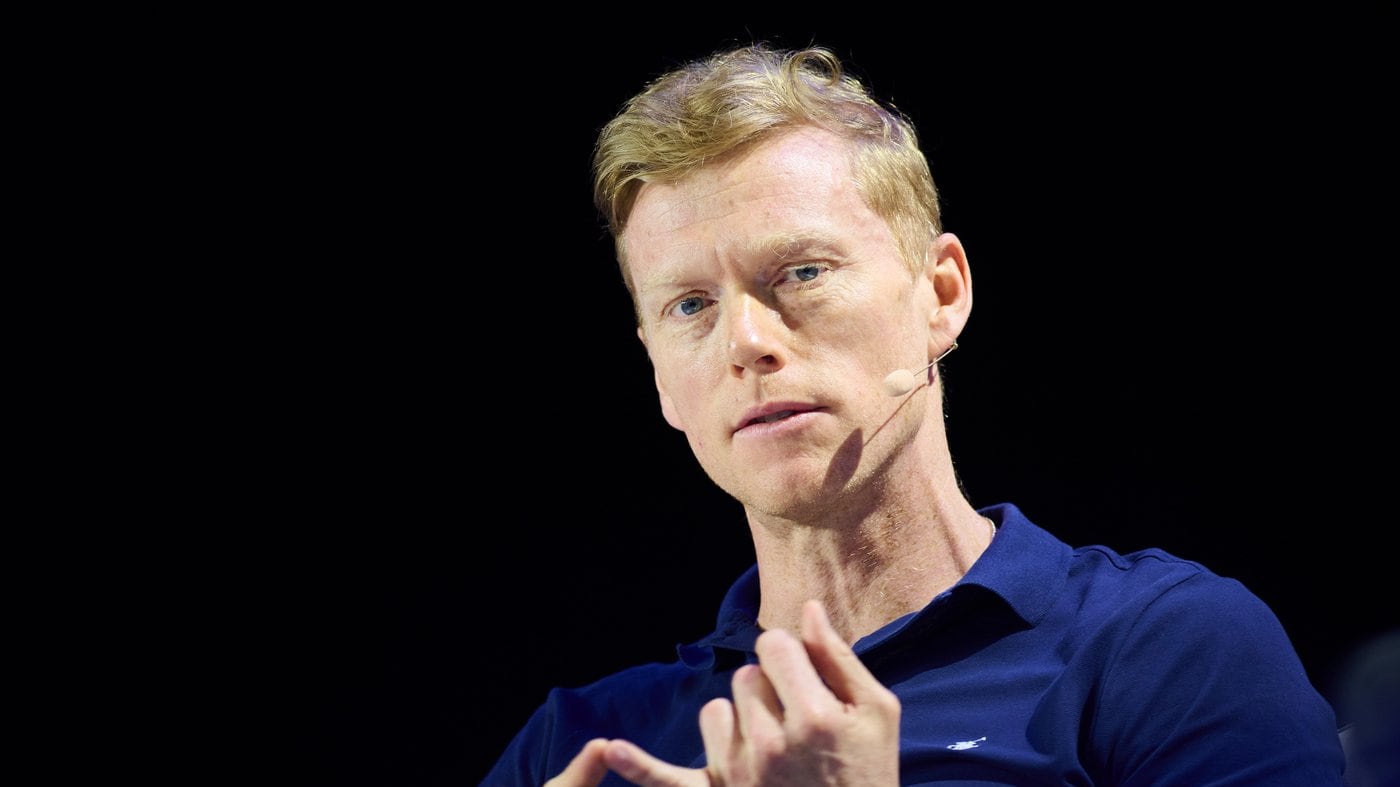
Uber president and chief operating officer Andrew Macdonald speaks at the 2026 Toronto Tech Week Homecoming conference in Toronto, on Wednesday, May 27, 2026. THE CANADIAN PRESS/Sammy Kogan
The job security of Uber drivers and couriers is particularly at risk because they work for — but are not employed by — ride-hailing companies, who are heavily investing in autonomous driving startups. Uber, for example, has invested in self-driving truck business Waabi, which is based in Toronto.
Asked Wednesday how soon self-driving vehicles could be on the Uber platform in Canada, Macdonald said “soon ... but I don’t have a specific date.”
Tobi Lütke, co-founder and chief executive of Shopify Inc.
The head of the e-commerce software firm says people are worried about what work will look like in the future.
He finds that “funny because it’s such a misunderstanding of how humans work that people think that there’s not going to be enough jobs here.”
“The shape of companies is going to change, absolutely. Companies will be smaller, but there will be vastly more of them, which is amazing,” Lütke said.
Up until now he said, very few companies could afford to hire enough engineers to pursue every idea staff had but that’s changing with AI and other tech.
Shopify co-founder and CEO Tobi Lütke speaks at the 2026 Toronto Tech Week Homecoming conference in Toronto, on Wednesday, May 27, 2026. THE CANADIAN PRESS/Sammy Kogan
“Now everyone has a seven out of 10 engineer on their phone right now for $200 a month and that’ll be $20 or $2 a month very soon ... so I think the amount of creativity that can be brought in the world is just so vastly higher,” he said.
The ease of building a business with that technology has some buzzing that a one-person company could generate $1 billion but Lütke says he thinks the concept is “bullshit.”
“Why ... would you not spend some of that money to have someone else around?” he said.
Nick Frosst, co-founder of Cohere
The artificial intelligence leader said there’s “no way” for Cohere to build its enterprise technology without raising a huge amount of money outside of Canada, but that doesn’t mean the company isn’t patriotic.
“We have had to go all over the world to raise the capital that we need to train models, but I don’t think that makes us any less sovereign,” he said.
“In many ways, that has given us roots into the rest of the world.”
Cohere has long been front and centre in sovereignty conversations because it was born in Canada, remains headquartered in Toronto and last year, signed an agreement to help the federal government build an AI ecosystem and services for the country.
The company announced in April it would merge with German rival Aleph Alpha. The new company will use the Cohere name and be “anchored in” Germany and Canada, if Aleph Alpha shareholders approve the deal.
---
Tara Deschamps, The Canadian Press
This report by The Canadian Press was first published May 27, 2026.
Uber president calls on federal government to speed up policy, program work
Uber president and chief operating officer Andrew Macdonald speaks at the 2026 Toronto Tech Week Homecoming conference in Toronto, on Wednesday, May 27, 2026. THE CANADIAN PRESS/Sammy Kogan
TORONTO — Uber’s president wants the federal government to act faster on policies and programs that will help Canadian companies build.
Andrew Macdonald says he thinks the country needs to move more quickly from announcements to progress.
As an example of how the government could speed up, he pointed to the major projects office Prime Minister Mark Carney launched last summer to fast-track the development of ports, railways, energy corridors and more.
Macdonald says the idea of a six-month target for getting project approvals is admirable, but he wonders why it can’t be something shorter, like six weeks.
By comparison, he says Germany approved new liquefied natural gas terminals in a matter of days, when war broke out between Ukraine and Russia.
Macdonald’s remarks came at one of 600 events running during Toronto Tech Week, which wraps up Friday.
This report by The Canadian Press was first published May 27, 2026.



No comments:
Post a Comment