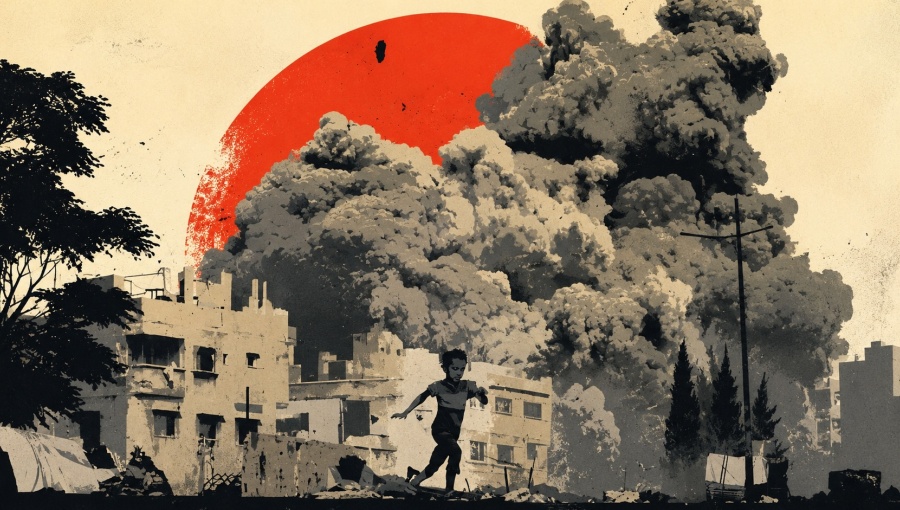
Israel has declared a new swathe of southern Lebanon a combat zone and ordered civilians to move north, ignoring the ceasefire deal announced in mid-April as it continues to target Hezbollah.
In a statement posted on X, the Israeli military warned it would act “with great force” against the Lebanese armed group in the designated area. “We advise residents of southern Lebanon to evacuate to the north of the Zahrani River, as all areas south of the river are considered a combat zone,” a military spokesperson said, Reuters reports.
The order marks a significant expansion of Israel’s operational footprint. The Zahrani River runs roughly 40km north of the Israeli border, placing about 2,000 sq km of Lebanese territory within the newly designated zone. It is the first time Israel has instructed the evacuation of the entire area south of the river, having previously focused on areas below the Litani River and issuing targeted evacuation orders in towns between the two.
The move follows an intensification of Israeli strikes earlier in the week, with more than 120 attacks reported across southern and eastern Lebanon on May 26 alone. Israeli Prime Minister Benjamin Netanyahu said the country needed to take further action to protect communities in northern Israel from Hezbollah fire.
The conflict has persisted despite a US-brokered ceasefire announced on April 16. The World Health Organization says at least 608 people in Lebanon have been killed in Israeli attacks since the truce, while Lebanon’s health ministry puts the broader death toll from Israeli strikes since early March at more than 3,200.
The Israeli military said 10 of its soldiers had been killed since the ceasefire, including six in attacks involving Hezbollah’s explosive drones, highlighting the continued lethality of cross-border hostilities.
On the ground, the humanitarian situation is deteriorating rapidly. Lebanese security sources said civilians were fleeing north towards the port city of Sidon, which is already hosting thousands displaced from earlier fighting. The latest evacuation order came as Muslims across Lebanon were marking Eid al-Adha, compounding the disruption to civilian life.
More than 1.2mn Lebanese have been displaced since March 2, when Hezbollah began firing on Israel in support of Iran, according to official figures. Since then, Israeli strikes have extended beyond the south to hit eastern regions and the capital Beirut, though the city has largely been spared in recent days.
Israeli officials say that restraint in Beirut is deliberate. Three senior officials told Reuters that while Israel believes it has freedom of action in southern Lebanon, it is more constrained in the capital. The calculus appears partly geopolitical: Israel does not want to be seen as undermining potential diplomacy between Washington and Tehran.
The officials said Israel was mindful of not derailing US President Donald Trump’s efforts to secure a deal with Iran, suggesting that the conflict’s trajectory remains closely tied to broader regional negotiations.
Even so, military operations on the ground are expanding. Israeli forces have pushed beyond a long-established security buffer known as the “Yellow Line”, though the army has provided no details on the extent of its advance. Surveillance drones continue to operate over Beirut, and low-flying warplanes have been reported over the city, signalling that escalation risks remain acute.
The widening of the combat zone and the scale of recent strikes point to a conflict that is drifting further from containment, even as diplomatic efforts seek to prevent it from spiralling into a wider regional war.

No comments:
Post a Comment