Bangladesh's Nuclear Power Play Is a Test for Emerging Economies
- Bangladesh is betting on nuclear power with the $12.65 billion, 2.4-GW Rooppur plant to strengthen energy security and reduce reliance on imported fossil fuels and Indian electricity.
- The Russian-built project has faced years of delays due to the pandemic, sanctions, currency pressures, and global conflicts.
- While Rooppur will supply up to 15% of Bangladesh's electricity, the country is already looking to smaller, cheaper SMRs for future nuclear expansion.
Previously, we reported that India is betting big on solar energy to power its industrialization drive, abandoning earlier plans to rely on coal. Indeed, India is going off the beaten path by attempting to become the first country to industrialize using clean energy instead of fossil fuels by traditional industrial superpowers. And, India’s smaller neighbor is making an equally high-stakes bet on nuclear energy, another low-carbon resource. Bangladesh is currently developing the giant Rooppur Nuclear Power Plant, its biggest infrastructure project in history, with the 2.4-gigawatt plant expected to come online as early as the current year. Located on the banks of the Padma River in western Bangladesh, the $12.65-billion, Russian-built facility is attracting a fair amount of attention because it’s a litmus test for atomic energy in developing nations, as reported by Livemint.
Specifically, the world will be watching to see whether Bangladesh can successfully integrate a complex, high-capital nuclear asset into an emerging economy without suffering catastrophic financial strain. After all, Rooppur is a major financial undertaking considering that Bangladesh's GDP in 2025 clocked in at ~$510 billion.
For Bangladesh, the primary motivation is simply long-term and reliable energy supplies. Recent conflicts (the Middle East war and Russia-Ukraine) have disrupted global energy flows, leading to expensive fuel imports, long queues at filling stations, and widespread rolling blackouts for a country that relies heavily on oil and gas.
When fully operational, the nuclear plant will provide stable, low-carbon baseload electricity, meeting nearly 15% of Bangladesh's national power demand.
But it also took conflict to ignite a fire under this massive project, which has faced multiple delays over the past decade, starting with the supply challenges presented by the COVID-19 pandemic, Western sanctions impacting this Russian-built (Rosatom) plant, currency fluctuations driving up costs by ~25%, and then two major conflicts affecting shipping.
Currently, Bangladesh is highly dependent on India for its electricity, relying on imports to meet a significant portion of its daily power demand. India is currently Bangladesh's largest electricity supplier, with about 2.5 GW to 2.8 GW of daily capacity contracted from Indian power conglomerates, notably Adani Power (which operates a large dedicated coal-fired plant in Godda, Jharkhand) as well as state-owned NTPC and PTC, according to Reuters.
The massive energy reliance has led to frequent tensions between the two countries, particularly concerning pricing and delayed payments by Dhaka due to foreign exchange constraints.
It also leaves Bangladesh at India's mercy: two years ago, India's Adani Power cut electricity exports to Bangladesh by over 60% due to an outstanding payment dispute. Bangladesh's accumulated arrears to Adani Power reached roughly $800 million, largely driven by the PDB's financial constraints and a nationwide shortage of foreign reserves. The cut from the dedicated 1,600 MW Godda plant in Jharkhand significantly impacted Bangladesh's power grid, creating severe energy shortages. Adani Power supplies roughly 10% of Bangladesh's total electricity demand.
The heavy financial burden and the political controversy are likely to render Rooppur the last large-scale nuclear plant Bangladesh builds. Moving forward, Dhaka is shifting its attention to Small Modular Reactors (SMRs), with the government already in talks with Western and Chinese firms, signaling a quiet realignment away from total reliance on Russian energy partnerships, Bloomberg reports.
Typically generating 300 to 400 MW per plant, SMRs are highly appealing to the country's policymakers for several key reasons. First off, SMRs can cost as little as $500 million to $1 billion compared to more than $10 billion for conventional nuclear plants. However, the larger plants enjoy the upper hand in economies of scale, with capital costs typically ranging from $6,600 to $8,000 per kW of capacity compared to $8,000 to over $10,000 per kW for SMRs. Second, SMRs can be deployed along coastal belts and riverbanks much faster than conventional reactors, directly serving concentrated industrial zones without relying on long-distance grid transmission.
The first reactor is expected to begin supplying 300 MW to Bangladesh’s grid in August before increasing to more than 1,000 MW by the end of 2026. Fuel loading for the second reactor is scheduled for 2027, with the full 2.4 GW Rooppur station expected to enter service in 2028. Once both units are online, nuclear power will rank alongside domestic gas as one of Bangladesh’s largest sources of baseload electricity.
By Alex Kimani for Oilprice.com
- Bangladesh is betting on nuclear power with the $12.65 billion, 2.4-GW Rooppur plant to strengthen energy security and reduce reliance on imported fossil fuels and Indian electricity.
- The Russian-built project has faced years of delays due to the pandemic, sanctions, currency pressures, and global conflicts.
- While Rooppur will supply up to 15% of Bangladesh's electricity, the country is already looking to smaller, cheaper SMRs for future nuclear expansion.
Previously, we reported that India is betting big on solar energy to power its industrialization drive, abandoning earlier plans to rely on coal. Indeed, India is going off the beaten path by attempting to become the first country to industrialize using clean energy instead of fossil fuels by traditional industrial superpowers. And, India’s smaller neighbor is making an equally high-stakes bet on nuclear energy, another low-carbon resource. Bangladesh is currently developing the giant Rooppur Nuclear Power Plant, its biggest infrastructure project in history, with the 2.4-gigawatt plant expected to come online as early as the current year. Located on the banks of the Padma River in western Bangladesh, the $12.65-billion, Russian-built facility is attracting a fair amount of attention because it’s a litmus test for atomic energy in developing nations, as reported by Livemint.
Specifically, the world will be watching to see whether Bangladesh can successfully integrate a complex, high-capital nuclear asset into an emerging economy without suffering catastrophic financial strain. After all, Rooppur is a major financial undertaking considering that Bangladesh's GDP in 2025 clocked in at ~$510 billion.
For Bangladesh, the primary motivation is simply long-term and reliable energy supplies. Recent conflicts (the Middle East war and Russia-Ukraine) have disrupted global energy flows, leading to expensive fuel imports, long queues at filling stations, and widespread rolling blackouts for a country that relies heavily on oil and gas.
When fully operational, the nuclear plant will provide stable, low-carbon baseload electricity, meeting nearly 15% of Bangladesh's national power demand.
But it also took conflict to ignite a fire under this massive project, which has faced multiple delays over the past decade, starting with the supply challenges presented by the COVID-19 pandemic, Western sanctions impacting this Russian-built (Rosatom) plant, currency fluctuations driving up costs by ~25%, and then two major conflicts affecting shipping.
Currently, Bangladesh is highly dependent on India for its electricity, relying on imports to meet a significant portion of its daily power demand. India is currently Bangladesh's largest electricity supplier, with about 2.5 GW to 2.8 GW of daily capacity contracted from Indian power conglomerates, notably Adani Power (which operates a large dedicated coal-fired plant in Godda, Jharkhand) as well as state-owned NTPC and PTC, according to Reuters.
The massive energy reliance has led to frequent tensions between the two countries, particularly concerning pricing and delayed payments by Dhaka due to foreign exchange constraints.
It also leaves Bangladesh at India's mercy: two years ago, India's Adani Power cut electricity exports to Bangladesh by over 60% due to an outstanding payment dispute. Bangladesh's accumulated arrears to Adani Power reached roughly $800 million, largely driven by the PDB's financial constraints and a nationwide shortage of foreign reserves. The cut from the dedicated 1,600 MW Godda plant in Jharkhand significantly impacted Bangladesh's power grid, creating severe energy shortages. Adani Power supplies roughly 10% of Bangladesh's total electricity demand.
The heavy financial burden and the political controversy are likely to render Rooppur the last large-scale nuclear plant Bangladesh builds. Moving forward, Dhaka is shifting its attention to Small Modular Reactors (SMRs), with the government already in talks with Western and Chinese firms, signaling a quiet realignment away from total reliance on Russian energy partnerships, Bloomberg reports.
Typically generating 300 to 400 MW per plant, SMRs are highly appealing to the country's policymakers for several key reasons. First off, SMRs can cost as little as $500 million to $1 billion compared to more than $10 billion for conventional nuclear plants. However, the larger plants enjoy the upper hand in economies of scale, with capital costs typically ranging from $6,600 to $8,000 per kW of capacity compared to $8,000 to over $10,000 per kW for SMRs. Second, SMRs can be deployed along coastal belts and riverbanks much faster than conventional reactors, directly serving concentrated industrial zones without relying on long-distance grid transmission.
The first reactor is expected to begin supplying 300 MW to Bangladesh’s grid in August before increasing to more than 1,000 MW by the end of 2026. Fuel loading for the second reactor is scheduled for 2027, with the full 2.4 GW Rooppur station expected to enter service in 2028. Once both units are online, nuclear power will rank alongside domestic gas as one of Bangladesh’s largest sources of baseload electricity.
By Alex Kimani for Oilprice.com
Bangladesh should strengthen nuclear expertise before investing in SMRs
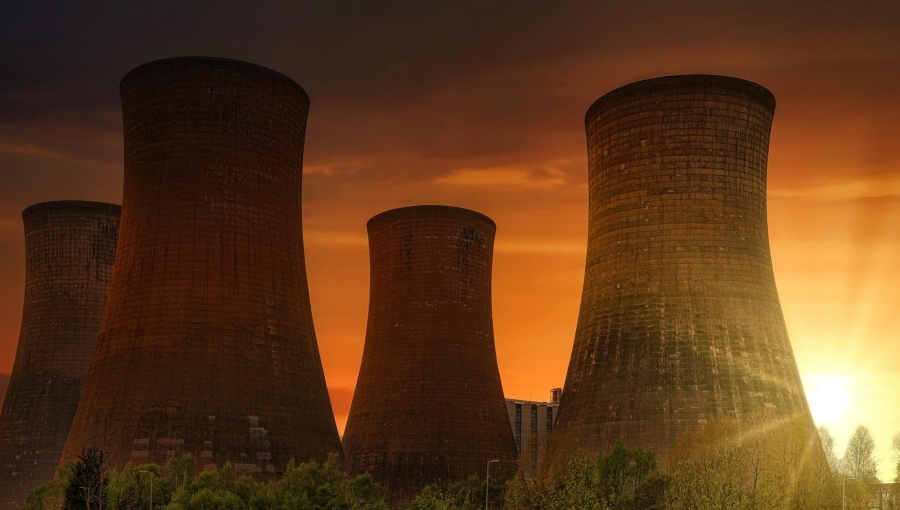
In May, Bangladesh’s first nuclear power plant moved a step closer to confirming power generation after fuel loading was completed at the first unit of the Rooppur Nuclear Power Plant. The plant is located about 160 kilometres from Dhaka. Construction of Unit 1 started in November 2017, while work on Unit 2 commenced in July 2018. The plant is now likely to come online in 2028.
As Bangladesh moves closer to attaining the status of a nuclear power-generating country, policymakers have begun weighing the option of setting up Small Modular Reactors (SMRs) or adding two more large reactors to the energy portfolio. However, according to Md Shafiqul Islam, professor of nuclear engineering at the University of Dhaka, the ambition is understandable but the timing demands far greater caution.
Writing an opinion piece in The Daily Star, a local Bangladeshi publication, Islam says that four key issues make an immediate SMR commitment premature. The first is quite simply Bangladesh’s lack of experience in operating a nuclear power plant. Building the skilled workforce and operational management needed to ensure the safe operation of a nuclear power plant is a long-term process that takes years. The second issue, according to Islam, is the lack of capacity to set up licensing and regulatory frameworks by the relatively young Bangladesh Atomic Energy Regulatory Authority (BAERA). SMRs are a special class of advanced nuclear technologies and require specific safety evaluations, regulatory approvals and inspection procedures, Islam says.
The third issue and pehaps most obvious is that of the limited number of commercially operational SMRs worldwide as only two are functional out of over 72 SMR designs under development. Most of these SMRs have not even secured a regulatory green light from their domestic nuclear regulators. The fourth is vendor selection complexity, whereby Dhaka will need to choose what technology to deploy, and to manage radioactive waste and geopolitical risk in the current international landscape.
A three-stage roadmap
Islam makes it clear that he is not arguing against SMRs outright, but is advocating a structured approach. According to the IAEA milestone approach, a nuclear programme requires a minimum 10 to 15 years of structured development to attain maturity. Islam says that at present, Bangladesh is in the very initial stages of this nuclear journey.
To begin with, Dhaka needs to successfully commission both units of the Rooppur power project and run it successfully for at least three to five years. This will help Bangladesh in acquiring operational and regulatory know-how. At the same time, concerted efforts are required to strengthen the regulatory body to bring it up to par with global standards. The South Asian country also needs to nurture fresh nuclear engineers and regulatory specialists.
Once these measures are in place, Bangladesh should then, but only then, move ahead with setting up two additional large reactors of 1,000 MW each as the third and fourth units of the Rooppur plant. Islam believes that the two units that are under construction alone will not solve Bangladesh’s energy deficit.
Also, expanding the power plant to four units will unlock economies of scale that maximise the long-term profitability of the initial $14bn investment. All four units can share the existing infrastructure like cooling systems, transmission lines and a trained workforce, which should result in a substantial reduction in per-unit costs. However, Dhaka should also be aiming to look beyond using just a single supplier to hedge geopolitical risks.
SMR’s come into the picture only in the third stage. However, this option should only be explored when the technology has matured, supply chains have been established and a robust regulatory system is in place.
Islam says that though SMRs are only the final option, Bangladesh should begin work in parallel on feasibility studies, global partnerships, technology assessment and specific workforce so that the country is ready when all the conditions are in place.
As a new generation of nuclear reactors that are much smaller than traditional nuclear plants, they are easy to build and easy to deploy. SMRs typically generate up to 300 MW of power as against 1,000 MW generated by a traditional nuclear power plant. Some of the advantages of SMRs include lower capital costs, faster construction and the theory that they can replace aging coal-based or gas-based power plants.
Once deployed, distributed SMR networks could then help to replace aging fossil fuel facilities, provide dependable electricity to remote coastal areas and deliver stable baseload power to export processing zones.
From the point of view of Bangladesh’s long-term energy requirements, there is a need to shift away from imported fossil fuels towards domestically produced clean energy. According to Islam, large nuclear reactors today and SMRs in the future must be central to the country’s energy planning.
Bangladesh will be best placed to realise the full benefits of nuclear energy by first operating Rooppur Units 1 and 2 successfully, strengthening its institutions, training technical personnel and building a robust regulatory framework. Energy security cannot be achieved overnight; it requires a deliberate, phased strategy and sustained commitment in Bangladesh, just as anywhere else.

No comments:
Post a Comment