The Pentagon’s estimate varies drastically from the $30 billion figure stated publicly by the Trump administration.
By Sharon Zhang ,
Published
July 15, 2026
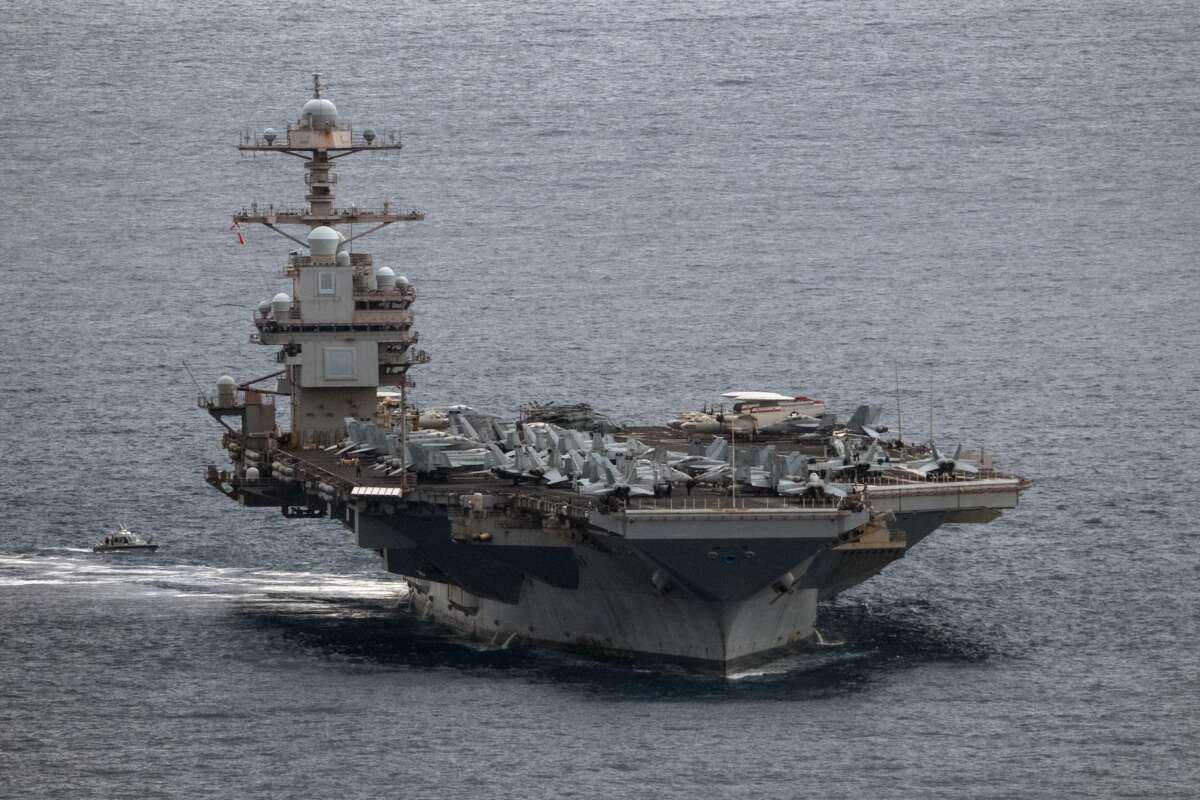
The United Stated Navy aircraft carrier USS Gerald R. Ford arrives in Souda Bay on March 23, 2026 in Souda, Greece. The USS Gerald R. Ford is undergoing repairs at Naval Support Activity Souda Bay on the Greek island of Crete, following a fire that reportedly broke out in a laundry room on the aircraft carrier earlier this month, injuring some sailors and causing significant damage. The vessel has also had issues with its toilet system.Carl Court / Getty Images
The U.S.-Israeli war on Iran has already cost the U.S. up to $100 billion, the Trump administration has internally estimated — over three times higher than the Trump administration’s public estimates of the price tag.
Citing six people familiar with internal estimates, including three U.S. officials, NBC reports that the Pentagon has estimated that the costs of the historically unpopular war fall between $80 billion and $100 billion when additional operational costs and the price to replace destroyed aircraft and other equipment is factored in.
Rebuilding the U.S. Naval Forces Central Command (NAVCENT) base in Bahrain, for instance, could cost nearly $1 billion after Iranian strikes earlier this year caused extensive damage to the facilities. The base serves as the Navy’s headquarters in the Middle East, and the facilities housing the headquarters as well as piers, warehouses, and military housing require hundreds of millions of dollars in repairs, sources said.
These costs may increase as Iran has now restarted attacks on U.S. military sites across the Middle East in response to U.S. President Donald Trump’s unilateral declaration that the ceasefire is over.
Just two weeks ago, however, Office of Management and Budget Director Russell Vought told House lawmakers that the conflict has cost “about $30 billion,” citing figures from the Pentagon. This is despite the fact that the Pentagon’s comptroller, Jay Hurst, gave Congress that same figure on May 12, when he said that the war had cost $29 billion so far.
Vought did not provide any explanation for why that figure was nearly unchanged despite almost six weeks of war between the two cost estimates. Just a week before his testimony, the White House requested $88 billion in supplemental funding from Congress, including roughly $72 billion in funding related to the war.
Throughout the war, the U.S. has been obfuscating the damage to U.S. assets done by Iranian forces, making it difficult for external sources to fact check the administration’s claims on costs. Trump administration officials have also been severely downplaying the costs of operations for the war, or seemingly omitting them altogether in estimates, as sources told NBC.
However, the $100 billion figure roughly lines up with other independent estimates. Researcher Stephen Semler calculated last week that the war had cost over $103 billion thus far — higher than the annual military budgets of all but three countries in the world, Semler noted.
This includes $47 billion in weapons costs, $29 billion for operations, and $20 billion for destroyed assets, he estimated. Another $3 billion has been spent on subsidies for Israel’s bombs and interceptors, and $5 billion in other war-related costs for other U.S. agencies, he found.
Semler noted that the Trump administration has become “increasingly brazen in lying about the war’s cost,” and that Vought’s $30 billion figure was “parody-level.”
Meanwhile, the war has cost American consumers an additional $69 billion as a result of the rise in gas and diesel prices caused by the closure of the Strait of Hormuz amid the war.
The U.S.-Israeli war on Iran has already cost the U.S. up to $100 billion, the Trump administration has internally estimated — over three times higher than the Trump administration’s public estimates of the price tag.
Citing six people familiar with internal estimates, including three U.S. officials, NBC reports that the Pentagon has estimated that the costs of the historically unpopular war fall between $80 billion and $100 billion when additional operational costs and the price to replace destroyed aircraft and other equipment is factored in.
Rebuilding the U.S. Naval Forces Central Command (NAVCENT) base in Bahrain, for instance, could cost nearly $1 billion after Iranian strikes earlier this year caused extensive damage to the facilities. The base serves as the Navy’s headquarters in the Middle East, and the facilities housing the headquarters as well as piers, warehouses, and military housing require hundreds of millions of dollars in repairs, sources said.
These costs may increase as Iran has now restarted attacks on U.S. military sites across the Middle East in response to U.S. President Donald Trump’s unilateral declaration that the ceasefire is over.
Just two weeks ago, however, Office of Management and Budget Director Russell Vought told House lawmakers that the conflict has cost “about $30 billion,” citing figures from the Pentagon. This is despite the fact that the Pentagon’s comptroller, Jay Hurst, gave Congress that same figure on May 12, when he said that the war had cost $29 billion so far.
Vought did not provide any explanation for why that figure was nearly unchanged despite almost six weeks of war between the two cost estimates. Just a week before his testimony, the White House requested $88 billion in supplemental funding from Congress, including roughly $72 billion in funding related to the war.
Throughout the war, the U.S. has been obfuscating the damage to U.S. assets done by Iranian forces, making it difficult for external sources to fact check the administration’s claims on costs. Trump administration officials have also been severely downplaying the costs of operations for the war, or seemingly omitting them altogether in estimates, as sources told NBC.
However, the $100 billion figure roughly lines up with other independent estimates. Researcher Stephen Semler calculated last week that the war had cost over $103 billion thus far — higher than the annual military budgets of all but three countries in the world, Semler noted.
This includes $47 billion in weapons costs, $29 billion for operations, and $20 billion for destroyed assets, he estimated. Another $3 billion has been spent on subsidies for Israel’s bombs and interceptors, and $5 billion in other war-related costs for other U.S. agencies, he found.
Semler noted that the Trump administration has become “increasingly brazen in lying about the war’s cost,” and that Vought’s $30 billion figure was “parody-level.”
Meanwhile, the war has cost American consumers an additional $69 billion as a result of the rise in gas and diesel prices caused by the closure of the Strait of Hormuz amid the war.

No comments:
Post a Comment