Sunday, February 16, 2020

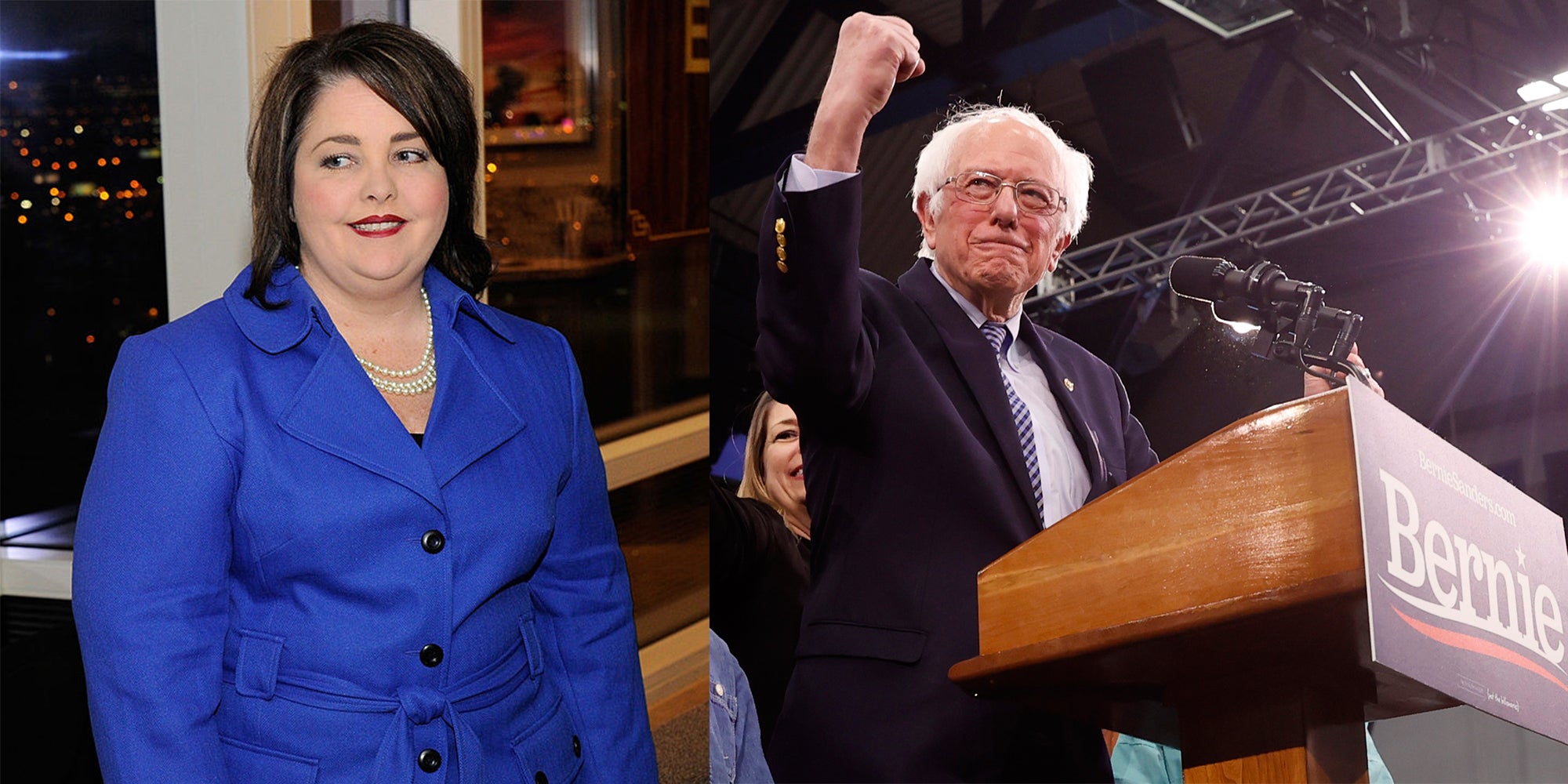
Pro-Trump parents suggest locking down children's bank accounts to stop them donating to Sanders

Picture: Ethan Miller/Getty Images/MIKE SEGAR/Reuters

A pro-Trump activist is urging parents to lock their children's bank accounts to prevent them from donating to Bernie Sanders' campaign to become president. 

Amy Kremer is a conservative activist who has links to the Tea Party movement and is the chair of Women for America First (a Trump-supporting organisation) and the co-founder for Women for Trump.

With the 2020 election just over the horizon, she is already in campaign mode and clearly doesn't want the president to face Bernie Sanders in the race. 

In a tweet that she posted on Friday, Kremer called on parents to 'lock down' their children's bank accounts over fears that they might respond to one of Sanders' requests for a small donation of money.

According to her, Sanders has been emailing the younger offspring of Trump supporters, asking for just $2.70 towards his campaign, which is obviously an unthinkable atrocity, especially after her best friend caught her son committing such an act against the POTUS.

Kremer then shared another screenshot of an email sent by the Sanders team on Friday asking for the same amount of money 'in the name of fairness.'

As you can imagine, this tweet has backfired on Kremer, with many people explaining to her that this is exactly why younger voters are turning to candidates like Sanders, with many adding that they have chosen to increase their donations to Sanders after seeing her tweet. 


Believe it or not, the Deepwater Horizon oil spill was even worse than previously thought

Chris Graythen / Getty Images  SURFACE SLICK

By Emily Pontecorvo on Feb 14, 2020

After the Deepwater Horizon explosion in the spring of 2010, oil poured into the Gulf of Mexico for nearly three months straight, resulting in the worst offshore oil spill in U.S. history. More than 200 million gallons of light crude flowed into the sea, devastating marine life and fisheries.

Ten years later, scientists are still uncovering new facets of the disaster and its aftermath. A study published Wednesday from researchers at the University of Miami found that fisheries closed by federal and state agencies after the spill only accounted for about 70 percent of the actual extent of the toxicity that emanated from the drilling platform. The closures were based on satellite images of so-called surface slick — the visible oil on the surface of the water. This metric was ultimately not sensitive enough to capture lower concentrations of oil that nevertheless were still harmful to animals.

“It’s a pretty interesting finding, and it shows that the surface slick is not a sufficient indicator of the real footprint of where the damage is occurring,” said Cameron Ainsworth, a fisheries oceanographer at the University of South Florida who was not involved in the study but has collaborated with its authors on related research.

Igal Berenshtein, a postdoctoral fellow at the University of Miami and lead author of the new study, said he originally set out to look at the effect of fishery closures on communities in the Gulf. One of the first things he did was run a model that his advisor, Claire Paris-Limouzy, developed that mapped where oil would have travelled after the spill, based on the specific conditions in the Gulf at the time. When he compared that map to the fishery closures, the results were intriguing: The model showed that oil likely traveled well beyond the bounds of the fishery closures.

When Berenshtein pored over past studies, the literature confirmed that oil had in fact been detected as far as the waters off the west coast of Florida, the Florida Keys, and Texas. That led to the question: Was the oil that spread beyond the fishery closures in high enough concentrations to be toxic to plant and animal life? And if so, what was the line between the toxic oil that satellites could detect, and the “invisible” but still toxic oil that they couldn’t?

One of the reasons for the discrepancy is the way that “toxicity” was being measured by fishery managers. “Until recently, the estimated satellite detection threshold was roughly equal to the estimated level of concern,” the paper’s authors write. But recent studies have found that organisms can be harmed at much lower concentrations due to a phenomenon called photo-induced toxicity.

After the spill, as oil floated around in the Gulf, it was exposed to ultraviolet radiation from the sun. When UV light interacts with the hydrocarbons in oil, it can produce new chemical compounds that can be more dangerous than the oil itself — especially to fish larvae and other young creatures. When the authors took this effect into account, they found that the oil concentration capable of killing many Gulf species is lower than what satellites can detect.

While satellite captures will remain essential for these kinds of calculations, according to Berenshtein, the study presents an additional framework that emergency managers can use to measure and account for the oil that’s “invisible” to satellites but still toxic to marine life. Accurate assessments of offshore drilling risk — and the effectiveness of emergency action after deadly spills — may benefit from the added precision this method can provide.
END OF AN ERA

It’s official: Federal judge shuts down the largest oil refinery on the East Coast

Grist / Ricky Carioti / The Washington Post via Getty Images

A federal judge finally confirmed the Chapter 11 bankruptcy plan of Philadelphia Energy Solutions (PES) on Thursday. The plan includes the sale of PES’s 1,300-acre refinery complex to a real estate company — putting an end to the largest oil refining operation on the East Coast.
A month earlier, dozens of Philadelphia-based climate activists made a trek to New York City to protest outside the building where a closed-door auction to sell the refinery site was being held. The activists hoped to prevent the site from being sold to a bidder with plans to keep the site running as a refinery. The following week, their wish seemed to have come true: Hilco Redevelopment Partners, a Chicago-based real estate company with a track record of turning defunct fossil fuel infrastructure into logistics centers, was the selected winner. For a moment, the future of the site looked bright. All that was left was approval from the bankruptcy court.
But the other bidders didn’t give up so easily. Industrial Realty Group (IRG), which had made a higher bid than Hilco, teamed up with Phil Rinaldi, the former chief executive of PES, to try to get the results of the auction voided so that IRG could continue running the site as a refinery. With the support of union leaders representing former refinery workers, Rinaldi urged the White House to get involved, arguing that more than a thousand jobs and national security interests were at stake. Peter Navarro, the assistant to President Trump for trade and manufacturing policy, openly backed IRG’s plan, telling the Philadelphia Inquirer, “We’d love to see that remain as a refinery.”
U.S. Bankruptcy Judge Kevin Gross had a tough decision to make. Last week, the Delaware judge delayed the confirmation hearing to give stakeholders more time to object to the plan. But on Thursday, he officially signed off on the plan. “I’m very much satisfied that the sale to Hilco is the highest bid and sale,” Judge Gross said. “Clearly is in the best interest of the community as well, given the risks that were attended to the prior operations with the refinery, and a refinery frankly that had numerous and repeated problems over the years.”
As a result of yesterday’s hearing, Hilco is now set to buy the plot of land for $252 million, $12 million more than what was initially agreed upon. The final bankruptcy plan also includes $5 million in severance for laid-off refinery workers, as part of a larger settlement for all the refinery’s unsecured creditors. In addition, the plan will also pay PES executives as much as $20 million in bonuses on top of the millions of dollars in bonuses paid to them right after the refinery exploded last June.
Since the explosion, Philly Thrive — the grassroots environmental justice group that organized the protest of the auction — ramped up its efforts to organize and rally against the refinery for threatening public health. The group held several protests in front of the refinery, hosted call banks, wrote testimonies, and occupied government-owned buildings. Meanwhile, a report released last week found that the PES refinery, which processed 335,000 barrels of crude oil each day, released the highest levels of cancer-causing benzene pollution of any refinery in the country.
“Some people can’t afford to get up and move,” South Philadelphia resident Carol White, who lives about a mile away from the refinery and is also a member of Philly Thrive, told Grist after the June explosion. “There are older people living here inhaling fumes, newborn babies, kids under five, and ultimately, it’s impacted people of color.”
Philly Thrive’s months-long fight to end the refinery — along with its years-long fight to breathe clean air — have paid off. The PES refinery will now be permanently shut down and most likely be redeveloped as a mixed-use property. But the group said it’s not an end to the fight, and it looks forward to working with Hilco in determining the future of the land.
“Thrive members are already seeing and planning for the next fight ahead of us, including holding Hilco to a process of involving the public around redevelopment, taking on measures to get whatever justice we can around the benzene emissions, and also linking up with efforts around a Green New Deal,” Philly Thrive organizer Alexa Ross told Grist. “This is not the end of the fight.”

Trump’s biggest vulnerability is his climate change denial


Chip Somodevilla / Getty Images
DENIER-IN-CHIEF

Trump’s biggest vulnerability is his climate change denial

This story was originally published by Mother Jones and is reproduced here as part of the Climate Desk collaboration.
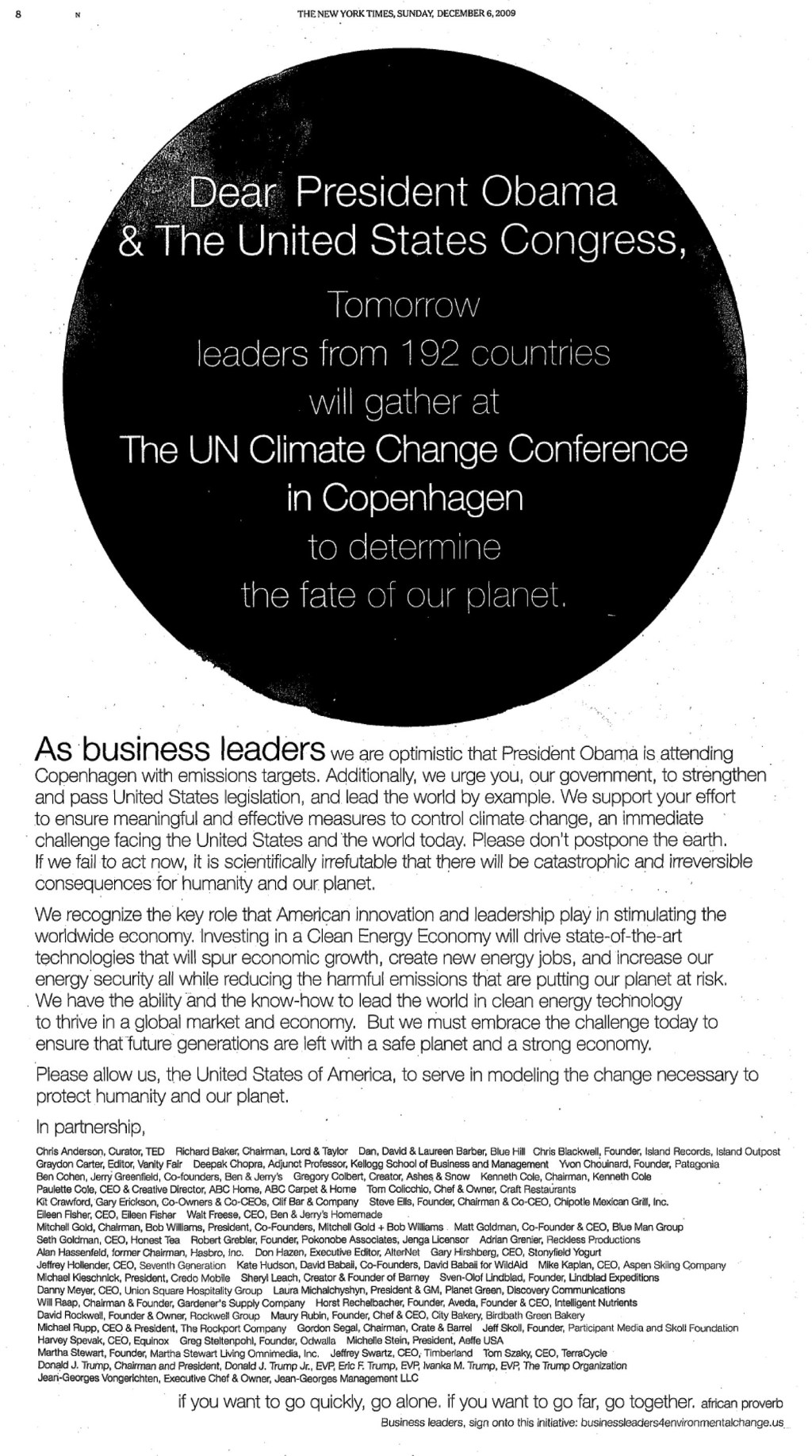
A little more than 10 years ago, Donald Trump and his children signed a letter that ran as a full-page ad in the New York TimesIn it, they urged global leaders to reach an ambitious climate change deal at the annual United Nations conference.
The position didn’t hold. Months later, Trump said he thought Al Gore should be stripped of his Nobel Prize because of an unusually cold winter. Since then, Trump has tried on many different excuses for ignoring climate change, from calling it an outright hoax on Twitter to claiming in an Axios interview that it’s part of a natural cycle that will “go back like this,” he said, making an ocean-wave gesture with his hand.
But most Americans don’t agree with that assessment. For the last year, there’s been a clear trend in polls finding that climate change is Trump’s most unpopular position, outranking health care, immigration, and foreign policy as the issue he gets the worst marks on from registered voters.
Politico/Morning Consult poll released in late January — smack in the middle of the impeachment trial — asked 2,000 voters about Trump’s performance on a number of issues ranging from jobs, economy, and terrorism to trade, climate, immigration, foreign relations, health care, and draining the swamp. They were the least impressed with climate: More than half — 54 percent — gave Trump a D or F, while just 21 percent gave him an A or B.
Then there was an August survey from the Associated Press-NORC Center for Public Affairs. The research group found that 64 percent of the 1,058 people included disapproved of his record on climate, while 32 percent approved — “the lowest among six issue areas that the poll asked about, including immigration (38 percent) and health care (37 percent),” the AP reported. And in July a poll by the Washington Post-ABC News poll found Trump’s lowest rating was on climate: Just 29 percent approving, with 62 percent disapproving, the widest spread in the poll.
The problem with this kind of polling is that the issue is widely polarized, so while climate change is a top-tier issue for Democratic primary voters, it ranks far lower in importance for Republicans. In swing states, it’s unclear whether climate will turn out voters.
In Florida, it just might. In October, Florida Atlantic University polled 1,045 Floridians on whether they believed climate change was real and primarily caused by human activities. Among Republicans, 44 percent agreed. That figure wasn’t as high as independents and Democrats who agreed — 59 and 70 percent respectively — but still a significant percentage for a party led by outspoken deniers.
Another poll in North Carolina in 2018 showed a spike in Republican voters’ concern about climate change following back-to-back direct hits hurricanes. The American Conservation Coalition, a group representing younger conservatives, has done its own polling of 1,000 voters nationwide under age 35 — 77 percent of whom said climate change was important to them and that they want to see more solutions from their party.
It’s getting harder for Trump to ignore the loudening chorus of conservative voices calling for climate action — and he and his advisers have taken notice, however halfheartedly. He held an event at the White House this summer touting his love for clean air and water, despite the revolving door of energy lobbyists rolling back environmental regulation and enforcement. Now, on the heels of impeachment, Trump has pledged US support of an initiative to plant 1 trillion trees globally.
His critics say it’s an empty gesture, noting his 95 and counting environmental rollbacks and opening of lands like Alaska’s Tongass National Forest and the Arctic National Wildlife Refuge. “The same man who is proposing to cut down the Tongass National Forest wants to plant a trillion trees,” said Center for American Progress Senior Policy Analyst Ryan Richards. “He can’t have it both ways.”

10-year-old Bangladeshi’s communication app creates buzz

Bangladeshi boy Ayman Al-Anam with his new communication app ‘Lita Free Video Calls and Chat.’ (Photo courtesy: Tauhedush Salam Nishad)

Short Url https://arab.news/5zqvp

Updated 20 January 2020
SHEHAB SUMON


“I thought we should have something of our own, which inspired me to start working on my communication app”: Ayman Al-Anam

DHAKA: A Bangladeshi fifth-grader’s new communication app — Lita Free Video Calls and Chat — has created a huge buzz among local internet users. Already, 10,500 people have downloaded the app from the Google Play Store since Saturday.

A
yman Al-Anam submitted the app to Google on Dec. 27. After scrutiny and manual verification, Google uploaded the app on its Play Store on Dec. 31.

“Currently, Bangladeshi internet users are mostly dependent on apps like WhatsApp, Viber and Imo for communication overseas,” Al-Anam told Arab News.

“I thought we should have something of our own, which inspired me to start working on my communication app.”

It took the 10-year-old 10 months to create the app, which he said he accomplished by himself, without the help of any mentor. “I learned the process through different YouTube tutorials. The rest was just trial and error,” he added.

The app provides better-quality, high-definition video calls to its users. It also works for transferring big data in a shorter amount of time compared to similar apps.

Al-Anam’s success at such an early age has surprised his parents. “From a very early age, my son had a knack for technology, and I encouraged him to pursue it. He used to spend his free time in front of computers, smartphones and other devices,” said proud father Tauhedush Salam Nishad. “I always supported him, but I never dreamed that he’d see this sort of success so young.”

Recalling the first successful test run of the new app, Nishad said: “One night, I returned home from work and Ayman took my smartphone and installed the raw file of the app. Later, he did the same with his mother’s phone and connected the two devices with a video call. It was the best moment in his life. He shouted with joy, ‘I did it!’”

Al-Anam named the app after his mother Lita. The young inventor is currently studying at South Point School and College in Chattogram, 248 km from the capital. He dreams of becoming a software engineer and wants to work at Google headquarters.

His creation has drawn much attention from local experts. “We should nurture this sort of extraordinary talent very carefully,” Prof. Mohammad Kaikobad of the Bangladesh University of Engineering and Technology told Arab News.

“This new generation will lead the technology world of tomorrow if they’re guided and encouraged properly.”
Banksy’s Valentine’s Day mural covered after it was defaced


Passers-by take photographs of a Banksy mural showing the stenciled image of a young girl firing a slingshot of flowers and leaves on the wall of a building in Bristol on February 14, 2020. (AFP)

AP
February 16, 2020

The elusive artist confirmed the mural as his creation on his official Instagram account on February 14


LONDON: The family who owns a house in southwest England where an artwork from Banksy appeared in time for Valentine’s Day has covered the mural after it was defaced.
Temporary fencing was also added Saturday to the home in Bristol and closed-circuit television has been installed to protect the artwork, which shows a young girl firing red flowers from a catapult.

The elusive artist confirmed the mural as his creation on his official Instagram account on Feb. 14. It was later defaced with an expletive.

Kelly Woodruff, the daughter of Edwin Simons, who owns the rented home on which the artwork appeared, said the family felt a “strong responsibility” to ensure that the artwork could be enjoyed by the general public.

“Due to the mindless vandalism to the artwork, the family have taken the very difficult decision to cover the artwork to try to protect it,” she said. “All measures are temporary and we ask that the public are patient while we work out the best way to clean the damage, restore and protect it for the future, so everyone can enjoy Banksy’s work.”

---30---
How Aramco fueled Saudi-US ties
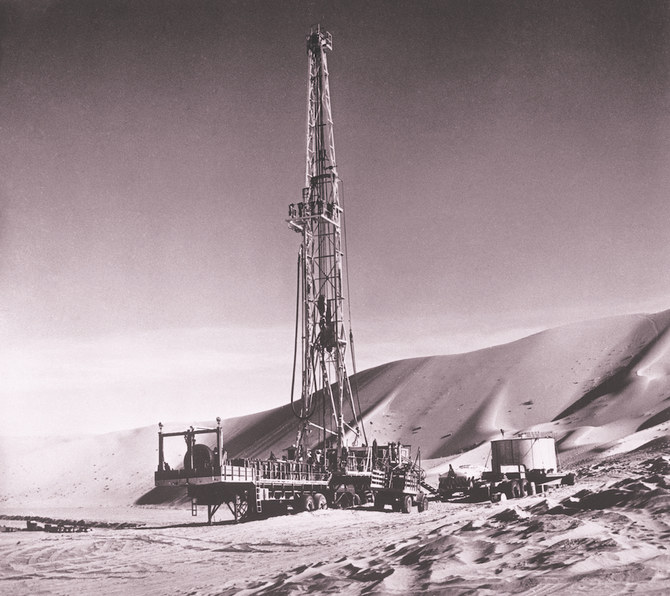

A drilling rig operated by the Arabian American Oil Company in 1955. (©Evans/Three Lions/Getty)

The oil company has been at the heart of the two countries’ partnership from the beginning
The vast amounts of crude discovered in the Kingdom were top of the agenda when President Franklin D. Roosevelt met with King Abdul Aziz

DUBAI: From “mother’s apple pie”-style homes in the deserts of the Eastern Province to gigantic refineries in Texas, Saudi Aramco has been at the heart of the 75-year-old partnership between the US and the Kingdom.


In fact, it preceded it. Ever since Oregon-born geologist Max Steineke teamed up with Bedouin guide Khamis bin Rimthan to find oil at Dammam Well No. 7 near Dhahran in 1938, the oil industry has played a major role in advancing the Saudi-US relationship.

Global oil supplies, and the vast amounts of crude that had been discovered in the Kingdom, were top of the agenda when President Franklin D. Roosevelt met with King Abdul Aziz on board the USS Quincy in 1945. “Oil was very much on Roosevelt’s mind,” wrote American analyst Bruce Riedel in his study of top-level US-Saudi relations, “Kings and Presidents.” He added: “It was also on the King’s mind.”

The relationship has inevitably changed over the decades, as the Kingdom learned from its American mentor and ultimately decided to take full control of its most precious resource, notably in the buy-out of the original American owners of Aramco in the 1970s, and the “oil ice shocks” of that and subsequent decades.

The relationship is changing again, with the emergence of the American shale industry as arguably the single most important development in international energy markets over the past 10 years. But the ties between Aramco and the US go deep, and are likely to outlast any short-term considerations of crude prices or supply agreements.

Aramco employs thousands of staff in the US, at research and technology centers in Houston, Detroit and Boston, as well as at the New York corporate headquarters. It owns and operates the Motiva refinery and petrochemicals facility on the coast of the Gulf of Mexico, the biggest such plant in North America. Despite US energy self-sufficiency, Aramco still exports significant quantities of its high-quality crude oil to America.

Many Aramco executives were educated at American colleges and universities. The management systems at the Saudi headquarters in Dhahran — among the most modern and sophisticated in the Kingdom — owe much to US standards developed during Aramco’s formative years.

After Steineke and Bin Rimthan found crude in commercial quantities, and World War II highlighted the need for secure and dependable oil sources, the meeting on the USS Quincy set the seal on the US-Saudi partnership for the next two decades

American oil engineers and their families arrived in the Eastern Province to work on the fields there, and were allowed a degree of home comforts virtually unheard of in the Kingdom at that time. The US community in Dhahran grew into an expatriate oasis, with freer dress codes and Western forms of entertainment such as Hollywood cinema and American baseball.

The “Camp” in Dhahran still exists, though it is no longer an American enclave. Now it is regarded as desirable accommodation by the “Aramcons,” the company’s Saudi workers. But it still has a feeling of “Smallville USA” about it, with porches and barbecues very much in evidence as well as US medical and other facilities.

Another clue to Aramco’s US lineage lies in the name. The Arabian-American Oil Co. was the successor to the Standard Oil Co. of California, the firm that had hired Steineke and Bin Rimthan in the first place, and which by the 1950s was a member of a consortium of the biggest US oil firms that owned Aramco, producing and exporting its crude via a concession agreement with the Saudi government.

When in 1957 the Ghawar Field was discovered, it set the seal on Aramco’s dominance of regional and global oil supply. The Americans called Ghawar “the field of dreams.” As US energy expert Ellen Wald wrote in her recent book “Saudi, Inc.”, “Aramco began as an American corporation established simply to drill for crude oil in Saudi Arabia, but within a single generation the Americans and the Saudis transformed it into a global energy conglomerate.”

By the 1970s the world had changed, and the Saudis felt they had learned enough about the energy business to go it alone. This was also the age of rising Arab nationalism, when many oil-exporting countries in the region began to nationalize their oil industries, often abruptly and without compensation, leading to a series of geopolitical confrontations with Western corporations and their governments.

In Saudi Arabia, the process was different. Instead of nationalization, the Kingdom discussed “participation” with the American owners of Aramco. In the course of the decade, the company was purchased by the Saudi government from its American owners, who were happy to get some financial return for their years of investment, though the price of the full purchase has never been disclosed.

Daniel Yergin, a prize-winning historian of the global oil industry, wrote in his book “The Prize” that the president of Exxon — one of Aramco’s owners — expected “more stable future relationships” from the “participation” agreements.

As “participation” in Aramco grew in the 1970s, so did Saudi self-confidence, especially on the price at which they could sell their product. In a series of oil “shocks” over the next few years, the Organization of the Petroleum Exporting Countries (OPEC) — in which the Kingdom played a leading role as the biggest producer — raised the price of a barrel of oil substantially.

“Oil was now clearly too important to be left to the oil men,” wrote Yergin. Most observers thought that some balance had been reasserted in global energy markets between producers and consumers, who had been benefiting from cheap oil for decades.

Over the past three decades, oil, and Aramco’s leading position in the global industry, have continued to set a pattern for US-Saudi relations. The two Gulf wars against Iraq were to a large degree motivated by the US desire to maintain security of output from its biggest crude supplier.

How it plays out in the new dynamic of the shale era — when America is much less dependent on oil from Saudi Arabia — remains to be seen. But Aramco’s role in the US-Saudi partnership has left a lasting legacy, and will continue to influence the relationship between kings and presidents.


Thyssenkrupp-Kone elevator merger ‘would trigger legal war’ Schindler 
CPPIB IS AN INVESTOR SO IS BROOKFIELD MANAGEMENT 
ThyssenKrupp elevators at its headquarters in Essen,
 western Germany. Thyssenkrupp went deeper into the 
red in its 2018-19 fiscal year. (AFP)

Updated 14 February 2020
REUTERS

Abu Dhabi sovereign fund consortium also said to be in running for company


FRANKFURT: Swiss elevator maker Schindler would embark on an all-out antitrust offensive in the courts to stall any deal to combine Thyssenkrupp’s lift division with rival Kone, board member Alfred Schindler told Reuters.

His comments came a day after the deadline for bids for Thyssenkrupp Elevator, with Finland’s Kone and three private equity consortia vying to buy it in a deal sources say could be worth up to $18.6 billion.

A Kone-Thyssenkrupp Elevator merger would create the world’s biggest lift maker, leapfrogging market leader Otis, and Schindler in second place.
“We would probably file lawsuits in Europe, the United States, Canada, China and possibly Australia. These cases would take at least three to four years,” said Schindler, who is now chairman emeritus of the company he ran for 26 years. He said that other rivals would probably take legal action too: “You can safely assume that neither Otis nor Schindler will simply accept being driven out.”

Thyssenkrupp and Otis declined to comment. A Kone spokeswoman said it believed there was room for consolidation in the sector. Shares in Kone fell as much as 3.9 percent after Schindler’s comments while Thyssenkrupp rose slightly.

Once a symbol of Germany’s industrial power, Thyssenkrupp is struggling with €12.4 billion (13.5 billion) of debt and pension liabilities after years of ill-fated investments, and needs to raise money from its prized elevator division to restructure. Thyssenkrupp’s supervisory board is due to meet on Feb. 27 and a decision on the fate of the elevator business could be made then, two people familiar with the matter said.

Besides selling all or part of the business, Thyssenkrupp is considering an initial public offering, though sources said this option was less likely. Solely based on bids, Kone and a consortium of Blackstone, Carlyle and the Canada Pension Plan Investment Board look best-placed to reach the final round but no decision has been made, the people said.


Kone has made a non-binding bid of €17 billion while the consortium has offered about €16 billion. It was not clear whether Kone had improved its earlier offer. A consortium comprising Advent, Cinven and the Abu Dhabi Investment Authority and an alliance between Canada’s Brookfield and Singapore’s Temasek are also in the running, sources have said.
While a sale to Kone would probably raise the most cash for Thyssenkrupp, the beleaguered conglomerate is concerned it could trigger antitrust investigations where the combined company would be a major player, such as Europe and the US. “Such a hypothetical takeover would . . . have considerable effects on the structure of the relevant markets and most likely lead to significant negative impacts on effective competition in many markets,” a DICE Consult report said.

Kone has drawn up plans to hand Thyssenkrupp’s European assets to private equity firm CVC but the European Commission typically prefers industrial buyers that can compete better with the firm offloading assets.

Trump’s $1.5bn uranium bailout triggers rush of mining plans
BY A CANADIAN MINING COMPANY

The Trump administration says it wants to break an over-reliance
 on cheap foreign uranium imports that undermines US energy security. (AP)

Updated 15 February 2020
AP

Administration alarm over energy security prompts moves to prop up production


SALT LAKE CITY: President Donald Trump’s $1.5 billion proposal to prop up the country’s nuclear fuel industry has emboldened at least one company to take steps toward boosting operations at dormant uranium mines around the West,  outside Grand Canyon National Park.
including

The company, Canada-based Energy Fuels Inc., announced a stock sale late on Thursday and said it would use the proceeds for its uranium mining operations in the US West.

The Trump administration asked Congress this week for $1.5 billion over 10 years to create a new national stockpile of US-mined uranium, saying that propping up US uranium production in the face of cheaper imports is a matter of vital energy security. Approval is far from certain in a highly partisan Congress.

Some Democratic lawmakers, and market analysts across the political spectrum, charge that the Trump administration’s overall aim is really about helping a few uranium companies that can’t compete in the global market, and their investors.


Demand for the nuclear fuel has languished worldwide since Japan’s 2011 Fukushima disaster. US uranium production has plummeted 96 percent in the last five years, the US Energy Information Administration reported on Thursday.

Energy Fuels Inc., a Toronto-based corporation that is the leading uranium mining company in the US, announced it was selling stock and putting the nearly $17 million in proceeds into its mining operations in Utah, Wyoming, Arizona, Texas and elsewhere in response to Trump’s 2021 budget. Company spokesman Curtis Moore said Friday that could mean opening a mine about 15 miles from the Grand Canyon’s South Rim entrance.
Environmentalists and Democrats have opposed uranium mining outside the national park, mainly over concerns it could contaminate water resources. Republicans say mining could bring much-needed jobs to the region.

Energy Fuels had been one of the main mining companies seeking US taxpayer support for domestic uranium mining. It also helped sell the Trump administration on cutting the size of Bears Ears National Monument in Utah to open more land for possible future mining, and oil and gas development.

Energy Fuels has no mining claims or land inside the former territory of Bears Ears, Moore said Friday. “So, that’s a hard no,” he said, to any suggestion it planned any immediate uranium development there.

Launching operations at the company’s Canyon Mine claim outside the Grand Canyon is definitely on the table, however, if Congress approves Trump’s proposal, he said.

“Depending on how things go in the coming weeks and months, we may be in a position to use some of the money to put that small mine into production,” Moore said.

Trump made the request for a new national uranium reserve in his 2021 budget request this week. It was the latest illustration that trying to rescue the US nuclear and coal industries is a political priority for the Republican president, who often invokes national security as justification.

The move has a range of critics.

“It’s not the responsibility of the taxpayer to bail out an industry, whether that’s uranium, solar, coal, what have you,” said Katie Tubb, a senior energy policy analyst at the conservative Washington Heritage Foundation.

The Energy Department said the plan would boost work for at least a couple of the US West’s nearly dormant uranium operations. Residents near another of the mines, in Utah, say they fear an increase in radioactive threats.


“Whatever Trump does, we’ll be standing our ground to let the people know that we’re not going to give up,” said Yolanda Badback, a resident of White Mesa, a town of about 200 people who are members of the Ute Mountain Ute Tribe near a uranium mill in southern Utah.

Trump’s plan would need approval from a highly partisan Congress. Rep. Raul Grijalva, an Arizona Democrat and chairman of the House Natural Resources Committee, has opposed Trump’s effort to make domestic uranium mining a strategic issue. His aides said they needed to see more details from the administration on the stockpile proposal.
Sen. John Barrasso, a Wyoming Republican and chairman of the Senate Environment and Public Works Committee, backed Trump’s proposal. “The United States should not be dependent on foreign imports of uranium. It is a risk to our national security,” Barrasso said in a statement.

Demand for nuclear and coal power sources has fallen against marketplace competition from ever-cheaper natural gas and renewable wind and solar. Trump has been unable to stop a string of coal and nuclear power plant closures.
The US nuclear industry has sought help from the Trump administration, including asking for taxpayer subsidies to promote use of US uranium. US nuclear power plants in 2018 got 90 percent of their uranium from Canada, Kazakhstan and other foreign suppliers and only 10% from US mines.
Trump in 2019 rejected a request from US uranium mining operators that he set a minimum quota for domestic uranium. But he agreed to set up a task force of national security, military and other federal officials to look for other ways to revive domestic production of the whole nuclear fuel supply chain.

That task force’s findings are expected within two weeks. Trump’s budget proposal would be part of an effort “to put the US back in the nuclear game around the world,” Energy Secretary Dan Brouillette said on Monday.

While Trump has called propping up US uranium mining essential to national security, the Energy Department acknowledged in its budget presentation that “no immediate national security need has been identified” for the uranium reserve. The same document contends that the funds aren’t meant to “disrupt market mechanisms.”

“That is exactly what it is designed to do,” said Luke J. Danielson, president of Colorado-based Sustainable Development Strategies Group, which advises foreign governments about mineral policies.

“The history of the government of trying to subsidize the energy sector and pick winners and losers is abysmal,” Danielson added.

Many Democratic lawmakers have challenged Trump’s security argument for domestic uranium. Existing uranium reserves and production and trade with allies Australia and Canada were already adequate to securing the US uranium supply, Rep. Alan Lowenthal, a California Democrat, said last year.


Energy Fuels called the Trump proposal “a good lifeline for the industry.” Moore, the spokesman, said the company is likely to benefit since it has operating mines in east-central Wyoming and southern Utah.

Moore said the program should lead to production of 2.5 million pounds of uranium per year. US uranium mines produced less than 174,000 pounds in 2019, according to Thursday’s Energy Information Administration report. That’s down from 4.9 million pounds in 2014.

Energy Fuels recently laid off nearly one-third of the company’s 79 employees at the White Mesa Mill and La Sal Complex mines, both in Utah, he said.

At White Mesa in Utah, Badback and other nearby residents participate in a yearly protest walk to draw attention to negative impacts the mine has on an otherwise wide open and remote stretch of land.


---30---


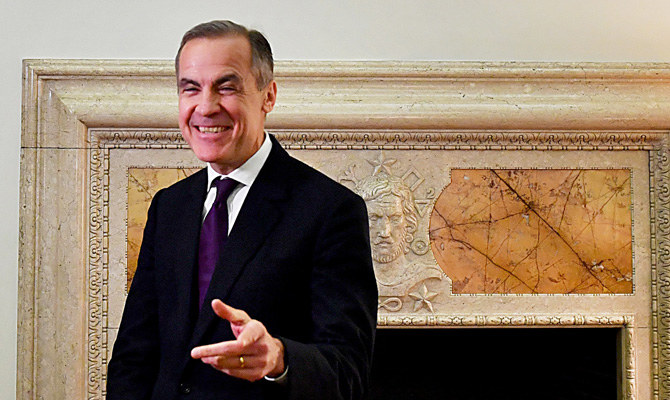
Bank of England’s Carney: Business must come clean quickly on climate

Mark Carney, Governor of the Bank of England, believes
 that major companies need to p

Updated 15 February 2020
REUTERS


LONDON: Bank of England Governor Mark Carney called on the world’s businesses to publish strategies for cutting carbon emissions and adopting cleaner power sources by November, when world leaders meet in Scotland for UN-led climate talks.

“It’s not just green assets and divestment campaigns or certain things are so brown or black. Every company ultimately has to have a plan for a transition and what the opportunities are and where the risks are,” Carney said.

“For Glasgow that must be well on the path. That that is the norm. That the question doesn’t even have to be asked because companies are answering that question as part of their strategy.

“And the answer is, it’s the transition, stupid,” he said, referencing a phrase coined by former US President Bill Clinton’s election strategist in reference to the US economy.

Carney was speaking to Reuters a month before he leaves his nearly seven-year posting at the helm of the UK’s central bank to take a new role as the UN envoy for climate.

The Canadian banker, who disarmed the British insurance industry in 2015 when, in a speech called “Tragedy of the Horizon,” he warned of their exposure to climate-related events, has been one of the most vocal public figures to push for better supervision and disclosure of climate risk.

The Task Force on Climate-related Financial Disclosures (TCFD), which he launched in 2015, has become a global standard that more than 1,000 companies, financial firms, governments and other organizations have adhered to.

But it remains voluntary, and it can be hard to compare and verify the claims of disclosures.

Hammering out a common set of global reference points on climate-related disclosures is seen by many as a crucial step to helping investors allocate capital more effectively.

Money would flow to those companies managing the risks — and therefore likely to perform better in the transition to a low-carbon economy — and away from those in danger of being impacted more severely.

Carney said November’s COP26 climate talks would also be a good deadline for regulators to map out how to make the TCFD framework compulsory.

“One of the things we will look at ahead at for the COP26 is ‘should we have pathways to make the TCFD mandatory?’ Not overnight, but through listing requirements or securities regulation disclosure standards,” he said.

Such an effort needs to be global, Carney added, encompassing regions laying out their own plans for cutting emissions. The EU recently announced a 1 trillion euro ($1.08 trillion) effort become carbon neutral by 2050, a strategy that includes introducing a new climate law by next month.

“It would be productive if other jurisdictions that potentially will have mandatory disclosure standards ... used more conventional routes than legislation, such as securities regulations or listing standards. Let’s have that conversation,” Carney said.

Carney could play an outsized role at November’s summit, especially in view of UK Prime Minister Boris Johnson’s government reshuffle on Thursday, which saw Chancellor of the Exchequer Sajid Javid resign.

Those who lost their job included energy minister Claire O’Neill, who had been named to lead the November talks in Glasgow. Alok Sharma was appointed to the position as her replacement.

Efforts by businesses, investors and financial institutions to disclose climate risk are gathering pace.

BlackRock, the world’s largest money manager with nearly $7 trillion in assets under management, said this month that it would take a tougher view of companies that were not properly disclosing their climate risk.

This week, BP set out one of the oil sector’s most ambitious targets for curbing carbon emissions, saying it would reduce its greenhouse gas emissions to net zero by 2050. The fossil fuel giant plans to give more details about the plan later this year.

“Last week, very few people would have said BP was Paris-aligned,” said Carney, referring to the 2015 global climate agreement, signed in the French capital. “They’ve jumped from toward back of the queue to the front of the queue.”