Tuesday, February 18, 2020

As sea levels rise, Venice fights to stay above the waterline

Claudio Lavanga, NBC News•February 16, 2020

VENICE, Italy — While climatologists use highly technical instruments and satellites to measure rise in global sea levels, Venetians suggest a much simpler method: just count the steps of centuries-old buildings that are now under water.

"When the palazzos on the Grand Canal were built around the 16th century, the main sea level was below the first step," Giovanni Cecconi, the president of the Venice Resilience Lab, tells NBC News.

"Nowadays, the water is about 3 feet over it. Divide that by 500 years, and you'll get an average sea rise of up to half a feet per century."

The whole city, Cecconi says, can be used as one beautiful ruler that has been measuring the changes in the average sea level across the centuries. He took NBC News for a ride on his small motorboat across the canals on a day of exceptionally low tide, when the water temporarily recedes to reveal the city's hidden treasures claimed by the sea.

"Do you see those heads of lions?" Cecconi asks, referring to a sequence of statues sculpted at the base of a palazzo. "They are all well below the green line, the main sea level drawn up by the algae. These days they are almost always underwater, but when this building was built in the 1500s, they were well visible to guests who entered it."

There is a pressing need to act. In November, a 6-foot-high tide — the second highest ever recorded — pushed by 35 mph winds submerged 80 percent of Venice. The seawater flooded shops, restaurants, residential ground floors and even the Basilica in St. Mark's Square, causing damage in excess of $1 billion.

While scientists around the world warn about the threat posed by rising seas, Venice has had the tide literally at its doorstep since its foundation — it has been adapting to it for centuries in innovative ways that can serve as an example to other coastal cities across the globe.

"What the Venetians are teaching is that when you live close to the water, you live in a continuously changing environment, in which you need the water but you also need the protection from the water," Cecconi says. "This is a continuous challenge that forces you to think and find new solutions."

Until not long ago, those solutions included raising the city at the same speed as the water by adding steps and layers to the city's banks, as well as sacrificing ground floors by walling up its doors once the water got to their level.

But the drastic acceleration in the rise of sea levels and the consequent higher and more frequent high tides mean that there is a need for new, drastic solutions.

"In the past 25 years, we noticed that the sea level has been rising four times as fast as in previous years. So we have no choice but to try to keep the excess of seawater out of the lagoon," Cecconi says.

The way to do that is as simple in theory as it is complicated in practice: a system of barriers that rest at the bottom of the three inlets that separate the Venetian Lagoon from the Adriatic Sea, which are then raised to form a floodgate only when the sea rises above critical levels.

The project's name, MOSE, is a nod to the prophet who parted the Red Sea. Its construction time frame is also of biblical proportion: The floodgate system has been under construction for the past 17 years and was initially meant to be completed by 2012. But a series of corruption scandals, rising costs and political controversies has delayed the project, which is yet to become fully operational.

In 2014, 35 people involved in the project were arrested on suspicion of corruption, bribery and kickbacks. Among them were the former mayor of Venice, Giorgio Orsoni, who was placed under house arrest for illicit party financing, and the president of the Veneto region, Giancarlo Galan, who was charged with corruption.

The MOSE project at the beginning of February still looked like a massive construction site built in the middle of the lagoon made of thick, gray concrete walls emerging from the water.

There was no sign of the watertight box-shaped gates — they were resting at the bottom of the lagoon — but it was possible to walk 60 feet below the water to seabed level and through one of the tunnels used by engineers to operate the barrier. There, Alessandro Soru, the chief engineer at MOSE, told journalists that once finished, it would be an unprecedented engineering feat.

"This is a unique floodgate system: It will be a mile long, with 78 gates ready to rise from the bottom of the sea when needed," Soru says. "There are other barriers in Rotterdam, London and New Orleans, but none of them are underwater when not in use."

In the meantime, a combination of rising sea levels and stronger storms has made tides higher and more frequent than ever, exposing Venice to the elements like never before.

Claudio Scarpa, director of the Hotels Association in Venice, says the fear factor caused by the dramatic images of the flood is a bigger threat to Venice than the immediate damage caused by the water.

"That exceptional high tide last November lasted a few hours, and yet people around the world think Venice was struck by a tsunami and it's still underwater," Scarpa said.

"In the month after the high tide, hotel bookings dropped by 50 percent. These days, they are still 20 percent below last year's average. And we are in the middle of Venice Carnival, one of the busiest times of the year."

Since November's high tide, many business owners and regular Venetians demanded answers on when the floodgate system would become operational and whether it would ever see the light of day. Others blamed MOSE, not climate change, for the worsening of tides in recent years.

On a menu at Harry's Bar, one of the oldest and most celebrated bars in Venice, a message from Arrigo Cipriani, its owner, stated: "During the past 50 years a devilish force, a Babylonian project, planned by nonsense and inexperience, has upset the lagoon. You may have noticed that for the past 40 days we have had an unusual low tide. Just an answer to the legend of the sea level rise."

"The project often grinded to a halt because of the frequent changes of governments, which is bankrolling it," Venice Mayor Luigi Brugnaro said. "The irony is that the devastating high tide last November brought the project to the world attention once again and gave it a final push."

MOSE, the mayor says, will become fully operational by 2021, but it could be activated temporarily as early as June to protect the city from exceptional tides.

Brugnaro says he doesn't only want Venice to defend itself from the effects of rising sea levels, but he wants it to become an example for other coastal cities across the world on how to face climate change.

"We want Venice to house an international water agency which studies the effects of climate change, so that we apply the lessons learned here to find solutions that work elsewhere in the world."


Image: Giovanni Cecconi
Image: Venice from the water
Two British Airways executives step down following the airline's first strike in decades

bwinck@businessinsider.com (Ben Winck),Business Insider•February 16, 2020
British Airways Embraer Airbus

British Airways' chief operating officer and people director are leaving the company in the wake of a tense pilot walkout in September, The Wall Street Journal reported Sunday.

The departures came as the airline's parent firm, International Consolidated Airlines Group, transitions to a new CEO.

The departing COO oversaw BA's pilots during their two-day walkout last year. The strike affected roughly 200,000 travelers and was the airline's first in 40 years.
Two key executives at British Airways are leaving the airline after a tense faceoff between pilots and company leadership sparked its first strike in four decades, The Wall Street Journal reported Sunday.

Chief Operating Officer Klaus Goersch and People Director Angela Williams will leave the company as its parent firm, International Consolidated Airlines Group, transitions to a new CEO. Williams led the airline's industrial relations while Goersch was in charge of British Airway's pilots, according to The Journal.

"We have made some changes in our leadership team to put us in the best possible position to deliver the next phase of our £6.5 billion customer and colleague investment, and to meet the challenges of the digital economy and changing consumer needs," British Airway told The Journal in a statement.

The shakeup follows a pilot walkout in September that crippled the company's operations over two full days. The airline canceled roughly 1,700 flights during the walkout, affecting about 200,000 travelers. The demonstration was fueled by disagreements over pilots' pay and benefits. The workers' union alleged that British Airway made huge profits on poorly paid pilots who helped keep the firm afloat while it faced tough times.

The strike was British Airway's first in nearly 40 years, according to The Journal.


British Airway has appointed former Director of Engineering Jason Mahoney as its new COO, while Stuart Kennedy, former people director at IAG Cargo, will replace Williams, the company told The Journal.
Huge locust outbreak in East Africa reaches South Sudan
MAURA AJAK, Associated Press•February 18, 2020


1 / 5

Somalia Africa Locust Outbreak
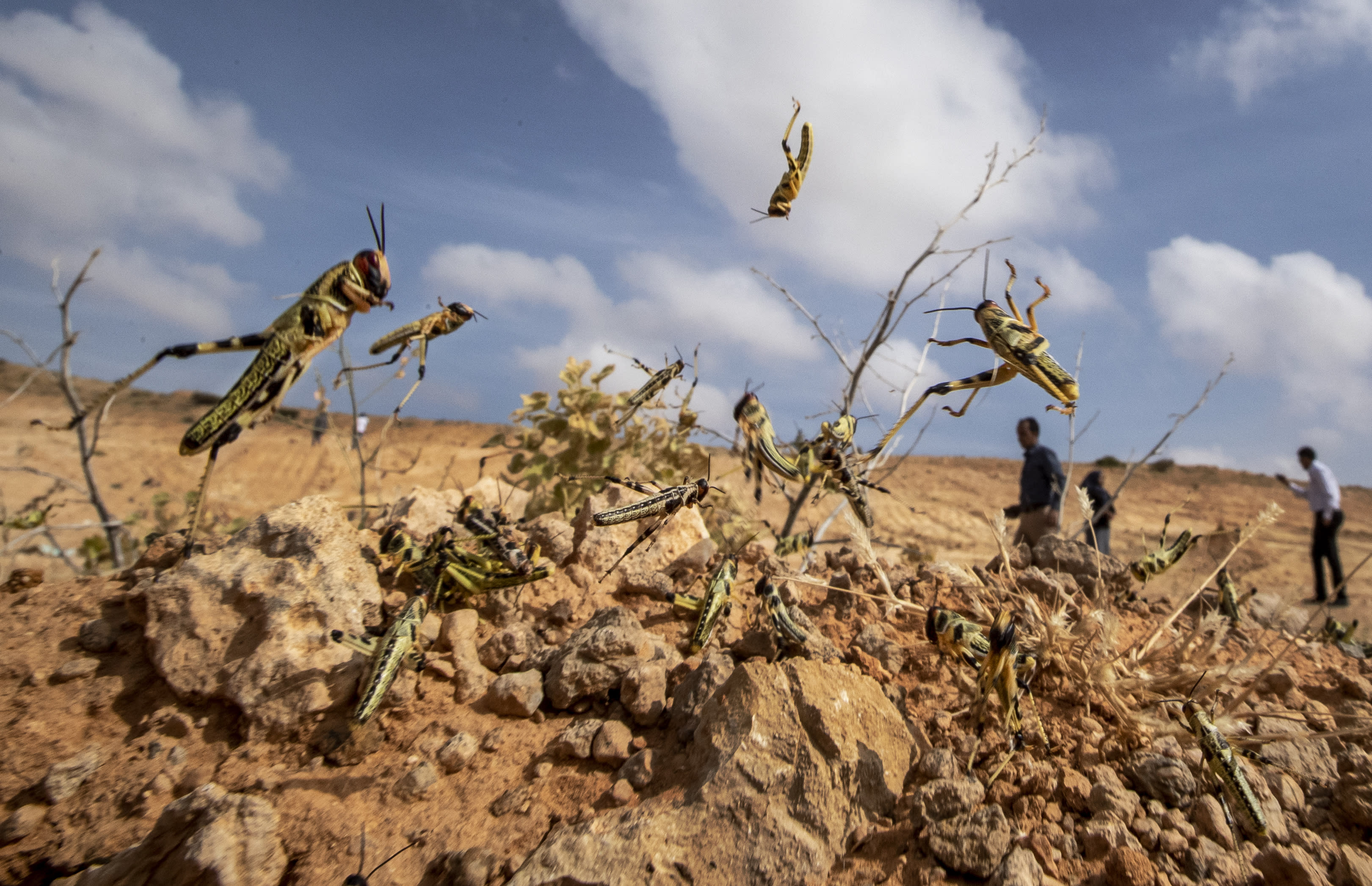
In this photo taken Wednesday, Feb. 5, 2020, young desert locusts that have not yet grown wings jump in the air as they are approached, as a visiting delegation from the Food and Agriculture Organization (FAO) observes them, in the desert near Garowe, in the semi-autonomous Puntland region of Somalia. The desert locusts in this arid patch of northern Somalia look less ominous than the billion-member swarms infesting East Africa, but the hopping young locusts are the next wave in the outbreak that threatens more than 10 million people across the region with a severe hunger crisis. (AP Photo/Ben Curtis)

JUBA, South Sudan (AP) — The worst locust outbreak that parts of East Africa have seen in 70 years has reached South Sudan, a country where roughly half the population already faces hunger after years of civil war, officials announced Tuesday.

Around 2,000 locusts were spotted inside the country, Agriculture Minister Onyoti Adigo told reporters. Authorities will try to control the outbreak, he added.

The locusts have been seen in Eastern Equatoria state near the borders with Ethiopia, Kenya and Uganda. All have been affected by the outbreak that has been influenced by the changing climate in the region.

The situation in those three countries “remains extremely alarming,” the U.N. Food and Agriculture Organization said in its latest Locust Watch update Monday. Locusts also have reached Sudan, Eritrea, Tanzania and more recently Uganda.


The soil in South Sudan's Eastern Equatoria has a sandy nature that allows the locusts to lay eggs easily, said Meshack Malo, country representative with the FAO.

At this stage “if we are not able to deal with them ... it will be a problem,” he said.

South Sudan is even less prepared than other countries in the region for a locust outbreak, and its people are arguably more vulnerable. More than 5 million people are severely food insecure, the U.N. humanitarian office says in its latest assessment, and some 860,000 children are malnourished.

Five years of civil war shattered South Sudan's economy, and lingering insecurity since a 2018 peace deal continues to endanger humanitarians trying to distribute aid. Another local aid worker was shot and killed last week, the U.N. said Tuesday.

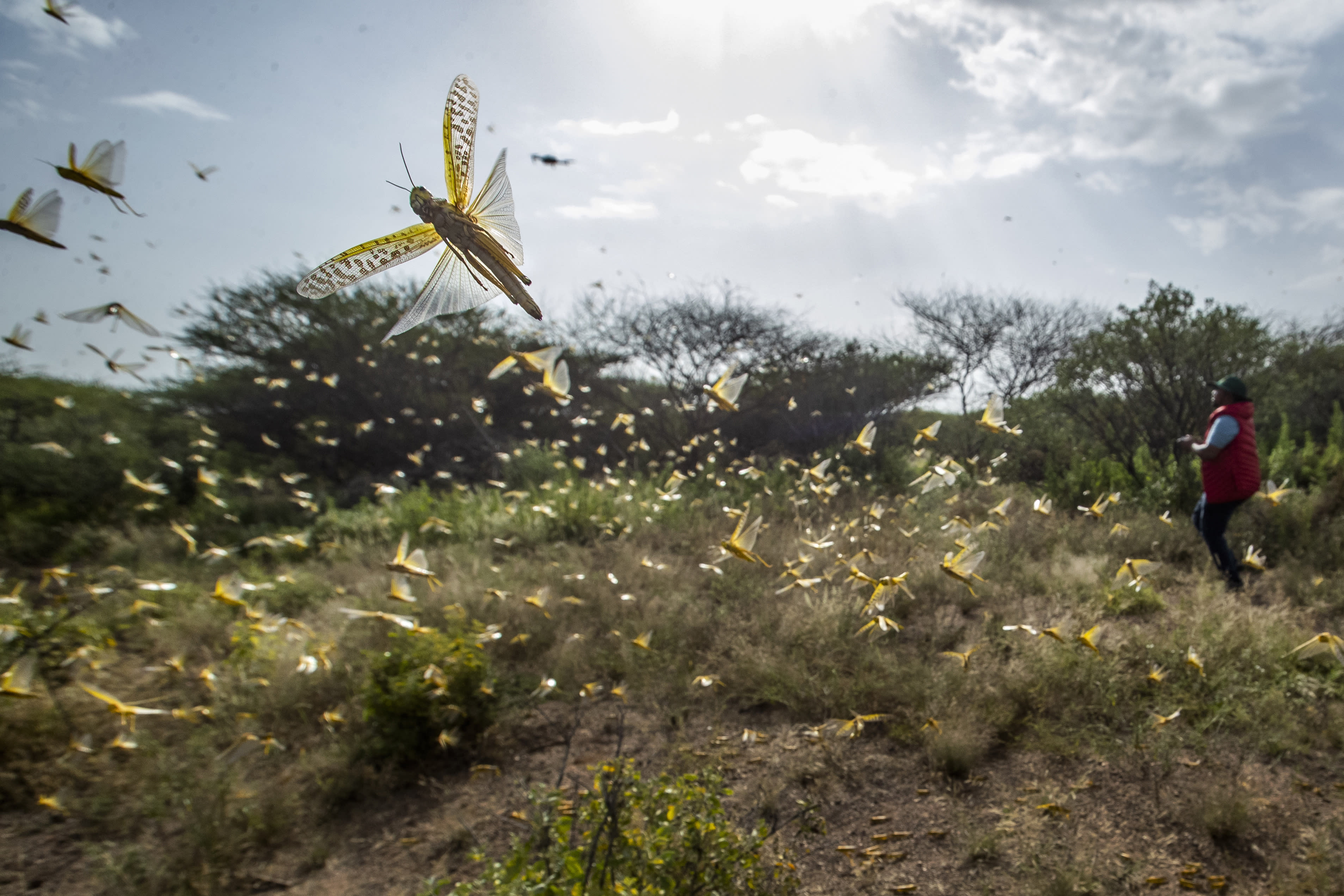
The locusts have traveled across the region in swarms the size of major cities. Experts say their only effective control is aerial spraying with pesticides, but U.N. and local authorities have said more aircraft and pesticides are required. A handful of planes have been active in Kenya and Ethiopia.

The U.N. has said $76 million is needed immediately. On Tuesday, U.S. Secretary of State Mike Pompeo during a visit to Ethiopia said the U.S. would donate another $8 million to the effort. That follows an earlier $800,000.

The number of overall locusts could grow up to 500 times by June, when drier weather begins, experts have said. Until then, the fear is that more rains in the coming weeks will bring fresh vegetation to feed a new generation of the voracious insects.

South Sudanese ministers called for a collective regional response to the outbreak that threatens to devastate crops and pasturage.
Turkish author fears for her life if she returns home

Fulya OZERKAN, AFP•February 16, 2020


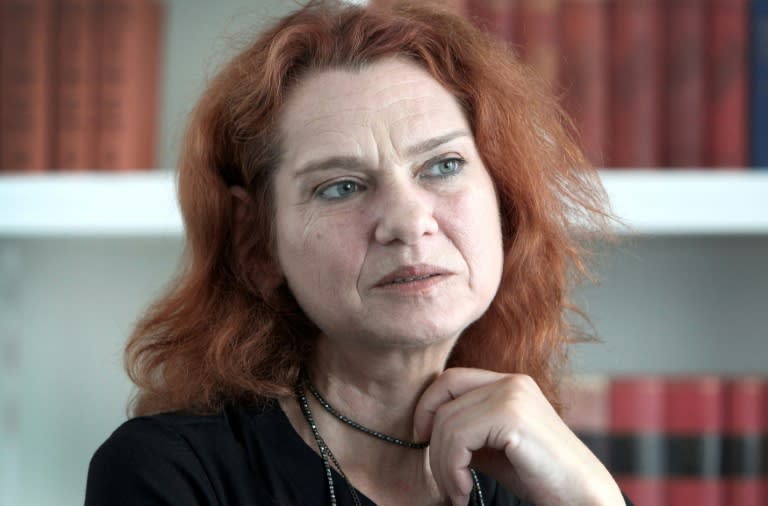
This week, when the terrorism case in which Asli Erdogan was accused came to court, she was unexpectedly acquitted (AFP Photo/Daniel ROLAND)More

Istanbul (AFP) - Exiled Turkish novelist Asli Erdogan expected to be a convicted woman by now with a life sentence hanging over her head.

The award-winning author, whose books have been translated into 21 languages, spent four months in jail in 2016 as part of a probe into a newspaper's alleged links to outlawed Kurdish militants.

After her release she travelled to Germany in 2017 as soon as she received her passport back. She has been in self-imposed exile ever since.

This week, when the long-running terror case in which she was accused came to court again, she was unexpectedly acquitted.

"To be honest, I was very surprised. Almost everyone took it for granted that I would be convicted," the writer told AFP in a phone interview Sunday.

"I still cannot believe it, but if it's not that, there will be another case," said Erdogan -- who is not related to Turkish President Recep Tayyip Erdogan.

An Istanbul court acquitted Erdogan on Friday of membership of an armed terrorist group and disrupting the unity of the state, while charges of spreading terror propaganda were dropped.

The writer said she had risked a life sentence just because her name was on the literary advisory list of the now-closed pro-Kurdish Ozgur Gundem newspaper.

The accusations "would amount to establishing an army in order to destroy the state. What's it got to do with a newspaper?" she asked.

She might have escaped a long jail term, but the experience has taken a toll.

In Germany she has had surgery twice for muscle paralysis of the intestine, a condition which doctors say is post-traumatic.

"At the age of 52 I encountered a disease that should occur in one's 80s," she said, adding that her stint in jail also played a part.

What she most longs for, however, is access to her library in Turkey.

"A 3,500-book library is my only property in the world. (Without it) I feel like my arms and legs are cut off."

- 'Silence prevails' -

However, she has no plans to return home because the authorities could seize upon anything she might say to charge her with further offences, with potentially fatal consequences.

"Another arrest would mean death for me... Under the current circumstances, I cannot return given a risk of detention," she said.

Since a failed putsch in Turkey in 2016, tens of thousands of people including academics and journalists have been arrested suspected of links to coup plotters.

Critics accuse the president of using the coup to silence opponents but the government argues a wholesale purge is needed to rid the network of followers blamed for the failed putsch.

For the author, the political climate is worsening even though she can no longer gauge the mood for herself as she could before.

"I used to speak with grocers or witness chats in a bus or metro. That was feeding me as a writer but this channel had been cut now. But I have the impression that silence prevails in Turkey."

She described the political system as "fascism, neo-fascism", saying ongoing cases involving jailed author Ahmet Altan and businessman and philanthropist Osman Kavala showed the situation was "well beyond dictatorship".

She added: "I don't know for sure what happens behind closed doors but such irrational cases have no other explanation. I see them as part of a strategy."

First mushrooms appeared earlier than previously thought


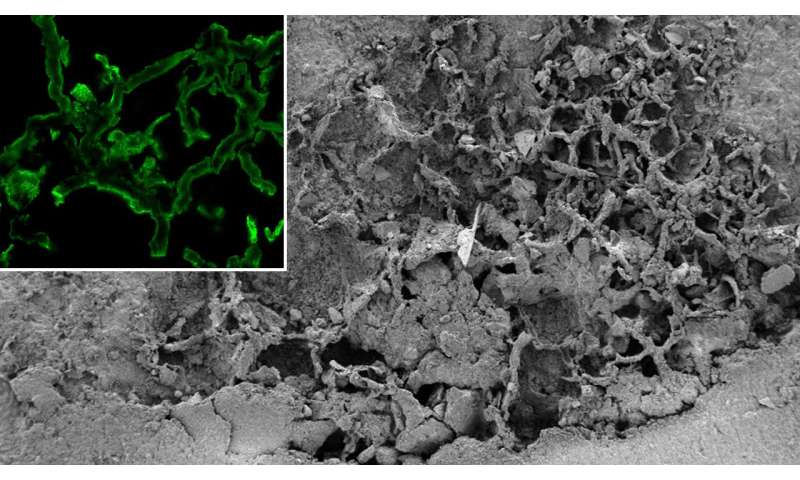
Fossilized network of filaments where vestiges of chitin - a very tough compound found in the cell walls of fungi - was detected. Credit: Steeve Bonneville - Université Libre de Bruxelles
According to a new study led by Steeve Bonneville from the Université libre de Bruxelles, the first mushrooms evolved on Earth between 715 and 810 million years ago, 300 million years earlier than the scientific community had believed until now. The results, published in Science Advances, also suggest that mushrooms could have been important partners for the first plants that colonized the continental surface.
The origin and evolution of the kingdom Fungi—more commonly known as mushrooms—are still very mysterious. Only 2 percent of species have been identified, and their delicate nature means fossils are extremely rare and difficult to discern from other microorganisms. Until now, the oldest confirmed mushroom fossil was 460 million years old.
A group of researchers led by Professor Steeve Bonneville, from the Biogeochemistry and Earth System Modelling research unit at the Université libre de Bruxelles has discovered a new mushroom fossil—the oldest to ever be identified from its molecular composition. The results are published in Science Advances.
The fossilized remains of mycelium (a network of interconnected microscopic strands) were discovered in rocks between 715 and 810 million years old—during a time in Earth's history when life on the continents' surface was in its infancy. These , found in the Democratic Republic of the Congo and part of the collection of the Africa Museum on Tervuren, formed in a lagoon or coastal lake environment. "The presence of fungi in this transitional area between water and land leads us to believe that these microscopic  were important partners of the first plants that colonized the Earth's surface around 500 million years ago," explains Steeve Bonneville, professor at the Université libre de Bruxelles and coordinator of the study.
Previous mushroom fossils had been identified only based on the morphology of organic remains extracted from rocks using corrosive acid compounds. "This method damages the chemistry of organic fossils and only allows morphological analysis, which can lead to incorrect interpretations because certain morphological characteristics are common to different branches of living organisms," Bonneville says.
The authors of this new study used multiple molecular analysis techniques at a microscopic scale: synchrotron radiation spectroscopy (XANES, μFTIR), μ-Raman , fluorescence microscopy (CLSM) and electron microscopy (FIB-TEM-HAADF). Using these techniques, it was possible to study the chemistry of organic remains in situ, without chemical treatment. This enabled the researchers to detect traces of chitin, a very tough compound found in the cell walls of fungi. They also demonstrated that the organisms were eukaryotes, i.e., their cells had a nucleus. "Only by cross- correlating chemical and micro-spectroscopic analyses could we demonstrate that the structures found in the old rock are indeed ~ 800-million-year-old fungal remains," says Liane Benning from GFZ Potsdam.
"This is a major discovery, and one that prompts us to reconsider our timeline of the evolution of organisms on Earth," says Bonneville. "The next step will be to look further back in time, in even more ancient rocks, for evidence of those microorganisms that are truly at the origins of the animal kingdom."
I'm an evolutionary biologist—here's why this ancient fungal fossil discovery is so revealing

More information: S. Bonneville el al., "Molecular identification of fungi microfossils in a Neoproterozoic shale rock," Science Advances (2020). advances.sciencemag.org/content/6/4/eaax7599
Prehistoric Egg Shells Provide Clues To Dinosaurs’ Evolution From Cold- To Warm-Blooded Creatures

From the time that dinosaur fossils were first discovered, these creatures have fascinated scientists and laypeople alike. In the academic world, their remains provide important clues into the prehistoric world; in popular culture, dinosaurs have inspired blockbuster hits, such as Jurassic Park and King Kong.

Hadrosaur eggshells [Credit: Darla Zelenitsky]
Now, a research team headed by Professor Hagit Affek at the Hebrew University of Jerusalem's Institute of Earth Sciences has unlocked a mystery that has stymied researchers for decades: How did dinosaurs regulate their body temperatures? Were they warm-blooded or cold-blooded?

Affek's study, published in Science Advances, relies on a novel method to measure historical temperatures. Called clumped isotope geochemistry, this method analyzes chemical bonds among heavy isotopes in calcium carbonate minerals--the main ingredient in egg shells. This allows scientists to calculate both the temperature at which the minerals formed and the body temperature of the mother that laid the egg.

Affek and her team applied this method to fossilized eggs from three distinct dinosaur species along the evolutionary path from reptile to bird and found that their body temperature ranged from 35-40 degrees Celsius. However, this bit of information still did not answer the question as to whether dinosaurs were endothermic or exothermic, meaning, did they generate their own body heat or get warm from the sun and their environment?


Dinosaur nesting site in Alberta, Canada [Credit: Darla Zelenitsky]
"The global climate during the dinosaur era was significantly warmer than it is today. For this reason, measuring only the body temperatures of dinosaurs who lived near the equator wouldn't tell us whether they were endo- or exothermic because their body temperature may simply have been a cold-blooded response to the hot climates they lived in," shared Affek.

To address this issue, her team focused on dinosaurs that lived in high latitudes like Alberta, Canada--far enough north to ensure that their warm body temperatures were the result of an internal, metabolic warming process rather than merely reflecting the climate around them.

To verify their hypothesis, Affek and her team needed to determine the environmental temperature in Alberta back when dinosaurs lived. 
They accomplished this by applying their isotope method to mollusk shells that lived in Alberta alongside the dinosaurs. Since mollusks are cold-blooded creatures, they reflect the ambient climate of the time. The mollusks' body temperature measured 26°C and showed that the dinosaurs living in Alberta were endothermic; otherwise, they could not have maintained a body temperature of 35-40°C.


Dinosaur body temperature comparison chart [Credit: Robin Dawson]
As dinosaurs evolved, they moved from lizard-like (cold-blooded) characteristics to avian (warm-blooded) ones. "We believe that this transformation happened very early on in dinosaurs' evolution since the Mayasaura eggs--a lizard-like dinosaur species that we tested--were already able to self-regulate their body temperature, just like their warm-blooded, bird-like cousins, the Torrdons," explained Affek.

The fact that both of these species, located at opposite ends of the dinosaur evolutionary tree, had body temperatures higher than those of their environment means that both had the ability to warm themselves.

Either way, Mother of Dragons, if your baby is showing a fever of 41 degrees, it's time to call the doctor.

Source: Hebrew University of Jerusalem [February 14, 2020]

Human Language Most Likely Evolved Gradually

One of the most controversial hypotheses for the origin of human language faculty is the evolutionary conjecture that language arose instantaneously in humans through a single gene mutation. `

These research studies claim that it is more likely that language evolved gradually, instead of by means
of sudden single mutation [Credit: Cedric Boeckx (University of Barcelona- ICREA-UBICS)]
Two recent publications by researchers at the University of Barcelona (UB), led by Cedric Boeckx, ICREA Research professor from the Section of General Linguistics and member of the Institute of Complex Systems of the UB (UBICS), question this hypothesis, advocated among others by linguist Noam Chomsky, and suggest that it is more likely that language evolved gradually.

Merge, the cognitive operation key to human language

For decades, several scholars such as Chomsky have proposed that modern humans are genetically equipped with a unique cognitive capacity that specifically allows us to implement computations over hierarchically structured symbolic representations. This capacity is enabled by a formally simple cognitive operation known as Merge, which is the basis of our ability to represent complex grammars in a way that other species cannot.


"Merge is claimed to be sufficient to yield grammatical structure. Put it simple, Merge takes two linguistic units (say, words) and combines them into a set that can then be combined further with other linguistic units, effectively creating unbounded linguistic expressions. These, in turn, are claimed to form the basis for our cognitive creativity and flexibility, setting us aside from other species," said Cedric Boeckx.

"The strongest version of this hypothesis --Cedric Boeckx continued -- suggests that the biological foundation of our modern language capacity is a single genetic mutation, a macromutation, that emerged instantaneously in a single hominin individual who is an ancestor of all modern humans, and spread through the population."

Modelling the single gene mutation hypothesis

In the first paper, published in Scientific Reports -with participation of Cedric Boeckx and researchers from the Free University of Brussels (Belgium) and the Max Plank Institute of Psycholinguistics (Netherlands), they examine this hypothesis by modeling the evolutionary dynamics of such a scenario, taking into account different parameters such as how long ago this mutation would have happened and the population size at the time.

"We examine the dynamics of a single, critical, mutation spreading rapidly through a population in a given time window, combining this theoretical proposal with contemporary genetic and demographic findings", said Cedric Boeckx.

In this case, researchers have applied a variety of techniques from theoretical biology to the question of how to quantify the probability of a complex trait like language evolving in a single step, in many small steps, or in a limited number of intermediate steps, within a specific time window and population size.

Researchers concluded that, instead of a single mutation with an extremely large fitness advantage, the most likely scenario is one where higher number of mutations, each with moderate fitness advantages, accumulate. "A scenario in which the genetic bases of our linguistic ability evolved through a gradual accumulation of smaller biological changes. This scenario can be articulated in many different ways, for instance as syntax evolving from phonological form, from rapid manual actions or from much simple pragmatic sequencing of words", said Boeckx.

Challenging the logic of the hypothesis

In the other study, published in PLoS Biology, UB graduate student Pedro Tiago Martins and Cedric Boeckx question this evolutionary hypothesis from a different angle: by going over its logic. Defendants of the single hypothesis claim that Merge, being such a simple operation had to be the result of a single genetic mutation that endowed one individual with the necessary biological equipment for language. In addition, because Merge is either fully present or fully absent --in other words, there cannot be such a thing as half-Merge--, the human language faculty had to emerge suddenly, as the result of this single mutation.

"From the formal properties of Merge, it is not possible to derive of number of evolutionary steps that led to the emergence of Merge. The computational simplicity of Merge does not correlate in any meaningful way to biological simplicity, and that once different levels of organization are taken into account there is no way to derive such simplistic evolutionary scenarios for any complex trait.",said Pedro Tiago Martins. The study highlights that even if a trait, such as the Merge operation, does not manifest itself in intermediate steps, its evolution may very well be gradual.

Researchers explained that the evolution of something as complex as human language deserves integration of results and insights from different corners of the research landscape, namely the fields of neurobiology, genetics, cognitive science, comparative biology, archaeology, psychology, and linguistics. "This is hard because it requires compatible levels of granularity between all fields involved, but it is the only way of achieving meaningful understanding," said Pedro Tiago Martins.

Together, these studies suggest that evolutionary reasoning does not warrant a scenario of sudden emergence of human language by means of a single mutation, and that it is more likely instead that language evolved gradually.

Source: University of Barcelona [February 12, 2020]

by PT Martins - ‎2019 - ‎Nov 27, 2019 - Citation: Martins PT, Boeckx C (2019) Language evolution and complexity ... language deserves integration of results and insights from different corners of the research landscape, namely the fields of neurobiology, genetics, cognitive science, comparative biology, archaeology, psychology, and linguistics.
The Curious Case Of The Disappearing Snakes
2/13/2020

The loss of any species is devastating. However, the decline or extinction of one species can trigger an avalanche within an ecosystem, wiping out many species in the process. When biodiversity losses cause cascading effects within a region, they can eliminate many data-deficient species ¬- animals that have eluded scientific study or haven't been researched enough to understand how best to conserve them.

An MSU-led study featured on the cover of this week’s Science magazine should
sound alarm bells regarding the “biodiversity crisis” or the loss of wildlife
around the world [Credit: Andrew Hein]
"Some species that are rare or hard to detect may be declining so quickly that we might not ever know that we're losing them," said Elise Zipkin, MSU integrative biologist and the study's lead author. "In fact, this study is less about snakes and more about the general loss of biodiversity and its consequences."

The snakes in question reside in a protected area near El Copé, Panama. The new study documents how the snake community plummeted after an invasive fungal pathogen wiped out most of the area's frogs, a primary food source. Thanks to the University of Maryland's long-term study tracking amphibians and reptiles, the team had seven years of data on the snake community before the loss of frogs and six years of data afterwards.

Yet even with that extensive dataset, many species were detected so infrequently that traditional analysis methods were impossible. To say that these snakes are highly elusive or rare would be an understatement. Of the 36 snake species observed during the study, 12 were detected only once and five species were detected twice.

"We need to reframe the question and accept that with data-deficient species, we won't often be able to assess population changes with high levels of certainty," Zipkin said. "Instead, we need to look at the probability that this snake community is worse off now than it used to be."

Using this approach, the team, which included former MSU integrative biologists Grace DiRenzo and Sam Rossman, built statistical models focused on estimating the probability that snake diversity metrics changed after the loss of amphibians, rather than trying to estimate the absolute number of species in the area, which is inherently difficult because snakes are so rare.

"We estimated an 85% probability that there are fewer snake species than there were before the amphibians declined," Zipkin said. "We also estimated high probabilities that the occurrence rates and body conditions of many of the individual snake species were lower after the loss of amphibians, despite no other systematic changes to the environment."

When animals die off en masse, such as what is happening with amphibians worldwide, researchers are dealing mainly with that discovery and are focused on determining the causes. But what happens to everything else that relies on those animals? Scientists don't often have accurate counts and observations of the other species in those ecosystems, leaving them guessing to the consequences of these changes. The challenge is exacerbated, of course, when it involves rare and data-deficient species.

"Because there will never be a ton of data, we can't pinpoint exactly why some snake species declined while others seemed to do okay or even prospered after the catastrophic loss of amphibians." Zipkin said. "But this phenomenon, in which a disturbance event indirectly produces a large number of 'losers' but also a few 'winners,' is increasingly common and leads to worldwide biotic homogenization, or the process of formally dissimilar ecosystems gradually becoming more similar."

The inability to put their finger on the exact cause, however, isn't the worst news to come from their results. The truly bad news is that the level of devastation portends to much greater worldwide loss than the scientific community has been estimating.

"The huge die-off of frogs is an even bigger problem than we thought," said Doug Levey, a program director in the National Science Foundation's Division of Environmental Biology. "Frogs' disappearance has had cascading effects in tropical food chains. This study reveals the importance of basic, long-term data. When these scientists started counting snakes in a rainforest, they had no idea what they'd eventually discover."

Zipkin agrees that long-term data is important to help stakeholders ascertain the extent of the issue.

"We have this unique dataset and we have found a clever way to estimate declines in rare species," she said. "It's sad, however, that the biodiversity crisis is probably worse than we thought because there are so many data-deficient species that we'll never be able to assess."

On a positive note, the scientists believe that improved forecasts and modeling could lead to bolstering conservation efforts. Making data-driven, proactive changes can prevent massive die offs and curb biodiversity loss.

The study is published in Science.

Source: Michigan State University [February 13, 2020]

When frogs die off, snake diversity plummets
SEE https://plawiuk.blogspot.com/2020/02/when-frogs-die-off-snake-diversity.html


Painting Of Deity Found Inside 3,000-Year-Old Egyptian Coffin

2/17/2020 

Three men, one at each end and one at the middle, slowly and gingerly lifted the wooden lid as if handling a giant eggshell. Quietly offering each other direction and status reports, they glided a few steps and placed the lid atop a Styrofoam support structure for safekeeping.

Dennis Piechota (from left), Adam Middleton, and Joe Green work on the coffin of Ankh-Khonsu
with a team at the Semitic Museum [Credit: Kris Snibbe/Harvard Staff Photographer]
Then they looked back at the 3,000-year-old coffin and what was now visible inside: an image of the ancient Egyptian sun god Ra-Horakhty, partially obscured by a thick, tar-like coating.

It "was a heart-stopping moment," said Peter Der Manuelian, Barbara Bell Professor of Egyptology and director of the Harvard Semitic Museum, of the discovery his team made last month after opening the coffin of Ankh-khonsu, a doorkeeper in the Temple of Amun-Ra.

The find was a highlight of a week-long research project led by Manuelian and financed by a grant from the Dean's Competitive Fund for Promising Scholarship. The goal was to create a complete digital visual record of Ankh-khonsu's coffin, along with two others, which then can be shared with students, researchers, museum visitors, and other enthusiasts. It's also part of a push by the museum to find ways to allow greater access to its collection of antiquities.

The body of Ankh-khonsu had been removed more than 100 years ago when the coffin was brought from Egypt to Cambridge, and the container was reopened about 30 years ago. But for reasons unknown, "there was no modern documentation of the coffin's interior, so we had no idea what to expect, plain wood or an exquisitely painted deity staring back at us," said Manuelian. "It turned out to be the latter, hiding somewhat beneath a layer of resinous material used in the funeral process." The two other coffins, whose former inhabitants were the female temple singer Mut-iy-iy and a priest and metal engraver named Pa-di-mut, had more complete records.

Despite the uneven texture of the area and the dark coating, Manuelian and his colleagues could see the yellow, orange, and blue painting and the hieroglyphs that read "Ra-Horakhty, the great God, Lord of Heaven" next to the figure.

As part of the project, Manuelian assembled an "all-star cast" of conservators, a professional photographer, and pigment sampling and residue and wood analysis experts to collect information and capture imagery of the coffin materials and adornments. Colleagues came from as far away as University College London and from just down the street at the Harvard Art Museums.

Over the course of their work, a dozen people congregated to document and analyze every inch of the artifacts. All three coffins date from Dynasty 22 (945‒712 BCE) and came to the museum from modern-day Thebes, Egypt, between 1901 and 1902. The coffins of Mut-iy-iy and Ankh-khonsu are made of wood, likely sycamore, while that of Pa-di-mut is a cartonnage case made of linen and plaster that was once housed within a wooden box. The closed coffins are displayed on the second floor of the Semitic Museum.

In addition to conservation efforts, assistant curator of collections Adam Aja and students in his co-taught Harvard Extension School course "Museum Collections Care," were on hand to 3-D scan the pieces, while Manuelian produced the camera-based photogrammetry of the coffins: top, bottom, interior, and exterior. The group worked with researcher Mohammed Abdelaziz of Indiana University on an animated and rotatable "first draft" of all three coffins.


The ancient Egyptian sun god Ra-Horakhty is barely visible inside
the coffin of Ankh-Khonsu [Credit: Harvard University]
"The work was timed to coincide with this January term course, and it was the perfect opportunity to involve students in one of our complex, multiphase collections projects," said Aja. "In addition to witnessing all of the stages of preparation and study, they were actively engaged in capturing and producing the digital content."

Consulting conservators Dennis and Jane Piechota, who regularly work with the Semitic Museum and the Peabody Museum of Archaeology and Ethnology, ensured that the coffins were removed from their display cases safely, transported to the research room, and laid out properly for photography and scanning.

"It's an honor to work on these artifacts up close, and unusual to be able to touch something so old and containing so much history," said Jane Piechota.

Opening the tops, which had been closed for decades, was a sizeable first hurdle. The Piechotas examined the contact points between lid and coffin for signs of pressure and fusing between the pieces, inserting thin wedges of wood all around the lid to begin the separation and lifting process.

Turning the coffins to photograph and scan them required more dexterity and care, due to the age and delicacy of the artifacts.

The female temple singer Mut-iy-iy had artwork inside her coffin
[Credit: Harvard University]
"Turning over the coffins is petrifying! They're heavy, and if we don't handle them carefully they can be easily damaged," said Dennis Piechota. "Once the lid came off, we looked inside at the construction of the sides and bottom of each coffin. We inspected the joints that keep the wooden pieces together, to make sure they would stay together as we turned them."

Researchers collected fabric, paint, and resin samples, and studied the texts and iconography covering the wooden boxes and ancient plaster cartonnage case, including the black resinous "goo" covering the paintings.

At the same time, Eden Piacitelli and Lauren Wyman, master's degree candidates in museum studies at Harvard Extension School, used a 3-D wireless scanner to capture every detail of the coffins, then used software to create rotatable digital models.


"This was all very new for me, with new technology. I've never been this close to an antiquity before," said Piacitelli. "Being part of the team doing the scanning was most exciting because it's a learning process for everybody. Working with these experts across [different] fields has been very intimidating, but they have been very generous with their time and their knowledge."

The project marked the latest step in the museum's journey to make more of its antiquities accessible to a wider audience (previous digital modeling processes included an augmented reality app to accompany an exhibit of the Dream Stela). Manuelian also directs the Giza Project, an initiative that assembles all the archaeology around the Giza Pyramids, including a virtual reality component.

"Even five years ago, we didn't have these technological developments," said Joseph Greene, deputy director and curator of the museum. "So we wanted to do everything we could to study and record information about these artifacts for the next generation of researchers."

Author: Manisha Aggarwal-Schifellite | Source: Harvard University [February 17, 2020]
More Than 16,000 Antiquities Stolen From Turkish-Occupied Cyprus
2/12/2020 

More than 16,000 Christian icons, mosaics and murals dating from to 6th and 5th centuries have been forcibly stolen and sold abroad since the Turkish invasion of Cyprus in 1974, according to the Director of the Office for Combating Illegal Possession and Trafficking of Antiquities, Michalis Gavriilidis.

Credit: KYPE-CNA
In a lecture he gave on Monday night at the University of Cyprus Archeology Research Unit, Michalis Gavriilidis said that after the Cyprus invasion in 1974, Byzantine artworks were even found in Kyoto, Japan (Fragments of Royal Doors from Peristeronopigi were fund in Kanazawa College of Arts). He added that efforts are being made to repatriate them and he hoped to return to Cyprus soon.

As Gavriilidis pointed out, illicit trafficking of cultural property is one of the most serious forms of crime today. “The annual cost of illicit trafficking and trade of artifacts and cultural goods worldwide is estimated to be more than $ 10 billion,” he said.

“Illegal trafficking of cultural heritage is an international crime that many countries suffer from, including Cyprus, especially after the 1974 Turkish invasion. It is a scourge affecting the countries of origin and the countries of transit and final destination of the stolen works. Just by listing the countries whose cultural heritage has been plundered by traffickers in recent years, the magnitude of the crime will be ascertained: Syria, Egypt, Afghanistan, Iraq and Cyprus and many more countries all over the world,” he said.

Gavriilidis also noted that the international community had become more sensitive about this issue, especially after the disaster in Palmyra, Syria, which put other countries that had suffered a similar disaster on the spotlight, such as Cyprus. The Council of the European Union, INTERPOL, EUROPOL and other international organizations, such as UNESCO, WCO, etc., have undertaken work in this respect, something which assists our efforts, he noted.

Source: KYPE-CNA [February 12, 2020]