Friday, May 21, 2021

Learning the Future: Bogdanov, Neurath, and Scientific Socialism


By Edmund Berger

Socialism has had a sort of poor track record as of late when it comes to science and technology. From Stalin’s violent repression of Mendelian genetics (and privileging of the pseudo-science of Trofim Lysenko) to the modern contemporary contingencies of anarcho-primitivists, it’s often easy to see what is ostensibly an ideology of advancement oscillating itself between confirmations of the worst despotisms of the dominant, capitalist order, and regressive attitudes towards the raw materials of possible emancipation. The paranoia of computers, simulation, and modelling that blossomed in the 1960s and has persisted until recently recalls, uncomfortably, the anti-scientism of climate change deniers. Where it does embrace technoscience, it adopts them as adjacent to, but not directly bound up within, the emancipatory project. Radical experiments in leftist technoscience, be it Chile’s CyberSyn or the Soviet Union’s own attempts at some form of cybernetic socialism during the Khrushchev years, have fallen by the wayside and are obscured from view. Critical theory continually returns to Situationist discourse, but always seems to focus on those elements that foreshadow insurrectionary anarchism and communization theory. It ignores the constructive side of the ‘construction of situations’ equation – the side on which we can find Constant Niewunhuy’s New Babylon, or Asger Jorn’s celebration of automation.

This is what I think is the greatest strength of Nick Srnicek and Alex William’s Inventing the Future – the reinstallation of technoscience as something intrinsic to a radical, left wing program. Automation, synthetic biology, artificial intelligence, and the planning of complex economic systems all find their application of the largely imaginal[1] horizon of a post-work world. Far from their inevitable brutal application under capitalist control, they offer a vision of technoscience as emerging from long-term state investment (where it emerges from in our current world, anyways) under the direction of democratic control by the population. Alongside this, breaking beyond capitalism requires the repurposing of existing technologies and infrastructures, to unmoor the class structures and exploitative mechanisms designed within their application. Building on Spinoza, the two suggest that “we know not what a sociotechnical body can do. Who among us fully recognizes what untapped potentials await discovery in the technologies that have already been developed? What sorts of postcapitalist communities could be built upon the material we already have?”[2]

Such a program – of developing new technologies through democratic mechanisms, and the repurposing of existing technologies – implies the generation of a sociotechnical literacy (to borrow a term from Arran James). How can a population be brought up to the level of being able to have substantial input into this sort of dynamic reformation? In a time when anti-scientism has yet to wane, how can the working class – and the surplus populations – learn of complexity, modeling systems, and the way that these technics and techniques exist in reciprocal feedback with the ebbs and flows of the population? True, outlets for learning of these things exists, but they remain shunted off in the university (itself repurposed long ago as training grounds for the petite bourgeoisie) or behind exorbitant paywalls. These privatizations of knowledge and knowledge production find their match in cultural attitudes and mores that tell the working class that these forms of knowledge are irrelevant to their daily situations – unless, of course, there is a perceived threat to their pocketbooks. To build a sociotechnical literacy, essential to a future-oriented hegemonic project, thus requires the building of an educational infrastructure that will help people to navigate the cutting edges of technoscience, while also speaking to them on a cultural level.

Importantly, just such a thing was proposed by socialists long ago, in a tendency that was quickly obscured by the hegemony of Leninism in the Soviet Union, the rise of fascism in Europe, and the American postwar sociotechnical hegemony. I would like to offer a cursory sketch of its history.


From Marx to Mach


How is it that we know the external world, and how do we articulate our knowledge of it in the arrays of paradigms and systems that we bundle under that singular world, “science”? For Kant, knowledge could be determined through synthetic a priori, that is, statements can be known to be true before experience can verify them. This was the trail to transcendental idealism – what we call “consciousness” is the result of the intermingling of sensory stimulation and actions of the mind. The mind gives form, shape, and structure to “our conscious experience that sensory stimulation does not provide.”[3] The world is out there, but the mind plays a fundamental role in articulating that world in ways that we can comprehend it.

It was Ernst Mach who challenged several of these key assumptions. If the principle of a priori was the mean to make knowledge possible, he asked, how is the a priori itself possible? The answer, Mach reasoned was not to be found inside philosophical contemplation, or in the relations going on within the mind itself. This was the positive task of science, to discern the functioning of the world in a way that a foundation can be built in order to build up future forms of knowledge and knowledge production. That which the a priori was aligned – theory – was unmoored from its ontological foundation, and treated as little more than an instrument through which the functioning of the world could be discerned. What mattered more than theory was the understanding of knowledge, scientific or otherwise, as sensation itself. Experience of sensation provides the “pure data” through which we can know. As such, the task of the scientist was to provide “economical description(s) of observable phenomena”; in a challenge to Kantian philosophy, knowledge pivoted on the “adapting [of] thoughts to facts and to each other.”[4]


In order for such a task to be carried out, scientific knowledge could no longer be isolated away from one another in differing fields. “It is the object of science to replace, or save experiences, by the reproduction and anticipation of facts in thought. Memory is handier than experience, and often answers the same purpose,” Mach wrote in Memory and Science.[5] In order to provide an ‘economical’ platform for knowledge, a memory system had to be crafted that brought together disparate fields. In other words, a unification of science had to be fostered. This would become the overriding intention of the Vienna Circle that flourished in Austria in various forms from the early 1900s to the 1930s, bringing together numerous and notable natural scientists, mathematicians and philosophers. Vienna, however, was not the only place that Mach’s influence would reverberate.
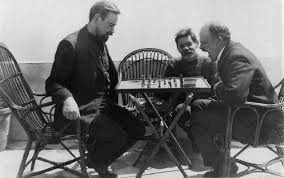


Between 1904 and 1906, Alexander Bogdanov published a three-volume work bearing the title of Emperio-Monism, detailing an attempted synthesis of Marxist theory and Machist philosophy. His first spin on Mach is a reinterpretation of the sensation necessary for the production of knowledge. In a foreshadow of the contemporary field of science and technology studies, Bogdanov understands science as a collective experience, circulating through and transcending the networks of individuals, apparatuses, and social organizations that produce it. This function, in many regards, recalls the now well-known Marxist concept of the “general intellect” found in Grundrisse.[6] Like the general intellect, Bogdanov’s science is a social function; this, in turn, entails a rendering of sensation as a collective, as opposed to an individual, experience. Yet science has no monopoly on knowledge. Bogdanov had a strong interest in folk knowledge, the kind of knowledge produced by the entanglement of labor and nature. This mode of folk knowledge functions very much like what James C. Scott describes as “metis”, a “mode of reasoning most appropriate to complex material and social tasks where the uncertainties are so daunting that we must trust our (experienced) intuition and feel our way.”[7] What is important in this Marxist-Machism is not so much the superiority of folk knowledge or technical knowledge, but the feedback that exists between and the possibilities of new forms arising from a mutual co-production.



Like any good Marxist, Bogdanov is attentive to the ways in which dominant (particularly capitalist) social organizations ‘flavor’ the way in which science and technology develop, find their articulation, and are deployed within the social field. In Marxist theory, the organization of society takes places through the superstructure, the realm of family, religion, philosophy, science, the institutions of civil society, which is contingent on the dynamics of the base, where one is to find the modes, forces, and relations of production and the economic system that emerges from it. Through this interplay, capitalism gains the expansionist ability to reproduce its relations. Bogdanov, however, finds this dynamic a bit too simplistic, and ultimately too deterministic, to account for the complexity of historical development. His alternative charts a non-linear movement through science, culture, production, and the way that the labor driving this production is organized. To quote Arran Gare, “For Bogdanov economic life is an integral part of social being, and social being is identical to social consciousness; therefore it is knowledge which is the moving force of history and the main line of social progress.”[8]

Reformulating Marx, he argued that social being has two levels, the technical and the organizational. The organization of activity at the technical level generates technical knowledge or technology… As the technical level became more complex, humans came to need organizational forms. This is the realm of ideology, or what has been called in idealist philosophy, the realm of the spirit – concepts, thoughts, norms, all of those things that would be called ideas in the broadest sense of the word. Bogdanov saw no difference between technical and ideological labor… Techniques are the very essence of human social existence and the primary matrix of social relations, but ideology, the entire sphere of social life outside of the technical process, is also a vital force.[9]


As McKenzie Wark writes, Bogdanov’s perspective is a “labor point of view”, perhaps even more so than Marx’s own, in that while he situates the sensation of experience as the baseline for the production of knowledge, which in turn feeds into the organization of society, as a laboring act committed not by the individual, but by the collective of laborers. “…scientists, artists, and philosophers,” like Mach would argue, “are ‘organizers of experience’”,[10] and communicate this experience through the structures of culture. Culture, then, is intricately bound to the ways in which knowledge is produced and articulated, and thus it is through this complex interplay that culture predicates the organization of production – a starkly different portrait than the predication of culture on the organization of production, as the Marxist base-superstructure dynamic would have it. As long as bourgeois culture persisted, experience would be organized in a way that perpetuated capitalist domination. An attempt to strike out against capitalism without first paying heed to the fostering a new culture that would replace that of the bourgeoisie would ultimately be doomed to fail.

Bogdanov would become one of the Lenin’s major rivals in the early days of the Soviet Union, and his reformulation of Marx clearly challenged many of the essential assumptions of the vanguard party, which carried out its actions on the notion that simply reorganizing the superstructure would fundamentally transform the base. It is for this reason that Bogdanov remains relatively unknown, even on the left, having been quite literally written out of history by Lenin. There is no need to recount the rivalry between Bogdanov and Lenin here, and its relation to wider power struggles in the fledgling socialist republic (though I cover some of it in my earlier essay All That is Solid Melts). What is important here are Bogdanov’s two attempts to build platforms for a revolution in organization, through which a new world can be glimpsed through productive education. The first of these is Proletkult, which attempted to provide the workers with the means in which to create their own culture, and the second is tektology, a sort of ‘science of sciences’ (not dissimilar to the Machist gambit of unifying science) that would allow workers to transcend their status as cogs in the capitalist machine and become worker-engineers, and ultimately worker-scientists.


Srnicek and Williams argue that the left must construct a “counter-hegemonic project” capable of contesting neoliberalism, one that “enables marginal and oppressed groups to transform the balance of power in a society and bring about a new common sense.”[11] This was precisely the program that Bogdanov conceived of with Prolekult; in his own words, “the inherent condition of Bolshevism was to ‘create as from now on in the midst of existing society the great proletarian culture, stronger and more structured than the culture of the bourgeois classes in decline and more immeasurably freer and more creative.”[12] Socialism was not some far-off goal to be attained in the future, following the heroic negation of the bourgeoisie’s power over the proletariat. It was emergent, right in the social fields of capitalism itself, and simply needed the ability to extend this emergence into the world. Funded by the People’s Commissariat for Education (led by a key Bogdanov ally, Anatoly Lunacharsky), Proletkult flourished in a network of individuals and institutions across multiple cities, often aligned directly with the leading trade unions. Arts and crafts studios, painting and cinema workshops, theater and cinematography courses sprung up, located primarily in direct proximity to factory shop-floors. The influence of the most cutting-edge and technologically-oriented of the modernist avant-gardes flowed through these hotbeds of “proletarian art”, including futurism and constructivism. Writes McKenzie Wark:

Proletkult was a movement with a mission: to change labor, by merging art and work; to change everyday life, by developing the collaborative life within the city and changing gender roles and norms; and to change affect, to create new structures of feeling, to overcome the emotional friction of organizing the labor that in turn organizes nature around its appetites.[13]

Importantly, Proletkult was to break with the student-teacher dynamic that characterizes the majority of education, cultural or otherwise. Just as James Scott defined metis as a sort of labor-knowledge that developed through cooperation within and against nature, the proletarian culture was to be self-generating from the self-organization of the workers themselves. Platon Kerzhentsev, a Bolshevik party official and Proletkult leader, wrote that the network’s studio systems “break with the principle of authoritarianism and are built on the comradely basis of equality and collective creativity.”[14] Self-organization, the Proletkultists recognized, was contingent on the fostering of physical and mental infrastructures, and the subsequent politics of organizing the environment. A leftist, proletarian hegemony had to be built towards, and was never a given against either the bourgeois hegemony or even that of the Marxist-Leninist party – as the subsequent dismantling of Proletkult, and the later dismantling of the Soviet Union, would show.



If the proletariat was to become the ‘organizers of experience’, this ambition could not be limited to the production of culture alone. A proletarian culture necessarily entailed a proletarian science, one that like Proletkult could be self-organizing and capable of superseding the scientific knowledge/folk knowledge divide. Such was the goal of tektology, defined by Bogdanov as “a general study of the forms and laws of organization of all elements of nature, of ourselves, practice, and thought.”[15] The debt to Mach is clear: tektology would provide an ‘economical description’ of experience, while also moving towards a unity of science that allowed the translation of insights and practices from one field to the next. As an educational platform, it would ostensibly also serve as the platform for future forms of scientific thought, theory, and practice. It is interesting to note that Bogdanov borrowed the term “tektology” not from the Machist continuum, but from Ernest Haeckel; Haeckel, also one of the leading proponents of Darwinian theories of evolution, had been a major proponent of German Naturphilosophie – the school of thought generally associated with Fichte and Schelling that sought to establish the foundation for the natural sciences through the elucidation of general rules and forms of organization governing nature in its totality. A Machist-Marxist tektology would seek to no longer maintain this effort in the hallowed halls of philosophy, but to instead inscribe in the practice of labor.

“The methods of all sciences are for tektology only modes of organization supplied by experience,” wrote Bogdanov.[16] The organization established by natural processes proceeds all other forms of organization, which form themselves within and against nature itself. Thus, all questions tend towards the question of organization. The concept of the dialectical synthesis has no bearing here; organization was never in the primordial past some harmonious totality, nor will it be in the future – communist or otherwise. Nature naturally disrupts all bids for utopia. If one can experience nature, and thus know it, make it into science, this experience is based on pre-existing organizational platforms (such as the self-organizing proletarian culture emerging from the Proletkult infrastructure). Tektology, therefore, “was meant to be a design practice for organizing organization, conceived under very real conditions of scarcity and disorganization, but under no illusions that a rosy and harmonious future lay ahead.”[17] If proletarian science was to take root, it needed an infrastructure that allowed the navigation of this tumultuous hyperchaos. Bogdanov lays out a variety of key concepts, which for him served as the essential baseline for the general rule sets governing this chaos:[18]
Environment – that which is always there, always there and composed of systems
Conjunction – the coming-together and overlapping of two systems embedded in this wider nature
Boundary – the insulation for a given system that must be “breached” in order for conjunction to take place
Linkage – the intermingling and interconnection of elements from different system, taking place in the conjunction’s overlapping zone
Ingression – the emergence of a new system or systems from the linkage
Disingression – the mutual breakdown of systems in conjunction
Equilibrium – the act of boundary stabilization in the event of disingression
Crisis – the movement of systems towards a point of disequilibrium
Conservative selection – the preservation or destruction of an organizational system in an unchanging environment
Progressive selection – “a change in the number of elements in a system that maintains a dynamic equilibrium with a changing environment.”
Egression – a system composed of multiple subsystems, usually bound up together under the direction of a primary system
Degression – the remnants or leftovers of a system’s actions


As this handful of concepts and brief, truncated definitions, the swerving of systems from stability to instability and back again is central to Bogdanov’s tektology. As a science of systems, the concern of tektology is not only the ability of the workers to higher modes of intellect and organization, but to discern the patterns of self-organization latent in nature at all scales. Even more importantly is the recognition that systems operating on different scales interact with one another, generating new systems or collapsing the old ones in kind. The self-organization of knowledge, labor, and culture, then, is established in the context of a wider swath of self-organizing systems, and remains perpetually embedded within them. Bogdanov’s tektology, in other words, anticipates the whole of second-order cybernetics, systems theory, and complexity theory, albeit in a rather reduced and premature way. The reductionist nature of his approach, however, cannot be dismissed outright, for his is simply an attempt to present what Mach had suggested: the collecting and arrangement of generalized experiences, through which the ability to know can flourish.



Indeed, many have suggested that German translations of Bogdanov’s tektological reflections influenced both Ludwig von Bertalanffy, the father of general of general systems theory, and Norbert Wiener, the leading theorist and proponent of cybernetics in the years following World War 2. While this remains the subject of debate, there are remarkable congruencies between his work and those of these later thinkers. To quote Fritjof Capra and Pier Luigi Luisi,


Like Bertalanffy, Bogdanov recognized that living systems are open systems that operate far from equilibrium, and he carefully studied their regulation and self-regulation processes. A system for which there is no need of external regulation, because the system regulates itself, is called a “biregulator” in Bogdanov’s language. Using the example of the centrifugal governor of a steam engine to illustrate self-regulation, as the cyberneticists would do several decades later, Bogdanov essentially described the mechanism defined as feedback by Norbert Wiener, which became a central concept of cybernetics.[19]

For the descendants of Bertalanffy and Wiener, such as the complexity theorists working at the Santa Fe Institute, these complex systems become tinged with the attributes of the neoliberal ideology. The ability of systems to self-organize becomes the self-organization of free agents moving and exchanging in the marketplace, swirling about and coalescing into the beautiful swarm of commerce. Tektology stakes itself out against these interpretations far in advance, with Bogdanov having attacked the atomistic worldview as the basis for capitalism’s projection of hyper-individualism radiated from the belief in the self’s absolute agency. While indebted to Mach’s own critique of atomism, tektology, like Proletkult, always maintained itself in the context of collectivity, of generalized experience and intellect encompassing multiple bodies encountering nature together. Everything unfolds under the socialist horizon.


CONTINUE READING

Empiriomonism


Empiriomonism | Historical Materialism

Buy hardcover (Brill)
Buy softcover (Haymarket)
Jan 2020
ISBN
978-90-04-30031-6

Essays in Philosophy, Books 1–3

Alexander Aleksandrovich Bogdanov

Editor: David Rowley

Author: Alexander Aleksandrovich Bogdanov

Empiriomonism is Alexander Bogdanov’s scientific-philosophical substantiation of Marxism. In Books One and Two, he combines Ernst Mach’s and Richard Avenarius’s neutral monist philosophy with the theory of psychophysical parallelism and systematically demonstrates that human psyches are thoroughly natural and are subject to nature’s laws. In Book Three, Bogdanov argues that empiriomonism is superior to G. V. Plekhanov’s outdated materialism and shows how the principles of empiriomonism solve the basic problem of historical materialism: how a society’s material base causally determines its ways of thinking. Bogdanov concludes that empiriomonism is of the same order as materialist systems, and, since it is the ideology of the productive forces of society, it is a Marxist philosophy.
Biographical note

David G. Rowley, Ph.D (1982), University of Michigan, is Emeritus Professor , University of Wisconsin-Platteville. He has published research on Alexander Bogdanov and is the translator of Volume 8 of the Bogdanov Library, The Philosophy of Living Experience (Brill, 2016).
Readership

All interested in Russian intellectual history, Russian Marxism in the revolutionary era, the philosophy of historical materialism, and the philosophy of mind.
Table of contents

Preface

The Autobiography of Alexander Bogdanov

Bogdanov as a Thinker

  V.A. Bazarov

Book One

1 The Ideal of Cognition (Empiriomonism of the Physical and the Psychical)

2 Life and the Psyche

 1  The Realm of Experiences

 2  Psychoenergetics

 3  The Monist Conception of Life

3 Universum (Empiriomonism of the Separate and the Continuous)

Conclusion to Book One

Book Two

4 The ‘Thing-in-Itself’ from the Perspective of Empiriomonism

5 Psychical Selection (Empiriomonism in the Theory of the Psyche)

 1  Foundations of the Method

 2  Applications of the Method (Illustrations)

6 Two Theories of the Vital-Differential

Book Three

7 Preface to Book Three

 1  Three Materialisms

 2  Energetics and Empiriocriticism

 3  The Path of Empiriomonism

 4  Regarding Eclecticism and Monism

8 Social Selection (Foundations of the Method)

9 Historical Monism

 1  Main Lines of Development

 2  Classes and Groups

10 Self-Awareness of Philosophy (The Origin of Empiriomonism)

Bibliography

Index


The Science of the Future

Screenshot_2015-04-30_12.23.24-b61f0ca5430b29c6a1fc3d98e503de85-


To compliment the publication of my book Molecular Red, I put together The Molecular Red Reader, a free pdf of some previously untranslated or hard to get texts that might help provide some context for Anglophone readers.


McKenzie Wark
13 May 2015
Download the Molecular Red Reader here.

It includes some texts by Alexander Bogdanov, a remarkable and largely forgotten Marxist thinker. He is largely out of print in English, although some materual can be found here. David Rowley very kindly let me have part of his forthcoming translation of Bogdanov's Philosophy of Living Experience, due out next year from the Historical Materialism book series. Here is Bogdanov's vision of what a post-capitalist organization of knowledge might be like:


The Science of the Future

Alexander Bogdanov, translated by David Rowley

Any organisation is organised precisely to the extent that it is integrated and holistic. This is the necessary condition for viability. This is also true of cognition, once we recognise that cognition represents the organisation of experience. Therefore cognition always tends toward unity, toward monism. In the history of humanity, there have been various means by which this monistic tendency has been accomplished.

The first worldviews were, as we know, religious. They appeared and became dominant in the era when the division of labour in society was still weak. Because of this, these worldviews did not involve any significant degree of specialisation, and they were distinguished by their simplicity and wholeness. All the material of experience was aggregated around a chain of authorities in the form of their precepts or revelations. The methods of these worldviews were undifferentiated and essentially boiled down to authoritarian causality. In developed religions, a unified structure was achieved through the centralisation of authority in the form of a supreme deity.

In a social system based on exchange, the broad and increasingly deepening division of labour resulted in the fragmentation of social experience and the specialisation of knowledge. The technological sciences directly corresponded to various branches of production – for example, agronomy to farming and various fields of technology and applied mechanics to various realms of industry. ‘Abstract’ sciences – mathematics and the natural and social sciences – were applied, it is true, in many fields simultaneously. Mathematics, for example, was employed in all fields. Astronomy – to the extent that it was used to measure time and to determine location and direction – was also employed in all fields. Zoology was employed in fishing, hunting, and cattle breeding, and also in agriculture to the extent that it is necessary to study animals that are harmful or useful for agriculture. And so on. But each of these general sciences itself became a particular specialty, elaborating its own particular technology and sharply separating itself from other scientific specialties and even more from technological specialties. It is precisely in our times that the most perfect type of specialist has appeared – a person with narrow one-sided experience, routine methods, and a complete lack of understanding of nature and life as a whole.

Specialisation is a necessary stage in the development of labour and cognition. Thanks to specialisation, a continually growing quantity of material builds up in each sphere of experience, and methods achieve a previously inconceivable perfection and refinement. Narrowing the field of work for separate individuals, specialisation permits a much better and more complete mastery of these fields. But, like any adaptation in life, specialisation also contains elements that resist adaptation. As specialisation develops, its limitations are revealed ever more sharply. In our times, the need to overcome specialisation has already become obvious, and, moreover, the path toward overcoming it has already become apparent.

Specialisation stands in contradiction to the tendency toward the unity of knowledge. It breaks up experience into pieces so that each is organised independently. As a result, two hugely important negative phenomena characteristic of contemporary science come about: an excessive accumulation of material and heterogeneous methods of cognition.

The accumulation of material in each special science is now so great that it can be mastered only after many years of study. For people of average abilities, sometimes even an entire lifetime is not enough. It is very rare that scientists are able to work in two or three specialties. More often they are completely closed off, each in their own field, and outside that field they become the most maladapted, limited people.

This insularity and limitedness sustains, consolidates, and intensifies the divergence of scientific methods. Every specialty works out its own separate methods in isolation – otherwise it would not be able to stand apart. As time goes on, it develops its methods in a one-sided way, moving ever further away from the methods and points of view that are developed by other fields. This is useful for continuous improvement in minor details, but it severely hinders any progress in the bases and the principles of a given science. Furthermore, an extreme conservatism of specialisation arises – ‘the philistinism of specialisation’, in the expression of Mach – a kind of professional obtuseness, which is why the greatest discoveries of past centuries usually encountered the most resistance from official representatives of that same branch of knowledge. There are as many examples to cite as one would like. One need only recall the disdainful indifference with which learned physicists reacted to the brilliant idea of Robert Meyer when he first formulated the idea of the conservation of energy or the bitter struggle that had to be waged in the last century to support the theory of evolution of animal and plant forms. Subsequently, after a discovery is finally adopted by the mass of specialists, they, of course, successfully apply it further and improve it in particular details, without abandoning their fundamental conservatism in the least, displaying it anew at the next revolution in science.

If we examine more closely how these revolutions occurred and what they involved, we find that they usually involved the destruction precisely of the boundaries between specialties. Some technique, method, or point of view that had already been applied in one field of science or production was transferred to another and transformed it. Thus, the law of the conservation of energy was actually the idea of the indestructibility of existence that had long ago been introduced into chemistry by Lavoisier and was already known in philosophy by the ancients, but only in the 1840s was it applied to the phenomena and forces studied by physics. And Lavoisier arrived at the law of the eternal existence of matter because he was the first to use the method of accurate weighing in his research in chemistry – a method of which had long been used in physics. And the technique had been borrowed by physics from the technology of mining and the jewellery trade, where strict determination of specific gravity of minerals, metals, and alloys is important. Darwin reformed biology by introducing the principle of the struggle for existence which he took from the economic doctrine of Malthus. Marx applied the dialectic – formerly only a philosophical method – to the social sciences. The greatest successes in physiology have been due to methods of physics and chemistry, and contemporary psychology depends to the same extent on the methods of physiology.

This all speaks clearly to us of the possibility – and even the necessity – of drawing together and unifying the various scientific methods and thereby overcoming specialisation. But as long as specialisation still rules, the unity of science is impossible, and social experience remains fragmented and unorganised as a whole. It is from this state of affairs that the need for philosophy arises.

Philosophy is nothing other than precisely the striving to organise what has been divided and broken up by the force of specialisation. This is the meaning and significance of philosophy; this is why it is historically necessary. But this is also the basic contradiction of all philosophy – the tragedy that is characteristic of it and inseparable from it.

In human practice, social experience is, in reality, atomised. Is it possible for a philosophical construction to combine, to connect what reality has disunited? It is objectively impossible to achieve this; the task becomes objectively achievable only when reality changes, when practice ceases to be broken up and disconnected and when specialisation is overcome by life itself. No power of thought is able to gather and organise into a living whole the pieces of a body that has been torn apart. Philosophy cannot work miracles, and to resolve the tasks placed before it with the means available would indeed be a miracle.

Does this mean that philosophy is fruitless and impotent? Not at all. Philosophy cannot resolve its task as a whole because society and its experience are not organised as a whole. But, all the same, exchange society is not an absolutely anarchical system, and the division of labour does not signify the disintegration of the social whole into completely separate individual units. Specialisation does prevail over the opposite tendency, and the struggle between enterprises and groups does prevail over the connection between them, but communication nevertheless occurs. Specialties are not so restricted that there is no contact between them. Collective organisation of experience is being created.If this were not the case, there could be no talk of society – the very word would lose its meaning.

Let us take, for example, the handicraft system at the end of the Middle Ages, characterised by extremely sharp specialisation. Each craft was organised separately and independently of others – even now, the word ‘guild’ is a synonym for ‘specialty’. However, it was not accidental that guilds supported each other in the struggle with the old aristocratic patricians of trade. It was not accidental that they acquired an extremely similar internal structure; it was not accidental that they developed approximately the same moral norms. A practical community of interests and experience obviously existed. And, actually, no matter how dissimilar the technologies of the various handicrafts were, they still had much in common in their on-going manual techniques, in the simplicity of their tools, in the small scale of their production, and in quite a number of relationships among producers that arose from these factors. This commonality found expression in similar methods of thought, of faith, of political views, etc.

The historical life of exchange society proceeded dialectically, in the genuine meaning of this term; the separation of social human beings and the gathering together of those same human beings – presenting two opposing tendencies – took place simultaneously. In the beginning, fragmentation predominated, inhibiting the process of aggregation so much that it completely masked it, making it invisible to ordinary, imprecise observation. Subsequently, aggregation gained momentum and little by little prevailed over fragmentation. It was not long before the relationship between aggregation and fragmentation was completely reversed.

This means that philosophy can organise general social experience to the extent that experience is in reality tied together and united by life itself. Within these confines, the unifying models of philosophy will be objective; outside these confines, they will inevitably be arbitrary and will have significance only for particular groups or schools and sometimes even for only an individual. For example, in all modern philosophy – down to and including German classical idealism – there is an underlying individualistic point of view; the separate human individual is taken to be the centre of activity, the subject of cognition and moral duty. This is an objective philosophical generalisation regarding those eras and regarding the developing bourgeois-capitalistic system. It is accepted by everyone, both in life and in theory, as something that is self-evident. On the contrary, any doctrine of monads or atomism, theories of ‘things-in-themselves’, or the principle of the creative ‘I’ which ‘posits not-I’, belong to the realm of the debatable and the unreliable. All of these doctrines are individual attempts or, at most, group attempts that are incapable of grasping and organising social experience as a whole. They are incapable of attaining the power of objectivity; they are products of limited experience that appear as universal truths only to their creators and their creators’ disciples. But, as with all sorts of organised endeavours, even goals only partly achieved provide material for further unifying work.

The saddest fate that can befall philosophy is when the power of specialisation completely predominates and creates a kind of guild philosopher – ‘a philistine of a specialty’. This is a completely perverse outcome, one of the most absurd results of the atomisation of humanity. Philosophy exists precisely in order to organise the disparate parts of experience into one whole, to establish the interconnectedness which was destroyed by the division of labour and by the professional narrowness that it produced. And now philosophy itself becomes just such an isolated part, a particular branch in the division of labour with its own professional narrowness – and what narrowness! The result is an individual with a study and a library who can, of course, organise only what that individual possesses, which is, to be precise, the experience of their study and their library – an infinitely small and very unimportant portion of the gigantic amount of material which genuine philosophy must deal with. Each of these individuals reads a hundred or a thousand philosophical books that are taken from outside of the reality which gave birth to them and from outside of the interests, forces, and social struggles that are reflected in them – the preserved, cold corpses of experience lived by other people. These corpses are dissected, scholastically investigated, and cut up into small pieces, all the while assuming that the highest wisdom consists in the best method of splitting a hair into four parts. Afterwards they take the bits and pieces and stitch them together into a new book which, naturally, also possesses all the characteristics of a corpse, except for one – that a corpse was at one time a living body. Such is the philosophy of true specialists, or of the majority of them, and especially of those who work in university departments of philosophy. Other than in their use of terminology, they have nothing in common with philosophy as a social-historical phenomenon and as a social form of worldview. They provoked Feuerbach’s sarcastic comment that the first indication of a genuine philosopher is not being a professor of philosophy.

As for the great masters of philosophy, they usually had an encyclopaedic grasp of the knowledge of their times, and many of them, in addition to that, were people of practical life and struggle. It is understandable that such people were able to attempt to organise experience as a whole – if not with complete objective success then at least with some benefit for the development of human thought. But the further specialisation has gone, with its accumulation of material and diversity of methods, the more difficult it has become for individuals, no matter how brilliant, to acquire an encyclopaedic knowledge of their times. Ultimately, philosophy – not as the knowledge of guild specialists but as the actual generalisation of social experience – would simply have been impossible if the new forces of life had not caused a turnabout in its development.

The starting point of this turnabout lies in labour practice – machine production, to be precise.

Machine production arose out of manufacturing, which took the specialisation of labour to its limit. Manufacturing broke work down into such small, elementary operations, that workers who carried them out were reduced to the roles of living machines. But then, since it is not difficult to build a machine to execute a series of simple movements, this made it possible to transfer separate parts of work to real, inanimate machines. And when this was accomplished, it turned out that specialisation was transferred from people to machines.

Work with machines brings together various forms of labour, and the further technology develops, the more fully and thoroughly those forms of labour are brought together. No matter how different the goods that are produced, the producers have much in common in the content of their labour experience. The same basic relationship to the machine, consistent with the predominant nature of effort, is required of the worker – management of the machine, monitoring its movements, intervention to the extent that it is necessary, and, consequently, attention, discussion, and understanding. Physical action on the machine, which is of the most varied kinds, represents a continually less significant portion of the overall sum of labour experiences. Moreover, to the extent that machines are perfected, that portion continually decreases to the  point where machines are transformed into a type of automatic process, and the mechanical aspect, proper, of the worker’s function completely disappears.

At the lowest levels of machine production there still remains a marked difference between the operating function of a simple worker and the organisational labour of an educated specialist-engineer. As machines become more complex and perfected, this distinction decreases. Automatic mechanisms already require an intellectual preparation of the worker that goes far beyond the boundaries of purely practical skills. Workers must understand the mechanisms they are dealing with, not only in those particulars which are at their fingertips, so to speak, but also in general and as a whole. Technical calculation based on knowledge (perhaps not strictly scientific but nevertheless quite precise knowledge) occupies a continually more important place in their activities, both when they simply manage the whole complicated sum total of a machine’s movements and especially when small irregularities, which occur quite frequently in the operation of machines like these, demand that workers consciously take the initiative and intervene quickly and systematically.

The increasing use of mechanisms that are not only automatic but automatically self-regulating will raise the worker to a still higher level. This type of machine will obviously serve as the foundation of the technology of collectivism. At present, this is only on the horizon. Many machines, beginning with steam engines, already are fitted with regulators that mechanically monitor one or another of their functions and correct any irregularities that arise. When such methods achieve full development and become the norm, and when the main occupation of someone who works on machines is to observe and correlate the given state of affairs reported by the monitoring and recording devices and generally to supervise and direct those regulating devices – and all this with the help of appropriate scientific knowledge – then any qualitative difference between a worker and an engineer will disappear, and all that will remain will be a quantitative difference in preparation and proficiency. In this way, labour will be reduced to a single type. The extremely deep divergence produced in practice by specialisation will be removed, the division of labour will cease to fragment humankind, and there will appear a simple division of effort directed at various objects but essentially of the same kind.

Cognition, expressing and reflecting practice, follows behind the progress of practice, and cognition will also experience the convergence of specialties. The transfer of methods from one field to another, which we have already noted, prepares for the elaboration of general, unifying techniques of cognition. Fields formerly extremely distant from one another will merge together – as, for example, in physics the theory of light merges with the theory of electricity – and, by all appearances, in the near future those theories will combine in a general theory of matter. And right now, all physics and chemistry are in effect only subdivisions of general energetics, and psychology is on the path towards merging with physiology, etc. But all this convergence occurs without any planned pursuit of it; it has not been posed as a task for the development of science, and it continually encounters passive and very often even active resistance from many scientific specialists. And they are essentially incapable of posing this task, not only due to force of habit and professional-guild insularity, but also due to the force of their real interests. For such scientists, specialisation is tied to their privileged position. Specialisation denies the mass of the population from being admitted to their circles, it diminishes competition, and it keeps their salaries at a high level.

By contrast, the working class, which in practice is moving toward the overcoming of specialisation, can and must set the very same task for scientific knowledge. This is a matter of urgent self-interest; it is the precondition for a cultural upsurge to a higher level and for the possibility of becoming the actual master of social life without the tutelage of the departmentalised intelligentsia. This is one of the most important needs of the new proletarian culture that is now being born and is taking shape.

What will this unity of cognitive methods look like that will break through the boundaries between specialties and that will organise social experience holistically, harmoniously, and coherently? Our point of view allows us to make a definite and confident prediction about this.

We have seen that the progress of machine production imparts an ever more fully and clearly expressed organisational character to the activity of the worker. This is fully consistent with the historical tasks of the working class as a whole – organisational tasks of unparalleled breadth and complexity. The resolution of those tasks cannot be haphazard or spontaneous; by necessity it can only be rationally planned and scientific. And this presupposes the unification of all of the organisational experience of humanity in a special general science of organisation. Such a science must be universal in its very essence.

As a matter of fact, all human activity has one thing in common – the processes of organisation. Technological activity organises elements of external nature in society; cognitive and artistic activity organises the social experience of people. Even destructive work is nothing other than the struggle of various organisational forms or tendencies. As we have already noted, war is an organised dialectical process in which each side is related to the other in the same way that people typically relate to the hostile forces of external nature – i.e. they strive to overcome or incapacitate the objects their energy is directed toward, and they consequently also strive to generally organise the surrounding environment in conformity with their interests. Even the activity of someone who violates the law has – from the violator’s point of view – a completely similar meaning. This is all the more true of the technically criminal activity that goes on in the struggle for new, higher forms of social life against the old and obsolete forms.

Even the elemental life of the universe is nothing other than the struggle and development of various types and levels of organisation. In this, human activity is indistinguishable from the activity of the world from which it is crystallised and at the expense of which it continues to grow. A science of methods of organisation must therefore both embrace the methods which nature has worked out and perfect its own forms of organisation. Universal methodology – this is the essence of this science of the future.

Each of the contemporary sciences, technical and abstract, represents a partial organisation of experience within one field or another. It is clear that, as the general science of methods of organisation emerges, all sciences will conform to it. The particular methods of particular fields will be partial applications of the general conclusions of the general science. This will represent the real overcoming of scientific specialisation. The differentiation between the fields of cognition and practice will remain, but this will not mean that those fields will be isolated from one another, that they will develop separately, or that they will continue to diverge. They will be vitally and ever more tightly interconnected, they will continuously exchange techniques, and their points of views will continuously interact. All the sciences will be guided by a universally-wide science – not one that is hypothetical, debatable, and vacillating like philosophy, but a science that is exact and thoroughly empirical.

In this regard, this science will be the direct opposite of philosophy, which is much less empirical than all the particular sciences. Philosophy is necessary now because of the rupture of the various fields of experience, but it is not capable of repairing that rupture. And that is why, not having its own special sphere of experience, it cannot simultaneously and directly rely on the living experience of all the separate fields, since they do not make up one whole but are divided by blanks and gaps that sometimes form impassable chasms for specialised thought. The new universal science, by contrast, will have its own basis in experience just as broad as all practice and cognition taken together; it must take note of and coherently systematise all of the methods and means of organisation which are in fact employed in society, in life, and in nature. The regularity that will be discovered and confirmed will provide universal guidance for the mastery of any aggregation of forces of nature, of any aggregation of the data of experience.

From the most primitive cosmic combination of elements to artistic creativity – which is by all appearances the highest and, so far, the least understood form of organisational activity – everything will then be elucidated, clarified, and harmoniously interconnected by the conclusions of the formallyorganised experience of the whole of humanity.

But, the reader asks, is such a science possible? Is it possible to generalise and reduce to a unity what would seem to be heterogeneous – the methods by which nature operates in its spontaneous creation of forms of movement and life and the methods by which humanity operates in its diverse forms of labour and thought?

In principle the answer is very simple. History sets tasks, and so far humanity has resolved all the tasks that history has set for it. Humanity continually organises for itself the most alien and the most hostile forces of the universe; it will also be able to organise for itself, in the process of its cognition, the same methods of organisation. No one has ever proven that anything has existed – in the world, in experience, or in human activity – that is essentially inaccessible to organising efforts. The only question and doubt is how much such effort and how much labour energy will be necessary for resolving a task and whether humanity has accumulated sufficient energy to be able to bring the task to a successful conclusion. But we will discover this only in practice.

But in addition to this, there is now already a great deal of concrete evidence which argues in favour of the possibility and the necessity of a universal organisational science. We have in mind those cases when nature or humanity, or both, simultaneously apply the same method in the creation of forms and combinations that are completely independent of one another and sometimes belong to quite different realms of being. One can point to facts of this kind that are truly amazing and are unquestionably not chance coincidences.

For example, the higher animals and plants descended from common single-celled ancestors that did not possess sexual difference or reproduce sexually – unless one considers as ‘copulation’ the fusion of a pair of cells that have begun to decompose, after many generations, that were obtained by simple division into two. Sexual difference – this ingenious method of producing new combinations of properties of life – developed independently and in parallel in the two realms of nature. If we compare the organs of sexual reproduction, we find an amazing architectural resemblance of structure in two such vastly different branches of life as the higher mammals and the higher flowering plants. This resemblance is striking to anyone who has studied the anatomy of flowers and even extends to quite a number of details...

The same deep parallelism of structure exists between the seed of a plant and the egg of a bird, for example. In both cases, there is an embryo surrounded by a nutritive layer and then a protective casing; only instead of the animal proteins of the egg, the seed contains plant proteins, and instead of the fat of the yolk, a physiologically similar starchy substance. In addition to this, the distribution of nutritive layers in the seed is approximately the reverse of what is in the egg.

Still more striking is the similarity of the structure of the eye of cephalopod molluscs - octopuses, cuttlefish, etc. – to the eye of the higher vertebrates. The eye is unusually complex; it is an apparatus for organising the visual elements of light and form, consisting of many diverse parts. The common ancestors of molluscs and vertebrates, it goes without saying, did not have eyes and had, at most, pigmented spots for the retention of radiant energy. Nevertheless, the construction of our eyes and the eyes of any octopus are almost identical down to the tiniest detail, except that, once again, the layers of the retina are arranged in reverse order, as if specifically emphasising the historical independence of the production of both apparatuses.

It can also be confidently asserted that the distant common ancestors of humans and ants were not social animals and of course did not possess even an embryonic form of cattle-breeding technology or of slave-owning institutions. Nevertheless, various species of ant have been observed, on the one hand, to breed grass aphids that produce sweet juice in a way that is completely similar to the breeding of dairy cattle by humans and to cultivate edible fungi in a manner similar to agriculture, and, on the other hand, to practice forms of slavery that are highly reminiscent of the militaryslave-owning system of ancient Sparta. As superficial as our knowledge of the life of social insects might be, these major organisational coincidences have nevertheless been discovered and many others besides.

The lives of human societies that develop independently of each other present an incomparably greater congruence: the same general historical path of development of economic interconnectedness. Thus, the transition from primitive communism to patriarchy and from patriarchy to feudalism took place on different continents without any mutual borrowing of forms.

Finally, let us compare the realm of life with the realm of so-called inorganic or inert nature. Exactly the same model – the rhythm of waves – is endlessly repeated in both realms in the most heterogeneous processes. We find it in the movement of the sea, in the phenomenon of sound, in the radiant energy of light and electricity, and – in astronomy – in the change of relationships of planets to their central sun. But it is also found in the fluctuation of the pulse, the breathing of animals, even in psychical changes of attention. The same model also governs well-organised work and artistic creativity, such as rhythm in music and poetry, and so on without end. The most dissimilar elements known to us, elements that are incommensurable both quantitatively and qualitatively, group themselves according to one type.

It would be naïve and unscientific to consider all these and countless other similar facts to be chance analogies; the theory of probability would unquestionably not allow this. The only possible conclusion is this:

There exist general methods and natural regularities according to which the most varied elements of the universe are organised into complexes.

This proposition provides the basis for the great new science that will take over from philosophy in order to resolve the tasks that are beyond the power of philosophy. With the help of this new science, humanity will be able systematically and comprehensively to organise its creative powers, its life ...

This same science will for the first time create genuine universal formulas. They will not be that absolute universal formula that Laplace dreamed of; they will not be a formula that would embrace the universe in all its complexity but that would itself be as complex as the universe; they will be other, practical formulas that will make possible the systematic mastery of any possible sum of given elements of the world process.

Philosophy is living out its last days. Empiriomonism is already not entirely a philosophy but a transitional form, because it knows where it is going and to what it must give way. The foundation of a universal new science will be laid down in the near future. The blossoming of this science will spring up out of that gigantic, feverish, organisational work which will create a new society and bring the agonising prologue to the history of humanity to its conclusion. That time is not so far off.


Mad Scientist #2: Alexander Bogdanov

Few nations in history have produced more mad scientists than the USSR. We’re going to spend plenty of time plumbing the depths of Soviet insanity here on Mad Scientist Blog, so it only seems fitting to begin our exploration with Bolshevism’s earliest oddball intellectual: Alexander Bogdanov.

A trained physician and master theoretician, Bogdanov began his career as a Marxist ideologue, and wound up creating a body of work so staggeringly pretentious, it transcended all known bounds of philosophy and science. In the process he lay the groundwork for cybernetics and systems theory, pioneered the genre of Soviet science fiction, and inadvertently established a Russian tradition in blood science.

Sound like a mouthful? Bogdanov’s career defies easy characterization. Any attempt to understand the man must engage him at his own level, which, as you might have guessed, is really way the fuck out there.

Our story begins on Mars, the red planet, where a socialist utopian technocracy has put an end to virtually all life’s problems. Mechanical efficiencies have eliminated the need for grunt labor, and all sentient work is of the organizational/scientific variety. Martians spend their free time either working, or in art museums, soberly contemplating their newfound structural unity. And they’ve got plenty of time to kill too, since blood transfusions between the young and the old have gloriously prolonged their lifespan.

This is the setting for Bogdanov’s novel, Red Star. Though it’s pure Soviet science fiction (the first of its kind no less), he devoted his entire life to turning this techno-communist dreamscape into reality. While others were busy turning Marx into revolution, Bogdanov took an honest stab at turning Marx into science.

He invented tektology, the study of organizational systems, in an attempt to put socialism on a more empirical footing. Tektology views the world as a network of interrelated systems. Systems can range from microscopic (i.e. atoms, cells, chemical reactions) to larger than life (i.e. governments, societies, civilizations). While systems may differ in both their complexity and degree of organization, they are all governed by rules that are fundamentally mathematical in nature.

The goal of tektology then, is to formulate the abstract rules that govern the organization of all systems. In doing so, Bogdanov believed we’d be able to reason about the organization of society with the same level of precision we can reason about physics. He saw this as an extension of the “scientific socialism” of Marx and Engles, which argued for a materialist conception of history but was sketchy on the details.

Some have posited tektology as a prototype for modern day cybernetics and systems theory, an obscure Marxist influence on the generalizing sciences. But that’s not giving Bogdanov enough credit. Tektology not only predated these schools by several decades, but according to scholars like Geoge Gorelick, “[it’s] the most comprehensive and universal of them all.”

While cybernetics is a framework for understanding machines, tektology is a framework for understanding everything: art, philosophy, technology, politics, biology, consciousness. Philosophical constructs like mind-body dualism are explained as the transfer of master/servant relations into the domain of abstract thought. Societies are imbued with the principles of single celled organisms.

It’s hard to think of a more ambitious project being undertaken by any individual. Bogdanov believed his work would close the gap between philosophy and science, and bring about a new age of organiza

ALEKSANDR BOGDANOV. The Paths of Proletarian Creation, 1920

  1. https://collectivewritingintervention.files.wordpress.com/2015/07/... · PDF file

    one. In science and philosophy Marxism emerged as the embodiment of monism of method and of a consciously collectivist tendency. Subsequent development on the basis of these same methods must work out a universal organizational science, uniting monistically the whole of man's organizational experience in his social labor and struggle. 

    1. Alexander Bogdanov Library – (Project of the Historical ...

      https://bogdanovlibrary.org

      2021-02-11 · Information from the event’s website: Alexander Bogdanov was one of the most creative and inspiring figures of the 20th Century. His utopian novel, Red Star, started the genre of Bolshevik science fiction, and he was the founder of the world’s first haematology institute. He was a leader of the Russian Bolsheviks, working with Lenin, at the […] Written by Евгений …

General Organization Theory

 Yuri N. Belokopytov* 

Siberian State University of Technology

 82 Mira prospect, Krasnoyarsk, 660049 Russia

 Received 23.05.2013, received in revised form 16.06.2013, accepted 26.06.2013 

The article is devoted to the origins of the new post neoclassical paradigm. The basis of the modern foundation of synergetics appearing was the scientific work of A.A. Bogdanov ‘Tectology’. For the first this study appeared in Russia and surpassed the Western scientific thoughts in the many decades. The following areas are reflected in the Russian study: the systematic approach, the cybernetic approach to synergetics as the science of self-organization of various systems. They appeared much later in other countries. A.A. Bogdanov introduced new concepts in the self-organizing such as non-linear system, the dynamic equilibrium attractor and revealed their role in the organization. Particular attention is paid to philosophy, dialectics in particular. Specific features of the similarities and differences of the two approaches in thinking are allocated. Keywords: a new paradigm, world view, ‘Tectology’ by A.A. Bogdanov as a source of new thinking, organization and discipline, methodology and system Western and Eastern thinking, non-linearity and dynamism, synergy and dialectic, the similarities and differences, self-organization and development

38640532.pdf (core.ac.uk)


BOGDANOV, CRITICAL SYSTEMS THINKING, POST-CAPITALISM, AND QUANTUM PHYSICS


Critical Systems Thinking and the Management of Complexity, Jackson, M.C., Wiley, 2019


Published on January 5, 2021

Dr Mike C Jackson OBE

Centre for Systems Studies
9 articles
Follow


The work of the Russian revolutionary and polymath Alexander Bogdanov (1873-1928) is provoking significant interest in a variety of fields. Let's consider his recent impact as a forerunner of critical systems thinking, a prophet of post-capitalism, and provider of a worldview consistent with quantum theory.

Bogdanov and Critical Systems Thinking

Bogdanov's Essays in Tektology first appeared in English in 1980, translated by Gorelik. It was immediately clear that his work posed a challenge to the dominant narrative, in the West, that sees von Bertalanfy and Wiener as the founding fathers of systems thinking. In 1996 the Centre for Systems Studies, at the University of Hull, published a translation of Book 1 of his Tektology, overseen by Peter Dudley and Vadim Sadovsky. Last year Orsan Senalp, a PhD student at Hull, alerted me to recent English translations of Bogdanov's The Philosophy of Living Experience (2016 - David Rowley) and Empiriomonism (2020 - David Rowley); to the excellent biography Red Hamlet by James White (2018); to John Biggart's numerous essays on Bogdanov and the Russian Revolution; and to the book Paradigm Lost (Stokes, 2015). The latter book - a not wholly reliable source, it has to be said - makes the case that Bogdanov's work represents a 'lost paradigm' of critical systems theory. My interest was renewed and I read these works together with Bogdanov's science fiction novels Engineer Menni and Red Star. My attempt to make sense of Bogdanov's life, philosophical, scientific and science fiction writings, to relate these to the history of systems thinking and critical systems thinking, and to tease out his legacy, can be found in this video presentation and discussion:

https://www.dropbox.com/s/qyf4zmkgxhn483e/Jackson%20Bogdanov.mp4?dl=0

You have to paste this into your browser.

As previously pointed out by Slava Maracha, there are particularly close links between Bogdanov's thinking and what Stafford Beer was trying to achieve with the Allende government in Chile - technology and socialism, a universal science of organisation (tektology/cybernetics), application to the whole of society, autonomy, self-regulation and learning, science for the people ('the people project' and Proletkult). With regard to critical systems thinking, there are shared commitments to systems thinking, critical and social awareness, and improvement for all. However, there are significant differences between Bogdanov's 'monist' approach and critical systems thinking's 'pluralism' - i.e. its advocacy of a variety of systems approaches corresponding to emergent properties at different levels of complexity (physical, biological and social). It is great that Bogdanov's thinking can now be employed in debates about the future direction of critical systems thinking.

Bogdanov and Post-Capitalism

Bogdanov's writings and especially his science fiction novel Red Star, depicting a communist society on Mars, have influenced thinking about what a post-capitalist society might look like and how it could be achieved.

Paul Mason's book Postcapitalism: A Guide to our Future (2015) takes inspiration from the novel's account of the necessary preconditions - economic and technological - for a different kind of society, and from its suggestions about the type of people that would make it possible:

"In the novel, Martian communism is based on abundance: there is more than enough of everything. Production takes place on the basis of realtime and transparent computation of demand. Consumption is free. It works because there is a mass psychology of cooperation among workers".

Paul Mason also notes Bogdanov's prescience in insisting that post-capitalist society has to be sustainable for the planet. Here's his session on Red Star/Empiriomonoism presented at the Kosmopolis festival in Barcelona in 2019.

https://www.youtube.com/watch?v=kUi85TBVKGs

McKenzie Wark's Molecular Red: Theory for the Anthropocene (2015) draws heavily on Bogdanov's work to provide 'a radical new critical theory for the 21st century'. He argues that the threat of climate change represents a 'world-historical moment' that should make us (as collective labourers) reimagine what we can make of the world. Bogdanov's thinking is crucial because:

" He took the core of Marxism to be the labor point of view. He thought that if labor was to organize the world, it needed to develop its own organization of knowledge, which he called tektology, and its own means of cultural development, or proletkult".

He goes on to describe what he feels Bogdanov has to teach us about the possibilities of 'cyber-communism' and the development of a new kind of knowledge. He also alerts us to the significance of Kim Stanley Robinson's Mars Trilogy: Red Mars, Green Mars and Blue Mars, published in the early 1990s. In these science fiction novels about collaborative labour, different knowledge paradigms and 'world-building', a character called Arkady Bogdanov represents the 'Bogdanov' position.

In a poem prefiguring a third science fiction novel, which was never written, Bogdanov expresses the views of 'A Martian Stranded On Earth' about our world;

"The harmony of life is outside their ken.

Though their souls swarm with hazy ideas,

The inherited past is lord of these men;

It has ruled them for so many years.

Their infantile babble and rapacious desires

Veil all but a rare flash or spark

Of other dreams and passions that vaguely aspire

To a culture that glimmers afar".

Perhaps, guided by Bogdanov, we are beginning to more clearly discern what our future could be like.

Bogdanov and Quantum Physics

When I was seeking, in the book pictured above (2019), to show how moderrn physics had abandoned mechanism and embraced systemic concepts such as relationships, interaction, indeterminacy, and emergence, it was to the work of Carlo Rovelli that I turned for guidance. Carlo Rovelli, as well as being a distinguished physicist is a great popularizer of the new thinking. I was intrigued, therefore, to read an interview with him in 'Physics Today’ (February, 2019) and his response to the question 'What are you reading right now?':

ROVELLI: An extraordinary book by Alexander Bogdanov, Tectology. Bogdanov was a great Russian intellectual at the beginning of the 20th century. His ideas anticipated aspects of cybernetics, system theory, and contemporary structural realism.

Orsan Senalp had already been exploring the Italian edition of Carlo Rovelli's new book Helgoland (English translation due March 2021). Apparently the book contains an account of the relationship between Bogdanov and Lenin, a discussion on how Bogdanov's ideas provide insight into what quantum theory is about, and Rovelli's acknowledgement of Bogdanov as a key influence alongside Heisenberg. No doubt, it was thinking such as this, from Tektology Book 1, that inspired Rovelli:

"This universe displays an infinitely unfolding canvas of forms, of different types and levels of organizedness - from unknown elements of the ether to human collectives and systems of stars. All these forms, in their mutual relatedness and struggle, and its constant changes, constitute the organizational process of the world, infinitely split in its parts, but continuous and unbreakable as a whole".

The publication of Rovelli's book will further enhance knowledge of and respect for Bogdanov's thinking.

Critical systems thinkers should be proud to recognise Bogdanov as a founding father of their enterprize. He provides a vision of a post-capitalist future, a systems approach for getting there, and an appreciation of the role that new technologies can play in transforming society for the better. There are flaws in his thinking, of course, but Bogdanov was never a dogmatist and he would value the debates that are beginning to coalesce around the incredibly significant issues he raised.

For further discussion of these issues, please join the Critical Systems Forum on Linkedi

Published by

Dr Mike C Jackson OBE
Centre for Systems Studies
Published • 4mo
9 articles
Follow
Some thoughts on the growing popularity of Bogdanov's work and its relationship to critical systems thinking. hashtag#systemsthinking hashtag#systemsthinkingdaily hashtag#systemsengineering hashtag#systemschange hashtag#systemsdesign hashtag#criticalsystemsforum hashtag#enlightenedenterpriseacademy hashtag#leadership hashtag#work hashtag#management hashtag#futureofwork