Monday, June 07, 2021

Germany's Spahn under fire for unfit COVID mask plans

Disabled and homeless people as well as welfare benefit recipients were nearly the recipients of unfit face masks, according to a magazine report.
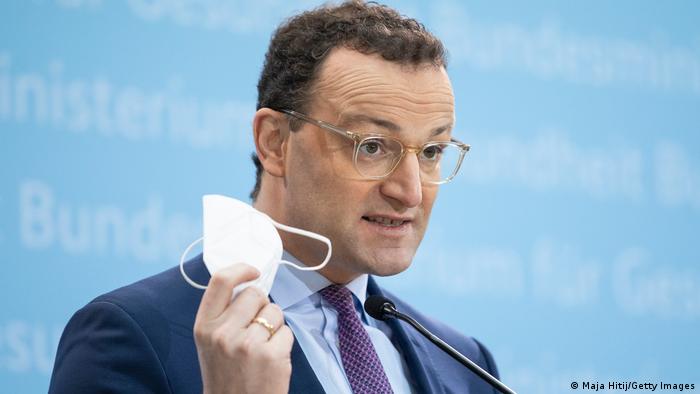

Jens Spahn has come under fire after a report emerged, detailing Health Ministry plans to hand out untested face masks to vulnerable groups

German Health Minister Jens Spahn is facing fierce cross-party criticism after a report emerged about his ministry's plans to dispose of unusable face masks by handing them out to vulnerable groups amid the coronavirus pandemic.

The Health Ministry on Saturday hit back at the claims made in the German magazine Der Spiegel, saying all its masks had been tested to a high standard and that protection of the wearer was its top priority.
The unfit face mask scandal

The magazine on Friday reported that the Health Ministry had ordered face masks from China in Spring 2020 for an estimated €1 billion ($1.2 billion). The order was placed amid a global mask shortage and had not been tested to meet EU standards.

Due to this, the masks were unable to be used on arrival and needed to undergo emergency testing to be deemed fit for use.

The Ministry of Health under Spahn drew up plans to distribute the masks to the homeless, the disabled or Hartz IV benefit recipients, the magazine reported.

But the Ministry of Labor, which is responsible for mask safety, refused to give its approval to the plan.

Fierce cross-party criticism

Social Democratic Party (SPD) General Secretary Lars Klingbeil told Der Spiegel on Saturday that the plan was "outrageous and inhumane."

"The minister must explain himself about this as soon as possible, he cannot point the finger at others here," Klingbeil added.

"Attempting to get rid of useless masks by giving them away to needy groups in our society ... this is simply beyond cynicism and absolutely unacceptable," Katja Mast, parliamentary group vice chair, also of the SPD, wrote on Twitter on Saturday.


The parliamentary leader of the Left party, Jan Korte, said that it "no longer seems to matter that the health minister once again seems not to care about the health of disabled and socially-disadvantaged people if his own failures are covered up as a result."

He criticized the lack of a resignation "or any consequences."

The pro-business Free Democratic Party (FDP) Vice Chair Michael Theurer called for a special investigator from the Federal Audit Office to look into the issue of the unused masks, in comments to the Handelsblatt business newspaper.

Health Ministry defends claims


The Health Ministry hit back at the accusations on Saturday, saying that "strict attention" had been paid to quality during the procurement of medical goods, including face masks, during what it described as an "emergency situation."

It said such accusations were "not acceptable" and not based on facts.

As soon as the goods were identified as "defective," the ministry did not pay for them, the BMG added.

"The best possible protection of the citizens and employees living there was at all times in the foreground" when it came to delivering masks to facilities for homeless and disabled people, the ministry also stressed. "Other considerations played no role on the part of the BMG."


Where are the masks now?


According to Der Spiegel, there is currently a plan to store the masks in a national emergency reserve of the federal government. When they reach their expiration date, they will be destroyed.

But the BMG also disputed this, saying: "Decisions on the destruction of stocks have not been made by the federal government." The masks were fully usable for infection control, it said. The BMG said there were plans to transfer the masks to the newly created National Reserve for Health Protection.

kmm/sri (AFP, dpa)
Namibia genocide: Mbumba says Germany's payment is 'not enough'

The Germany-Namibia genocide accord is on track to be ratified by the Namibian parliament. But Namibian Vice President Nangolo Mbumba is not happy with the amount of money pledged by Berlin.


Nangolo Mbumba thinks Germany's compensation sum is 'not enough'


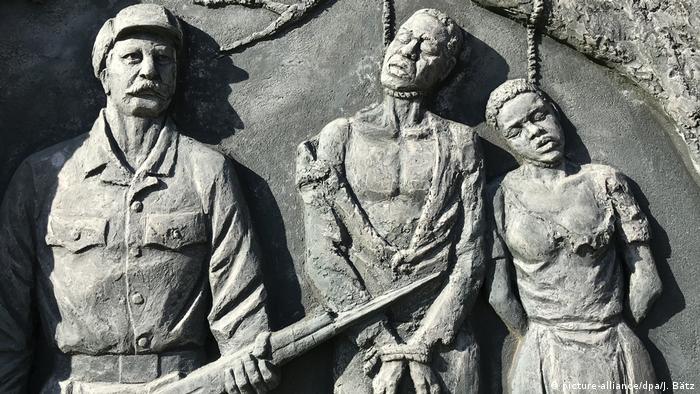
A German infrastructure program for Namibia — worth €1.1 billion ($1.4 billion) — was no adequate compensation for an early 20th century colonial-era genocide, the Southern African country's vice president said on Friday.

"We need to recognize that the amount of 1.1 billion euros agreed upon between the two governments is not enough and does not adequately address the initial quantum of reparations initially submitted to the German government," Vice President Nangolo Mbumba told a press conference.

"No amount of money in any currency can truly compensate the life of a human being."

Mbumba is only the latest Namibian public figure to criticize the amount offered on May 28 by former colonizer Germany for the massacre of tens of thousands of Herero and Nama people from 1904 to 1908.

The politician also said that Germany "has agreed to commit to revisit and renegotiate the amount as the implementation of the reparations ensues."

The bilateral deal has yet to be ratified but will likely be approved by Namibian lawmakers.


Herero chief Vikuii Reinhard Rukoro says he and other Namibian leaders are still unhappy about the deal with Germany

Why is the deal controversial in Namibia?

The two nations reached the financial agreement last week as part of a deal in which Germany acknowledged the massacres were a genocide. The accord marks the end of negotiations that had begun in 2015.

Many Namibians have since rejected the outcome of the talks and dismissed the offered amount as insulting. They called on Germany to directly compensate victims in the form of "reparations" — a term Berlin has pointedly avoided. Many are also angry over a statement by German Foreign Minister Heiko Maas, who said that the killings were a genocide "from today's perspective."

German President Frank Walter-Steinmeier is expected to give an official reconciliation speech to the Namibian parliament, although the date for his visit has yet to be announced. In an interview published by German tabloid newspaper Bild on Saturday, a senior Herero chief, Vikuii Reinhard Rukoro, warned that some opposition politicians were planning to disrupt Steinmeier's address. Rukoro also said he himself wanted to "expose" Germany and cause a diplomatic incident.

Previously, Vice President Mbumba urged Namibians to "remain calm" and "think deeply" about their response to the deal.

"We have made remarkable progress over the past five years of negotiations and there is an opportunity we should not waste," he added.

Watch video02:50 Namibia: Mixed reactions to compensation deal with Germany


What did Namibia's top negotiator tell DW?


Zed Ngavirue, the chief negotiator for the Namibian government said he was confident in the deal and that he expects it to be formally approved:

"I'm satisfied that we arrived at a common understanding," he told DW on Thursday.

Ngavirue also defended the amount of financial aid agreed under the deal. "The damage that we suffered is incalculable. Loss of life, loss of land, loss of stock, slave labor and so on. When you are negotiating with another party, you want to know what is realizable," he said.

What happens next?

The agreement is being reviewed by Namibia's Attorney General and will be presented to parliament for ratification next week.

If Namibia's parliament ratifies the document, it can be signed by the foreign ministers of the two countries.

Mbumba said all ethnic groups will be called upon to make sure the agreement is successful and to help plot a path toward the future. "A lot of work lies ahead," he said.

kmm/dj (AFP, Reuters, dpa)
Colombia president announces policing changes after protest criticism

The government has announced an effort to "modernize" the nation's police force after accusations of police brutality during recent anti-government protests.


Protesters want Duque to denounce excessive use of force by police

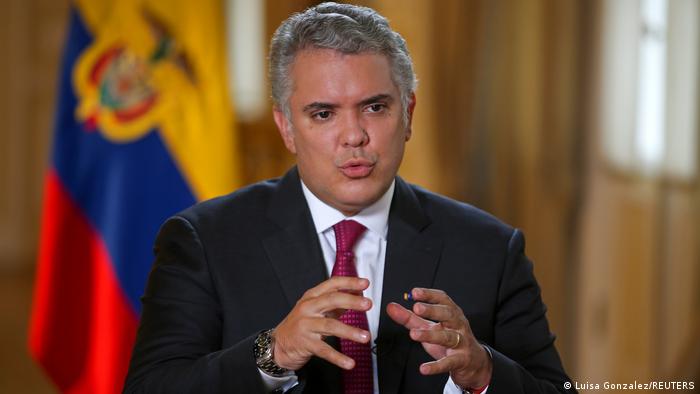
Colombian President Ivan Duque on Sunday announced plans to "modernize" the country's police, who have been widely criticized forviolently curbing recent anti-government protests.

Calling for a "transformation" of the national police, Duque announced "a decree that will modernize the structure of the national police, especially to strengthen the policy... on human rights."

Changes to police force


Duque said a human rights directorate headed by an outside expert would be created as part of the changes. The Defense Ministry said in a statement that there would be a training review, use of ID badges and bodycams, and better follow-up of citizen complaints.

Congress is expected to approve the creation of the directorate this month, which will seek international help for the creation of policies.

Colombian troops tighten grip on Cali following more protests


Defense Minister Diego Molano told AFP news agency that there would be "professionalization so that all police officers are trained in (human) rights and use of force."

The announcement came as a delegation from the Washington-based Inter-American Commission on Human Rights (IACHR) arrived in Colombia for a four-day visit to the country to evaluate the clashes in the cities of Bogota and Cali. The delegation was greeted by hundreds of supporters on the streets of Bogota.


Watch video 02:12BProtesters in Colombia condemn police crackdown

Protests continue


Demonstrations that started on April 28 against proposed tax hikes have turned into widespread protests against the government's social and economic policies. The police has been accused of using excessive force to quell the protests.

At least 61 people, mostly civilians, have died in the clashes.

The government has blamed blockades by protesters for crippling the nation's economy.

Watch video 02:27 Colombia calls in army to quash anti-government protests

Government delegates and protest leaders have held talks aimed at defusing the crisis, so far without success. Protesters want Duque to denounce excessive force by police and act to address yawning inequities in the country.

tg/sri (AFP, Reuters)
German church officials face charges for helping refugees

The number of legal cases against members of the Catholic Church is on the rise, as the German government takes a harder stance against asylum seekers taking refuge in churches.

 "It must not be that this act of Christian charity is made impossible by the threat of punishment from the state."


German churches have taken in hundreds of refugees over several decades


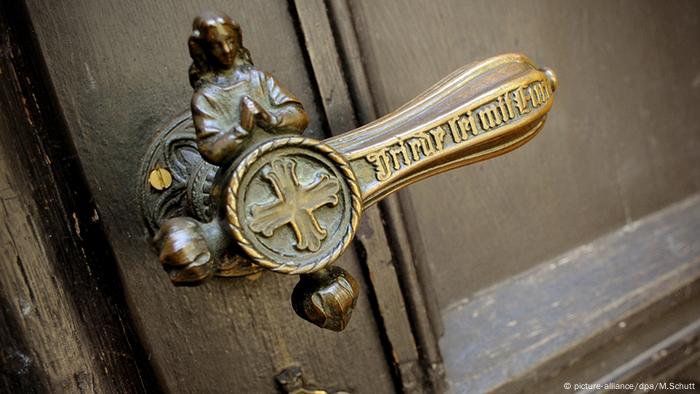
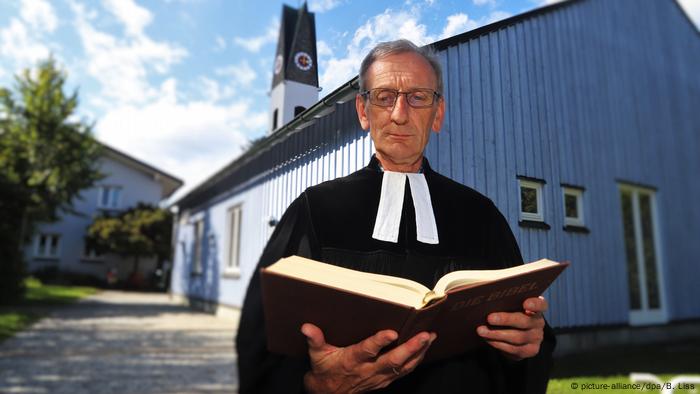
Juliana Seelmann, a nun from the Franciscan nunnery at the Oberzell monastery in southern Germany, was found guilty this week of aiding the unauthorized residence in Germany of two Nigerian women. She was fined several hundred euros.

She had aided two women from Nigeria who said they were trying to escape forced prostitution in Italy, where they had first fled to. After German officials sent them back to Italy, where forced prostitution again awaited them, they were able to find their way into the church's protection, under a practice often referred to in Germany as "church asylum." 


Juliana Seelmann was found guilty of aiding the unauthorized residence in Germany of Nigerian refugees

Church asylum means the temporary admission of refugees by a parish in order to avert deportation. The aim is the resumption or reexamination of the asylum or immigration procedure for the individual refugee. The practice has a long history in Germany.

After the influx of refugees to Germany in 2015 and 2016, several asylum-seekers saw their applications rejected.

Churches prevented 498 deportations in the first quarter of 2018, but in 2019 authorities rejected almost all church asylum cases. The nuns and priests point to article 4 of the German constitution, which guarantees the freedom of faith and conscience.

That is also what nun Seelmann cited in her defense


No legal exception for the churches


But German prosecutors argue that church premises do not enjoy any legal exception or special status. And police and the public prosecutor's office must have access to the people staying there to conduct deportations if these have been ordered.

So several priests or nuns who gave refugees refuge on church premises have been prosecuted for violating German law. Seelmann's case is the third within the span of only a few years.

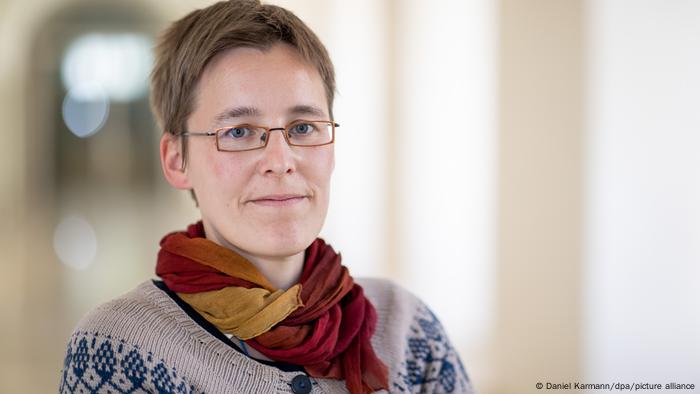
Mechthild Thürmer, the abbess of a Bavarian monastery, grabbed the headlines of German newspapers in 2020.

Over several decades she has given refuge to dozens of refugees. In 2020, she was charged with illegally aiding individuals to avoid deportation and was found guilty. She said she received several offers from others to pay her fine of €2,500 ($3,051), but she declined. She is refusing to pay.

"People in such a terrible situation need help," she told DW. 


Mechthild Thürmer


Thürmer argues that in the end, no German court would find someone guilty for trying to help — it is a Christian's "highest duty." A guilty verdict would be simply "inhumane," she said.

"Every person's dignity is equal," she added, paraphrasing the German constitution. "It says, ‘every person.' Not 'every German.'"

In 2019, Protestant pastor Ulrich Gampert was sentenced by a court in southern Germany to pay a fine of €3,000 for taking in an Afghan refugee who had been scheduled for deportation.
Making church asylum 'more difficult'

The latest round of cases does not come as a surprise to Dieter Müller, a Jesuit and deputy chairman of the nonprofit Asylum in the Church. Müller told DW that there has been a "steep rise" in investigations into church asylum in Bavaria since 2017. The southern state's public prosecutor confirmed this. Many of the hundreds of cases against church officials and other members have been dismissed.

"I've had four cases against me, all dismissed," Müller said, though criminal charges are now afoot.

"We're witnessing an escalation," he said. "The case won't be dismissed. Instead, it'll be fully prosecuted in court because three people have so far refused to pay fines."

The state's legal action is an "effort to make church asylum more difficult," Müller said.


Protestant Pastor Ulrich Gampert was sentenced to a fine of €3,000 for taking in an Afghan refugee

Germany introduced a hardship commission in 2005, which re-examines individual cases of rejected asylum seekers. This offers an alternative to church asylum and offers individuals a legal possibility for having their cases revisited.

German politicians rarely comment on the issue of church asylum. But in what is termed a "major election year," activists took the opportunity of an Ecumenical Church Congress in Frankfurt in May to write to the three leading politicians who were present.

Recently, a group of church officials and laypeople put the question of church asylum to top politicians in a letter-writing campaign. Armin Laschet of the Christian Democrats, Olaf Scholz of the Social Democrats, and Annalena Baerbock of the Green party are running to replace Angela Merkel as chancellor in September's general election.

All three were asked whether church asylum can be legally justified. So far only Baerbock replied, writing: "It must not be that this act of Christian charity is made impossible by the threat of punishment from the state."

The Green party politician, who has been riding high in the polls, went on to say that church asylum is often the last "lifeline" for t
hose affected. A constitutional state that wants to prevent this "shows weakness, not strength," she said.

This text has been translated from German.
CRIMINAL CAPITALI$M
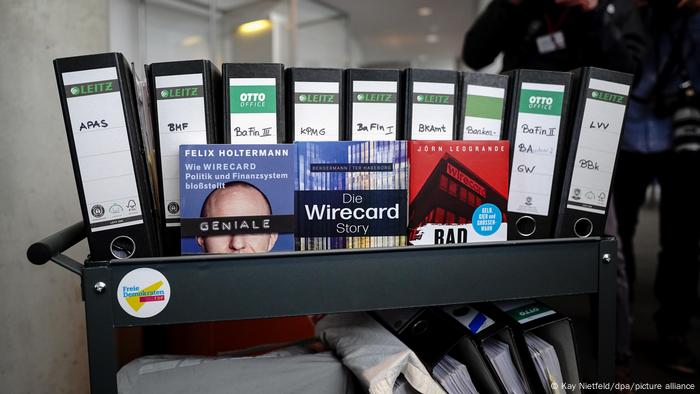
Wirecard: German Parliament slams Scholz and Merkel

A committee of lawmakers in the Bundestag has published its inquiry into the Wirecard fraud affair. The damaging report comes months before Germany's general election.


The committee report has mirrored what lawmakers have long said about the Wirecard affair

The public inquiry into the Wirecard scandal published its concluding report on Monday, criticizing Germany's Finance Minister Olaf Scholz and Chancellor Angela Merkel.

The parliamentary committee consisting of opposition lawmakers ended a monthslong investigation into the scandal with the publication of a 675-page draft report.

The report called out Scholz, who is also the chancellor candidate for the Social Democrats, for his oversight and mishandling of the biggest fraud scandal in post-war Germany.

"Olaf Scholz as finance minister bears political responsibility for the failure of BaFin," the report said. BaFin is Germany's financial regulator and part of Scholz's ministry.

The committee also said that Merkel had been naive about the lobbying efforts by Wirecard.


VIDEO Left Party member of Bundestag: Merkel bears 'personal responsibility' for Wirecard scandal

What was the Wirecard scandal?

Wirecard was once the poster-child for Germany's financial technology sector. Set up in 1999, it processed online payments for gambling and pornography sites. It eventually grew into a top financial services provider with huge growth potential that many people had been encouraged to invest in.

Even Chancellor Merkel herself lobbied on behalf of the company during a trip to China in 2019.

However, in June 2020 the company filed for insolvency after admitting that €1.9 billion ($2.3 billion) supposedly held in trust accounts didn't exist. It was also found to be massively in debt and faced accusations of having falsified balance sheets for years.
What was the outcome of the scandal?

Following the revelations, Wirecard's CEO Markus Braun was detained and its COO Jan Marsalek went into hiding, landing on Europol's wanted list.

Scholz was grilled by the inquiry committee, but rejected the accusation that he was responsible. He argued that most of Wirecard's criminal activity happened before he took office in 2018.

Merkel was also questioned by the committee. However, of the two only Scholz is standing in this year's general election.


#KASHMIR IS #INDIA'S #GAZA
Kashmir: India tightens grip on government-critical state employees


A series of dismissals of public servants in Kashmir has triggered fears that India is clamping down on state workers in the region. The dismissals were issued under the pretext of protecting "state security."


Six public employees have been dismissed under the pretext of protecting state security

Muhammad Yusuf Ganaie, a schoolteacher in Indian-administered Kashmir, found out that he was fired from his job through a Facebook post last month.

He was the sixth employee in the region to be sacked under the pretext of protecting the "security of the state," and the series of dismissals has sparked fears of a widespread effort to tighten the political reins on public servants in the region.

The General Administration Department issued the order on May 20, shocking Ganaie's family members.

Zahid Ahmad, Ganaie's younger brother, told DW the dismissal was an "injustice."

No specific reasons were given for the sackings, and the six employees affected so far include three teachers, an assistant professor, a police officer and a revenue official.

Critics have called the latest dismissals an effort to intimidate public servants and those who have participated in anti-India protests.

Watch video 09:43 India-Pakistan conflict: A ticking time bomb

'A harsh punishment'


"This order is a harsh punishment," Ahmad said. "This is harming the future of my brother's children," he added.

Ahmad said that his brother, a 42-year-old math teacher at a boys' school, was suspended after being accused of throwing stones during mass uprisings in 2016 against the killing of young insurgent commander Burhan Wani.

After spending a year in jail, Ganaie was again arrested in 2019 when the region's government launched a massive clampdown on leaders, traders and young people.

"He spent two years in jail, and he was hopeful that he would be reinstated. But now his dismissal comes as a shock to the whole family," Ganaie said.

On the day that he was sacked, a similar order of dismissal was issued for two more people, including a teacher from the same district and Devinder Singh, a police officer who was suspended after being caught last year with a Hizbul Mujahideen militant while traveling in a car in south Kashmir.

"Dismissing them without mentioning the reason is not justifiable," Ahmad added.

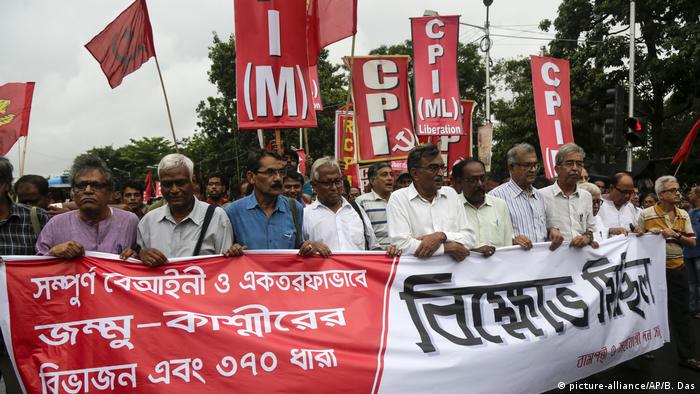
Watch video03:07 Delhi: Hundreds rally against India's Kashmir policy

Scrutinizing 'anti-national activities'


On April 27, the regional government, which underwent many political changes after being stripped of its limited autonomy in August 2019, ordered the formation of a special task force to scrutinize the cases of employees suspected of being involved in "anti-national activities."

The six employees were fired under an article of the constitution that gives the government authority to remove a public servant from their role without any inquiry.

Critics say the article, which was implemented in 2019, is meant to "instill fear and silence among Muslims in the region."

Muhammad, 43, a government employee from the southern district of Shopian, also feels that the dismissals are discriminatory.

"They can fire anyone, and it's an attack on us because of our religious identity,” Muhammad said.

"At some point in time, everyone, including small children or even women, have been part of the anti-India protests," he said.

The Jammu and Kashmir government is the largest employer in the region, with nearly 450,000 employees.

New hires must undergo 'verification'


On March 3, the regional government passed an order saying that no new employee would be paid their salary or allowances until they had undergone a verification process by the top investigative agency, the Criminal Investigation Department (CID).

The new hires were asked to submit details about their social media accounts like Twitter, Facebook and Instagram, which many experts said "targets freedom of expression."

The government made a change to the Jammu and Kashmir civil service regulations, allowing the authorities to forcibly retire any public servant over 48 years old or who has completed 22 years of service. Many have said the change was politically motivated.

An official involved with the development told DW that the changes are, however, not religiously or regionally motivated.

"Some elements are trying to present it as religiously motivated, but it is not," the official said, adding that all of the employees dismissed so far have been "involved in anti-national activities."

Another official said the sackings took place after finding "proper evidence" of such activities.

"Some people are prone to misconduct that leads to violence in society, and they continue to enjoy the privileges of being public servants," the official said.

Watch video 02:43 Will Kashmir's young politicians bring hope to the region?

Political parties slam sackings

Political parties in the region have condemned the random firings as "inhuman and cruel."

The National Conference, the pro-Indian political party that has ruled for most of the last seven decades in the region, said the measures would "alienate" people.

"The government should have focused on boosting coronavirus care rather than firing employees in an elusive manner in which they cannot even resort to legal recourse to protect their rights," the party said in a statement.

The pro-freedom political parties led by Mirwaiz Umar Farooq called the actions a form of "harassment of government employees."

"To render people jobless in such a manner by invoking a draconian law is intimidation," said Farooq, who heads the All Parties Hurriyat Conference (APHC), a coalition of separatist leaders in the region.

Meanwhile, Habeel Iqbal, a lawyer based in Kashmir, told DW that dismissing an employee from service "without hearing him is against the basic principles of natural justice.”

"It (dismissal) shall be used in exceptional circumstances, to maintain the larger public good," he said, adding that it's "difficult to imagine how a teacher or an assistant professor could be a threat to the national security of a powerful country like India.

"These decisions are subject to judicial review, and I am hopeful that the courts will quash these dismissal orders," he said.

Living Planet: First Nations alternatives to industrial farming in Iowa

Iowa's industrial agricultural system suffered massive damages after a storm tore through the area in August 2020. But between the vast monocultures of soy and ethanol corn, the Indigenous Meskwaki Nation grows food using different techniques that may provide key lessons for farmers wanting a more resilient and sustainable agricultural system in the face of increasingly severe climatic changes.


Climate inaction will cost G7 countries 'billions'

Oxfam has called on the leaders of the G7 countries to pursue greater cuts to emissions or face economic consequences worse than those caused by coronavirus.


Oxfam has warned the G7 countries of the economic impacts of not taking measures to keep global temperature rises to below 1.5 degrees

The world's richest countries face billions of dollars in economic losses if they fail to take stringent measures to curb climate change, Oxfam said on Monday, citing research by the Swiss Re Institute.

According to the report, the G7 (Group of Seven) economies — Germany, France, Italy, Japan, Canada, the UK and the US — could see annual average losses of up to 8.5% by 2050 if CO2 emissions continue unabated.

Total losses could amount to $4.8 trillion (€3.95 trillion) a year, double the GDP losses caused by the coronavirus pandemic.

What did the report reveal?

The Swiss Re report looked out how different aspects of changing climate, including heatwaves, rising sea levels and degradation of agricultural land, may impact economic activities in 48 countries.

Although the report concluded that the richest countries would be badly hit by the consequences of runaway climate change, poorer countries would fare much worse.

It predicted that up to 35% of the Philippines' economy could be wiped away while India, home to over 1.3 billion people, may see its economic activity shrink by 27%.

Oxfam added that between 32 and 132 billion people could be pushed into extreme poverty by 2030 due to climate change, citing a recent report by the World Bank.


What is Oxfam's message for the G7?

Oxfam called on the leaders of the G7 countries to immediately increase the pledges to cut carbon emissions, pointing out that most were falling short of necessary reductions to keep global warming below 1.5 degrees.

The charity also demanded that the G7 countries — who represent some of the world's worst emitters of CO2 historically — stick to their pledge to provide $100 billion annually to help poorer countries deal with the impacts of climate change.

"The economic turmoil projected in wealthy G7 countries is only the tip of the iceberg: many poorer parts of the world will see increasing deaths, hunger and poverty as a result of extreme weather. This year could be a turning point if governments grasp the challenge to create a safer, more liveable planet for all," Oxfam expert Mark Lawson said.


6 CITIES AT RISK OF CHRONIC FLOODING
Shanghai (China)
Ninety-three million people currently live on land in China that could be inundated by 2050 due to the localized coastal flooding, according to research by independent US-based science organization Climate Central. Shanghai, which is China's most populous city, is expected to be particularly vulnerable to ocean flooding as it lacks coastal defenses.   PHOTOS 123456

The leaders from the G7 countries are meeting in the UK later this week.

"The economic case for climate action is clear ― now we need G7 governments to take dramatic action in the next nine years to cut emissions and increase climate finance," Lawson said.
Malala Yousafzai features on Vogue UK's July cover

The youngest woman to receive the Nobel Peace Prize joins a list of activists and cultural celebrities to grace the cover of the fashion and lifestyle magazine.


Malala Yousafzai: The outspoken survivor

As a 15-year-old, Malala was shot by the Taliban in Pakistan because she spoke up for girls' education. In 2014, she received the Nobel Peace Prize. The now 23-year-old features on the cover of Vogue UK's July edition, in which she discusses the limits of online activism: "Right now... we have associated activism with tweets. That needs to change, because Twitter is a completely different world."


PHOTOS 12345678910

Opinion: US voting rights restrictions are a warning to all democracies

New restrictive voting laws in many Republican-ruled US states are hollowing out citizens’ basic civil rights, especially those of African Americans. DW’s Ines Pohl says an existential attack on democracy is underway.


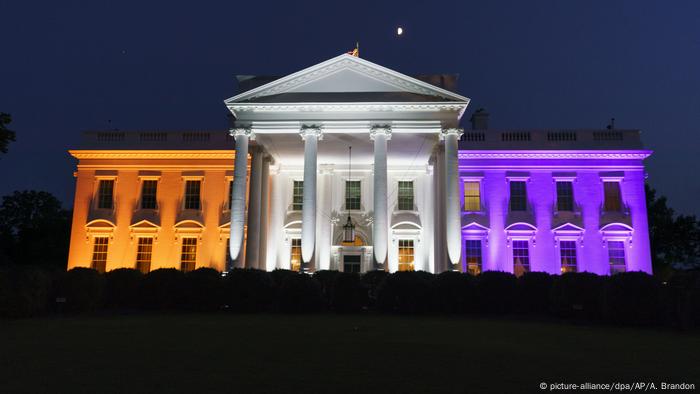
The person who resides here should represent all Americans, irrespective of gender, skin color, religion or origin


On the surface, it all seems to be nothing more than a classic US power struggle of the kind presented to the rest of the world in many a Netflix series. In this two-party country, it is often a dubious political custom to thwart the other party by any means and to prevent the ruling party from scoring any political successes in order to win back a majority in at least one, if not both, houses in the midterm elections. And it should not be forgotten: These are tactics that Democratic politicians have also used in the past.

But what is currently happening in the US is something more fundamental, more existential. After four years of Donald Trump and a Republican Party that remains firmly caught in his web of lies, it is nothing less than the entire political system that is at stake. That may sound exaggerated, but it is not.
Preventing Black Americans from voting

A true democracy is characterized by the fact that all citizens have the right to vote freely and secretly, regardless of origin, sexual orientation, religion, age or income. But it is precisely this right that is currently being undermined in parts of the US. Republican governments in 14 states have already changed election laws, and several more are set to do so. The goal is to minimize the ability of Blacks and other minorities to influence the outcome of elections and to bolster the Republican Party's hold on power. This is how the party is trying to secure its future in a country where the white majority will be a thing of the past in a few years' time.

Ines Pohl heads the DW studio in Washington, DC

To this end, boundaries of congressional districts are being redrawn, it is being made mandatory to present proof of identity to vote, non-recent signatures are being declared invalid and absentee voting is being abolished or made more difficult. The state of Texas is even going so far as to prohibit voting on Sunday mornings — the time many Black Americans tend to head for polling stations, combining their democratic rights with their churchgoing.

What's most dangerous, however, are the legal reforms making it much easier for election commission chairs to simply declare elections invalid. To put this in context: A broad majority of Republicans claim to this day — without any evidence and despite all recounts to the contrary — that Donald Trump actually won the presidential election last November.
What's at stake

These are extremely grim developments with hardly foreseeable consequences — not only for the upcoming midterm elections at the end of 2022, but also for the next presidential election in 2024. That's because ultimately, both chambers, the Senate and Congress, must certify the results of the vote by the so-called Electoral College so that the president elected by the people can actually take office.

It was precisely this process that Donald Trump's supporters tried to stop on January 6 by storming the Capitol. Since then, democratic forces within the United States have been in a state of alarm and realize just what is at stake.
All democracies should pay close attention

All democracies around the world should watch the situation in the US closely and draw lessons from it:

1. There is no such thing as being a bit anti-democratic. Forging coalitions with anti-democratic persons and parties as a strategy to gain or retain power is a bad idea. The Republicans are discovering they can no longer restrain the populist spirit unleashed by Donald Trump.

2. No one has found an answer to the question of how to break up social media echo chambers. The US is a disturbing example of how quickly facts can be replaced by lies when the latter support people's own worldview.

3. Politicians' credibility starts with respect for voters. The presidency of Donald Trump was made possible partly by the arrogance of the liberal political elite, which simply ignored the concerns of many Americans.

4. Democracies can survive only with an independent, critical media that is capable of dialogue and reaching a broad public.

5. And the most important thing of all is educating young people in media literacy and encouraging them to think for themselves. It all starts at school. But that is also where everything can end.

This article has been translated from German