Wednesday, June 16, 2021


Junk food diet may boost risk of dangerous driving among truck/lorry drivers

Unhealthy diet linked to greater fatigue: Key factor in heightened crash risk, say researchers

BMJ

Research News

A junk food diet may increase the risk of dangerous driving among truck/lorry drivers by boosting fatigue, which is often a key factor in vehicle collisions, suggests research published online in the journal Occupational & Environmental Medicine.

Some 1.35 million people die in road traffic collisions every year, with professional drivers at greater risk because of the time they spend behind the wheel.

There are several known contributory factors, among which gender, age, experience, driving skills and attitudes seem to be important, note the researchers. But lifestyle may also be a factor, particularly as long distance driving often involves sleep deprivation, unhealthy dietary habits, and limited physical activity, they add.

Few studies have looked at the potential impact of dietary patterns on driving behaviours among professional truck/lorry drivers.

To try and plug this knowledge gap, the researchers assessed whether dietary patterns, fatigue, and driving behaviour might be linked in a sample of 389 male truck drivers from one transport company in Suzhou, China.

Most of the drivers were aged between 31 and 60, with 6 to 10 years of experience under their belts, and an annual tally of between 50,000 and 100,000 km on the road.

Each driver was asked to specify how much and how often they ate any of 25 food items over the previous 12 months in a Food Frequency Questionnaire.

They also completed the Multidimensional Fatigue Inventory, which assesses physical and mental fatigue on a 5-point scale, as well as two validated questionnaires on driving behaviours and attitudes towards other drivers on the road.

Dietary patterns were categorised as: vegetable-rich; staple foods (high intake of carbohydrates, unrefined grains, dairy products and eggs; animal proteins (fish and poultry); and snacks (fried foods, desserts, and sugary drinks).

The vegetable-rich and staple food diets were strongly associated with safe driving behaviours.

The animal protein diet was strongly associated with higher rates of errors, concentration lapses, and minor traffic violations, while the snack diet was strongly associated with unsafe driving behaviour.

Fatigue likely mediated the impact of dietary patterns on driving behaviours, the findings indicated: vegetable-rich and staple food diets were associated with less fatigue, while animal protein and snack diets were associated with greater fatigue.

This is an observational study, and as such can't establish cause, only correlation. The study relied heavily on recall and self report. And the researchers didn't glean any information on potentially important factors, such as smoking, physical activity, shift patterns and work stress.

But they point out that eating a lot of unhealthy snacks is often associated with erratic meal-times and disturbed metabolism, which might affect many tasks that require vigilance, alertness, and concentration.

And they conclude: "The results of this study support a relationship between dietary patterns and driving behaviour in a sample of professional truck drivers.

"Moreover, through the pathway analysis reported, it is possible to conclude that positive driving behaviour can be predicted by prudent dietary patterns such as vegetable-rich diets, while some dangerous driving behaviours (errors, lapses and violations), can be predicted by unhealthy dietary patterns characterised by high intake of fats and [sugars]."

###

Externally peer reviewed? Yes
Evidence type: Observational
Subjects: Truck/lorry drivers


Association of a Sweetened Beverage Tax With Purchases of Beverages and High-Sugar Foods at Independent Stores in Philadelphia

JAMA Netw Open. 2021;4(6):e2113527. doi:10.1001/jamanetworkopen.2021.13527
Key Points

Question  How has the 2017 Philadelphia beverage tax factored into longer-term changes in beverage prices and purchases in independent food retail stores based on observational data?

Findings  This cross-sectional study found that, 2 years after tax implementation, price audits of stores showed 137% of the tax was passed through to prices and bag checks indicated a 42% decline in volume of taxed beverages purchased in Philadelphia compared with Baltimore. Total calories purchased from beverages and high-sugar foods declined, suggesting food substitution did not offset beverage declines.

Meaning  These findings suggest a city-level beverage excise tax was associated with persistent declines in purchases of sweetened drinks and calories from sugar in independent stores.

Abstract

Importance  The relationship between a sweetened beverage tax and changes in the prices and purchases of beverages and high-sugar food is understudied in the long term and in small independent food retail stores where sugar-sweetened beverages are among the most commonly purchased items.

Objective  To examine whether a 1.5 cent-per-fluid-ounce excise tax on sugar- and artificially sweetened beverages Philadelphia, Pennsylvania, was associated with sustained changes in beverage prices and purchases, as well as calories purchased from beverages and high-sugar foods, over 2 years at small independent stores.

Design, Setting, and Participants  This cross-sectional study used a difference-in-differences approach to compare changes in beverage prices and purchases of beverages and high-sugar foods (candy, sweet snacks) at independent stores in Philadelphia and Baltimore, Maryland (a nontaxed control) before and 2 years after tax implementation, which occurred on January 1, 2017. Price comparisons were also made to independent stores in Philadelphia’s neighboring counties.

Main Outcomes and Measures  Changes in mean price (measured in cents per fluid ounce) of taxed and nontaxed beverages, mean fluid ounces purchased of taxed and nontaxed beverages, and mean total calories purchased from beverages and high-sugar foods.

Results  Compared with Baltimore independent stores, taxed beverage prices in Philadelphia increased 2.06 cents per fluid ounce (95% CI, 1.75 to 2.38 cents per fluid ounce; P < .001), with 137% of the tax passed through to prices 2 years after tax implementation, while nontaxed beverage prices had no statistically significant change. A total of 116 independent stores and 4738 customer purchases (1950 [41.2%] women; 4351 [91.8%] age 18 years or older; 1006 [21.2%] White customers, 3185 [67.2%] Black customers) at independent stores were assessed for price and purchase comparisons. Purchases of taxed beverages declined by 6.1 fl oz (95% CI, −9.9 to −2.4 fl oz; P < .001), corresponding to a 42% decline in Philadelphia compared with Baltimore; there were no significant changes in purchases of nontaxed beverages. Although there was no significant moderation by neighborhood income or customer education level, exploratory stratified analyses revealed that declines in taxed beverage purchases were larger among customers shopping in low-income neighborhoods (−7.1 fl oz; 95% CI, −13.0 to −1.1 fl oz; P = .001) and individuals with lower education levels (−6.9 fl oz; 95% CI, −12.5 to −1.3 fl oz; P = .001).

Conclusions and Relevance  This cross-sectional study found that a tax on sweetened beverages was associated with increases in price and decreases in purchasing. Beverage excise taxes may be an effective policy to sustainably decrease purchases of sweetened drinks and calories from sugar in independent stores, with large reductions in lower-income areas and among customers with lower levels of education.

Introduction

Beverage taxes are a promising policy to reduce sugar-sweetened beverage (SSB) consumption. SSBs are more commonly consumed by communities of color and low-income populations,1-3 and excess consumption is associated with poor health outcomes.4-7 As of 2020, beverage taxes—ranging from 1 to 2 cents per fluid ounce—were implemented in 7 US localities. A tax in Philadelphia, Pennsylvania, enacted January 1, 2017, was for 1.5 cents per fluid ounce.

Mounting research suggests that beverage taxes are consistently associated with increased prices,8-20 and reductions in the volume of taxed beverages sold13-15,19-24 with considerable variation by retailer type and tax jurisdiction. There is some evidence that beverage taxes are associated with reductions in self-reported consumptions of SSBs, although results are mixed and many studies are limited by small sample sizes.22,24-27 One year after Philadelphia’s 1.5-cent-per-fluid-ounce tax on sugar- and artificially sweetened beverages, we found that small, independent stores passed-through 120% of the tax to prices and the fluid ounces of taxed beverages per purchase declined by 39%.14 Tax effects at small, independent stores have been understudied, despite SSBs being among the most commonly purchased items at these stores28-30 and the many shopping trips made to these stores in urban and low-income areas.28 Small business owners are also key stakeholders in beverage tax policy discussions, underscoring the importance of understanding small store sales in response to a tax. There are also limited data on whether initial reductions in sweetened beverage sales in response to these taxes persist beyond the first year. Mexico’s countrywide tax was associated with persistent reductions in taxed beverage sales 2 years later,23 but US city tax effects might lessen over time given the ability to cross city lines to avoid the tax. In addition, although 1 published study has found no evidence of substitution to high-calorie foods or alcohol in place of SSBs 1 year after Philadelphia’s tax,31 no studies have examined potential substitution over the longer term (ie, ≥2 years).

This study fills these gaps by evaluating the association between implementation of the Philadelphia tax and changes in beverage prices and fluid ounces purchased, as well as total calories purchased from beverages and high-sugar foods, 2 years posttax in a large sample of small, independent stores. We hypothesized the tax would be associated with significant beverage price increases and reductions in taxed beverage sales, with limited substitution to high-sugar foods. Our secondary aims examined differences by beverage sweetener status and container size as well as neighborhood income in neighborhoods where stores are located and customer education level.

Methods
Study Design

In this cross-sectional study, we used a difference-in-differences approach to examine pretax vs posttax beverage prices, fluid ounces purchased, and total calories purchased from beverages and high-sugar foods at small independent food retailers in Philadelphia compared with Baltimore, Maryland. Baltimore was the control city because it is geographically close to Philadelphia but does not border it and has a similar demographic composition.32 In prior work, we observed parallel trends in beverage volume sales among large, chain retailers in 2016 and therefore assumed it was similar for independent stores.15

Stores were included if they sold at least 3 of 31 beverages assessed on store audit forms (methods and forms published elsewhere14). Trained research assistants collected data on beverage prices and customer purchases at baseline (October-December 2016) right before the January 1, 2017, tax implementation date; 6 months after tax implementation (June-August 2017); 12 months after implementation (October-December 2017); and 24 months after implementation (October-December 2018). This article presents results from data sampled 24 months following tax implementation. Price data were also collected at small independent stores in untaxed, neighboring Pennsylvania counties to determine whether the tax was associated with prices at bordering stores.

Details on beverage categorization, data collection, and measures are described elsewhere14 and summarized below. This research was approved by the institutional review boards of the University of Pennsylvania, Harvard T.H. Chan School of Public Health, and the Philadelphia Department of Public Health. A waiver of informed consent was approved for adult participants. For adolescent participants, a waiver of parental consent was approved and verbal assent was obtained. This study followed the Strengthening the Reporting of Observational Studies in Epidemiology (STROBE) reporting guideline.

TO READ THE REST OR DOWNLOAD GO HERE

Association of a Sweetened Beverage Tax With Purchases of Beverages and High-Sugar Foods at Independent Stores in Philadelphia | Lifestyle Behaviors | JAMA Network Open | JAMA Network

Drug rebates for insurers tied to higher costs for patients, especially the uninsured

UNIVERSITY OF WASHINGTON

Research News

Federal agencies that regulate drug pricing and healthcare insurance are concerned that an industry practice of using rebates to lower drug costs for insurers has led to increases in list prices and out-of-pockets costs for patients.

To investigate whether patients with or without insurance were paying more because of rebates to insurers, researchers led by the University of Washington examined cost and price data on more than 400 branded drugs. The study found that rebates were associated with increases in out-of-pocket costs for patients by an average of $6 for those with commercial insurance, $13 for Medicare patients and $39 for the uninsured.

"We know that list prices have been increasing quite dramatically as have rebates, but no one has looked into the association between rebates and out-of-pocket costs," said study lead author Kai Yeung, an affiliate assistant professor at the CHOICE Institute in the UW School of Pharmacy. "Increases in out-of-pocket costs are associated with rebates, however rebates also help keep premium costs down."

Consequently, said Yeung, who is also an assistant professor at Kaiser Permanente Bernard J. Tyson School of Medicine, "There has been inadequate focus on the impact the pricing mechanism has on the uninsured, who are most affected."

For the study published June 14 in JAMA, the researchers used data on 444 branded drugs without generic equivalents from national datasets involving healthcare costs and drug prices from 2007 to 2018 including the federal Medical Expenditure Panel Survey and SSR Health, a private company that collects and analyzes prescription drug pricing data.

Researchers point out that the cost increases can impact patient health, since higher costs can cause patients to take their medication less often. That, in turn, can lead to increased emergency room use and hospitalizations. People in their study who did not have insurance had the poorest health and those with lower incomes were less likely to take medication as prescribed when costs increased.

"Further," the researchers wrote, "uninsured individuals were more likely to be in racial minority groups, amplifying pre-existing disparities in healthcare access."

As a result, the authors suggest future research and policies should focus on decoupling list prices from what patients pay out of pocket, "especially for uninsured individuals."

"The biggest takeaway is understanding that the rebates work to reduce the cost of prescription drugs for insurance companies and may reduce premiums," said co-author Anirban Basu, the Stergachis Family endowed director of the CHOICE Institute and professor of health economics at the UW School of Pharmacy. "And while it's unclear how much the discounts are reducing premiums, they are definitely not translating to lower out-of-pocket costs for the patients who are using the treatment because of this structure of coinsurance and copayments tied to the list price."

Stacie Dusetzina, Vanderbilt University School of Medicine, Nashville, Tenn., is also a co-author. This research was supported in part by grant funding from the Donaghue Foundation's Greater Value Portfol

STAR TREK TECH

Bending light for safer driving; invisibility cloaks to come?

Optical cloaks hide objects in plain view by controlling the flow of electromagnetic radiation around them

AMERICAN INSTITUTE OF PHYSICS

Research News

IMAGE

IMAGE: CLOAKING DEVICE REALIZED BY STANDARD OPTICAL COMPONENTS. view more 

CREDIT: FIGURE REPRODUCED WITH PERMISSION FROM SCI. REP. 6, 38965 (2016) COPYRIGHT 2016 SPRINGER NATURE LIMITED

WASHINGTON, June 15, 2021 -- Optical cloaking allows objects to be hidden in plain sight or to become invisible by guiding light around anything placed inside the cloak. While cloaking has been popularized in fiction, like in the "Harry Potter" books, researchers in recent years have started realizing cloaks that shield objects from view by controlling the flow of electromagnetic radiation around them.

In the Journal of Applied Physics, by AIP Publishing, researchers from the Toyota Research Institute of North America examined recent progress of developing invisibility cloaks that function in natural incoherent light and can be realized using standard optical components, part of ongoing research over the last two decades.

Invisibility cloaks potentially have a broad array of applications in sensing and display devices in warfare, surveillance, blind spot removal in vehicles, spacecraft, and highly efficient solar cells. The researchers examined blind spots that occur in vehicles, such as the windshield pillars, the stanchions that frame windshields.

"We are always looking for ways to keep drivers and passengers safe while driving," said author Debasish Banerjee. "We started exploring whether we could make the light go around the pillar so it appeared transparent."

Advances in metamaterials, engineered complexes of metals and dielectrics for manipulating electromagnetic waves, have opened up the possibility for realizing optical cloaks around an object by making incoming light bypass it.

Perfect optical cloaking requires the total scattering of electromagnetic waves around an object at all angles and all polarizations and over a wide frequency range, irrespective of the medium. This has not yet been achieved.

However, by simplifying the invisibility requirements, innovative work with spherical transformation cloaks, carpet cloaks, plasmonic cloaks, and mantle cloaks in narrowband microwave, infrared, and optical wavelengths has been accomplished over the last two decades.

"One of the real challenges is that we have to optimize optical elements around an object so that phase relationships are preserved," said Banerjee.

For optimization, artificial intelligence and machine learning may help resolve certain challenges. Algortihms can help solve the necessary inverse design problem in the context of practical cloaking devices.

These can be powerful tools to predict and analyze the optical responses of these devices or detectors without time-consuming and expensive simulations, which may raise the possibility of intelligent invisibility that is adaptive to movements, shapes, and the environment.

With the fast development of both AI-aided design and additive manufacturing capabilities, it is foreseeable that flexible cloaks that could function effectively at all incident angles with a high cloaking ratio and a wide field of view could be realized and mass-produced at low cost and high efficiency.

###

The article "Optical cloaking and invisibility: From fiction toward a technological reality" is authored by Kyu-Tae Lee, Chengang Ji, Hideo Iizuka, and Debasish Banerjee. The article will appear in the Journal of Applied Physics on June 15, 2021 (DOI: 10.1063/5.0048846). After that date, it can be accessed at https://aip.scitation.org/doi/10.1063/5.0048846.

ABOUT THE JOURNAL

The Journal of Applied Physics is an influential international journal publishing significant new experimental and theoretical results in all areas of applied physics. See https://aip.scitation.org/journal/jap.


Neanderthal and Early Modern Human Culture Co-existed Alongside Older Traditions for Over 100,000 Years

Neanderthal Caveman Early Human Concept

Research from the University of Kent’s School of Anthropology and Conservation has discovered that one of the earliest stone tool cultures, known as the Acheulean, likely persisted for tens of thousands of years longer than previously thought.

The Acheulean was estimated to have died out around 200,000 years ago but the new findings suggest it may have persisted for much longer, creating over 100,000 years of overlap with more advanced technologies produced by Neanderthals and early modern humans.

The research team, led by Dr. Alastair Key (Kent) alongside Dr. David Roberts (Kent) and Dr. Ivan Jarić (Biology Centre of the Czech Academy of Sciences), made the discovery whilst studying stone tool records from different regions across the world. Using statistical techniques new to archaeological science, the archaeologists and conservation experts were able to reconstruct the end of the Acheulean period and re-map the archaeological record.

Acheulean Technology Around the World

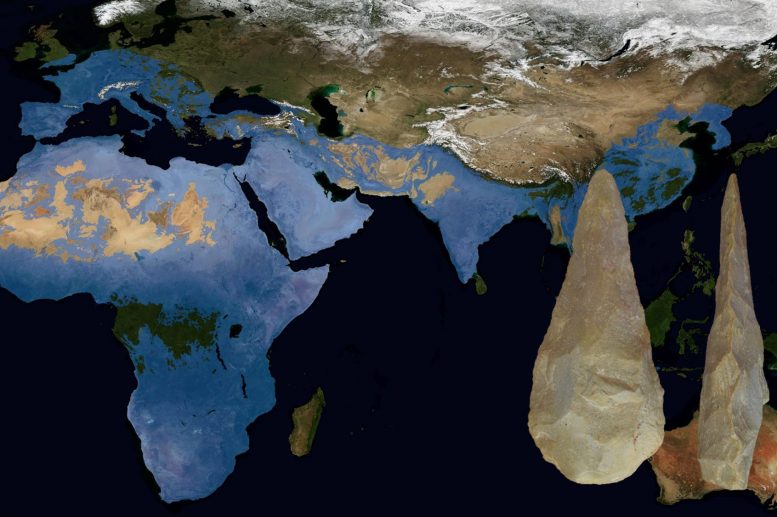
Map indicating the distribution of Acheulean technology around the world. Credit: Dr. Alastair Key

Previously, a more rapid shift between the earlier Acheulean stone tool designs often associated with Homo heidelbergensis – the common ancestor of modern humans and Neanderthals – and more advanced ‘Levallois’ technologies created by early modern humans and Neanderthals, was assumed. However, the study has shed new light on the transition between these two technologies, suggesting substantial overlap between the two.

Acheulean stone tool technologies are the longest-lived cultural tradition practiced by early humans. Originating in East Africa 1.75 million years ago, handaxes and cleavers – the stone tool types which characterize the period – went on to be used across Africa, Europe, and Asia by several different species of early human. Prior to this discovery, it was widely assumed that the Acheulean period ended between 300-150,000 years ago. However, the record was lacking in specific dates, and the timing of its demise has been heavily debated. The Kent and Czech team discovered that the tradition likely ended at different times around the world, varying from as early as 170,000 years ago in Sub-Saharan Africa through to as late as 57,000 years ago in Asia.

To understand when the Acheulean ended, the team collected information on different archaeological sites from around the world to find the latest known stone tool assemblages. A statistical technique known as optimal linear estimation – commonly used in conservation studies to estimate species extinctions – was used to predict how much longer the stone tool tradition continued after the most recent known sites. In effect, the technique was able to model the portion of the archaeological record yet to be discovered.

Dr. Key, a Palaeolithic Archaeologist and the lead author of the study, said: ‘The earliest archaeological record will always be an incomplete picture of early human behavior, so we know that the youngest known Acheulean sites are unlikely to actually represent the final instances of these technologies being produced. By allowing us to reconstruct these missing portions of the archaeological record, this technique not only gives us a more accurate understanding of when the tradition ended, but it gives us an indication of where we can expect to find new archaeological discoveries in the future.’

Dr. Roberts added: ‘This technique was originally developed by myself and a colleague to date extinctions, as the last sighting of a species is unlikely to be the date when it actually became extinct. It is exciting to see it applied in a new context.’

Their research paper ‘Modelling the end of the Acheulean at global and continental levels suggests widespread persistence into the Middle Palaeolithic’ is published by Humanities & Social Sciences Communications.

Reference: “Modelling the end of the Acheulean at global and continental levels suggests widespread persistence into the Middle Palaeolithic” by Alastair J. M. Key, Ivan Jarić and David L. Roberts, 2 March 2021, Humanities & Social Sciences Communications.
DOI: 10.1057/s41599-021-00735-8


The “Great Dying” – Rapid Warming Contributed to Abrupt Collapse of Forest-Mire Ecosystems

Outcrop Frazer Beach Australia

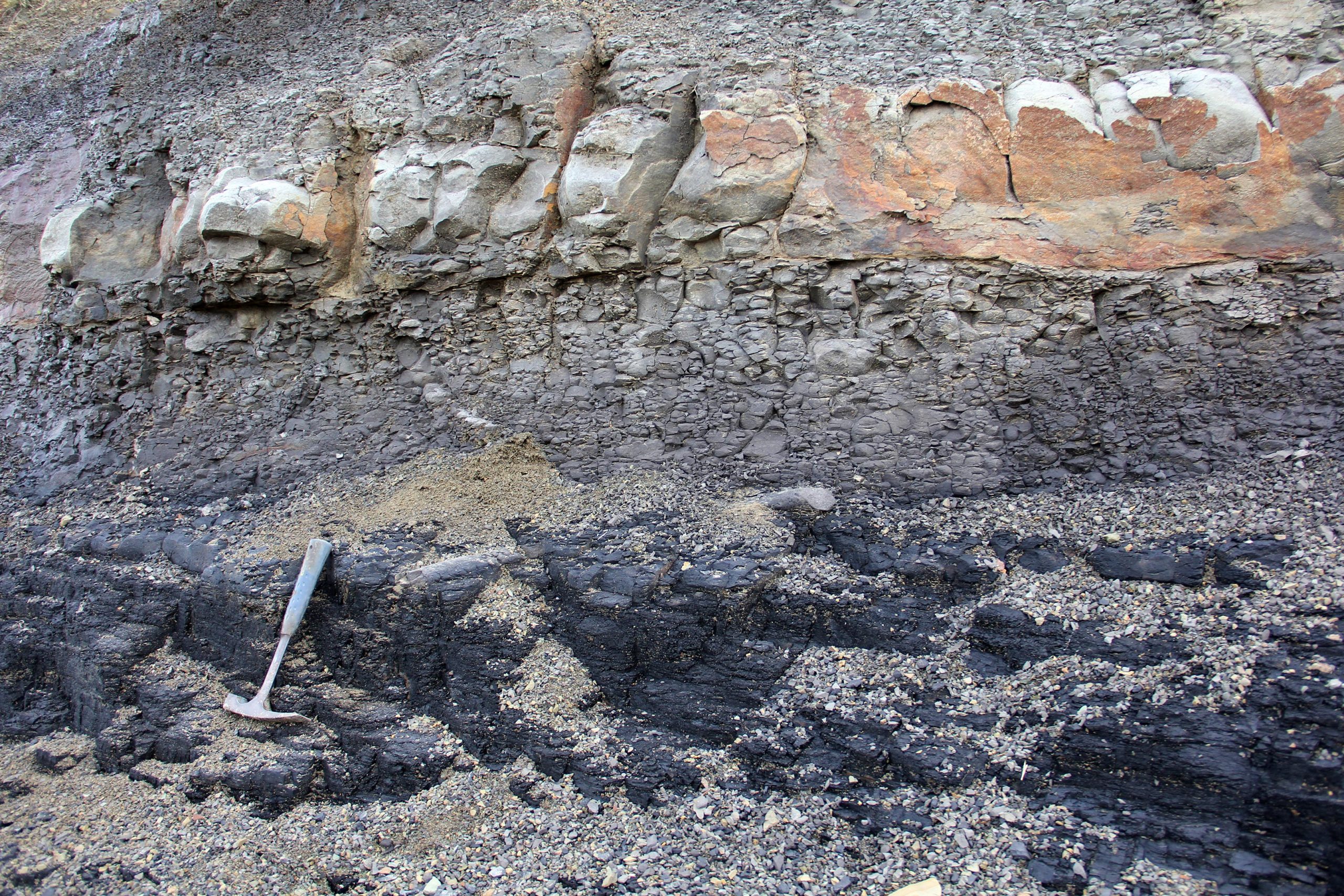
Outcrop photos are taken T.D. Frank and are from Frazer Beach, New South Wales, Australia. The end Permian extinction and disappearance of Glossopteris flora occurs at the top of the coal (black layer). Credit: T.D. Frank

Rapid Warming and Monsoonal Intensification Contributed to the Abrupt Collapse of Forest-Mire (Glossopteris) Ecosystems in the High Southern Latitudes

The Paleozoic era culminated 251.9 million years ago in the most severe mass extinction recorded in the geologic record. Known as the “great dying,” this event saw the loss of up to 96% of all marine species and around 70% of terrestrial species, including plants and insects.

The consensus view of scientists is that volcanic activity at the end of the Permian period, associated with the Siberian Traps Large Igneous Province, emitted massive quantities of greenhouse gases into the atmosphere over a short time interval. This caused a spike in global temperatures and a cascade of other deleterious environmental effects.

Glossopteris Leaves

Glossopteris leaves. Credit: Photo by co-author Chris Mays

An international team of researchers from the United States, Sweden, and Australia studied sedimentary deposits in eastern Australia, which span the extinction event and provide a record of changing conditions along a coastal margin that was located in the high latitudes of the southern hemisphere. Here, the extinction event is evident as the abrupt disappearance of Glossopteris forest-mire ecosystems that had flourished in the region for millions of years. Data collected from eight sites in New South Wales and Queensland, Australia were combined with the results of climate models to assess the nature and pace of climate change before, during, and after the extinction event.

Results show that Glossopteris forest-mire ecosystems thrived through the final stages of the Permian period, a time when the climate in the region was gradually warming and becoming increasingly seasonal. The collapse of these lush environments was abrupt, coinciding with a rapid spike in temperatures recorded throughout the region. The post-extinction climate was 10–14°C warmer, and landscapes were no longer persistently wet, but results point to overall higher but more seasonal precipitation consistent with an intensification of a monsoonal climate regime in the high southern latitudes.

Because many areas of the globe experienced abrupt aridification in the wake of the “great dying,” results suggest that high-southern latitudes may have served as important refugia for moisture-loving terrestrial groups.

The rate of present-day global warming rivals that experienced during the “great dying,” but its signature varies regionally, with some areas of the planet experiencing rapid change while other areas remain relatively unaffected. The future effects of climate change on ecosystems will likely be severe. Thus, understanding global patterns of environmental change at the end of the Paleozoic can provide important insights as we navigate rapid climate change today.

Outcrop Frazer Beach

Outcrop photos are taken T.D. Frank and are from Frazer Beach, New South Wales, Australia. The end Permian extinction and disappearance of Glossopteris flora occurs at the top of the coal (black layer). Credit: T.D. Frank

Reference: “Pace, magnitude, and nature of terrestrial climate change through the end-Permian extinction in southeastern Gondwana” by T.D. Frank; C.R. Fielding; A.M.E. Winguth; K. Savatic; A. Tevyaw; C. Winguth; S. McLoughlin; V. Vajda; C. Mays; R. Nicoll; M. Bocking and J.L. Crowley, 19 May 2021, Geology.
DOI: 10.1130/G48795.1


New Species of Ancient Shark Discovered


By UNIVERSITY OF VIENNA JUNE 12, 2021


In a new study, an international team led by Sebastian Stumpf from the University of Vienna describes a fossil skeleton of an ancient shark, which is assigned to a new, previously unknown genus and species.

This rare fossil find comes from the Kimmeridge Clay Formation in England, a series of sedimentary rocks that was formed in a shallow, tropical-subtropical sea during the Upper Jurassic, about 150 million years ago. The fossil shark skeleton was found more than 20 years ago on the southern coast of England and is now held in the Etches Collection. Additional fossil shark specimens from it will be investigated in the years to come.


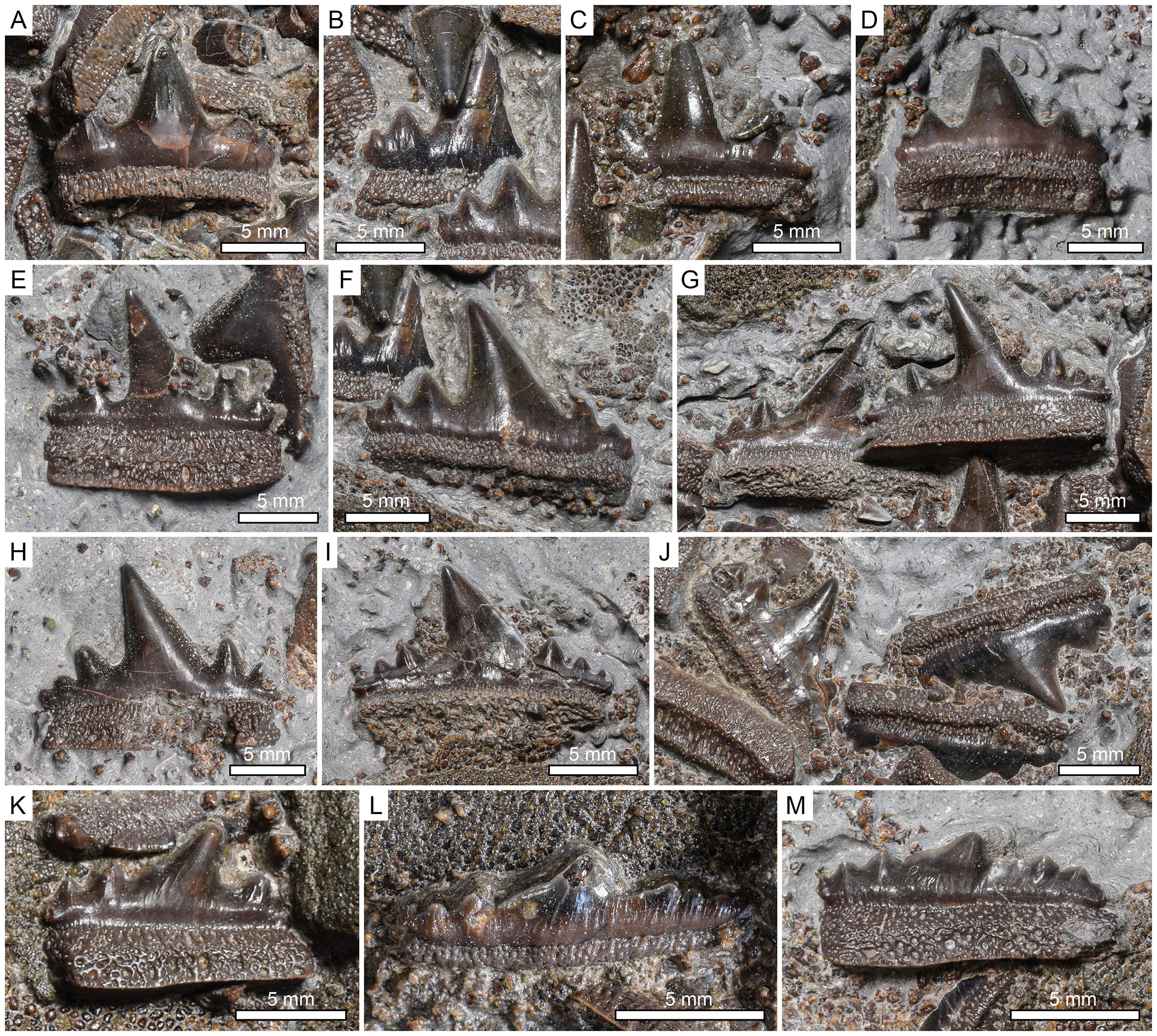
Teeth of the new hybodontiform shark Durnonovariaodus maiseyi from the Upper Jurassic Kimmeridge Clay Formation of England. Credit: © Sebastian Stumpf

Due to their life-long tooth replacement shark teeth are among the most common vertebrate finds encountered in the fossil record. The low preservation potential of their poorly mineralized cartilaginous skeletons, on the other hand, prevents fossilization of completely preserved specimens in most cases.

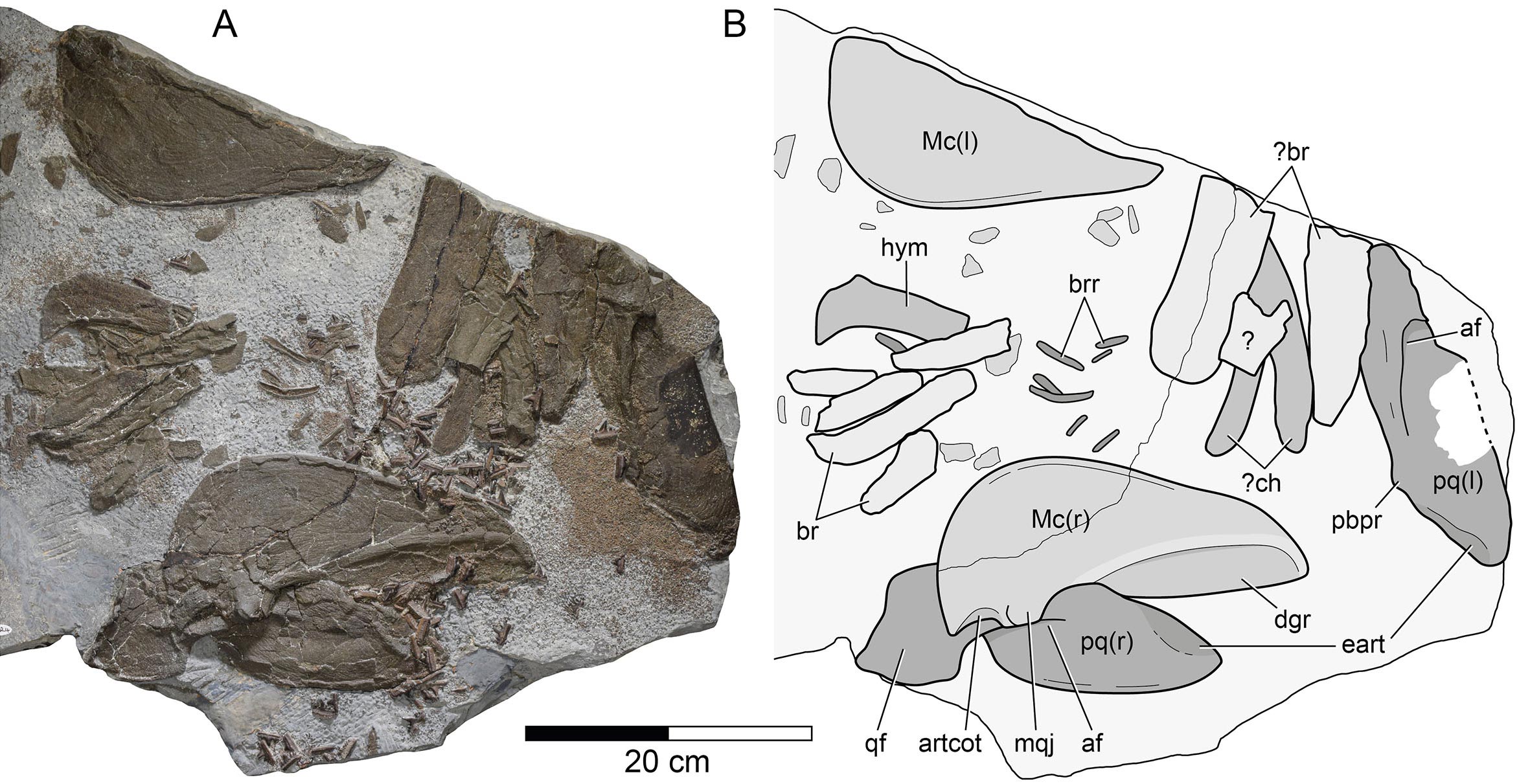
The new study published in the journal PeerJ and led by Sebastian Stumpf from the University of Vienna now presents the fossil skeleton of a new ancient shark from the Kimmeridge Clay Formation of England, a fossiliferous rock sequence that was formed during the Late Jurassic in a shallow, tropical-subtropical sea.

The new shark fossil, which is about 150 million years old, is assigned to a previously unknown genus and species of hybodontiform sharks named Durnonovariaodus maiseyi. This extremely rare fossil find was made almost 20 years ago on the southern coast of England and is now held and curated in the Etches Collection, which houses one of the most scientifically significant fossil collections in England.


Skull of the new hybodontiform shark Durnonovariaodus maiseyi from the Upper Jurassic Kimmeridge Clay Formation of England. Credit: © Sebastian Stumpf

Hybodontiform sharks are one of the most species-rich groups of extinct sharks and represent the closest relatives to modern sharks. They first appeared during the latest Devonian, about 361 million years ago, and went extinct together with dinosaurs at the end of the Cretaceous, about 66 million years ago. The new genus and species Durnonovariaodus maiseyi differs from all other previously described hybodontiform sharks, including those that are characterized by having similarly shaped teeth. “Durnonovariaodus maiseyi represents an important source of information for better understanding the diversity of sharks in the past as well as for new interpretations of the evolution of hybodontiform sharks, whose relationships are still poorly understood, even after more than 150 years of research,” says Stumpf.

The scientific importance of the Kimmeridge Clay Formation is underlined by additional, but still undescribed hybodontiform shark skeletons, which are also held in the Etches Collection. The research of fossil sharks from the Kimmeridge Clay Formation of England, which will be continued in the years to come, will certainly contain further surprises to be yet discovered.

Reference: “Durnonovariaodus maiseyi gen. et sp. nov., a new hybodontiform shark-like chondrichthyan from the Upper Jurassic Kimmeridge Clay Formation of England” by Sebastian Stumpf​1, Steve Etches2, Charlie J. Underwood3, Jürgen Kriwet1 , 11 May 2021, PeerJ.
DOI: 10.7717/peerj.11362


Malicious content exploits pathways between platforms to thrive online, subvert moderation

New research demonstrates how stopping the spread of harmful content will require inter-platform action

GEORGE WASHINGTON UNIVERSITY

Research News

IMAGE

IMAGE: MALICIOUS COVID-19 CONTENT (E.G. ANTI-ASIAN HATE) EXPLOITS PATHWAYS BETWEEN SOCIAL MEDIA PLATFORMS TO SPREAD ONLINE. view more 

CREDIT: NEIL JOHNSON/GW

WASHINGTON (June 15, 2021)--Malicious COVID-19 online content -- including racist content, disinformation and misinformation -- thrives and spreads online by bypassing the moderation efforts of individual social media platforms, according to new research published in the journal Scientific Reports. By mapping online hate clusters across six major social media platforms, researchers at the George Washington University show how malicious content exploits pathways between platforms, highlighting the need for social media companies to rethink and adjust their content moderation policies.

Led by Neil Johnson, a professor of physics at GW, the research team set out to understand how and why malicious content thrives so well online despite significant moderation efforts, and how it can be stopped. The team used a combination of machine learning and network data science to investigate how online hate communities sharpened COVID-19 as a weapon and used current events to draw in new followers.

"Until now, slowing the spread of malicious content online has been like playing a game of whack-a-mole, because a map of the online hate multiverse did not exist," Johnson, who is also a researcher at the GW Institute for Data, Democracy & Politics, said. "You cannot win a battle if you don't have a map of the battlefield. In our study, we laid out a first-of-its-kind map of this battlefield. Whether you're looking at traditional hate topics, such as anti-Semitism or anti-Asian racism surrounding COVID-19, the battlefield map is the same. And it is this map of links within and between platforms that is the missing piece in understanding how we can slow or stop the spread of online hate content."

The researchers began by mapping how hate clusters interconnect to spread their narratives across social media platforms. Focusing on six platforms -- Facebook, VKontakte, Instagram, Gab, Telegram and 4Chan -- the team started with a given hate cluster and looked outward to find a second cluster that was strongly connected to the original. They found the strongest connections were VKontakte into Telegram (40.83% of cross-platform connections), Telegram into 4Chan (11.09%), and Gab into 4Chan (10.90%).

The researchers then turned their attention to identifying malicious content related to COVID-19. They found that the coherence of COVID-19 discussion increased rapidly in the early phases of the pandemic, with hate clusters forming narratives and cohering around COVID-19 topics and misinformation. To subvert moderation efforts by social media platforms, groups sending hate messages used several adaptation strategies in order to regroup on other platforms and/or reenter a platform, the researchers found. For example, clusters frequently change their names to avoid detection by moderators' algorithms, such as vaccine to va$$ine. Similarly, anti-Semitic and anti-LGBTQ clusters simply add strings of 1's or A's before their name.

"Because the number of independent social media platforms is growing, these hate-generating clusters are very likely to strengthen and expand their interconnections via new links, and will likely exploit new platforms which lie beyond the reach of the U.S. and other Western nations' jurisdictions." Johnson said. "The chances of getting all social media platforms globally to work together to solve this are very slim. However, our mathematical analysis identifies strategies that platforms can use as a group to effectively slow or block online hate content."

Based on their findings, the team suggests several ways for social media platforms to slow the spread of malicious content:

  • Artificially lengthen the pathways that malicious content needs to take between clusters, increasing the chances of its detection by moderators and delaying the spread of time-sensitive material such as weaponized COVID-19 misinformation and violent content.
  • Control the size of an online hate cluster's support base by placing a cap on the size of clusters.
  • Introduce non-malicious, mainstream content in order to effectively dilute a cluster's focus.

"Our study demonstrates a similarity between the spread of online hate and the spread of a virus," Yonatan Lupu, an associate professor of political science at GW and co-author on the paper, said. "Individual social media platforms have had difficulty controlling the spread of online hate, which mirrors the difficulty individual countries around the world have had in stopping the spread of the COVID-19 virus."

Going forward, Johnson and his team are already using their map and its mathematical modeling to analyze other forms of malicious content -- including the weaponization of COVID-19 vaccines in which certain countries are attempting to manipulate mainstream sentiment for nationalistic gains. They are also examining the extent to which single actors, including foreign governments, may play a more influential or controlling role in this space than others.

#