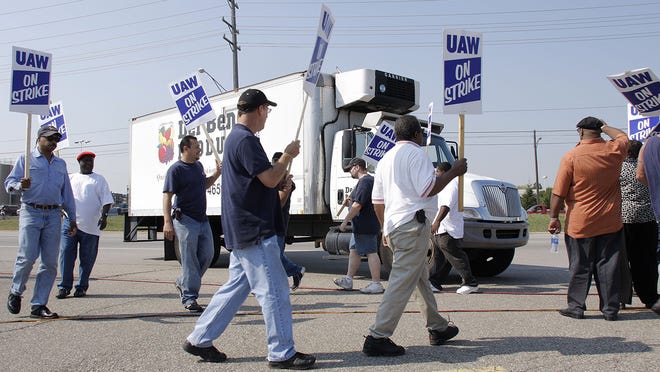
The 1970s were a high-water mark for the US labor movement, with work stoppages, wildcat strikes, and sit-downs spreading up and down the country, involving workers in all industries.

An AFSCME (American Federation of State, County and Municipal Employees) strike in San Jose, California, in the late 1970s. (Photo courtesy AFSCME)
BY CAL WINSLOW
JACOBIN
The US Bureau of Labor Statistics, in its accounting of the year 1970, revealed an extraordinary statistic: there had been, in that year alone, 5,716 strikes, involving 3 million workers.
The year 1970 saw strikes in almost every employment category. Many, seen from the outside, were inconsequential affairs; others shook the nation. In Chicago, a truckers’ strike — “a revolt against the union leadership,” according to the New York Times — spread nationwide, including to Los Angeles and Cleveland, where roving pickets fought with police and national guardsmen. The Times reported that in Cleveland,
Strikers have set up a roving patrol system that they say can muster 300 men within an hour to stop any truck moving goods in the area. The strikers are allowing trucks carrying food, drugs and beer to continue, but they have become outraged when they have found food trucks carrying other cargo. There has been rock throwing, windshields have been smashed, tires slashed and air hoses cut.
The United Press reckoned that 500,000 people were out of work as a result of the strike.
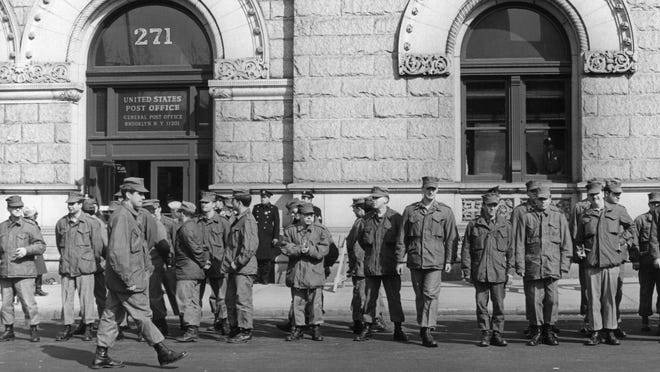
In New York City, postal workers kicked off the year with a national wildcat strike, which was against federal law. Rank-and-file workers organized the strike, and no mail moved in the nations’ major cities. The strike lasted eight days in New York, despite the deployment of 30,000 national guardsmen. In total, some 200,000 workers participated in the largest wildcat strike ever. New York, according to the Economist, became “the city of strikes.” Telephone workers struck for eight months. City workers shut down the bridges that connected the boroughs with Manhattan in what came to be known as the “drawbridge strike.”
This was just the beginning. In the decade that followed — or the “long seventies,” lasting from 1965 to 1981 — the United States experienced a strike wave like few others. Uniquely, the ’70s strikes were often led by “restless” young workers whose grievances went far beyond the bread-and-butter disputes typical of the postwar decades. These disputes included the entire range of strikes: wildcats and sit-downs, grievance strikes, as well as contract rejections and contested local union elections, often initiated by a rank and file.
The strikes, taken together, were reflective of the rebellious movements of the era. The 1972 strike at the General Motors colossal plant at Lordstown, Ohio, was led by long-haired, unshaven workers. The president of the local was Gary Bryner, then twenty-nine years old. Lordstown, wrote Studs Terkel, “was the Woodstock of the working man.” Ed Sadlowski, just thirty-four when he challenged the leadership of the United Steelworkers in District 31 (Chicago-Gary, 128,000 members), spoke for a generation:
I consider democracy within the union to be the most important single issue. If the steelworkers had been consulted they never would have agreed to an International Executive Board which excluded blacks, Latinos, and women. If the steelworkers were consulted they would insist on their right to vote on union contracts in the same manner other unions do. They rightfully feel they are not running their own affairs and are not being represented on the district level.
The Dodge Revolutionary Union Movement (DRUM) electrified black workers, as well as the Left. Its origins and that of the black caucus movement that followed were in ranks of the workers recruited in the late ’60s: young black workers, often Vietnam veterans, with little tolerance for racist foremen.
Paul Dietsch, a spokesperson for the Fraternal Association of Steel Haulers (FASH), suggested that the steel haulers were the “Black Panthers of the Working Class.” Terkel called the workers’ rebellion the “new, new left.” In the auto plants, workers struck to “humanize working conditions”; coal miners fought for an end to chronic poverty in Appalachia; black workers demanded access, integration, and equality; truckers called for union democracy; UPS workers rebelled against “being treated like machines”; millions of workers clearly wanted something better in life. Black workers, Latinos, women, and young workers brought their movements into the workplace. With their demand for democracy in their unions, workers sought to make these institutions their own, recalling the students’ demand for self-government, or “participatory democracy.”The strikes, taken together, were reflective of the rebellious movements of the era.
That is, they fought for control of their jobs. And, as their signs so often said, they fought for “dignity,” a central demand, of course, of the southern civil rights movement. Commonly, they called themselves “radicals;” they were defiant and courageous advocates of direct action to change their world. Importantly, they did this in the context of a general challenge to authority, and they did this in the shadow of the great spectacle of radical conflict: the Tet Offensive, the Paris Spring, the Black Panthers, Kent State, Jackson State, Attica.
“The Strike Movement Continued Uninterrupted”
This, then, was not the labor movement of the 1950 and ’60s, though those decades, too, had been at times places of workplace turmoil. Nevertheless, in 1956, George Meany, president of the AFL-CIO for twenty-four years (1955–79), speaking to the convention of the National Association of Manufacturers (NAM), reassured the delegates assembled there:
I never went on strike in my life, never ordered anyone else to run a strike, never had anything to do with a picket line . . . there is not a great difference between the things I stand for and the things that NAM leaders stand for. I stand for the profit system. I believe in the profit system. I believe in the free enterprise system completely.
In another setting, Walter Reuther, president of the United Automobile Workers (UAW), complained that “these hundreds of thousands of young workers . . . They don’t know where they came from. They don’t know where they’re going.”
The working class that emerged in the late ’60s had been transformed by technology, by demographics, and by a cultural revolution. In its vanguard were teachers, whose wildcat strikes had swept through districts large and small, north and south, and into the West, in the new spirit of rebellion. They were far from alone, but the sight, wrote the historian David Montgomery, “of school teachers, hospital workers and garbage men going off to jail for violating injunctions is becoming routine. And the teachers are demonstrating that arbitrary authority is as common and as intolerable in education as it is in the factories.” Their ranks had been swollen by the great expansion of higher education in the ’60s. They, with the explosion of the baby boomers, argued Montgomery, represented the basis of a “new unionism.”With their demand for democracy in their unions, workers sought to make these institutions their own.
There had been strikes in the 1950s and ’60s; some, including the 1959 strike of steelworkers, were massive. There were, in fact, many strikes, certainly by today’s standards, yet these were often routine affairs; picket lines were frequently token. Workers went hunting, repaired the house, or just had a vacation. The union officers were left to settle disputes behind closed doors in smoked-filled rooms. The trade union leaders had become increasingly wedded to collaboration with the employers in a sort of modus vivendi. The unions, one-party organizations, typically were led by old men or bland bureaucrats, sometimes by gangsters, nearly all lifers (honorable exceptions aside). They dominated the internal life of “the machines,” and looked to the Democrats and the National Labor Relations Board (NLRB) for remediation. Dave Beck, the Teamsters’ leader, declared that “Unions are big business.”
These leaders offered peace to the employers, above all on the shop floor, and in return, workers expected (and often got) steadily rising wages, plus expanding benefit packages — improvements they could count on. In return, the employers got peace — sometimes enforced by the union itself, as shop stewards, often appointed, became policemen on the beat — and the promise of uninterrupted production in a period of high profitability.
At the same time, whatever the merits of this system, these were restricted to a core of union members, skilled workers, and the inheritors of the industrial wars of the ’30s. The majority of workers were excluded — women, people of color, farmworkers, and service workers. In truth, this system, sometimes referred to as the “New Deal system,” never fully worked; the truce between labor and capital was always partial and temporary; it always favored the employers. In addition, it was based on a steadily expanding economy of the postwar boom — the years of prosperity fueled by war and war production — which came to an end in the late-’60s crisis of profitability and the employers’ response to it. The Vietnam War, too, had fueled economic expansion, but by the end of the ’60s, its costs were sending prices soaring.The working class that emerged in the late ’60s had been transformed by technology, by demographics, and by a cultural revolution.
In these changing conditions, collaboration gave way to conflict and an employers’ offensive marked by their resistance to wage and benefit demands, to stubborn opposition to organizing, and, perhaps above all, on the “shop floor” to the speedup, typified by line speed in the assembly plants and the United Parcel supervisors with their time and motion, stopwatch mania. In 1971, hard-pressed by the shippers, West Coast longshoremen defied the flag wavers with a strike that threatened the flow of military goods and personnel to Vietnam. Richard Nixon, asserting that the strike undermined the war effort, invoked an anti-strike Taft-Hartley injunction, though this failed to deter longshoremen from conducting the longest waterfront strike in US history. The strike, organized in opposition to the union’s leadership, was the first coastwide strike since 1934.
The number of strikes remained high throughout the decade — they amounted to tens of thousands and only fell off dramatically in 1982. The strike wave continued in “good” times and bad. The strike count in 1974 nearly matched that of 1970, yet it took place amid the worst recession since the 1930s, clearly signaling that the postwar economic boom was over. Long lines at unemployment offices became the norm, as did free food distribution in industrial centers. In addition, this recession was accompanied by inflation — hence the term “stagflation” — and with it increasing pressure on workers to resist. In 1975, the economy expanded again, but millions of jobs had been lost. Instability gave rise to insecurity; Merle Haggard’s 1974 “If We Make It Through December” topped the charts at Akron’s radio, WSLR.
In boom and bust, the strike movement continued uninterrupted, if unpredictably. The coal miners exemplified this — the ability of workers to win great victories, yet also, alas, the limitations of trade unionism. On November 12, 1974, negotiations stalled, and 120,000 miners walked off their jobs, honoring their tradition of “no contract, no work.” The United Mine Workers (UMWA) had long been the backbone of American labor; as the largest union, in the ’30s, it had bankrolled the Congress of Industrial Organizations (CIO). Its great battles were legendary — Ludlow, Blair Mountain, Harlan County. In the 1960s, however, it was a shadow of its former self. In 1950, there were 416,000 working miners; in 1959, just 180,000 remained at work in the coalfields. John L. Lewis, the autocratic leader of the union for half the century, had, in the ’50s, negotiated away the miners’ jobs, accepting as inevitable the mechanization of mining while receiving next to nothing for miners in return. In 1963, Tony Boyle, a nonentity from Montana handpicked by Lewis, inherited the leadership of the union.
The result was an embattled rank and file seething under the iron hand of management in the mines. Discontent was near universal in the face of the slow-motion inevitability of the deadly black lung disease and in the stunning horror of each recurrent coal mine catastrophe. In November 1968, seventy-eight miners lost their lives in the explosion at Consolidation Coal’s No. 9 mine in Farmington, West Virginia. In total, one hundred thousand coal miners were believed to have been killed in the mines in the twentieth century.
In 1969, Jock Yablonski, a union officer in Clarksville, Pennsylvania, challenged Boyle but lost in an election mired in fraud. Yablonski filed suit with the Department of Labor. In response, Boyle had him murdered. On New Year’s Eve, three petty criminals hired in a Cleveland bar shot and fatally killed Yablonski, his wife, and his daughter in their beds. The Miners for Democracy (MFD) was founded at the Yablonskis’ funerals. In 1972, the US district court in Washington, DC, responding in part to an outraged rank and file, ordered a new election. Arnold Miller, a partially disabled West Virginia miner, running on the slate of the MFD, defeated Boyle — Boyle himself would be charged and convicted of ordering the murders. In 1974, he received three life sentences.
The MFD identified itself as a rank-and-file miners’ movement. It brought together the various oppositional currents within the union, uniting them with a mission of not just defeating Boyle but also of transforming the union, top to bottom. In 1973, in Pittsburgh, the MFD led its first UMW convention. Miners there rewrote the union’s constitution, guaranteeing rank-and-file rights. In an atmosphere of jubilation, they increased district autonomy and reorganized the union’s dues structure in favor of the districts and the locals. The rank and file won the right to ratify contracts. Thus inspired, rank-and-file miners then set out to transform formal democracy into practical democracy, and coal miners embarked upon a campaign to transform relations in the mines themselves. One result was the national strike of 1974 and 1978, as well as literally thousands of wildcat strikes. The MFD would become a model for radicals and union reformers — in many ways, it still is.
Industries Hit by Recession
Elsewhere, the impact of recession in 1974 was devastating, above all in the auto industry. The recession’s origins were in large part structural, and in that sense long overdue, but matters were made worse by OPEC’s (the Organization of the Petroleum Exporting Countries) 1973 oil embargo, in response to the Arab-Israeli War. As a result, the price of oil rose by 300 percent.
The recession raced through US industry. Construction unemployment reached 15 percent. The auto industry was hit hardest; unemployment in the six-county Detroit area topped 20 percent. Plants were shut down in New Jersey and California, in Cleveland and St. Louis. The Ford Motor Company shut down 22 of its 66 plants in the United States, idling 55 percent of its hourly paid work force of 155,000. The industry would never fully recover. Closures became permanent. Rolling back the clock, a chorus of employers introduced demands for deep concessions from its workers. Chrysler threatened bankruptcy. UAW president Douglas Fraser responded with this prophetic retort: “I believe the leaders of business community, with few exceptions, have chosen to wage a one-sided class war today in this country.” Indeed, they had. In 1979, the federal government stepped in to save Chrysler, bailing out the company; concessions, layoffs, and plant closures followed.
Gas prices provoked “political” walkouts in West Virginia; striking miners demanded that the governor roll back the cost of fuel, complaining they could not afford the cost of their commutes to work. Then, totally unexpectedly, truckers, — who were independent operators — emerged in an astonishing movement that challenged the Nixon administration’s energy policies. The truckers began shutting down the nation’s highways, snarling traffic and disrupting the distribution of goods and services. With CB (citizen’s band) radios and “handles” to obscure their identities, they formed convoys and organized slowdowns and blockades. Thousands of tractor trailers jammed the turnpikes in Ohio and Pennsylvania. They choked off the New York–Washington, DC corridor at the Delaware Bridge.The truckers’ movement was a striking example of the creativity of workers and their capacity to organize and fight.
Industry, already hemorrhaging, was hit again. Within hours, GM management was forced to close its Lordstown plant. In Toledo, factory workers left their jobs to join truckers at the interchange of I-75 and the Ohio Turnpike. Exhausted by gas lines, a weary public applauded. The response of the authorities, including the White House, was fierce; state troopers, hated by the truckers, waded in whenever they assembled. In Ohio, the National Guard was deployed, and trucks were commandeered and towed away. Interestingly, interviews with truckers near Cleveland invariably turned to the Kent State killings by these same guardsmen. Ultimately, the blockaders failed. Their movement, however, was a striking example of the creativity of workers and their capacity to organize and fight — their blockages were in certain ways analogous with the sit-down strikes of another era. They took control of their workplaces: the highways.
That same year, in March, four Service Employees International Union (SEIU) locals, representing hospital, clerical, maintenance, and social workers, rejected a wage offer from San Francisco’s Board of Supervisors and struck. They were joined by teachers, who honored picket lines set up at the schools. The Municipal Railway’s mostly black motormen and conductors joined in, as did transit drivers. Farmworkers joined substitute teachers to shut down school bus barns. Governor Ronald Reagan threatened to send in the National Guard, but the strike continued to spread. Only an early settlement by the SEIU leaders prevented a much wider strike. In August 1974, “Everywhere you turn,” wrote one reporter, “someone is on strike: airline mechanics, bus drivers, copper miners, sanitation workers, firemen, hospital workers, painters, steelworkers, telephone workers. The American Federation of State, County and Municipal Employees (AFSCME) voted to shut down the state of Ohio.” The miners, with their new leadership, struck for twenty-eight days, winning a package valued above 40 percent. The rank and file accepted this, though only barely — nearly half voted to stay out longer
.
Ford workers leaving the plant in 1978 after voting to strike. (Getty Images)
By the middle of 1975, employment was nearly back to pre-recession levels, and the workers’ insurgency remained very much alive, above all in the coalfields. In the summers of 1975, 1976, and 1977, there were nationwide wildcat strikes. The first was in 1975, when 80,000 miners struck for the right to strike. Then, in 1976, 120,000 (virtually the entire workforce in the East) walked out against injunctions imposed on striking miners. The extent of the solidarity of the miners was such that a single “stranger” picket could shut down an entire shift. The strikes continued into the summer of 1977, when, in anticipation of a national strike, 85,000 miners struck. In 1976, the number of major strikes — 5,648 — nearly matched that of 1970 — 5,716 — though the number of strikers was not so high. In the years between 1976 and 1979, there were, again, strikes nearly everywhere — that is, in every sector and throughout the country. The teachers, in wave after wave of strikes, confounded school boards, local authorities, and even teachers’ unions, striking and winning.
By the mid-1970s, according to historian Michael Honey, the Southern civil rights movement had spilled over into industry, so that “after decades of painful effort . . . black workers in a core of unionized factory jobs had torn down most Jim Crow barriers within their workplaces and unions.” In addition, “Black Power” had migrated north; in industry, it represented a tactic to force both the employers and the unions to recognize the rights and demands of black workers. The companies had recruited thousands of new, young workers, and a large proportion of these workers were in Detroit.The majority of the new recruits worked in unskilled, often dangerous jobs, performing the monotonous, nerve-racking tasks that led to the high turnover and absentee rates for which the auto industry was notorious.
The majority of the new recruits worked in unskilled, often dangerous jobs, performing the monotonous, nerve-racking tasks that led to the high turnover and absentee rates for which the industry was notorious. The origins of the black caucus movement were in these conditions. In the automobile industry, this movement began in wildcat strikes and the development of a revolutionary union movement spearheaded by DRUM (Dodge Revolutionary Union Movement) at Chrysler’s Dodge Main plant in Detroit. Other black autoworkers followed, establishing revolutionary union movements at Eldon Road (ELRUM), Ford’s River Rouge plant (FRUM); at Chrysler’s Jefferson Avenue Assembly plant (JARUM). Workers in other industries also joined in; hospital workers organized HRUM, newspaper workers NEWRU, United Parcel workers UPRUM, together leading to the creation of the League of Revolutionary Black Workers.
The revolt of black workers inspired many, including white workers. It did not, however, lead to the unity that many hoped for, certainly not in the automobile industry. When black autoworkers, fighting the speed-p, staged sit-in strikes in the summer of 1973 in Detroit at the Jefferson Assembly, Eldon Road, and Mack Avenue plants, they were not, for the most part, supported by whites, a few radicals excepted. The results, for tens of thousands of workers, were devastating. This alliance that did not happen, together with the 1974 crash in automobile production, resulted in the end of the movement in auto, dashing the perspectives of two generations of radicals who had banked everything on a rebellion in auto
By the middle of 1975, employment was nearly back to pre-recession levels, and the workers’ insurgency remained very much alive, above all in the coalfields. In the summers of 1975, 1976, and 1977, there were nationwide wildcat strikes. The first was in 1975, when 80,000 miners struck for the right to strike. Then, in 1976, 120,000 (virtually the entire workforce in the East) walked out against injunctions imposed on striking miners. The extent of the solidarity of the miners was such that a single “stranger” picket could shut down an entire shift. The strikes continued into the summer of 1977, when, in anticipation of a national strike, 85,000 miners struck. In 1976, the number of major strikes — 5,648 — nearly matched that of 1970 — 5,716 — though the number of strikers was not so high. In the years between 1976 and 1979, there were, again, strikes nearly everywhere — that is, in every sector and throughout the country. The teachers, in wave after wave of strikes, confounded school boards, local authorities, and even teachers’ unions, striking and winning.
By the mid-1970s, according to historian Michael Honey, the Southern civil rights movement had spilled over into industry, so that “after decades of painful effort . . . black workers in a core of unionized factory jobs had torn down most Jim Crow barriers within their workplaces and unions.” In addition, “Black Power” had migrated north; in industry, it represented a tactic to force both the employers and the unions to recognize the rights and demands of black workers. The companies had recruited thousands of new, young workers, and a large proportion of these workers were in Detroit.The majority of the new recruits worked in unskilled, often dangerous jobs, performing the monotonous, nerve-racking tasks that led to the high turnover and absentee rates for which the auto industry was notorious.
The majority of the new recruits worked in unskilled, often dangerous jobs, performing the monotonous, nerve-racking tasks that led to the high turnover and absentee rates for which the industry was notorious. The origins of the black caucus movement were in these conditions. In the automobile industry, this movement began in wildcat strikes and the development of a revolutionary union movement spearheaded by DRUM (Dodge Revolutionary Union Movement) at Chrysler’s Dodge Main plant in Detroit. Other black autoworkers followed, establishing revolutionary union movements at Eldon Road (ELRUM), Ford’s River Rouge plant (FRUM); at Chrysler’s Jefferson Avenue Assembly plant (JARUM). Workers in other industries also joined in; hospital workers organized HRUM, newspaper workers NEWRU, United Parcel workers UPRUM, together leading to the creation of the League of Revolutionary Black Workers.
The revolt of black workers inspired many, including white workers. It did not, however, lead to the unity that many hoped for, certainly not in the automobile industry. When black autoworkers, fighting the speed-p, staged sit-in strikes in the summer of 1973 in Detroit at the Jefferson Assembly, Eldon Road, and Mack Avenue plants, they were not, for the most part, supported by whites, a few radicals excepted. The results, for tens of thousands of workers, were devastating. This alliance that did not happen, together with the 1974 crash in automobile production, resulted in the end of the movement in auto, dashing the perspectives of two generations of radicals who had banked everything on a rebellion in auto
.
Metrobus workers on strike in Arlington, VA in 1974. (Washington Area Spark)
The steel industry once dominated US industry, its scale gigantic. In the Pittsburgh region alone, a dozen great mills lined the banks of the Monongahela River. Nationally, hundreds of thousands worked in basic steel. In the ’70s, however, steelworkers were losing jobs; they faced stagnant and declining real incomes and witnessed increasing numbers of plant closings. The industry and the union blamed foreign competition, but just as important was overcapacity in an aging, capital-intensive industry.
The steel companies used the crisis to combine jobs, intensify “discipline,” and increase productivity, at the same time replacing older facilities with new technology. In 1973, the union agreed to the Experimental Negotiating Agreement (ENA), a national no-strike pledge, that exchanged the right to strike in national bargaining for cash bonuses, cost-of living adjustments, and widened access to arbitration. Steelworkers retained the right to strike on local issues, and in 1977, there were more than one hundred strike votes, compared to just seven in 1974. All this produced a rebellion within the union, first and foremost in District 31, the United Steel Workers’ (USW) largest, where Sadlowski defeated the incumbent for the position of district director.The steel companies used the crisis to combine jobs, intensify “discipline,” and increase productivity.
The insurgents proposed to end the 1973 ENA; they demanded the right to ratify contracts and sought to elect a new national leadership to mobilize the rank and file. In 1975, these workers and local militants throughout the union formed Steelworkers Fight Back, a national network of oppositionists. The decision was made to run Sadlowski for USW president with Fight Back as the campaign organization. The 1976–77 campaign developed a crusading spirit focusing on issues like the ENA, opposition to a dues increase, and the right to ratify contracts. This spirit was deepened by the fact that Sadlowski himself had been outspoken on broader social issues such as the Vietnam War and civil rights. In the end, Sadlowski lost, though he received 43 percent of the votes, including a majority in the largest locals, which were mostly in basic steel.
The industry, however, was on the verge of a precipitous decline and the beginnings of a new, brutal phase of deindustrialization; predicted by few, it moved to center stage. Domestic steel production plummeted sharply following 1979, as steel corporations carried out drastic rationalizations. A full 200,000 steelworkers lost their jobs. In early 1980, steelworkers in Youngstown, Ohio, occupied the district headquarters of U.S. Steel in a bold but desperate attempt to stave off shutting down their mill. It was hoped that the sit-in might be the spark to ignite a resistance movement. Instead, to the dismay of hundreds of workers and supporters involved, it was quickly abandoned on orders from the local union officers and their advisers.
The Right to Organize
The major breakthrough for workers in the postwar system was winning the right to organize by local, state, and federal government workers, and the subsequent organization of millions of these workers into trade unions. “The growth of US public sector unions” in the ’50s and ’60s was, according to Mark Maier, “analogous to the expansion of private sector unions during the 1930s.” Women entered the service and public-sector sections of the labor force in millions; they became the backbone of the new teachers’ movements, in particular of the NEA, now transformed into a union. In the 1970s, public employee unions grew four times as fast as total union membership, and women made up a very large proportion of these new members.
The steel industry once dominated US industry, its scale gigantic. In the Pittsburgh region alone, a dozen great mills lined the banks of the Monongahela River. Nationally, hundreds of thousands worked in basic steel. In the ’70s, however, steelworkers were losing jobs; they faced stagnant and declining real incomes and witnessed increasing numbers of plant closings. The industry and the union blamed foreign competition, but just as important was overcapacity in an aging, capital-intensive industry.
The steel companies used the crisis to combine jobs, intensify “discipline,” and increase productivity, at the same time replacing older facilities with new technology. In 1973, the union agreed to the Experimental Negotiating Agreement (ENA), a national no-strike pledge, that exchanged the right to strike in national bargaining for cash bonuses, cost-of living adjustments, and widened access to arbitration. Steelworkers retained the right to strike on local issues, and in 1977, there were more than one hundred strike votes, compared to just seven in 1974. All this produced a rebellion within the union, first and foremost in District 31, the United Steel Workers’ (USW) largest, where Sadlowski defeated the incumbent for the position of district director.The steel companies used the crisis to combine jobs, intensify “discipline,” and increase productivity.
The insurgents proposed to end the 1973 ENA; they demanded the right to ratify contracts and sought to elect a new national leadership to mobilize the rank and file. In 1975, these workers and local militants throughout the union formed Steelworkers Fight Back, a national network of oppositionists. The decision was made to run Sadlowski for USW president with Fight Back as the campaign organization. The 1976–77 campaign developed a crusading spirit focusing on issues like the ENA, opposition to a dues increase, and the right to ratify contracts. This spirit was deepened by the fact that Sadlowski himself had been outspoken on broader social issues such as the Vietnam War and civil rights. In the end, Sadlowski lost, though he received 43 percent of the votes, including a majority in the largest locals, which were mostly in basic steel.
The industry, however, was on the verge of a precipitous decline and the beginnings of a new, brutal phase of deindustrialization; predicted by few, it moved to center stage. Domestic steel production plummeted sharply following 1979, as steel corporations carried out drastic rationalizations. A full 200,000 steelworkers lost their jobs. In early 1980, steelworkers in Youngstown, Ohio, occupied the district headquarters of U.S. Steel in a bold but desperate attempt to stave off shutting down their mill. It was hoped that the sit-in might be the spark to ignite a resistance movement. Instead, to the dismay of hundreds of workers and supporters involved, it was quickly abandoned on orders from the local union officers and their advisers.
The Right to Organize
The major breakthrough for workers in the postwar system was winning the right to organize by local, state, and federal government workers, and the subsequent organization of millions of these workers into trade unions. “The growth of US public sector unions” in the ’50s and ’60s was, according to Mark Maier, “analogous to the expansion of private sector unions during the 1930s.” Women entered the service and public-sector sections of the labor force in millions; they became the backbone of the new teachers’ movements, in particular of the NEA, now transformed into a union. In the 1970s, public employee unions grew four times as fast as total union membership, and women made up a very large proportion of these new members.

Post office workers on strike in 1970. (US National Archives)
The Coalition of Labor Union Women (CLUW), founded in 1974 in Chicago, was born in a moment of great enthusiasm and embodied a potential movement to support working women and their struggles. The new union women joined office workers, telephone workers, nurses, and health care workers, garment workers, and factory workers. Three thousand trade union women attended its founding convention; nearly a third in attendance were reported to be young radicals. CLUW seemed an ideal vehicle for uniting women’s liberation with a movement of working-class women, one capable of speaking for the vast increase in the numbers of working women, the great majority unorganized.
Within two years, however, CLUW was essentially dead, undermined by the women of the bureaucracy, themselves, as often as not, second-class citizens in their own unions. Nevertheless, for working women, the struggle continued. In September 1976, in Seattle, 2,500 nurses were on strike, a strike that lasted sixty-five days, the longest nurses’ strike ever at that point, reflecting, according to the New York Times, “the new militancy of registered nurses here and elsewhere.” The issues were wages, staffing, and the agency shop. But there was also an “emotional issue,” according to one doctor.
It used to be nurses could be yelled at and their opinions ignored . . . Now they will challenge doctors and sometimes even substitute their judgments for his . . . This is the issue of parity, brought by the smart young nurses who have recently graduated and sparked by the women’s movement that is making it hard to end this strike.
The service workers, public-sector workers, and women workers set the foundations of public-sector and service-sector unionism that are with us still today. These unions forecast the future for much of labor, developing in the midst of the transition from an industrial working class to one based on the public and service sectors. They represented large numbers of women and workers of color.
Two movements in the Teamsters also illustrate that the rebellion continued. In 1976, Frank Fitzsimmons, Teamsters president, called an official strike, nationwide, of truckers in the freight industry under pressure from the rank and file, including the new organization Teamsters for a Decent Contract (TDC). The following October, TDC became Teamsters for a Democratic Union (TDU). The same spring, the Teamsters struck UPS in the central states, this time pressured by UPSurge, the organization of the UPS rank and file. The settlement in freight was met with a wildcat strike in Detroit. UPSurge responded to the UPS settlement with wildcat strikes in eight Midwestern cities.The service workers, public-sector workers, and women workers set the foundations of public-sector and service-sector unionism that are with us still today.
In the Teamsters, then the largest industrial union in the country, the TDU set out to build a national rank-and-file movement within the union, a corrupt union, often with close ties to the mob (the gangsters who cut deals with the union’s officers, national and local, and sought ways to slice up the union’s highly lucrative pension fund). TDU quickly grew to a movement of thousands; its mission was to transform a powerful union into a force for progressive change. It became active in contract negotiations, promoted solidarity in strikes and among jurisdictions, sponsored bylaw reforms, and exposed corruption and criminality. Its greatest achievement came in 1991 when it played a key role in the victory of Ron Carey, the UPS workers’ leader, in his successful contest for the union’s presidency.
UPSurge, the rank-and-file UPS workers’ organization, founded in Cleveland in 1975, was allied with the TDU but differed in that it was first of all organized to fight the company. Its initial focus was preparation for the 1976 central states’ contract negotiations. UPSurge was built on an informal shop stewards network with roots in decades of militant activity. In the ’60s and ’70s, there were continuous conflicts — strikes, official and unofficial, including, in 1973, the Pittsburgh wildcat strike with roving pickets that shut down UPS operations in Western Pennsylvania and much of Ohio.
In this period, UPS became the largest employer of Teamsters, as well as the largest transportation company in the world. It became well known, even internationally, for brown trucks, its military-style uniforms, and its ubiquitous supervisors, armed with clipboards and stopwatches. In an industry still dominated by small and medium-size firms, UPS became an innovator — it specialized in “Taylorism,” a form of scientific management that took control of every detail in work, producing, in Harry Braverman’s words, “the disassociation of the labor process from the skills of the worker.” UPS introduced new technologies, added airfreight, and brought in students and young workers as part-timers.The conflict at UPS revealed the depth of rank-and-file unrest in this country, this time in a powerful, national, highly profitable company.
The founding “convention” of UPSurge was held in Indianapolis on January 31, 1976. It was astonishing; 650 UPSurgers gathered in a Holiday Inn in the eastern suburbs of the city. The meeting was part business, part protest rally, part celebration — and it was certainly unparalleled in UPS history. Workers came from as far as Portland, Oregon, and Boston, Massachusetts, though overwhelmingly from the central states. Ten contract demands were chosen; they focused on the following areas: part-timers, appearance standards; supervisors working, unsafe equipment, sick days, holidays, and radios.
The conflict at UPS revealed the depth of rank-and-file unrest in this country, this time in a powerful, national, highly profitable company. The UPSurge steering committee was, in essence, a shop stewards’ movement, in the classic sense; that is, nearly every member was a working, elected, recallable, shop-floor leader. In 1980, UPSurge joined forces with TDU, and today, UPS workers represent its single largest section — in addition, they numerically dominate the Teamsters union itself. TDU, remarkably, has weathered the storms of more than forty years. It continues to stand out as a voice for rank-and-file Teamsters and a model for the kind of rank-and-file movement we still need.
The Coalition of Labor Union Women (CLUW), founded in 1974 in Chicago, was born in a moment of great enthusiasm and embodied a potential movement to support working women and their struggles. The new union women joined office workers, telephone workers, nurses, and health care workers, garment workers, and factory workers. Three thousand trade union women attended its founding convention; nearly a third in attendance were reported to be young radicals. CLUW seemed an ideal vehicle for uniting women’s liberation with a movement of working-class women, one capable of speaking for the vast increase in the numbers of working women, the great majority unorganized.
Within two years, however, CLUW was essentially dead, undermined by the women of the bureaucracy, themselves, as often as not, second-class citizens in their own unions. Nevertheless, for working women, the struggle continued. In September 1976, in Seattle, 2,500 nurses were on strike, a strike that lasted sixty-five days, the longest nurses’ strike ever at that point, reflecting, according to the New York Times, “the new militancy of registered nurses here and elsewhere.” The issues were wages, staffing, and the agency shop. But there was also an “emotional issue,” according to one doctor.
It used to be nurses could be yelled at and their opinions ignored . . . Now they will challenge doctors and sometimes even substitute their judgments for his . . . This is the issue of parity, brought by the smart young nurses who have recently graduated and sparked by the women’s movement that is making it hard to end this strike.
The service workers, public-sector workers, and women workers set the foundations of public-sector and service-sector unionism that are with us still today. These unions forecast the future for much of labor, developing in the midst of the transition from an industrial working class to one based on the public and service sectors. They represented large numbers of women and workers of color.
Two movements in the Teamsters also illustrate that the rebellion continued. In 1976, Frank Fitzsimmons, Teamsters president, called an official strike, nationwide, of truckers in the freight industry under pressure from the rank and file, including the new organization Teamsters for a Decent Contract (TDC). The following October, TDC became Teamsters for a Democratic Union (TDU). The same spring, the Teamsters struck UPS in the central states, this time pressured by UPSurge, the organization of the UPS rank and file. The settlement in freight was met with a wildcat strike in Detroit. UPSurge responded to the UPS settlement with wildcat strikes in eight Midwestern cities.The service workers, public-sector workers, and women workers set the foundations of public-sector and service-sector unionism that are with us still today.
In the Teamsters, then the largest industrial union in the country, the TDU set out to build a national rank-and-file movement within the union, a corrupt union, often with close ties to the mob (the gangsters who cut deals with the union’s officers, national and local, and sought ways to slice up the union’s highly lucrative pension fund). TDU quickly grew to a movement of thousands; its mission was to transform a powerful union into a force for progressive change. It became active in contract negotiations, promoted solidarity in strikes and among jurisdictions, sponsored bylaw reforms, and exposed corruption and criminality. Its greatest achievement came in 1991 when it played a key role in the victory of Ron Carey, the UPS workers’ leader, in his successful contest for the union’s presidency.
UPSurge, the rank-and-file UPS workers’ organization, founded in Cleveland in 1975, was allied with the TDU but differed in that it was first of all organized to fight the company. Its initial focus was preparation for the 1976 central states’ contract negotiations. UPSurge was built on an informal shop stewards network with roots in decades of militant activity. In the ’60s and ’70s, there were continuous conflicts — strikes, official and unofficial, including, in 1973, the Pittsburgh wildcat strike with roving pickets that shut down UPS operations in Western Pennsylvania and much of Ohio.
In this period, UPS became the largest employer of Teamsters, as well as the largest transportation company in the world. It became well known, even internationally, for brown trucks, its military-style uniforms, and its ubiquitous supervisors, armed with clipboards and stopwatches. In an industry still dominated by small and medium-size firms, UPS became an innovator — it specialized in “Taylorism,” a form of scientific management that took control of every detail in work, producing, in Harry Braverman’s words, “the disassociation of the labor process from the skills of the worker.” UPS introduced new technologies, added airfreight, and brought in students and young workers as part-timers.The conflict at UPS revealed the depth of rank-and-file unrest in this country, this time in a powerful, national, highly profitable company.
The founding “convention” of UPSurge was held in Indianapolis on January 31, 1976. It was astonishing; 650 UPSurgers gathered in a Holiday Inn in the eastern suburbs of the city. The meeting was part business, part protest rally, part celebration — and it was certainly unparalleled in UPS history. Workers came from as far as Portland, Oregon, and Boston, Massachusetts, though overwhelmingly from the central states. Ten contract demands were chosen; they focused on the following areas: part-timers, appearance standards; supervisors working, unsafe equipment, sick days, holidays, and radios.
The conflict at UPS revealed the depth of rank-and-file unrest in this country, this time in a powerful, national, highly profitable company. The UPSurge steering committee was, in essence, a shop stewards’ movement, in the classic sense; that is, nearly every member was a working, elected, recallable, shop-floor leader. In 1980, UPSurge joined forces with TDU, and today, UPS workers represent its single largest section — in addition, they numerically dominate the Teamsters union itself. TDU, remarkably, has weathered the storms of more than forty years. It continues to stand out as a voice for rank-and-file Teamsters and a model for the kind of rank-and-file movement we still need.
The End of the Long Seventies
In the late 1970s, strikes continued to be the order of the day. The example of successful United Farm Workers (UFW) strikes and boycotts of grapes and lettuce in the ’60s was followed by strikes and consumer boycotts in clothing and textiles at the Farah Company and J. P. Stevens, as well as at Coors Brewing. These boycotts involved considerable numbers of supporters and other workers, as well as the general public.
In September 1976, workers in the tomato fields of northeastern Ohio and cannery workers near Toledo struck and occupied the Morgan Packing Company facilities. The strikers erected barricades, held off the authorities, and won, in a crucial early victory for the Farm Labor Organizing Committee (FLOC). FLOC was founded by former student activist Baldemar Velásquez.
In Seattle, 17,000 Boeing machinists struck. In bitter strikes of miners at Stearns, Kentucky, and factory workers in Elwood, Indiana, strikers were beaten, shot at, and arrested. That same year, firefighters struck in Memphis, a wildcat strike, as well as in Normal, Illinois, and Dayton, Ohio. In September 1978, 20,000 members of the American Federation of State, County and Municipal Employees (AFSCME) walked off their jobs in Philadelphia. Safeway was shut down in Northern California in a bitter confrontation with Teamsters — in August, a picketing striker was killed.The final conflict of the decade of rank-and file insurgency came in the 1977–78 strike in coalfields.
Railroad workers, in defiance of federal interventions, turned an eighty-one-day dispute with the Norfolk Western into a national railroad strike. And 15,000 pulp and paper workers used mass action and traveling pickets in a near general strike in the Pacific Northwest. In 1979, there was a wildcat strike of steel haulers in Youngstown. Car haulers wildcatted in Linwood, New Jersey, and Lordstown, Ohio, as well as postal workers at the Richmond, California bulk mail center. Nuclear workers walked out at Goodyear’s Piketon, Ohio, plant. Steelworkers won recognition in the shipyards at Newport News, following a two-year strike. Faculty struck at Boston University and the University of Cincinnati, and again, schoolteachers. There were 199 teachers’ strikes in 1979, matching the previous high in 1975–76. Teachers struck for more money, reduced class size, additional preparation time, and, in some places, student discipline. Finally, there was the 1979 strike of California farm workers.
The final conflict of the decade of rank-and file insurgency came in the 1977–78 strike in coalfields. The strike of 160,000 miners lasted 110 days, continuing despite the Taft-Hartley injunction issued by President Jimmy Carter. Twice, rank-and-file miners defied UMW leaders and rejected concessionary contracts. The operators wanted what miners called a “1930s-style contract,” with the right to fire strikers, big health deductibles, and punitive absentee controls. Critics contended the union called the strike in the worst possible circumstances; there were months of coal stockpiles on the ground. Critics also insisted that the union leadership had no intention of winning the strike.

Postal workers picket during their 1970 nationwide wildcat strike. APWU / Wikimedia Commons
Nevertheless, the rank-and-file miners did, and they fought the companies — all subsidiaries of giant energy corporations — to a bloody standstill. They also fought state troopers, national guardsmen in Indiana, and thousands of company guards and goons. Three miners were shot and killed on picket lines, hundreds were arrested, and thousands were fined. There was widespread sympathy for the striking miners, including solidarity rallies, food collections, and caravans, but no other union took action in their support. The miners fought alone; nevertheless, they defeated the companies on many issues. Only hunger forced them back. Even then, 40 percent of the miners voting rejected the settlement, preferring to fight on. The miners were exhausted in 1978, but not defeated. They were not, however, prepared for what was to come — the wholesale removal of coal mining to the West.
And the teachers, again. In the ’70s, teachers’ strikes were overwhelmingly called by the National Education Association (NEA). In the 1975–76 school year alone, there were 203 strikes. In January 1978, when teachers struck in the Canton, Ohio, schools, 400 were arrested, including 230 in one swoop at Timken High School.
These are just two examples in a history yet to be written. The NEA was already a large organization in the 1960s. Historically, it was a professional organization; unlike the American Federation of Teachers (AFT), it had no ties to the organized labor movement. In the 1960s, however, this began to change. “Within the NEA,” wrote the historian Marjorie Murphy, “internal changes had made it clear that the mammoth organization was slowly but inevitably restructuring itself into a union.” In the course of the 1970s, the NEA grew at a rate of nearly 100,000 new members each year, reaching the 2 million mark in 1980. The American Federation of Teachers (AFT) grew as well, though not nearly so dramatically. The AFT was organized as a trade union, and its roots were in the cities, above all in New York City; it was affiliated with the AFL-CIO. Membership in the two unions came to exceed that of the Teamsters union.
Nevertheless, the rank-and-file miners did, and they fought the companies — all subsidiaries of giant energy corporations — to a bloody standstill. They also fought state troopers, national guardsmen in Indiana, and thousands of company guards and goons. Three miners were shot and killed on picket lines, hundreds were arrested, and thousands were fined. There was widespread sympathy for the striking miners, including solidarity rallies, food collections, and caravans, but no other union took action in their support. The miners fought alone; nevertheless, they defeated the companies on many issues. Only hunger forced them back. Even then, 40 percent of the miners voting rejected the settlement, preferring to fight on. The miners were exhausted in 1978, but not defeated. They were not, however, prepared for what was to come — the wholesale removal of coal mining to the West.
And the teachers, again. In the ’70s, teachers’ strikes were overwhelmingly called by the National Education Association (NEA). In the 1975–76 school year alone, there were 203 strikes. In January 1978, when teachers struck in the Canton, Ohio, schools, 400 were arrested, including 230 in one swoop at Timken High School.
These are just two examples in a history yet to be written. The NEA was already a large organization in the 1960s. Historically, it was a professional organization; unlike the American Federation of Teachers (AFT), it had no ties to the organized labor movement. In the 1960s, however, this began to change. “Within the NEA,” wrote the historian Marjorie Murphy, “internal changes had made it clear that the mammoth organization was slowly but inevitably restructuring itself into a union.” In the course of the 1970s, the NEA grew at a rate of nearly 100,000 new members each year, reaching the 2 million mark in 1980. The American Federation of Teachers (AFT) grew as well, though not nearly so dramatically. The AFT was organized as a trade union, and its roots were in the cities, above all in New York City; it was affiliated with the AFL-CIO. Membership in the two unions came to exceed that of the Teamsters union.
Bridgeport, Connecticut teachers on strike in 1978. (Connecticut Education Association)
Both unions responded to changing conditions in the ’60s with strikes and organizing drives. The NEA, however, quickly outpaced its rival. In the thousands of teachers’ strikes in the ’70s, perhaps as many as 80 percent were led by NEA teachers; moreover, these teacher’s strikes represented a grassroots movement led locally. The NEA was highly decentralized, certainly in comparison to the top-down unionism of the AFT.
The NEA had another advantage. In these years of extensive teacher activity, the AFT was embroiled in racial disputes — a legacy, in part, of its racist confrontations with black community activists in the New York teachers’ strikes of 1968. There were also conflicts with black parents in Youngstown and Newark, where black activists challenged the union, even when led by black teachers. In September 1975, in Boston, 4,950 teachers, 90 percent of the workforce, struck in response to a bargaining impasse — their strike also, however, crippled the district’s two-week-old, court-ordered desegregation program. The AFT welcomed the anti-affirmative-action Bakke decision, the Supreme Court ruling against racial quotas, and opposed NEA policies that implemented racial and gender quotas in its governing bodies.
The NEA, despite its conservative origins in the era of segregated schools — it organized biracial unions in the South — supported integration and affirmative action. In 1964, it ordered that all its affiliates be integrated, though in 1974, the Louisiana association remained segregated. In 1967, Elizabeth Koontz, an African American classroom teacher from North Carolina, became the NEA’s first black president. In 1972, when two black students at Southern University were shot and killed by police, the NEA joined students and black organizations in demanding an official investigation. The NEA denounced a court ruling that would not require school authorities to readjust attendance zones to keep up with racial population shifts.
When the AFT and the NEA abandoned unity talks in 1974, the reasons were numerous, including simple organizational issues and the problems of professionalism, the latter strongest in the NEA. But when Helen Wise, president of the NEA, rebutted the charge that the NEA teachers were not trade unionists, she said, fairly, that there “are many liberals within the association who think of the AFL-CIO as too conservative.” She continued, “The AFT, while paying lip service to minority involvement, opposed an effective way to assure it. There is no compatibility between the NEA commitment and the AFT laissez-faire attitude on this issue.” From the first, the NEA enthusiastically supported the Equal Rights Amendment (ERA) for women. In 1974, it won a Supreme Court case striking down mandatory leave for pregnant teachers.
In addition, then, to aggressive organizing, including the use of the strike, the NEA, in Murphy’s words, took “bolder, more progressive positions on a range of social issues.” The AFT and the AFL-CIO strongly supported the war in Vietnam — they no doubt believed that American workers did as well. This was not the case with teachers, however, and the AFT paid a price. Between 1970 and 1980, the NEA grew by a million members. The majority of these new members were women, and many were black and Latino; tens of thousands of these new members attended university in the 1960s. At the same time, according to Murphy, “teachers complained about over supervision, increasing bureaucratization, inappropriate assignments, and a lack of control over licensing, training and assignments.” Out of these conflicts emerged what was soon to be the nation’s largest union — demonstrating that, given the right circumstances and the willingness to act, trade unions, and above all progressive trade unions, could still grow and succeed.
Both unions responded to changing conditions in the ’60s with strikes and organizing drives. The NEA, however, quickly outpaced its rival. In the thousands of teachers’ strikes in the ’70s, perhaps as many as 80 percent were led by NEA teachers; moreover, these teacher’s strikes represented a grassroots movement led locally. The NEA was highly decentralized, certainly in comparison to the top-down unionism of the AFT.
The NEA had another advantage. In these years of extensive teacher activity, the AFT was embroiled in racial disputes — a legacy, in part, of its racist confrontations with black community activists in the New York teachers’ strikes of 1968. There were also conflicts with black parents in Youngstown and Newark, where black activists challenged the union, even when led by black teachers. In September 1975, in Boston, 4,950 teachers, 90 percent of the workforce, struck in response to a bargaining impasse — their strike also, however, crippled the district’s two-week-old, court-ordered desegregation program. The AFT welcomed the anti-affirmative-action Bakke decision, the Supreme Court ruling against racial quotas, and opposed NEA policies that implemented racial and gender quotas in its governing bodies.
The NEA, despite its conservative origins in the era of segregated schools — it organized biracial unions in the South — supported integration and affirmative action. In 1964, it ordered that all its affiliates be integrated, though in 1974, the Louisiana association remained segregated. In 1967, Elizabeth Koontz, an African American classroom teacher from North Carolina, became the NEA’s first black president. In 1972, when two black students at Southern University were shot and killed by police, the NEA joined students and black organizations in demanding an official investigation. The NEA denounced a court ruling that would not require school authorities to readjust attendance zones to keep up with racial population shifts.
When the AFT and the NEA abandoned unity talks in 1974, the reasons were numerous, including simple organizational issues and the problems of professionalism, the latter strongest in the NEA. But when Helen Wise, president of the NEA, rebutted the charge that the NEA teachers were not trade unionists, she said, fairly, that there “are many liberals within the association who think of the AFL-CIO as too conservative.” She continued, “The AFT, while paying lip service to minority involvement, opposed an effective way to assure it. There is no compatibility between the NEA commitment and the AFT laissez-faire attitude on this issue.” From the first, the NEA enthusiastically supported the Equal Rights Amendment (ERA) for women. In 1974, it won a Supreme Court case striking down mandatory leave for pregnant teachers.
In addition, then, to aggressive organizing, including the use of the strike, the NEA, in Murphy’s words, took “bolder, more progressive positions on a range of social issues.” The AFT and the AFL-CIO strongly supported the war in Vietnam — they no doubt believed that American workers did as well. This was not the case with teachers, however, and the AFT paid a price. Between 1970 and 1980, the NEA grew by a million members. The majority of these new members were women, and many were black and Latino; tens of thousands of these new members attended university in the 1960s. At the same time, according to Murphy, “teachers complained about over supervision, increasing bureaucratization, inappropriate assignments, and a lack of control over licensing, training and assignments.” Out of these conflicts emerged what was soon to be the nation’s largest union — demonstrating that, given the right circumstances and the willingness to act, trade unions, and above all progressive trade unions, could still grow and succeed.
“Extraordinary Events in Their Own Right”
How are we to assess the strikes and workers’ movements of the decade? This is well beyond the scope of this investigation. Still, these movements need to be recognized, and recognized for what they were: extraordinary events in their own right, certainly deserving an honored place in the chain of conflicts that is the emblem of their class, conflicts in the long, tenacious history of the ordinary people and their fight for a better world.
Several points might be made here. The workers’ movements were not without victories; over the course of the decade, they made unions more democratic and more inclusive, they recast the shop steward and won significant economic and social battles. They enlarged the field of the possible. They re-flew, if just briefly, the tattered flags of workers’ control. So, for example, the coal miners caught up with the rest of the industrial working class, while pushing back productivity, essential if mining was to be made safer. Inevitably, however, the unions still reflected the institutions in which they developed. The movement remained, for the most part, a minority, not able to transcend the limitations this imposed upon them, including a pervasive jurisdictional parochialism. At the end of the decade, the structures and leadership of the unions remained largely intact. Inevitably, then, the movements, often despite best intentions and with important qualifications, could not overcome the deep racial and gender divides in the United States. American workers never overcame these divisions, and class solidarity remained elusive — white racism prevented the fusing of the civil rights movement, the Black Power movement, and the working-class movement.They enlarged the field of the possible. They re-flew, if just briefly, the tattered flags of workers’ control.
The strikes and rank-and-file movements remained confined to single industries and unions, although there was often intense solidarity, and while the rank and file threw up a vast array of young local leaders, the movements produced no center, no way to coordinate, and no recognizable national leaders. They were isolated within individual industries and unions; they rarely spilled over from one industry to another. Certainly, there was widespread sympathy for workers in struggle, but there was no organizational way of expressing such support. This was perhaps the tragedy of the decade, considering what the ’80s would bring.
Repression, both by employers and from the state, played a significant role, and striking workers, in particular in the absence of official union support, were often defenseless in the face of violence. The employers increasingly contemplated a union-free workforce. Individually, they implemented a panoply of strategies now commonplace, including hiring union-busting lawyers, running decertification campaigns, and moving to non-union regions in the South and abroad. The level of violence in the 1970s did not match that of 1919 or that in the 1930s; nevertheless, workers routinely faced armed guards, police, and national guardsmen, as well as strikebreakers and union goons.
The US labor movement, surviving a decade of booms and busts, as well as economic change that would become epochal in scale, remained, at the end of this decade, potentially a powerful force. What can be seen now as the exhaustion of the rank-and-file rebellion was not the defeat of the labor movement. This came, and it was decisive, not in 1974, and not in 1978, but in 1981, when the new president, Ronald Reagan, fired the striking air traffic controllers and decertified their union, the Professional Air Traffic Controllers (PATCO).
The air traffic controllers represented a small number of workers. The conflict was, in this sense, symbolic. But, in this case, the symbols represented life and death for trade unionism in the United States. Lane Kirkland, president of the AFL-CIO, responded to the new Reagan administration’s aggressive anti-union stance by organizing “Solidarity Day” in Washington, DC: September 19, 1981 — though, to his shame, the defense of PATCO was not the central demand. Hundreds of thousands of workers responded, PATCO prominently among them, marching union by union in massive battalions through the Capitol, in a spectacular display of trade union power. This demonstration dramatically revealed the possibility of stopping Reagan, saving PATCO, and rescuing what remained of trade union strength and organization, still considerable in 1981.
It was not to happen. Solidarity Day came and went. Support for PATCO was not forthcoming; indeed, the AFL-CIO privately undermined any possibility of practical solidarity, and the air traffic controllers’ union was lost. After that, there was no coming back. The floodgates of concessions and systematic retreat were opened; union membership collapsed. The 1980s were a catastrophe for the labor movement. “The chickens came home to roost.” The rest of the story is well-known.
ABOUT THE AUTHOR
Cal Winslow is the author of Radical Seattle: The General Strike of 1919, along with Labor’s Civil War in California. He is editor of E.P. Thompson and the Making of the New Left.