It’s possible that I shall make an ass of myself. But in that case one can always get out of it with a little dialectic. I have, of course, so worded my proposition as to be right either way (K.Marx, Letter to F.Engels on the Indian Mutiny)
Monday, August 30, 2021
Ancient remains send warning message on current lead exposure in humans
An international team of researchers discovered that as worldwide lead production began and increased, so too did the rates of lead absorption found in people who lived during those time periods—even those not remotely involved in lead production— simply by breathing the air around them.
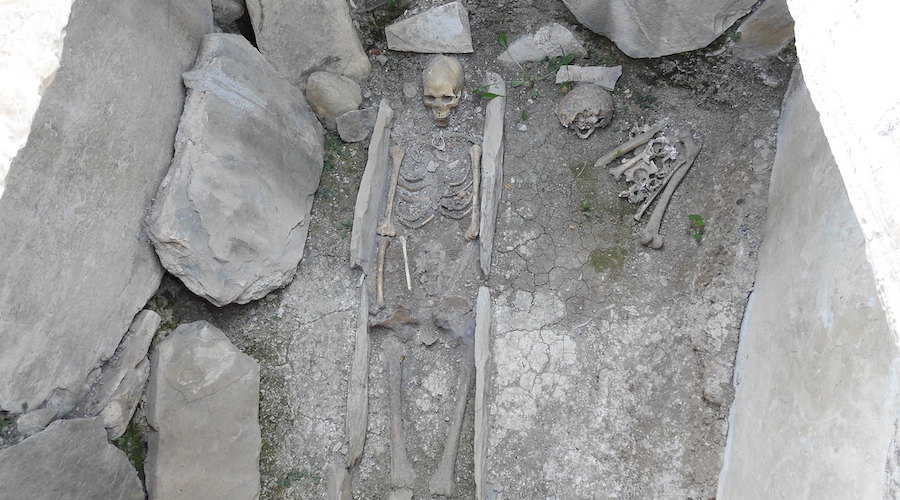
The scientists reached this conclusion after examining human remains from a burial ground in central Italy that was in consecutive use for 12,000 years.
Lead extraction is believed to have begun several millennia ago. A big boost in lead production started 2,500 years ago with coin production, an uptick that reached its peak during the Roman Period before declining during the Middle Ages. Beginning 1,000 years ago, lead production was on the rise again, prompted by silver mining in Germany, then in the New World, and finally to meet the demands of the Industrial Revolution.
In a paper published in the journal Environmental Science and Technology, the research group directed by Yigal Erel from the Hebrew University of Jerusalem, explains that while increases in lead production rates are noted in environmental archives, such as glaciers and sediments from lakes, lead concentrations in human bones and teeth seldom told the outside story of worldwide lead generation rates, until now.
THE LEVEL OF LEAD POLLUTION IN PEOPLE’S BONES OVER TIME CLOSELY MIMICKED THE RATE OF WORLDWIDE LEAD PRODUCTION
As part of their research, the scientists analyzed bone fragments from 130 people who lived in Rome, from as early as 12,000 years ago—well before the advent of metal production—until the 17th century. By looking into the elemental composition found in their bones, the researchers were able to compute the level of lead pollution over time, and showed that it closely mimicked the rate of global lead production.
“This documentation of lead pollution throughout human history indicates that, remarkably, much of the estimated dynamics in lead production is replicated in human exposure. Thus, lead pollution in humans has closely followed their rates of lead production,” Erel said in a media statement. “Simply put: the more lead we produce, the more people are likely to be absorbing it into their bodies. This has a highly toxic effect.”
According to Erel, these findings are cause for concern due to the ever-mounting demand for metals in the manufacturing of electronic devices.
“The close relationship between lead production rates and lead concentrations in humans in the past, suggests that without proper regulation we will continue to experience the damaging health impacts of toxic metals contamination,” Erel said.
The researcher warned that while those most directly affected by these dangers are people with the highest exposure to lead, namely miners and employees in recycling facilities, lead can be found throughout everyone’s daily lives in the form of batteries and the new generation of solar panels that deteriorate over time and release their toxicity into the air and the soil from which crops are grown.
“Any expanded use of metals should go hand in hand with industrial hygiene, ideally safe metal recycling and increased environmental and toxicological consideration in the selection of metals for industrial use,” Erel said.
Extinction Rebellion activists glued to Science Museum site in Shell protest
Demonstrators attach themselves to railings in reaction to museum taking funding from oil firm for Our Future Planet show
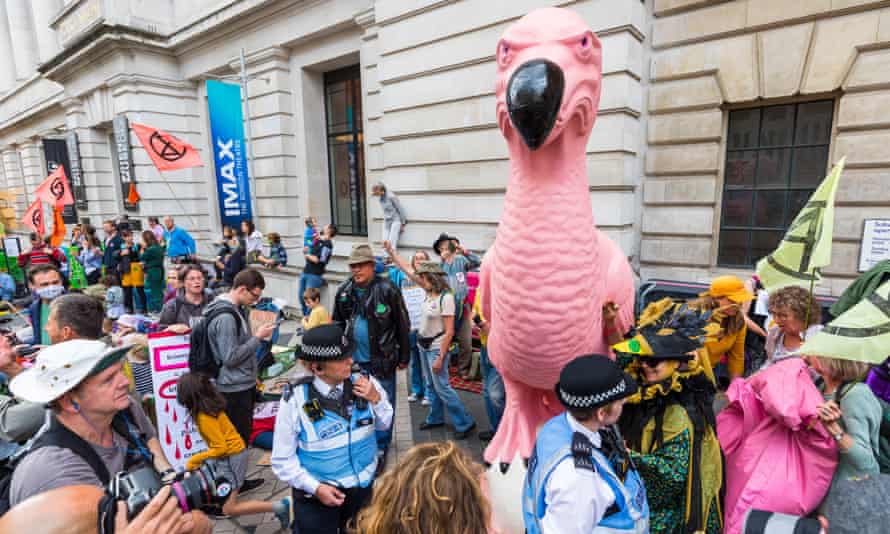
Doctors, scientists and members of the climate campaign group addressed the crowd about the effect fossil fuels are having on the planet. Photograph: Vickie Flores/EPA YES THAT IS A PINK FLAMINGO FROM ALICE IN WONDERLAND, CROQUET WITH THE RED QUEEN
Extinction Rebellion protesters have glued and locked themselves to the railings inside the Science Museum, in a protest against the oil firm Shell’s sponsorship of an exhibition about greenhouse gases.
Five people have put their arms through the railings and glued their hands together so that they are not damaging the museum’s property. Six have deadlocked their necks against the railings. Some are scientists dressed in lab coats, while others are in clothes with Extinction Rebellion logos.
Earlier, protesters were escorted by police and members of the museum security team as they moved through the ground floor of the museum in South Kensington while about 200 supporters, including the Olympic sailor Laura Baldwin, gathered outside.
They chanted, “Hey hey, ho ho, sponsor Shell has got to go” as those outside sang “No more petrol, no more diesel, funding fossil fuels is evil”, waved flags and banners, played drums and blew whistles.
Doctors, scientists and members of the climate campaign group addressed the crowd about the effect that fossil fuels are having on the planet. A 12-foot model of a pink dodo – the bird driven to extinction in the 17th century – was erected by protesters. Curbs on protests in policing bill breach human rights laws, MPs and peers say
A group called Silent Rebellion sat outside in silence and appeared to meditate near the entrance to the museum.
Protesters staged a “die-in” on half of the ramp that leads to the museum’s entrance. Members of security at the museum urged them to keep one side of the ramp free for wheelchairs and pushchairs, which the protesters were doing.
By 7pm some protesters had begun to leave the museum, and about 70 people were left inside the foyer.
Meanwhile, a blockade was set up outside the adjacent Natural History Museum, with hundreds of protesters and supporters stopping traffic at the junction of Cromwell Road and Exhibition Road. A large blue van was parked on Cromwell Road and a man was on top of it holding an Extinction Rebellion banner. Police also blocked off the junction with a police van and a number of officers.
Outside, Baldwin gave a speech to the protesters outlining her reasons for joining the movement in 2019. She said: “Learning about the dire situation, the dire state of our beautiful planet, broke my heart.
“It filled my heart with dread and fear for my child’s future. As a desperately protective mother, I refuse to accept my son’s life as collateral damage for the few to continue economic growth, business as usual, as long as mother nature will allow it.
“As well as continuing to apply pressure to the government, which we must do through non-violent direct action, we need to also dream about how our future world could look.”
Extinction Rebellion has criticised the Science Museum for taking funding from Shell for the Our Future Planet exhibition, which began on 19 May and runs until September.
The climate activist Greta Thunberg has also hit out at Shell’s sponsorship after previous reports said the museum had signed a gagging clause over the funding of the exhibition. The exhibition explores the technologies being developed to remove carbon dioxide from the atmosphere.
Dr Charlie Gardner, an associate senior lecturer in conservation science at the University of Kent and a member of Scientists for Extinction Rebellion, said: “We find it unacceptable that a scientific institution, a great cultural institution such as the Science Museum, should be taking money, dirty money, from an oil company.
“The fact that Shell are able to sponsor this exhibition allows them to paint themselves as part of the solution to climate change, whereas they are, of course, at the heart of the problem.”A Shell spokesperson said: “Our target is to become a net zero emissions energy business by 2050, in step with society. Shell works with our customers to identify the best paths to decarbonisation; we seek to avoid, reduce and only then mitigate any remaining emissions.”
Wind turbines in front of a coal-fired power plant on the outskirts of the new city area of Yumen, Gansu province, China, on Wednesday, March 31, 2021. Wind turbines in front of a coal-fired power plant on the outskirts of the new city area of Yumen, Gansu province, China, on Wednesday, March 31, 2021.
As people ventured out from their pandemic cocoons this year, they gobbled up more electricity than they did before COVID-19 shut the world down. But there still isn’t enough clean energy to meet rising demand, so coal is making a comeback. Global electricity demand climbed 5 percent above pre-pandemic levels in the first six months of 2021, according to an analysis published today by London think tank Ember. Electricity grids turned to more coal to meet that demand, and power sector carbon pollution rose 5 percent compared to the first half of 2019.
“WE ARE BUILDING BACK BADLY”
“Catapulting emissions in 2021 should send alarm bells across the world. We are not building back better, we are building back badly,” Dave Jones, global program lead at Ember, said in a statement today. “The electricity transition is happening but with little urgency: emissions are going in the wrong direction.”
China drove 90 percent of the rise in electricity demand and most of the uptick in coal. While China is already the biggest carbon emitter in the world, that’s been mitigated by the fact that its per capita emissions are less than half that of the US, which is currently the second biggest climate polluter. But China’s per capita electricity demand is also rising rapidly, Ember’s report shows. That highlights how important it will be for the planet for China to get its emissions in check.
None of the 63 countries Ember analyzed, which account for 87 percent of the global electricity production, saw a “green recovery” in the first half of 2021. Ember’s criteria for “green recovery” included lower power sector emissions and higher electricity demand, a sign that more electricity was being generated by clean energy sources like solar and wind. Some countries like the US had slightly cleaner power sectors compared to 2019 as electricity demand stayed relatively flat, but their emissions are expected to rise again with demand.
Renewable energy did have a growth spurt in the early part of 2021. Together, wind and solar generated more than a tenth of the world’s electricity — doubling their share in 2015 and surpassing nuclear power plants for the first time this year. But solar panels and wind turbines were still only able to meet 57 percent of the rise in electricity demand, leaving coal — the dirtiest-burning fossil fuel — to provide the rest.
A CLEAN POWER SECTOR IS ONE OF THE MOST CRUCIAL STEPS
A clean power sector is one of the most crucial steps to achieving global climate goals. Countries are working together under the framework of the Paris climate agreement to limit global warming to about 1.5 degrees Celsius above preindustrial temperatures, which could significantly limit the damage we’re already beginning to see as a result of climate change.
Planet-heating carbon dioxide emissions from the power sector need to fall by 57 percent this decade to meet that goal, regardless of a rise in electricity demand, according to a recent analysis by the International Energy Agency. Much of that reduction could come from completely cutting out coal — but the Ember analysis shows that the opposite is happening.
In the future, clean power grids could also translate to clean transportation, housing, and building sectors. All-electric vehicles, homes, and buildings are one way city planners and policymakers have sought to bring down greenhouse gas emissions. But the power sector has a long way to go to provide them all with carbon pollution-free energy.
During the height of the pandemic last year, carbon dioxide emissions fell across the board for electricity, transportation, and other energy-hungry industries. That clearly hasn’t been enough to stave off climate change-fueled disasters like worsening droughts, explosive wildfires, record-smashing heatwaves, and severe storms. Moving forward, CO2 cuts will have to come from intentional changes to how the world does business — not because a pandemic put things on pause.
Jagmeet Singh visits Laurentian University, decries lack of federal insolvency support
Federal NDP leader says schools like Laurentian are important to support culture, education in the north
Warren Schlote · CBC News · Posted: Aug 28, 2021 NDP leader says if elected PM his government will forgive student debt and stop charging interest on student loans
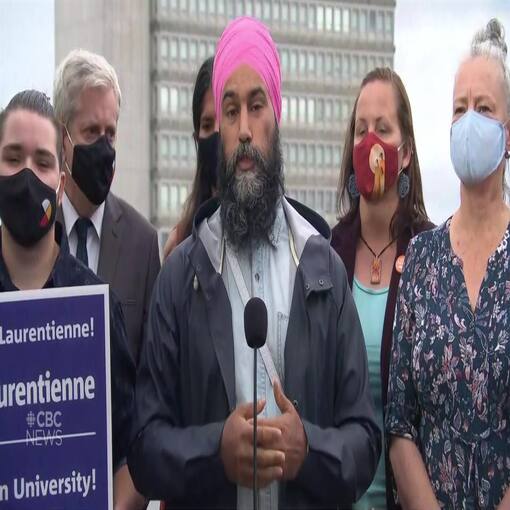
Federal NDP Leader Jagmeet Singh visited the University of Sudbury Saturday morning for a campaign stop, criticizing the Liberal government for not doing more to support Laurentian University and promising to immediately remove the interest on federal student loans if elected.
An NDP press release said the party would also forgive up to $20,000 in student loan debt, double the amount of federal grants and not require graduates to repay the federal portion of their loans for five years.
The current federal grace period before repayment must start is six months after a student leaves school.
"In this pandemic, students have been really hard hit. And we want to make sure you know the New Democrats will be there for students," Singh said, announcing the plan on a terrace at the University of Sudbury, one of the federated schools at Laurentian University.
Singh said the Liberal government has earned $4 billion through student loan interest since taking power in 2015. A report on the Canada Student Loans Program in 2018-2019 cited $2.25 billion in federal interest revenue between 2016 and 2019.
The NDP announced its intention to waive student loan interest and forgive some debt in March of this year, well before the official campaign period began.
Jagmeet Singh promised at a Sudbury, Ont., campaign stop on Aug. 28 to forgive portions of federal student loans and eliminate interest on such financing.
(Warren Schlote/CBC)
The 2021 budget passed by the current Parliament has already extended a pause on student and apprentice loan interest until March 31, 2023. The NDP pledge would make that move permanent.
Singh also said Laurentian University and its federated schools were crucial for the north, by helping northern students study closer to home. He said the current financial crisis at Laurentian and its federated universities might have been avoided if the Trudeau government "would have listened to the people who said, 'we want to save this university.'" Competitive race for Sudbury riding
Many pundits cite the federal riding of Sudbury as one to watch this election, as the incumbent MP Paul Lefebvre has chosen not to run again. Vivian Lapointe is replacing him as the Liberal candidate.
Singh is the first federal leader to visit the riding this election. Sudbury NDP candidate Nadia Verrelli spoke first to introduce Singh and described the frustration she and her former Laurentian University colleagues felt when the university began restructuring.
Sudbury, Ont., resident Dan Scott attended the Aug. 28 event in support of Sudbury NDP candidate Nadia Verrelli. He said the NDP will get his support during the 2021 election. (Warren Schlote/CBC)
Verrelli said she did not feel support from the Liberal party as the crisis began, and she said NDP MPs forced an emergency debate in the House of Commons to demand action on the issue.
"It was the NDP that attended the SOS meetings and heard our stories. It was the NDP that worked with us and for us. And it will be the NDP that will continue to work for this community," she said.
Voter attends to support former colleague
Dan Scott of Sudbury, who works at Laurentian University, said he feels Verrelli brings a base of knowledge to her politics through her doctorate in political science. He said he would expect an NDP government to face fewer scandals than the many issues tied to the current Liberal government such as SNC-Lavalin and WE Charity.
"I have to believe that the NDP can do a better job of governing without taking those missteps and having a more honest relationship with Indigenous peoples, not taking them to court instead of giving them the benefits ... that they've won through previous court battles," he said.
Election day is Sept. 20, though there are advance poll dates and mail-in options available. Details are on the Elections Canada website.
ABOUT THE AUTHOR Warren Schlote Reporter Warren Schlote is a reporter at CBC Sudbury. Connect with him via email at warren.schlote@cbc.ca, or on Twitter at @ReporterWarren.
Canada election: NDP puts Indigenous issues at forefront, attracts votes in the North
Aug 28, 2021
NDP leader Jagmeet Singh got a warm welcome when his campaign touched down in the northern Ontario riding of Kenora on Friday, where more than 40 per cent of voters are Indigenous. The visit was part of an effort by the New Democrats to campaign hard in Canada's northern regions, as the party tries to make gains with the Indigenous population critical to the vote. As David Akin reports, the party has already seen praise for putting Indigenous issues and leaders at the forefront of the election campaign.
What Links the Covaxin Scandal in Brazil and Kumbh Fake-Tests Scam in India?
30/08/2021
SHOBHAN SAXENA AND FLORENCIA COSTA Francisco Maximiano, the president of Precisa Medicamentos, in front of the Senate panel, August 2021. Photo: Pedro França/Agência Senado
Brazil’s investigation into the Covaxin deal revealed that an MoU between Bharat Biotech and Precisa Medicamentos involved a third company: Envixia.
A supply agreement for Covaxin specifies a CIN for Envixia that is identical to that of an Indian firm owned by Anudesh Goyal.
The agreement reads like a rush job with no regard for good language, and it reveals a lot about Covaxingate.
Sao Paulo:In the very first agreement signed for initiating the process of exporting 20 million doses of Bharat Biotech’s Covaxin to Brazil, a middleman selected by the Hyderabad-based vaccine manufacturer used the unique corporate identification number of his Indian company even though the $300 million deal was meant to be with his UAE-registered entity.
Signed on November 10, 2020, the five-page “supply agreement” between Precisa Medicamentos of Brazil and Envixia – an offshore firm which claims it is registered in a free zone area of the United Arab Emirates – mentioned incorrect registration numbers for both the companies. It is also replete with glaring spelling and grammatical errors, just as in the two invoices raised by Madison Biotech of Singapore, which is another offshore firm under the scanner in the scandal known here as “Covaxingate”.
The deal is the subject of a probe by a parliamentary commission of inquiry (CPI) in Brazil.
The November 2020 pact was the initial step towards negotiations for the export of the Indian vaccine to Brazil’s ministry of health. Though Bharat Biotech was not a party to the agreement, it signed a Memorandum of Understanding (MoU) with the two firms involved just 14 days later, based on the terms in the pact, for selling its high-priced vaccine to Brazil.
In the opening clause of the agreement between the Brazilian company and Envixia, which is introduced as an “authorized distributer (sic) of Bharat Biotech International Limited”, the registration number of Precisa Medicamentos, Ltd., “a company incorporate (sic) under the laws of Brazil”, is mentioned as “SP-CEP: 06696-069”. This number is actually the postal code of Avenida Portugal in São Paulo, where an office of the company is located. It does not match the company’s registration number issued by the Federal Revenue department of Brazil.
In the case of Envixia, the agreement included a false identity, which actually reveals more about the company and its involvement in another scam in India.
As per the agreement, Envixia is a company in Dubai. But a registration number given for it is actually the corporate identification number (CIN) issued by the Registrar of Companies (RoC), Gwalior, for Invex Health Private Limited – a firm headquartered in Neemuch, Madhya Pradesh, with another office in Thane, Mumbai.
In the supply agreement, which The Wire has seen, Envixia is described as a company “based out in Dubai (sic) and its associates” which are represented “through Anudesh Goyal (Director)”. A registration number for the company is specified as “U24290MP2018PTC047309”. This is the CIN of the Indian firm owned by Anudesh Goyal – who has been questioned in the Kumbh Mela fake tests scandal. The name and address of Invex Health doesn’t figure anywhere in the poorly-drafted agreement, which has two different spellings – “Envixia” and “Envexia” – for the Dubai firm throughout the contract.In the opening clause of the supply agreement, the registration numbers used for both the companies are incorrect and misleading.PIN IT
As both companies failed to respond to The Wire’s queries about the supply agreement, it is not clear who drafted the document, which looks like a rush job with little regard for language. Yet, it reveals a lot about the scandal.
As part of its ongoing investigation into Covaxingate, The Wire had reported in July that Envixia could be a firm that probably doesn’t exist, and that Anudesh Goyal, who signed the MoU with Bharat Biotech, could be the same person who brokered the Kumbh Mela testing contracts, now being investigated by the Uttarakhand police. The Covaxin supply agreement, where the Envixia director used the Indian CIN instead of the business license issued by Dubai authorities, now establishes a link between the vaccine scandal in Brazil and the fake-tests scam in India.
Also read:
The CIN of a company is a 21-digit alphanumerical code that the RoC issues in different Indian states. The number is valid only for companies in India and can be used to check the status of a business entity on the master-data section of the Ministry of Corporate Affairs’ website. Per Union ministry data, the CIN mentioned in the Covaxin agreement was issued by the RoC of Gwalior to Invex Health, which has two directors: Anudesh Goyal and Neha Goyal. Till date, Anudesh Goyal had neither confirmed nor denied that he was the same person whose name appears in two different scandals. Bharat Biotech has not explained its relationship with Envixia and Anudesh Goyal either.
Multiple sources in Brazil and India have confirmed to The Wire that Goyal was present in several meetings between the three firms at Hyderabad. But despite several queries, including about the supply agreement, Covaxin manufacturer Bharat Biotech has kept mum about its dealings with the UAE firm and its director.
The publicly available data on Ministry of Corporate Affairs’ website shows the registration number used in the agreement belongs to Invex Health, whose director is Anudesh Goyal.PIN IT
An uneasy silence
Anudesh Goyal’s name popped up the first time in Brazil’s investigation into the Covaxin deal in July 2021, when it was revealed that the MoU between Bharat Biotech and Precisa Medicamentos, signed on November 24, 2020, had a third company in the middle: Envixia, with an office purportedly in the International Free Zone Authority of Fujairah, an emirate of the UAE. But the supply agreement, first obtained by O Globo newspaper, pushed the timeline of the case back by at least two weeks. It also revealed that the Dubai firm and Anudesh Goyal were key players in the proposed export of vaccine doses to Brazil.
Envixia, according to the agreement, was to receive payment for the vaccines directly from Brazil’s ministry of health, in Dubai – a known tax haven – and pass on a commission to Precisa Medicamentos. This is an extremely important revelation: the MoU and the main contract, signed later on February 23, 2021, are silent about the payment to the Brazilian firm. The Wire emailed both Anudesh Goyal and Precisa Medicamentos about the terms and conditions of their agreement, but they haven’t elicited responses yet.
In the supply agreement, signed by Goyal for Envixia and Francisco Maximiano for Precisa Medicamentos, the payment conditions had been put in black and white prior to the MoU’s signing with Bharat Biotech. Annexure I of the agreement says the Indian firm will raise an invoice with Envixia, which in turn will send an invoice to Brazil’s ministry of health.
“Envixia will pay Precisa’s commision (sic) after receipt of full payment from MOH [Brazil’s ministry of health],” the payment clause says. It is written in such jarring English that even the names of Covaxin and the Guarulhos Airport in São Paulo have been misspelt. The agreement also provided for a refundable advance payment, of $1 million, from Precisa Medicamentos to Envixia.
Also read:
From the time Envixia entered the picture in the vaccine scandal, its details have been rather sketchy. Now, the revelations in the supply agreement raise more doubts about the company’s existence. The supply agreement specifies Envixia as a Dubai-based firm – but the MoU lists the address of Envixia Pharmaceuticals LLC as “Kidnah, Block A, Plot 4, Fujairah, UAE”. This is actually the address of the International Free Zone Authority in Fujairah, which is not a part of Dubai. In the supply agreement, Goyal is mentioned as the director of Envixia, but in the MoU, his designation is general manager at the same company. The copy of the MoU submitted to the Brazilian ministry lacks the Fujairah registration number and the Envixia company stamp. It is now part of a folio of documents being examined by the Senate panel.
The timeline of the supply agreement and MoU and details about the roles of the three companies suggest that the Dubai firm was a key player in the deal from the beginning. The agreement signed on November 10, 2020, clearly suggests Envixia was scouting clients for Bharat Biotech International Limited (BBIL) – which was in the process of developing and selling its COVID-19 vaccine, Covaxin, around the world. “Envexia (sic) contacted Precisa for registration and distribution of their BBIL vaccines for Private and Government requirement in Brazil,” says clause #5 of the agreement. “Precisa [Medicamentos] agreed and willing to join hand (sic) for this business opportunity,” the next point goes.
The supply agreement’s signing was followed by a meeting at the ministry of health on November 20, 2020, joined in by three senior executives of Precisa Medicamentos, including Maximiano, and the top brass of the Indian firm. Four days later, on November 24, 2020, the tripartite MoU was signed by Maximiano, Goyal and V. Krishna Mohan, who was signing on behalf of Bharat Biotech. The MoU assigned five roles to the Brazilian firm, including “import and distribute the Covid-19 vaccine for both private sector and public sector”. For Envixia, the pact specified just one role: “Provide support for all activities related to registering and commercialising BBIL’s Covid-19 vaccine in Brazil”.
A dubious contract
As the supply agreement, followed by the MoU, mandated two firms – Precisa Medicamentos and Envixia – with handling the Brazil deal, independent observers have been raising serious questions about the legality of the $300-million contract, signed in Brasilia. Last week, Senator Simone Tebet, one of the main parliamentary committee investigators, questioned the legitimacy of Precisa Medicamentos as a representative of Bharat Biotech. In the MoU, Senator Tebet said, it was clear the Brazilian firm was “a mere importer and exclusive distributor” of Covaxin but not the only representative. “The company represents Bharat [Biotech] in some activities, but signing the contract is not among the roles assigned to it,” said Senator Tebet at a hearing. “Why was Precisa Medicamentos not authorised to sign the contract [by Bharat Biotech]?” she asked – alleging that the Brazilian firm had submitted forged documents to make itself eligible for signing the multi-million-dollar contract.
The Brazilian firm had submitted the MoU to the ministry of health as proof of its partnership with Bharat Biotech – but it had also produced a “power of attorney” from the Indian firm that allowed it to sign the contract as a representative of the Hyderabad-based firm. On July 23, the day Bharat Biotech terminated the MoU, the Indian vaccine-maker had accused its former partner of forging two important documents, including the power of attorney. An investigation by the Legislative Police at the CPI’s request has found evidence of “tampering and falsification” in the documents that Precisa Medicamentos delivered. Earlier, a probe into the documents’ authenticity, by the office of Comptroller General of Union, had reached the same conclusion without specifying who actually committed the forgery.
The payment clause, which is full of glaring spelling mistakes, reveals how the Dubai firm was to be paid directly by the Brazilian ministry of health.PIN IT
Precisa Medicamentos has claimed that Anudesh Goyal had sent the two documents with the signature of V. Krishna Mohan, a director of Bharat Biotech. Based on a forensic probe by an expert that the company hired, Precisa accused Goyal of creating the documents. On August 19, at his Senate hearing, Francisco Maximiano stayed mostly silent as senators bombarded him with difficult questions. He opened his mouth only to accuse Envixia, whom he called an “intermediary of Bharat Biotech”, of forging the documents. “I went to India [in July] to present to them the evidence and proof that we received these documents from Envixia, a partner of theirs and selected for the process by them,” said Maximiano, whose testimony didn’t go down well with the Senators. They are going to summon him back to the commission, which is probing the conduct of President Jair Bolsonaro’s government during the pandemic, which has claimed more than 5.7 lakh lives in Brazil.
The Senate panel is planning to submit its report by September 16. With allegations of corruption in the deal stinging top officials, including Bolsonaro, the report is expected to unleash a political storm in Brazil. Although the Brazilian government has terminated the Covaxin contract, it is still the top priority for the CPI, which is looking at Covaxingate as a “grand scheme of corruption”.
With all the paperwork in the deal being probed for fraud, there is serious trouble ahead for the main players in Covaxingate.
Shobhan Saxena and Florencia Costa are independent journalists based in São Paulo, Brazil.
Information overload is a common and old problem but the growth of preprints in the last five years presents us with a proximal example of the challenge.
The scholarly communication community is in a stage of “publish first, filter later”.
While preprints are lowering the cost of and delays to sharing information, filtering for relevant content is still at a relatively early stage.
Information overload is the difficulty in understanding an issue and effectively making decisions when one has too much information about that issue, and is generally associated with the excessive quantity of daily information Wikipedia
Information overload is a common problem, and it is an old problem. It is not a problem of the Internet age, and it is not specific to scholarly literature, but the growth of preprints in the last five years presents us with a proximal example of the challenge.
We want to tackle this information overload problem and have some ideas on how to do this – presented at the end of this post. Are you willing to help? This post tells some of the back story of how preprints solve part of the problem – speedy access to academic information – yet add to the growing information that we need to filter to find results that we can build on. It is written to inspire the problem solvers in our community to step forward and help us to realise some practical solutions.
Using journals to find relevant information
In a classic presentation in 2008, the writer Clay Shirky argued that while information overload might be a problem as old as the 15th century when the printing press was invented by Gutenberg, the rise of the Internet for the first time had radically changed how we address this problem. Publishing used to be expensive, complicated and therefore risky, and this was addressed by only publishing content that was selected by the publisher to be “worth publishing”. Scientific publishing worked – and still works – in similar ways. One important change occurred with the dramatic growth of scientific publishing after World War II, when filtering by staff editors became unsustainable, and external peer review by academic experts slowly became the norm from the 1960s to the 1990s (for example, Nature in 1973 and The Lancet in 1976).
Clay Shirky coined the phrase “It’s Not Information Overload. It’s Filter Failure” in his 2008 presentation and made the point that publishing in the Internet age has become so cheap that publication no longer needs to be the critical filtering step, rather that filtering can happen after publication. We can see this pattern in many mainstream industries, from movies to online shopping, with organisations such as Netflix and Amazon investing heavily in recommender systems that substantially contribute to their revenues.
Cameron Neylon applied these considerations to scholarly communication and found the scholarly communication community at an early stage in the transition to “publish first, filter later”. Ten years later, his findings for the most part still hold true, as scholarly discovery services still for the most part focus on publications that have gone through a “filter” step by a scholarly publisher.
Preprints: an alternative to the ‘journal as a filter’
Preprints are the most visible implementation of the “publish first, filter later” approach. Preprints in some disciplines, including high-energy physics, astrophysics, mathematics, and computer science, increasingly became the norm in the last 25 years, and currently the majority of high-energy physics papers are first published as preprints on the arXiv. In the life sciences, the preprints server E-Biomed was proposed by NIH director Harold Varmus in 1999, but the project was killed after a few months, not least because of strong and vocal opposition by biomedical publishers and societies. Instead, PubMed Central launched in 2000 to host open access journal publications instead of preprints. After a delay of more than 15 years, preprints in the life sciences finally took off, and although they have grown considerably in number in the last five years, preprints still only represent a small fraction (6.4% in Figure 1) of all publications in biology:
Figure 1. Yearly preprints/all-papers in Microsoft Academic Graph, trend by domain, reproduced from Xie B, Shen Z, and Wang K 2021.PIN IT
Coming back to the original problem, preprints now add to the journal articles that researchers are tasked with filtering. That information overload poses a problem was recognised in a survey of stakeholders (such as librarians, journalists, publishers, funders, research administrators, students, clinicians, and more) conducted last year by ASAPbio. The problem is exacerbated given the number of servers hosting relevant preprints – ASAPbio’s preprint platform directory lists 56 preprint servers that host potentially relevant material.
Filtering for relevant content
While preprints in general, and specifically in the life sciences, are lowering the cost of and delays to sharing information, filtering for relevant content is still at a relatively early stage. To go deeper into the details of how relevant preprints can be discovered, it is important to make the important distinction between Discovering relevant preprints at any point in time independent of peer review status Discovering relevant preprints that have undergone peer review Discovering relevant preprints immediately (days) after posting
The first category includes discovery services that also include preprints as part of their content, including for example Europe PMC and Meta. Discovery strategies relevant for journal content can also be applied to preprints, e.g. search by keyword and/or author.
The second category focuses on peer-reviewed preprints, and is covered extensively elsewhere.
The third category is the focus of this post – discovery of relevant preprints of interest to a researcher right after their posting, which rules out traditional peer review. The following filter strategies are possible: Filter by subject area, keyword or author name Filter by personal publication history Filter by attention immediately after publication: social media (Twitter, Mendeley, etc.) and usage stats
Filter by recommendations, e.g. from subject matter experts
These filters can of course also be combined. The particular challenge is that they must work almost immediately (within days) after the preprint has been posted. This assumes a high level of automation, and a focus on immediacy. A combination of filters 1 and 3 works well with this approach: the information required for filter 1 is available in the metadata (e.g. via Crossref) when the content is posted, and attention (filter 3) can be determined immediately after the preprint is posted – Twitter is widely used for sharing links to bioRxiv/medRxiv preprints, see examples in Figure 2. The Crossref Event Data service found 15,598 tweets for bioRxiv/medRxiv preprints the week starting June 7, 2021.
For filter 3, we’ve considered ‘bookmarking preprints in Mendeley’ but these cannot currently be tracked in open APIs such as the Crossref Event Data service. Usage stats are another alternative, but are currently not available via API in the early days after publication.
Another consideration is how to best inform researchers of these potentially relevant preprints. Given that cost and speed are the primary concerns, we consider the most appropriate approach to be dissemination of these filtering results via a regular (daily or weekly) RSS feed or newsletter.
In summary, realising a list of biomedical preprints that have been filtered by a minimal number of tweets in the days after posting, and broken down by subject area, is a good initial filtering strategy to identify relevant preprints immediately after they have been posted. Interested researchers can access a filtered corpus via newsletter.
Existing efforts that track discovery of relevant preprints right after their posting
A few examples
PreprintBot – new this year, “a bot that tweets preprints and comments from BioRxiv and MedRxiv” PromPreprint – this has been running for a while; “A bot tweeting @biorxivpreprint publications reaching the top 10% Altmetric score within their first month after publication” http://arxiv-sanity.com/toptwtr – this started as a new way to list all arXiv preprints, but they added social media data at some point https://scirate.com – a free and open access scientific collaboration network that allows users to follow arXiv.org categories and see the highest ranked new papers https://rxivist.org – a free and open website that enables users to identify preprints from bioRxiv and medRxiv based on download count or mentions on Twitter. One can, for example, pick the most tweeted preprints in the last 7 days – and this presents a list of preprints that may have been posted at any point since the servers began.
Our strategy for filtering life science preprints builds on these existing efforts but picks up only those preprints posted in the past week that have received tweets and proposes to use a newsletter as the primary communication channel. We propose to run this newsletter as a community experiment, where we iterate over the implementation based on researcher feedback on how helpful the newsletter is in addressing information overload. Other considerations: Can we focus more on who is tweeting rather than the number of tweets, or should we add an element of human curation? Can we filter life science preprints from additional servers?
Call to action
If you want to help to tackle the information overload problem in the life sciences then leave a comment below or DM us. If enough folk are interested in working with us, we could generate a community group under the auspices of ASAPbio to work on information overload.
Women were the first computer programmers. How, then, did programming become the domain of bearded nerds and manly individualists? via Wikimedia Commons
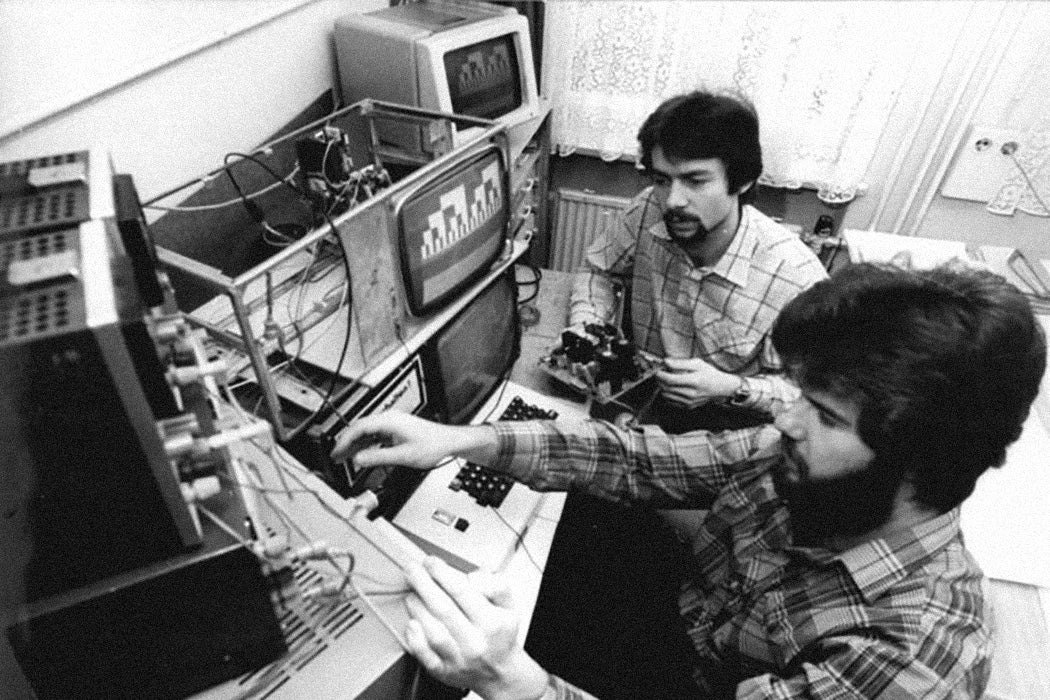
When people picture the archetypal computer nerd, they probably imagine a certain character: unkempt, eccentric, maybe a bit awkward around women—embodying a very specific, and perhaps unexpected, form of masculinity. Yet computer programming wasn’t born male. As computing historian Nathan Ensmenger notes, programming was initially seen as a woman’s job. So how did the male nerd come to dominate the field and popular ideas about it? Prior to the 1960s and 1970s, writes Ensmenger, computer programming was thought of as a “routine and mechanical” activity, which resulted in the field becoming largely feminized. The work wasn’t particularly glamorous; “coders” were “low-status, largely invisible.” They were only supposed to implement the plans sketched out by male “planners.” Ensmenger quotes one female programmer, who recalled, “It never occurred to any of us that computer programming would eventually become something that was thought of as a men’s field.”
The turning point came during the 1960s and ’70s, when a remarkable demographic shift hit programming. Now dominated by men, the field spanned corporate, academic, and social spaces.
From the mid-1960s, a “newfound appreciation for computer programmers, combined with an increasing demand for their services, was accompanied by an equally dramatic rise in their salaries.” Aspiring male professionals wanted in, but they didn’t want to be associated with lowly coding clerks. To elevate themselves, they emphasized the esoteric nature of their discipline, deriving professional authority from individualism, personal creativity, and an obscure, almost arcane, skill set. “To be a devotee of a dark art, a high priest, or a sorcerer…was to be privileged, elite, master of one’s own domain,” writes Ensmenger.
Companies selected candidates using aptitude tests that favored “antisocial, mathematically inclined, and male” candidates, Ensmenger finds. So, in classic snake-eats-tail fashion, workers who fit that type “became overrepresented in the programmer population, which in turn reinforced the original perception that programmers ought to be antisocial, mathematically inclined, and male.”
By the end of the 1960s, this ideal had morphed into a series of masculine stereotypes: the bearded, sandal-wearing “programming guru,” the upshot “whiz kid,” the “computer cowboy,” the programming “hot shot.”
The “computer bum” and “hacker” stereotypes that emerged in the 1970s would only solidify the masculine takeover of computer programming. The “bum” was viewed as a wasted, antisocial, obsessive figure, who would mooch off the university’s resources by monopolizing the computer lab (mostly at night, when it was empty). These computer centers were “effectively males only,” explains Ensmenger. Inside, bums solved puzzles, tinkered with code, wrote “trick programs,” and stayed up for days, trying to “maximize code.”
Despite the image of social isolation, computer centers were profoundly social spaces, Ensmenger argues: “The male camaraderie [was] defined by inside jokes, competitive pranks, video game marathons, and all-night code fests.” This atmosphere was notably “unfriendly to a more mixed-gender social environment, a fact noted by many women who cited the male-dominated culture of the computer center as an obstacle to their continued participation in computing.”
While the nerd, guru, sorcerer, hacker, and bum don’t seem particularly “manly,” these identities granted programmers a perceived mastery over their discipline and the ability to monopolize competence, as well as to establish steep barriers of entry. “In fact,” Ensmenger concludes, “one might argue that computer programmers, rather than being insufficiently masculine, have elevated the performance of masculinity to an extreme.”
Former Afghan Air Force pilots plead with Canada for rescue after daring escape
Social Sharing
Facebook
Twitter
Reddit
LinkedIn
Email
'We are sure they will kill us because we are fighter pilots,' says one Afghan flier
An Afghan Air Force AC-208 Eliminator used for ground attack. Known as a Cessna with a Hellfire, an aircraft like this was used by former Afghan military pilots to flee Kabul in the hours after the Taliban overthrew the democratically elected government. Those 13 aircrew are now appealing for asylum in Canada. (U.S. Defense Visual Information Distribution Service)
As darkness fell a week ago Sunday, the Taliban had them totally surrounded.
There was no way out of the Kabul airport the night the Afghan government fell. For a dozen military pilots, there was only one thing left to do — fly.
In the weeks leading up to the government's capitulation, the Taliban had carried out a brutal assassination campaign that killed several of the pilots' comrades.
"They will kill us," one of the NATO-trained pilots, now in hiding in Tajikistan, told CBC News. "We are sure they will kill us because we are fighter pilots."
Twelve pilots and one aircrew chief tumbled into one of the Afghan Air Force's single-engine AC-208 Eliminators, known by their crews as a 'Cessna with Hellfire,' a reference to its air-to-surface missile.
The plane taxied for takeoff just as the first desperate wave of Afghan civilians fleeing the Taliban reached the edges of the runway — "a lot of people who were just running to the aircraft," said the pilot.
Roaring into the night sky, they left behind them a dark, chaotic city where sporadic gunfights and tracer fire marked the last gasps of the democratically-elected government they had sworn to defend.
CBC News interviewed three of the pilots via cell phone from Dushanbe, the capital of Tajikistan. Their identities have been verified through military records, but their names are being withheld to protect their lives and the lives of the families they left behind in Afghanistan.
The group of pilots includes those who have flown AC-208s, MD-530 attack helicopters and the UH-60 Blackhawk.
An Afghan Air Force MD-530 attack helicopter on a patrol. In the final days before the Taliban takeover, the fledgling air force ran short of ammunition. Twelve pilots and one aircraft crewmember, who fled to Tajikistan, are asking for asylum in Canada. (U.S. Defense Visual Information Distribution Service)
They are still wearing the flight suits they escaped in and say they have no access to the Internet to contact their families.
Authorities in Tajikistan, which shares a 1,350-kilometre border with Afghanistan, said that several Afghan military planes carrying more than 100 aircrew and soldiers have landed at various airports. Separately, a week ago, another Afghan military plane crashed in Uzbekistan. It's not clear whether it was shot down.
Although they're not under guard and are free to move around in Dushanbe, the aircrew who spoke to CBC News said they are afraid the authorities in Tajikistan will hand them back to the new Taliban regime — either at the behest of the Russians, who made it clear this weekend they want no part of a refugee crisis, or as a goodwill gesture to the new government in Kabul.
'They would take their revenge'
One pilot, who was a small boy when the Taliban were last in power, said he remembers their brutal ways and has no illusions about the fate that would await him in Afghanistan.
"I killed them," he said. "I rocketed them. I shot them. I am sure if I killed someone they would take their revenge and kill us."
All 13 aircrew are asking for asylum in Canada and the federal government's help with rescuing their wives, parents and children from the grip of the Taliban regime.
"All of us here ... we want to exit to Canada," said the first pilot, who had flown the AC-208 in combat since 2017. "We need help. We request the Canadian government to help us and to take us out from here."
Even though some of them trained in the United States, none of the pilots expressed interest in immigrating there after U.S. President Joe Biden claimed that "the Afghan military gave up, sometimes without trying to fight."
Out of ammo
It's hard to fight when you have no ammunition. All three pilots said their stock of missiles and other munitions ran out weeks ago and they had been reduced to flying intelligence, reconnaissance and surveillance (ISR) missions, watching in horror from the air as the Taliban advanced.
One pilot, who also flew the light AC-208, said that as the end approached and the Taliban prepared to storm the airport, he and his comrades had to make a choice: wait to be captured and die a futile, meaningless death, or flee in hopes of surviving and eventually seeing their families.
People looking to flee the country wait next to Hamid Karzai International Airport in Kabul, Afghanistan on August 24, 2021. (Haroon Sabawoon/Anadolu Agency/Getty Images)
"We didn't want to die in Kabul," said the pilot, a five-year air force veteran. "We left our families behind and we are sick about it."
He said their families do not know whether they are dead or alive.
'We didn't have any chance to fight'
There was bitterness in the voice of a third pilot who spoke to CBC News. He said they were helpless in the final days of the fight, as the Taliban encircled Kabul and moved in to finish off the western-backed government.
"We didn't have any chance to fight with them because there was no rockets," said the pilot, who flew MD 530 Defender helicopter gunship.
The Afghan Air Force, once the crown jewel of the U.S.-led NATO training mission, was supposed to be the trump card over the Taliban, supporting troops on the ground holding back the militants.
As the U.S. withdrawal accelerated last spring, the Afghan forces' reliance on American and foreign contractors — to repair, maintain and fuel their aircraft — led to confusion and crippling shortages. It was a void the Pentagon was scrambling to fill as late as June.
The absence of airpower left Afghan troops on the ground alone to face the Taliban.
American and Canadian forces, along with the other western armies that fought in Afghanistan, relied heavily on missile-armed fighters, helicopter gunships and unmanned Predator drones to beat back insurgent attacks.
A full squadron of transport and attack helicopters belonging to the now-former Afghan Air Force. Thirteen flight crew who fled to Tajikistan following the Taliban takeover are now appealing for asylum in Canada. (U.S. Defense Visual Information Distribution Service)
Handicapped by shortages, the Afghan Air Force sustained a final blow in early summer: a Taliban campaign to assassinate pilots which spread terror and confusion within the ranks.
"I believe the Taliban were going after anyone who had a higher military education," said retired Canadian major-general Denis Thompson. "That resulted in a number of targeted assassinations."
The Taliban had no airpower, so "if they could neuter the airpower of the Afghan National Security Forces by taking out their pilots, that would be a legitimate — from their perspective — military aim," Thompson added.
The federal government has announced that — in addition to a special immigration program for former interpreters who worked for the Canadian military and diplomats, along with their families — there would be a targeted refugee program for vulnerable Afghans who face reprisals under the Taliban.
"[The pilots] would fit the program because their lives were in danger, and their families would fit the program," Thompson said. "I believe the case fits the criteria."
Getting Canadian consular help will prove to be difficult. Canada has no embassy in Tajikistan and all cases are funnelled through the mission in Kazakhstan.
Murray Brewster is senior defence writer for CBC News, based in Ottawa. He has covered the Canadian military and foreign policy from Parliament Hill for over a decade. Among other assignments, he spent a total of 15 months on the ground covering the Afghan war for The Canadian Press. Prior to that, he covered defence issues and politics for CP in Nova Scotia for 11 years and was bureau chief for Standard Broadcast News in Ottawa.
Ukrainian troops rescue Afghans bound for Canada in daring operation August 30, 2021 About 360 evacuees from Kabul, including 80 Ukrainian citizens, arrive in Kiev on August 28. Agence Anadolu/Getty Images
A plane carrying Afghan translators, including one who worked for The Globe and Mail and another who served the Canadian military and their families, arrived in Kiev following a daring operation by stationed Ukrainian soldiers at Kabul airport.
The rescue, which was coordinated by the Ukrainian military, President Volodymyr Zelensky’s office and The Globe, could pave the way for more Afghans fleeing the Taliban to reach Canada. Ottawa has promised to resettle vulnerable Afghans on condition that they can travel to third countries, and The Globe has learned that the Canadian government has asked the Ukrainian government if it would be ready to transport more refugees to Canada. in Kiev, where they would be processed before resettlement.
The translators’ rescue was carried out early Friday morning in Kabul, a day after the last Canadian evacuation plane left Afghanistan, and hours after the deadly suicide bombing at one of the airport gates international Hamid Karzai, which resulted in the deaths of at least 170 Afghans trying to flee the country, as well as 13 American soldiers. Following the attack, claimed by the local affiliate of the so-called Islamic State, the United States said only foreign nationals – and no longer Afghans applying for visas – would be allowed into the airport.
Despite this restriction, as well as the growing risks to coalition forces ahead of the planned withdrawal of the last US forces on August 31, Ukrainian troops marched into the city of Kabul to escort two minibuses – carrying the translators to their destinations. from Canada. and their families, 19 people in all – on the airfield.
The soldiers had photographs of the license plates of the minibuses, and they surrounded and escorted the vehicles the last 600 meters to the airport.
“The convoy entered [the airport] because the Ukrainians came out. We just sent them the license plates of our vehicles… and they came to the local bazaar to find us. They said “Ukraine? We said ‘Yes!’ and they took us inside, ”said Mohammed Sharif Sharaf, a 49-year-old father of five who spent 10 years as a fixer and translator helping The Globe cover Canada’s role in the war in Afghanistan. .
After reaching the airport, the 19 Afghans were boarded a military cargo plane – which was stationed in Kabul as part of Ukraine’s little-known contribution to the NATO-led effort in the country – and flew to Islamabad with a group of other Afghans the Ukrainians had previously rescued. In the Pakistani capital, they were transferred on a chartered commercial plane that transported the group to Ukraine, with a brief stopover in the Azerbaijani capital of Baku.
In a tweet, Zelensky said “360 more Ukrainians and citizens of other countries” arrived in Kiev on Saturday. “Our military, our intelligence services and our diplomats did a brilliant job. Ukraine does not leave its struggling citizens in difficult times and helps others!
Taliban agree to let foreign nationals and Afghans leave, international statement says
Shribman: Withdrawal from Afghanistan is not the end of US power, just another round of frustrated ambition
Two previous attempts, planned by the Canadian military before it left Kabul airport, failed to get Mr. Sharaf’s group into the airport, as did another attempt organized by the Department of US state. These operations relied on the ability of Afghans and their families to reach designated meeting points near the airport gates, which proved impossible in the chaos outside the facility, where thousands of ‘Afghans gathered in hopes of being airlifted out of Kabul, which fell to extremist Taliban on August 15.
The Ukrainian operation succeeded where others had collapsed because the Ukrainian army deployed special forces troops to the city on foot to carry out the rescue.
Evacuees said they were stunned that Ukrainian troops took risks to save them, unlike Canadian and US forces.
“Everyone was surprised. I tried last month to get someone to get us. We asked Americans, Canadians, Qataris, everyone – and no solution. They were afraid to go out, ”said Jawed Haqmal, a 33-year-old father of four who worked for two years with the Canadian Special Forces in Kandahar. “Ukrainian soldiers were angels to us. They did an exceptional job. They have a big heart.
Retired captain Jérémie Verville of the Royal 22e Régiment said his former translator’s escape was “a stor an who went out of his way to ask for help.”
Mr. Sharaf, Mr. Haqmal and their families arrived in Kiev with passes issued to them a day before the Ukrainian operation by the office of Immigration Minister Marco Mendicino. The documents indicate that porters should be treated as Canadian citizens and that they had visas to travel to Canada.
The documents were enough to get them out of Kabul, but created hours of bureaucracy at Kiev’s Boryspil Airport on Saturday, where border guards had no idea how to deal with evacuees, many of whom had passports. expired or only identity cards issued by the former Afghan government. government. The Sharaf and Haqmal families, along with others on the plane, were finally granted 15-day humanitarian visas to enter Ukraine, in part because of promises from the Canadian Embassy that they would be quickly resettled. .
“What this extraordinary effort demonstrates is that we can and will continue to be very nimble in providing Afghan refugees with all the visas or documents they need to make it clear that they are bound for Canada and should be authorized. to get here, ”Mendicino said in a telephone interview.
While the dramatic Kabul operation is unlikely to be repeated due to the deteriorating security situation in the country, the Islamabad-Kiev trail that has been mapped could be used to help move other Afghans to Canada. who have reached Pakistan, then they can travel to Ukraine where they can be screened and processed for resettlement in Canada.
“Canada has further requested our further support and we will be happy to assist you,” Ukrainian Foreign Minister Dmytro Kuleba said in response to questions e-mailed by The Globe. He said the rescue of Kabul demonstrated the capabilities of his country’s military and why it should finally be accepted into the NATO alliance, a long-standing goal of the Ukrainian government. “In these horrific circumstances, our military officers displayed bravery, high class and exemplary professionalism. “
Roman Waschuk, a former Canadian ambassador to Kiev who aided the operation by putting the Globe in touch with a senior official in Mr Zelensky’s office, said the Ukrainians accepted the rescue mission largely thanks to the support that their country had received from Canada during its own seven-year war with Russian-backed forces in the eastern Donbass region of Ukraine. Canada has provided some $ 700 million in financial assistance to Ukraine since the start of the conflict and has deployed 200 troops on a rotational basis since 2015 on a mission to train Ukrainian troops for combat.
“This is, in part, a return on the investment of successive Canadian governments in the training of the Ukrainian army. There is a lot of respect and appreciation for what Canada has done over the past seven years, ”said Mr. Waschuk.
Rachel Pulfer, executive director of the Toronto-based Journalists for Human Rights, said the Ukrainian rescue was one of many since Canada ended its evacuation on Thursday. She said her organization – working with other groups, as well as individual Canadian journalists – had compiled a list of 275 Afghan media and human rights workers and their families who wanted to leave, but who had been left behind by the Western Airlift. Twenty-nine of them have since left the country, including Mr. Sharaf and his family, who account for seven of that figure.
“Each of these 29 people represents a miracle of human ingenuity and resilience in the face of the longest possible odds imaginable,” Ms. Pulfer said. “The sad reality is that we have hundreds more left – the numbers are growing every day – and much, much more to be done to keep those most at risk safe.


 Doctors, scientists and members of the climate campaign group addressed the crowd about the effect fossil fuels are having on the planet. Photograph: Vickie Flores/EPA
/cdn.vox-cdn.com/uploads/chorus_image/image/69774566/1232961715.0.jpg)


 In the opening clause of the supply agreement, the registration numbers used for both the companies are incorrect and misleading.