Saturday, November 06, 2021

Can Africa achieve universal internet access by 2030?

Despite recent growth in internet connectivity, Africa lags behind other regions of the world. The World Bank hopes to help the continent achieve universal connectivity by 2030, but huge hurdles stand in the way.
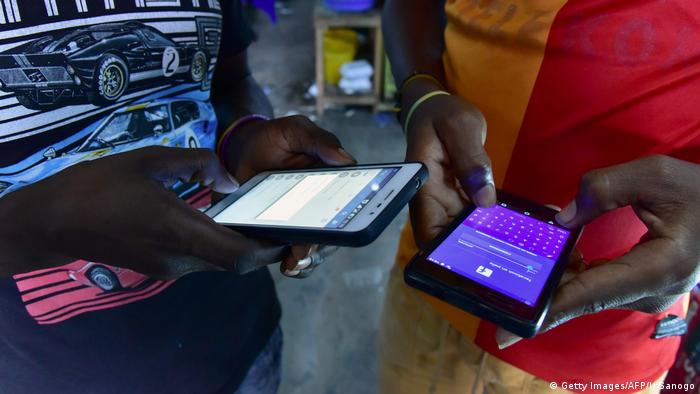


IT experts say Africa has the largest potential for digital growth

Customers surrounded Samuel Dagblo, a young teacher who doubles as a mobile phone money transfer agent in northern Ghana's Yunyoo farming community.

In this rural area which only recently gained access to cellular networks, people's lives are being rapidly transformed by internet connectivity.

Previously, people had to make do with weak network signals and, in some cases, needed to walk several kilometers just to make a phone call.

But a few weeks ago, authorities and telecom companies set up infrastructure to connect the region via a 4G broadband network.

"It's making things now easy, whoever comes, maximum, one minute, you are done with that person, and the person can go," Dagblo told DW. "Unlike those days [where] you can be [with] one person close to 10 minutes and getting to the end, the network will fail you, and you have to start all over again."

Nearby, a group of young people sat under a cashew tree using their phones. One of them, Musah Nangode, said he felt very excited about this new connectivity.

"We did not have this privilege others were enjoying in other districts," Nangode said, adding that they could not make calls, transact mobile money, or use WhatsApp and Twitter.

"We were just left out, which was a hell here," he added.

Broadening broadband

Ghana was among the first African countries to liberalize the telecommunications market in 1990. Two years later, the internet became accessible.

Today, nearly 70% of Ghana's 30 million people are mobile subscribers, according to the National Communications Authority (NCA).

In 2004, Ghana enacted an internet accelerating development program, which included laying fiber optic infrastructure. IT expert Amadu Samed Gaida said connectivity is crucial for empowering Africa's youth.

"That is where they will be able to learn beyond imagination," Gaida said.

"If you deprive them of the internet, you are definitely not empowering them. You can give them money, you can give them water, you can give them anything, but they will still lack the knowledge to make use of whatever you are giving them," Gaida told DW.

South Sudan's internet woes

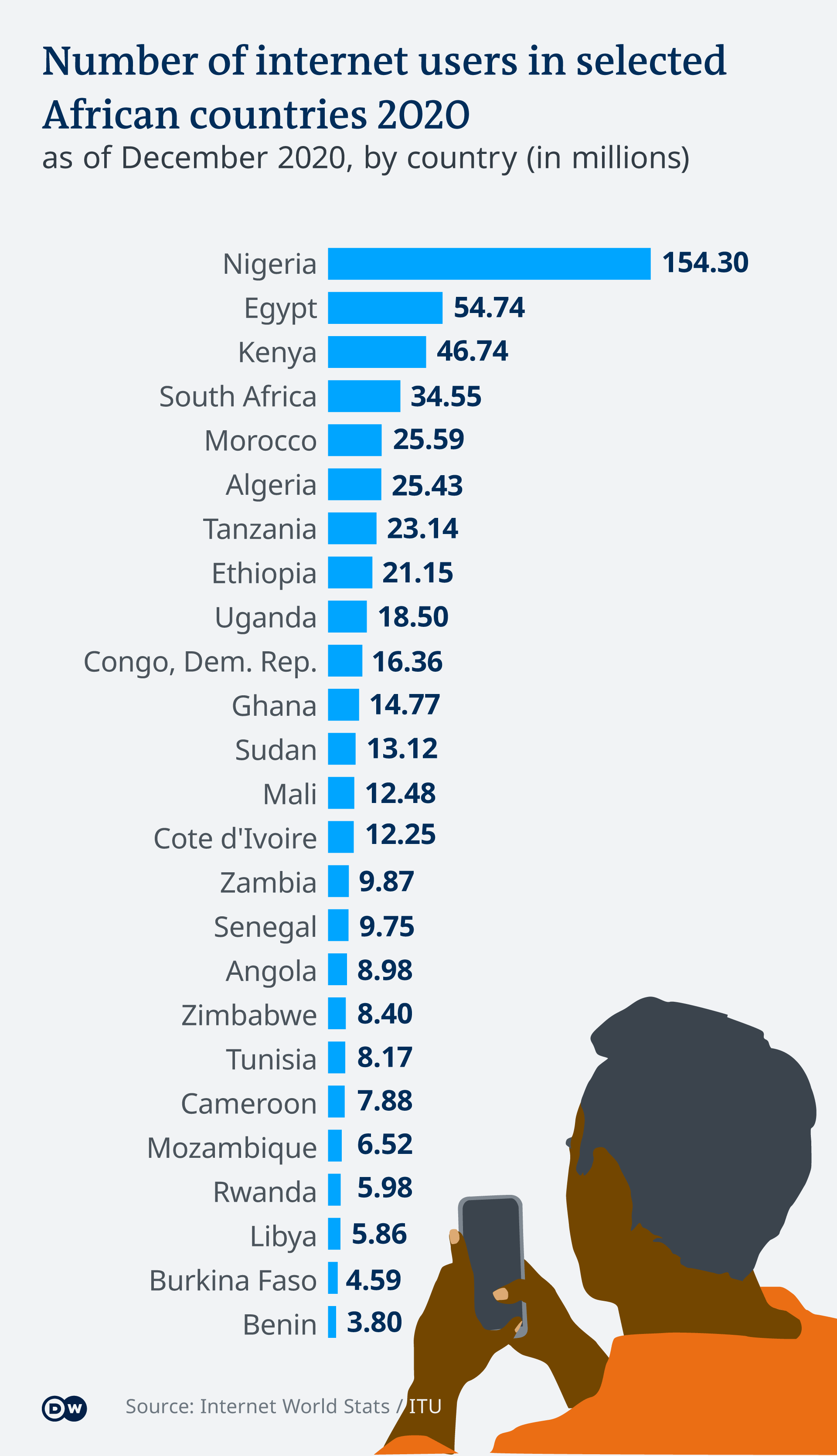
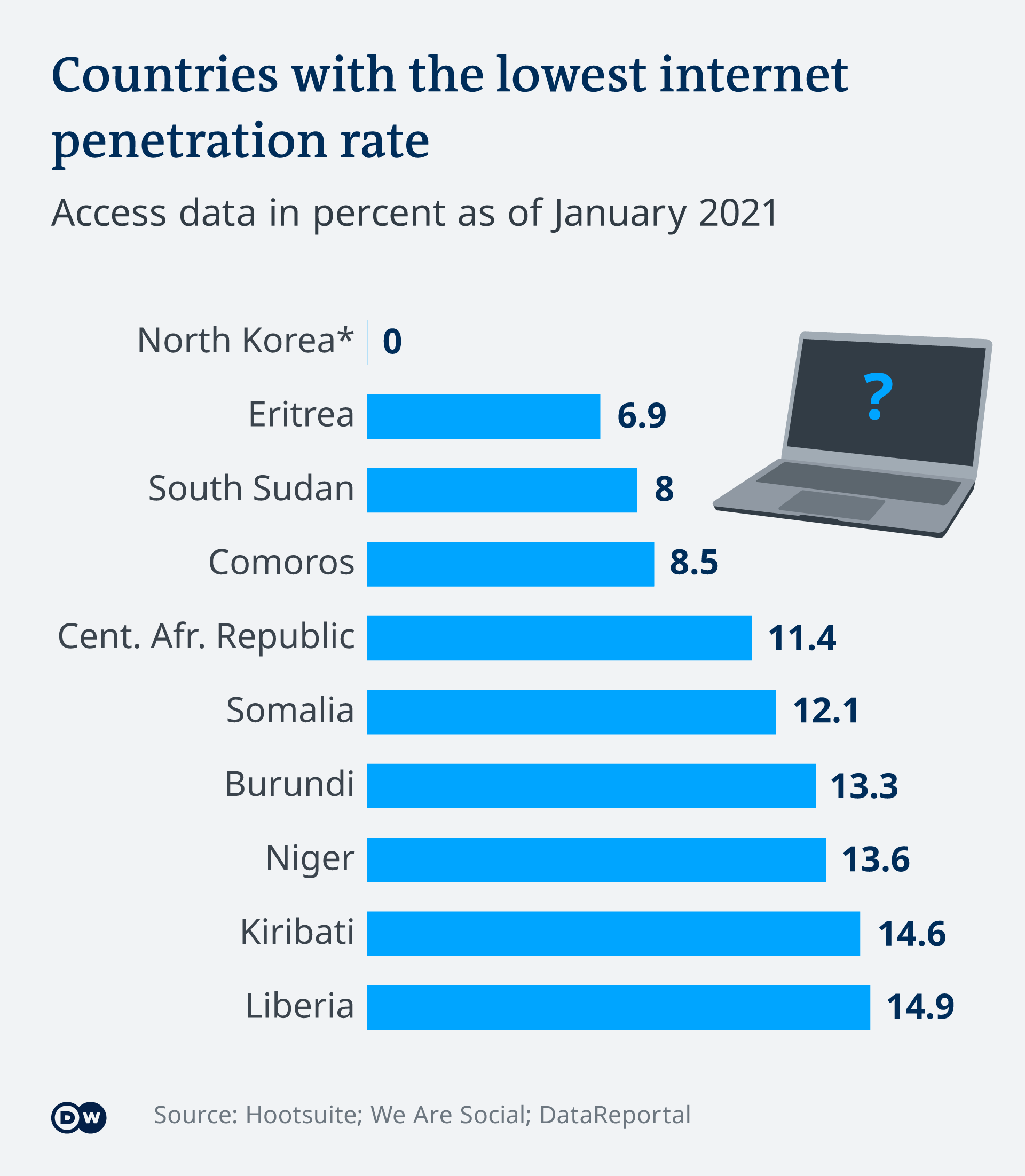
Whereas countries such as Ghana, Nigeria, South Africa and Kenya boast impressive internet penetration, South Sudan has an internet penetration rate of only 8% — one of the lowest in the continent.

Moreover, mobile network coverage is feeble in Africa's youngest nation.
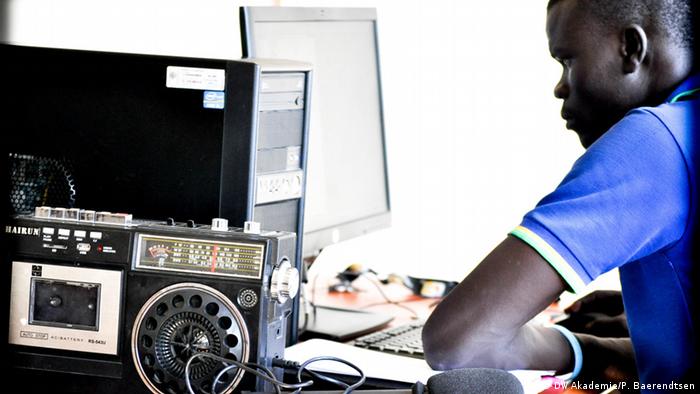

Connecting to the internet in South Sudan can be frustrating

The number of mobile phone connections in South Sudan is equivalent to roughly 20% of the population, according to 2020 figures from DataReportal.

"It is very difficult in South Sudan to get in touch with our family members because we have the internet in South Sudan but it is not all that fast," Dedi Ezbon Samuel, a radio journalist in the capital, Juba, told DW. "Even in some parts of the country, we find there is no internet."

His frustrations are shared by Jimmy Alithum. The 45-year-old hardware businessman complained that the phone companies give way too little time on their data bundles.

"Sometimes when I am at home doing my research using my phone or my laptop, it is a little bit disturbing because you feel like the time given [by phone companies to browse] is not enough and you have spent a lot of money," he said.

"Most people are doing business online and maybe there is a picture of a certain item that is on display, you want to view and so you click on it, It takes so long and if you are in a hurry you cannot wait," Alithum said, adding that in the process he was using up data bundles.

"The government needs to address the issue of higher taxes," Robert Gama, an IT consultant based in Juba, told DW. "Companies tend to incur a lot of money on taxes, they also spend a lot of money on taxes on the importation of equipment and logistics."

Gama also highlighted the need to improve the country's infrastructure, such as roads and railway, as a means of accelerating internet penetration.

"Besides that, the issue of insecurity tends to make a lot of losses for internet and telecom companies in this country," he said.

South Sudan has been ravaged by internal power and ethnic strife since it gained independence from Sudan in 2011.
Billions needed to connect Africans

Over the past decade, African leaders working with various local and international partners have made great strides in making the internet accessible for the continent's 1.4 billion people.

But — with just 22% internet connectivity — the continent remains significantly behind other world regions.

IT experts have long argued that the cost of data is too high for most people. In addition, lack of digital skills and literacy remains a stumbling block for many, particularly those living in rural areas.


Africa will require an investment totaling $100 billion (€86 billion) to plug every citizen into the internet by 2030, according to a World Bank estimate.

"Let us be clear: No single actor will be able to meet Africa's 2030 target and carry the burden of a $100 billion investment funding requirement alone," Hafez Ghanem, the World Bank's vice president for Eastern and Southern Africa, said on the bank's website. He added that all stakeholders must strive to ensure that every African has affordable and reliable access to the internet.

In October, US tech giant Google announced that it intends to invest $1 billion in Africa over the next five years. The massive funds will ensure access to fast and affordable internet and support startups to aid the continent's digital transformation. Nigeria, Kenya, Ghana and Uganda will be the prime beneficiaries.

Abdul Rahaman Nayuni, from the Yunyoo community of northern Ghana, can attest to that.

"If you don't monitor the internet, you wouldn't know there is an opportunity somewhere. Now I can sit in my room every morning, go to the job opportunity platforms and see if anything is going on in Ghana," he said.


Maxwell Suuk and Waakhe Wudu Simon contributed to this article
Call for review of Thai royal insults law sparks rare debate


Pro-democracy rally in Bangkok

Panu Wongcha-um and Panarat Thepgumpanat
Fri, November 5, 2021

BANGKOK (Reuters) - Nine political parties in Thailand have taken a position on reform of a strict royal insults law in recent days, bringing into the mainstream a controversial debate that would have been unthinkable just a few years ago.

The catalyst for the discussion has been a youth-led anti-government protest movement that emerged late last year and openly called for a reform of the monarchy - a bold move in a country that traditionally upholds the king as semi-divine and above criticism.

Changing the lese majeste law, which carries punishments of up to 15 years in prison for each perceived insult of the monarchy, had been a subject off-limits for decades in Thailand, where the crown is officially above politics and constitutionally enshrined to be held in "revered worship".

But the opposition Pheu Thai party ignited discussion on the taboo topic this week, with major parties weighing in quickly after it proposed a parliamentary review of how it said the law was being used to prosecute scores of opponents of the royalist government.

Since the student protests began last year, at least 155 people, including 12 minors, have been charged with lese majeste, according to a tally compiled by the Thai Lawyers for Human Rights group.

"The lese majeste law has become a fault line in Thai politics. It was inevitable," said Thitinan Pongsudhirak, a political analyst at Chulalongkorn University.

"Moving forward, this will be the front-and-centre issue to decide Thailand's political future."

DESTRUCTIVE DEBATE?


The Pheu Thai party's call for a parliamentary review drew strong reaction among royalist conservatives.

Major parties in the ruling coalition issued their own statements objecting to amending the law, including Prime Minister Prayuth Chan-ocha, a former army chief.

"It's a security matter for our country," he said. "We do not want to destroy something that is revered by Thai people."

Prayuth's government has denied misusing the law. The palace, which has a longstanding policy of not commenting on the issue, could not be reached for comment.

Thailand's media has long self-censored on issues of the monarchy but in a rare move, Thursday's Bangkok Post newspaper carried an infographic of the major parties' positions on lese majeste, under the headline "to change or not to change".

Opposition parties Move Forward and the Seri Ruam Thai have also accused the government of abusing the royal law to go after opponents, and they called for punishments to be less severe.

In February, 44 Move Forward lawmakers sought a reduction in the maximum sentence from 15 years to one year, or a 300,000 baht ($8,982) fine, or both. Their effort was shot down by parliament, which said it was unconstitutional.

Stirring the debate too was influential tycoon and self-exiled former premier Thaksin Shinawatra, Pheu Thai's de facto founder. This week, Thaksin voiced his support for preserving a law that he himself has been accused of breaking, while calling for changes in how it was applied.

Political scientist Wanwichit Boonprong said a push for a review is unlikely to gain much traction in parliament, though it has forced other parties to take a firm position on one of the country's most sensitive issues.

But Piyabutr Saengkanokkul, secretary-general of the student-led progressive movement, a backer of the Move Forward party, said opposition efforts were not bold enough, and it was time to abolish the law altogether.

"The party needs to be avant garde," Piyabutr said on Twitter, adding Move Forward should be pressing a more progressive agenda.

(Reporting by Panu Wongcha-um and Panarat Thepgumpanat; Editing by Martin Petty and Mark Heinrich)
16 million student-loan borrowers could be facing 'millions of mistakes and problems' at the hands of new student-loan companies, Elizabeth Warren says


Ayelet Sheffey
Thu, November 4, 2021


Students toss their hats at Wesleyan University's commencement ceremony in 2018. Eduardo Munoz Alvarez/Getty Images


Three student-loan companies are shutting down federal services, impacting 16 million borrowers.


Elizabeth Warren joined six Democrats in requesting information from those companies on the transitions.


They noted that in the past, transitions have caused a number of mistakes that harmed borrowers.


Three student-loan companies announced they are shutting down their federal loan services at the end of this year, placing 16 million borrowers in the hands of new companies.

Seven Democrats, led by Massachusetts Sen. Elizabeth Warren, want to ensure those borrowers will not be harmed during the transition before student-loan payments resume in 90 days.

In letters to Navient, the Pennsylvania Higher Education Assistance Agency (PHEAA) and Granite State Management and Resources - the three companies ending their federal loan servicing - Warren and six other senators requested information on how each of the companies will ensure "a smooth transfer of tens of millions of borrowers' accounts to new student loan servicers."

"Student loan servicers have a long history of misleading borrowers about available options, mismanaging programs, and cheating borrowers out of protections developed to help them pay back their student loans," the lawmakers, including Massachusetts Sen. Ed Markey, wrote. "In previous transfers, failures to transfer complete and accurate information left hundreds of thousands of borrowers with account problems that continue to plague the federal loan portfolio today."

They added that during past servicer transitions, "millions of mistakes and problems" caused borrowers to face penalties due to servicer error in processing payments, and months of qualifying payments toward loan forgiveness programs, like Public Service Loan Forgiveness (PSLF) could be lost.

PHEAA manages the entire PSLF portfolio, holding millions of accounts for public servants such as teachers and police officers seeking loan forgiveness after ten years of qualifying payments. The lawmakers requested PHEAA provide them with information on how they plan to maintain borrowers' payment records and ensure they will be processed correctly, along with requests to all three companies on further information regarding the transition.

The Consumer Financial Protection Bureau (CFPB) has previously highlighted issues that could arise from servicer transitions, resulting in lost payments, surprise late fees, and processing problems. The lawmakers wrote that on top of the difficulties with the transition, the Education Department has the "unprecedented logistical challenge" of resuming student-loan payments for borrowers after a nearly two-year pandemic pause.

Despite the significant administrative burdens borrowers and loan companies could be facing, though, Warren has previously said that borrowers no longer having to pay their debt to Navient and PHEAA is a good thing.

She told Insider last month that the 6 million borrowers under Navient will be "far better off," citing the company's decades spent "misleading, cheating, and abusing student borrowers." Insider reported in April on the comprehensive history Warren has with Navient, most recently telling Navient's CEO, John Remondi, that he should be fired for the abuses that happened under his leadership.

She also said in June that the 8.5 million borrowers serviced by PHEAA could "breathe a sigh of relief" since they would no longer have to deal with the company that oversaw a 98% denial rate for PSLF, and Warren told Insider in a July interview that "the days are over" when student-loan companies could do "a terrible job."

But despite administrative burdens, an Education Department spokesperson told Insider after Navient announced plans to shut down that it still "expects" payments to resume on February 1, as planned.

"We will continue to work to ensure that all of our borrowers can experience a successful return to repayment," the spokesperson said. "The Department expects student loan payments to resume after Jan. 31, 2022."
Leukemia-Causing Benzene Found in Underarm Sprays

Anna Edney
Thu, November 4, 2021

(Bloomberg) -- Antiperspirant and deodorant body sprays have been found to contain elevated levels of the carcinogen benzene and should be recalled, an independent testing lab said in a petition filed with the U.S. Food and Drug Administration late Wednesday.

The sprays are the latest in a string of aerosol products found to contain the cancer-causing chemical, including sunscreens and antifungals. Earlier this year, Johnson & Johnson recalled certain aerosol sunscreen sprays under the brands Neutrogena and Aveeno. Beiersdorf AG recalled some Coppertone sunscreen sprays in September. The next month, Bayer AG pulled certain Lotrimin and Tinactin sprays used for athlete’s foot and jock itch after tests showed some samples contained benzene.

The efforts to get the contaminated products off of shelves came after Valisure, an independent testing lab in New Haven, Connecticut, alerted the FDA to its findings of benzene in sun-care products in May. Valisure followed up in recent months by testing 108 batches of antiperspirant and deodorant sprays from 30 brands and detected benzene in 59 batches at levels as much as triple the amount it found in sunscreens and detailed in the petition to the FDA.

Antiperspirant sprays from Procter & Gamble Co. brands Old Spice and Secret contained the highest levels of benzene. An antiperspirant spray from Walmart Inc.’s Equate brand and one from Unilever PLC’s Suave were also high on the list. Most of the sprays that Valisure found to contain benzene were meant only for underarms, though the lab did find some benzene in a Victoria’s Secret & Co. spray deodorant meant to be used all over the body and a Summer’s Eve spray from Prestige Consumer Healthcare Inc. meant for the vaginal area.

The companies and the FDA didn’t immediately respond to requests for comment. P&G fell 0.7% at 9:43 a.m. in New York trading, and Unilever dropped 1.1% in London.

Valisure found that products that contained butane were most likely to have elevated benzene levels. Those that used alcohol as a propellant instead were least likely to be contaminated with the carcinogen.

David Light, chief executive officer of Valisure, said he’s concerned the contamination may be coming from the raw materials companies use as propellants, such as butane and propane that are petroleum distillates produced by refining crude oil.

“Butane is lighter fluid,” Light said. “Propane is the same thing you use to light your grill. These gases come out of the ground, as benzene does as well. Benzene is a known contaminant of these products. It seems likely these propellants are the source.”

It’s difficult to track and ensure the purity of raw materials even in pharmaceutical products. Consumer goods, meanwhile, are more lightly regulated by the FDA. The pharmaceutical industry has been dealing with its own contamination problem related to probable carcinogens called nitrosamines and mutagenic impurities called azidos that have been found in drugs over the last few years stemming from side chemical reactions that are sometimes the result of raw materials that aren’t properly purified.

No Clear Threshold


The FDA doesn’t have a clear benzene threshold in products. Its guidance for drugs is that benzene levels can reach up to 2 parts per million only if its use in manufacturing is unavoidable for a product that represents a significant therapeutic advance. Valisure has asked the FDA to set clear benzene guidance.

Valisure found benzene levels up to almost 18 parts per million in the antiperspirant and deodorant sprays. Yale University’s Chemical and Biophysical Instrumentation Center confirmed the presence of benzene in a sampling of the sprays through separate tests. Valisure also found spray products that didn’t contain any detectable benzene, including a deodorant from Sanofi’s Gold Bond and antiperspirants from Unilever’s Axe and Degree.

Valisure first detected benzene in consumer products in March when it tested hand sanitizers. The benzene levels were particularly high in those that came on the market to fill a gap when supplies of the cleansers ran low at the start of the Covid-19 pandemic. It’s possible the benzene in hand sanitizers may have been introduced during the manufacturing process when germ-killing alcohol is purified. Alcohol is also sometimes used as a propellant in aerosols.

Artnaturals contained the highest levels of benzene Valisure found in hand sanitizers. The FDA said last month it tested Artnaturals hand sanitizers and also found benzene as well as other contaminants. The agency advised consumers in early October not to use any Artnaturals products. The company later announced a limited recall of hand sanitizers. The agency said it asked the company to conduct more testing to determine the scope of the contamination, adding that even after the recall, the scope is still under investigation.

(Updates share trading in fifth paragraph. An earlier version of this story corrected the spelling of P&G.)
Jeffrey Toobin: Rudy Giuliani’s Leaked Election-Fraud Deposition May Be ‘Disastrous’ for Fox News


Tony Maglio
Fri, November 5, 2021,

CNN has been having a field day with Rudy Giuliani’s deposition video cross-examining his claims of election tampering evidence, which included a purported trip in 2013/2014 by the heads of voting-systems companies Dominion and Smartmatic USA to Venezuela to participate in a “vote-fixing” meeting.

In the deposition, Giuliani said he was given that anecdotal — and since debunked — evidence about election fraud, a conspiracy theory that he reported during a press conference but never attempted to personally verify. The idea was to push the (conspiracy) theory that the 2020 U.S. presidential election was stolen from Donald Trump.

The press conference in question — and thus, Giuliani’s claims — was covered by several conservative news outlets, including Fox News.

Giuliani’s public and false accusation has led to numerous libel lawsuits: Dominion sued Giuliani for $1.3 billion dollars and Fox News for $1.6 billion. Smartmatic USA sued Fox News for $2.7 billion.

Fox News has filed to dismiss both lawsuits, at the time telling TheWrap: “Fox News Media is proud of our 2020 election coverage, which stands in the highest tradition of American journalism, and will vigorously defend against this baseless lawsuit in court.”

“Before the press conference, I was told about it,” Giuliani said of the Venezuela hearsay (and we’re being generous in using that term) in the deposition. “Sometimes I go and look myself online when stuff comes up. This time I didn’t have time to do it. It’s not my job in a fast-moving case to go out and investigate every piece of evidence that is given to me.”

“From America’s Mayor to Trump’s Stooge,” Chris Cuomo said of Giuliani on his Thursday night program, which re-aired the deposition video.

Attorney and CNN contributor Jeffrey Toobin also reveled in Giuliani’s floundering.

“In order to win a libel case like this, the plaintiffs have to show what’s called ‘reckless disregard for the truth,'” Toobin said. “That deposition to me looks like the definition of reckless disregard for the truth. The idea that you will go out in public and damage the reputation — as Giuliani clearly did — of these companies, without any sort of checking, without any sort of concern for whether what you’re saying is true, seems to me, clearly libelous.”

Toobin said he believes Giuliani is now “on the hook for millions of dollars.”

“I think these libel cases will be disastrous for him, and they may as well be disastrous for the media outlets, including Fox News, that put it on uncritically,” Toobin said.

Watch the video above. Toobin’s turn comes around the 5-minute mark.
US Vaccine deadlines for millions of workers hit with a whimper


Jennifer A. Kingson
AXIOS
Thu, November 4, 2021, 

Mandatory vaccine deadlines have now come and gone for millions of workers — and most of them have either bit the bullet or taken advantage of wiggle room offered by their employers.

Why it matters: These mandates have become one of the most polarizing policies in America, but predictions that they'd drive workers away in droves, voluntarily or not, simply aren't coming to fruition.

Stay on top of the latest market trends and economic insights with Axios Markets. Subscribe for free


Where it stands: There's a patchwork of deadlines set by the federal government, states, cities, schools and private companies. Last Monday was a big deadline, and more are coming up.


The average vaccination rate nationwide is up to 1.3 million doses per day, more than 400,000 doses higher than the average two weeks ago, according to the New York Times.


Many workers are waiting until the last minute to get their jab.

Many large employers that imposed their own vaccine requirements — from Disney, Citigroup and AT&T to big airlines, hospitals and cities — say compliance has been high, and there's little risk that they'll end up losing any significant share of their workforce.

United Air Lines — the first American air carrier to mandate vaccines — says nearly all its workers are vaccinated, but "is facing a federal lawsuit brought by six of its employees who have applied for a medical or religious exemption to the vaccine mandate," per CNN.


Yes, but: There are pockets of staunch resistance: In New York, more than 10,000 workers defied last Monday's deadline to get vaccinated; and in Los Angeles, L.A. County Sheriff Alex Villanueva vowed not to enforce a countywide mandate.

Between the lines: Vaccine mandates are common but not universal, and many of them have significant exceptions or lax enforcement. Workers may not be leaving or losing their jobs — but that doesn't mean they're all actually getting vaccinated.


Hospitals across the country reported that only handfuls of workers — often about 1% to 2% of their workforces — chose to leave due to mandates, Axios health care editor Tina Reed reports.

But many of them also reported higher-than-usual rates of medical or religious exemption, often around 4% to 6%.

Despite all the focus this year on vaccinating teachers, less than half of big school districts imposed any sort of vaccination mandate on their workers. Just 15 districts enacted universal mandates for employees, according to the Center for Reinventing Public Education, a nonpartisan research center.

"Districts are saying that employees could be disciplined up to termination, but only a handful are really taking those first steps of termination or placing employees on unpaid leave," Bree Dusseault, principal researcher at the center, tells Axios.

"So teachers who don't get vaccinated are given some options to still stay in their jobs, at least for the short term."

What we're watching: New polling from Qualtrics, a survey software company, found that less than half of U.S. workers (49%) believe their employers or the government will be able to enforce federal vaccine mandates effectively.

What's next: There's a Dec. 8 deadline for federal contractors and subcontractors to comply with the Biden administration's vaccine mandate Additional deadlines for federal workers and school employees to be vaccinated are scattered through November and December.

Elizabeth Holmes trial Week 9 recap: The Kissinger connection, and a former lab co-director cites a 'lack of clarity'


Theranos founder Elizabeth Holmes looks ahead while wearing a blue mask as a man stands behind her
Elizabeth Holmes. Nick Otto/AFP via Getty Images
  • The ninth week of Theranos founder Elizabeth Holmes' fraud trial is now over.

  • It included testimony about investments from Henry Kissinger, the DeVos family, and Walmart's heirs.

  • Here's everything that happened in the trial in its ninth week.

Theranos investor: "There was not a lot of transparency"

Black Diamond Ventures founder and managing director Chris Lucas told the jury this week that he invested roughly $1.5 million in Theranos in 2006 and another $5.4 million in 2013, according to The New York Times. He said the first investment was risky because Theranos was still in its early stages, but "you would expect to have a higher certainty of return" in 2013.

Lucas also testified there was "not a lot of transparency" into the now-defunct startup. But he said he invested because of his good relationship with Holmes, whom he says was his primary source of information about the company.

Former lab co-director was "increasingly uncomfortable" with "lack of clarity"

Lynette Sawyer, Theranos' former lab co-director, shared responsibilities with Sunil Dhawan, who was the dermatologist of former Theranos COO and president Ramesh "Sunny" Balwani. Dhawan previously testified that he didn't know at the time that he shared the job with Sawyer.

Sawyer, who worked at Theranos from 2014 to 2015, testified that she was never invited to the lab, never spoke with her co-director, and never met Holmes.

"I grew increasingly uncomfortable in the way things were done," she testified, according to The Wall Street Journal. "I was very uncomfortable with the lack of clarity about the lab."

Sawyer said much of her job entailed signing documents about tests performed on commercially available analyzers; she never reviewed data from Theranos' analyzers.

The investors network connection

Daniel Mosley, an estate lawyer whose clients included former US secretary of state and Theranos board member Henry Kissinger, testified that he introduced Holmes to clients like the DeVos, Cox, and Walton families, who collectively invested hundreds of millions of dollars in the now-defunct startup, according to The Wall Street Journal. Kissinger invested $3 million, and Mosley himself invested $6 million, even though he had unanswered questions and thought "it was certainly possible to lose all your money."

Trouble with another validation report

Constance Cullen, a former bioanalytical lab director at pharmaceutical company Schering-Plough, testified that she helped evaluate Theranos' technology. In a 2009 meeting with Holmes, Cullen says she was "dissatisfied" with "cagey" responses to her questions. The jury saw a report with Schering-Plough's logo that appeared to validate Theranos' technology, but Cullen said neither she nor anyone else at the pharmaceutical company deemed the report's conclusions accurate, according to The New York Times.

Her testimony echoes that of a former Pfizer scientist, Shane Weber, who recently said he never authorized Theranos' use of the Pfizer logo on a validation report, nor did he know of anyone else at Pfizer who might have done so.

Defense wins one

Judge Edward Davila dealt Holmes a small victory, granting her request to exclude testimony from a patient identified in court documents as "B.B." Only one patient has taken the stand so far in the trial.

You can catch up on Week 1 hereWeek 2 hereWeek 3 hereWeek 4 hereWeek 5 hereWeek 6 here, and Week 7 here. You can read how Holmes wound up on trial here and see the list of potential witnesses hereEverything else you need to know about the case is here.

Exclusive-Baby handed to U.S. soldiers in chaos of Afghanistan airlift still missing


Mica Rosenberg
Fri, November 5, 2021

NEW YORK (Reuters) -It was a split second decision. Mirza Ali Ahmadi and his wife Suraya found themselves and their five children on Aug. 19 in a chaotic crowd outside the gates of the Kabul airport in Afghanistan when a U.S. soldier, from over the tall fence, asked if they needed help.

Fearing their two-month old baby Sohail would get crushed in the melee, they handed him to the soldier, thinking they would soon get to the entrance, which was only about 16 feet (5 meters) away.

But at that moment, Mirza Ali said, the Taliban - which had swiftly taken over the country as U.S. troops withdrew - began pushing back hundreds of hopeful evacuees. It took the rest of the family more than a half hour to get to the other side of the airport fence.

Once they were inside, Sohail was nowhere to be found.

Mirza Ali, who said he worked as a security guard at the U.S embassy for 10 years, began desperately asking every official he encountered about his baby's whereabouts. He said a military commander told him the airport was too dangerous for a baby and that he might have been taken to a special area for children. But when they got there it was empty.

"He walked with me all around the airport to search everywhere," Mirza Ali said in an interview through a translator. He said he never got the commander's name, as he didn't speak English and was relying on Afghan colleagues from the embassy to help communicate. Three days went by.

"I spoke to maybe more than 20 people," he said. "Every officer - military or civilian - I came across I was asking about my baby."

He said one of the civilian officials he spoke to told him Sohail might have been evacuated by himself. "They said 'we don't have resources to keep the baby here.'"

Mirza Ali, 35, Suraya, 32, and their other children, 17, 9, 6 and 3 years old, were put on an evacuation flight to Qatar and then to Germany and eventually landed in the United States. The family is now at Fort Bliss in Texas with other Afghan refugees waiting to be resettled somewhere in the United States. They have no relatives here.

Mirza Ali said he saw other families handing their babies over the Kabul airport fence to soldiers at the same time. One video clip https://www.reuters.com/news/picture/the-only-way-out-scenes-from-the-kabul-a-idUSRTXFVLJR of a small baby in a diaper being hoisted by her arm over razor wire went viral on social media. She was later reunited with her parents.

Ever since his baby went missing dates are a blur, Mirza Ali said. Every person he comes across - aid workers, U.S. officials - he tells them about Sohail. "Everyone promises they will do their best, but they are just promises," he said.

An Afghan refugee support group created a "Missing Baby" sign with Sohail's picture on it and are circulating it among their networks in the hopes that someone will recognize him.

A U.S. government official familiar with the situation said the case had been flagged for all the agencies involved, including the U.S. bases and overseas locations. The child was last seen being handed to a U.S. soldier during the chaos at the Kabul airport but "unfortunately no one can find the child," the official said.

A Department of Defense spokesperson and a spokesperson for the U.S. Department of Homeland Security, which is overseeing resettlement efforts, referred queries on the matter to the State Department, since the separation took place overseas.

A State Department spokesperson said the government is working with international partners and the international community "to explore every avenue to locate the child, which includes an international amber alert that was issued through the International Center for Missing and Exploited Children."

Suraya, who also spoke through a translator, said she cries most of the time and that her other children are distraught.

"All I am doing is thinking about my child," Suraya said. "Everyone that is calling me, my mother, my father, my sister, they all comfort me and say 'don't worry, God is kind, your son will be found.'"

(Reporting by Mica Rosenberg in New York; Additional reporting by Kristina Cooke in San Francisco and Jonathan Landay in Washington;Editing by Mary Milliken and Rosalba O'Brien)
RIGHT ON SISTER
Rep. Alexandria Ocasio-Cortez slammed James Carville, saying 'wokeness' is 'a term almost exclusively used by older people these days' AND FOX NEWS


Rep. Alexandria Ocasio-Cortez slammed James Carville, saying 'wokeness' is 'a term almost exclusively used by older people these days'


Bryan Metzger
Fri, November 5, 2021

Democratic Rep. Alexandria Ocasio-Cortez of New York and long-time Democratic strategist James Carville. Drew Angerer and Michael S. Schwartz/Getty Images

AOC slammed strategist James Carville for blaming "wokeness" for Terry McAuliffe's defeat.

She said that "wokeness" is "a term almost exclusively used by older people these days."

It's the latest in an ongoing intra-Democratic debate about how to talk about issues like race and gender.

On Friday, Democratic Rep. Alexandria Ocasio-Cortez of New York - a leading progressive voice within her party and the youngest woman ever elected to Congress - slammed long-time Democratic strategist James Carville for being out of touch with the modern Democratic Party amid the debate over its election losses.

"The average audience for people seriously using the word 'woke' in a 2021 political discussion are James Carville and Fox News pundits," the congresswoman wrote on Twitter. "So that should tell you all you need to know."

Carville, who originally gained national prominence by helping then-Arkansas Gov. Bill Clinton win the 1992 presidential election, told PBS on Wednesday that "wokeness" was to blame for Democrat Terry McAuliffe's loss to Republican Glenn Youngkin in the Virginia gubernatorial election.

"What went wrong is just stupid wokeness," said Carville, referring to rhetoric about defunding the police and renaming buildings. "Some of these people need to go to a 'woke' detox center or something."

"They're expressing a language that people just don't use, and there's backlash and a frustration at that," he also said. Carville has a history of attacking so-called "wokeness" - a catch-all term with lots of purported meanings, in this case referring to the language progressives use to talk about social issues like race and gender. In 2020, he gave an interview to Vox where he made similar points.

AOC made her critique while calling out a local news story that claimed she said McAuliffe "wasn't woke enough" because she said that "moderate Dems" were "ceding white swing voters to the right" by not forcefully engaging Republicans on the issues.

"How can news outlets even attribute words to me I didn't say?" she wrote. "I said there are limits to trying to mobilize a campaign with a 100% moderate strategy without mobilizing the base. Said nothing [about] 'wokeness' which is a term almost exclusively used by older people these days."


She then took aim at Carville, writing that the "average audience for people seriously using the word 'woke' in a 2021 political discussion are James Carville and Fox News pundits."


She ended by arguing that the term itself, rather than being denigrating to older people, is actually insulting to voters under 45.


"Don't wonder why youth turnout falls when Dems talk about them like this," she wrote. "We need everyone."
THE TYRANT ROARS
China lashes out at press freedom survey in Hong Kong


E - Press freedom advocates rally outside a court in Hong Kong, Thursday, April 22, 2021. China has criticized a press freedom survey, Friday, Nov. 5, 2021, from the Hong Kong Foreign Correspondents' Club that found nearly half its members were considering leaving the city. The survey said the members are concerned about a decline in press freedoms under a sweeping new national security law imposed by Beijing following massive anti-government protests in 2019. (AP Photo/Kin Cheung)More

ZEN SOO
Fri, November 5, 2021

HONG KONG (AP) — China on Friday criticized a press freedom survey from the Hong Kong Foreign Correspondents’ Club that found nearly half its members were considering leaving the city.

The survey said the members were concerned about a decline in press freedoms under a sweeping national security law imposed by Beijing following massive anti-government protests in 2019.

Eighty-three of the 99 journalists polled said that the working environment had “changed for the worse” since the law was introduced last June. The law outlaws subversion, secession, terrorism and foreign collusion to intervene in the city’s affairs, and has since been used to arrest over 120 people in the semi-autonomous Chinese city.

“These results clearly show that assurances that Hong Kong still enjoys press freedom, guaranteed under the Basic Law, are not enough,” FCC President Keith Richburg said. “More steps need to be taken to restore confidence among journalists and to make sure Hong Kong maintains its decades-long reputation as a welcoming place for the international media.”

In a statement, the Commissioner’s Office of China’s Foreign Ministry in Hong Kong warned the FCC to stop making “noise” and accused the organization of being “black hands” that intervene in the city's affairs.

“There is no absolute press freedom in the world that is above the law,” the statement read. “It is a common international practice for countries to supervise the news media working in their own countries in accordance with the law.”

The survey comes as authorities are cracking down on political dissent in Hong Kong. Most of the city’s prominent pro-democracy activists are currently in jail. Critics say the security law has rolled back freedoms promised to Hong Kong for 50 years when it was handed over to China in 1997.

The former British colony was previously known for its vibrant press freedoms, and for decades has served as regional headquarters for many English-language news outlets.

The national security law has been used against journalists in the city. The pro-democracy newspaper Apple Daily was forced to close in June after millions of dollars in assets were frozen and several top editors and executives arrested.

The New York Times has transferred some of its staff from Hong Kong to Seoul due to the uncertainties about the city’s prospects for journalism under the security legislation.

China’s Foreign Ministry spokesperson Wang Wenbin said Friday at a regular news briefing that the rights of foreign media and journalists in Hong Kong will be “fully protected” as long as they report in accordance with the law.

Wang said that as of April this year, there were 628 foreign employees with work visas for foreign media in Hong Kong, a 18.5% increase from the same time last year.

“It is a true reflection of how people from all walks of life, including foreign media in Hong Kong, see and feel about the economic and social and media reporting environment in Hong Kong,” he said.