It’s possible that I shall make an ass of myself. But in that case one can always get out of it with a little dialectic. I have, of course, so worded my proposition as to be right either way (K.Marx, Letter to F.Engels on the Indian Mutiny)
Sunday, November 07, 2021
PERU Antamina CEO seeks ‘common ground’ after protests
Reuters | November 5, 2021 Víctor Gobitz, president of Peruvian Institute of Mining Engineers (Gestion)
The head of Antamina, Peru’s largest copper producer, looked to defuse tensions with rural community protesters on Friday, addressing residents in a town-hall meeting after a blockade forced the mining firm to suspend operations last week.
Victor Gobitz, head of Antamina, part-owned by Glencore Plc and BHP Billiton, told residents at a town hall meeting in Aquia attended by Reuters that the two sides could find common ground, a sharp shift from an earlier critical tone.
“With orderly dialogue we will find the formula for a development plan for the whole town of Aquia,” Gobitz said at the meeting hold in the town’s bull fighting arena. “We have to lead by example that we can find common ground.”
The tone was a marked shift for Gobitz, who initially dismissed the protesters as violent and only representative of a minority of voices. Gobitz arrived in rural Aquia for the meeting with residents on Friday in a government helicopter.
Protests against miners in Peru, the world’s No. 2 copper producer, have escalated in recent weeks amid high expectations from rural communities emboldened by the socialist administration of center-left President Pedro Castillo.
Castillo, from a peasant farming background, came to power in July with massive support from mining regions, promising to hike taxes on miners to promote local development.
The community in Aquia, located some 60 kilometers (37 miles) from Antamina, had blocked a key road for the mine in late October, before agreeing to lift the blockade after government talks earlier this week.
Residents say the area receives little in terms of tax contributions from the mine, while the company has a copper pipeline and road running through the town.
“We are not throwing a social tantrum,” said Adan Damian, the president of Aquia, in remarks in response to Gobitz. “I have mixed feelings that after protesting so much we are finally being listened to.”
Aquia residents are hoping to sign a formal agreement with Antamina later on Friday. Gobitz’s presence indicates a positive resolution is highly likely.
(By Marcelo Rochabrun; Editing by Adam Jourdan and Marguerita Choy)
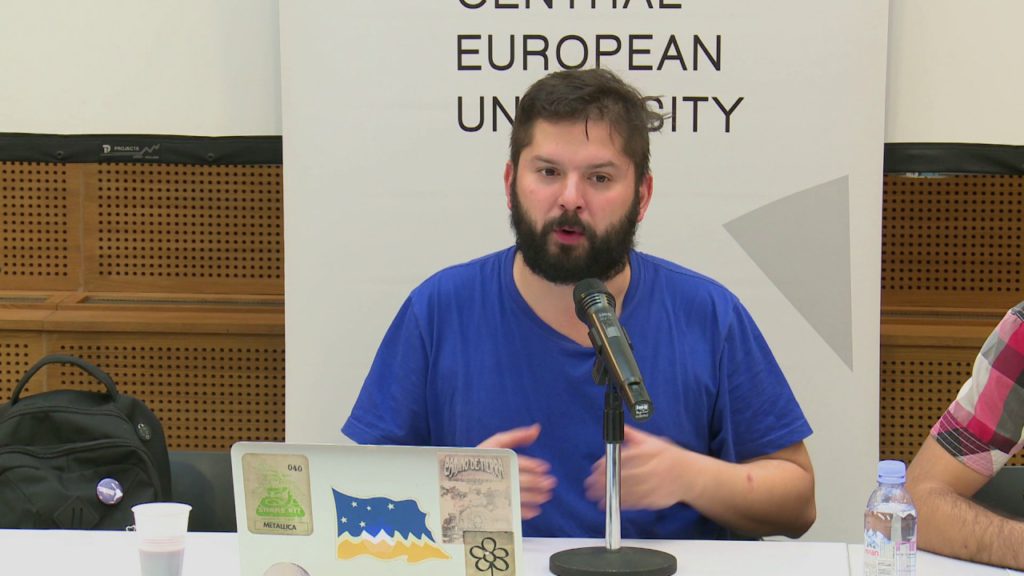
Copper giants safe in our hands, Chile leftist’s campaign says Bloomberg News | November 5, 2021 | Gabriel Boric. Credit: Department of Public Policy at CEU
Mining heavyweights such as BHP Group and Anglo American Plc have nothing to fear if former student protest leader Gabriel Boric becomes Chile’s next president, according to one of his top advisers.
While a Boric government would raise taxes to help fund a green transformation, it wouldn’t overburden the industry by removing incentives to invest, said Willy Kracht in a telephone call Thursday. The left-leaning candidate wants the state to play a more active role in technology projects and lithium extraction, but has no plans to interfere in any existing concessions.
“There’s no intention to change the rules of the game, just to strengthen institutionality so that things function better,” said Kracht, who is head of the mine engineering department at the University of Chile and a director at copper research center CESCO.
Just two weeks away from the first round of voting, the comments may go some way to easing concern that a Boric victory would stifle investment in a country that accounts for more than a quarter of mined copper.
Mining companies have warned that a royalty bill currently before congress would erode Chile’s competitiveness by creating one of the heaviest tax burdens among major copper nations.
Still, government and industry representatives agree that there is scope to lift taxes in some form. Boric’s proposal is two-pronged — a royalty on sales and a sliding levy on profit. That would raise the equivalent to an additional 1% of gross domestic product.
“That mixed structure — with ad valorem and progressive components — should work better in terms of collection without putting at risk the feasibility of development projects,” Kracht said, without offering proposed rates.
He also said there’s considerable consensus on what has to be done in terms of decarbonization and social engagement.
One priority of the Boric team is to set up a development bank that helps fund technology in collaboration with the private sector. For example, the state could help fund a privately-run project for mines to convert to electric trucks, which could then be marketed as a solution in neighboring countries.
Boric’s program also prioritizes the development of state companies Codelco and Enami and will look to promote investments in local refining, as well as gradually raising carbon and fuel taxes.
(By James Attwood)
Massive comet exploding over Chile 12,000 years ago may have created strange glassy rocks
By Meghan Bartels 3 days ago Dark silicate glass is seen against the Atacama Desert in northern Chile. (Image credit: P.H. Schultz/Brown University)
Be grateful you weren't in what is now Chile's Atacama Desert 12,000 years ago.
Today, a 47-mile (75 kilometers) swath of the desert is strewn with strange dark, glassy rocks that have long puzzled scientists. New research finds that those rocks are quite similar to comet particles collected by a NASA mission. The scientists behind the work now think that all those years ago, one or more huge comets exploded together in the skies over the region, causing tornado-force winds, scorching a wet, grassy landscape, and scattering the area with warped and twisted glass that still contains minerals generally found only in meteorites.
"This is the first time we have clear evidence of glasses on Earth that were created by the thermal radiation and winds from a fireball exploding just above the surface," Pete Schultz, a geologist at Brown University in Rhode Island, said in a statement.
"To have such a dramatic effect on such a large area, this was a truly massive explosion," he said. "Lots of us have seen bolide fireballs streaking across the sky, but those are tiny blips compared to this."
Schultz and his colleagues wanted to compare the strange Chilean glass, which ranges from dark green to black, with the work of a NASA mission called Stardust, which launched in 1999. Stardust visited a comet called Wild-2 to trap particles of its dust, which the spacecraft delivered to Earth in 2006. The samples were scientists' first-ever pristine samples of cometary dust from out beyond the orbit of the moon, according to NASA.
For the new research, Schultz and his colleagues collected 300 pieces of the strange glassy rock to analyze from two patches of the region. In addition, the team cut thin, polished slices out of 20 of those samples to study under a microscope. In all of those slices, the researchers found dozens of grains and fragments that didn't match the region.
Those anomalies included a mineral called troilite, which is typically found in meteorites, and decomposed zircons that suggest the samples reached temperatures hotter than 3,000 degrees Fahrenheit (1,670 degrees Celsius). Other traits the researchers noted aren't exclusive to meteorites but are quite common in an extraterrestrial context and match what scientists have seen in meteorites or the Wild-2 samples.
"Those minerals are what tell us that this object has all the markings of a comet," Scott Harris, a planetary geologist at the Fernbank Science Center in Atlanta and a co-author on the new study, said in the same statement. "To have the same mineralogy we saw in the Stardust samples entrained in these glasses is really powerful evidence that what we're seeing is the result of a cometary airburst."
In addition, the researchers noted signs of a dramatic past on the glass, which show "sliding, shearing, twisting, rolling, and folding (in some cases, more than twice) before being fully quenched," the scientists wrote in the paper.
Scientists have considered other scenarios to explain the strange glass over the years. At the time, the region featured oases and grassy wetlands, so some have suggested that vast grass fires could have melted the sandy soil to form the glassy rocks.
"There may be lots of these blast scars out there, but until now we haven't had enough evidence to make us believe they were truly related to airburst events," Schultz said. "I think this site provides a template to help refine our impact models and will help to identify similar sites elsewhere."
Scientists can't yet precisely date the glassy rocks, although other research on the phenomenon has suggested the strange rocks formed between 12,300 and 11,500 years ago.
Intriguingly, that's close to the time when the remains of large mammals like horses and ground sloths stop showing up in the fossil record, and around when some scientists think humans started building settlements in northern Chile — although there's no way to know right now whether any of the three events are connected.
"It's too soon to say if there was a causal connection or not, but what we can say is that this event did happen around the same time as when we think the megafauna disappeared, which is intriguing," Schultz said. "There's also a chance that this was actually witnessed by early inhabitants, who had just arrived in the region. It would have been quite a show."
The research is described in a paper published Tuesday (Nov. 2) in the journal Geology.
An ancient fireball turned kilometres of the world's driest desert into glass
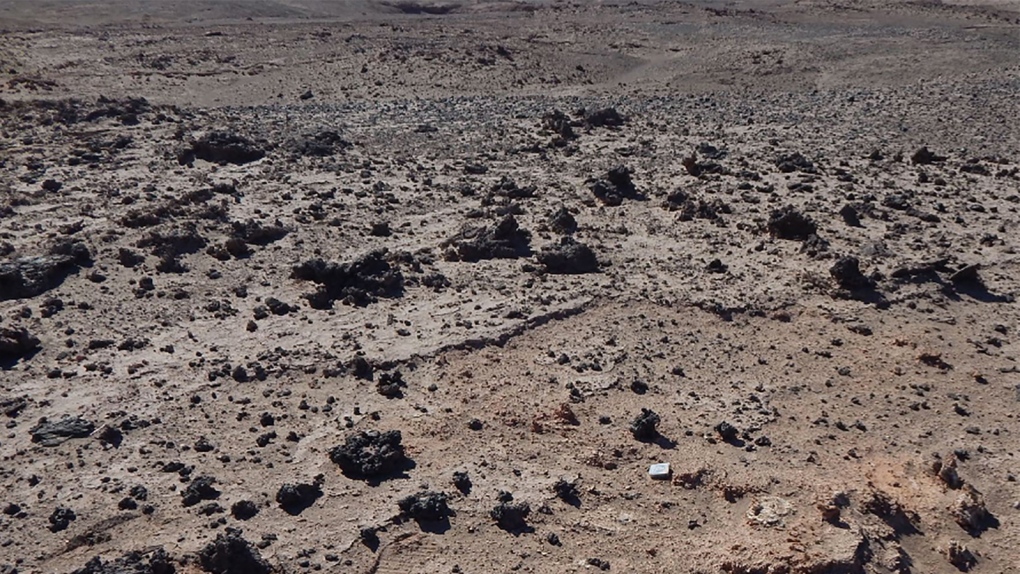
Ashley Strickland CNNDigital Thursday, November 4, 2021 Researchers believe the Atacama Desert in Chile was the site of an ancient comet explosion intense enough to create giant slabs of silicate glass, according to a new study
. (P.H. Schultz/Brown University/CNN)
The Atacama Desert in Chile has been used as a way to simulate alien environments, like Mars on Earth. Now, researchers believe it was the site of an ancient comet explosion intense enough to create giant slabs of silicate glass, according to a new study.
The research published Tuesday in the journal Geology.
About 12,000 years ago, intense heat turned Atacama's sandy soil into vast areas of glass stretching for 75 kilometres, but researchers weren't sure what caused such a drastic change.
The Atacama Desert is the driest desert region on Earth, with incredibly little moisture or precipitation. The fragmented desert glass contains tiny mineral fragments that are often found in meteorites that land on Earth.
The minerals found in this glass matched up with particles collected by NASA's Stardust mission, which sampled a comet known as Wild 2.
The researchers are confident that the minerals found in the Chilean desert are what's left after a comet similar to Wild 2 exploded over the sands and melted them.
"This is the first time we have clear evidence of glasses on Earth that were created by the thermal radiation and winds from a fireball exploding just above the surface," said Pete Schultz, study author and a professor emeritus of geological science at Brown University and research professor at Brown's department of earth, environmental and planetary sciences, in a statement. "To have such a dramatic effect on such a large area, this was a truly massive explosion. Lots of us have seen bolide (bright meteor) fireballs streaking across the sky, but those are tiny blips compared to this."
The startling fields of glass, which appear dark green or black, stretch across an area east of the Pampa del Tamarugal plateau, located between the Andes Mountains and the Chilean Coastal Range.
While volcanic activity can create this kind of glass, there was no evidence to support that the Atacama glass was formed that way.
Previously, researchers have suggested that ancient fires were the cause.The area once hosted grassy wetlands derived from rivers. If those ancient grasses burned in widespread wildfires, some believe it may have created the glass.
However, the glass itself is more complicated. Up close, it appears the glass pieces had been twisted, folded, rolled and thrown while they were still molten. This, the researchers say, would only be possible with an airburst explosion that can unleash winds rivaling those of tornadoes.
A chemical analysis of the glass revealed zircons, or minerals that thermally decomposed to form baddeleyite crystals. This change can only happen when temperature spike above 3,000 degrees Fahrenheit or 1648 degrees Celsius, which would definitely exceed the heat generated by grass fires.
The analysis also showed minerals like cubanite and troilite, both found in the Wild 2 comet and meteorites.
"Those minerals are what tell us that this object has all the markings of a comet," said Scott Harris, study coauthor and a planetary geologist at the Fernbank Science Center in Georgia, in a statement. "To have the same mineralogy we saw in the Stardust samples entrained in these glasses is really powerful evidence that what we're seeing is the result of a cometary airburst."
The researchers want to focus on dating the glass to determine its exact age, as well as the potential size of the comet, but their current expectation that the impact occurred 12,000 years ago aligns with when large mammals disappeared from the area.
"It's too soon to say if there was a causal connection or not, but what we can say is that this event did happen around the same time as when we think the megafauna disappeared, which is intriguing," Schultz said. "There's also a chance that this was actually witnessed by early inhabitants, who had just arrived in the region. It would have been quite a show."
MUTUAL AID VS SPENCERIAN SOCIAL DARWINISM
Sabre-toothed cats cared for each other when injured, fossil evidence suggests
Social Sharing
Facebook
Twitter
Pinterest
Reddit
LinkedIn
Email
A cat with a painful hip disability lived a long life, suggesting
it had help on the hunt
CBC Radio ·
This image is taken from the 1988 Mark Hallett mural Trapped in Time. It depicts saber-toothed cats digging into prey. A new study suggests that these ferocious killers shared their food with those unable to hunt for themselves. (La Brea Tar Pits)
Scientists have found that the fossilized remains of an adult sabre-toothed cat show signs that it lived with a congenital hip condition, suggesting that it lived in a social group with other cats who were able to help it hunt and feed.
The researchers identified the cat's pelvic bone showed evidence of long-term hip dysplasia, a developmental birth defect that is common in modern times in dogs and cats, but also well-known in humans.
The cat's fossilized remains were found in the La Brea Tar Pits in Los Angeles, an area the size of several city blocks. The pits have preserved the remains of animals that were trapped in sticky tar over tens of thousands of years.
Paleontologists have found a wealth of fossil remains in excavation of the pits.
The La Brea Tar Pits and Museum, which is part of the Los Angeles Natural History Museum, is home to a collection of the remains of about more than 2,000 extinct sabre-toothed cats, as well as many other animals, including other extinct animals like ground slots to mammoths.
Hips don't lie
The team of researchers, including paleontologist Mairin Balisi, decided to investigate a puzzling pattern.
A surprising number of fossils of Smilodon fatalis, the sabre-toothed cat that lived in the Los Angeles area up until about ten thousand years ago, showed evidence of hip damage.
The injuries were previously assumed to have been sustained from the aggressive hunting style required to bring down much larger prey than themselves, like bison.
But an in-depth study of that one pelvic bone found something else, which overturned that previous assumption.
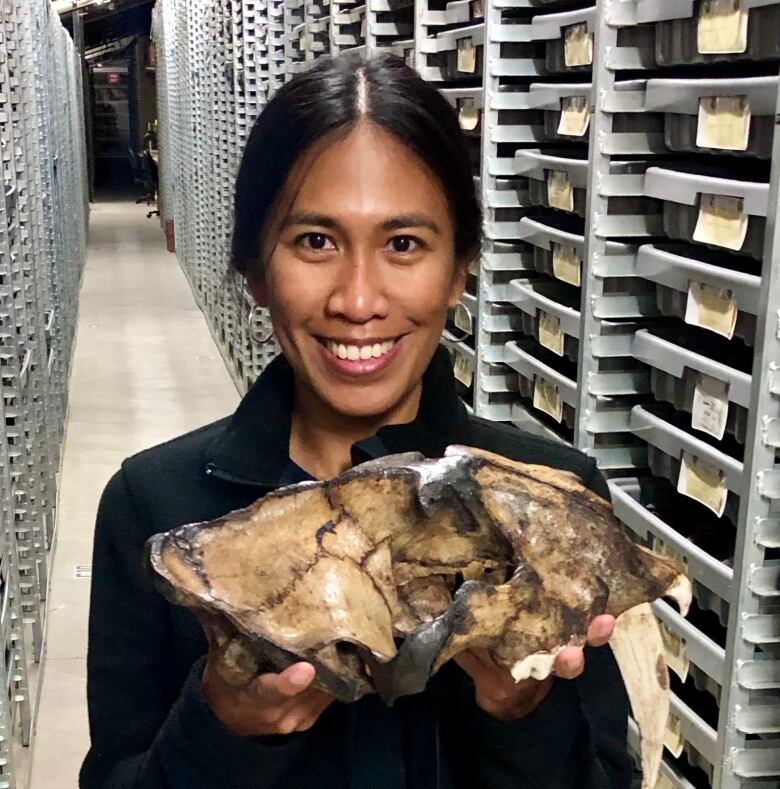
Paleontologist Mairin Balisi holds a sabre-toothed cat pelvis. (Submitted by Mairin Balisi)
"A CT scan of this specimen at Cedar Sinai Hospital here in Los Angeles found no evidence of fractures," said Balisi, who is also a postdoctoral fellow at the La Brea Tar Pits and Museum.
"If this had been from an injury, there would have been fractures preserved in the bone. Instead, symptoms that supported the diagnosis of hip dysplasia were found,"she told Quirks & Quarks host Bob McDonald.
Hip dysplasia occurs when the hip socket doesn't fully cover the ball portion of the thigh bone. Normally the top of the femur fits into the hip socket to create the hip joint. But in the case of hip dysplasia, there is an incomplete formation, or deformation of the hip socket.
"This condition would have degenerated over the animal's life, and so it would have started limping," Balisi said. "At some point, bone was rubbing on bone, and we see evidence of that in the skeleton. Hunting would have been painful and difficult."
The fact that this sabre-toothed cat lived to adulthood with such a debilitating condition suggested to Balisi and her colleagues that it had help from other cats to survive.
This implied a degree of sociality in sabre-toothed cats not fully understood before. Cats today show a range of social behaviours but frequently live as largely solitary, territorial hunters.
"It reached the same size as adult specimens that we have at the Tar Pits without this condition," Balisi said. "That suggests to us that it must have had enough food. We infer that it must have had help with some sort of food provisioning happening."
This may have taken the form of group hunting, in which the disabled cat wouldn't have had to take on the physically demanding role of taking down a large animal by itself.
This idea prompted Balisi to take a second look at some of the other sabre-toothed cat pelvic specimens in the collection. She wondered if they too had been mistakenly identified as having suffered an injury, instead of hip dysplasia.
A three-dimensional scan of the pelvis and femur of a sabre-toothed cat showing hip dysplasia from the La Brea Tar Pits in Los Angeles. (La Brea Tar Pits)
"We did look at dozens of other specimens in the pathology collection at the La Brea Tar Pits, but it's difficult to make a definitive diagnosis of hip dysplasia without CT scans," she said.
"These specimens do show external signs that might be interpreted as hip dysplasia. Now with our study, we are prompted to reevaluate this."
If such reevaluation does find widespread evidence of hip dysplasia in sabre-toothed cats, it could help reinforce the case that these animals were consistently social. However, Balisi said other evidence will likely still be required, because it's difficult to be certain when it comes to understanding how extinct animals behaved.
"Sociality is very difficult to infer in the fossil record." she said.
"[However,] I think that it would be safe to say from our study that sabre-toothed cats lived in social groups. They were probably more social like lions rather than more solitary like tigers and leopards."
Written and produced by Mark Crawley.
The Evolutionary Quirk That Allows Antarctica’s Icefish To Survive Extreme Cold
Unique adaptations allow the ambush predator to thrive in an environment that would kill most other organisms.
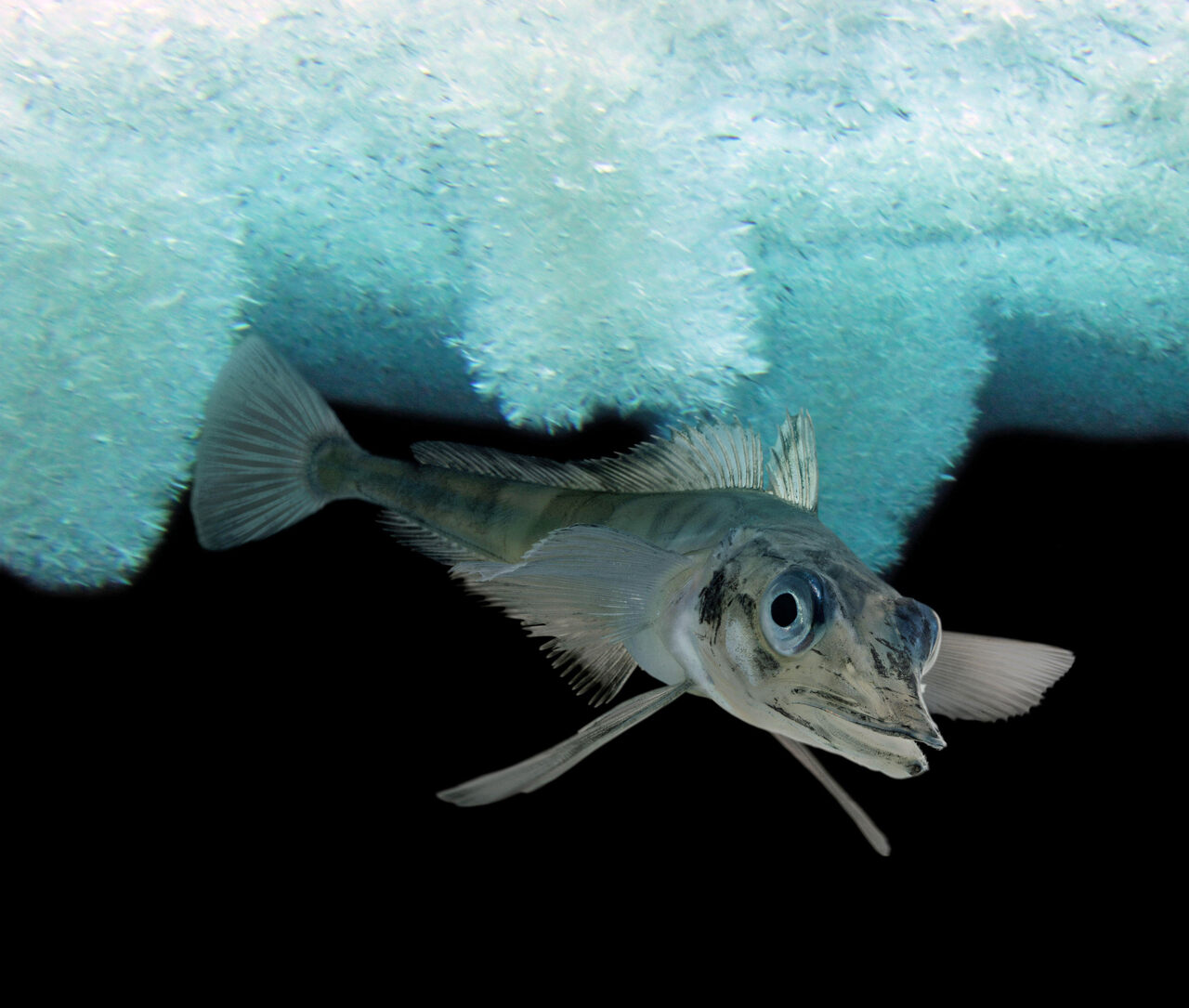
NOVEMBER 4, 2021 In Antarctica, the aptly-named icefish survives extreme cold thanks to an unusual suite of anatomical oddities. PALLY/ALAMY
This story is excerpted and adapted from Bill Schutt’s PUMP: A Natural History of the Heart, published in September 2021 by Algonquin Books of Chapel Hill. All rights reserved.
WINTER IS COMING, AND WHEN it arrives, most organisms can’t simply throw down the snow shovel and head for their warm homes. Many have evolved unique mechanisms to deal with exposure to cold temperatures and the stresses that accompany them. For warm-blooded species, including those that do wield snow shovels, the body compensates for low external temperatures by working to hold internal temperatures relatively steady. Normally, our body temperature is maintained at around 98.6 degrees Fahrenheit. Primarily, this occurs as an indirect result of metabolic processes like digestion and muscle contraction, since each produces heat as a byproduct of its chemical reactions.
Something very similar occurs when you turn on your car engine. Gasoline contains chemical bond energy. When mixed with air and ignited in a small space (one of your car’s cylinders), a controlled explosion results and the chemical bond energy is converted into the mechanical energy that spins your tires. Since no energy conversion is 100 percent efficient, some energy is lost during the process, here in the form of heat. You can demonstrate this yourself by asking someone you don’t like to place a hand on your car engine a few minutes after starting it. What they feel is the energy that has been lost during the conversion from chemical to mechanical energy. You can explain this to them once they stop screaming at you.
In the body, as heat is released, mostly during muscle contraction, it radiates out of the tissues where the reactions take place and into the adjacent thin-walled capillaries, warming them and the blood within. The warm blood flows back to the heart and is circulated throughout the body. As that happens, the heat leaves the blood and moves into the cooler surrounding tissues.
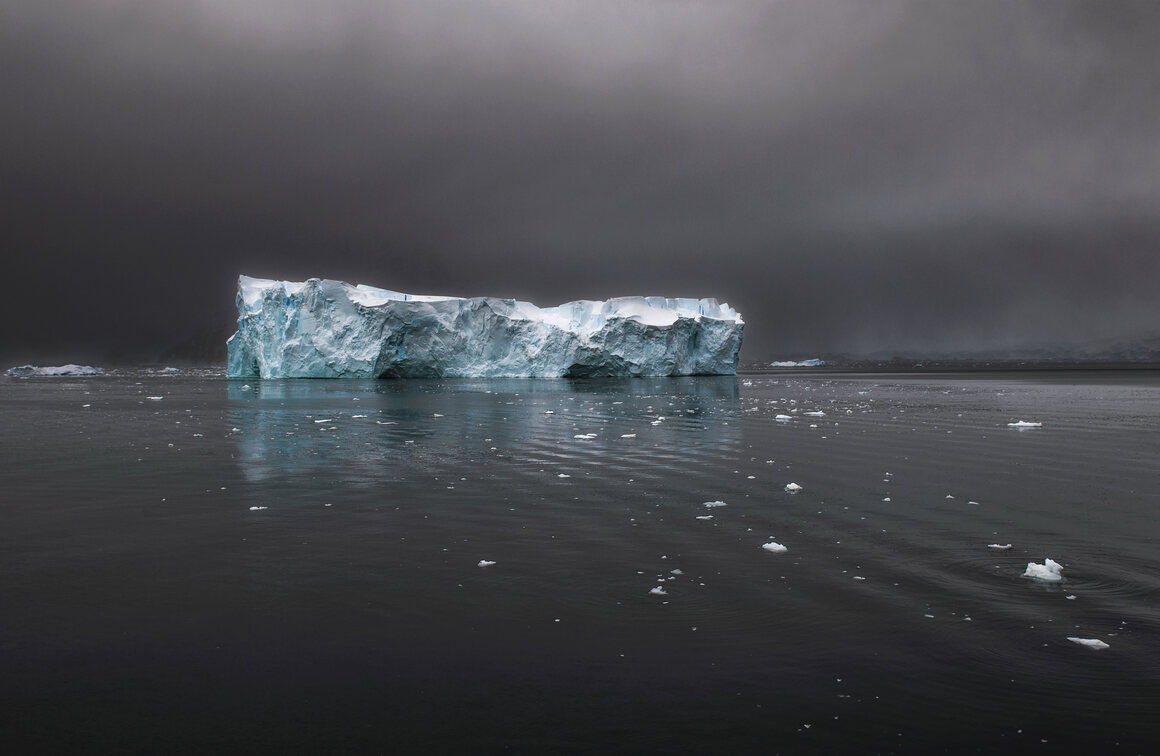
Animals that live in the Great Southern Ocean around Antarctica have evolved different ways of surviving the challenging environment.
MARIE HICKMAN/GETTY IMAGES
But what keeps the temperature of the human body constant? Why don’t our bodies cool down when we step outside on a cold morning? The reasons relate to a section of the brain called the hypothalamus. The hypothalamus is the command center for the autonomic nervous system, the portion of your nervous system that regulates most bodily functions without your conscious input. Those include the maintenance of the body’s internal environment, including body temperature.
Upon receiving nerve impulses from temperature receptors in the skin, the hypothalamus acts as a sort of thermostat to keep the body temperature stable. Detecting frigid temperatures, the hypothalamus initiates the previously described shunting away of blood from the peripheral structures like the fingers and toes. It also reduces blood flow to the skin, where superficial blood vessels allow heat to be quickly lost to the environment. Additionally, the hypothalamus sets up a series of involuntary heat-releasing muscle contractions, better known as shivering.
Interestingly, some temperature receptors in the skin “learn” to ignore inconsequential stimuli, which explains why stepping into a hot shower might be painful at first, but then becomes comfortable. The phenomenon is known as thermal adaptation. Something similar occurs on a tactile level when you put on socks. Initially, the brain receives signals from touch and pressure receptors in the skin of the feet and ankles, and you feel your socks being pulled on. Very soon, though, the nervous system begins to ignore these unimportant tactile stimuli, allowing you to concentrate on more important things, like making sure that you’ve put on socks that match. Sensory adaptation can also be related to smells or sounds. Fortunately, this process has its limits. For instance, the nervous system doesn’t adapt to stimuli that can be harmful, like putting on a sock with a burr inside or increasing blood pressure.
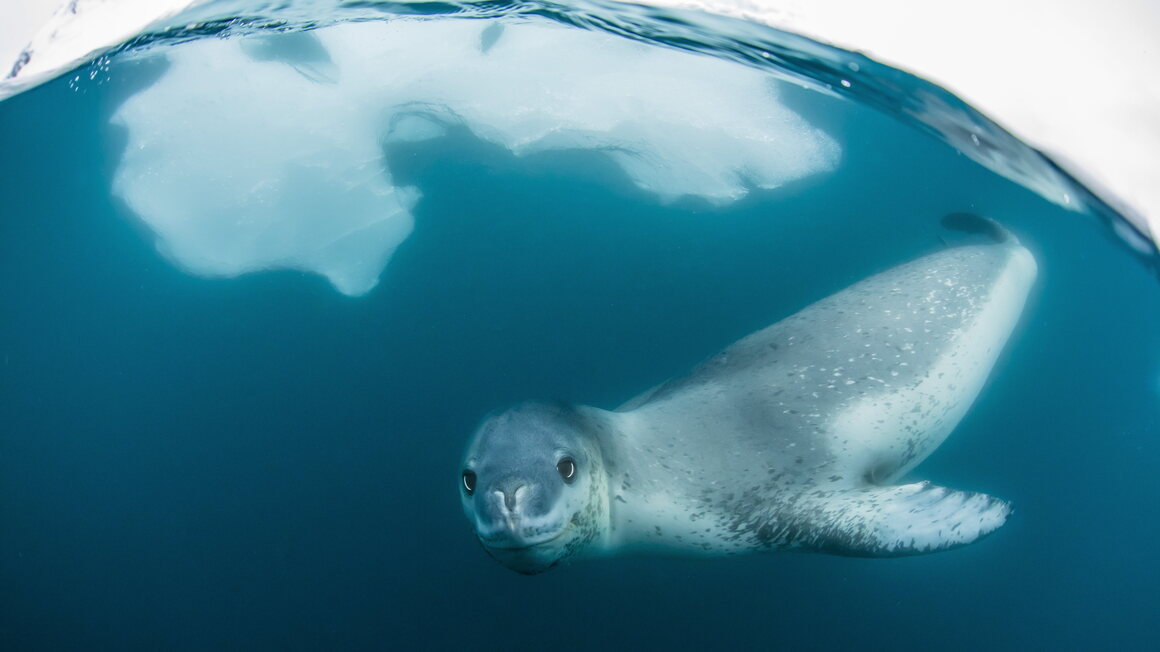
Seals, like whales and penguins, stay warm in chilly Antarctic waters thanks to layers of insulating fat and an internal thermostat that keeps the body’s temperature stable. MICHAEL NOLAN/GETTY IMAGES
The ability to internally maintain stable body temperature is known as endothermy, and those that exhibit it, like mammals and birds, are endotherms. This ability differentiates them from ectotherms, like fish, amphibians, and most reptiles. These so-called cold-blooded creatures require externally supplied energy (usually from the rays of the sun) to keep their bodies at a temperature at which tissues and organs can function properly.
Regardless of how consistent body temperature is maintained, it’s important that it be maintained. The myriad chemical reactions (that is, metabolic processes) taking place in the body can occur only when things like temperature are held within a very specific range. So how do ectotherms deal with the cold, specifically temperatures that would normally freeze their bodies and the liquids like blood found within them? For nearly all of them, the answer is hemoglobin.
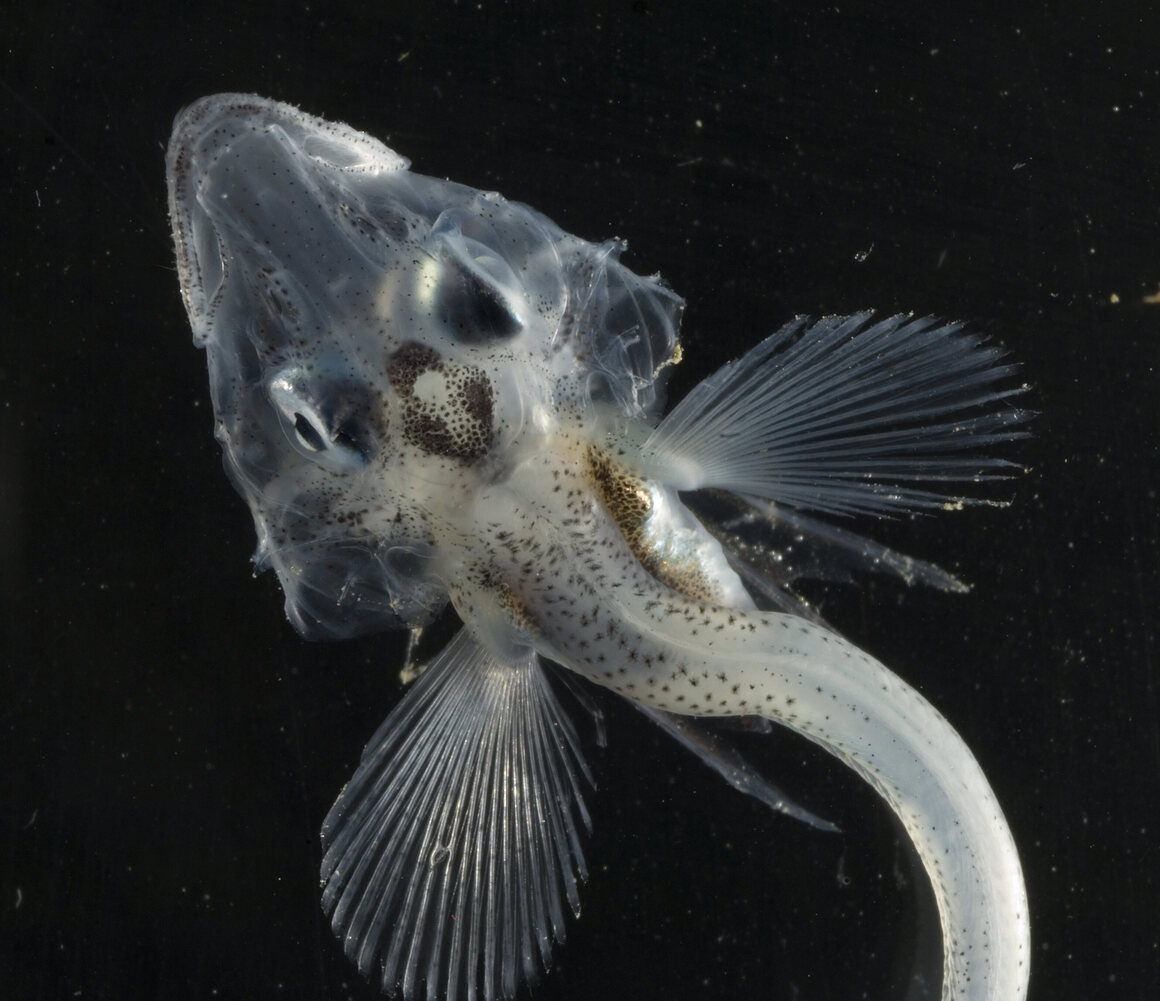
Hemoglobin is an iron-containing molecule whose primary function is to pick up oxygen in the lungs or gills, then transport it and drop it off in the tissues. And, yes, a byproduct of this oxygen/hemoglobin interaction is the distinctive red color of vertebrate blood. But for those of you who might be wondering if there’s an exception to the red-blooded vertebrate rule, the answer is also yes, and that blood belongs to the Antarctic icefish (family Channichthyidae). Known to 19th-century whalers long before researchers snagged one in 1928, icefish are the only known vertebrates that lack hemoglobin as adults. Because of this, their blood is nearly clear.
The icefish of the Great Southern Ocean are the only vertebrates that lack hemoglobin in adulthood.
PETE BUCKTROUT, BRITISH ANTARCTIC SURVEY
I first heard about these unique creatures during my three-semester tenure as an undergraduate marine science major at Southampton College on Long Island. Howard Reisman, my ichthyology professor there, taught me that icefish blood not only lacked hemoglobin, but it also contained a unique array of antifreeze proteins that allowed the fish to survive in temperatures that would normally freeze a body solid. Similar to the antifreeze in a car radiator, these substances function by chemically lowering the temperature at which freezing occurs. In the icefish, the antifreeze proteins restrict the growth of ice crystals in tissues, including blood, and in hollow structures like the heart and blood vessels. This opens some exciting avenues to medical researchers, who are experimenting with using antifreeze proteins to prevent damage to tissues and organs that are stored on ice before their use in transplants and related procedures.
Interestingly, this characteristic led a European food company to patent a strain of yeast that had been genetically modified to produce the very same antifreeze proteins found in icefish blood. In an amusing twist on the original function, the company currently uses the stuff to prevent crystals from forming in ice cream. More specifically, the edible antifreeze spares frozen dessert munchers from having to deal with the crunchy ice that can form when ice cream’s tiny crystals melt and then refreeze into larger, less palatable crystals. The antifreeze proteins work by latching on to the surface of the smaller crystals, thereby preventing them from clustering together into jumbo chunks.
Admittedly, my primary interest in icefish blood had nothing to do with improving mouthfeel for ice cream lovers. Instead, I wanted to know how icefish were able to evolve this weird bit of biology and still obtain enough oxygen to survive. According to University of Alaska Fairbanks icefish expert Kristin O’Brien, the explanation involves their habitat and a related quirk of physics, as well as their anatomy and behavior.
Icefish inhabit the deep waters of the Southern Ocean, also known as the Antarctic Ocean, since it encircles that particular continent. There are relatively few fish species living there and even fewer predators (mostly seals and penguins). Because of this, icefish face little or no competition for the krill, small fish, and crabs they feed upon. They are also ambush predators, which means that their movement consists of short and infrequent bursts of speed. Without much in the way of extended physical activity, their bodies require less oxygen.
The very first hemoglobin-free icefish ancestors were the result of a mistake.
The cold water itself offers the hemoglobin-free icefish an additional benefit: it holds more oxygen than warm water. This is because molecules in cold water move more slowly than in warm water. When the molecules move faster, it is easier for oxygen to break free from the H2O molecule and escape. As a result, cold water ends up hanging on to more oxygen, which is useful for the organisms that require it.
Research suggests that the very first hemoglobin-free icefish ancestors were the result of a mistake—a genetic mutation that occurred sometime around five million years ago. Fortunately, because of their oxygen-rich environment, this mutation didn’t immediately doom the ancient fish to extinction. According to O’Brien, what it did do is force an extensive remodeling of the icefish cardiovascular system. This evolutionary tweakage resulted in the fish having four times the blood volume and three times the blood vessel diameter of a similarly sized red-blooded fish, as well as a heart more than five times larger than one might expect. This means that although icefish blood pressure and heart rates are low, the volume of blood that leaves the heart with each contraction is high. Additionally, once the blood reaches muscles and organs, extremely dense capillary beds help improve the efficiency of gas exchange. Finally, in one innovative evolutionary twist, icefish have no scales covering their bodies, and so oxygen uptake occurs not just through the gills but also directly through the skin.
So, yes, originally, perhaps icefish ancestors were lucky to have lived where they did. Now, though, they have successfully compensated for the species’ lack of hemoglobin—the vital oxygen carrier found in the blood of pretty much every other vertebrate in existence.
Scientists in Thailand are performing "coral IVF" in an attempt to protect reefs from rising sea temperatures. At Chulalongkorn University, marine biologists have been growing coral which is seemingly more resistant to higher sea temperatures to help combat the effects of climate change.
Solar + Wind = 72% Of South Australia’s Electricity In October, World Not Turned Upside Down
South Australia was close to 100% renewable electricity in October, and everything went smoothly.
Sometimes the sun does shine and the wind does blow. That’s most of the time in South Australia, apparently. The average share of wind and solar during October was 72%. For 29 out of 31 days, 100% of the power used in South Australia (SA) was renewable. The sky didn’t fall, the grid didn’t collapse, and the apocalypse is not nigh.
South Australia has gone from being a power pariah to a hero, setting new records each month and acting as an example to the world.
Geoff Eldridge, an Energy Data Analyst at NEMLog, offers more data. “The maximum output of renewables was 129% of local demand on Sunday, October 3,” Eldridge says. As far as the max for a whole day, that was 107.3% on Sunday, April 4, 2020.
Renewables, supported by big batteries, are bringing consumers lower emissions, lower prices, and improved reliability. That’s some trifecta!
These lower prices may get even lower, as the federal government is finally starting to take a positive interest in the solar sector. It is aiming to reduce the price of electricity even further – by about 70%. It’s said that this will be needed to make green hydrogen a financial success.
Economies of scale will be the key. Remember Canon-Brookes and Twiggy Forest’s Sun Cable project? “Annual solar irradiation in Australia is the highest per square metre in the world, and we have significant land-mass suitable for large-scale solar developments, and proximity to large and growing markets,” ARENA states.
However, in a nod to old man coal, the Australian government is quick to point out that there is no intention of doing away with our current steam engine technology.
Perhaps we will now get some solar policy clarity from the federal government, though, which may lead to less perceived risk for investment, leading to lower-cost capital and eventually even lower-cost electricity.
New cell efficiently converts waste heat to energy
Scientists at Korea’s Daegu Gyeongbuk Institute of Science and Technology have designed a novel hybrid thermoelectrochemical-concentration cell that outperforms similar state-of-the-art devices and shows promise in utilizing waste heat to generate electricity.
In a paper published in the Chemical Engineering Journal, the researchers point out that the cell opens the door to commercially feasible energy harvesting systems that could power IoT devices and sensors by leveraging thermal energy.
The article also explains that the conversion of a temperature difference into electricity is already possible through thermoelectrochemical cells (TECs). These devices can leverage waste heat to sustain a reduction-oxidation (redox) reaction that, in turn, produces electricity.
The problem is that, so far, TECs are lacking commercial implementations due to their low energy conversion efficiency, lacklustre output power, and costly fabrication.
Seeing these difficulties as opportunities, the DGIST researchers came up with a breakthrough in energy conversion that would make TECs viable for untethered low-power devices.
Led by Professor Hochun Lee, the group combined the operating principle of TECs with that of concentration galvanic cells, creating a hybrid thermoelectrochemical-concentration cell (TCC). Although TCCs are not a new concept, the design put forward by the team overcomes some critical limitations of existing TECs.
The TCC reported in this study is based on redox reactions involving iodine ions (I−) and triiodide (I3−). Different from what happens in conventional TECs, these reactions occur in a non-aqueous carbonate solution that uses dimethyl carbonate (DMC) as a solvent. This particular selection of materials creates a peculiar effect.
As the temperature of the hot side increased beyond 40°C, the DMC reacted with I− to produce a porous, gel-like layer of Li2CO3 near the hot electrode that helped maintain a large difference in the concentrations of I− and I3− throughout the cell, greatly boosting its performance.
“Our hybrid cell demonstrates a remarkable thermal conversion efficiency (5.2%) and outperforms the current best n-type TECs,” Lee said in a media statement. “In addition, the simple structure and fabrication process of our TCCs offer a practically feasible platform for thermal energy harvesting.”
In Lee’s view, further studies will be needed to refine this unprecedented approach to TCC design and, hopefully, achieve the goal of connecting multiple TCCs in series to reach commercially acceptable capabilities.
“IoT-connected societies will require economic and autonomous power sources for their IoT devices and sensors, and we believe TECs will be the ideal candidate to meet their needs,” Lee said.
NIMBY
Rocky road for Hydro Quebec clean energy corridor
Mainers voted against the project, which would supply Massachusetts with Quebec-made hydro power.
Legal fight begins over Hydro-Quebec line in Maine, with land partially cleared
Digital Reporter Thursday, November 4, 2021 MONTREAL -- The legal fight began immediately after Tuesday's referendum in Maine over a Hydro-Quebec power line worth $10 billion through the state.
It's no abstract battle of paperwork, as the transmission line is already under construction, and has been for almost a year.
The referendum results came in near midnight on Tuesday. On Wednesday, Maine's power corporation, which is responsible for building the power line, filed a lawsuit in Maine Superior Court arguing it's unconstitutional to allow the referendum to decide the project's future.
"This Initiative represents an extraordinary attempt to deprive a private party of vested rights in the construction and operation of a multi-year development project," they said in the legal complaint.
The company asked for a preliminary injunction allowing them to keep building.
The results on Tuesday struck a blow to Hydro-Quebec, which would earn $10 billion from the project. The transmission line would carry electricity to Massachusetts, passing through Maine to get there.
The company got the regulatory approvals needed to build it, though non-government groups collected enough signatures to force a referendum on its future.
On Wednesday, the power giant and Quebec Premier François Legault both pledged to fight the result, though Legault suggested that the answer may not be in a legal fight but in a "plan B" or different route.
But plenty of building has already been done in Maine, argued Avangrid, the company that owns Central Maine Power. They are building the line, called NECEC, as a project-specific entity named after it.
Building started in January 2021, they said.
"To date, NECEC LLC has expended approximately $449.8 million dollars on the Project, and substantial physical construction has occurred," they wrote in the court filing.
That includes about 124 miles of corridor that's "been cut," they said.
"Over 120 structures have been erected along" different segments of the line, and "over three miles of conductor" already strung.
They've begun preparing the site and the construction for a converter station as well.
On Thursday, a Maine environmental group applied to the state's environment department for their own stay, which would halt construction.
"Despite... the unequivocal repudiation of the NECEC Project by the people of Maine, Thorn Dickinson, President of NECEC Transmission, has vowed that [the power company] will continue constructing the banned corridor," wrote the Natural Resources Council of Maine.
The group argued that the only harm the power companies will suffer, if the stay is granted, is "monetary," while for locals the environmental changes can't be undone.
"An immediate stay is necessary to protect the public from the irreparable harm that will result from CMP’s continued clearing and construction," they wrote.
There was already a similar request underway, with the environmental department facing an older request to halt the project, in light of a court ruling finding that it didn't have the right to cross areas of public land, according to Maine news outlets.
On Thursday evening, a Hydro-Quebec spokesperson told CTV that it has no comment yet on the day's request for a stay since it hasn't seen it yet.
A hydro pole stands in the City of Toronto's west end on Friday, January 16, 2009.
THE CANADIAN PRESS/Nathan Denette
Canada joins pledge to end public fossil fuel finance, shift resources to renewables
Canada has joined the United States, United Kingdom and 21 other countries in a historic deal to stop new direct public finance for coal, oil and gas development by the end of 2022 and shift investment to renewable energy.
“It's a big deal,” said federal Natural Resources Minister Jonathan Wilkinson from Glasgow, Scotland, the site of a United Nations-sponsored meeting on climate change.
“It's a signal that many countries in this world are making this commitment not to use public resources to finance further exploration and development for fossil fuels.”
Climate activists welcomed the deal.
“It shows that Canada recognizes the harmful social and economic impacts of fossil fuels and the urgent need to end global production and use,” said Alan Andrews of Ecojustice, an environmental law firm.
But industry groups responded warily.
“We believe responsible energy producers such as Canada should be playing a larger role in meeting global energy demand,” said Jay Averill of the Canadian Association of Petroleum Producers.
Few details were immediately available about the deal. It commits signatories to stop using loans, loan guarantees, grants, share purchases and insurance coverage from any government or government agency to finance new international fossil fuel developments.
Oil Change International, a group that monitors fossil fuel financing, says an average of about $78 billion a year flows to such projects. It estimates Thursday's deal could affect about $22 billion of that.
But in Canada, the issue is complicated by the fact that Export Development Canada, through which most of that financing flows, is involved with both international and domestic deals.
Wilkinson said the new agreement will affect about $1 billion in financing from the agency, roughly what was committed to such projects last year. That money could now be used for renewable energy projects.
“It certainly opens up that potential,” Wilkinson said. “(Export Development Canada's) mandate, increasingly, is very much focused on a net-zero portfolio.”
The deal also allows governments to keep funding projects in which carbon emissions are “abated,” or that are consistent with reduction targets. Canada is still free to finance developments such as carbon capture, Wilkinson said.
“This does not affect financing to support clean technology investments that are about reducing emissions.”
The government still has to figure out how the deal will specifically apply in Canada, said Wilkinson. There are also clauses that allow fossil finance “in limited circumstances” - details that need to be worked out.
“They drafted it in fairly general terms with a number of provisions that do require further detail,” he said. “We are going to define exactly what Canada means by that.”
Bronwen Tucker of Oil Change International said that could be a loophole.
“There's a way to do it in good faith and a way to do it in bad faith.”
Everything depends on how fossil fuel investment is defined, said Tucker.
“I do have some concerns there.”
She said Canada has for years been one of the world's top public financiers of fossil fuels, averaging about $13.6 billion a year.
Wilkinson acknowledged the deal doesn't include China, Japan or Korea - the world's other top fossil fuel funders. He said he hopes those countries will eventually sign on just as they recently signed on to deals to stop financing international coal development.
“We're going to work to expand the coalition and work to put pressure on all actors, including China, to ensure that it moves in this direction as well.”
In Alberta, provincial Energy Minister Sonya Savage said the deals the Liberal government is agreeing to in Glasgow make Canada an “outlier” in a world that's ramping up fossil fuel production, not shutting it down.
“It sends the wrong message to investors,” she said, dismissing COP26 as a “photo op.”
The COP26 deal adds to previous government commitments.
During the recent election campaign, the Liberals said they would eliminate fossil fuel subsidies by 2023. Export Development Canada has said by 2023, it will reduce support to the six most carbon-intensive sectors by 40 per cent below 2018 levels and set “sustainable finance targets” by July 2022.
This report by The Canadian Press was first published Nov. 4, 2021
Varcoe: Oilpatch seeks answers on emissions cap amid fears of throttled production
'People forget we’re actually pretty aligned with the federal government on this. They have a net-zero target in 2050 and that’s the same target we have come out with'
Author of the article: Chris Varcoe • Calgary Herald Publishing date: Nov 04, 2021 • 2 days ago
Steam rises from the Syncrude Canada Ltd. facility in the Athabasca oilsands near Fort McMurray, Alberta.
PHOTO BY BEN NELMS/BLOOMBERG FILES
A new federal limit on greenhouse gas emissions is coming for the Canadian oil and gas industry.
Does it mean the end of growth for a key sector of the economy?
Will it cause investment, jobs and production to shift outside of the country?
Or will it activate massive spending in new emissions-reduction projects?
So many questions. So little clarity. So much is at stake.
“We are not particularly fussed by a cap on emissions, subject to a couple of provisos,” Cenovus Energy CEO Alex Pourbaix said in an interview Wednesday.
“Those caps must correspond to the industry’s ability to actually, physically reduce its GHG emissions . . . These are things that cannot be done overnight.”
Pourbaix, who is chair of the Canadian Association of Petroleum Producers (CAPP), also believes a price on carbon needs to be applied globally.
Aside from the federal government’s plan to cap oil and gas emissions, Ottawa has already established a national price on carbon, which is set to rise to $170 by the end of this decade.
While the U.S. and more than 100 other countries have signed on to reducing methane emissions by 30 per cent by the end of 2030, Canada has gone further, announcing a planned cut of 75 per cent.
A price on carbon needs to be applied globally “so that early movers like Canada, in terms of decarbonizing their economy, are not handicapped by other countries that have no interest in pricing carbon or putting any restrictions on their industry,” said Pourbaix.
Alex Pourbaix, CEO of Cenovus, was photographed in the company’s Calgary offices on Wednesday Dec. 19, 2018.
PHOTO BY GAVIN YOUNG/POSTMEDIA
The international climate conference in Scotland will help determine just how ambitious countries are prepared to be in the coming years.
At COP26, Trudeau announced his government will become the first major oil and gas-producing county to adopt such an emissions cap on the industry.
Back at home, Ottawa remains in discussion with the sector on a proposed federal tax credit for carbon capture, utilization and storage (CCUS) projects, which would sequester CO2 emissions underground.
The technology could make a major difference for oilsands operators and other industrial sectors as the country strives to reach its net-zero target by 2050.
On Wednesday, ConocoPhillips Canada joined an alliance of five other major oilsands producers, including Cenovus and Suncor Energy, that have agreed to jointly pursue net-zero emissions within three decades.
“What it really does is just show the interest right across our entire industry in reducing emissions,” said Al Reid, director of the alliance.
The group has said its longer-term plans could cost up to $75 billion over three decades; it is seeking federal assistance to help foot the bill.
Alberta has called for at least $30 billion in federal incentives over the span of a decade.
“People forget we’re actually pretty aligned with the federal government on this. They have a net-zero target in 2050 and that’s the same target we have come out with,” said Pourbaix.
These two sides are singing from the same song sheet, for now.
As for future oil and gas production increases in Canada, that will depend on several factors, including commodity prices, investor pressure and the ability of companies to move product to markets.
“It obviously depends on where the cap is set,” said Pourbaix.
“I expect on a go-forward basis, you will continue to see growth, but it’s going to be a lot more measured.”
The federal government has referred many of these tough questions about the emissions cap to its net-zero advisory board. The group will face an enormous challenge to help the government establish five-year milestones for the industry.
According to federal officials, the cap will apply to emissions from conventional oil and natural gas production, as well as the oilsands.
So far, there has been little communication with the province or industry players about details of the federal limit.
The head of the Explorers and Producers Association of Canada (EPAC) said companies are committed to lowering their emissions, but the group’s members — small and intermediate-sized producers — are frustrated by a lack of consultation from Ottawa.
“There’s been no engagement whatsoever from anyone in the federal government on the cap. We have no idea what it is,” said EPAC president Tristan Goodman.
If these federal measures serve to crimp production, it could push investment and jobs into other oil-producing countries that don’t have the same rules in place.
“Leadership is a good thing until you’re out leading and no one is following — and then you are just all by yourself,” said energy consultant Greg Stringham.
The provincial government already has a 100-megatonne emissions cap on the oilsands, which was adopted by the former Notley government, although the implementing regulations are not in place.
Total emissions from the oilsands sector (as defined by the provincial cap) reached 64 megatonnes in 2019, although the federal government views it as being closer to 83 megatonnes under its criteria, said analyst Kevin Birn of energy consultancy IHS Markit.
IHS has projected oilsands emissions peaking within the decade (even before the oilsands alliance was formed and adopted tougher targets) while total Canadian oil production is projected to climb until the early 2030s.
However, much will depend on the new federal limit.
“A cap on oil and gas emissions, if it is too stringent and too soon, will reduce and throttle production output,” said Birn.
“And when it does that, those production barrels aren’t necessarily going to disappear from the world. They just won’t be produced by Canada.”