It’s possible that I shall make an ass of myself. But in that case one can always get out of it with a little dialectic. I have, of course, so worded my proposition as to be right either way (K.Marx, Letter to F.Engels on the Indian Mutiny)
Tuesday, January 04, 2022
Political activist Ramy Shaath to be freed from detention in Egypt, say sources
Procedures to release political activist Ramy Shaath from detention in Egypt are under way, four judicial and security sources said late on Monday.
Two of the sources, speaking on condition of anonymity, said Shaath would be deported to France upon his release.
Egyptian former member of parliament Anwar El Sadat, who has mediated a number of recent prisoner releases, said in a statement that Shaath would be freed and deported.
Shaath, a member of several secular political groups in Egypt and a co-founder of Egypt's pro-Palestinian Boycott, Divestment and Sanctions (BDS) movement, was arrested in June 2019 and held in pre-trial detention on accusations of aiding a terrorist group.
In April 2020 he was placed on a terrorism list along with 12 others, a decision that was upheld by Egypt's highest civilian court in July 2021.
Shaath's French wife Celine Lebrun Shaath, who was deported from Egypt following his arrest, has lobbied the French government to pressure Egypt to release him.
ONTARIO
BURSZTYN: Darlington reactor project sets off alarm bells
'At age 79, I will probably never buy an electron from this new (reactor). But most of you reading this could be buying this power,' says columnist
Peter Bursztyn
BARRIE TODAY
Recently, the Ford government announced that Ontario would build a “small modular reactor” (SMR) at the site of the Darlington nuclear power reactor in Bowmanville. Immediately, alarm bells began to sound.
First of all, this seems to be a contract with no competitive price quotes, definitely at odds with the PC “For the People” promise of greater accountability, transparency and fiscal responsibility. But leave that aside for the moment.
The word “small” might almost be perceived as “cuddly," but that would be quite wrong in this case. This “small” reactor is around 30 per cent the typical size for a nuclear reactor and 40 per cent the size of several Ontario CANDU units. Its 300MW output is definitely not “small" and that matters, too.
“Modular” makes it sound as if you could assemble the device from off-the-shelf modules. That’s simply not possible for a design, which now exists only in blueprint form. Instead of a well-tested electricity generator, Ontario would be building one of the first example of this GE-Hitachi design.
We did this before, with our CANDU “fleet” of reactors. These provide Ontario with almost 60 per cent of our electricity. All of them took longer to build and cost far more than expected. After many rebuilds and retubing exercises, they are now reliable, but it took three decades and pots of money to get there. Are the people of Ontario clamouring to do it all again?
I believe Ontarians want good “value-for-money” performance guarantees, particularly with respect to the future cost of electricity. I would love to know what’s in the contract with GE-Hitachi. And why do we, the taxpayers, not know what we are signing up to build and how much its power output will cost?
When first proposed decades ago, SMRs were meant for niche markets. They were originally intended for communities and industries too remote to justify connecting to the electricity grid. Specifically, they would replace the diesel generators, which now supply Arctic and sub-Arctic towns, mining and petroleum extraction operations, etc.
Depending on the cost of shipping diesel fuel, electricity from these generators could be very expensive: Nunavut – 60 cents to $1.10/kWh, Alaska – 30 cents US to $1.10 US/kWh, Siberia – 50 cents US to $1.50 US/kWh. A small nuclear power plant would only need refuelling every decade or so, simplifying supply issues and reducing costs.
As initially conceived, SMRs were designed to be shipped as sealed, pre-fuelled units. On arrival, they only needed to be connected to plumbing and the local micro-grid. Every decade or so, the old unit would be replaced and shipped back to the factory where it could be refuelled and refurbished if necessary. A “plug-and-play” operation.
Most of the world's SMRs are in naval ships and submarines, plus nine Russian icebreakers. Very few SMRs are in operation in Russia’s Arctic. Planned decades ago, the fact that so few have been built (mostly military naval ships) is not a ringing endorsement for the concept’s economics.
One frequently cited complaint is the large amount of (low-enriched) uranium, which must be packed into such sealed units to fuel them for a decade. Some worry terrorists might try to steal the fuel, particularly since security would be poor in remote communities.
However, a neat feature of nuclear reactors is that after an hour or two of operation, their inner workings become so radioactive that nobody can touch these without serious protective clothing. Refuelling would be carried out by remote control. Opening up the welded casing would expose any would-be thief to deadly radiation, making them “self-policing” and safe from terrorists.
A key to economic operation is the ability to warm a community with waste heat. Far North settlements need heat 10 months a year. (The diesel generators currently used also heat their Arctic communities.) Heat is supplied by circulating a fluid like radiator anti-freeze.
It is worth understanding that the farther this fluid is pumped, the more of its heat is lost. In practice, an SMR can distribute heat within a radius of about two kilometres; beyond that, costs rise and efficiency suffers.
Siting such a unit at Darlington puts it around five kilometres from Oshawa, where its abundant waste heat might be used. That’s a long way to move heat without serious loss. Moreover, the north shore of Lake Ontario only needs heat a few months a year. An SMR at that site cannot hope to make much money from waste heat.
SMRs are nuclear reactors creating highly radioactive wastes. All countries with nuclear power plants wrestle with this problem. Spent fuel rods remain dangerously radioactive for more than 100,000 years. We cannot imagine what our world will look like 100,000 years from now. Looking back, homo sapiens (modern humans) were just arriving in Europe then. That’s 20 times longer than the entire span of recorded human history.
We don't know how to make containers capable of storing radioactive waste that long. We could dissolve the wastes in molten glass, but exposed to water on such a longtime scale glass actually dissolves. Of course, we would tunnel into dry rock, but could we guarantee it would remain dry for 100,000 years?
If we did bury radioactive waste, how could we communicate the hazard to future generations? The English of just 1,000 years ago is almost unintelligible. Even Hebrew, probably the oldest language still in use, dates back just 5,000 years.
But back to economics. Two decades ago, Price Waterhouse estimated the output of a proposed Florida nuclear plant to cost 25 cents/kWh – plus transmission, distribution and taxes. For comparison, electricity costs me 18 cents/kWh inclusive of transmission and distribution (10 cents/kWh) and GST (13 per cent). Remember, Ontarians believe we pay too much. It has been suggested — although I am not sure how this was determined — that the proposed SMR would make electricity at 16 cents/kWh. Adding the costs I now pay would give us electricity at 29 cents/kWH. Sound appealing?
Meanwhile, our wind turbines produce power at 12 cents/kWh or less — delivered to us for 25 cents/kWh). But Quebec sells hydroelectricity to New England for four cents per kWh. If we could buy it at that price, it would come to 16 cents/kWh, including tax and distribution.
But that’s close to what we pay for power now.
We do pay four cents per kWh for power from our existing nuclear plants. But, that’s because former premier Mike Harris took the immense debt ($38 billion) which the old Ontario Hydro carried and transferred it to the Province of Ontario’s books. (Largely borrowed to build the CANDU “fleet.”)
Relieved of debt, the nukes could compete with other generators and undercut wind turbines, which enjoy no such advantage.(Imagine how you would feel if a rich uncle took over your mortgage.) Of course, that debt hasn’t disappeared. At the time, it roughly doubled Ontario’s total debt, and taxpayers were on the hook, but it made the price of electricity look better... Do you prefer to pay for electricity on your utility bill or your tax bill?
The Bottom Line
I cannot guess what GE-Hitachi promised Premier Ford regarding the price of electricity from their SMRs. I also cannot guess what it might cost to build transmission lines to bring Quebec’s four cents per kWh power to Ontario in sufficient quantity to replace our nuclear electricity and to charge the electric cars we will have on our roads in two decades, plus the heat pumps we are meant to use to heat our homes.
I would like to think that Premier Ford has taken the trouble to cost these and other options, compared nuclear, or more wind and hydroelectricity from Quebec and Manitoba, and has chosen wisely.
Before we give him our votes in six months, shouldn’t we ask him what GE-Hitachi’s SMR (likely their first) electricity will cost us? Shouldn’t we also ask what guarantee he has that GE-Hitachi will be responsible for cost overruns and construction delays?
At age 79, I will probably never buy an electron from this new SMR. But most of you reading this could be buying this power. Wouldn’t you like to know what it will cost? Don’t you have the right to know? Or will you simply accept government’s reluctance to reveal what has been contracted with GE-Hitachi?
I can honestly say that it will not affect me. Can you?
Canada’s top CEOs saw average pay increase of almost $100k in 2020
“Before lunch hour on the first working day of 2022, Jan. 4, Canada’s highest-paid CEOs will have already racked up the same amount of pay that will take the average worker the entire year to accrue,” said an annual report released Tuesday.
Canada’s top 100 CEOs saw their incomes rise in 2020, even as the pandemic wreaked havoc on the Canadian economy, according to an annual report released Tuesday.
Their pay during the first full year of COVID-19 averaged $10.9 million each, up $95,000 apiece since 2019.
“As a result, those 100 CEOs now make, on average, 191 times more than the average worker wage in Canada,” according to the report, entitled: Another Year in Paradise, CEO pay in 2020.
The data is compiled annually by the Canadian Centre for Policy Alternatives (CCPA).
“Before lunch hour on the first working day of 2022, Jan. 4, Canada’s highest-paid CEOs will have already racked up the same amount of pay that will take the average worker the entire year to accrue,” the report says.
The highest-paid CEO in Canada in 2020 was David Klein, who officially took over Canopy Growth Corp. in January 2020, according to the report. Company stock was then trading at about $31 a share. By the end of that year, it was trading for roughly a dollar more. Klein’s total compensation during that time was $45.3 million, including $281,715 in salary; $10-million in share-based awards and $33.3 million in option-based awards, according to the CCPA analysis.
Canopy Growth Corp., which produces, distributes and sells medical and recreational cannabis, closed at $11.04 a share on the TSX on Monday.
While income earned by Canadian CEOs is theoretically based on merit, the report found that among the richest 100 CEOs, 30 headed companies that received the Canada Emergency Wage Subsidy (CEWS), 14 saw the structure of their bonuses changed in order to protect them from the impact of COVID-19 and five experienced both.
“The CEWS was meant to go to businesses that saw large declines in revenue during the worst of the pandemic, but some companies with the highest-paid 100 CEOs in Canada continued to pay their CEOs extraordinary amounts while receiving the CEWS,” according to the report.
“The philosophical justification of extreme bonuses — that they are merit-based — is on thin ice. Executive compensation isn’t variable or merit-based but rather, it’s part of the c-suite culture.”
Also according to the report, there was no requirement that the CEWS be put toward worker’s wages. The rules were amended in June 2021 to prevent companies who paid their executives more in 2019 from receiving the subsidy.
The gap between the average worker and the highest-paid CEO narrowed in 2020, but only because about half of all workers who are paid $17 an hour or less either lost their job or the majority of their working hours in the first few months of the pandemic, according to the report.
Macdonald said some progress has been made: Prior to July 2021, only 50 per cent of the value of stock options was considered taxable. That’s now been capped at the first $200,000 of stock options.
The second-highest-paid CEO in Canada is José Cil, of Restaurant Brands International, which owns and operates Burger King and Tim Hortons. His total compensation in 2020 was just under $27-million, including nearly $24-million in share-based awards.
The report recommends taking steps to reduce the gap between CEO salaries and employee wages by capping the allowable corporate deductions for executive compensation at $1-million. There is currently no cap. It also recommends making all income from stock options taxable — currently only half is taxable.
It also recommends a wealth tax on the ultra-rich, generally defined as a tax on those with a net wealth of more than $10 million.
Alberta doctors upset with provincial move to restrict PCR testing: ‘Absolutely absurd’
By Jill Croteau Global News Posted January 3, 2022 Updated January 4, 2022 In an effort to conserve supply and to reserve spaces for high-risk individuals, the province is asking Albertans to report results of at-home tests to their family doctor. Jill Croteau reports on the impact of this decision.
Family physicians around Alberta have expressed serious concern about the province’s move to recommend self-reporting.
On December 23, Alberta health officials restricted access to PCR testing to conserve supply and reserve spaces for high-risk individuals.
There is a recommendation to rely on the ‘at home’ rapid tests. But that move, according to Dr. Mukarram Zaidi, stifles the true scope of the Omicron spread.
“AHS has the capacity to expand and do the PCR test,” Dr. Zaidi said.
“Patients are calling and trying to book appointments that are 7-8 days away. What’s the point when you’re sick today?”
On December 28, Alberta chief medical officer of health Dr. Deena Hinshaw advised Albertans who test positive for COVID-19 to use an at-home antigen rapid testing kit to notify their family doctors in order for the diagnosis to be kept on file.
Dr. Hinshaw added they wouldn’t be included in daily case counts. But there is a worry about the verification of the results.
Rapid response COVID-19 antigen test. THE CANADIAN PRESS IMAGES/Lars Hagberg
“Somebody can take a picture of anybody’s test or from internet send it in now Dr. Hinshaw wants us to document that as a positive antigen test. It’s mind blowing,” Dr. Zaidi said.
“The fundamentals of this request is absurd.”
“The onus of the reporting should be on the government and not the individuals,” Dr. Zaidi said,
“It’s a huge medical dilemma for family physicians to be charting something that may or may not be true in our charts.”
Calgarian Anne Yates-Laberge said the changes are flawed. She said her family was potentially exposed to COVID-19 by a close contact, but because they’re asymptomatic they don’t qualify for AHS PCR testing.
Anne Yates-Laberge. Jill Croteau/Global News
“I need to make sure I’m not asymptomatic spreading this all over the place,” Yates-Laberge said.
Because of her work with vulnerable people she called 811 for guidance. She said the health worker instructed her to pay for a private PCR.
Instead, she asked her family doctor to do a house call to test the family.
“I feel like they’ve thrown the towel in and are contributing to this issue. It’s a bad example of government to be this negligent. All of a sudden they don’t want numbers so they won’t test — it makes no sense.”
Dr. Keegan performing test on Yates-Laberge’s son. Courtesy: Anne Yates-Laberge
Her physician Dr. David Keegan said they need to be done by an objective person in order to be verified.
“That’s one example of how health providers across Alberta are hacking the system and doing it appropriately but getting around things that could have and should have been predicted,” Dr. Keegan said.
He said concrete data is needed.
“We are going to get voicemails, emails and things dropped off and we need some order to this chaos,” Dr. Keegan said. “Then, if an insurance company comes we can say it was reported but we can’t verify at-home test results because we didn’t take it.”
NDP leader Rachel Notley said more needs to be done.
“Not only do many Albertans not have family doctors, also many family docs aren’t set up to administratively receive phone calls and keep these kinds of records,” Notley said. “The government needs to go back to the drawing board.”
Alberta Health spokesperson, Lisa Glover said self-reporting is a challenge being faced by many provinces.
“We currently recommend that people connect with their family doctor to discuss health implications of their diagnosis,” Glover said in a statement.
“We are looking at other provinces and working together to determine what solutions have been implemented in other jurisdictions that have moved earlier Omicron then we have had to. We hope to have an approach we can share with Albertans soon.”
Alberta Health is expected to provide a COVID-19 update on Tuesday.
How the pandemic has some Ontario employers switching to a 4-day work week
& FOUR HOUR DAY FOR FORTY HOURS PAY
Social Sharing
Facebook
Twitter
Email
Reddit
LinkedIn
Some companies are paying workers the same to work less,
Starting in the new year, Juno College's 45 employees will begin transitioning into working four days a week. Staff won't be making up the time, and they won't get paid any less. (Lisa Xing/CBC)
The concept of a four-day work week is gaining traction as the COVID-19 pandemic wears on, with some employers re-evaluating their priorities.
That's been the case for Heather Payne, CEO and founder of Juno College, a vocational school in Toronto that teaches tech and web skills.
For the decade that she's been running the company, Payne says her focus has been on growth. But over the summer, she says, she had an "epiphany."
"I realized that's not what matters the most," she told CBC News.
Now, starting in the new year, her 45 employees will be gradually transitioning into working four days a week, starting with one week in January, two in February and so on. Staff won't be making up the time, and they won't get paid any less.
It honestly seems like the right thing to do.- Heather Payne, CEO of Juno College
Payne is just one of a handful of employers who have decided to make the change to boost productivity, prioritize workers' health and, in some cases, retain talent. The Ontario Liberal Party has also promised a four-day work week pilot if elected this spring.
"It honestly seems like the right thing to do. It's something I want for my own life as well," said Payne.
The 40-hour work week was adopted in 1914 when Henry Ford scaled the work week down from 48 to 40 hours, correctly believing productivity would improve.
Some of those pilots inspired managers in Zorra township, about 30 minutes east of London, Ont., to test out a compressed work week as well, which began in September 2020. The township's 14 staff worked four days a week and an hour extra per day. The work is split into two shifts, with one group working Monday to Thursday and the other working Tuesday to Friday.
Human resources professor Margaret Yap at Ryerson University says a four-day work week will boost productivity. (Submitted by Margaret Yap)
The second phase of Zorra's pilot recently wrapped, and its chief administrative officer Don MacLeod has called the project a success, especially since it means extended opening hours.
"There's something about it that makes people happier to come to work," said MacLeod. "Everybody seems to have embraced it."
MacLeod said news of the pilot has also helped retain talent, and staff reported more interest from people wanting to work for the township.
Similarly, an Angus Reid poll from 2020 suggested many Canadians support the idea. Fifty-three per cent of people polled said a shortened week would be a good idea. That's up from 47 per cent in 2018.
Benefits to productivity, but not everyone's on board
Many of the workplaces that have tested the four-day model have reported benefits to both employee and employer. That doesn't come as a surprise to Margaret Yap, an associate professor in the department of HR management and organization behaviour at Ryerson University.
"It will increase productivity," she said. "Employees are going to think employers are taking care of them."
The trials in Iceland, which took place over four years, found productivity remained the same or improved in the majority of workplaces. A similar pilot in Guysborough, a community in Nova Scotia, which Zorra's experiment was modelled after, found employees experienced a boost in morale, too.
Yap says the four-day model requires commitment from an employer to set an example so staff aren't reaching for their phones or turning on their computers on that extra day off.
She also said it's easier for smaller workplaces to make the transition.
But not every employee is a fan of the new work week, says Payne. While her company has received an increase in job applications since announcing the change, some staff have decided to leave in search of other opportunities.
"It's a different strategy for the company, a lower growth strategy," she said. "I can't fault anyone for [leaving because of] that."
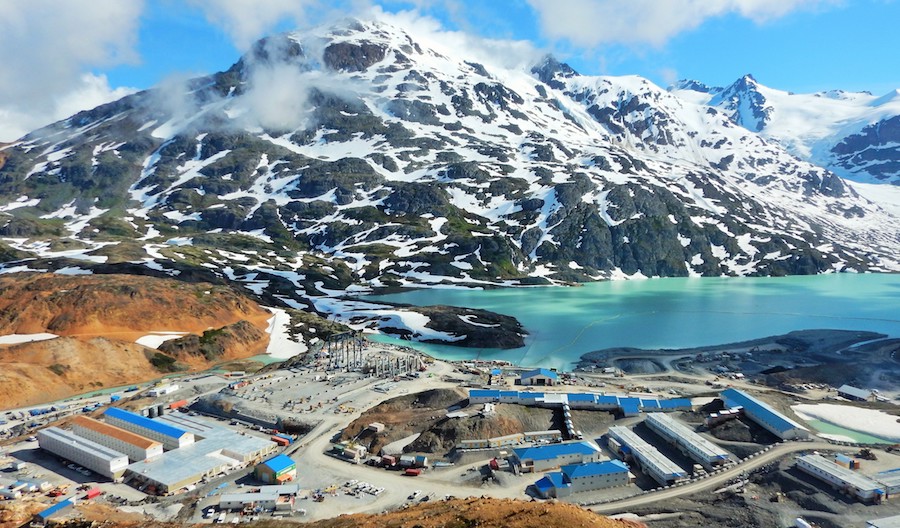
The $2.8 billion acquisition by Australia’s 2nd biggest gold miner, Newcrest (ASX, TSX: NCM) of Canada’s Pretium Resources (TSX, NYSE: PVG) late last year marked a new beginning for the Brucejack mine, Pretium’s former flagship asset and one of the highest grade gold mines in the world.
The Brucejack project spans 1,200 square kilometres in the heart of British Columbia’s Golden Triangle, which has a 100-year mining history and also hosts the Red Chris,Eskay Creek and Snip mines. The important Brucejack deposit was prospected as early as the 1980s.
But the real Brucejack mine story started 1999, when it was acquired by Silver Standard, which held a 60% interest at the time of what consisted of about 3,000 hectares and a few exploration prospects. The story really started to gain momentum in August 2009, when Silver Standard reported an intercept of 16,948 gram per tonne gold over 1.5 metres.
In 2010 Pretuim IPO’d on the TSX, raising C$280 million via private equity, offtake agreements, and a precious metals stream. It acquired Brucejack from Silver Standard for $450 million in October that year.
But the road to production would prove to be rocky.
Five years later, on September 5, 2015, construction began at Brucejack, somewhat of an anomaly when it comes to the persistent permitting processing backlogs in British Columbia miners have to contend with.
It began commercial production on July 1, 2017, financed during one of the most protracted mining downturns in history, when few investors were putting money into new mines, somewhat of an anomaly in mining when it comes to cash flow in the mining sector.
Shares in Pretium tanked in early 2018 after the company announced disappointing production and cost forecasts. From the outset the company failed to achieve production guidance with consecutive results reporting lower-than-expected mine grades and higher all-in sustaining costs.
However, a 2020 technical report estimated gold production of 311,000 ounces per year, at an all-in sustaining cost (AISC) of $743 per ounce, over a projected mine life of 13 years. In 2021, the mine is anticipated to produce between 325,000 and 365,000 ounces of gold. That’s a far cry from the $1 billion mine’s initial commitment to producing roughly 500,000 ounces gold annually for the first eight years of the mine’s 18-year mine life, at an AISC of $446 per ounce of gold.
High-grade, gold-silver mineralization at the Valley of the Kings occurs in steeply dipping and predominantly east- to northwest-trending quartz stockwork veins and breccia zones, inside a broader halo of clay alteration and low-grade mineralization.
Brucejack consists of the Valley of the Kings deposit, and the result is that the gold mineralization is “nuggety,” which makes it hard to mill with predictable output.
Enter 2021
As of January 1, 2021, Brucejack’s Valley of the Kings deposit held a compliant proven and probable reserve base of 11.5 million tonnes grading 8.7 grams per tonne gold and 9.8 grams per tonne silver, for 3.2 million ounces ad 3.6 million ounces of gold and silver metal, respectively.
The West Zone also holds proven a probable reserves totalling 29 million tonnes grading 6.8 grams per tonne and 278.5 grams per tonne for a respective 600,000 ounces gold and 26 million ounces silver, respectively.
Brucejack and surrounding tenements are within the traditional territories asserted by the Tsetsaut Skii km Lax Ha and Tahltan Nation, and in the Nass Area of Nisga’a Nation.
The company said it had received assays for the first nine drill holes, eight of which intersected gold with a highlight of 53.5 metres grading 72.5 grams per tonne gold including 05 metres grading a bonaza 6,700 grams per tonne gold and 3,990 grams per tonne silver.
“Initial results from Golden Marmot are exciting and affirm the district-scale potential of the Brucejack property,” president and CEO Jacques Perron said in an October 2021 statement.
“We are delighted to be expanding our presence in this highly prospective region in British Columbia. Brucejack is a Tier 1 mine in a Tier 1 jurisdiction and will deliver immediate production, free cash flow and earnings diversification to Newcrest and will fit seamlessly into our long-life, low-cost portfolio,” Newcrest CEO Sandeep Biswas said in a media release.
“The combination of Newcrest and Pretivm will create the leading gold miner in British Columbia’s Golden Triangle, operating both the Brucejack and Red Chris mines,” Biswas said.
“Newcrest specializes in what I call tier-one deposits,” Biswas said in a recent interview with The Northern Miner. “We have a clear strategy where we want to continue to gain exposure to tier-one deposits, which in our terminology is typically 300,000-plus ounces per year equivalent, comprising copper if available, and gold.”
Newcrest will bring its extensive block-caving and epithermal vein experience to the table, which could entail a philosophical step-change for how the future Brucejack asset will be operated.
While Brucejack’s past has seen some hiccups, its future seems bright given the experience a top-tier miner like Newcrest has.
One-party rule is now the credo of Trump and his followers
An illiberal democracy, similar to Viktor Orbán’s Hungary, is increasingly the model for Republicans
Supporters of President Donald Trump gather for a rally with Trump on Jan. 6, 2021, on the Ellipse near the White House in Washington.
The first anniversary of the invasion of the Capitol approaches, our cold civil war grows hotter by the day, and the numbers tell the story. A majority of Republicans view the attack as a defense of freedom (56%) and just under half (47%) cast it as an act of patriotism. For good measure, one in six Americans approve of the events of 6 January 2021, including nearly a quarter of Republicans.
America’s Reichstag fire continues to smolder. A staggering 64% of Americans believe democracy here is “in crisis and at risk of failing”. Beyond that, two-thirds of Republicans agree that “voter fraud helped Joe Biden win the 2020 election”. Disturbingly but not surprisingly, the Republican party’s credo is now “heads I win, tails you lose”.
Then again, the last time a non-incumbent Republican won the presidential popular vote was George HW Bush in 1988. The fact that recent Republican-backed post-election “audits” have failed to yield a different outcome, has not dulled the party faithful’s devotion to the false and Trump-driven proposition that the election was stolen.
From the looks of things, the Republican party’s fealty to democracy appears tenuous at best, no longer willing to accept the finality of the ballot box or the courts. Even after the insurrection, the majority of congressional Republicans opposed certifying the election. And the base is definitely with them.
In that same spirit, Representatives Marjorie Taylor Greene, Louie Gohmert and Matt Gaetz lie at the party’s enraged and performative core. During the last 12 months, these attitudes have managed to congeal and fester. Liz Cheney and Adam Kinzinger are outliers in a party driven by and suffused with grievance.
Cheney is dead-on when she says the choice is between the constitution and Trump. But it is only the coastal elites who are listening. During the 2016 campaign, Paul LePage, then governor of Maine, thought Trump needed to show some “authoritarian power”. The Republican party knew who it was getting and what it wanted.
Back in the day, Republican congressional leaders ushered Richard Nixon to the door. Now, crossing Trump is met with the prospect of a primary or the inevitable resignation. In Georgia, Trump is supporting the opponents of Brian Kemp, the incumbent Republican governor, and Brad Raffensperger, the incumbent secretary state, because they declined to bend to his will.
In the aftermath of the election, they refused to “find” votes for Trump where there were none to be found despite relentless pressure from the White House or to overturn the will of their state’s voters. Indeed, Trump’s phone call to Raffensperger was a key event in Trump’s second impeachment.
Fittingly, on Monday Trump issued his “complete support and endorsement” for the re-election bid of Viktor Orbán, Hungary’s prime minister and an outright proponent of “illiberal democracy”. In office, Orbán has curbed the press and tilted his country’s constitution and laws in his personal favor.
One-party rule is his goal. Think of Mar-a-Lago along the Danube and you get the picture.
Beyond that, Orbán has thrust blood, soil and Christianity into the forefront of Hungarian politics, to the approval of name-brand Republicans. Mike Pence, Trump’s vice-president, and Jeff Sessions, Trump’s discarded attorney general, have travellled to Budapest and paid homage to Orbán and conservative social values. Likewise, Fox News’ Tucker Carlson spent time broadcasting from Hungary.
The nexus between the Republican party and religion grows at a moment in time when fewer Americans can be found in the pews, and religious “nones” occupy a growing space in public debate and the Democratic party.
Frequency of worship is as valid a predictor of how white Americans will vote as any other. It is no longer a simple matter of denominational affiliation. In a sense, America is enveloped in a bloodless but rage-filled 16th-century-styled religious war.
Meanwhile, for all of Biden’s campaign rhetoric about bridging our political chasm, his presidency has failed to narrow the breadth and intensity of the partisan divide. Booming job and stock markets have not papered over the country’s fault lines, which have only grown deeper and more acrid during his tenure. And it is not just the debacle in Afghanistan or even inflation.
On that score, the 46th president and his allies refuse to acknowledge that in US politics if you want to move to the left on economics, you had better move to the center on social issues. Culture still counts – a lot. The lessons of triangulation taught by Bill Clinton three decades ago remain valid.
Sadly, the realities that brought America to its present inflection point are not disappearing any time soon. Tribe, place and resentment stand to define and drive our politics for as far as the eye can see. Barrington Moore Jr once said, “No bourgeoisie, no democracy,” and these days, the middle class feels buffeted by forces outside its control.
A recent Republican fundraising missive framed the debate in the US as between Americans and Democrats. So, this is where we are.
Lloyd Green is an attorney in New York. He was opposition research counsel to George HW Bush’s 1988 campaign and served in the Department of Justice from 1990 to 1992
Faculty at Concordia University of Edmonton strike, halting start of winter term
Social Sharing
Facebook
Twitter
Email
Reddit
LinkedIn
'Multiple competitive salary offers' have been made to faculty, university says
CBC News ·
Faculty at Concordia University of Edmonton are now on strike after negotiations with the school's bargaining committee stalled out over the holidays. (David Bajer/CBC)
Faculty at Concordia University of Edmonton walked off the job Tuesday morning after the union and the school's bargaining committee failed to strike a deal following months of negotiations.
The strike, a first for faculty associations in Alberta, is expected to halt the start of the winter term. More than 2,500 students were expected to return to virtual classes Tuesday.
Starting at 9 a.m., a picket line formed outside the Magrath Mansion, a historic property in Edmonton's Highlands neighbourhood recently acquired by the university.
The Concordia University of Edmonton Faculty Association (CUEFA) issued formal strike notice to the university's administration on Dec. 22, warning that members would walk off the job in the new year if the school's bargaining team failed to strike a deal.
The association is the bargaining agent for 82 full-time professors, librarians, placement coordinators and lab instructors at Concordia.
Professors and instructors formed a picket line outside the Magrath Mansion, a historic property in Edmonton’s Highlands neighbourhood recently acquired by the university. (David Bajer/CBC)
As a result of the legal strike action, all instruction will be halted until further notice, the university said in a memo to students Monday.
"The strike comes in spite of bargaining that occurred over the holiday break," the university's bargaining unit said in the statement.
"The university's bargaining team is particularly disappointed by the brevity of a mediation meeting last weekend. Earlier negotiations on major issues such as workload have been successful.
"The university's bargaining team has presented multiple competitive salary offers which are in line with those recently accepted by some of Alberta's largest public-sector unions."
Sticking points
After months of negotiation last year, the university and faculty association signed off on more than half of 41 articles of a new collective agreement but, as of last month, sticking points remained.
Should a new agreement be reached, faculty would be expected to teach fewer courses to make up for an increase in research. However, the association remains concerned about workload for non-faculty staff and salaries, among other issues.
Mediation was "unsuccessful at helping to resolve any remaining issues," the association said in a statement Tuesday.
"Our faculty association is dismayed that the administration rejected our reasonable salary proposals," CUEFA president Glynis Price said in the statement.
"We have bargained since the late spring of 2021 and plan to continue bargaining in good faith to push the administration to improve the workloads and pay of all of our members."
Price said the university has been approved to lock out staff should they choose. In the case of a strike or a lockout, 72 hours notice is required.
In a ballot in November, 90 per cent of CUEFA members backed a strike mandate. The association said 95 per cent of members voted.
'Jeopardizing their winter term'
Price said the university has the financial resources to resolve the issues, but instead of investing in competitive wages and staff recruitment, administration spent $1.75 million on the Magrath Mansion, "a building without a clear role in the university's core operations."
"We're saddened that the administration has refused to budge and would rather disrupt students' lives and add to their stress by jeopardizing their winter term," Price said in the CUEFA statement.
The university's bargaining team said it is willing to resume discussions with the faculty association "at any time" and will continue to work toward a settlement.
"We regret the disruption to our students, their families, and our university community," the bargaining committee said. "The strike will impact student learning and depending on how long it extends could threaten semester outcomes.
"The university remains hopeful that the strike will be brief."
After months of negotiations, faculty members walked off the job Tuesday morning. (David Bajer/CBC)
Experts question usefulness of masks purchased by province for Alberta students
Experts are questioning the Alberta government’s decision to purchase medical-grade masks for students in school, saying better masks should be used instead.
Students would have been back in class this week, but the province extended the winter break as Omicron cases rise.
In an effort to protect students and staff when they do return to school, the province plans to deliver 8.6 million rapid tests and 16.5 million adult and pediatric medical-grade masks to schools.
“What we need to worry about are fit, filter and function… so called “medical-grade masks” are designed for adults, not kids,” said Dorothy Wigmore, an occupational health specialist.
“For a medical mask, the actual design of them is intended to stop someone like a surgeon spitting into a patient that they’re working on, it’s to stop material coming out of the wearer, rather than to protect the wearer,” added Dr. Simon Smith, a retired respiratory filter specialist.
“Without a good fit, you’re going to be breathing air in when you inhale that’s going to take the path of least resistance and bypass the filter entirely.”
Respirator-style masks are being recommended as alternatives which would be better suited to what students will be doing in schools, breathing, talking and learning.
“All of the medical-grade masks have been tested to meet international standards for particle and bacterial filtration, breathability, fluid resistance, and flammability of materials,” said a statement from the premier’s office.
“Medical-grade masks provide an additional layer of protection to lower the risk of in-school transmission, and when properly fitted are 98% as effective as N95 masks.”
One ER doctor in the province argues that “there is no such thing as a well-fitting medical mask.”
“They’re not designed to fit well… they’re basically a barrier,” said Dr. Joe Vipond, the co-founder of Masks4Canada and Protect Our Province Alberta.
“I’m worried the Alberta public will feel reassured that they’re getting these higher quality masks, when they’re completely inadequate for the job… it’s not useless, it’s just not nearly enough for the job.”
He recommends parents get better masks for their children to go to school with, if they can find them. Respirator-style masks are a little more expensive, but Vipond believes they’re worth the investment.
“You can wear (respirator masks) multiple days… up to five eight hour days in a row as long as it’s not smelling bad or obviously soiled… they don’t expire, they don’t get less safe after a day’s use,” added Vipond.
CANADA Grocery managersBOSSES get big bonuses after boost from pandemic sales
JAN 3, 2022 The practice of paying executive bonuses has been more researched in the pandemic, especially among companies that employ significant front-line employees who are unable to perform their jobs safely at home.
Nathan Denette / The Canadian Press
Two of Canada’s largest merchants – Empire Company Ltd. and Metro Inc. – paid their executives almost maximum bonuses for their most recent, pandemic-boosted fiscal year.
They joined Loblaw Companies Ltd. to reward their top executives for robust sales over the past 18 months, where many Canadians have replaced restaurant expenses with home cooking and warehousing of essential household items – a winner for grocers.
The practice of paying executive bonuses has been more researched in the pandemic, especially among companies that employ significant front-line employees who are unable to perform their jobs safely at home.
Merchants gave all workers some form of “pandemic wage” – increased wages or bonuses – in the earlier months of the public health crisis, but they lowered or eliminated wages later in 2020. Grocery retailers offered additional one-time bonuses earlier this year (and in Empire cases reintroduced bonuses in regions, where orders for stay at home were imposed). Other benefits, merchants said, included being paid free of vaccinations, discounts and gift card bonuses. But in the spring, Canada’s largest private-sector union, Unifor, called on companies to bring back universal, regular wage premiums for grocery workers during the pandemic.
Together, Loblaw, Empire (the parent company of Sobeys) and Metro have a combined market value of about $ 60 billion. They had $ 100 billion in sales over the past 12 months, with just over $ 3 billion in profits, according to S&P Global Market Intelligence. While their single-digit profit margins are modest compared to other industries, they have risen from pre-pandemic levels in the last 12 months.
Empire paid its executives almost the maximum possible bonuses for its most recent fiscal year, which ended May 1, saying it easily exceeded its sales and profit targets.
That meant a $ 2.71 million bonus for CEO Michael Medline, up from $ 1.41 million the year before. Four other top executives received payouts of $ 579,000 to $ 1.01 million. All five bonuses were almost or more than double their incentive pay from the previous fiscal year.
In the year ending May 2020, Empire’s board decided to scale down bonuses for its top executives in recognition of the pandemic – especially because blowout sales in the first three months of the crisis were not part of the annual targets. For the year ending in May, however, Empire incorporated COVID-19 into its targets, setting a sales target roughly in line with the previous year and a lower performance target.
Empire said sales of $ 28.3 billion topped its $ 26.7 billion target and reported net earnings of $ 701.5 million that were exceeded by the $ 548.1 million target. Putting those numbers into the formula gave leaders almost double their target bonuses, Empire said.
Overall, Mr. Medline $ 7.49 million in the year ending May, including nearly $ 3.1 million in stock allotments. That’s below his $ 13.04 million compensation from the previous year, a figure inflated by a special $ 6.9 million stock reward designed to keep him for another six years. In the year ending May 2019, he earned just under $ 5.5 million.
For the second year in a row, executives at Metro also received almost the maximum possible bonuses after the company exceeded its profit targets. For most, however, the payments were slightly lower than the year before.
Metro paid CEO Eric La Flèche a $ 1.29 million bonus on top of his salary of just over $ 1 million for the year ending Sept. 25. He was entitled to a maximum bonus of just over $ 1.5 million. In the year ending September 2020, his bonus was $ 1.43 million.
Four other Metro executives, who were eligible for bonuses equal to their salaries, received payouts of between $ 450,000 and $ 505,000 – 82 percent to 99 percent of maximum. Their bonuses ranged from $ 450,000 to $ 600,000 in the previous year, with only Executive Vice President Marc Giroux, head of both e-commerce and the Quebec division, receiving the maximum payout for his division’s goals.
For the year ending September 25, Metro set a target of $ 823.6 million in adjusted net earnings – roughly the same amount as it recorded in the year ending September 2020, when more than six months of pandemic purchases increased the results. Metro said that by setting the target, it started by assuming a normal environment and then added pandemic-related sales.
Its adjusted net income came in at $ 854.2 million, above the maximum bonus level for all executives except Mr La Flèche, who has a higher profit threshold for a maximum bonus.
Metro said it saw a sharp increase in food sales in the first half of the year, but will fall in the second half, “as they cycled unusually strong levels” in 2020. It said pharmacy sales were hit by an eight-week labor dispute at Jean Coutu distribution center, and expenses increased due to $ 104 million in pandemic-related costs, including $ 24 million in gift cards for front-line employees.
The executive bonuses are based on a mix of company-wide earnings, divisional performance and individual goals, with Mr La Flèche’s bonus being weighted at most to the company’s profits.
In total, he earned $ 5.02 million, including $ 2.24 million in stock and option allotments, up from $ 5.07 million the year before.
Loblaw, which blew through its 2020 revenue targets but missed its profit target, said in April that the board decided that the company’s short-term bonus plan should not pay out more than 150 percent of the target for any target, instead of the 200 percent maximum plan allowed.
Loblaw CEO Galen G. Weston earned $ 3.55 million, down from $ 3.67 million in 2019, including an annual bonus of $ 648,000, which was less than 2019’s annual incentive of $ 764,640. President Sarah Davis, who resigned from the company in May, earned $ 4.53 million, including a $ 1.35 million bonus, down from $ 1.59 million in 2019.
The Globe and Mail previously reported on Loblaw’s compensation figures, which were for the year ending January 2, 2021, in April.













:format(jpeg)/cloudfront-us-east-1.images.arcpublishing.com/tgam/GOSI76B7OBMJHII24746ELLAEU.jpg)