Monday, March 07, 2022

 Location of Ukraine. Source: CIA World Factbook.

The Tragedy Of Ukraine’s Abyss: Three Decades Of Misguided Geopolitics – OpEd

By 

The Russia-Ukraine war was not warranted. Ukrainians despair for peace. Russia needs security. China offers development. But Blackwater, US, NATO and the far-right Ukrainian paramilitaries seek something very different.

In his TV address of February 24, Russian President Vladimir Putin denounced three decades of NATO expansion and broken pledges to Russia. Moscow did not intend to occupy Ukraine but wanted to “demilitarize and de-nazify” the country. As bombs exploded in several Ukrainian cities, Putin’s speech was discounted in the West, even as Facebook reversed its ban on users praising the Azov Battalion, a Ukrainian neo-Nazi white supremacist military unit.  

In reality, Putin’s address was not a rogue autocrat’s conspiracy fantasy. 

NATO expansion, rise of far-right paramilitaries 

A series of security assurances were given to Mikhail Gorbachev and other Soviet leaders against NATO expansion at the turn of the 1990s, as evidenced by declassified files posted online half a decade ago by the Washington-based National Security Archive. 

Moreover, NATO expansion was widely condemned already in June 26, 1997, by a group of 50 leading U.S. foreign policy experts, including the architect of the Cold War Paul Nitze, in an open letter to President Clinton (Figure 1). With foresight, they warned it would undermine U.S.-Russian mutual trust and nuclear arms control. 

Figure 1 NATO Opposition: Open letter to President Clinton, Jun. 26, 1997


Another ironic outcome was the rejuvenation of Ukrainian far-right, which entered an ominous phase last November, when Russia presented a motion in the UN against the “glorification of Nazism.” The overwhelming majority passed the resolution, which was opposed by the U.S., along with Ukraine and Canada. 

It was a stunning reversal of official US stance, yet perfectly aligned with US covert activities since the postwar era. During World War II, Ukraine’s far-right anti-Communist forces collaborated with Nazi-Germany. During the Cold War, they cooperated with Washington. Since the 2014 Ukrainian unrest and Russia’s annexation of Crimea, these clandestine networks, fostered by Western intelligence services, have been dominated by far-right, neo-Nazi and white supremacist paramilitaries, as evidenced by a recent study on Ukrainian far-right by a US watchdog on far-right extremism.

U.S. has given overt and covert training, financing and arming to these groups. And since the mid-2010s, Ukraine has been the Mecca for far-right white supremacists from the West, as stressed by a West Point report.

Undermining Ukraine’s development with China 

Even as tensions have progressively escalated in the past half a decade, trade ties between Ukraine and China have steadily increased since President Viktor Yanukovych’s state visit to Beijing in 2013. Four years later, Ukraine, now under President Poroshenko, joined China’s Belt and Road Initiative (BRI). And in 2019, China bypassed Russia as Ukraine’s biggest single trading partner. Together, the two absorb a fourth of Ukraine’s exports, over six times more than the US (Figure 2). 

Figure 2 Ukraine’s major trading partners, 2021  

Source: The Observatory of Economic Complexity, Mar 1, 2022

In June 2020, Chinese Commerce Minister Wang Wentao and Ukrainian Minister of Infrastructure Oleksandr Kubrakov signed a deal to strengthen cooperation in multiple areas, particularly in infrastructure financing and construction. And last year, overall trade boomed to $19 billion, having soared 80% since 2013. To Ukraine’s President Zelensky, the BRI meant an alternative future that would be more peaceful and stable. Or as he said in his phone conversation with President Xi Jinping, Ukraine might become a “bridge to Europe” for Chinese investments. 

In just a year, major Chinese companies started operations in construction (CPCG, CHEC), food (COFCO) and telecoms (Huawei). Intriguingly, Huawei, which U.S. has struggled to bury for a decade, Ukraine to develop mobile networks, won the bid to install a 4G network in Kyiv’s subway and was selected in 2020 to improve Ukraine’s cyber defense and -security. Indeed, new contracts signed by Chinese companies in the Ukrainian engineering market exceed $2 billion for two consecutive years. 

But Washington did not perceive stability and development as an acceptable future for Ukraine. Hence, the U.S. penchant to ignore Russian pleas for diplomacy, Zelenskyy’s reconciliation efforts that were derailed by the far-right paramilitaries, the purposeful neglect of Austrian-style options for neutrality in the region and the fatal sanctions against Russia that will ultimately undermine global economic prospects.

The White House has opted for very different scenarios.

Ukraine’s military-industrial complex: From Prince to Biden 

From 1991 to 2014, the US flooded Ukraine with $4 billion in military assistance. Over $2.7 billion has been added since then, plus over a billion provided by the NATO Trust Fund, and all that is only a part of the NATO total. Even before the crisis, that inched closer to $10 billion. To Erik Prince, it was a great money-making opportunity, Iraq déjà vu. 

As the founder of the private US military contractor Blackwater (renamed Academy), Prince had long supplied mercenaries to the CIA, Pentagon and State Department for covert operations, including torture and assassinations. In early 2020, as Washington struggled to keep China and economic development out of Ukraine, Prince outlined a “roadmap” for the creation of a “vertically integrated aviation defense consortium” that could bring $10 billion in revenues and investment.

However, Prince needed the Motor Sich factory, which had a deal with Beijing Skyrizon Aviation. The Chinese company had bought its 41% stake already in 2017. Chinese investors hoped to invest $250 million in one of the largest advanced engine manufacturers for airplanes and helicopters worldwide. 

Prince pushed his plan, with tacit support by his family, a powerful Republican dynasty; and his sister Betsy DeVos, Trump’s secretary of education. While the Trump administration urged Ukraine not to complete the sale to the Chinese, the 2020 election undermined the plan. Prince’s Ukrainian partners got under criminal investigation for alleged efforts to sway the 2020 presidential election and the investigation included President Biden’s son and his stakes in Ukraine. Meanwhile, Washington blacklisted the Chinese firm involved, then Ukrainian court froze the holding for “national security” reasons and Chinese companies and dealmakers were sanctioned. 

After Trump left the White House, the idea of the nascent military-industrial complex remains in both the US and Ukraine, where the state-controlled sector employs more than 1 million people and has moved into increased military procurement since 2014. 

Zelenskyy’s government sees the complex as “strategic.” It could serve the needs of the US, Ukrainian state, its defense suppliers and their oligarch owners. As a platform, it could pave way to the next regime change in the region. And it is located close to Kremlin.  

Global risks that were avoidable

In an interview done over 2 months ago, US Army Colonel Douglas Macgregor predicted both the Russian invasion and its timing. The ex-Pentagon advisor also suggested U.S. policy was misguided and captive by “the war lobby” in America. Ukraine that remains “independent, sovereign, free… may or may not have anything to do with membership in NATO. But we haven’t been willing to consider that.”

Similarly, a highly-regarded U.S. foreign policy expert, Michael Mandelbaum, one of the original signatories of the 1997 protest against the NATO expansion, sees the current Ukrainian crisis as a logical outcome of “one of the greatest foreign policy blunders of America.”

Ukraine’s shift toward warfare economy has occurred at the expense of Ukrainians’ welfare. After the Cold War, Ukrainian living standards were not that different relative to Poland. By the end of 2021, they had fallen 60% behind those in Poland. Today, they are barely ahead of those in the war-torn Libya – another target of Western regime change.

In terms of global economic prospects, the risk is that the misguided geopolitics will soon not only derail the lingering global recovery. It could result in stagflationary recession by dividing the international community in the worst possible way in the worst possible time. 

What happens in Ukraine will not stay in Ukraine.

A version of the commentary was published by China-US Focus on March 4, 2022

Dan Steinbock

Dr Dan Steinbock is an recognized expert of the multipolar world. He focuses on international business, international relations, investment and risk among the leading advanced and large emerging economies. He is a Senior ASLA-Fulbright Scholar (New York University and Columbia Business School). Dr Dan Steinbock is an internationally recognized expert of the multipolar world. He focuses on international business, international relations, investment and risk among the major advanced economies (G7) and large emerging economies (BRICS and beyond). Altogether, he monitors 40 major world economies and 12 strategic nations. In addition to his advisory activities, he is affiliated with India China and America Institute (USA), Shanghai Institutes for International Studies (China) and EU Center (Singapore). As a Fulbright scholar, he also cooperates with NYU, Columbia University and Harvard Business School. He has consulted for international organizations, government agencies, financial institutions, MNCs, industry associations, chambers of commerce, and NGOs. He serves on media advisory boards (Fortune, Bloomberg BusinessWeek, McKinsey).
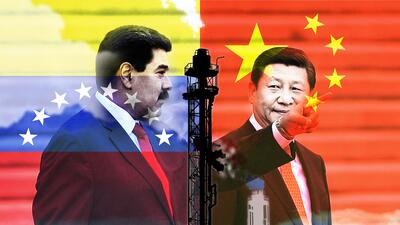
Secret talks in Venezuela: US officials visit Maduro in effort to further isolate Putin

US officials are exploring a possible partial lifting of oil sanctions imposed on Caracas as part of their strategy to isolate Russia, as well as the possible release of Citgo executives jailed in Venezuela, sources tell Univision.


POR::DAVID C ADAMS
 6 MAR 2022 
Crédito: Ana Maria Otero/AP

Senior U.S. officials flew to Venezuela on Saturday for talks with Nicolas Maduro's government, to explore a deal to partially lift U.S. oil sanctions in the wake of Russia’s invasion of Ukraine and skyrocketing energy prices that are pushing inflation even higher in the United States, according to two sources familiar with the talks.

The secret trip is the highest-level U.S. visit to Venezuela since Washington imposed sweeping sanctions on the Maduro regime in 2019 and appears to be part of a U.S. strategy to isolate Russian President Vladimir Putin.

The U.S. officials, National Security Director for the Western Hemisphere, Juan Gonzalez and ambassador to Venezuela, Jimmy Story, met with Maduro on Saturday, sources told Univision, but neither government has made any official comment about the meeting.

The White House told reporters at a briefing on Friday that the Biden administration was “looking at ways to reduce the import of Russian oil while also making sure that we are maintaining the global supply needs out there."


Bipartisan legislation is already being drawn up in Congress while some 80% of Americans think the United States should stop buying Russian oil, according to a Reuters/Ipsos poll completed on Friday.

But some Republicans strenuosly oppose any deal with Maduro. "Joe Biden using Russia as an excuse to do the deal they always wanted to do anyway with the Maduro Regime," tweeted Florida Senator Marco Rubio on Sunday. "Rather than produce more American oil he wants to replace the oil we buy from one murderous dictator with oil from another murderous dictator," he added.

Russian oil dependence varies globally

Russian oil accounts for only about 5% of U.S. petroleum imports (about 670,000 barrels a day), and a smaller amounts of liquid natural gas, according to the Energy Information Administration (EIA). But U.S. allies in Europe, especially Germany and Italy are much more dependent on Russia for their energy. Germany relies on Russia for about 34% of its oil needs and two-thirds of its natural gas, which itself accounts for 27% percent of all the energy it consumed, according to government figures. (Germany also has wind, solar and nuclear power sources.)

Overall, the European Union imported close to 40% of its total natural gas consumption and 25% of its oil from Russia in 2021.

The United States and its allies are under growing pressure to further punish Russia for its invasion of Ukraine by sanctioning Russia's oil and gas exports. Venezuela, once one of the largest oil and gas exporters in the world, could serve as a potential alternate source of oil supplies should western nations decided to cut off Russian oil and gas exports, which they have so far hesitated from doing.

But Venezuelan oil production has fallen drastically in recent years and critics object to Maduro being allowed to benefit financially without major concessions.

China to tax Venezuelan crude: the possible end of an alliance that marks another chapter in Maduro's economic debacle


US and Venezuela would have to make major concessions

Any a=reement would involve a huge change of policy from both sides. The Biden administration has insisted it will not lift sanctions, including on Venezuela's vital oil sector, unless Maduro takes concrete steps toward holding free elections.


It would also be a stunning development if Maduro were to take any action against the interests of the Kremlin. Venezuela on Feb. 25 blamed the United States and NATO for the crisis in Ukraine, though it abstained in a vote at the United Nations condemning the Russian invasion.

In a March 1 phone call, Putin and Maduro discussed the situation in Ukraine and talked about increasing a strategic partnership between Russia and Venezuela, the Interfax news agency reported, citing the Kremlin.

Advocates of a negotiated solution, like the International Crisis Group, have long advocated for the phased lifting of sanctions in return for progress in restoring institutional rule in Venezuela.

“The current crisis offers an opportunity to break the logjam, but Washington will need to be aware of the danger that a deal under these circumstances might enable the Venezuelan government to sideline opposition voices and consolidate authoritarian rule," said Phil Gunson, the Crisis Group senior analyst for the Andes region.

"Ultimately, the price of combating tyranny is a period of much higher gas prices. That's a price we need to pay as a country," former Treasury Secretary Larry Summers told CNN. "Inflation is a serious problem and this will make it worse. But preserving world order is much more fundamental and important," he added.

In photos: the umbelical cord between Moscow and Caracas
SIGUIENTE GALERÍA


1/10
Hugo Chavez offers a ceremonial sword to Vladimir Putin during the Russian leader's official visit to Venezuela, April 2, 2010. Crédito: AP
Univision

Venezuela gets sanctions support from Russia

Since coming under sanctions, Maduro has retained power with the backing of Russia and several other autocratic allies, including China, Cuba and Iran.

While Venezuela's oil exports have fallen steeply in the last three years, while Russian oil companies and banks have played a key role in helping Maduro and state-run oil company PDVSA evade U.S. sanctions and continue shipments, often using ships without transponders or clandestine ship-to-ship transfers at sea.

In the short run, lifting the Venezuelan oil sanctions “would not have any relevant effect in the world oil market, but perhaps it could help some refiners in the US Gulf of Mexico to replace Russian oil imports,” said Francisco Monaldi, director of the Latin America Energy Program at the Center for Energy Studies at Rice University.

Venezuela produces less than 800 thousand barrels per day and has little remaining production potential, he said. Meanwhile, Russia produces 11 million barrels per day and exports more than 7 million bpd. “So, Venezuela’s additional production would be irrelevant to compensate for a major disruption of Russian exports,” he added.

The US severed diplomatic relations with Maduro and closed its embassy in Caracas in 2019 after accusing the authoritarian leader of electoral fraud.

The U.S. and a large group of democratic countries, deemed Maduro's 2018 re-election a fraud and instead recognized opposition leader Juan Guaido as the country's legitimate president.

Venezuela also hold several Americans in jail, including several oil executives from Citgo, accused of corruption, who could be part of the sanctions bargain.

A former U.S. Marine, Matthew Heath, was also arrested four months after a botched coup in May 2020, launched from Colombia and led in part by a Florida company called Silvercorp USA. The Maduro regime accuses him of being a spy and a terrorist and claims he was caught carrying weapons and explosives.
WW3.0
Going Hot? Russia ‘Prepped the Battlefield’ in US Long Ago, Officials Say

U.S. should prepare for shocks like Pearl Harbor or 9/11, 
ex-CIA official warns


Jeff Stein
SPYTALK

The lights were blinking off.

As raucous pro- and anti-Trump crowds flooded into Washington for the presidential inauguration in Jan. 2017 , the D.C. police department’s citywide surveillance cameras stopped recording. Within seconds, 123 of its 178 surveillance cameras, including those monitoring the streets around the White House and the headquarters of multiple federal agencies, had been “accessed and compromised.”


The intelligence gap lasted for three days, from Jan. 12 to Jan. 15. Coming on the heels of Russia’s covert intrusions into the 2016 campaign, officials at first feared Vladimir Putin—or other bad actors, from China, Iran or North Korea—had dramatically upped their game to create more chaos in American society and its politics.

As it would turn out, it was none of them. A couple of lowlife Romanian hackers had stumbled into the system and used it in a ransomware demand for a paltry $60,800 in bitcoin in exchange for releasing control of the system. The suspects were tracked down 11 months later and extradited to D.C., where they pleaded guilty.

The incident still chills veteran agents who’ve spent decades worrying about such things. It could happen again, in spades, if the crisis over Ukraine overheats into a direct military contest between Russia and the United States, say veteran intelligence officials.

Decades ago, defectors from Russia’s GRU military intelligence agency said that its agents had planted weapons caches in the U.S. and Europe for sabotage attacks should a shooting war break out. One said it was "likely" that GRU operatives placed "poison supplies near the tributaries to major US reservoirs,” including the Potomac River that supplies Washington, D.C. with drinking water.

The defectors corroborated each others’ accounts, but it’s unclear whether any caches here were ever discovered. Swiss authorities reported finding a cache that had an exploding mechanism to destroy the evidence should an unauthorized person try to unearth it.

But the January 2017 blinding of DC surveillance cameras “highlights the fact that police, fire, EMS, cities and municipalities are as vulnerable as private sector entities to cyber attacks,” says Ammar Y. Barghouty, a retired, highly decorated FBI agent who ran a program responsible for computer threats from terrorist organizations. Like many a homeland security official over the past quarter century, Barghouty, now director of cyber consulting for The Soufan Group, says key infrastructure organizations “should implement best practices” to defend against cyber attacks.

Yes, but it’s late, says Bill Evanina, a career FBI special agent who became director of National Counterintelligence in the Obama administration. Utilities and financial networks began “raising their drawbridges” as the Ukraine crisis deepened, he and others say, but the Russians had “already prepped the battlefield for many years,” he tells SpyTalk.

“They've been installing malware in critical infrastructure for more than a decade,” said Evanina, who also once headed the Counterespionage Group at the CIA.

With Putin threatening war over Western sanctions and the possible transfer of Polish warplanes to Ukraine, Evanina says his “biggest concern is the utilization of intelligence operatives here to do close-access harm.” By that he means Russian agents sliding up to targets with electronic devices to throw their operating systems out of whack or offline—or more, physically cutting their cables and peppering its control offices with expert sniper shots.

Such happened in April 2013 at the Metcalf power facility adjacent to Silicon Valley, an incident that 60 Minutes revisited on Feb. 27. Investigators found that the unidentified perpetrators “shot 100 rifle rounds into 17 transformers, crippling the substation for a month and causing $15 million in damage,” NBC’s Bay Area affiliate reported in 2015. “The attack lasted just 19 minutes but sparked widespread concern that it was either an act of terrorism or a trial run for an even bigger assault on the nation’s power grid.” Later investigations showed the shots had been fired and cables cut with unusually high precision. Few physical security upgrades were taken at power stations around the country in the attack’s aftermath, 60 Minutes found.

It wasn’t Middle East terrorists who attacked Metcalf, U.S. intelligence agancies concluded. The Obama administration stopped short of publicly blaming Moscow, but officials told a congressional committee behind closed doors that only three actors were capable of carrying out such a sophisticated operation: the U.S., Israel and Russia—and it wasn’t Israel. The Russians have been suspected of carrying out more anomalous attacks on U.S. power stations in recent years.

Meanwhile, in 2020, the SVR, Russia’s foreign intelligence agency, was fingered in the hacking of the SolarWinds IT management company, which “may have exposed the networks of more than 18,000 corporations and government agencies [and] inserted malware into an update of Orion, the company's software platform that monitors network traffic,” a Columbia University panel said. Then, six months later, Russians carried out a massive ransomware attack on Colonial Pipeline, which controls about half of the fuel flowing to the U.S.'s East Coast. Moscow blamed Russian “criminals” for the attack.

Like Evanina, retired CIA senior official Gregory Sims sees all this as Russia prepping the battlefield should war break out.

“Russian doctrine clearly suggests that these vulnerabilities are being exploited not only to harvest intelligence but to reconnoiter critical U.S networks to lay the groundwork for disrupting or destroying them,” Sims wrote in January.

U.S. national security leaders, he said, would be well advised to expect the unexpected, a shock on the order of Japan’s sneak attack on Pearl Harbor or Al-Qaeda’s audacious 9/11 plot.

“In the summer of 1941, U.S. officials knew that war with Japan was a real possibility, especially after imposing an oil embargo in response to Japanese military actions in French Indochina, a crippling blow given that Japan then imported 80 percent of its oil from the United States,” Sims wrote for The Cipher Brief, a web site populated by retired intelligence officials. “What was surprising was not that Japan attacked in December 1941, but that it dared to attack the U.S. Pacific Fleet in its home port at Pearl Harbor.”

“Sixty years later, in the summer of 2001,” Sims added, “warning signs about another foe, this time Al-Qaeda, were also ‘blinking red.’ The intelligence community repeatedly warned policymakers of indications that Al-Qaeda was planning a spectacular attack. Yet once again, the failure was not in anticipating an attack, but in failing to imagine its breathtaking audacity.”

Now the lights are “blinking red” in the cyber realm, but Sims says officials should widen their lens.

Going Deep


“It is worth pondering, for example, that Russia has developed, at tremendous expense, a sophisticated capability using exotic and highly specialized nuclear submarines and ships to attack the extensive network of undersea cables which carry 97% of global communications traffic, including the equivalent of $10 trillion in financial transactions daily,” wrote Sims, who served multiple tours as a CIA station chief or deputy chief before retiring in late 2018.

Diagram of Russian Project 09852 Belgorod. (via Hisutton.com)

“A coordinated, large-scale attack on this network would have the potential to wreak enormous economic, political, and social havoc on both sides of the Atlantic,” Sims added. “In Putin’s calculation, might that not be an appropriate response to a Russian ejection from SWIFT or other sanctions designed to cripple the Russian economy?”

Anything’s possible, say other veteran intelligence officials, considering Putin’s excited state of mind, but the Kremlin’s recent history of covert activities suggests its attacks will remain in the cyber realm, its “center of gravity,” as former DHS intelligence chief Brian Murphy puts it. Cyber-saboteurs could blow up gas pipelines or open the floodgates of a massive dam.

As for weapons caches, Murphy told SpyTalk in an interview, “We would hear things occasionally…from sources who heard something, from sources with less than credible access. I never heard anything come from it.” Then again, he says,​​ “it wouldn't surprise me,” because Iranian agents here had been caught in the past extracting ammonium nitrate and other chemicals from cold packs to make bombs. A decade ago, the FBI and DHS put out an alert to local law enforcement to be on the lookout for suspicious accumulations of cold packs. One can expect the Russians to be more sophisticated than that.

The GRU defectors who told their sabotage tales years ago corroborated each others’ accounts, but it’s unclear whether any caches here were ever discovered. Swiss authorities reported finding a cache that had an exploding mechanism to destroy the evidence should an unauthorized person try to unearth it. But, as Evanina told SpyTalk, just disabling a half dozen major transportation hubs, like airports, via mobile cyber devices could create chaos across the country.

“As you know, we panic like nobody in America, right?” he said. “So my biggest concern is the utilization of intelligence operatives here to do close-access harm.”

The U.S. recently booted 13 Russian diplomats suspected of espionage activities, just the latest expulsions going back to the Obama administration.

Alas, it’s not only the Russians that authorities have to worry about. Only two weeks ago, three white supremacists pleaded guilty to conspiring to take down power grids in three different regions in order to accelerate “economic distress and civil unrest.”

But the main worry right now is Russian intelligence agencies, because of their demonstrated expertise, sophistication and long record of aggression against American institutions, from infrastructure to elections.

“I think Putin is prepared to do whatever it takes,” Gregory Sims tells SpyTalk.

“His state of mind should concern the world.”

Alberta oil can be a solution to U.S. energy supply crunch, says minister

‘We are the solution, not Venezuela and others,' 

Energy Minister Sonya Savage says

Alberta's energy minister Sonya Savage said it was “unconscionable” for any nation to be buying Russian crude oil or refined products in light of its invasion of Ukraine. (Jason Franson/The Canadian Press)

Alberta, Canada's main oil-producing region, can help alleviate the global oil supply crunch caused by energy disruptions, Alberta's Energy Minister Sonya Savage said on Sunday.

Alberta has some spare pipeline and rail capacity and can move more oil to the United States, Savage said in Houston ahead of the CERAWeek energy conference by S&P Global.

Oil prices in Monday trading in Asia have soared to $128 per barrel, up from about $83 per barrel in January.

"We are the solution, not Venezuela and others," Savage told Reuters, an apparent reference to the U.S. sending a delegation to Caracas last week to discuss an easing of U.S. oil sanctions.

She also said it was "unconscionable" for any nation to be buying Russian crude oil or refined products in light of its invasion of Ukraine.

In a tweet on Sunday, Alberta Premier Jason Kenney said that he would be joining Savage at the conference in Houston. 

"We will be meeting with decision-makers to secure access to markets, attract job-creating investment to our province and argue for Canadian energy to displace Russian conflict oil," the tweet says.

Kenney called out President Biden's vetoing of the Keystone XL pipeline, saying that with his approval of the project Canada could provide "nearly 1 million barrels of day of responsibly produced energy," to the U.S. 

Oil buyers have been shunning oil cargoes from Russia, one of the world's largest petroleum exporters. Russia exports 4 to 5 million barrels per day of oil and 2 to 3 million barrels per day of refined products.

Savage said the U.S. should ban imports of Russian crude oil and refined products.

Canada last week banned Russian crude oil imports and agreed to supply anti-tank weapons to Ukraine to counter the Russian invasion.

Russia calls its actions in Ukraine a "special operation."

300 workers locked out at Troy, Ohio aeronautics plant

Anthony Wallace
WSWS.ORG

Nearly 300 workers at Collins Aerospace wheel and brake division in Troy, Ohio, were locked out on Monday, February 21, after their rejection the previous Friday of the company’s “last, best and final offer” by a margin of 230 to 37. The facility supplies wheels and brakes for a number of commercial and military planes, including the F-16 Fighting Falcon, U-2 Dragon Lady and LM-100J. Collins Aerospace is a subsidiary of Waltham, Massachusetts-based Raytheon Technologies, a giant aerospace, defense and intelligence conglomerate.

The issues leading to their rejection of the contract, one locked-out worker told the World Socialist Web Site, center on “wages, pensions and health care, just like always.” Despite incredible profits after the rebound in aeronautics and the airline industry, the company “wants to nickel and dime us,” he said. Raytheon’s profits increased by 46.42 percent to approximately $12.5 billion in 2021.
A sign for Collins Aerospace (Credit:www.collinsaerospace.com)

The lockout of the aerospace workers comes in the midst of an intense geopolitical crisis and feverish war propaganda in the media over Russia’s invasion of Ukraine, which the US and its NATO allies are attempting to use as a pretext for a direct military confrontation with the nuclear-armed power.

The lockout’s potential disruption to the arms industry and the US war drive has already prompted anxiety within ruling circles. Ohio Democratic Congressman Tim Ryan, vice chair of the House’s Defense Appropriations Subcommittee, released an open letter to Collins’ and Raytheon’s CEOs on February 24 calling on them to end the lockout, stating, “As a member of the House Appropriations Committee’s Defense Subcommittee, I know well the critical role that Raytheon and its subsidiary, Collins Aerospace, hold as part of the United States’ defense industrial base. In these uncertain times, it is more important than ever to have stable workforces at our major defense contractors [emphasis added].”

Ryan was one of a number of US congressmen who participated in a Zoom call with Ukrainian President Volodymyr Zelensky in recent days. Following the meeting, he said, “They need planes, and, quite frankly, I think we need to find a way to get them there.” The arming of Ukraine by the US and NATO and the increasingly bellicose calls in the media and Congress for a no-fly zone over the country threaten to provoke a direct and catastrophic military conflict with Russia.

As the WSWS has explained, the ruling class in the United States, confronting a staggering economic, social and political domestic crisis, is seeking to create a false “national unity” through the means of militarism abroad and by channeling tensions against an “external enemy,” in this case, Russia. Thus, the White House and the political establishment, working with the pro-corporate trade unions, are increasingly using the war drive as a pretext to block strikes and settle disputes over wages on the companies’ terms.

The United Auto Workers union (UAW), for its part, is working to keep the workers isolated. The initial refusal of the UAW to call a strike at Collins, despite workers’ overwhelming rejection of the contract, has allowed Collins to take the initiative, locking out the workers on the company’s schedule.

Now the UAW officials are telling their members that they are prohibited from organizing mass picketing or taking any actions to stop scabs from entering the plant, claiming it would jeopardize workers’ chances of collecting unemployment benefits.

In a statement, Collins Aerospace wrote that they “are prepared to continue negotiating in good faith with UAW Local 128 and seek to reach an agreement that recognizes and rewards our employees’ contributions while allowing us to remain competitive.” Such statements are routinely made by companies as they seek to cut workers living standards and impose multi-tier wages and benefits.

Raytheon CEO Greg Hayes, meanwhile, received compensation of $21 million in 2020. The likelihood is that both Raytheon’s profits and Hayes’ compensation will balloon as the aerospace and military industries benefit from the frenzied buildup to war against Russia being pursued by the US and its NATO allies.

Another worker told the WSWS that although Collins claims to be increasing worker compensation, they are really just moving money “from one pot to another.” After workers closely studied the hefty and complicated contract, it became apparent that there was no real monetary gain.

The contract attempts to pit worker against worker, shortchanging the newer hires despite being nearly acceptable to veterans. “If it had been just me, I would have approved it, but I couldn’t leave the other guys hanging,” says one picketing worker with more than 30 years on the job.

Another worker said that Collins called their only proposed contract to date their “last, best offer,” but “it’s more like their first and last.”

Despite the lockout of its entire brake and wheel workforce, Collins says the plant is running as usual. However, in the place of highly trained and experienced workers, Collins is forcing many of its office workers, salaried and otherwise, to make up production, posing significant safety issues for both workers and commercial aircraft. One shipment of parts, in fact, has already “returned because it was not properly inspected,” one locked-out worker said.

The 300 Collins workers face a multi-front battle. Collins Aerospace is applying significant pressure, and the UAW is working to keep workers in the dark on the “negotiations,” while looking for the earliest opportunity to force a deal through, which will inevitably be little-changed from that which workers already rejected.

In July 2021, nearly 3,000 striking Volvo Truck workers were forced by the UAW to revote on a concessions agreement they had already voted down. The UAW declared the ratification of the contract by a margin of just 17 ballots after a highly suspect voting process. In October and November, the UAW then pulled a similar maneuver on 10,000 striking John Deere workers, combining it with widespread voter intimidation.

In the present situation, the UAW is keeping the Collins workers isolated from countless other aerospace workers who are also seeking to increase their living standards.

In Davenport, Iowa, over 360 workers at Eaton-Cobham Missions Industries, a defense contractor and supplier of military airplane fueling systems, are in the third week of their strike. Workers at the plant have courageously rejected two contract proposals between the company and the International Association of Machinists, and Eaton is now threatening to hire permanent replacements.

Each of these fights are not merely disputes over contracts, but rather political struggles. More than two years into the COVID-19 pandemic, capitalism presents workers with a disaster: surging inflation, rapidly eroding purchasing power, grindingly long hours and workplaces which remain unsafe. Now, the corporations, the banks and their political representatives in the Democratic and Republican Parties are demanding that workers make further sacrifices for their war drive. All the while, the corporate owners and financial aristocracy continue to grow unimaginably richer.

To break free of the isolation imposed by the UAW and expand their struggle, the WSWS urges workers at Collins to form rank-and-file strike committees, democratically controlled by workers themselves. Such committees would draw up lists of demands based on what workers actually need, and would link up with other workers—including Eaton workers in Davenport, educators in Chicago and Minneapolis-St. Paul, oil refinery workers and beyond—in a common fight for the interests of the working class.


Strike deadline for Minneapolis, St. Paul educators looms

Marathon talks continue as educators prepare for possible Tuesday strike

Matt Sepic
March 6, 2022 

Minneapolis school social worker Daniel Perez talked about the contract demands from teachers and education professionals after unions on Minneapolis and St. Paul filed an intent to strike at the state’s Bureau of Mediation Services in St. Paul on Feb. 23, 2022. Leaders said they could walk off the job and shut down public school classes as soon as March 8.

Tim Nelson | MPR News

Members of teachers unions in both Minneapolis and St. Paul spent the weekend making and distributing picket signs ahead of a possible strike as early as Tuesday.

Nevertheless, union members said they want to avoid a walkout.

“We are here ready to mediate with the district up until Tuesday, and we're doing everything we can to get a settlement,” said Natasha Dockter, a middle school teacher and spokesperson for the Minneapolis Federation of Teachers.

Both the MFT and Minneapolis Public Schools said negotiations lasted for hours on Saturday and Sunday, with proposals presented from both sides.

Among other things, the unions in Minneapolis and St. Paul are seeking caps on class sizes, higher wages for paraprofessionals, and more mental health support for students.

"Nobody wants to go on strike. None of the teachers do. None of the staff wants to,” said Ruth Krider, a second grade teacher in St. Paul. “But for the kids, and for the students, and for their learning environment, it just needs to happen. We can bend, but we won't break."

Schools will operate as normal on Monday in both cities, but will close beginning Tuesday if no agreement is reached.

St. Paul students will have access to academic activities through iPads. The district will also open limited “Kid Space” programs in most elementary schools beginning Wednesday. Breakfast and lunch will be available for students under 18.

In Minneapolis, a meal bag containing breakfast and lunch for students will be available daily. MPS may also have limited child care spots available on an emergency basis. The district is urging parents to find other child care options.
Wife of Russian prisoner and WNBA star Brittney Griner speaks out as fears grow that Putin will use the former Olympian as a 'high-profile hostage'

SARAH TAYLOR
March 06, 2022


Photo by Douglas P. DeFelice/Getty Images

The wife of WNBA star and Russian captive Brittney Griner says that she and Griner's team are tirelessly working to get the basketball star home after the celebrated Olympian was detained at a Russian airport at least three weeks ago for reportedly having a cannabis-filled vape pen on her person.

The longer Griner spends incarcerated in Russia, the longer fears continue to grow over the possibility that Russian President Vladimir Putin will use the WNBA star as a "high-profile hostage," the Daily Mail reported on Sunday.
What are the details?

Wife Cherelle Griner on Saturday night shared an update on Instagram, writing, "I love my wife wholeheartedly, so this message comes during one of the weakest moments of my life. I understand that many of you have grown to love BG over the years and have concerns and want details. Please honor our privacy as we continue to work on getting my wife home safely."

"Your prayers, and support," she added, "are greatly appreciated."

According to the report, Eveyln Farkas, former U.S. Deputy Assistant Secretary of Defense for Russia and Ukraine, said that she fears Russia may use Griner as a "high-profile hostage," and noted that if the U.S. wants Griner out of jail, "Russia is going to have some terms."

"It could be a prisoner swap," she added. "They could also use it as an implicit threat or blackmail to get us to do something or not do something. Either way, they find it useful."
What else?

Griner's agent, Lindsay Kagawa Colas, told the outlet that the basketball star's team is in "close contact with her, her legal representation in Russia, her family, her fears, and the WNBA and NBA."

"As this is an ongoing legal matter, we are not able to comment further on the specifics of her case but can confirm that as we work to get her home, her mental and physical health remain our primary concern," Colas added in the statement.

During a Saturday press conference, Rep. Sheila Jackson Lee (D-Texas) said that she is working hard to return Griner to the U.S.

"Brittney Griner is a United States citizen, she was a guest in Russia ... and I will be demanding her release," she said. "I don't want to disregard a sovereign nation, but Putin has disregarded sovereign nations his entire service in this world and anyone that is killing and attacking and destroying Ukraine, their neighboring country — that does not bother them has no right to hold Ms. Griner. Period. If there is challenges and concerns about her actions, it should be dealt with diplomatically and she should be released."

She continued, "I believe that at this time, in the midst of war, how dangerous being Moscow, how dangerous it is to be in Moscow prisons ... it is no place for her. I would call upon Russia at this time to really stop harassing U.S. citizens, but more importantly to release those that are there and to not claim any upper hand or any sense of character in the pillage of murder and terroristic actions against the Ukrainians."
A timeline

The Daily Mail reported that Griner played for UMMC Ekaterinburg in Russia before the WNBA took a two-week hiatus in early February for the FIBA World Cup qualifying tournaments. Griner was said to have "made her last communication" in posting a photo to Instagram on Feb. 5.

On Feb. 11, President Joe Biden called on all Americans to evacuate the region. It is believed she was taken into custody around that time, and by Feb. 24, Russia began its invasion of Ukraine.

On March 5, the Russian Federal Customs Service announced that it detained a "two-time Olympic basketball champion" on suspicion of drugs.
Angelina Jolie Arrives in Yemen to Aid Refugees as She Likens Crisis to War in Ukraine

"Everyone deserves the same compassion," Angelina Jolie wrote of the ongoing conflicts in Ukraine and Yemen, where she's assisting the United Nations Refugee Agency


By Glenn Garner
March 06, 2022

CREDIT: MARCO RAVAGLI/BARCROFT MEDIA VIA GETTY

Angelina Jolie is on the ground in Yemen to assist refugees amid the unfolding war in Ukraine.

The Academy Award winner, 46, updated her 12.4 million Instagram followers Sunday as she arrived in the capital city of Aden, where she's working with the United Nations Refugee Agency (UNHCR) to provide aid.

"I've landed in Aden, to meet displaced families and refugees for UNHCR @refugees and show my support for the people of Yemen," Jolie wrote in the caption. "I will do my best to communicate from the ground as the days unfold."

RELATED: Angelina Jolie, United Nations Ambassador, Says She's 'Praying for the People of Ukraine'

"As we continue to watch the horrors unfolding in Ukraine, and call for an immediate end to the conflict and humanitarian access, I'm here in Yemen to support people who also desperately need peace. The situation here is one of the worst humanitarian crises in the world, with one civilian killed or injured every hour in 2022. An economy devastated by war, and over 20 million Yemenis depending on humanitarian assistance to survive," she added.

Jolie, who has long been an advocate for the people of Yemen, likened the country's ongoing humanitarian crisis to the current devastation in Ukraine, urging compassion for those impacted by both conflicts.


"This week a million people were forced to flee the horrific war in Ukraine. If we learn anything from this shocking situation, it is that we cannot be selective about who deserves support and whose rights we defend. Everyone deserves the same compassion," she penned. "The lives of civilian victims of conflict everywhere are of equal value. After seven years of war, the people of Yemen also need protection, support, and above all, peace."


Since 2014, Yemen has been enduring a civil war, with both the Abdrabbuh Mansur Hadi-led Yemeni government and the Supreme Political Council's Houthi movement claiming to run the country. Millions of Yemeni civilians continue to face starvation due to famine, while more than 100,000 have reportedly died amid the conflicts, which include Saudi Arabia-backed bombing campaigns.


Russia's 2022 attack on Ukraine continues after their forces launched a large-scale invasion on Feb. 24 — the first major land conflict in Europe in decades. Details of the fighting change by the day, but hundreds of civilians have already been reported dead or wounded, including children. More than a million Ukrainians have also fled, the United Nations says.


RELATED VIDEO: Angelina Jolie Makes 'Extremely Generous' Donation to Boys' Lemonade Stand Raising Funds for Yemen


The invasion, ordered by Russian President Vladimir Putin, has drawn condemnation around the world and increasingly severe economic sanctions against Russia. Putin insists Ukraine has historic ties to Russia and that he is acting in the best security interests of his country. Ukrainian President Volodymyr Zelenskyy has vowed not to bend.


The Russian attack on Ukraine is an evolving story, with information changing quickly. Follow PEOPLE's complete coverage of the war here, including stories from citizens on the ground and ways to help.
AN OBJECTIVE CRITIQUE

Ayn Rand in Our Day

The mixed literary, philosophical, and political legacy of the author of The Fountainhead and Atlas Shrugged, forty years after her death.

by CATHY YOUNG
MARCH 6, 2022 

View of Russian-born American writer Ayn Rand (1905 - 1982) on the set of the NBC television program 'The Today Show', New York, New York, March 23, 1961. Behind her is a quote from her 1961 book, 'For the New Intellectual'. 
(Photo by Raimondo Borea/Photo Researchers History/Getty Images)

Today marks the fortieth anniversary of the death of a writer who has been worshipped, loathed, and ridiculed—and whose legacy, despite all the dismissals by her detractors, still reverberates in the twenty-first century. Ayn Rand, the bestselling novelist, controversial philosopher of “Objectivism,” and secular guru of reason and individualism, died in New York City on March 6, 1982, at the age of 77. As a refugee from Soviet Russia (born Alissa Zinovyevna Rosenbaum) who vehemently rejected not only communism but the religious and nationalist values of pre-revolutionary Russian culture, Rand may be particularly relevant to the current moment, when the new Russia is rebuilding itself as a hybrid of the USSR and the old empire with its pillars of religion and nationalism.

Rand’s works, especially her two best-known novels, The Fountainhead (1943) and Atlas Shrugged (1957), still continue to be read and to draw new and often passionate fans. Yet mainstream culture has mostly regarded her as a quaint niche interest on the right—an intellectual pin-up girl for the likes of Paul Ryan, the former speaker of the House, and Andy Puzder, Donald Trump’s withdrawn nominee for secretary of labor—or treated her as a caricature and a punchline. (Think the “Ayn Rand School for Tots” in a 1992 Simpsons episode, where the Objectivist daycare-center owner bans pacifiers and asserts that a child who reaches for a bottle of milk is being a “leech.”) Conservative culture mavens have not been much kinder: In 2010, New Criterion editor Roger Kimball wrote that he had never been able to make it through much of either Atlas Shrugged or The Fountainhead because each time he tried, he found himself “oscillating between fits of the giggles, at the awful prose, and irritation, at the jejune philosophy.”

Is Rand unfairly maligned, as her admirers assert? In some ways, yes. She did not, as is often implied, worship the rich (most of the wealthy characters in her novels are repulsive or ridiculous, or both), nor did she preach that moneymaking is life’s highest goal. (At one point in The Fountainhead, the hero, visionary architect Howard Roark, describes “the man whose sole aim is to make money” as a variety of “the second-hander” who lives solely through other people, seeking to impress them with his wealth.) The character in the 1987 movie Dirty Dancing who ditches his pregnant girlfriend and brandishes a dogeared paperback of The Fountainhead to explain that “some people count, some people don’t” does not actually exemplify Randian philosophy.

While Rand praised “the virtue of selfishness,” what she meant by the word was something very different from the common meaning. One of the points of The Fountainhead is that mediocre architect Peter Keating, the slick opportunist who uses everything from plagiarism to blackmail to advance his career, would be commonly seen as selfish even though a “self” is precisely what’s absent from his pursuit of success, while Roark would be wrongly seen as self-sacrificing when he would rather be broke than sacrifice his integrity. (Donald Trump, who has fancied himself a Fountainhead fan and Roark wannabe, is in fact a perfect Randian baddie: not only a businessman who thrives on government connections, string-pulling and shady deals, but a man whose sense of achievement is derived mainly from bullying others and being loved.)

Rand’s affirmation of a strong sense of selfhood as the proper foundation of human relationships—“To say ‘I love you’ one must first know how to say the ‘I,’” Roark tells his beloved, Dominique Francon—is a worthwhile message for anyone. Likewise, her formulation of “reason—purpose—self-esteem” as the core principles of the good life in Atlas Shrugged is a powerful distillation of what we often call Enlightenment values. Conversely, her critique of altruism as the foundation of morality led her to some undeniably valid insights: for instance, that altruistic goals can easily become an excuse for bad acts or a vehicle for power-seeking and self-righteous bullying. Rand, who asserted almost a decade before Hannah Arendt that Nazism and communism were not opposites but totalitarian twins—one subordinating the individual to race, the other to class and collective—was almost certainly on to something when she wrote that the habit of equating self-interest with immorality and self-sacrifice with nobility often left democracy’s defenders intellectually disarmed against arguments that communism, at least, teaches people to put others first.

Many of Rand’s admirers have singled out as a particularly important intellectual contribution her defense of the free market as a moral system based on accomplishment and voluntary exchange rather than coercion, as well as her celebration of entrepreneurship as a creative activity rather than mere pursuit of profit. But on this and much else Rand is ill served by her absolutism. She assumes that, absent dirty dealing of one kind or another, individuals rewarded by the market have an absolute moral claim to those rewards as the fruit of their own efforts—which means that not only any redistribution but all involuntary taxation is immoral (Rand believed that necessary government services should ideally be supported via “voluntary financing”). But this view ignores not only the extent to which an individual’s achievement and flourishing is made possible by a vast and intricate civilizational infrastructure, but the role of factors unrelated to personal merit—from family background to sheer luck. Rand was still right when she wrote that “the government is not the owner of the citizens’ income and, therefore, cannot hold a blank check on that income” and that the state should not have “power to enlarge the scope of its services at its own arbitrary discretion.” But her political philosophy and her followers were often unable to reckon with the messy reality and compromises inherent in a government constituted to respect both the individual and the social contract.

Rand’s absolutism also undercuts her arguments on a moral level. Ideas she opposes, such as altruism, are relentlessly strawmanned: If you teach people that it’s praiseworthy to give up something to help others with no thought of your own self-interest, then you’re telling them that they have no right to exist for their own sake and no purpose except to be a “sacrificial animal.” While some accusations of cruelty directed at Rand are based on caricature more than her actual work, it’s difficult to deny that her version of individualism—which bears a Nietzschean stamp Rand denied—has little room for physical afflictions and vulnerabilities. Except for her first major novel, We the Living (more about which in a moment), sick people mostly figure in her work as unworthy recipients of pity, and even private charities are mocked for helping drug addicts and unwed pregnant women.

The way Rand’s philosophy played out in her own life is a stark example of being mugged by reality. Her following, by the admission of former associates who never stopped admiring her work, became so cultlike that people who spoke of freedom and the independent mind felt compelled to admire the same books and music Rand admired. (Objectivist groups even held show trials of members accused of violating Randian precepts.) While her heroes stoically accepted romantic rejection, Rand’s reaction to the revelation that her much younger lover and disciple, Nathaniel Branden, was involved with a still-younger woman was to rail against him, curse him with impotence, and denounce him to her flock for unspecified immoral acts. Her belief that cancer and many other illnesses were the result of “psycho-epistemological errors” led her to conceal her lung cancer diagnosis from her fans (and refuse to retract her previous staunch denial of the hazards of smoking) and to torment her long-suffering husband by trying to reason him out of Alzheimer’s. Her professed commitment to truth did not prevent her from rewriting her history to proudly declare, “No one helped me,” even though she repeatedly received help from relatives, friends, and even charities after coming to the United States.

In other words: Don’t try this philosophy at home, kids.


But Rand is hardly the first philosopher whose ideas cannot survive a close encounter with reality, or the first writer with eccentric philosophical views. And the truth is that, despite her eccentricities, she was a far better writer than Kimball and others recognize—at least until she went full ideologue in Atlas Shrugged and began to use fiction as a vehicle for heavy-handed agitprop. While Atlas has some powerful passages, its hero John Galt is an abstraction with the looks of a Greek god, its villains are a gallery of grotesques, and its plot is weighed down by endless preaching in which the message is hammered into the reader’s head again and again and again. That message subsumes anything that could be recognizable as human emotion: When the wife of industrialist Hank Rearden tries to humiliate him by announcing that she slept with a man he despises, he responds by having philosophical musings (as one does) on “the creed of collective interdependence,” which holds that “the moral stature of one is at the mercy of the action of another.”

But Rand’s earlier works, while always wedded to her ideas, are far more readable and human—and leave little doubt that she was a writer of extraordinary if idiosyncratic talent.

We the Living (1936), set in Petrograd/Leningrad in the early to mid-1920s, paints a compelling picture of life in the Soviet Union as the devastation of revolution and civil war gave way to the “New Economic Policy,” a brief interlude in which private enterprise was grudgingly tolerated along with a fair amount of personal and cultural freedom. At this point, Rand was still flexible enough that she could make some of her commies sympathetic and that her individualistic heroine, Kira Argounova, could have real, tangible bonds with her family despite being its black sheep. Kira’s uncle Vassily, a dispossessed businessman who desperately tries to hold on to his dignity and cling to hope under the new regime, is a particularly tragic figure, while her mother Galina, whose haughty scorn for the new ways gradually shifts to acceptance and then enthusiastic conformism, is depicted with fine and subtle satire. Kira’s tangled relationship with the idealistic Communist Andrei Taganov and the aristocrat Leo Kovalensky, which ends in Andrei’s suicide and Leo’s descent into cynicism and degradation, is a genuinely poignant story with enough unusual twists to make it riveting. And Rand has a knack for the vivid detail, such as the early scene in which a woman traveling on an overcrowded train holes up in the reeking cubicle of the toilet to devour a boiled potato, a rare luxury in a country only starting to climb out of the civil war’s wreckage.

The Fountainhead, almost certainly Rand’s best work, can also be read and appreciated without fully embracing the message. The frequently made claim that Rand’s characters are black-and-white cardboard cutouts does not apply here: Even the despicable Keating is a nuanced character with some sympathetic moments, including the bittersweet story of his thwarted romance with the young woman he truly loves but gives up for a more advantageous marriage. The Citizen Kane-like newspaper tycoon Gail Wynand, Roark’s frenemy and (for a long stretch of the novel) Dominique’s husband, is both odious and noble; many other characters such as Dominique’s father Guy Francon do not neatly fit the good/bad scheme, and even the (very bad) archvillain Ellsworth Toohey has an acid intelligence, wit, and even Mephistophelean charm that place him in an entirely different league from the thoroughly repulsive baddies of Atlas Shrugged.

Likewise, Rand’s prose here has little in common with the later novel’s anvil-heavy propaganda tropes and crass mockery. It can be beautifully evocative (“The air was heavy with untimely darkness, disquieting like premature old age, and there were yellow puddles of light in windows”) and bitingly funny (Wynand’s tabloid, the New York Banner, is described as covering society news in a trashy way that “gave the man on the street two satisfactions: that of entering illustrious drawing rooms and that of not wiping his feet on the threshold”). Reviewing the novel in the New York Times—one of the few favorable mainstream reviews Rand’s books got in her lifetime—pioneering feminist psychologist Lorine Pruette hailed it as the work of “a writer of great power” with “a subtle and ingenious mind and the capacity of writing brilliantly, beautifully, bitterly.” The praise may sound startling to those used to thinking of Rand as a right-wing pseudo-intellectual hack, but it’s well deserved. The Fountainhead is rightly considered a twentieth-century American classic.

Rand’s relationship with American politics was always complicated, to say the least. Her fierce opposition to the New Deal and socialist encroachments on capitalism drew her to the right, but her militant atheism and radical individualism led to irreconcilable differences with the conservative movement. The scathing review of Atlas Shrugged in National Review by Whittaker Chambers, titled “Big Sister is Watching You,” made the divorce final. (While Chambers’s animus focused primarily on the godlessness of Rand’s vision, some of his charges—for instance, that Rand’s utopia is a world ruled by a technocratic elite—are difficult to refute regardless of the question of religion.)

Today, one could see Rand’s rational individualism as an alternative to the collectivist politics at both ends of the political spectrum: demagogic populism and anti-liberal traditionalism on the right, resurgent socialism and identity politics on the left. Unfortunately, her flaws inevitably get in the way. One need not, for example, be “woke” to find it shocking that during the years when Rand inveighed against onerous business regulations as an assault on individual rights, she never gave any thought to Jim Crow laws; it took until 1963 for her to write that “the policy of the Southern states toward Negroes was and is a shameful contradiction of this country’s basic principles.” (At that point, while condemning racism, she also criticized the Civil Rights Act for outlawing discrimination by private businesses and violating property rights.) Rand’s warning that “the smallest minority on earth is the individual” and that anti-racism must be founded on individual rights is a potent and relevant message—but one likely to be undercut by her cavalier attitude toward racism. And her work has other problems that could play to the worst of current American discourse, such as a tendency to demonize people with “bad” opinions.

Yet it is also true that Rand contains multitudes. Perhaps the best way to approach her work is to get beyond her own black-and-white framework in which there is either total acceptance or wholesale rejection, and to acknowledge the contradictions that she denied she had. Encouragingly, some scholars are now engaging her work in a way that is critical but not dismissive; readers should, too. One can appreciate Rand’s affirmation of reason, personal autonomy, and achievement while acknowledging that these values need to be complemented by others. One need not accept her romantic individualism wholesale to see that it has a stirring power and a magnetic appeal, especially to young people—which is not necessarily a bad thing, as long as that individualism comes to be balanced by a fuller understanding of life’s complexities. And one need not ignore the ugly side of Rand’s work to see the beauty in her celebration of life, creativity, and freedom.

I came across an unexpected, and oddly relevant, example of such beauty while looking through Rand’s 1970 collection of essays, The New Left: The Anti-Industrial Revolution. While Rand rarely wrote about specific events in Russia, in early 1969 she was moved to write about the sentencing of five young people who had come out on Red Square on August 25, 1968 to protest the Soviet invasion of Czechoslovakia. (Their protest lasted three minutes before they were arrested.) Commenting on New York Times reporter Henry Kamm’s observation about the “inexplicable personal alchemy” that drove these five to such a brave and futile act, Rand wrote:

There is a fundamental conviction which some people never acquire, some hold only in their youth, and a few hold to the end of their days—the conviction that ideas matter. In one’s youth that conviction is experienced as a self-evident absolute. . . . That ideas matter means that knowledge matters, that truth matters, that one’s mind matters. And the radiance of that certainty, in the process of growing up, is the best aspect of youth.

Its consequence is the inability to believe in the power or the triumph of evil. . . . This is the “inexplicable personal alchemy” that puzzled Henry Kamm: an independent mind dedicated to the supremacy of ideas, i.e., of truth.

Voicing anguish for the physical and spiritual ordeal that awaits the young rebels, Rand finally addresses herself to people of good will, “Objectivist or not,” who have “preserved some sense of humanity, justice and compassion” (italics in the original), and pleads with them not to help the Soviet jailers “pretend that they are the morally acceptable leaders of a civilized country.”

Written about Soviet Russia in 1969, these words still ring true in 2022 for Putin’s Russia, where courage is not nearly as rare and protest not nearly as futile.

This, too, is the real Ayn Rand.


Cathy Young is a writer at The Bulwark, a senior fellow at the Cato Institute, a columnist for Newsday, and a contributing editor to Reason. Twitter: @CathyYoung63.


 Migrants are dying along the route to their American Dream

Water stations are placed along the road to help migrants survive the journey

As the migration crisis continues along the U.S. southern border, the dangers facing those seeking to enter the United States aren’t only in Mexico. Some of the most perilous parts of the journey are on the U.S. side of the border. The crackdown by migration authorities over the years has forced migrants to follow even more extreme routes to reach their dream destination. CGTN correspondent Alasdair Baverstock has the story. 

#features, #americasnow