Tuesday, July 12, 2022

Achieving Self-Funding Local Sovereignty as Global Food Systems Collapse

The solution to the current food crisis is small and local, including growing food locally. But how to fund local food co-ops without pricey loans from big banks?

“Deglobalizing” and “dedollarizing” have been much in the news. Reducing dependence on the global supply chain and the U.S. dollar are trends that are happening not just internationally but locally. In the United States, we have seen movements both for local food independence and to divest from Wall Street banks. The burgeoning cryptocurrency movement is another push to “dedollarize” and escape the international bankers’ control grid.

This article is a sequel to one discussing home gardens and community food co-ops as local counter-measures to an impending food crisis. The question to be addressed here is how to fund them. What sort of local currency could fund food co-ops independently of the credit dollars we get from banks?

But first, some framing of the problem. It’s not just about temporary food shortages. It’s about sovereignty from the sort of global control foreshadowed in Henry Kissinger’s notorious statement, “Control food and you control the people.”

The War on Food

Alarmed commentators are observing that our food systems seem to be under attack. In a June 14 article, ZeroHedge republished a list of 99 accidental fires hampering America’s food supply chain since January 2021. Meanwhile, many farmers are unable to get the supplies they need to produce food, from fertilizers to herbicides to tractor parts; and small trucking companies that deliver food to grocery stores are being driven into insolvency by unprecedented diesel gas prices. There has also been a surge of cyberattacks on agricultural companies during critical planting and harvest seasons. And an estimated 10,000 head of cattle died mysteriously in Kansas feedlots. The deaths were officially attributed to a heat wave but that explanation is disputed by farmers.

In July 2020, the Rockefeller Foundation published a white paper called “Reset the Table: Meeting the Moment to Transform the U.S. Food System.” It summarized discussions of over 100 leaders and experts brought together to design a “reset” of the food system. A skeptical Irish blogger notes:

The first question anybody should be asking is “How would the Rockefeller Foundation know about upcoming food shortages” in 2020. Naturally it was just a calculated guess on their part. Isn’t it also interesting that the title was “Reset the Table.”

Surely just another coincidence considering “The Great Reset” was announced on 3rd June 2020. Amazing how they can get all their ducks in a row lined up so quickly considering Covid had only officially been on the block for a few months.

The hunger problem in July 2020 stemmed from unemployment and Covid-19 lockdowns, which had just begun nationally at the end of March. A January 2022 meta-analysis from Johns Hopkins University concluded that “lockdowns have had little to no public health effects, [but] they have imposed enormous economic and social costs where they have been adopted. In consequence, lockdown policies are ill-founded and should be rejected as a pandemic policy instrument.”

To the Rockefeller Foundation, however, the Covid crisis and policy response were an “opportunity” to make transformative changes in our food system, including “modernizing data and technology platforms.” The July 2020 white paper proclaimed:

Food is medicine … One of Covid-19’s legacies should be that it was the moment Americans realized the need to treat nutritious food as a part of health care …. By integrating healthy food into the health care system, doctors could prescribe produce as easily as pharmaceuticals and reduce utilization of expensive health services that are often required because of nutrition insecurity.

“Doctors could prescribe produce as easily as pharmaceuticals ….” Food can be prescribed, controlled and rationed. The Irish blogger wrote, “The plan is to centralize and control the food supply into one body, one single executive office.” In a May 2022 podcast, Christian Westbrook, the “Ice Age Farmer,” mused:

Where vaccine passports failed, food passports will now be eagerly accepted by hungry people who can’t afford rapidly inflating food prices. This is the realization of a longstanding agenda by the Rockefeller/UN/WEF crowd to, as Kissinger put it, “control food, and control people.”

That sort of control grid is what concerns preppers” and “survivalists” – people preparing for large-scale societal collapse. But we don’t need to go down that controversial rabbit hole for confirmation that a major food crisis is on the horizon. President Biden has said as much, and the head of the UN World Food Program has warned that we are heading into the worst humanitarian crisis since World War II.

The crisis is systemic, predating Covid. As Australian author Dr. Liz Elliott colorfully illustrates the problem in an as-yet-unpublished preface to her book “A New Way Now: Solutions to Financial and Climate Collapse”:

Corporations have become bigger than ancient countries, steamrolling over Life like invading armies.… Long supply chains are making food, machines and energy insecure. So much transport, needing so much oil, just to bring carrots and soap from cheap labour places. Third World people are realizing the money driven system is the extension of Colonialism; exploitation of their work and land by those who control money and weapons.…

These few then drive public policy towards more centralization, more scientific determinism, more technocratic “solutions,” more standardization, more war, more ideology.…

If large corporations and banks are the problem, then the solution is small and local.… The path to decentralization is already being forged in a million initiatives everywhere.

The solution is small and local, including growing food locally. But how to fund local food co-ops without pricey loans from big banks?

Food-backed Local Credit as Money

In a 2014 article titled “The Truth Is Out: Money Is Just an IOU, and the Banks Are Rolling in It,” the late David Graeber underscored the fact that money is basically just credit. What triggered his article was the Bank of England’s acknowledgment in its first quarterly report that year that virtually all of the money we use in trade is simply created on the books of banks when they make loans. It is credit advanced by the bank against the borrower’s promise to repay it, preferably backed by some form of collateral. Local currencies and cryptocurrencies can work in the same way.

To be useful today as “money,” a currency is said to need these four main attributes. It should serve as:

  • A medium of exchange
  • A standard of deferred payment
  • A store of wealth
  • A measure of value or unit of account

A medium of exchange is something that people actually use and will accept in trade. Today, that would largely rule out both gold and blockchain cryptocurrencies on the model of Bitcoin (BTC). You can’t buy groceries with gold (the grocer wouldn’t know how to make change), and Bitcoin is little used in trade. It is too volatile to be a reliable measure of value and is held chiefly as a speculative asset. As one commentator puts it, “Can you imagine owning a small business and having to pay your employees’ salaries denominated in Bitcoin. The actual value paid could vary by 50% or more from paycheck to paycheck. No company would commit to this as the risk would be way too high.”

To retain its value, a currency should ideally be backed by some asset that has a stable value itself. Gold and silver have been used historically, but the gold-backed money system failed because the banks did not have enough of that precious metal to satisfy the liquidity needs of the economy. The result was periodic bank runs and banking crises.

What sort of asset would hold its value and be widely available as collateral in a local community trading system today?  With the threat of impending food shortages, food could satisfy that requirement. Garden co-ops can issue their own cryptocurrencies or community currencies, backed by the food they will produce. Sellers are often reluctant to accept unbacked community currencies in payment, because other sellers may not accept them in trade; but food-backed currencies hold their value. They are promises to pay in food, or advances against future productivity. They are paper or digital stores of food that can be reclaimed in the future, cashed in for fresh produce long after storage food in the refrigerator would have gone bad.

Grain-Backed Crypto Tokens

Grain-backed cryptocurrencies are already happening at the corporate level. In March 2022, banking giant Santander signed an agreement with an Argentinian company named Agrotoken, which has created a cryptocurrency to tokenize grain. Santander agreed to accept Agrotoken’s soy-, corn-and wheat-backed coins as loan collateral. Each token is backed by one ton of grain held in a storage facility. Farmers generate tokens by selling their crops to participating grain elevators, which validate the existence of the commodity. The loans will be made on a blockchain, with the tokens locked into smart contracts. Agrotokens were listed on an Argentinian commodities derivatives exchange, a key to getting the lending project started.

Santander called the project the first to use cryptocurrency tokens backed by agricultural commodities as lending collateral. It said in a blog post that the project uses an innovative digital solution that “will allow farmers and the agro ecosystem to have easy and fluid access to a new financing system, expanding credit capacity by using tokenized grains.”

Agrotoken was recently the subject of a case study by Accenture, which said it was bringing “new financial options to the multi-trillion-dollar agribusiness sector by letting farmers convert tons of soybean crops into a commodity-backed stablecoin that could be spent with merchants and investors.” Longer term, the company plans to move beyond grains into other agricultural commodities, offering Tokenization-as-a-Service (TaaS). The goal, Accenture said, is to develop “a token-collateralized loan system that would allow farmers easy, fluid access to a new system of credit at competitive rates.”

Holochain

Agrotokens are issued on a blockchain, the sort of distributed ledger technology involved in Bitcoin, Ethereum and Hashgraph. But an agricultural supply chain startup called Producers Token has rejected that technology in favor of a more localized peer-to-peer technology called Holochain. Holochain developer Arthur Brock says it is rooted in biomimicry (“how nature functions and scales”). Users are not buying coins created by wealthy “miners” in China but are creating their own money, simply by extending credit to other users.

According to Colin Stewart, Director of Agricultural Technology for Producers Token:

[Holochain’s] method of cryptographic accounting allows for the creation of asset-backed cryptocurrencies, and this is really interesting because what we’re designing and implementing in our platform is a method for agricultural producers to mint their own cryptocurrencies that are actually backed by their goods. So you can think of the cryptocurrency as a forward contract.

A typical “forward contract” might be an agreement between a wheat farmer and a grain processor for the sale of the farmer’s crop at a certain price on a certain date. The currency issued by the farmer would act as a receipt for future delivery of the wheat. A food-backed cryptocurrency tied to an asset with real value is considered to be more stable than blockchain-based tokens, which again are notoriously volatile.

For Stewart, another problem with blockchain technology involves its “consensus” feature. Most versions require the entire network to agree about the order of events. But Stewart asked, “If I’m an apple grower in Washington State… why should I have to know that the avocado grower in Michoacán sold his avocados?” He explained that Holochain, like blockchain, provides for transparency, accountability, and immutability, but without the inefficiencies of using one monolithic ledger that contains the history of all transactions in the network. Instead, Holochain is “agent-centric,” with users having their own individual hash-chains of data. For more on Holochain, see here.

Homegrown Food-backed Currencies

If all that sounds too high-tech for your friendly neighborhood food co-op, there are more modest local alternatives. Community currency expert Thomas Greco, author of The End of Money, maintains that a produce-backed currency could be issued without even creating a cryptocurrency. A group of local farmers could be organized to jointly issue farm currency as a paper or digital community currency, which could be spent into circulation to buy what the farmers needed to produce their crops. The currency would circulate in the local community and would be accepted back by the farmers in payment for the products they sell.

“So the currency has a beginning and an end, it’s created and it’s extinguished,” says Greco. “It’s created by the act of spending and it’s extinguished in the act of redemption, not in some other currency, but in goods and services that have been promised.”

Community currencies operate on the same sort of credit clearing system that banks use to create the “bank money” composing the majority of our money supply today, but they do it without manipulation by profiteering middlemen. Money is created as a debit in an account and is extinguished when the debt is repaid. No interest is charged, so there is no built-in imperative for growth. Community currencies also allow communities to make decisions about where capital should flow rather than giving decision-making power solely to banks, and they foster human relationships, building community and encouraging people to interact with one another.

Spreading Financial Sovereignty: From Communities to Cities to Countries

Local currencies don’t need to be printed on paper or issued as cryptocurrencies. “Mutual credit clearing systems” can keep track of credits and debits on a simple ledger. Participants of mutual credit clearing systems around the world can trade with each other, and this is already being done.

Cities and towns can also issue their own community currencies; and many haveparticularly in times of depression. A major hurdle is getting sellers to accept the local currency, but this could be fixed by backing it with some public service. Tom Greco suggests “Solar Dollars” – credit instruments of a local utility company, spent into circulation by the company as credit against future electricity services. Other services the city could provide include fiber-optic broadband, circumventing the perceived hazards of 5G; and ethanol fuel generated by a community-owned still, processing not corn and other foodstuffs but weeds and other organic waste. The currency could be issued by the city through a publicly-owned bank.

Combining these possibilities, a global monetary system might be devised that is independent of the control grid manipulated by international financial megaliths. But that is a big subject, which will have to be addressed in another article.

• This article was first posted on ScheerPost.

Ellen Brown is an attorney, founder of the Public Banking Institute, and author of twelve books, including the best-selling Web of Debt. In The Public Bank Solution, her latest book, she explores successful public banking models historically and globally. Read other articles by Ellen, or visit Ellen's website.


COVID, Capitalism, Friedrich and Boris

And thus it renders more and more evident the great central fact that the cause of the miserable condition of the working class is to be sought, not in these minor grievances, but in the capitalistic system itself.

— Friedrich Engels, The Condition of the Working Class in England (1845) (preface to the English Edition, p. 36).

The IMF and World Bank have for decades pushed a policy agenda based on cuts to public services, increases in taxes paid by the poorest and moves to undermine labour rights and protections.

IMF ‘structural adjustment’ policies have resulted in 52% of Africans lacking access to healthcare and 83% having no safety nets to fall back on if they lose their job or become sick. Even the IMF has shown that neoliberal policies fuel poverty and inequality.

In 2021, an Oxfam review of IMF COVID-19 loans showed that 33 African countries were encouraged to pursue austerity policies. The world’s poorest countries are due to pay $43 billion in debt repayments in 2022, which could otherwise cover the costs of their food imports.

Oxfam and Development Finance International (DFI) have also revealed that 43 out of 55 African Union member states face public expenditure cuts totalling $183 billion over the next five years.

According to Prof Michel Chossudovsky of the Centre for Research on Globalization, the closure of the world economy has triggered an unprecedented process of global indebtedness. Governments are now under the control of global creditors in the post-COVID era.

What we are seeing is a de facto privatisation of the state as governments capitulate to the needs of Western financial institutions.

Moreover, these debts are largely dollar-denominated, helping to strengthen the US dollar and US leverage over countries.

It raises the question: what was COVID really about?

Millions have been asking that question since lockdowns and restrictions began in early 2020. If it was indeed about public health, why close down the bulk of health services and the global economy knowing full well what the massive health, economic and debt implications would be?

Why mount a military-style propaganda campaign to censor world-renowned scientists and terrorise entire populations and use the full force and brutality of the police to ensure compliance?

These actions were wholly disproportionate to any risk posed to public health, especially when considering the way ‘COVID death’ definitions and data were often massaged and how PCR tests were misused to scare populations into submission.

Prof Fabio Vighi of Cardiff University implies we should have been suspicious from the start when the usually “unscrupulous ruling elites” froze the global economy in the face of a pathogen that targets almost exclusively the unproductive (the over 80s).

COVID was a crisis of capitalism masquerading as a public health emergency.

Capitalism

Capitalism needs to keep expanding into or creating new markets to ensure the accumulation of capital to offset the tendency for the general rate of profit to fall. The capitalist needs to accumulate capital (wealth) to be able to reinvest it and make further profits. By placing downward pressure on workers’ wages, the capitalist extracts sufficient surplus value to be able to do this.

But when the capitalist is unable to sufficiently reinvest (due to declining demand for commodities, a lack of investment opportunities and markets, etc), wealth (capital) over accumulates, devalues and the system goes into crisis. To avoid crisis, capitalism requires constant growth, markets and sufficient demand.

According to writer Ted Reese, the capitalist rate of profit has trended downwards from an estimated 43% in the 1870s to 17% in the 2000s. Although wages and corporate taxes have been slashed, the exploitability of labour was increasingly insufficient to meet the demands of capital accumulation.

By late 2019, many companies could not generate sufficient profit. Falling turnover, limited cashflows and highly leveraged balance sheets were prevalent.

Economic growth was weakening in the run up to the massive stock market crash in February 2020, which saw trillions more pumped into the system in the guise of ‘COVID relief’.

To stave off crisis up until that point, various tactics had been employed.

Credit markets were expanded and personal debt increased to maintain consumer demand as workers’ wages were squeezed. Financial deregulation occurred and speculative capital was allowed to exploit new areas and investment opportunities. At the same time, stock buy backs, the student debt economy, quantitative easing and massive bail outs and subsidies and an expansion of militarism helped to maintain economic growth.

There was also a ramping up of an imperialist strategy that has seen indigenous systems of production abroad being displaced by global corporations and states pressurised to withdraw from areas of economic activity, leaving transnational players to occupy the space left open.

While these strategies produced speculative bubbles and led to an overevaluation of assets and increased both personal and government debt, they helped to continue to secure viable profits and returns on investment.

But come 2019, former governor of the Bank of England Mervyn King warned that the world was sleepwalking towards a fresh economic and financial crisis that would have devastating consequences. He argued that the global economy was stuck in a low growth trap and recovery from the crisis of 2008 was weaker than that after the Great Depression.

King concluded that it was time for the Federal Reserve and other central banks to begin talks behind closed doors with politicians.

That is precisely what happened as key players, including BlackRock, the world’s most powerful investment fund, got together to work out a strategy going forward. This took place in the lead up to COVID.

Aside from deepening the dependency of poorer countries on Western capital, Fabio Vighi says lockdowns and the global suspension of economic transactions allowed the US Fed to flood the ailing financial markets (under the guise of COVID) with freshly printed money while shutting down the real economy to avoid hyperinflation. Lockdowns suspended business transactions, which drained the demand for credit and stopped the contagion.

COVID provided cover for a multi-trillion-dollar bailout for the capitalist economy that was in meltdown prior to COVID. Despite a decade or more of ‘quantitative easing’, this new bailout came in the form of trillions of dollars pumped into financial markets by the US Fed (in the months prior to March 2020) and subsequent ‘COVID relief’.

The IMF, World bank and global leaders knew full well what the impact on the world’s poor would be of closing down the world economy through COVID-related lockdowns. Yet they sanctioned it and there is now the prospect that in excess of a quarter of a billion more people worldwide will fall into extreme levels of poverty in 2022 alone.

In April 2020, the Wall Street Journal stated the IMF and World Bank faced a deluge of aid requests from scores of poorer countries seeking bailouts and loans from financial institutions with $1.2 trillion to lend.

In addition to helping to reboot the financial system, closing down the global economy deliberately deepened poorer countries’ dependency on Western global conglomerates and financial interests.

Lockdowns also helped accelerate the restructuring of capitalism that involves smaller enterprises being driven to bankruptcy or bought up by monopolies and global chains, thereby ensuring continued viable profits for Big Tech, the digital payments giants and global online corporations like Meta and Amazon and the eradication of millions of jobs.

Although the effects of the conflict in Ukraine cannot be dismissed, with the global economy now open again, inflation is rising and causing a ‘cost of living’ crisis. With a debt-ridden economy, there is limited scope for rising interest rates to control inflation.

But this crisis is not inevitable: current inflation is not only induced by the liquidity injected into the financial system but also being fuelled by speculation in food commodity markets and corporate greed as energy and food corporations continue to rake in vast profits at the expense of ordinary people.

Resistance

However, resistance is fertile.

Aside from the many anti-restriction/pro-freedom rallies during COVID, we are now seeing a more strident trade unionism coming to the fore – in Britain at least – led by media savvy leaders like Mick Lynch, general secretary of the National Union of Rail, Maritime and Transport Workers (RMT), who know how to appeal to the public and tap into widely held resentment against soaring cost of living rises.

Teachers, health workers and others could follow the RMT into taking strike action.

Lynch says that millions of people in Britain face lower living standards and the stripping out of occupational pensions. He adds:

COVID has been a smokescreen for the rich and powerful in this country to drive down wages as far as they can.

Just like a decade of imposed ‘austerity’ was used to achieve similar results in the lead up to COVID.

The trade union movement should now be taking a leading role in resisting the attack on living standards and further attempts to run-down state-provided welfare and privatise what remains. The strategy to wholly dismantle and privatise health and welfare services seems increasingly likely given the need to rein in (COVID-related) public debt and the trend towards AI, workplace automisation and worklessness.

This is a real concern because, following the logic of capitalism, work is a condition for the existence of the labouring classes. So, if a mass labour force is no longer deemed necessary, there is no need for mass education, welfare and healthcare provision and systems that have traditionally served to reproduce and maintain labour that capitalist economic activity has required.

In 2019, Philip Alston, the UN rapporteur on extreme poverty, accused British government ministers of the “systematic immiseration of a significant part of the British population” in the decade following the 2008 financial crash.

Alston stated:

As Thomas Hobbes observed long ago, such an approach condemns the least well off to lives that are ‘solitary, poor, nasty, brutish, and short’. As the British social contract slowly evaporates, Hobbes’ prediction risks becoming the new reality.

Post-COVID, Alston’s words carry even more weight.

As this article draws to a close, news is breaking that Boris Johnson has resigned as prime minister. A remarkable PM if only for his criminality, lack of moral foundation and double standards – also applicable to many of his cronies in government.

With this in mind, let’s finish where we began.

I have never seen a class so deeply demoralised, so incurably debased by selfishness, so corroded within, so incapable of progress, as the English bourgeoisie… For it nothing exists in this world, except for the sake of money, itself not excluded. It knows no bliss save that of rapid gain, no pain save that of losing gold. In the presence of this avarice and lust of gain, it is not possible for a single human sentiment or opinion to remain untainted.

— The Condition of the Working Class in England (1845), p. 275.

Facebook

Colin Todhunter is an independent writer specialising in development, food and agriculture. You can read his new e-book 'Food, Dependency and Dispossession: Resisting the New World Order' for free here 

“Booming” Economy Leaves Millions Behind: Part Eleven

Below is part 11 of the series called “Booming” Economy Leaves Millions Behind. It contains 50 new and updated statistics from multiple sources. New dismal records continue to be set and the long depression that started many years ago continues to intensify. Part 12, the last part, will appear in a few weeks. Facts, discussion, and analysis on the economic and social decline unfolding worldwide will still be provided in future articles on the economy under different applicable titles. Links to all previous ten parts of this series can be found below.

*****

U.S. Conditions

“Biden drops to just 32 percent approval in new Civiqs Poll.”

“Inflation and the Fed plan to cut wages: A depression Is coming.”

83% of Americans cut back on spending as economy careens towards crisis, poll finds.”

“Americans tap pandemic savings to cope with inflation.”

“U.S. labor market starts to cool as weekly jobless claims rise, layoffs surge. Announced job cuts jump 57% to 32,517 in June [2022].”

“Stocks slide to close worst first half in 52 years.”

“Investments in U.S. tech start-ups plunged 23 percent over the last three months, to $62.3 billion, the steepest fall since 2019, according to figures released on Thursday by PitchBook, which tracks young companies.”

“U.S. power companies face supply-chain crisis this summer.”

“New vehicle sales in June 2022 plunged 25% from June 2019, back to 1970s levels, on inventory shortages.”

“Average car payments now above $700/month, highest price tag on record.”

“Housing bubble getting ready to pop: pending sales plunge in June [2022], inventory jumps, price reductions spike amid holy-moly mortgage rates.”

“‘Peak inflation is not here yet’: Rents continue to rise, putting pressure on would-be homebuyers.”

“Manhattan apartment sales fall 30% in June [2022], but prices remain high.”

“WA [State of Washington] gasoline sales drop, lifestyles change amid soaring prices.”

“Report: WV [West Virginia] had highest food insecurity in nation through first half of June [2022].”

“Texans face skyrocketing home energy bills as the state exports more natural gas than ever.”

“Inflation is making homelessness worse. Rising prices and soaring rents are taking their toll across the country.”

“Sacramento State [California] researchers document startling jump in homelessness in county.”

Red flag: Consumers are using Buy Now, Pay Later to cover everyday expenses.”

“State cuts continue to unravel basic support for unemployed workers.”

“Confidence in U.S. institutions Down; average at new low.”

“Highland Park Fourth of July [2022] parade shooting was nation’s 309th this year.”

 Panic at July Fourth [2022] celebrations as crowds mistake fireworks for gunfire.”

 Just 7% of U.S. adults have good cardiometabolic health.”

 International Conditions

“One child pushed into severe malnutrition every minute: Unicef.”

“Oxfam condemns G7 for ‘leaving millions to starve’.”

“Global hunger figures rose to as many as 828M in 2021: UN.”

Historic cascade of defaults is coming for emerging markets.”

“Charting the global economy: Factories slow down from US to Asia.”

“Euro slides to 20-year low against the dollar as recession fears build.”

“Inflation in Eurozone hits record 8.6% as Ukraine war continues.”

“Sri Lanka energy minister warns petrol stocks about to run dry.”

“Sri Lankans turn to bicycles as economic crisis worsens.”

“The world’s third-largest economy [Japan] is facing a looming energy crisis.”

“Indonesia’s annual inflation rate quickened to 4.35% in June 2022 from 3.55% in May, above market consensus of 4.17% and breaching the central bank’s target range of 2 to 4%.”

Millions of Yemenis to go hungry as UN forced to slash food aid.”

“Egypt’s external debt increased by 8.5 percent in three months.”

“Over 33,000 British Columbia [Canada] government workers vote for strike action, as contracts for 400,000 public sector workers expire.”

“Australia risks recession and housing downturn after third rate hike.”

“UK: Supermarkets put security tags on cheese blocks as stores tackle shoplifting amid soaring food costs.”

“UK: Debt held by over-55s up 40% in five years.”

“British Airways to cancel 10,300 more flights.”

“Norway strikes threaten to cut off gas supplies to UK within days.”

“The consumer confidence index in Denmark fell to a new record low of -24.8 in June 2022 from -22.4 in the previous month, with four out of the five indicators declining.”

“Germany posts first monthly trade deficit in 30 years.”

“France records highest inflation rate for decades.”

“Dutch farmers block entrances to supermarket warehouses.”

State of emergency declared In Italy’s drought-stricken North.”

“Italy’s liabilities towards other euro zone central banks jumped to a new record high in June [2022], central bank data showed on Thursday.”

“Core inflation rate in Spain, which excludes volatile items such as unprocessed food and energy products, rose to 4.9 percent in May of 2022, the highest since October of 1995, from 4.4 percent in April.”

*****

Worldwide there is no letup in the intensification of the destruction and violence produced by the outdated political and economic system of the rich. Inhumane conditions are flourishing globally under a system which has long benefitted elitist rule. Capital-centered fiscal and monetary policies have solved nothing; they have not prevented recurring crises.

There is a growing sense among people that no matter what the rich and their representatives in different spheres do they just make things worse and have no real sustainable human-centered solutions. The inefficacy of existing liberal institutions of governance is becoming more glaring to more people. Various media outlets are even openly discussing how and why “representative democracy” is seen by many as a farce at this stage of history. People are blocked from establishing arrangements that favor them and they want mechanisms and institutions that effectively and rapidly affirm their rights. They do not want the life sucked out of them fighting for years just for a few crumbs while fundamental problems worsen. Constantly begging the cartel parties of the rich for some crumbs is exhausting, humiliating, and unsatisfactory.

The only way out of recurring crises and endless tragedies is by ending the rule of capital and establishing the rule of working people. Experience shows daily that an economic system dominated by competing owners of capital striving to maximize profit as fast as possible is a disaster for the social and natural environment. Rule by the financial oligarchy must be replaced by rule of the working class if human rights are to be guaranteed in practice. An integrated socialized economic system built and operated by working people but divided up amongst competing owners of capital to do with as they wish will only guarantee more crises and tragedies.

At this stage of history and social development what is needed is an economic system based on the broad aim of using socially-produced wealth to advance the general interests of society. Such a society will empower people to take charge of the affairs of society and prohibit private interests from accessing public funds and assets.

Part one (April 10, 2022); Part two (April 25, 2022); Part three (May 10, 2022); Part four (May 16, 2022); Part five (May 22, 2022); Part six (May 30, 2022); Part seven (June 6, 2022); Part eight (June 13, 2022); Part nine (June 17, 2022); Part ten (June 27, 2022).

FacebookTwitter

Shawgi Tell is author of the book Charter School Report Card. He can be reached at stell5@naz.edu.Read other articles by Shawgi.


Global Inflation and China’s Measures to Stabilize Her Economy

• This article was first published by the International Monetary Institute, China.

Under normal circumstances inflation occurs when too many monetary units (US-dollars, Euros, Chinese Yuan) chase too few goods. But we are not living in normal times. To the contrary. We are living in an increasingly divided world, not only in political terms – West vs. East / Global North vs. Global South – but also in monetary terms.

The gradual but ever faster faltering of the US-dollar hegemony, followed by related so-called hard currencies, like the Euro, the British Pound, the Japanese Yen, as well as the Australian and Canadian dollars – is giving eastern currencies, especially the Chinese Yuan and to some extent also the Russian Ruble a thrive towards stability.

Why is that? For a number of reasons. First, the Chinese Yuan and the Russian Ruble, as well as many other eastern currencies, are backed by their economies and in both cases also by gold. For that reason alone, they have an inherent stability that western fiat currencies – which are based on nothing – do not have.

A new and coming eastern currency stability mechanism may soon be a basket of some twenty commodities that are widely and universally used, in addition to the strength of the local economy.

This idea is not new, but has recently been reintroduced by Russia’s Sergei Glazyev.  As of 2021, he is the Commissioner for Integration and Macroeconomics within the Eurasian Economic Commission, the executive body of the Eurasian Economic Union. Sergei Glazyev is also President Putin’s economic advisor.

It is a clear distinction from western fiat currencies which are based on no solid substance, other than debt creation. In other words, western dollar-based currencies, beginning with the US-dollar itself, are unsustainable pyramid schemes which sooner or later are bound to implode, or at best, gradually collapse.

What we are witnessing today is a steady decay of western currencies which are currently been artificially propped up by manipulation of interest rates, as well as artificially caused inflation, based on artificially created shortages of food, energy and other commodities. The pretext used for such shortages – totally false indeed – is the Russian-Ukraine war.

Such shortages, especially food shortages and resulting mass famine, had been planned for over ten years and were already reflected in the 2010 Rockefeller Report. They are being carried out now.

In today’s (western) world, inflation and monetary (in)stability are manufactured or manipulated. They are being used like “cold war” weapons by the west internally, initiated by the US, to play western currencies against each other and to assure dollar hegemony will continue. To the extent possible and especially through the east-west trade-related interdependency, mostly through the powerhouse China, the west is hoping to also destabilize the economies of the Shanghai Cooperation Organization (SCO) members, especially China.

China’s western currency reserves amounted in May 2022 to some US$ 3.12 trillion equivalent, at least two thirds of which are in US-dollar denominated assets. Given the Chinese, US, as well as western economies’ trading interrelation, dedollarization remains a challenge for China.

The Federal Reserve – FED

Despite forecasters’ expectations of a half-a basic point increase, under the pretext of fighting inflation, the FED announced on June 15 the largest interest rate hike in 28 years, namely an increase of three-quarters of a percentage point — the biggest hike since 1994. That follows a quarter-point increase in March and a half-point jump in May. On July 5, 2022, the FED’s base rate was between 1.5% and 1.75%.

This, the FED said, was a move towards regaining control over soaring consumer prices.

However, consumer prices were up 8.6% from a year ago. In other words, the FED pretends to fight an 8.6% annual inflation with an interest rate hike of less than 2%. This is unrealistic.

The real reason for these sudden interest rate increases is to be sought elsewhere. Namely, the gradual but steady loss of the US-dollar’s value in the global monetary market. This has to do with a number of factors, among them the steadily faltering trust in the US economy, but predominantly with Washington’s dollar-based worldwide “sanctioning” of countries that do not conform to US policies, but instead want to preserve their political and economic sovereignty.

Increasing interest rates is expected to draw investors to dollar denominated assets, at least temporarily; thereby “postponing” the collapse of the US-dollar hegemony.

The global flow of US-dollars accounts today for between 50% and 60% of all trading currencies in the world. With this quantitative supremacy, plus interest rates increases, the US-dollar may be able to extend her currency domination provisionally – but the fall of the dollar and dollar-related and dependent currencies will undoubtedly follow.

The result of this FED interest hike can already be seen, in as much as the exchange rate US dollar and Euro is almost 1:1, and the dollar is moving in the same direction vis-Ă -vis the British Pound.

The inflation-driven price increases reflect not only rising costs for gasoline and groceries, but also for rent and airfares and a wide range of services.

Overall, however, the FEDs interest hike, even at a record-level over the past almost 30 years,  does not stop or even brake inflation – which is expected to soon enter the two-digit dimension. The gap between base-interest and inflation is too wide. But it may bring temporarily more stability to the US-dollar.

What is China doing for their currency’s – the Yuan’s – stability?

In addition to having already a real economy-based currency, and the prospect of moving towards commodity-based and backed currency, the State Council of China issued at the end of May 2022 a policy package, including 33 measures covering fiscal and financial policies, as well as policies on investment, consumption, food and energy security, industrial and supply chains, and people’s livelihoods. These are some highlights of the package:

— In finance, China will further enhance value-added tax credit refund policies and quicken its fiscal spending schedule. Local government special bonds issuance and utilization will be accelerated with a service extension. Government financing guarantee policies will be activated and social security premiums deferral and employment support policies will be enhanced;

— In terms of monetary and financial policies, China encourages delayed repayment of capital and interests on loans for small and medium-sized enterprises, self-employed individuals, truck drivers, and personal housing and consumption loans affected by COVID-19. Inclusive loans to micro and small businesses will be expanded. Real lending rates will be stable with a slight decline, and improvements will be made to the financing efficiency of capital markets;

— In stabilizing investment and promoting consumption, China will accelerate some approved water conservancy projects and speed up investment on transportation infrastructure, continue to build urban underground pipelines, stabilize and expand private investment, promote the healthy and standardized development of the platform economy, and stimulate purchases of cars and home appliances;

— Regarding food and energy security, policies on grains profit guarantee for farmers will be intensified. Quality coal will be produced while ensuring safety, environment-friendliness and efficient utilization. In addition, some major [alternative] energy projects will be launched;

— To stabilize industrial and supply chains, China will reduce utility costs for market entities, gradually reduce and exempt their rent, and help ease the burden on sectors and companies severely affected by the pandemic. Enterprises’ work resumption and smooth transportation and logistics policies will be optimized. More support will be provided to logistics hubs and enterprises. Major foreign-funded projects will be prioritized to attract foreign investments; and

— As for policies concerning people’s livelihoods, China will implement support policies for housing provident funds, bolster the employment and entrepreneurship of rural migrant population and rural labor, and enhance social security guarantee measures.

From a Uni-Polar to a Multi-Polar World

The future points clearly away from a western-dominated unipolar world or One World Order (OWO) to a multi-polar world, that may be based on some strong economic “hubs”, while preserving individual countries’ sovereignty.

The above policies are to strengthen and stabilize in the long-term the Chinese economy – which will be further enhanced by trade and political association with other related regional economies, like those of the Eurasia Economic Union (EAEU), the SCO, as well as further down the road the BRICS+ countries.

Among the particular socioeconomic achievements that will keep China’s and associated currencies and financial systems stable and apart from the western shortage and inflation-driven economies, is the ASEAN-plus Five world’s largest and most comprehensive free-trade agreement, the Regional Comprehensive Economic Partnership (RCEP).

The RCEP is a free trade agreement among the Asia-Pacific ASEAN nations of Brunei, Cambodia, Indonesia, Laos, Malaysia, Myanmar, the Philippines, Singapore, Thailand, and Vietnam. The trade deal also includes five non-ASEAN signatories, Australia, New Zealand, Japan, South Korea and China.

The RCEP is the world’s largest free trade agreement. It was negotiated during eight years and entered into effect on 1 January 2022. According to a recent UN Conference on Trade and Development (UNCTAD) study, it represents 30.5% of the world’s GDP. The only other blocs coming close to that are the US-Mexico-Canada agreement – NAFTA (28%) and the EU (17.9%).

The RCEP is expected to expand quickly, as the 15 countries will likely generate world-embracing dynamics, while at the same time remaining self-contained as a sovereign bloc, meaning trading within and protected from western influences.

The bloc’s trading currencies will be predominantly the Yuan (a digital yuan primarily for international trade is expected to be rolled out possibly as early as later this year or early 2023), but also local currencies – but not the US-dollar and other western currencies under the dollar hegemony.

Another element for enhancing eastern financial stability, is the BRICS bloc (Brazil, Russia, India, China, South Africa). Earlier this year, Iran applied for BRICS membership. Iran is already a member of the SCO.

At present, the BRICS represent 40 percent of world population, 25 percent of the global economy, 18 percent of world trade. The BRICS are the fastest growing bloc of countries, contributing some 50% to world economic growth.

Finally – but not least – is the interrelated Belt and Road Initiative (BRI), initiated by President Xi Jinping in 2013. The BRI is also called the New Silk Road, inspired by the concept of the Silk Road established during the Han Dynasty over 2,000 years ago – an ancient network of trade routes that connected China to the Mediterranean via Eurasia for centuries.

In March 2022, the number of countries that have joined the BRI by signing a Memorandum of Understanding (MoU) with China is 146, plus 32 international organizations. The countries of the BRI are spread across all continents: 43 countries are in Sub-Saharan Africa.

The BRI has several trading routes, including maritime routes, connecting countries with transport and other infrastructure links, as well as joint ventures for energy exploitation or industrial production processes, cultural and educational exchanges, and many more country and regional links. It is “Globalization” with Chinese characteristics, where individual autonomies are respected.

This initiative goes hand in hand with another one, the Global Development Initiative (GDI), announced by President Xi Jinping at the UN General Assembly in 2021.

GDI complements BRI as a support and cooperation mechanism for large international financial and development bodies, such as the South-South Cooperation Fund, the International Development Association (IDA is part of the World Bank Group), the Asian Development Fund (ADF), and the Global Environment Facility (GEF).

This eastern, China-based network of mutually enhancing financial institutions, trade agreements, economic policy think tanks – and much more – shield against western attempts to interfere with and destabilize these eastern bloc financial, economic and monetary mechanisms.

These networks also represent a stronghold for a sound future for an eastern-led socioeconomic development framework – a solid base for a common future in PEACE for mankindFacebook

Peter Koenig is a geopolitical analyst and a former Senior Economist at the World Bank and the World Health Organization (WHO), where he has worked for over 30 years on water and environment around the world. He lectures at universities in the US, Europe and South America. He writes regularly for online journals and is the author of Implosion – An Economic Thriller about War, Environmental Destruction and Corporate Greed; and  co-author of Cynthia McKinney’s book “When China Sneezes: From the Coronavirus Lockdown to the Global Politico-Economic Crisis” (Clarity Press – November 1, 2020).  Peter is a non-resident Senior Fellow of the Chongyang Institute of Renmin University, Beijing. Read other articles by Peter.
IN AMERICA ANYONE CAN BE A CHURCH
Right-wing think tank Family Research Council is now a church in the eyes of the IRS

Andrea Suozzo, Propublica
July 11, 2022

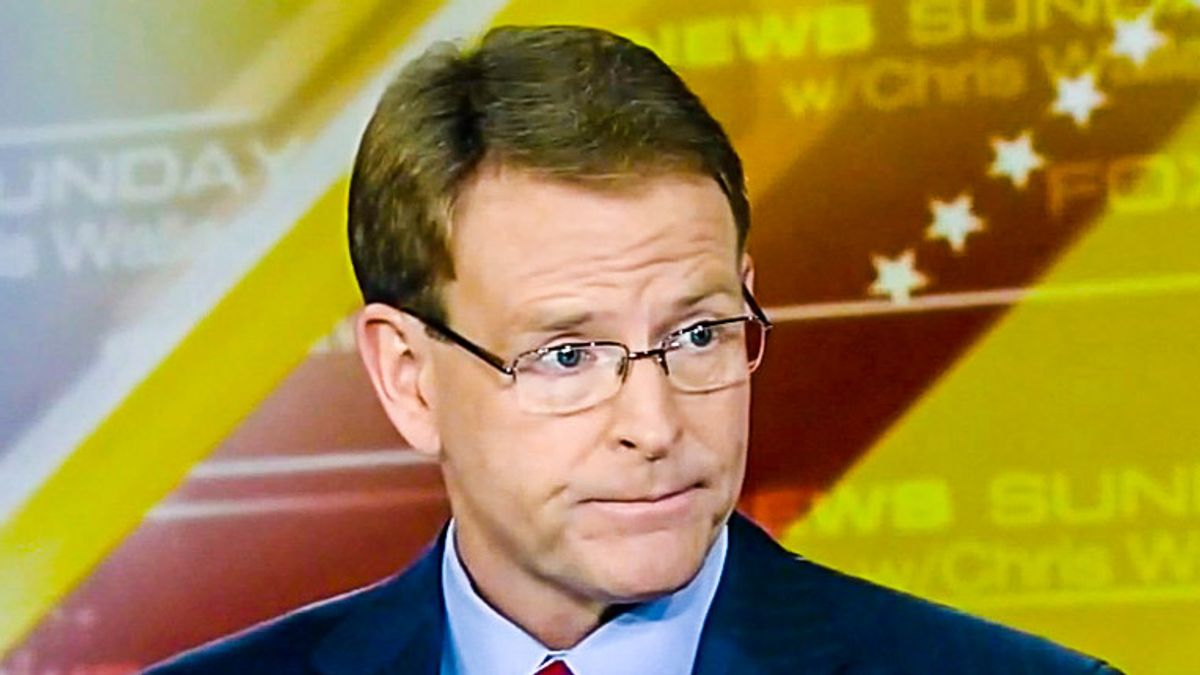
Tony Perkins of the Family Research Council (Fox News)

ProPublica is a Pulitzer Prize-winning investigative newsroom. Sign up for The Big Story newsletter to receive stories like this one in your inbox.

The Family Research Council’s multimillion-dollar headquarters sit on G Street in Washington, D.C., just steps from the U.S. Capitol and the White House, a spot ideally situated for its work as a right-wing policy think tank and political pressure group.

From its perch at the heart of the nation’s capital, the FRC has pushed for legislation banning gender-affirming surgery; filed amicus briefs supporting the overturning of Roe v. Wade; and advocated for religious exemptions to civil rights laws. Its longtime head, a former state lawmaker and ordained minister named Tony Perkins, claims credit for pushing the Republican platform rightward over the past two decades.

What is the FRC? Its website sums up the answer to this question in 63 words: “A nonprofit research and educational organization dedicated to articulating and advancing a family-centered philosophy of public life. In addition to providing policy research and analysis for the legislative, executive, and judicial branches of the federal government, FRC seeks to inform the news media, the academic community, business leaders, and the general public about family issues that affect the nation from a biblical worldview.”

In the eyes of the Internal Revenue Service, though, it is also a church, with Perkins as its religious leader.

According to documents obtained via the Freedom of Information Act and given to ProPublica, the FRC filed an application to change its status to an “association of churches,” a designation commonly used by groups with member churches like the Southern Baptist Convention, in March 2020. The agency approved the change a few months later.

The FRC is one of a growing list of activist groups to seek church status, a designation that comes with the ability for an organization to shield itself from financial scrutiny. Once the IRS blessed it as an association of churches, the FRC was no longer required to file a public tax return, known as a Form 990, revealing key staffer salaries, the names of board members and related organizations, large payments to independent contractors and grants the organization has made. Unlike with other charities, IRS investigators can’t initiate an audit on a church unless a high-level Treasury Department official has approved the investigation.


The FRC declined to make officials available for an interview or answer any questions for this story. Its former parent organization, Focus on the Family, changed its designation to become a church in 2016. In a statement, the organization said it made the switch largely out of concern for donor privacy, noting that many groups like it have made the same change. Many of them claim they operated in practice as churches or associations of churches all along.

Warren Cole Smith, president of the Christian transparency watchdog MinistryWatch, said he believes groups like these are seeking church status with the IRS for the protections it confers.

“I don’t believe that a lot of the organizations that have filed for the church exemption are in fact churches,” he said. “And I don’t think that they think that they are in fact churches.”

The IRS uses a list of 14 characteristics to determine if an organization is a church or an association of churches, though it notes that organizations need not meet all the specifications. The Family Research Council answered in the affirmative for 11 of those points, saying that it has an array of “partner churches” with a shared mission: “to hold all life as sacred, to see families flourish, and to promote religious freedom.” The group says there is no set process for a church to become one of the partners that make up its association, but it says partners (and the FRC’s employees) must affirm a statement of faith to do so. It claims there are nearly 40,000 churches in its association, made up of different creeds and beliefs — saying that this models the pattern of the “first Christian churches described in the New Testament of the Bible.”

Unlike the Southern Baptist Convention, whose website hosts a directory of more than 50,000 affiliated churches, the FRC’s site does not list these partners or mention the word “church” anywhere on its home page. The FRC’s application to become an association of churches didn’t include this list of partner churches, nor did it provide the names to ProPublica.

To the question of whether the organization performs baptisms, weddings and funerals, the FRC answered yes, but it said it left those duties to its partner churches. Did it have schools for religious instruction of the young? That, too, was the job of the partner churches.

The FRC says it does not have members but a congregation made up of its board of directors, employees, supporters and partner churches. Some of those partner churches, it says, do have members.

Does the organization hold regular chapel services? According to the FRC’s letter to the IRS, the answer is yes. It wrote that it holds services at its office building averaging more than 65 people. But when a ProPublica reporter called to inquire about service times, a staffer who answered the phone responded, “We don’t have church service.” Elsewhere in the form, it says that the employees make up those who attend its services.

The organization’s claim to be an association of churches is disingenuous, said Frederick Clarkson, who researches the Christian right at nonpartisan social justice think tank Political Research Associates.

“The FRC can say whatever bullshit things they want to,” he said. “The IRS should recognize it as a bad argument.”

Three experts told ProPublica that the IRS is failing to use its full powers to determine who gets the special privileges afforded to churches. And when a group like the FRC appears to push the limits of what charities are allowed to do — particularly relating to their partisan political activity — the IRS doesn’t often step in to crack down. The IRS did not answer a list of detailed questions for this story or make anyone available for an interview.

David Cary Hart, an activist and writer who received the FRC’s reclassification documents via a Freedom of Information Act request, wrote a letter to the IRS questioning the decision, saying the approval “defies regulatory logic.”

When ProPublica relayed details of the FRC’s new church designation to Senate Finance Committee Chairman Sheldon Whitehouse, D-R.I., he decried the loss of transparency and lax IRS oversight. “It is far too easy for powerful special interests to hide their donors using webs of nonprofits,” he said in a statement. “Form 990 filings provide valuable, and often the only, insight into a tax-exempt organization’s income and spending. But lax enforcement at the IRS and DOJ encourage more game-playing, which leaves the door wide open for enterprising dark-money schemes to exploit the system further.”
A Wave of Conversions

The current wave of nonprofit-to-church conversions appears to have gained steam after 2013, when the head of the Billy Graham Evangelistic Associationaccused the IRS of targeting BGEA and another charity he heads with audits after the group took out newspaper ads supporting a North Carolina constitutional amendment defining marriage as between one man and one woman. The groups, BGEA and Samaritan’s Purse, retained their tax-exempt status, and in 2015, they applied for church status and got it.

In 2018, Liberty Counsel, a Florida-based legal nonprofit, was reclassified as an “association of churches” — though it had been categorized as a “church auxiliary” affiliated with Jerry Falwell’s megachurch since 2006, granting the organization many of the same exemptions that churches get. The organization represents Kim Davis, the Kentucky county clerk who refused to issue licenses for same-sex marriages. Just days after the Supreme Court cited a Liberty Counsel brief in its June decision overturning Roe v. Wade, a staffer for the organization was recorded saying she prays with conservative justices inside the court building — raising questions about conflicts of interest. (Liberty Counsel denies that the staffer prayed with justices.) In a written statement, founder and chairperson Mathew Staver said that the organization’s legal work is just one part of its activity, and that it made the change “to accurately reflect the operation of the ministry.”

The American Family Association, a Tupelo, Mississippi-based group that runs the influential American Family Radio network, as well as a film studio and magazine, changed its designation to a church in early 2022, according to IRS data. The association sends out frequent “action alerts” to subscribers asking them to sign petitions opposing government appointees or boycott media and brands that it has identified as supporting LGBTQ rights or abortion access. The organization declined to respond to a request for comment.

In its letter to the IRS, the FRC argued that the classification change would protect its religious liberty rights. As an example, it pointed to Treasury Department rules exempting church organizations from the mandatory coverage requirements for contraceptives.

Churches also have a “ministerial exemption” to hiring discrimination laws for religious leaders — meaning, for example, that a Catholic church may exclude women when hiring priests. Courts have interpreted this protection broadly, shielding churches from claims of discrimination for sexual orientation as well. Recent Supreme Court rulings have broadened the umbrella of staffers who may be included under the exemption.

According to IRS data, the FRC has submitted a 990 tax return for its 2021 fiscal year, but the agency has not yet released the filing. The organization is also a member of the Evangelical Council for Financial Accountability, a voluntary membership organization that collects revenue, expenses, assets and a small number of other top-line financials from its members. The organization does not collect more detailed financial data reported on the 990.

Over the five years ending June 2020, the FRC saw average revenues of $15.9 million each year, and it spent an average of $15.6 million. In its fiscal year 2021, the FRC reported to ECFA, it brought in $23.1 million and spent $20 million. In the most recent 990, Perkins made about $300,000.

The IRS did not answer questions about how many groups apply to become a church and how many applications it denies. Samuel Brunson, a law professor specializing in religion and tax exemption at Loyola University Chicago, said the federal government, and especially the IRS, are typically very cautious when it comes to making judgments about defining religion.

“The First Amendment makes [defining a religion] really hard,” he said.


Brunson pointed to the Satanic Temple, which received IRS church recognition in 2019, as an example of an organization that people may not consider one. The group has made headlines over the years for mounting First Amendment challenges such as suing to have a statue of the goat-headed occult icon Baphomet placed next to statues of the Ten Commandments in public places. The temple is now suing Texas, claiming that the state’s abortion restrictions inhibit the liberty of the organization’s members to practice their religious rituals.


Lucien Greaves, a founder of the Satanic Temple, said groups like Liberty Counsel and the FRC have for years implied his organization is too political to be a church — one of the reasons the group finally sought official recognition. The fact that those same organizations are now themselves churches, he said, is hypocritical.


“People act like ... we’re trying to get away with something: ‘Look, these guys want to be a church, and yet they’re active in these public campaigns,’” he said. “And they never apply those same questions to the other side.”


Politics and the Pulpit


The Southern Poverty Law Center classifies the FRC, Liberty Counsel and the American Family Association as hate groups for their anti-LGBTQ stances and advocacy. But Clarkson, the researcher, said focusing on that designation misses the larger sphere of the FRC’s political influence. In recent years, he said, the FRC’s rhetoric and actions have influenced politics away from democracy and in a direction that is “distinctly theocratic.”

“Abortion and LGBT issues are not the war,” he said. “They’re battles in the war.”

IRS rules prohibit public, tax-exempt charities including churches from “directly or indirectly participating in, or intervening in, any political campaign on behalf of (or in opposition to) any candidate for elective public office.” That rule, known as the Johnson Amendment, dates back to 1954. Short of explicit political endorsements, these groups may participate in what’s known as “issue advocacy” including voter education. They can also lobby for political causes connected to their core missions, as long as the lobbying activity is not a “substantial part” of their activities.

To run its more direct political activities, the FRC has another tax-exempt organization, called a social welfare organization, that actively endorses candidates and lobbies for legislation — Family Research Council Action. The arms separate out messaging on two websites, with the FRC hosting issues-based content supporting its Christian worldview and linking to the Family Research Council Action website for content that explicitly endorses candidates.

Family Research Council Action is registered at the same address as the FRC and shares all five of the part-time employees it lists on its tax form, including Perkins. This is legal so long as the organizations are careful to separate activities and accounting, such that tax-deductible charity dollars aren’t supporting political work by the social welfare organization, said Philip Hackney, a tax law professor at the University of Pittsburgh. Experts say ideally a group like Family Research Council Action would have at least one independent staffer to indicate that it’s actually operating as an independent entity.

But FRC Action lists zero full-time employees on its most recent tax filing. When Perkins — who is president of both organizations — is speaking, he rarely makes a delineation about whether he is speaking as the head of the FRC or the head of Family Research Council Action.

But even for charitable operations, the lines around political activities are open to interpretation. While the FRC and other evangelical groups have pushed for the removal of all restrictions on political speech by churches for years, the FRC also releases guidelines encouraging pastors to discuss political matters while staying within the bounds of the law, noting that “there are legal limits to what churches may do, but your hands are not completely tied. In fact, you may be surprised at how much influence you can have.”

On Perkins’ radio show, “Washington Watch,” he hosts a bevy of pro-Donald Trump lawmakers and political figures every day. Its annual Pray Vote Stand Summit, formerly known as the Values Voter Summit, is one of the largest and most influential gatherings for those on the Christian right, where politicians, including Trump during his presidency, talk strategy with religious organizers. In 2021, the event’s schedule included “The Battle for America’s Classrooms: Fighting Indoctrination on a National Scale,” “The End of Roe and Beyond: The Outlook for the Unborn in America” and “A Mandate for Disaster: How States Are Fighting Biden’s Vaccine Tyranny” — the last event featuring the Ohio and Arkansas attorneys general and Perkins. The event was hosted by both the FRC and FRC Action.

In December 2020, Perkins — reportedly a close confidant of Trump’s during his presidency — signed a letter containing the false claims that state officials violated election laws and that “there is no doubt President Donald J. Trump is the lawful winner of the presidential election.” The letter called on state lawmakers to appoint a new slate of electors to override the election President Joe Biden won. Perkins signed as “President, Family Research Council.”

Experts say it’s not clear whether seeking to influence an election after it’s already happened would run afoul of the nonprofit campaign prohibitions.

But it’s rare for a nonprofit to face a challenge for political campaign speech. A 2020 Government Accountability Office report found that, between 2010 and 2017, the IRS examined just 226 of more than 1.5 million tax-exempt organizations for political activity. It sent a written warning to 56% of the organizations it examined and took additional action in just 10% of cases.

Scrutinizing the fuzzy line between FRC and FRC Action, or getting involved in how far out of the gray area a charity may have strayed, is not something that authorities are keeping a close eye on, said Frances Hill, a law professor specializing in tax and election law at the University of Miami. “It would take some sort of an earthquake to make the IRS use its time looking into these matters,” she said.