Tuesday, August 30, 2022

NASA calls off Artemis I rocket launch to moon

Engine trouble has prompted the US space agency to postpone the debut launch of its next generation rocketship. Its Artemis program aims to eventually fly astronauts back to the moon..
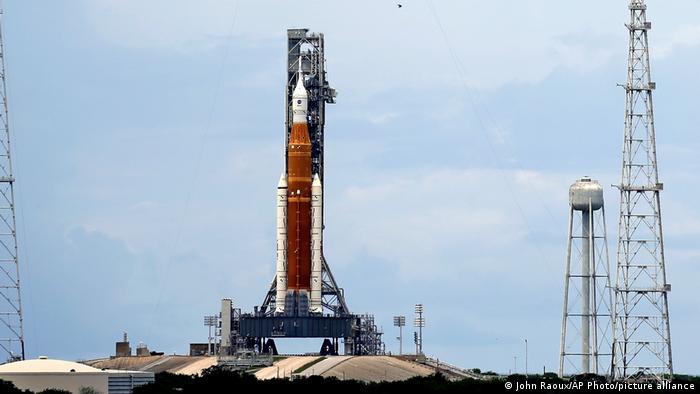
The unmanned Artemis I is designed as a test flight for future Moon exploration, with a view of eventually establishing a permanent settlement

NASA on Monday called off the launch of a rocket in its Artemis I mission due to a temperature issue with one of its engines.

The launch of the 322-foot (98-meter) Space Launch System rocket and its Orion capsule was originally scheduled for 8:33 a.m. (1233 GMT). The uncrewed rocket was to blast off from the Kennedy Space Center in the US state of Florida.

What is the Artemis I mission?

The Orion capsule is designed to orbit the moon to see if it is safe for people in the near future. The goal of the mission is to eventually set up an outpost on the moon as a pitstop for future Mars exploration and later colonization.

Cameras will capture every moment of the trip, which will last 42 days. The Orion capsule is to orbit around the moon, coming within 60 miles (100 kilometers) of the celestial body. It will then fire its engines to get to a distance 40,000 miles away from it, which is a record for a spacecraft designed to carry humans.

One of the main objectives of the mission is to test the capsule's heat shield, which is the largest ever built. During the capsule's return to Earth, the shield will have to withstand a temperature of nearly 2,760 degrees Celsius (5,000 degrees Fahrenheit), which is half as hot as the sun.

'First woman and first person of color'

Women now make up 30% of staff in the control room, compared to just one for the Apollo 11 mission in 1969 that took the first humans to the moon.

NASA has said that "we will see the first woman and first person of color walk on the surface of the moon" once the program is able to launch a crewed rocket. The mission is named after the Greek moon goddess Artemis.

"This mission goes with a lot of hopes and dreams of a lot of people. And we now are the Artemis generation," NASA Administrator Bill Nelson said on Saturday.

Repeated delays

The rocket's fuel tanks began to be filled overnight from Sunday to Monday. Early on Monday, a hydrogen fuel leak emerged, forcing launch controllers to halt the tanking operation.

The tanking process was already running an hour late due to stormy weather. Following the initial delay, NASA said there was an 80% chance of acceptable weather for a lift-off on time.

September 2 and 5 have been scheduled as alternative dates for the launch.

The flight is years overdue, and repeated delays have led to billions in budget overruns.

Around 100,000 to 200,000 spectators were expected to attend the launch on Monday.

sdi/nm (AP, AFP, Reuters)

AUDIOS AND VIDEOS ON THE TOPIC

Fact check: What role does climate change play in extreme weather events?

Attribution scientists are modeling floods, droughts and wildfires in real time to determine how big a part global heating plays in each event. DW takes a closer look.


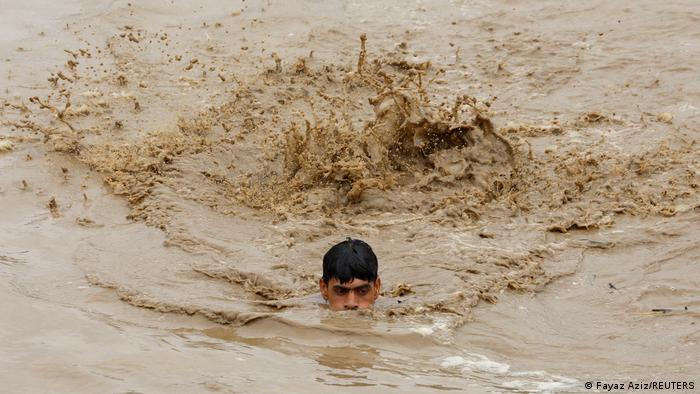
Torrential rains have turned parts of Pakistan into 'small oceans'

After scorching heat waves withered crops and dried up mighty rivers in the Northern Hemisphere, catastrophic super flooding in Pakistan has so far killed more than a 1,000 people, displacing millions more.

Pakistan's climate change minister, Sherry Rehman, told DW much of the flood area she surveyed from helicopter looked like a "small ocean" because of the relentless rain that followed soaring temperatures earlier in the year and a season of forest fires.

"It is a climate catastrophe, I'm very clear," said Rehman.

That heating the planet by burning fossil fuels is broadly making extreme weather more frequent and intense is well established. Scientists have been sounding the alarm bells on that for years.

But just how big a factor is climate change in deadly flooding like that in Pakistan or in the heat waves that dried up Europe this summer

Establishing a direct causal link between rising global average temperature and a single storm, for instance, is difficult and an evolving science.

"Extreme weather has always existed and will always exist," said Sjoukje Philip, a climate researcher at the Royal Netherlands Meteorological Institute (KNMI). "But climate change might, however, have an impact on the probability or extremity of the extreme weather events."

Determining climate change's contribution is exactly what Philip, who works with an international research team at the World Weather Attribution initiative (WWA), is trying to do by conducting real-time attribution analysis of global weather events as they occur.
Does global warming cause flooding and heat waves?

Weather catastrophes are never down to just one cause. They result from natural factors, as well as human-made ones. For instance, large-scale deforestation and paving over green areas that would usually absorb heavy rainfall with concrete and tarmac can worsen flooding.

Climate change is a human factor too, of course, but is never the sole trigger of a weather catastrophe. Its influence depends on the weather phenomenon in question and is weighted differently for each event, said German climatologist Friederike Otto from Imperial College in London and a founder of the WWA research team.


Climate change plays a big role for some events, said Otto, "but for most others like heavy rainfall or droughts, it is quite often a relatively small factor compared to others."

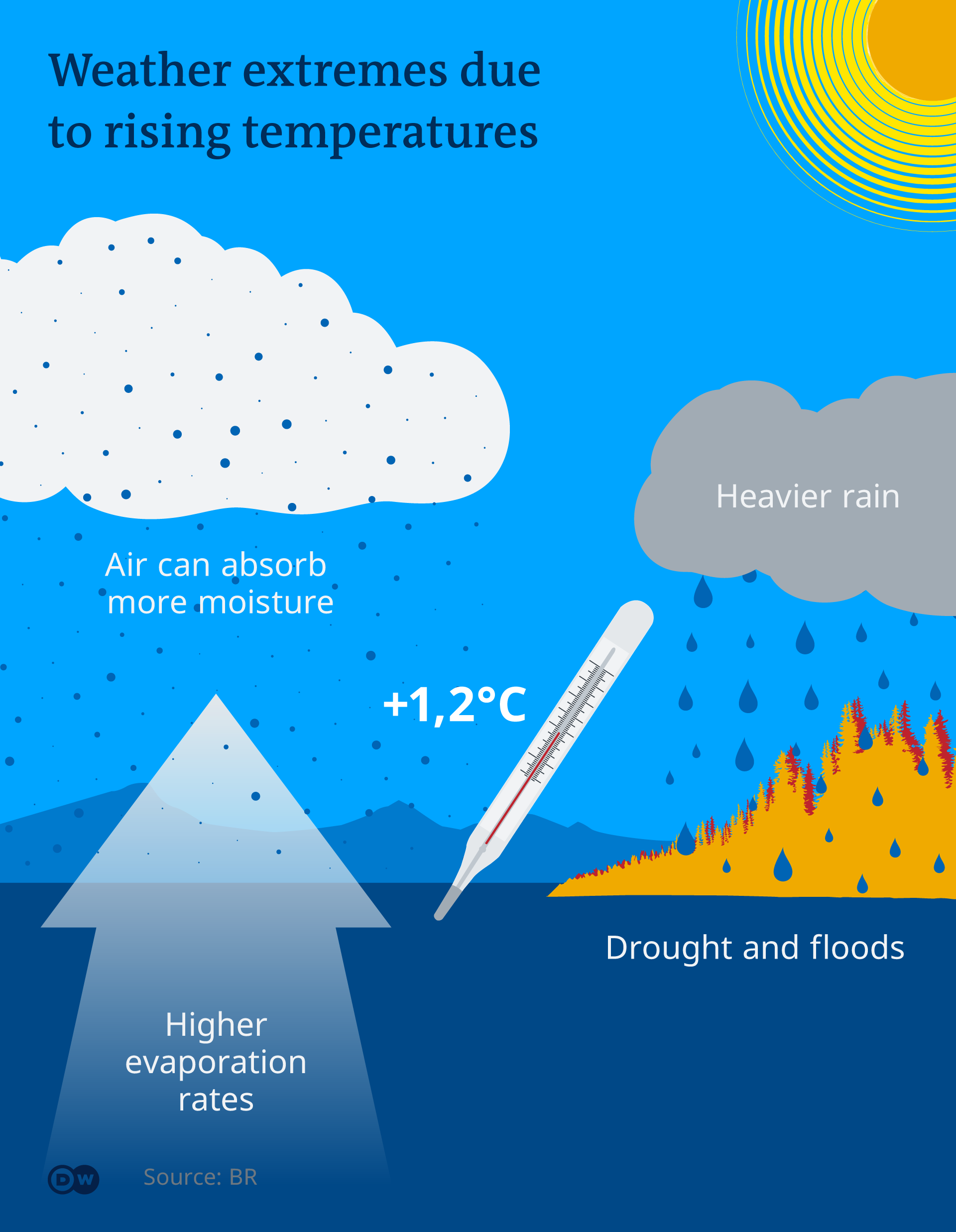
So while global heating alone cannot cause heavy rain, it can facilitate prime conditions and increase the amount of precipitation.

"A warmer atmosphere can hold more moisture, which can result in heavier rainfall," said Philip. But where and when that falls depends on a variety of factors, she added.

The link between temperature extremes and global heating is much more direct, said Philip. Swings in temperature are not necessarily more extreme but as global average temperatures rise, heat waves have grown hotter and cold spells milder.

Without global heating, recent record temperatures of 40 degrees Celsius (104 Fahrenheit) in the United Kingdom would have been virtually impossible, as would the North American heat wave of 2021, according to WWA analyses. And climate change made deadly early heat waves in India and Pakistan this year 30 times more likely.

"With heat waves climate change is really a game changer," said Friederike Otto.
Does climate change have the same impact everywhere?

Climate change impacts also differ from region to region, said Philip. "So even for similar types of extreme weather, it can still be different for different regions."

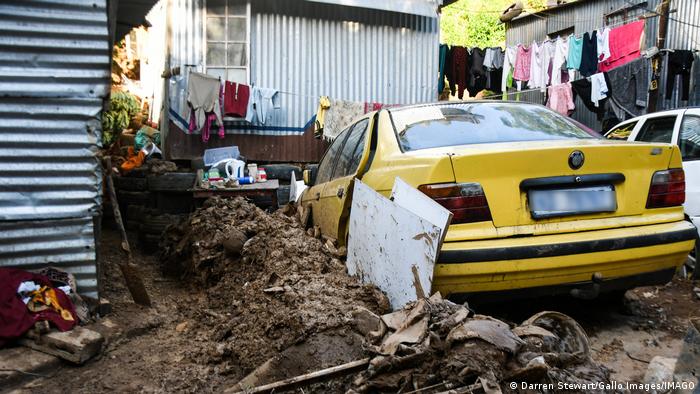
Take the Ahr Valley flood in Germany and Belgium in July 2021 compared to flooding in the South African province of KwaZulu-Natal in April 2022 as an example. At least 435 people died in the latter flood and thousands were made homeless. In the Ahr Valley, heavy rainfalls triggered flooding that killed more than 220 people.

The heavy rainfall in the Ahr Valley would have been a once in 500-year event around the start of the 20th century. That means we could have reckoned with such an extreme event every 500 years in an area of a similar size between the Alps and the North Sea under global average temperatures seen in the year 1900, according to a WWA analysis.


Flood damage in KwaZulu-Natal. Climate change's influence on extreme weather depends on multiple factors

Global heating made the event 1.2 to 9 times more likely, so in today's climate, we can expect such a flood every 56 to 400 years. At the same time, the rainfall was likely 3 to 19% stronger than it would've been 120 years ago, said the research group.

In KwaZulu-Natal, the researchers found climate change had made torrential rains that washed away entire settlements between 4 and 8% stronger. The probability, meanwhile, had doubled since 1900.

So, the uncertainties in weather attribution vary greatly depending on location. Climate scientists can determine the influence of warming more precisely in bigger regions. The area flooded in South Africa was many times larger than the affected valleys in Belgium and Germany. But it's clear that the influence of global warming on heavy rainfall in South Africa is in all probability smaller than in Central Europe.
Predicting future weather disasters

Potential disasters in the distant future cannot be predicted with existing models — the weather is too chaotic for that. Serious weather forecasts are still only possible a few days in advance.

But what weather attribution models can "calculate very well is the frequency of certain weather patterns," said Otto. And according to WWA findings, as we continue to burn fossil fuels causing global average temperatures to rise, weather patterns that can trigger floods, droughts and other extremes become more likely.

CLIMATE CHANGE: FLOODING, DROUGHT, FIRE AND HEAT WAVES AROUND THE WORLD
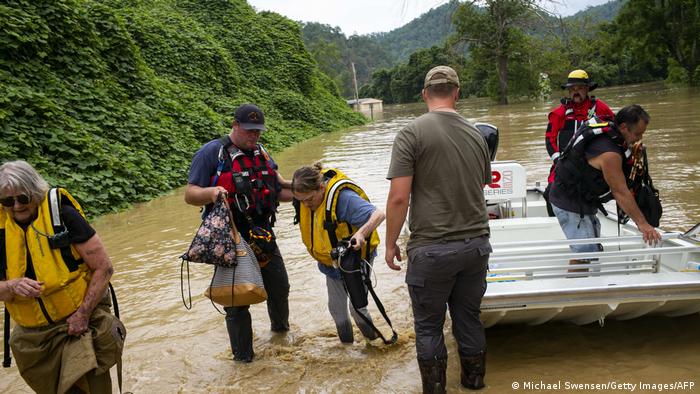
Heavy rains devastate communities in Kentucky, USA
Heavy rain has pummeled mountain communities in the US state of Kentucky. Water rushed down hillsides, swallowing towns, washing away homes and trapping hundreds of people. At least 30 people have been killed. US Vice President Kamala Harris said the flooding showed the urgency of crisis and announced $1 billion in grants to help states prepare for weather extremes worsened by climate change.

This article was originally published in German.

When the Venice Film Festival was fascist

The Venice Film Festival celebrates its 90th anniversary this year. Its beginnings were deeply entangled with fascism.

In 1932, the first film festival was held in Venice. Cinema was extremely popular among Italians at the time

This year marks the 90th anniversary of the first Venice Film Festival, when the Italian lagoon city will once again bask in the glitz and glamour of the film industry.

However, dark shadows hang over the birth of the festival, which was launched in 1932. The first president was Giuseppe Volpi — the former finance minister of Italian dictator Benito Mussolini.

His declared goal was to present the festival as a product of fascism and to emphasize its innovative cultural power and its role as a catalyst for experimentation. "A spectacle with Hollywood participation and an international audience, the film festival lent the regime an aura of glitz, modernity and style," writes film scholar Marla Stone. 

Tens of thousands of spectators celebrate the art of film

When the festival first opened in 1932, it took place from August 6-21 on the terrace of the Hotel Excelsior on Venice's Lido island. However, the venue soon became too small and the "Palazzo del Cinema" (Cinema Palace) was built in the vicinity. As early as 1937, 60,000 spectators attended.

The presence of many Hollywood stars attracted a large audience that not only viewed the screenings, but also admired the stars against Venice's spectacular nighttime backdrop.

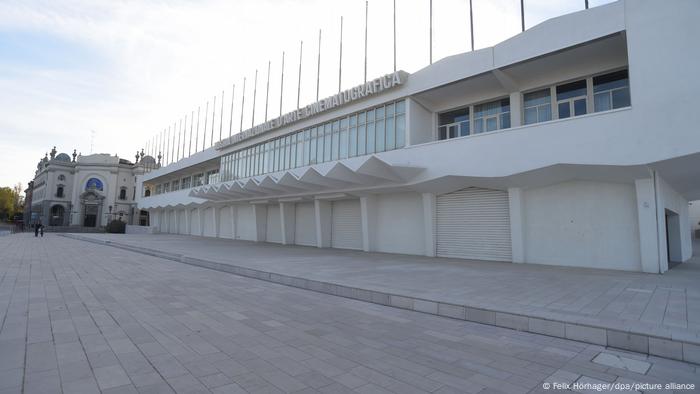
The Palazzo del Cinema is the venue of the Film Festival: It was built from 1936 to 1937

The cosmopolitan wave would not survive the outbreak of war. Beginning in 1938, the awards for the best foreign film went only to productions from Nazi Germany, the fascist allies of Italy at the time.

The jurors were no longer independent, and the festival became a propaganda stage. The notorious antisemitic propaganda film "Jud Süss" by Veit Harlan premiered here in 1940, and Joseph Goebbels, Reich Minister of Propaganda of the Nazi regime, opened the festival in person.

Shocked by this development, French diplomat and historian Philippe Erlanger founded his own film festival — in Cannes, France, now known as the famous Cannes Film Festival.

Film critics welcomed the move

In 1942, an interim edition of the Venice Film Festival would take place, by then renamed the German-Italian Film Festival. "It had nothing to do with the original festival," film expert Stone elaborates. Only films from Germany, Italy and their allies were allowed to be shown.

In Italian film magazines, reporters praised the fact that there was no longer any "superficial" foreign cinema coming from Hollywood, but only from  "our own cultivated creatives." The US had boycotted the Venice Film Festival, where the top prize was the "Coppa Mussolini" at the time.

Presiding over the jury this year: US star Julianne Moore

A new beginning

Today, the film festival has dissolved this past. Following the end of World War II, the famed film festival resumed in 1946. It has been attracting filmmakers from all over the world to the Lido ever since. 

This year's 79th edition will open with a film from Hollywood: "White Noise" by US director Noah Baumbach, starring Hollywood stars Adam Driver and Greta Gerwig.

The jury will be chaired by US actress Julianne Moore. Together with the jurors, she will decide who will receive the coveted main prize, long since renamed the Golden Lion. 

Other celebrity guests expected to attend are Timothee Chalamet, Sadie Sink, Olivia Wilde, Harry Styles, Ana de Armas, Hugh Jackman and Sigourney Weaver. 

The Venice Film Festival 2022 runs from August 31 to September 10.

This article was originally written in German.

Iraq: Fatal clashes after powerful cleric Muqtada al-Sadr quits politics

At least 15 people have died in clashes after supporters of Muqtada al-Sadr stormed the government palace. The unrest came after the cleric announced he was retiring from politics.

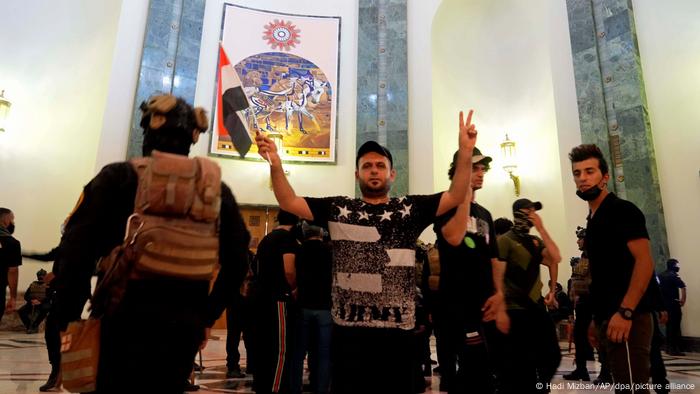
Protesters rushed past security guards into the Republican Palace, home

 to the prime minister's office

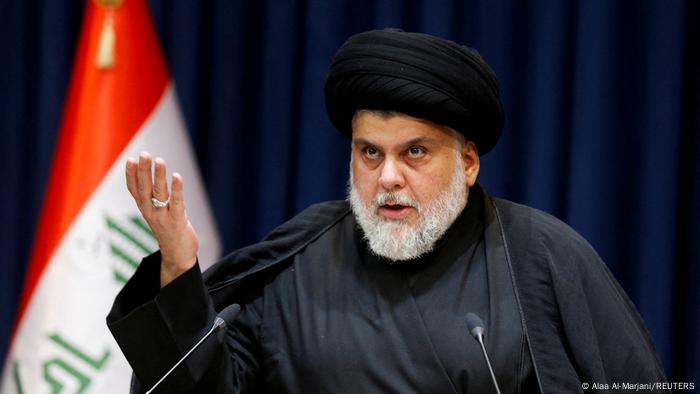
Iraq's powerful Shiite Muslim cleric Muqtada al-Sadr on Monday announced his withdrawal from politics and the closure of his institutions over the political deadlock in the country. The move prompted violent clashes across Baghdad that left at least 15 people dead.

"I've decided not to meddle in political affairs. I therefore announce now my definitive retirement," al-Sadr said in a statement on Twitter. He also said "if I die or get killed, I ask for your prayers."

Al-Sadr, a longtime player in the Middle East nation's political scene, criticized fellow Shiite political leaders for failing to act upon his calls for reform.

Without elaborating on the closure of his offices, al-Sadr said that some of his cultural and religious institutions would remain open.

This is not the first time Muqtada al-Sadr has said he was retiring, prompting

 critics to accuse him of bluffing to gain political leverage

As news of the violence caused by clashes between his supporters and rival groups began to spread, al-Sadr announced that he was beginning a hunger strike until the clashes ceased.

Al-Sadr supporters break into Republican Palace

His announcement was followed by hundreds of his supporters rushing to the government palace, which houses the main offices of Iraq's caretaker Prime Minister Mustafa al-Kadhimi. Kadhimi said he was suspending all cabinet meetings until further notice.

Protesters used ropes to pull down cement barriers leading to the seat of the government, prompting Iraq’s military to call for an immediate withdrawal from the Green Zone. The military urged protesters to practice self-restraint "to prevent clashes or the spilling of Iraqi blood," according to a statement.

"The security forces affirm their responsibility to protect government institutions, international missions, public and private properties," the statement said.

The army then announced it was imposing a 3:30 p.m. curfew for all of Baghdad, but that did little to deter al-Sadr's followers, who pushed into the Republican Palace chanting "the people want to overthrow the regime."

Violence spreads outside Green Zone

As the situation escalated, the curfew was later extended, with all of Iraq required to be indoors by 7 p.m. Witnesses told reporters that they heard live fire and saw security services use tear gas inside the fortified Green Zone.

Outside the Green Zone government compounds and embassies, dozens of young men loyal to al-Sadr and supporters of a rival Shiite group, the pro-Iran Coordination Framework, hurled stones at each other in street clashes.

Later, police and medical personnel said that at least ten people had died and that 85 were injured as the violence spread and witnesses said they could hear gunfire in different parts of the city.

There were also reports that protests had spread outside of Baghdad, including demonstrators blocking access to the airport in key port city of Umm Qasr, 560 km (350 miles) from the capital.

The AFP news agency reported, citing an unnamed security source, that at least seven shells fell in the Green Zone. The report could not be independently verified, and it was not clear who was behind the reported shelling.

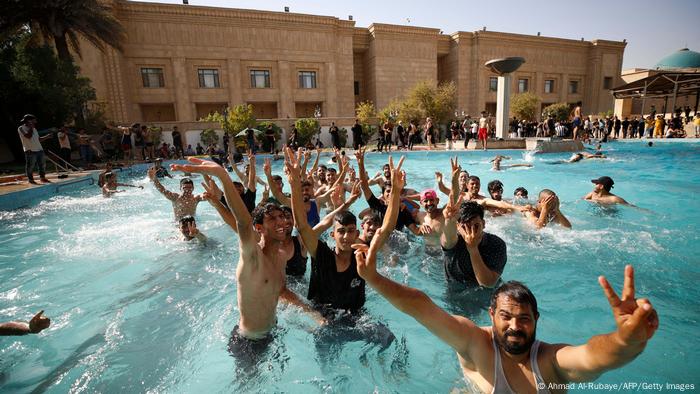
Al-Sadr supporters also used to the opportunity to jump in the Republican Palace's swimming pool

White House spokesman John Kirby told reporters that the US was not evacuating its embassy in Iraq. He urged calm in the country, saying "now is the time for dialogue, not confrontation."

"Reports today of unrest throughout Iraq are disturbing....  We urge those involved to remain calm, to abstain from this violence and pursue peaceful avenues of redress," he added.

According to state media in neighboring Kuwait, however, their government was urging all its citizens in Iraq to leave.

Why is there political deadlock in Iraq?

Despite winning the largest share of seats in last October's elections, a political impasse between al-Sadr and his Iran-linked Shiite rivals has given Iraq its longest run without a government. In June, he withdrew his lawmakers from the parliament after failing to form a government of his choosing. 

Since last month, his supporters have occupied parliament and held protests near government buildings. With the process of choosing a new president and prime minister halted, many fear that al-Sadr's supporters may escalate their protests, pushing the conflict-ravaged country into a new phase of instability.

see,es/sri (AFP, AP, dpa, Reuters)

Portugal: Scientists unearth remains of large dinosaur skeleton

Fragments of the remains were first found in a backyard during construction work. Paleontologists say it may be the largest dinosaur skeleton ever found in Europe.

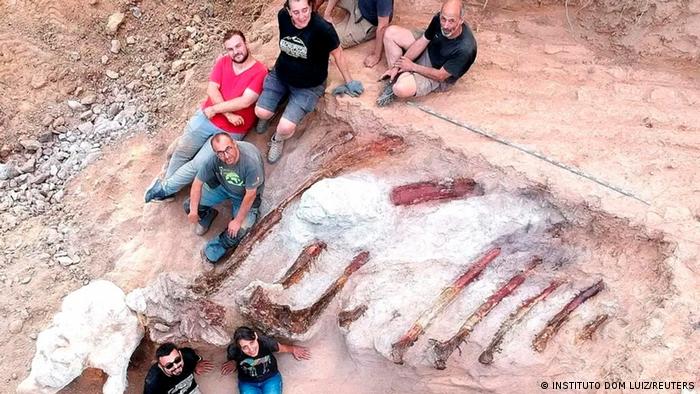
Scientists believe the skeleton belonged to a sauropod

Researchers at the University of Lisbon said on Monday a fossilized skeleton unearthed in a backyard could be the largest dinosaur ever found in Europe.

In 2017, a property owner in the central Portuguese city of Pombal was digging up in his garden to make way for expansion when he discovered fossilized fragments from the dinosaur.

The property owner contacted paleontologists, who took to the backyard and uncovered a rib about three meters long at the beginning of this month. 

The excavation work at the Monte Agudo fossil site in Pombal is likely to continue

What do we know about the unearthed remains? 

"It's one of the biggest specimens discovered in Europe, perhaps in the world," paleontologist Elisabete Malafaia, from the Faculty of Sciences at Lisbon University, told the AFP news agency on Monday.

According to the faculty, the dinosaur was possibly about 25 meters (82 feet) long and 12 meters tall and lived around 145 million years ago, during the Upper Jurassic period.

The scientists said the skeleton likely belonged to a sauropod. The plant-eating, four-legged species is characterized by long necks and tails. 

TOOK LONG ENOUGH

Japan police chief to resign over shooting death of ex-PM Shinzo Abe

Police report says Abe's police protection lacking, allowed alleged attacker to shoot him

People line up to place flowers at a makeshift memorial for former Japanese prime minister Shinzo Abe, near where he was fatally shot, in the western city of Nara, on July 8. (Philip Fong/AFP/Getty Images)

Japan's national police chief said Thursday he will resign to take responsibility over shortfalls in security that an investigation by his own agency showed did not adequately safeguard former Japanese prime minister Shinzo Abe from a fatal shooting at a campaign speech last month.

National Police Agency Chief Itaru Nakamura's announcement came as his agency released a report on how it failed to protect Abe's life on July 8 when he was assassinated in Nara, in western Japan.

The police report found holes in Abe's police protection that allowed the attacker to shoot him from behind.

Nakamura said he took the former prime minister's death seriously and that he submitted his resignation to the National Public Safety Commission earlier Thursday.

"In order to fundamentally re-examine guarding and never to let this happen, we need to have a new system," Nakamura told a news conference as he announced his intention to step down.

A man, who is believed to have shot Abe is tackled by police officers in Nara, western Japan, on July 8. (The Asahi Shimbun/Reuters)

Nakamura did not say when his resignation would be official. Japanese media reported that his resignation is expected to be approved at Friday's cabinet meeting.

The alleged gunman, Tetsuya Yamagami, was arrested at the scene and is currently under mental evaluation until late November. Yamagami told police that he targeted Abe because of the former leader's link to the Unification Church, which he hated.

Abe sent a video message last year to a group affiliated with the church, which experts say may have infuriated the shooting suspect.

Problems with protection plan

In the 54-page investigative report released Thursday, the National Police Agency concluded that the protection plan for Abe neglected potential danger coming from behind him and merely focused on risks during his movement from the site of his speech to his vehicle.

Inadequacies in the command system, communication among several key police officials, as well as their attention in areas behind Abe at the campaign site, led to their lack of focus on the suspect's movement until it was too late.

None of the officers assigned to immediate protection of Abe caught the suspect until he was already seven metres behind him where he took out his homemade double-barrel gun, which resembled a camera with a long lens, to blast his first shot that narrowly missed Abe. Up to that moment, none of the officers was aware of the suspect's presence, the report said.

In just over two seconds, the suspect was only 5.3 metres behind Abe to fire the second shot.

The report said the prefectural police's protection plan for Abe lacked a thorough safety evaluation. It called for significant strengthening in both training and staffing of Japan's dignitary protection, as well as revising police protection guidelines for the first time in about 30 years.

The national police called for doubling dignitary protection staff, greater supervisory role for the national police over prefectural staff, and use of digital technology and drones to bolster surveillance from above ground.

Another police chief to resign 

Abe's family paid tribute to him in a private Buddhist ritual Thursday marking the 49th day since his assassination.

In Nara, prefectural police Chief Tomoaki Onizuka also expressed his intention to step down over Abe's assassination.

National Police Agency Chief Itaru Nakamura, pictured on July 12, announced Thursday he will resign to take responsibility over Abe's fatal shooting. (Kyodo News/The Associated Press)

The Unification Church, which was founded in South Korea in 1954 and came to Japan a decade later, has built close ties with a host of conservative lawmakers, many of them members of Abe's Liberal Democratic Party, on their shared interests of anti-communism.

Since the 1980s, the church has faced accusations of problematic recruiting and religious sales in Japan, and the governing party's church ties have sent support ratings of Prime Minister Fumio Kishida's cabinet into a nosedive even after its recent shuffle.

'I cannot accept it': Bali bomb survivors fume after attacker's term cut

Agnes ANYA, Dessy SAGITA
Thu, August 25, 2022 


Almost two decades after the Bali bombings left Thiolina Ferawati Marpaung with permanent eye injuries, news that one of the masterminds could be released early has caused fresh trauma.

Indonesia's latest reduction to Umar Patek's prison sentence -- revealed last week by Australian Prime Minister Anthony Albanese and confirmed by AFP -- means the bomber could be released on parole before the island marks the 20th anniversary of the attacks in October.

That is a galling prospect for survivors of the attack, which killed 202 people, including 88 Australians.

"It is not that I don't respect other people's rights, but he has hurt the survivors and families with his evil and inhumane acts," Marpaung told AFP by phone from Denpasar, the resort island's biggest city.


The smell of smoke triggers vivid memories of the blasts that sent shards of broken glass tearing into her eyes, Marpaung said.

Patek -- a member of an Al Qaeda-affiliated group who was captured in the same Pakistani town where Osama bin Laden was killed -- should be kept locked up, she said.

"Please let him serve what he deserves as a terror convict, not like a chicken thief whom we can easily forgive," the 47-year-old said.

But Indonesia says Patek is giving up his extremist beliefs after completing a deradicalisation programme.

He was granted a sentence reduction on August 17 because he had served two-thirds of his 20-year prison term and shown progress towards reform, said Teguh Wibowo, spokesperson of the Law and Human Rights Ministry office in East Java.


"He has dutifully undergone a deradicalisation programme and behaves well in the prison," Wibowo said, referring to Indonesia's rehabilitation scheme to make terror convicts abandon extremism and pledge loyalty to the state.

The attacks on a nightclub and bar were the deadliest in Indonesian history and led to a crackdown on extremism in the country, which has the largest Muslim population in the world.

Tied side-by-side to wooden posts on a small prison island, the attackers were executed by firing squad in 2008 after a years-long probe.
- 'Contempt' -

Patek was found to have made the bombs used in the assault on Bali, a Hindu island popular with foreign tourists.

He was captured with a $1 million bounty on his head after nearly a decade on the run.

Prosecutors only sought a life sentence for the 52-year-old on a charge of premeditated murder because he showed remorse during his 2012 trial.

Any release from prison must be approved by Indonesia's Ministry of Justice.

For survivors of the attack the thought of him leaving prison and living a normal life is difficult to bear.

"Deep down in my heart, I cannot accept it but I am trying to," said Chusnul Chotimah, another survivor who suffered severe burns that have left scars across her face and body.

Australia has also been angered by the news of Patek's sentence reduction.

The country lost 88 of its citizens in the attacks, the most of any of the 21 countries whose nationals were killed.


Albanese said he had nothing but "contempt" and disgust for Patek's actions, saying his early release would only renew distress and trauma for the victims' grieving families.

But Chotimah met with Patek's relatives and said she learned they had also suffered from the tragedy he helped to commit.

The 52-year-old is trying to make peace with what happened to her, despite the news of Patek's potential release before the anniversary of the day that changed her life.

"The longer I keep the grudge, the more aching my heart is," she said.

agn-dsa/jfx/mca/axn
ETHIOPIA'S WAR OF AGGRESSION
Fighting erupts in Ethiopia's Tigray region, breaking five-month truce

NEWS WIRES - Thursday

Fighting erupted between government forces and Tigrayan rebels in northern Ethiopia on Wednesday, shattering a five-month truce and dealing a blow to peace efforts.


Reports of fresh offensives were followed by Ethiopia's air force announcing it had downed a plane carrying weapons for the Tigray People's Liberation Front (TPLF).

The government of Prime Minister Abiy Ahmed and the rebels have accused each other of undermining efforts to peacefully resolve the brutal 21-month war in Africa's second most populous nation, and traded blame over who was responsible for returning to combat.

UN chief Antonio Guterres said he was "deeply shocked" by the renewed fighting and appealed for an "immediate cessation of hostilities and for the resumption of peace talks".

The head of the African Union Commission, Moussa Faki Mahamat, called for a "de-escalation" and the resumption of "talks to seek a peaceful solution".

The United States urged both sides "to redouble efforts to advance talks to achieve a durable ceasefire", a US State Department spokesman said.

The TPLF said government forces and their allies had launched a "large scale" offensive towards southern Tigray early Wednesday after a months-long lull in fighting.

But the government accused the TPLF of striking first and violating the ceasefire.

"Ignoring all of the peace alternatives presented by the government, the terrorist group TPLF armed group continued its recent provocations and launched an attack this morning at 5 am (0200 GMT)" around southern Tigray, the Government Communication Service said in a statement.

The rival claims could not be independently verified as access to northern Ethiopia is restricted, but there were reports of fighting around southern Tigray in areas bordering the Amhara and Afar regions.

"They launched the offensive early this morning around 5 am local time. We are defending our positions," TPLF spokesman Getachew Reda told AFP.

He said on Twitter that the "large-scale" offensive was launched "against our positions in the southern front" by the Ethiopian army and special forces as well as militias from neighbouring Amhara.
'Violated our airspace'

The air force said Wednesday it had shot down a plane "believed to be a property of historical enemies who want Ethiopia's weakness".

Related video: Air Strike in Ethiopia's Tigray region, fight between forces and national government continues
Duration 1:36
View on Watch

"The airplane which violated our airspace from Sudan... and aimed to supply weapons to the terror group was shot down by our heroic air force," the Ethiopian News Agency quoted armed forces spokesman Major General Tesfaye Ayalew as saying.

The date of the incident, the type of aircraft and how it was downed were not detailed.

The TPLF said it was a "blatant lie".

The March truce had paused fighting in a war that first began in November 2020, allowing a resumption of some international aid to Tigray after a three-month break.

Both sides in recent weeks had evoked possible peace talks.

But they disagree on who should lead negotiations, and the TPLF also insists basic services must be restored to Tigray's six million people before dialogue can begin.

Abiy's government says any talks must be brokered by the African Union's Horn of Africa envoy Olusegun Obasanjo, who is leading the international push for peace, but the rebels want outgoing Kenyan President Uhuru Kenyatta to mediate.

In a statement dated August 23, TPLF leader Debretsion Gebremichael said "two rounds of confidential face-to-face" meetings with top civilian and military officials had taken place, the first acknowledgement by either side of direct talks.

No time or place was given for these talks, which the government has not confirmed.

William Davison, senior Ethiopia analyst for the International Crisis Group (ICG) think tank, urged all parties to cease fighting to avert "a return to full-blown war".

"This serious breach of the truce agreed earlier this year demonstrates the need for the two parties to arrange unconditional face-to-face negotiations as soon as these hostilities cease," Davison said in a statement.
'Enough of this war'

"I was shocked when I heard the news this morning. We had hoped they were ready for peace, but now our hope is gone," said Addis Ababa resident Teklehaimanot Mezgebu.

"If they start the war, that will not be good for the people of Ethiopia and Tigray."

The conflict has killed untold numbers, with widespread reports of atrocities including mass killings and sexual violence.

Millions of people need humanitarian assistance in Tigray, the country's northernmost region, as well as Afar and Amhara.

The UN's World Food Programme said last week that nearly half the population in Tigray is suffering from a severe lack of food and rates of malnutrition had "skyrocketed".

Tigray is largely cut off from the rest of Ethiopia, without basic services such as electricity, communications and banking.

Abiy sent troops into Tigray in November 2020 to topple the TPLF after months of tensions with the party that had dominated Ethiopian politics for three decades.

The 2019 Nobel Peace Prize winner said the move came in response to rebel attacks on army camps.

The TPLF mounted a comeback, recapturing Tigray and expanding into Afar and Amhara, before the war reached a stalemate.

Last Wednesday, an Ethiopian government committee tasked with looking into negotiations called for a formal ceasefire as part of a proposal it planned to submit to the AU.

(AFP)


Former UK Ambassador To Myanmar Detained In Yangon: Source
By AFP News
08/25/22  


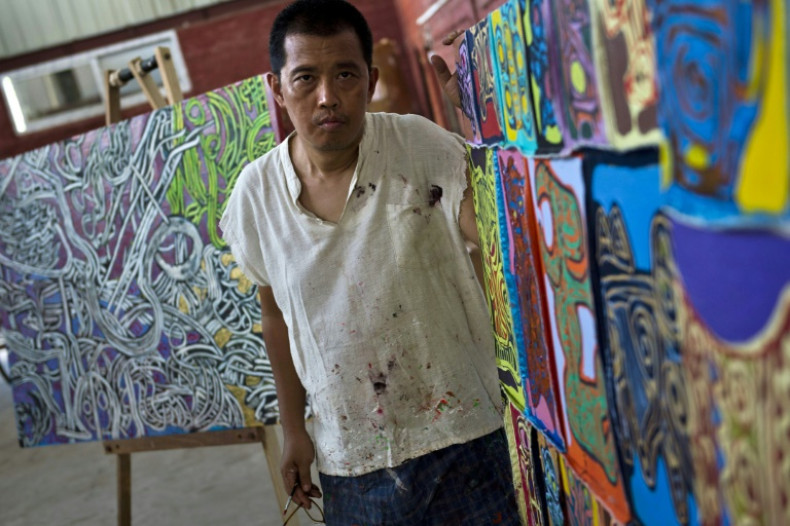
Former ambassador Bowman's husband Htein Lin, a prominent artist, was also arrested, the diplomatic source said

Myanmar authorities have detained the United Kingdom's former ambassador to the country, a diplomatic source said on Thursday.

Vicky Bowman, who served as envoy from 2002 to 2006 was arrested on Wednesday in the commercial hub Yangon, the source said, requesting anonymity.


Prior to serving as ambassador, Bowman was also the second secretary in the UK's embassy from 1990 to 1993.

"We are concerned by the arrest of a British woman in Myanmar," a UK embassy spokesperson told AFP.

"We are in contact with the local authorities and are providing consular assistance."

Bowman's husband and prominent artist Htein Lin was also arrested, the diplomatic source said. Local media said the pair had been taken to Yangon's Insein prison.

A source with knowledge of the case said the pair had been arrested for allegedly violating immigration laws.

Each charge carries a maximum of five years in prison.

A junta spokesman did not respond to requests for comment.

Bowman works as director at the Myanmar Centre for Responsible Business and is a fluent Burmese speaker.

Htein Lin was arrested in 1998 and imprisoned for allegedly opposing the rule of the then-junta.

After he was freed in 2004, he came to the attention of then-ambassador Bowman for a series of paintings he had made while imprisoned, using smuggled materials.

She persuaded him to let her take the paintings for his own security, and the pair married in 2006.

Ties between the UK and Myanmar have soured since the coup in 2021.

The junta earlier this year criticised Britain's recent downgrading of its mission in the country as "unacceptable".

The UK government has sanctioned several military-linked companies and individuals following the army's power grab last year, which triggered mass uprisings and a bloody crackdown on dissent.

On Thursday, the UK announced new sanctions on companies it said had helped raise funds for the military during its 2017 crackdown on the mostly Muslim Rohingya minority.

Scores of foreign nationals have been caught up in the junta's crackdown following its power grab.

Japanese filmmaker Toru Kubota is currently being held in Insein prison, after he was detained last month near an anti-government rally in Yangon.


He is the fifth foreign journalist to be detained in Myanmar, after US citizens Nathan Maung and Danny Fenster, Robert Bociaga of Poland and Yuki Kitazumi of Japan -- all of whom were later freed and deported.
British Museum showcases ancient vessels smashed in Beirut blast

Agence France-Presse - Wednesday

LONDON: Eight ancient glass vessels shattered in the 2020 Beirut explosion go on display at the British Museum from Thursday, walking visitors through the painstaking international project to piece them back together.


A photograph taken on August 24, 2022 shows the newly conserved ancient glass vessels damaged during the 2020 Beirut port explosion, and displayed at the British Museum in London, ahead of an exhibition which will walk visitors through the laborious conservation project.
AFP PHOTO© Provided by The Manila Times

The vessels, from the Roman, Byzantine and Islamic periods, were reconstructed at the world-famous museum's conservation laboratories, and will be shown as part of its "Shattered Glass of Beirut" showcase, before returning to Lebanon later this year.

"(It) tells a story of near destruction and recovery, of resilience and collaboration," said Hartwig Fischer, Director of the British Museum.

The vessels were among 74 contained within a case at the American University in Beirut (AUB).

The case fell over when the shockwave of the port blast, which occurred three kilometers (two miles) away on August 4, 2020, hit the building, smashing the glass objects inside.

A team of experts had the daunting task of sorting every shard of glass, deciding if it was part of an ancient vessel, rather than display case, and which vessel it belonged to, Duygu Camurcuoglu, a senior conservator at the British Museum, told Agence France-Presse.

"It's all pretty much done by hand or by eye — brainwork basically. You have to know certain techniques to be able to carry out this work," she added.

Once the pieces had been sorted, the conservators began the mammoth jigsaw-puzzle exercise of reassembling the vessels.

"It's a case of using an adhesive to reconstruct the vessels," said Camurcuoglu. But they could not just use anything.

"We don't use superglue, we don't use UHU," she joked.


British museum press assistant Stella Scobie examines the newly conserved ancient glass vessels damaged during the 2020 Beirut port explosion, and displayed at the British Museum in London, on August 24, 2022 ahead of an exhibition which will walk visitors through the laborious conservation project. 
AFP PHOTO© Provided by The Manila Times

'Scars'

The most challenging vessels were the "large dish and the Byzantine pitcher," Camurcuoglu recalled.

Eighteen of the vessels have so far been conserved as part of an emergency recovery campaign in Beirut, along with the eight vessels at the British Museum and two that emerged unscathed from the fall.

Experts hope that at least half of the remaining 46 objects in Beirut can be conserved soon too.

The collaborative project between the British Museum and the AUB's Archaeological Museum began in 2021, following an offer of help from the London institution.

Conservators agreed early on to make the vessels structurally sound but leave imperfections caused by the shattering visible, bearing witness to the explosion.

The exhibition will take visitors on the journey undergone by the glass vessels, from the moment of the blast to their display in the famous London museum.

Lighting will be used in the display to illuminate cracks and gaps in the glass.

"We really wanted to highlight the damage these objects went through, so we can all look at the scars, and remember how they were revived together," said Camurcuoglu.

The vessels are considered important in telling the story of the development of revolutionary glass-blowing techniques in Lebanon in the 1st century BC, enabling the mass production of glass objects and making them available for common use.

Their restoration, and the teamwork involved, is a source of pride to the conservators, said Camurcuoglu.

"We all individually felt that, I think, we contributed to something by working on these objects — by sharing this pain, these emotions.

"So it's not only about the conservation... but also the working together and achieving something together," she added.