Friday, September 23, 2022

Toward a European carbon footprint rule for batteries

Focus on upstream production, not downstream use

Reports and Proceedings

ETH ZURICH

Top energy, tech, and climate researchers at ETH Zurich engaged in an informed debate over the European regulation that sets an upper carbon footprint limit for European markets. The limits, to be established this year, come into force in 2027 and will apply to electric vehicle batteries and stationary batteries with more than 2 kilowatt-hours (kWh) of storage capacity. Researchers anticipate that any throughput-based design option for quantifying the Carbon Footprints of batteries may fall short of its expectations and do more harm than good.

The regulation could play a pioneering role in climate change policy. Experience with it may also prove invaluable for non-European regulators and for the regulatory design of products that share characteristics with batteries. The European take on addressing the Carbon Footprint of complex, multipurpose technologies will, therefore, be closely observed internationally.


Villaseñor co-authors PNAS paper on extinction of megafauna

A study coauthored by Amelia Villaseñor shows that a megafaunal extinction in North America more than 10,000 years ago resulted in a reorganized, vulnerable ecosystem

Peer-Reviewed Publication

UNIVERSITY OF ARKANSAS

Amelia Villasenor.jpg 

IMAGE: AMELIA VILLASENOR, UNIVERSITY OF ARKANSAS view more 

CREDIT: RUSSELL COTHREN, UNIVERSITY OF ARKANSAS

Anthropologist Amelia Villaseñor coauthored a paper describing the ecological effects of an extinction event that occurred more than 10,000 years ago in North America, one that had major consequences for the surviving mammal species.

The paper, titled "Late Pleistocene megafauna extinction leads to missing pieces of ecological space in a North American mammal community,” was published in Proceedings of the National Academy of Sciences, or PNAS, a journal of the National Academy of Sciences.

“Our findings show that the extinction of large-bodied animals, like mammoths, substantially changed how the remaining mammal communities were organized,” Villaseñor said. “The findings also suggest that human impacts have likely played a major role in large-scale degradation of North American ecosystems for thousands of years.”

Villaseñor’s research uses the remains of fossil mammals to understand how humans and other animals interacted with each other over the last 3.5 million years, as well as the ecological impacts of extinction.

For this study, to gain a better understanding of modern biodiversity loss, she and colleagues relied on the fossil record of mammals from the Texas Memorial Museum that span roughly 50,000 years ago to recent times. These collections include extinct megafauna from Texas. Megafauna are large-bodied mammals such as mammoths and sabertooth cats.

The researchers characterized the roles of extinct and surviving mammals using stable isotopes and body size. Stable isotopes are present in all parts of an animal’s body, and certain kinds of isotopes can stay preserved for millions of years. They provided Villaseñor and her team with a record of animal diets and how those diets changed through time.

The researchers also estimated the body size of animals, which gave them another piece of information about how animals interacted with their environment and each other. Together, this information describes the job an animal has in its community or its “niche.”  

The team found that after the extinction, the surviving animal community was reorganized in what they ate and where they fell in the food chain, particularly among carnivores. Jaguars moved into a specialized dietary niche previously occupied by extinct cats like the sabertooth and the American lion. Puma, which were previously rare in the community, became common.

Biodiversity loss also led to “vacant niches,” or missing pieces, within the community, meaning that the roles of species such as mammoths, mastodons, and sabertooth cats were never again filled by the native mammal community. This biodiversity and ecological loss led to an overall reduction in ecosystem resilience that will affect the ability of native North American mammal communities to respond to future environmental changes.

The study’s lead author was Felisa Smith, biology professor at the University of New Mexico. In addition to Villaseñor, co-authors were Seth Newsome at the University of New Mexico, Emma Elliot Smith at the Smithsonian Institution and Kate Lyons and Catalina Tomé at the University of Nebraska-Lincoln.

Findings from this study support those of previous work published by Villaseñor this year in Nature Communications. The earlier study showed that mammal communities of North America have been homogenizing, or becoming more similar to one another, at faster rates over the last 10,000 years.

The earlier study also suggested lasting impacts from the megafaunal extinction on remaining mammal communities. Both studies showed that human impacts have likely played a major role in the reorganization and loss of resiliency of North American ecosystems for thousands of years.

The studies also have implications for the future.

“Our research of ancient mammals highlights what might happen if Earth’s remaining large-bodied mammals go extinct — animals such as elephants, rhinos, zebra, and lions — and it demonstrates how insights from the past can really inform modern conservation efforts,” said Smith.

Understanding the dynamics of workplace violence can improve employee health and safety


Peer-Reviewed Publication

UNIVERSITY OF TORONTO, ROTMAN SCHOOL OF MANAGEMENT

Prof. Katherine (Katy) DeCelles 

IMAGE: KATHERINE (KATY) DECELLES IS A PROFESSOR OF ORGANIZATIONAL BEHAVIOR AT THE UNIVERSITY OF TORONTO'S ROTMAN SCHOOL OF MANAGEMENT AND CROSS-APPOINTED TO THE CENTRE FOR CRIMINOLOGY AND SOCIOLEGAL STUDIES AT THE UNIVERSITY OF TORONTO. SHE ALSO HOLDS THE SECRETARY OF STATE PROFESSORSHIP IN ORGANIZATIONAL EFFECTIVENESS. KATY’S RESEARCH IS ON UNDERSTANDING THE MICRO-MECHANISMS INVOLVED IN CONFLICT, EMOTION, MORALITY, INEQUALITY, AGGRESSION, CRIME, AND CRIMINAL JUSTICE ORGANIZATIONS. HER RESEARCH HAS BEEN HIGHLIGHTED IN OUTLETS SUCH AS THE SMITHSONIAN MAGAZINE, SCIENCE MAGAZINE, BBC, CNN, AND THE NEW YORK TIMES. HER RESEARCH HAS RECEIVED AWARDS FROM THE ACADEMY OF MANAGEMENT AND AMERICAN SOCIOLOGICAL ASSOCIATION, AND SHE HAS BEEN RECOGNIZED FOR HER MBA TEACHING BY POETS & QUANTS (2018). view more 

CREDIT: ROTMAN SCHOOL OF MANAGEMENT

Toronto – Workplace violence is a pervasive problem with tremendous costs for individuals, organizations, and society. A new study published this week in the Proceedings of the National Academy of Sciences (PNAS) focuses on convenience-store robberies, one of the most common forms of workplace violence, and finds that robbers are significantly more likely to injure employees who are present on the sales floor rather than behind the cash register when a robbery begins. But industry standard safety training practices encourage employees to get out from behind the register for their safety.

“Unlike past studies, we used video of convenience-store robberies to examine why and when injuries during robberies occur,” says co-author Katherine DeCelles, a professor of organizational behavioural and human resource management at the University of Toronto’s Rotman School of Management, who hold a cross-appointment to the University’s Centre for Criminology and Sociolegal Studies. “We suggest that an understanding of the interactive dynamics of workplace violence and emphasize the critical need to verify that common practices for organizations are evidence based for employee health and safety.”

Prof. DeCelles and her colleagues first examined 196 surveillance videos and archival data of convenience store robberies collected over a four-year period. The results showed a significant correlation between employee location at the beginning of the robbery and injury, with lower risk of injury if employees were behind the register when the robbery began than if they were on the sales floor. Follow-up studies involving 648 people, including both formerly incarcerated individuals and retail clerks, found that when presented with robbery onset scenarios, more than 81% of participants expected employees to be behind the register and anticipated significantly more violence during the robbery if the employee was on the sales floor rather than behind the register. Finally, the authors conducted a three-year longitudinal field study with revised safety protocols that provided a behavioral script to follow in case of a robbery while employees are on the sales floor. The authors found, in an additional 368 robberies, a significantly lower risk of injury when employees were on the sales floor as the robbery began following the protocol change, relative to before the intervention.


“This understanding of the dynamics of workplace violence and how to mitigate it is relevant for any retail organization and for developing effective policies which promote employee health and safety,” says Prof. DeCelles.

The research was co-authored with Maryam Kouchaki of Northwestern University’s Kellogg School of Management and Nir Halevy of Stanford University’s Graduate School of Business.

Bringing together high-impact faculty research and thought leadership on one searchable platform, the new Rotman Insights Hub offers articles, podcasts, opinions, books and videos representing the latest in management thinking and providing insights into the key issues facing business and society. Visit www.rotman.utoronto.ca/insightshub.

The Rotman School of Management is part of the University of Toronto, a global centre of research and teaching excellence at the heart of Canada’s commercial capital. Rotman is a catalyst for transformative learning, insights and public engagement, bringing together diverse views and initiatives around a defining purpose: to create value for business and society. For more information, visit www.rotman.utoronto.ca

-30-

For more information:

Ken McGuffin

Manager, Media Relations

Rotman School of Management

University of Toronto

E-mail:mcguffin@rotman.utoronto.ca


Docile raccoons are super learners and likely trash can criminal masterminds


Peer-Reviewed Publication

THE COMPANY OF BIOLOGISTS

Bustling with exciting urban opportunities, cities are attractive not only to human residents. Many creatures happily share human settlements, feasting on easy pickings. But what makes some creatures better suited for life in the urban fast lane? ‘Several cognitive abilities have been proposed as particularly important for urban wildlife’, says Lauren Stanton from the University of California, Berkeley, USA, including learning from situations and adapting to change. But no one had pinned down how one particularly successful urban colonist, the raccoon, has taken North American cities by storm. While studying for her PhD with Sarah Benson-Amram at the University of Wyoming, USA, Stanton, with Eli Bridge (University of Oklahoma, USA) and Joost Huizinga (OpenAI, USA), embarked on an ambitious program to get inside the heads of the urban mammals to find out what makes a great city dweller. The team publishes their discovery that the least bold and most docile animals are the best learners in Journal of Experimental Biology and suggest that targeting the boldest raccoons when there is human conflict could exacerbate the problem, as the most docile animals that remain are probably the true trash can raiding criminal masterminds.

‘We used live traps baited with cat food to humanely capture raccoons living in the city of Laramie, Wyoming’, says Stanton, who then transported the animals to the lab to assess their health and how feisty or docile they were. Then Stanton injected a tiny radio frequency ID tag between the animals’ shoulder blades to individually identify them before returning the animals to their home territories, keeping track of their impulsivity by recording each time an individual ended up in a trap again.

Having tagged 204 raccoons between August 2015 and September 2019, Stanton and the team then tested how well the wild raccoons learned and adapted to change by locating a raccoon-sized cubicle in the animals’ neighbourhood, equipped with two buttons: one that released a handful of tasty dog food treats when pressed, and a second one that provided nothing. However, once each raccoon had overcome its misgivings and learned to climb inside the cubicle and obtain its edible reward, the team turned the tables on the animals, switching which button dispensed the dog food reward, to find out how quickly the raccoons figured out the change. However, Stanton admits that she and her colleagues hadn’t factored in how popular the raccoon cubicle would be, with several animals often trying to crowd inside simultaneously, bumping and distracting the raccoon at the console as it tried to obtain its dog food treat.

After two patient years, 27 raccoons got the hang of visiting the cubicle, with 19 figuring out how to press the buttons to provide themselves with rewards, and 17 realising that they had to depress the other button when the team tried to outfox them. Initially, the youngest raccoons seemed the keenest to explore the experimental cubicle; however, the adults were better prepared for adversity when the researchers switched the console buttons. And when they checked the animals’ temperaments, the least bold and most docile raccoons seemed best prepared to learn how to operate the console, ‘which suggests a potential relationship between emotional reactivity and cognitive ability in raccoons’, says Stanton.

However, when the researchers compared how the raccoons in the Laramie suburbs coped, compared with the wild raccoons that tried out their paws in a peaceful lab, the captive animals seemed to pick up the test more readily, ‘likely because there were more distractions and interruptions during testing in the natural conditions’, says Stanton. And the team is keen to see wildlife managers dealing with troublesome urban raccoons learn from their experience, warning that going after more proactive, bold individuals may exacerbate problems, as the calmer, more docile individuals that are left may be the true criminal masterminds.

*********************

IF REPORTING THIS STORY, PLEASE MENTION JOURNAL OF EXPERIMENTAL BIOLOGY AS THE SOURCE AND, IF REPORTING ONLINE, PLEASE CARRY A LINK TO:  https://journals.biologists.com/jeb/article-lookup/doi/10.1242/jeb.243726

REFERENCE: Stanton, L. A., Bridge, E. S., Huizinga, J. and Benson-Amram, S. (2022). Environmental, individual and social traits of free-ranging raccoons influence performance in cognitive testing. J. Exp. Biol. 225, jeb243726. doi:10.1242/jeb.243726.

DOI:10.1242/jeb.244806

Registered journalists can obtain a copy of the article under embargo from http://pr.biologists.com. Unregistered journalists can register at http://pr.biologists.com to access the embargoed content. The embargoed article can also be obtained from Kathryn Knight (kathryn.knight@biologists.com)[KK2] 

This article is posted on this site to give advance access to other authorised media who may wish to report on this story. Full attribution is required and if reporting online a link to https://journals.biologists.com/jeb is also required. The story posted here is COPYRIGHTED. Advance permission is required before any and every reproduction of each article in full from permissions@biologists.com.

THIS ARTICLE IS EMBARGOED UNTIL Thursday 22 September 2022, 18:00 HRS EDT (23:00 HRS BST)


Ancient Maya cities were dangerously contaminated with mercury

Exposure to mercury may have posed health hazard for ancient Maya

Peer-Reviewed Publication

FRONTIERS

The cities of the ancient Maya in Mesoamerica never fail to impress. But beneath the soil surface, an unexpected danger lurks there: mercury pollution. In a review article in Frontiers in Environmental Science, researchers conclude that this pollution isn’t modern: it’s due to the frequent use of mercury and mercury-containing products by the Maya of the Classic Period, between 250 and 1100 CE. This pollution is in places so heavy that even today, it pose a potential health hazard for unwary archeologists.

Lead author Dr Duncan Cook, an associate professor of Geography at the Australian Catholic University, said: “Mercury pollution in the environment is usually found in contemporary urban areas and industrial landscapes. Discovering mercury buried deep in soils and sediments in ancient Maya cities is difficult to explain, until we begin to consider the archeology of the region which tells us that the Maya were using mercury for centuries.”

Ancient anthropogenic pollution

For the first time, Cook and colleagues here reviewed all data on mercury concentrations in soil and sediments at archeological sites across the ancient Maya world. They show that at sites from the Classical Period for which measurements are available –  Chunchumil in today’s Mexico, Marco Gonzales, Chan b’i, and Actuncan in Belize, La Corona, Tikal, Petén Itzá, Piedras Negras, and Cancuén in Guatemala, Palmarejo in Honduras, and Cerén, a Mesoamerican ‘Pompeii’, in El Salvador –mercury pollution is detectable everywhere except at Chan b’i.

Concentrations range from 0.016 ppm at Actuncan to an extraordinary 17.16 ppm at Tikal. For comparison, the Toxic Effect Threshold (TET) for mercury in sediments is defined as 1 ppm.

Heavy users of mercury

What caused this prehistoric mercury pollution? The authors highlight that sealed vessels filled with ‘elemental’ (ie, liquid) mercury have been found at several Maya sites, for example Quiriqua in Guatemala, El Paraíso in Honduras, and the former multi-ethnic megacity Teotihucan in Central Mexico. Elsewhere in the Maya region, archeologists have found objects painted with mercury-containing paints, mainly made from the mineral cinnabar.

The authors conclude that the ancient Maya frequently used cinnabar and mercury-containing paints and powders for decoration. This mercury could then have leached from patios, floor areas, walls, and ceramics, and subsequently spread into the soil and water.

"For the Maya, objects could contain ch’ulel, or soul-force, which resided in blood. Hence, the brilliant red pigment of cinnabar was an invaluable and sacred substance, but unbeknownst to them it was also deadly and its legacy persists in soils and sediments around ancient Maya sites," said co-author Dr Nicholas Dunning, a professor at the University of Cincinnati.

As mercury is rare in the limestone that underlies much of the Maya region, they speculate that elemental mercury and cinnabar found at Maya sites could have been originally mined from known deposits on the northern and southern confines of the ancient Maya world, and imported to the cities by traders.

Health hazards and the ‘Mayacene’

All this mercury would have posed a health hazard for the ancient Maya: for example, the effects of chronic mercury poisoning include damage to the central nervous system, kidneys, and liver, and cause tremors, impaired vision and hearing, paralysis, and mental health problems. It’s perhaps significant that one of the last Maya rulers of Tikal, Dark Sun, who ruled around 810 CE, is depicted in frescoes as pathologically obese. Obesity is a known effect of metabolic syndrome, which can be caused by chronic mercury poisoning.

More research is needed to determine whether mercury exposure played a role in larger sociocultural change and trends in the Maya world, such as those towards the end of the Classic Period.

Co-author Dr Tim Beach, a professor at the University of Texas at Austin, said: “We conclude that even the ancient Maya, who barely used metals, caused mercury concentrations to be greatly elevated in their environment. This result is yet more evidence that just like we live today in the ‘Anthropocene’, there also was a ‘Maya anthropocene’ or ‘Mayacene’. Metal contamination seems to have been effect of human activity through history.”  

BHP coal mine workers in Australian state set to vote on industrial action
Reuters | September 21, 2022 | 

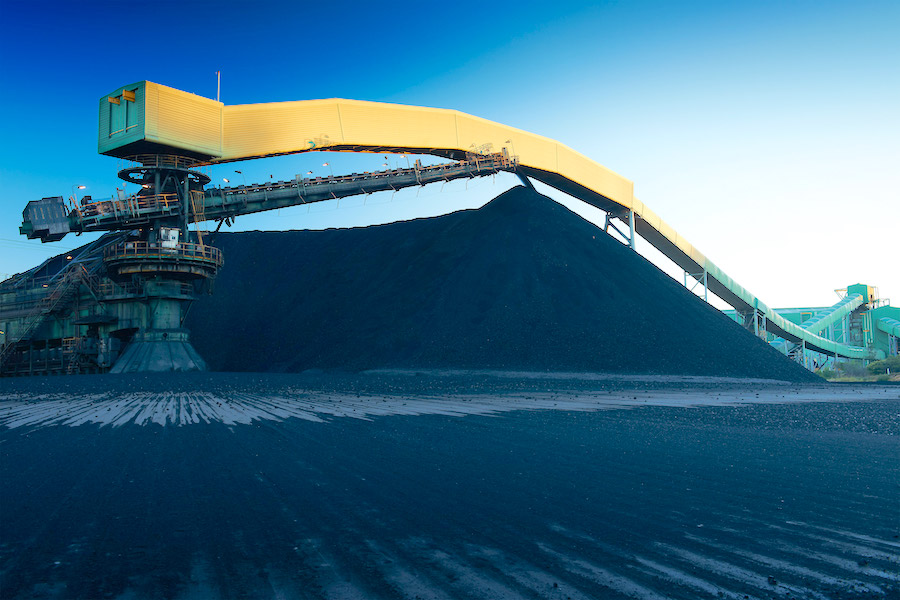
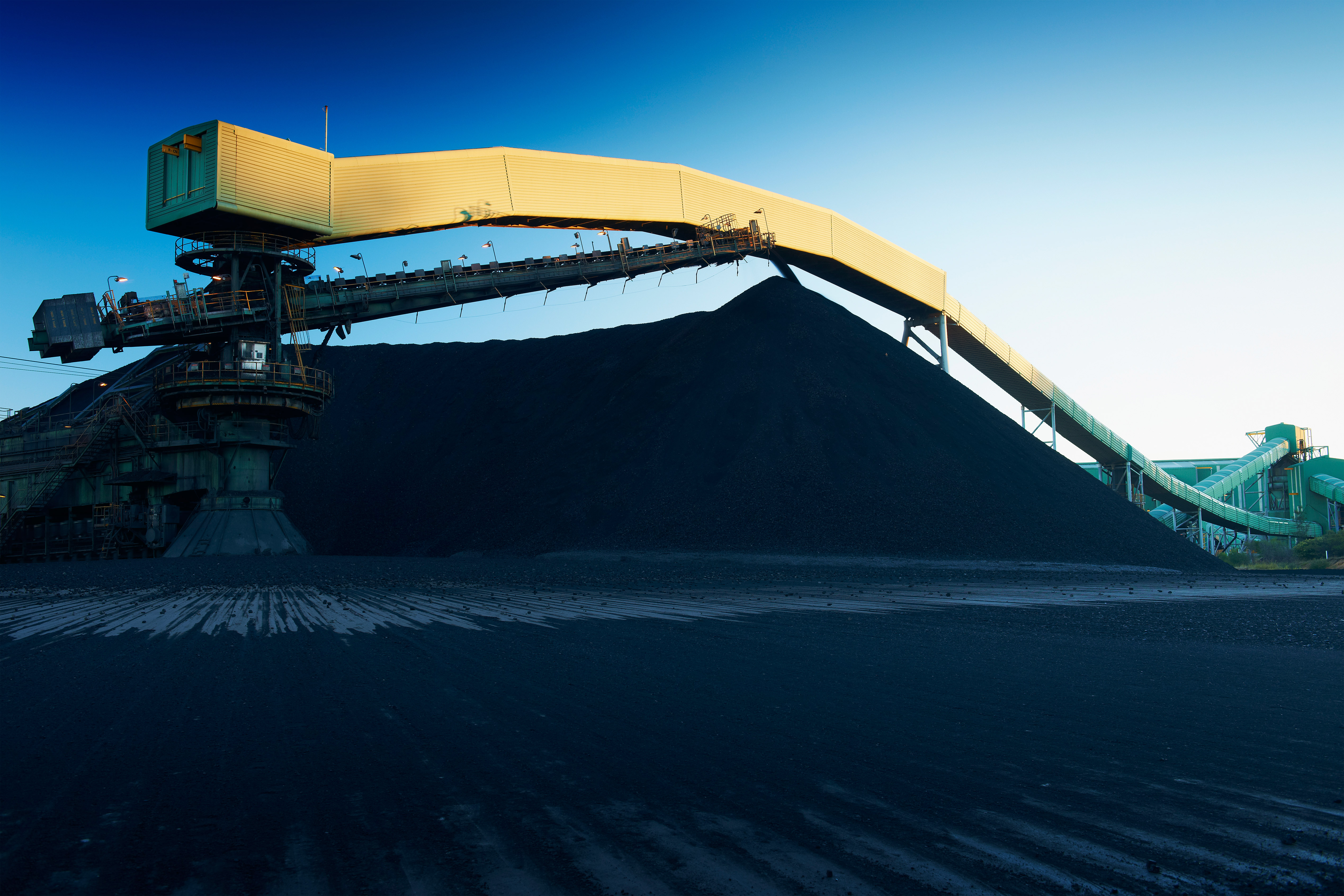
Mount Arthur thermal coal mine in Australia. (Image courtesy of BHP.)

Workers at four mines of the BHP Mitsubishi Alliance (BMA), which owns Australia’s largest metallurgical coal fields, will vote on strike action over working conditions and job security, their union said on Wednesday.


The possibility of industrial action at some sites of BHP Group’s joint venture with a unit of Mitsubishi Corp in Australia’s Queensland state comes as prices slump due to weaker steel demand in China.

Coking coal futures on the Dalian Commodity exchange closed at 2,192.5 yuan on Sept. 20, down from a high of 3,741 yuan in March.

“We had 15 months of negotiations with BHP, then another three months of negotiations assisted by the Fair Work Commission, but BHP refuse to do the right thing,” Stephen Smyth, the Mining & Energy Union’s (MEU) Queensland president, said in a statement.

Mitsubishi Development and BHP, one of the world’s biggest miners, did not immediately respond to a request seeking comment.

BMA, owned 50:50 by BHP and Mitsubishi Development, is Australia’s largest producer and supplier of seaborne metallurgical coal. The alliance operates seven mines in central Queensland’s Bowen Basin as well as the Hay Point Coal Terminal.

Smyth said the union will fight to protect permanent jobs after a steady decline over the last decade. Talks have not reached the point of discussing wage hikes as the focus was on working conditions, especially on job security, he said.

The union filed an application to strike with Australia’s workplace regulator on Monday but a date has not yet been set for the vote, a union spokesperson said in an emailed response.

More than 2,000 workers across four of BMA’s seven mines come under the current employment agreement, the union said.

BHP’s Queensland coal operations, which also include two mines operated by the miner independently, produced 41 million tonnes of steel-making coal in fiscal 2021. This is roughly 4% of the global total, data from the International Energy Agency showed.

(By Lewis Jackson and Renju Jose; Editing by Richard Pullin)
Mosaic floor dating to Byzantine era found in Gaza
(7 images)

A mosaic floor that dates back to the Byzantine era has been discovered by farmers in the central Gaza Strip. The mosaic, shown on September 21, 2022, will be protected, with an excavation project planned.


Ahmad al-Nabahin, 16, cleans a mosaic floor he discovered at his farm, which dates back to the Byzantine era, according to officials in the Al-Bureij camp in the central Gaza Strip on September 21, 2022. Photo by Ismael Mohamad/UPI
License photo | Permalink


A closer look shows animal designs on the mosaic floor. Photo by Ismael Mohamad/UPI
License photo | Permalink


The full mosaic floor. Photo by Ismael Mohamad/UPI
License photo | Permalink


Ahmad al-Nabahin continues to clean. Photo by Ismael Mohamad/UPI
License photo | Permalink


Ahmad and his tools. Photo by Ismael Mohamad/UPI
License photo | Permalink


Palestinian farmer Salman al-Nabahin, 52, works with his son, Ahmad al-Nabahin. Photo by Ismael Mohamad/UPI
License photo | Permalink


The Palestinian Ministry of Tourism and Antiquities announced the discovery of the mosaic, which will be protected. An excavation project will begin soon. Photo by Ismael Mohamad/UPI
License photo | Permalink
US seeks action, possible UN resolution, on Myanmar junta

Thu, September 22, 2022 


The United States is seeking more pressure on Myanmar's junta through the United Nations and is urging the international community not to recognize upcoming elections, a senior official said Thursday.

"There is wide acknowledgement that the regime needs to feel more pressure," State Department Counselor Derek Chollet, who is leading US diplomacy on Myanmar during the annual United Nations General Assembly, told AFP.

He pointed to outrage over an air strike this month that killed 11 schoolchildren as well as the July execution of four prominent prisoners by the junta, which threw out the elected government in February 2021, ending a decade-long experiment in democracy.


Chollet said he held talks both with other governments and with representatives of the National Unity Government -- dominated by ousted civilian leader Aung San Suu Kyi's party -- and held a virtual meeting with armed ethnic groups inside the country also known as Burma.

He said he spoke with other nations about a Security Council resolution although the effort was in "the very early stages" with specifics not yet clear.

"We think we have to be realistic as on all issues about how far Russia and China are willing to let the Council take action," he said, referring to the veto-wielding allies of Myanmar's military.

"We think it's important to try," he said.

He said that he also conveyed to other governments that "we shouldn't lend any sense of credibility" to elections the junta plans for next August.

"I told them that we see no chance that these elections could be free and fair, given the fact that the regime doesn't control as much as half the territory, you've got political prisoners being locked up and killed, and Aung San Suu Kyi basically in isolation and no one has seen her for 20 months," Chollet said.

Earlier Thursday, the UN special rapporteur on the rights situation in Myanmar, Thomas Andrews, warned that the election would be "fraud."

The United States has imposed a series of sanctions, including targeting junta leaders, since the coup.

But it has held off on one step urged by activists, targeting Myanmar's oil and gas industry, amid opposition from ally Thailand which imports energy from its neighbor.

The Southeast Asian bloc ASEAN has unsuccessfully sought to broker a diplomatic way out of the crisis with the generals and some US partners, notably Myanmar's neighbor India, have hesitated at tough action.

sct/md
INDIAN IMPERIALISM  
Conflict Tourism: Kashmir Hottest New Destination For Indians
#KASHMIR IS #INDIA'S #GAZA

By Parvaiz BUKHARI
09/22/22 
Kashmir, India's hottest new travel destination, is also the site of its deadliest insurgency

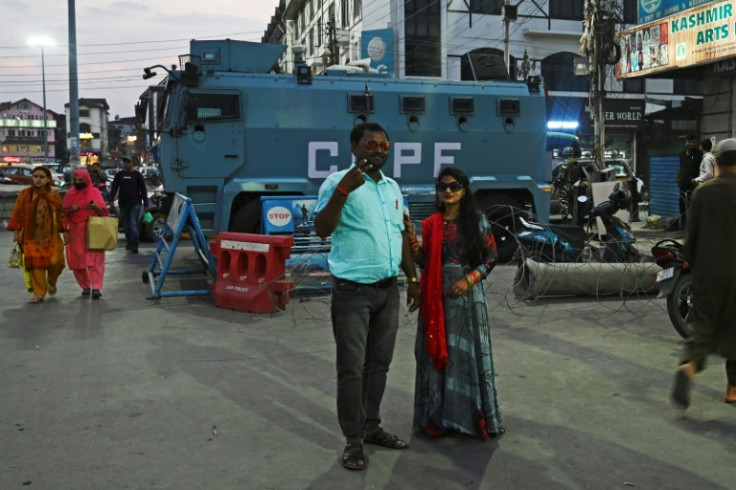
Standing on a fortified Kashmir street, an Indian tourist poses triumphantly for her husband's camera, clutching the national flag in each hand and flanked by two soldiers carrying rifles.

India's hottest new travel destination is also the site of its deadliest insurgency, where regular skirmishes break out between separatist militants and Indian troops, half a million of whom are stationed in Kashmir.

A big-budget tourism campaign, inaugurated early last year, is luring Indians to Kashmir with the promise of stunning Himalayan scenery, snow-covered hill stations and the remote Hindu shrines dotting the Muslim-majority region.

More than 1.6 million Indian travellers visited the disputed territory in the first six months of this year -- a new record, according to local officials, and four times the number that visited over the same period in 2019.

Many fraternise and take selfies with soldiers, and are dismissive of the regular firefights between troops and rebels taking place out of sight from popular destinations.


"Now everything is fine in Kashmir," Dilip Bhai, a visitor from India's Gujarat state, told AFP while waiting in queue outside a restaurant guarded by paramilitary forces.

"The news of violence we hear in media is more rumour than reality," he said, adding that whatever armed clashes were happening "on the side" did not worry him.

Security forces have tightened a chokehold on Kashmir -- also claimed and partly controlled by Pakistan -- since 2019, when India's government revoked the limited autonomy constitutionally guaranteed to the region.

That year, thousands of people were taken into preventative detention to forestall expected protests against the sudden decision, while authorities severed communications links in what became the world's longest-ever internet shutdown.

Public protests have since been made virtually impossible, local journalists are regularly harassed by police and the region is shut off to foreign reporters.

But clashes still break out in the territory almost every week, with officials counting 130 suspected rebels and 19 members of the security forces killed over the first six months of the year.

The constitutional change opened up land purchases and local jobs to Indians from outside Kashmir, and for residents, this year's influx of travellers is the final insult.

"Promotion of tourism is good, but it is done with a kind of nationalist triumphalism," a leading Kashmiri trader told AFP, asking not to be named for fear of government reprisal.

"It's like war by other means," they added. "The way tourism is being promoted by the government is telling Indians: go spend time there and make Kashmir yours."

A 1989 rebellion against Indian rule in Kashmir started a long-running insurgency that killed thousands of people and sparked a panicked migration of Hindu residents from the Muslim-majority valley.

Periodic attempts to revive the tourism market faltered, with three popular uprisings between 2008 and 2016 leaving more than 300 civilians dead and scaring off potential visitors.

But after Prime Minister Narendra Modi's government revoked Kashmir's limited autonomy three years ago, authorities again began promoting the region to Indians as one of the country's premier getaway destinations.

A promotional blitz followed, with festivals, travel marts, roadshows and summits featuring Indian travel operators, sponsored by the local government and 21 major cities across India.

The government announced the opening of a ski resort among 75 new "untapped destinations" for tourists, including some close to the heavily militarised de facto border that divides Kashmir between India and Pakistan.

Authorities are also courting investors to build 20,000 hotel rooms in addition to the 50,000 already in the territory, and they eased a homestay policy to encourage residents to host visitors.

Sarmad Hafeez, the local government's tourism secretary, told AFP that the official budget to promote tourism had "quadrupled" in the past two years.

"We changed past perceptions about Kashmir," he said. "Events sent out a clear message that Kashmir is safe to travel to."

India's drive to open Kashmir's remarkable landscape to tourism comes as the rest of its established economy languishes after the change in the territory's status.

Drastic curbs on civic life and an intensified counterinsurgency campaign have stifled local business.

IBT Fast Start - Let the best of International News come to you
Sign up and stay up to date with our daily newsletter.
You can unsubscribe at any time. By signing up you are agreeing to our Terms of Service and Privacy Policy.

The government has also removed tax barriers that had helped protect local production from outside competition.

"This was the last nail in the coffin of our manufacturing industry," Shahid Kamili, president of the Federation Chamber of Commerce and Industry in Kashmir (FCIK), told AFP.

Industrial production accounts for 15 percent of the local economy, according to FCIK data -- three times the most optimistic figures for the tourism sector.

But 350,000 industrial workers lost their jobs since the region's autonomy was rescinded, Kamili said.

The region's potential for growth as a travel destination remains hampered by its violent history and prevailing unhappiness with Indian rule, leaving some visitors unnerved by the heavy security presence.

"If Kashmir is a part of India," a tourist from West Bengal told AFP, "then we should ask why there are so many security forces everywhere."

Half a million Indian troops are stationed in Kashmir to 
quell a separatist insurgency in the Muslim-majority region
Despite the push for tourism, drastic curbs on civic life and and intensified counterinsurgency campaign have stifled businesses in Kashmir

Kashmir's potential for growth as a travel destination remains
 hampered by its violent history and prevailing unhappiness with Indian rule


© Copyright AFP 2022. All rights reserved.
NASA gears up to deflect asteroid, in key test of planetary defense
THIS SHOULD BE THE JOB OF THE
U$A SPACE FORCE INC.
Issam AHMED
Thu, September 22, 2022 


Bet the dinosaurs wish they'd thought of this.

NASA on Monday will attempt a feat humanity has never before accomplished: deliberately smacking a spacecraft into an asteroid to slightly deflect its orbit, in a key test of our ability to stop cosmic objects from devastating life on Earth.

The Double Asteroid Redirection Test (DART) spaceship launched from California last November and is fast approaching its target, which it will strike at roughly 14,000 miles per hour (23,000 kph).

To be sure, neither the asteroid moonlet Dimorphos, nor the big brother it orbits, called Didymos, pose any threat as the pair loop the Sun, passing some seven million miles from Earth at nearest approach.

But the experiment is one NASA has deemed important to carry out before an actual need is discovered.

"This is an exciting time, not only for the agency, but in space history and in the history of humankind quite frankly," Lindley Johnson, a planetary defense officer for NASA told reporters in a briefing Thursday.

If all goes to plan, impact between the car-sized spacecraft, and the 530-foot (160 meters, or two Statues of Liberty) asteroid should take place at 7:14pm Eastern Time (2314 GMT), and can be followed on a NASA livestream.

By striking Dimorphos head on, NASA hopes to push it into a smaller orbit, shaving ten minutes off the time it takes to encircle Didymos, which is currently 11 hours and 55 minutes -- a change that will be detected by ground telescopes in the days that follow.

The proof-of-concept experiment will make a reality what has before only been attempted in science fiction -- notably films such as "Armageddon" and "Don't Look Up."

- Technically challenging -


As the craft propels itself through space, flying autonomously for the mission's final phase like a self-guided missile, its main camera system, called DRACO, will start to beam down the very first pictures of Dimorphos.

"It's going to start off as a little point of light and then eventually it's going to zoom and fill the whole entire field of view," said Nancy Chabot of Johns Hopkins Applied Physics Laboratory (APL), which hosts mission control in a recent briefing.

"These images will continue until they don't," added the planetary scientist.

Minutes later, a toaster-sized satellite called LICIACube, which separated from DART a couple of weeks earlier, will make a close pass of the site to capture images of the collision and the ejecta -- the pulverized rock thrown off by impact.

LICIACube's picture will be sent back in the weeks and months that follow.

Also watching the event: an array of telescopes, both on Earth and in space -- including the recently operational James Webb -- which might be able to see a brightening cloud of dust.

Finally, a full picture of what the system looks like will be revealed when a European Space Agency mission four years down the line called Hera arrives to survey Dimorphos's surface and measure its mass, which scientists can only guess at currently.

- Being prepared -


Very few of the billions of asteroids and comets in our solar system are considered potentially hazardous to our planet, and none in the next hundred or so years.

But "I guarantee to you that if you wait long enough, there will be an object," said Thomas Zurbuchen, NASA's chief scientist.

We know that from the geological record -- for example, the six-mile wide Chicxulub asteroid struck Earth 66 million years ago, plunging the world into a long winter that led to the mass extinction of the dinosaurs along with 75 percent of species.

An asteroid the size of Dimorphos, by contrast, would only cause a regional impact, such as devastating a city, albeit with a greater force than any nuclear bomb in history.

Scientists are also hoping to glean valuable new information that can inform them about the nature of asteroids more generally.

How much momentum DART imparts on Dimorphos will depend on whether the asteroid is solid rock, or more like a "rubbish pile" of boulders bound by mutual gravity, a property that's not yet known.

We also don't know its actual shape: whether it's more like a dog bone or a donut, but NASA engineers are confident DART's SmartNav guidance system will hit its target.

If it misses, NASA will have another shot in two years' time, with the spaceship containing just enough fuel for another pass.

But if it succeeds, then it's a first step towards a world capable of defending itself from a future existential threat, said Chabot.

ia/mdl

After asteroid collision, Europe's Hera will probe 'crime scene'

A NASA mission to deliberately smash a spacecraft into an asteroid blasts off on Monday


September 23, 2022 - AFP

After NASA deliberately smashes a car-sized spacecraft into an asteroid next week, it will be up to the European Space Agency's Hera mission to investigate the "crime scene" and uncover the secrets of these potentially devastating space rocks.

NASA's Double Asteroid Redirection Test (DART) aims to collide with the asteroid moonlet Dimorphos on Monday night, hoping to slightly alter its trajectory -- the first time such an operation has been attempted.

Astronomers around the world will watch DART's impact, and its effect will be closely followed to see if the mission passed the test.

The Hera spacecraft is planned to launch in October 2024, aiming to arrive at Dimorphos in 2026 to measure the exact impact DART had on the asteroid.


- 'A new world' -


Hera will be loaded up with cameras, spectrometers, radars and even toaster-sized nano-satellites to measure the asteroid's shape, mass, chemical composition and more.

"If an asteroid is made up of, for example, loose gravel, approaches to disrupt it may be different than if it was metal or some other kind of rock," she told the International Astronautical Congress in Paris this week.

"Asteroids are not boring space rocks -- they are super exciting because they have a great diversity" in size, shape and composition, Michel said.

"Unless you touch the surface, you cannot know the mechanical response," he said.

For example, when a Japanese probe dropped a small explosive near the surface of the Ryugu asteroid in 2019, it was expected to make a crater of two or three metres. Instead, it blasted a 50-metre hole.

"The surface behaved almost like a fluid," rather than solid rock, he added. "How weird is that?"

Binary systems like Dimorphos and Didymos represent around 15 percent of known asteroids, but have not yet been explored.

Learning about the impact of DART is not only important for planetary defence, Michel said, but also for understanding the history of our Solar System, where most cosmic bodies were formed through collisions and are now riddled with craters.

juc/dl/kjm