Thursday, November 03, 2022

Convicted murderer Colin Thatcher's invitation to the Saskatchewan legislature diminishes us all

Kathy Walker, Assistant Professor, Department of Political Studies, University of Saskatchewan and Susan Gingell, Professor Emerita (Decolonizing & Women's Literatures in English; Women's and Gender Studies), University of Saskatchewan - 
THE CONNVERSATION

Saskatchewan Premier Scott Moe and key legislators are under fire for inviting and initially defending the invitation of convicted killer and former cabinet minister Colin Thatcher to the throne speech.


Colin Thatcher, former MLA of Saskatchewan and convicted murderer, walks out of the chamber after the speech from the throne at the Saskatchewan legislature in Regina on Oct. 26, 2022. 
THE CANADIAN PRESS/Heywood Yu

The invitation was issued by Lyle Stewart, a Saskatchewan Party MLA and legislative secretary to the premier responsible for provincial economic autonomy.

Describing Thatcher as a “fine individual,” Stewart said: “If anybody has a right to be here, it’s Colin Thatcher.”

Stewart’s supposed “fine individual” is the same person who was convicted in 1984 of the first-degree murder of his ex-wife, JoAnn Wilson, in the garage of her Regina home. The pair was in a custody battle when Wilson was severely beaten before being shot in the skull.

It wasn’t the first time Wilson had been violently assaulted after the marriage breakdown. In 1981, she was shot in the shoulder through a patio door.
Longtime abuser

Thatcher’s final act of violence was, according to Wilson’s earlier statement, the culmination of abuses that experts — those who have lived and/or studied intimate partner violence — recognize as a classic escalation.

Under the influence of stress and alcohol, Thatcher reportedly pushed and kicked Wilson because she couldn’t soothe their sick infant and shoved her when she was nine months pregnant. Among several threats, he once said he would kill her and hide her body so it would never be found.


Thatcher had a right to be at the throne speech, Tell told reporters.
© THE CANADIAN PRESS/Heywood Yu

Yet when responding to questions about Thatcher’s invitation to the province’s throne speech, Christine Tell, minister of corrections, policing and public safety, said: “It doesn’t matter, he has a right to be here, just like anybody else. He is a free citizen.”

The comment implies that because Thatcher served a 22-year jail sentence before being released on parole, his crime is no longer relevant.

Moe has backpedalled on his initial refusal to apologize for the incident and reprimanded Stewart by removing him as his legislative secretary.

Tell, however, appears to have not suffered any political repercussions for her comments, though she admits her words were “inappropriate” and should not take away from the “horrendousness” of Thatcher’s “situation.”

Related video: Ex-partner of Saskatchewan mass murderer shares story of abuse, survival, and hope
Ex-partner of Saskatchewan mass murderer shares story of abuse, survival, and hope

Normalizing violence against women

To treat these reactions as the wrongful attitudes of a privileged few only compounds and masks what is really wrong with these responses. They illustrate that we live in a society that normalizes violence against women, and this normalization is reflected in systems that not only routinely fail to protect women from further violence, but also become the tools of abusers.

Saskatchewan, which has the highest rates (tied with Manitoba) of interpersonal family violence in Canada, according to the latest statistics, is a quintessential example. This kind of violence in Saskatchewan also rose between 2016 and 2019, so the problem is getting worse.

Thatcher is escorted by police into the Regina provincial courthouse in June 1984 for a preliminary hearing after being charged with murdering his ex-wife in 1983. He was later convicted.
© THE CANADIAN PRESS/Lorne McClinton

What does it say to those who have experienced or are experiencing such violence, when even the most horrific intimate partner violence is not enough to make a man a permanent pariah to the province’s most powerful politicians?

The Saskatchewan government should be just as concerned with the safety of domestic violence survivors as it currently is with asserting provincial autonomy.

Domestic violence survivors also require autonomy so they are not subject to violence in their own homes. The Saskatchewan Party’s version of autonomy is inherently patriarchal; we’d all benefit from measures that recognize women’s rights to a life free of violence and terror.

Survivors need resources

The same week Thatcher was being invited to the legislature, a forum was being held in Saskatoon called “Walking with Domestic Violence Survivors: Stories, Prevention, Responses and Healing.” It focused on the voices of survivors and those who work to support them.

An illusory autonomy is produced for domestic violence victims, typically women, when the onus is placed on them to protect themselves by moving away — despite widespread knowledge that the most dangerous period for victims is immediately after separation. As the speakers at the Saskatoon forum stated: “Why should the abused be the ones who lose their homes?” and “Where are they going to go?”

Survivors’ stories at the forum indicated that they need to be better connected with resources to help them heal. Saskatchewan currently does not provide operational funding to second-stage shelters that could provide security and counselling support.

Survivors also feel police frequently don’t believe them and do not provide adequate protection in an abuse situation. Social workers too often intervene by taking children from the abused parent on the grounds that they’re not providing a safe environment for their children. Family law courts do not take domestic violence into adequate account when determining custody of children.

English poet John Donne once remarked:
“Every [human] death diminishes me because I am involved in [Human]kind.”


The Saskatchewan government’s version of law and order would do well to recognize that Wilson’s death diminished us, and actively address its ongoing systemic causes and conditions — not accommodate and defend the supposed “rights” of her killer.

This article is republished from The Conversation, a nonprofit news site dedicated to sharing ideas from academic experts.

Read more:
New anti-poverty initiative focuses on lived experiences to help shape policy

Federal election 2021: Gender-based violence is an issue we should all prioritize

Kathy Walker has volunteered in the campaigns of provincial and federal NDP and Liberal Party candidates she knows and respects. Susan Gingell is a member of the Saskatchewan NDP and edits the newsletter of her MLA, Erika Ritchie.

Susan Gingell does not work for, consult, own shares in or receive funding from any company or organisation that would benefit from this article, and has disclosed no relevant affiliations beyond their academic appointment.
24 more graves excavated, including those of children, in Tulsa Race Massacre probe

Forensic scientists have uncovered 24 additional unmarked graves in an Oklahoma cemetery, three of them containing child-sized coffins, as part an effort to identify victims of the 1921 Tulsa Race Massacre, officials said.

The unmarked burial sites were discovered in Tulsa's Oaklawn Cemetery after excavations resumed there on Oct. 26, according to city officials who authorized the investigation.

The latest discovery was made Tuesday in the graveyard just southeast of downtown Tulsa, officials said.

"Three additional child-sized burials were discovered...in the southern block (of the cemetery)," the city said in a news release.


State archaeologist Kary Stackelbeck makes notes at an excavation site at Oaklawn Cemetery while searching for victims of the 1921 Tulsa Race Massacre Friday, Oct. 28, 2022 in Tulsa, Okla.© City of Tulsa via AP

Twenty-one other burial sites were unearthed in the western section of the cemetery since the new excavation got underway last week, according to the city's statement.

Four of the graves are being excavated by hand to determine if the remains should be exhumed for further analysis.

Remains from one of the graves were found in a simple coffin and exhumed on Tuesday to be analyzed in an on-site lab.


Crews work on an excavation at Oaklawn Cemetery searching for victims of the 1921 Tulsa Race Massacre on Oct. 27, 2022, in Tulsa, Okla.© City of Tulsa via AP

"Experts continue to be narrowly focused on which graves will be exhumed and have determined that no child-sized burial will be," the city's statement reads.

This is the second excavation to occur at the cemetery. An excavation last year uncovered 19 unmarked burial sites, officials said.

Historians suspect that 75 to 300 people, most of them Black, were killed in the Tulsa Race Massacre, which the Oklahoma Historical Society calls "the single worst incident of racial violence in American history." The Oklahoma Bureau of Vital Statistics officially recorded 36 deaths.MORE: Tulsa Massacre 100 years later: Black Wall Street reimagined as Black tech hub

Following World War I, Tulsa was known for its affluent African American residents and black-owned businesses in an area called the Greenwood District, which was also referred to as "Black Wall Street."

White mobs attacked Black residents in the neighborhood and burned down more than 1,000 homes and businesses during two days of riots that broke out between May 31 and June 1, 1921, prompted by allegations that a 19-year-old Black shoe shiner assaulted a white female elevator operator.MORE: 100 years later, Tulsa Race Massacre survivors appeal to lawmakers: 'I hear the screams'

In 2018, Tulsa Mayor G.T. Bynum announced the city would reexamine the unmarked graves identified in a 2001 state commissioned report. In addition to Oaklawn Cemetery, the city has designated three other potential areas to excavate, including a park in northwest Tulsa near the Arkansas River and the Rolling Oaks Memorial Gardens cemetery.
New York Attorney General Letitia James secures $523 million from Teva Pharmaceuticals for role in opioid crisis

Kristina Sgueglia - 14h ago

The New York Attorney General’s office announced it has secured $523 million from Teva Pharmaceuticals and affiliates for its role in the opioid crisis, effectively marking the end of the state’s litigation against opioid manufacturers and distributors not currently in bankruptcy proceedings.

HOW THE PURDUE PHARMA BANKRUPTCY FAILED THE VICTIMS 
Duration 5:18
View on Watch

The funds — secured as part of Teva’s $4 billion-plus global settlement and separately from the state achieving a “historic liability verdict” following a jury trial against the company in 2021 — marks the largest settlement that Attorney General James has reached with an individual opioid defendant, according to a statement from James’ office.

The agreement also commits Teva to prohibit marketing opioids and funding third parties that promote them, and a ban on high-dose opioids and prescription savings programs among other injunctive relief.

Teva Pharmaceuticals announced in July a $4.35 billion proposed nationwide settlement that could resolve thousands of lawsuits over the drugmaker’s alleged role in the US opioid epidemic.

The attorney general plans to make a motion to remove Teva from opioid litigation effectively concluding New York’s opioid trial after James filed what she called the nation’s most extensive lawsuit in 2019.

In total, the attorney general’s office has secured over $2 billion from opioid manufacturers and distributors to fund abatement, treatment, and prevention resources as part of her efforts.

“The false information that Teva and other opioids manufacturers propagated about the safety of their drugs inflicted tremendous damage on the lives of countless people, while also abusing the health insurance system,” said New York’s Superintendent of Financial Services Adrienne Harris in a statement. “No monetary penalty can undo the immeasurable harm the opioid crisis has dealt to families across the country, but DFS is proud to have played a role in bringing about this resolution, holding opioid manufacturers and distributors accountable for their actions.”

The news comes on the heels of a separate tentative agreement from CVS and Walgreens to pay a combined $10 billion to settle lawsuits brought by states and local governments alleging the retailers mishandled prescriptions of opioid painkillers.

Those two agreements, unrelated to the New York settlement with Teva, continue to mark milestones in the effort to hold manufacturers and distributors accountable for the opioid crisis that have plagued America.
Calgary council unanimously supports motion to place limits on anti-abortion flyers


Calgary city council is taking specific aim at anti-abortion flyers with a new bylaw that would ban the delivery of uncensored images of fetuses.


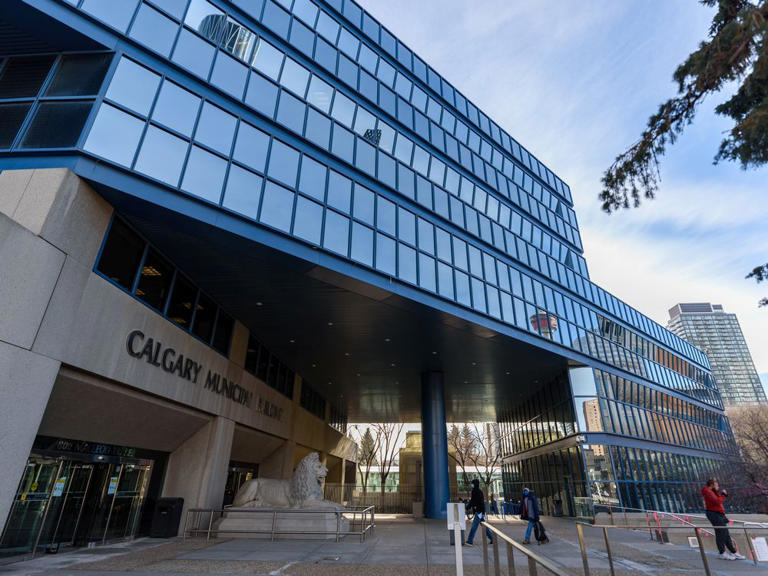
Calgary City Hall was photographed on Monday, November 22, 2021.© Provided by Calgary Herald

The motion, brought forward by Ward 2 Coun. Jennifer Wyness, would require anti-abortion flyers that have images of a fetus to cover those images with adhesives or an envelope, and to include a viewer discretion warning.

The steps would prevent people from inadvertently seeing an image of a fetus — something that has been described as traumatizing by those who have suffered miscarriages or gone through an abortion.

Wyness said she’s heard from many residents who have had their young children inadvertently find the flyers in their mailbox.

“This traumatizes the children and many, many months go by of nightmares, and I’ve heard from many community members story after story about this,” said Wyness.

She said these images are too graphic for television, and they’re too graphic to be posted on social media without a warning, so she wants the same for citizens’ mailboxes.

Related
Council calls for crackdown on graphic anti-abortion pamphlets

Alberta groups expect rise in abortion inquiries from U.S. women following court ruling

'Something that needs to be protected': Calgarians rally for abortion rights

Mayor Jyoti Gondek described her own experience with encountering the flyers.

“It is incredibly traumatizing,” she said. “I’ve had this dropped into my mailbox after a miscarriage and that is not something I wish for other people.”

Gondek said she isn’t worried that the bylaw is too targeted. She said the city has to start somewhere, and they are starting here.

“If you want to make an argument, you can go ahead and make it. You can be pro-life all day long, but we don’t need to see your graphic images.”

Several councillors commended Wyness for attempting to address the problem, and for bearing the expected attack from critics. The motion was approved unanimously.

Wyness’s motion does not specify any fines or punishments for breaking the proposed bylaw but does leave the door open for the administration’s suggestions.

Administration has been directed to report back to council by the end of June 2023 with a proposed bylaw.
Transgender soul pioneer Jackie Shane subject of Heritage Minute

TORONTO — Groundbreaking transgender soul singer Jackie Shane is the focus of a new Heritage Minute.


Transgender soul pioneer Jackie Shane subject of Heritage Minute

Historica Canada released her story as the latest in its ongoing series of minute-long shorts celebrating influential figures and accomplishments in Canadian history.

Shane, who was born in Nashville but thrived in the Canadian R&B music scene, was selected for her contributions to "the Toronto sound," a version of electric soul shaped in the early 1960s.

But she's also considered a trans pioneer at a time when few held visible positions in the local community. She performed on stage as an androgynous man, but in her private life had come out as trans to her mother when she was 13 years old.


Shane played clubs in Montreal and Boston, but her home was at Toronto's Saphire Tavern until she suddenly quit music in 1971.

She died three years ago at age 78 shortly after the retrospective "Any Other Way" was nominated for best historical album at the Grammys.

Two of Shane's songs, "Any Other Way" and "New Way of Lovin’," are featured in the Heritage Minute.

The singer is played by African-Mohawk two-spirit trans activist Ravyn Wngz who narrates a script penned by JP Larocque, a writer on "Sort Of" and "Coroner."

The Heritage Minute, released before the start of Transgender Awareness Week on Nov. 20, is co-directed by newcomer Ayo Tsalithaba and Pat Mills, known for the LGBTQ Lifetime movie "The Christmas Setup."

This report by The Canadian Press was first published Nov. 2, 2022.

David Friend, The Canadian Press
Why this Thunder Bay folk singer brought back his 1979 protest song to speak out against nuclear waste

Jon Thompson - CBC


What's old is new again in the debate around whether to store nuclear waste in northwestern Ontario.


Rodney Brown is a well-known folk singer and music teacher in Thunder Bay, Ont., he re-recorded his 1979 Freight Train Derailed to protest a plan to bury nuclear waste in northwestern Ontario.© Submitted by Rodney Brown

In 1979, when Atomic Energy of Canada was consulting on its plan to bury nuclear waste near Atikokan, Thunder Bay folk singer Rodney Brown's gave a five-minute deputation expressing his opposition to the plan.

That deputation was a performance of his new song, Freight Train Derailed.

Now 43 years later, another process designed by the Nuclear Waste Management Organization has whittled possible burial sites down to two communities including Ignace, a community of about 1,300 150 kilometres north of Atikokan, and 250 kilometres north of Thunder Bay.

And Rodney Brown is re-releasing Freight Train Derailed, this time with a new music video, to protest the project.

The plan is for a $23-billion nuclear disposal site where the nuclear waste management organization wants to inter some three million spent nuclear fuel bundles in a sprawling network of tunnels and holes 500 metres below the ground.

The controversial project is nearing the end of a years-long consultation project with communities and First Nations about whether they are willing to host the site either near Ignace or South Bruce, near London, Ont. Organization officials have said they welcome public discourse and debate, while promising a safe solution in line with international best practices.

People in Ignace are concerned about the long-term environmental and health effects of the project, but others note that it could bring back jobs and business in the economically-depressed town.

Amid that backdrop, Brown felt the time was right to bring back his protest song.

"The nuclear industry now, it's not the same kind of panel I saw in '79," Brown said. "Now it's a marketing company."


Brown originally wrote Freight Train Derailed for a play. Though the theatre troupe didn't end up using the song, its theme struck a nerve. Then, just months after Brown's deputation, a train carrying chlorine gas and other chemicals derailed in Mississauga. The accident caused an evacuation that affected 200,000 people.

The seeming increase in rail accidents was wind in the sails of Thunder Bay's anti-nuclear movement.

Brown drove from Thunder Bay to Atikokan to demonstrate against burying the waste in the area. When he arrived, he found mass unemployment due to the recent closure of the Steep Rock Iron Mines.

"The Atikokan people weren't excited about [nuclear waste] either," Brown recalls. "But there were so many jobs lost there and everybody was desperate. They needed jobs and I'm sure it's the same kind of thing now going on in Ignace. Everybody's looking at money and jobs."

Giving an old song new life

An old ally from that movement who now works with the advocacy group Environment North offered to pay for Brown to shoot a music video so Freight Train Derailed could once again bring attention to the cause.

Brown always felt the song needed a third verse so he added lyrics about the Mississauga crash, the Lac-Megantic crude oil train explosion in 2013, and the dangers of transporting nuclear waste.

The videographer introduced him to music engineer Ryan MacDonald, to re-record the song. MacDonald is also the leader of the Honest Heart Collective, a Thunder Bay-based rock band whose latest songs are charting in Italy.

The pair agreed to combine their bands and re-record the song as an inter-generational collaboration.

MacDonald doesn't identify as an activist. He grew up in the 1990s when Brown was best known as a children's performer and MacDonald can still recite the school song that Brown wrote and would perform when he visited to teach music.

"Rodney was one of — if not the first — musician who inspired me to play music," MacDonald says. "It was a big full-circle moment for me, working in the recording studio that I built with my friends in the Honest Heart Collective, to be recording the guy that got me into wanting to record music in the first place."

For Brown, the experience has opened his eyes to a new generation that is making, teaching, and recording music in Thunder Bay's north core. Brown notes how MacDonald is the same age as he was when he wrote Freight Train Derailed.

And while Brown marvels at new technology that has made quality recording affordable for independent artists to reach wider audiences, Brown laments that political progress hasn't turned out to be so linear.

He notes that political activism goes far back in history, from the labour movement of the last 150 years, even back to the French Revolution in the 18th century.

"The older you get the more you see how things go in circles," Brown said. "When I was involved in all this stuff, I thought we were on new ground, new territory, but we weren't."
Family living in a tent by the Arctic Ocean finally receives a home


After spending months living in a canvas tent as they waited on public housing, a Paulatuk couple with a young child finally has a home to move into.

Nunakput MLA Jackie Jacobson advocated for the couple on Friday in the legislature, and repeated his plea for help on Wednesday after he learned there was an available house in the community the family could move into.

"[They've] been trying to get into public housing since their baby was one month old," said Jacobson, saying the young family is currently living in a tent in the Arctic community. Being a tent, he said, it doesn't have a bathroom or other necessities for raising a baby.

"It's unbelievable that the baby's 13 months old, and I'm still advocating for the family to have a roof over their heads. Winter's sitting in. It's -20C in the community."

Back in 2020, the same couple had finally progressed through the waitlist for a home through Housing NWT, but was told their income was too high as they were receiving Canada Emergency Response Benefit (CERB) payments during the pandemic and they were removed from the waitlist. Housing minister Paulie Chinna fixed the issue of Housing NWT counting CERB payments as income, and personally promised the couple in the summer of 2020 that their application would be prioritized when she visited their community.

Over two years later, the couple still didn't have a home until Jacobson elevated their case in the legislature.

During question period on Wednesday, Jacobson grilled the housing minister, saying that a unit was available in the community but hadn't been offered to the couple.

"I spoke to the mayor this morning," he said. "There's one unit available in Paulatuk and is ready to be moved in. So I'm just wondering if the couple is first on the waiting list like I've been told?"

"I'm not familiar with the unit that is available and the condition that the unit may be in and why the unit may be vacant," responded housing minister Paulie Chinna. "I will work with the board of directors and look at the allocation."

"The [housing] minister has the authority to make that decision right now," said Jacobson, saying the housing minister could give the couple the available home immediately. "Will the minister commit to me today that you will assign Unit 65 to that young couple?"

"The tenants are number one on the wait list, so they are potentially next up for allocation," Chinna responded.

But Jacobson wasn't backing down. He continued to press the minister until Chinna promised they would be given Unit 65 in particular, even asking her to repeat herself to confirm it, prompting cheers and applause and from other members.

"We need the minister of housing to work with our community leadership and the people on the ground to show solutions today," he said. "It's 2022, and our people are living in the High Arctic raising their children in tents."

Caitrin Pilkington, Local Journalism Initiative Reporter, Cabin Radio
CNN's New Morning Show Garners Less Than 400,000 Viewers, Marking Latest Loss For Network's New Boss Chris Licht
Radar Online - 

Mega© Radar Online

CNN’s new morning show, CNN This Morning, tanked in the ratings during its debut earlier this week, garnering even less viewers than the average viewership of its predecessor, RadarOnline.com has learned.

In a surprising development to come as new CNN boss Chris Licht continues to shakeup the network’s on-air talent and program lineup, CNN This Morning – which premiered on Tuesday and saw Don Lemon, Poppy Harlow and Kaitlan Collins as its cohosts – debuted to abysmal numbers.


Mega© Radar Online

That is the revelation found by Nielsen Media Research, whose data showed only 387,000 total viewers tuned in to watch the network’s new morning show between 6 AM and 9 AM.

Even more surprising is the data showing that, of the less than 400,000 viewers to tune in, only 71,000 were in the 25-54 age demographic – a key demographic for advertisers looking to buy into networks’ programs.

New Day, CNN This Morning’s predecessor, garnered a daily average of 404,000 viewers throughout the month of October – meaning Licht’s new program with Lemon, Harlow and Collins at the helm failed to beat even the show it replaced.

Other networks’ morning shows, such as Fox News Channel’s Fox & Friends and MSNBC’s Morning Joe, essentially destroyed CNN This Morning in viewership.


Mega© Radar Online

Fox & Friends received a whopping 1.5 million viewers with 236,000 of those being in the 25-54 age demographic.

Morning Joe garnered a strong 793,000 viewers with 114,000 in the 25-54 age demographic.


As RadarOnline.com previously reported, CNN This Morning’s debut bomb is just the latest decision made by Licht to ultimately backfire in his face.

Chris Wallace’s new program, Who’s Talking to Chris Wallace, scored an atrocious 44,000 viewers when it debuted in September, while Jake Tapper – who was moved to the network’s 9 PM primetime time slot ahead of the upcoming midterm elections – essentially proved to be dead on arrival.


Mega© Radar Online

Although Tapper’s new show, CNN Tonight with Jake Tapper, had President Joe Biden as its guest when it debuted in October, the show still managed to come in last place against its competitors on other major news networks.

CNN This Morning’s poor premiere also came amid reports the struggling network’s employees are becoming increasingly more irked with Licht and his abrupt changes, layoffs and budget cuts.
World ‘plunging towards societal collapse’ as era of cheap money ends

The global economy is on the path to hyperinflation and risks societal collapse if soaring prices are not brought under control, one of the world’s biggest hedge funds has warned.


rates rise recession© Provided by The Telegraph

Elliott Management, the hedge fund founded by Wall Street billionaire Paul Singer, hit out at central bank rate-setters in an apocalyptic warning to clients as rate-setters bring the era of ultra-cheap money to an abrupt end.

The world economy faces an “extremely challenging” outlook and hyperinflation could result in “global societal collapse and civil or international strife”, the letter to clients said, the Financial Times reported. It said central banks have been “dishonest” in deflecting blame for the price surge from their prolonged use of ultra-loose monetary policy.

Elliott is one of the most influential hedge funds in the world and is feared in corporate boardrooms for its approach to investor activism.

Central banks are being forced into rapid interest rate rises to tackle inflation with the rate of price growth hitting double digits and a four-decade high in the UK.

The US Federal Reserve voted for its fourth consecutive 0.75 percentage point increase to its benchmark interest rate on Wednesday while the Bank of England followed with a 0.75 percentage point jump on Thursday, the eighth straight increase.


Stock markets have already suffered a tough year as the global economic outlook darkens and interest rates are pushed to levels last seen before the financial crisis. But Elliott believes that investors should brace for a “a seriously adverse unwind of the everything bubble” because of the number of “frightening and seriously negative possibilities”.


The “everything bubble” refers to the surge in a range of investments, including stocks, bonds and house prices, since the financial crisis after central banks left interest rates at rock bottom levels for years and cranked up the printing presses under quantitative easing.

Investors should not believe they have seen everything from previous financial crises, the letter warned. The sudden end to cheap money has “made possible a set of outcomes that would be at or beyond the boundaries of the entire post-WWII period”.

The S&P 500 – the benchmark US stock index – has plunged by 22pc this year and dropped a further 2.5pc on Wednesday after Fed chairman Jerome Powell signalled more rate increases are on the way. The FTSE 100 has been one of the world’s better performing stock indices but is still 5.6pc lower.

Elliott declined to comment.


Exclusive-Shell's flagship LNG trading made nearly $1 billion loss in Q3 -sources

By Ron Bousso, Marwa Rashad and Dmitry Zhdannikov - 


LONDON (Reuters) - Shell's liquefied natural gas (LNG) trading division recorded a loss of nearly $1 billion in the third quarter of the year, three industry sources told Reuters, after traders were caught out by a sharp rally in European gas prices when Russia halted supplies.

Shell, the world's top LNG trader, last week reported its second largest quarterly profit of $9.45 billion, but said it was impacted by weaker gas trading results.

Shell does not disclose its trading results and often uses general terms to describe trading conditions.

The pre-tax loss of around $900 million in its LNG trading offers rare insight into its trading operations that can also sharply boost the group's earnings.

The loss was a result of a wrong bet on the difference between benchmark Asian and European gas prices over the summer months, according to the three sources.

Shell declined to comment.

Shell's LNG trading performance contrasts with rivals BP and TotalEnergies which both reported strong earnings from their trading divisions in the quarter, without providing details.


European gas prices hit an all-time high of nearly $90 per million British thermal units (mmBtu) on Aug. 22 as the region scrambled to secure gas supplies after Russian halted pipeline gas deliveries.

Related video: Shell posts another bumper profit
Duration 1:06 View on Watch

The rally in European prices far outpaced Asian prices, leading to a collapse in the spread between the two benchmarks.

Asia has historically set the highest LNG prices in order to attract supplies during the summer months to allow countries like Japan and China to refill storages ahead of winter.

SEASONALITY

Traders also use paper derivatives to protect, or hedge, physical cargo trades from price fluctuations.

But the paper bets badly backfired in the third quarter.

Shell's Chief Financial Officer Sinead Gorman said last week that LNG trading was impacted by "seasonality and supply constraints, coupled with substantial differences between paper and physical realisation in a volatile and dislocated market."

"Our trading and optimization organization manages risk through hedging our physical volumes," Gorman told analysts on Oct. 27.

"Due to a breakdown in correlations, some hedges were less effective. LNG trading and optimization were also impacted by a combination of seasonality and supply constraints where the business is geared towards supplying the Northern Hemisphere during the winter."

Gorman added that for the first three quarters of 2022, LNG trading results were higher than the same period a year earlier.

Asian prices have been weakened by muted Chinese demand since the start of the year due to covid and slow economic growth.

LNG prices in Europe have been benchmarked against the TTF Dutch gas prices for years and the European Union is exploring alternative benchmark after the drop in Russian pipeline supplies.

(Reporting by Ron Bousso, Marwa Rashad, Dmitry Zhdannikov; Editing by Veronica Brown and Elaine Hardcastle)