Saturday, November 19, 2022

Six years after 'the Blob' in the Santa Barbara Channel, researchers find lasting effects in the kelp forest

A changing sea floor
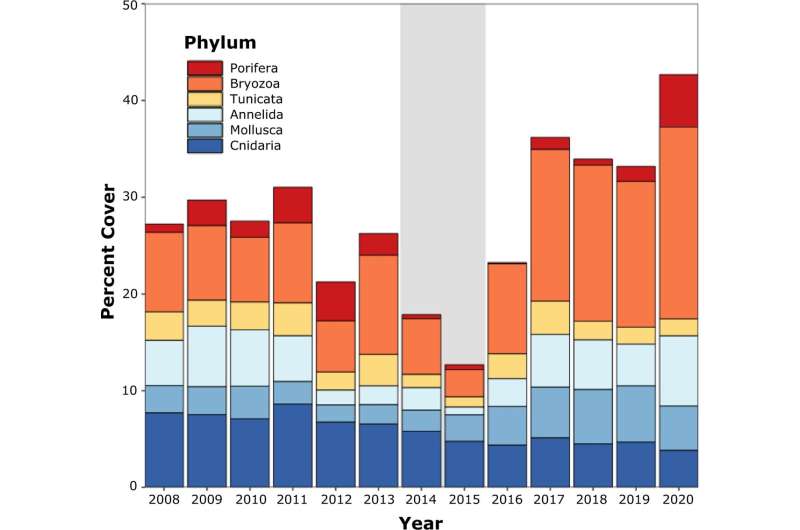
Average annual percent cover of invertebrate phyla. Gray shading indicates the Blob period of 2014– 2015 when bryozoan, ascidian, sponge (Porifera) and annelid cover declined dramatically. Credit: Communications Biology (2022). DOI: 10.1038/s42003-022-04107-z

The nearshore rocky reefs of the Santa Barbara Channel are dynamic places, with populations of fish, mollusks, algae and other assorted sea life shifting in response to currents, storms and a variety of other conditions. They wax and wane, typically returning to some sort of baseline composition—a kind of standard demographic—after disturbances temporarily disrupt the neighborhood, and then subside.

But there is one event in recent history that continues to be felt: an extreme marine heatwave that rolled through the Pacific Ocean several years ago. Nicknamed "the Blob," it consisted of abnormally warm temperatures that blanketed the waters in the Channel from 2014–2016. The Blob wreaked havoc on reef inhabitants, especially sessile invertebrates—filter feeders attached to the nearshore rocky reefs, such as anemones, tubeworms and clams.

"As sessile animals, most species are permanently attached to the substrate as adults," said UC Santa Barbara graduate student researcher Kristen Michaud, the lead author of a paper that appears in the Nature journal Communications Biology. "They cannot forage for alternate food sources and are highly dependent on the delivery of plankton."

Six years later, the number of these creatures has bounced back, but a closer look reveals that the structure of these populations has changed—an indicator of the effects of global warming on coastal oceans.

A 'perfect storm'

Marine heatwaves in the Santa Barbara Channel are not unheard of.

"They tend to be associated with El Niño events," said Dan Reed, a coastal marine ecologist and co-author of the paper. During these events,  across the Pacific Ocean rise by a few degrees, and the typical upwelling of nutrient-rich cold water from the deep is suppressed. This affects the abundance of phytoplankton in the surface waters that rely on these nutrients, and by extension, the many sea creatures that rely on the plankton for food. In the Channel, El Niños tend to come with big winter storms that rip out kelp and scour the rocky sea floor. These events are destructive, but are a normal part of life in the Channel's —the sites of UCSB's Santa Barbara Coastal Long-Term Ecological Research (SBC LTER) project.

"What was really different about the Blob was that in 2014 and 2015, we got all this , but without the swell," Reed said. This made it easier to suss out the effects of increased temperature on the kelp forest community without the complicating factors of storm and wave action, he explained.

"The Blob is exactly the kind of event that shows why long-term research is so valuable," said Bob Miller, principal investigator at the SBC LTER and a co-author on the paper. "If we had to react to such an event with new research, we would never know what the true effect was. Because SBC LTER is doing work designed to address how the changes in the environment affect coastal marine ecosystems, we are perfectly positioned to examine unprecedented events like this."

According to Michaud, the anomalous heatwave was a "perfect storm" for the filter feeders. Not only did it result in a reduced abundance of food, but it also stoked the creatures' metabolisms, leading them to require more food as temperatures rose. As a result, the average cover of sessile invertebrates across the study sites declined by 71% in 2015.

Among the filter feeders, there were winners and losers.

"The groups of animals that seemed to be the winners, at least during the warm period, were longer-lived species, like clams and sea anemones," Michaud said, explaining that these species could have traits and feeding strategies that enable them to survive periods of stress and low food availability. The more vulnerable invertebrates were the rapid-growing and shorter-lived types such as sea squirts, sponges and bryozoans—compound organisms composed of a few to many tiny, specialized individuals.

"But after the Blob, the story is a little different," Michaud said. "Bryozoan cover increased quite rapidly, and there are two species of invasive bryozoans that are now much more abundant."

According to the study, the species Watersipora subatra, a recent invader, and the long-established Bugula neritina are now more prevalent in the Channel, post-Blob. There could be several reasons for the new dominance of these species, Michaud said, such as a greater tolerance for warmer temperatures compared to the natives, and more aggressive competition for space against reduced numbers of native bryozoans. The kelp forests, which were surprisingly resilient to the heat in the Santa Barbara Channel, may also have assisted in the bryozoan invaders' quest for space by shading out competing seaweeds in the understory.

Additionally, Michaud and her colleagues found that a native sessile gastropod called Thylacodes squamigerous, or "scaled worm snail," has significantly increased in abundance since the onset of the Blob. With a southern range that extends beyond Baja California, the researchers surmise that the animal may have adaptations to warm temperatures that made it robust to the Blob. Its ability to switch to alternative food sources such as kelp detritus could have given it an edge during the phytoplankton lean years.

The reshaping of the sessile invertebrate populations after the Blob are among the many shifts in the kelp forests that Michaud, Miller, Reed and colleagues at the SBC LTER have been focusing on, particularly with respect to .

"Nothing's permanent in this system," Reed said. "Things fluctuate on the order of months, other things on the order of years." With the decades' worth of continuous data collected at the LTER's study sites, scientists can watch for changes that might otherwise go unnoticed now but in the future could result in more profound effects.

The heat of the Blob may have subsided in the Channel, but the researchers expect the changes it wrought to continue, according to Miller, who has an eye on potential effects on the local food web, particularly with animals like surfperch, which forage for sessile invertebrates in the kelp forest.

"This pattern in the community structure has persisted for the entire post-Blob period," Michaud added, "suggesting that this might be more of a long-term shift in the assemblage of benthic animals—these communities may continue to change as we experience more marine heat waves and continued warming."

More information: Kristen M. Michaud et al, The Blob marine heatwave transforms California kelp forest ecosystems, Communications Biology (2022). DOI: 10.1038/s42003-022-04107-z

CRIMINAL CAPITALI$M

Christine Duhaime: The wild FTX Ponzi scheme touched Vancouver

TheOrca Author

“When you bought Bitcoin on FTX, it seems they would “record” that you held Bitcoin on a scrap of paper somewhere, or as with other business records, on Signal’s auto-erasing text messaging app” | Image: stockcatalog, Creative Commons

One struggles to find the words to describe the FTX debacle. 

It’s a wild story – a 30-year-old crypto dude who amassed a personal fortune of $25 billion in one year, and now is worth nothing! His crypto exchange, FTX, filed for bankruptcy in Delaware, with up to $30 billion missing. 

“I f—ed up”, tweeted FTX CEO Sam Bankman-Fried, known as SBF, after the exchange collapsed. That hardly describes it. 

Four people – SBF, his girlfriend Caroline Ellison, Zixiao Wang and Nishad Singh – controlled the whole house of cards. They apparently all lived together in a love nest in the Bahamas, played video games much of the time, and inter-dated with six other roommates. 

The house of cards had two fictional rooms: one was the crypto exchange, FTX, and the other was Alameda Research LLC. SBF led FTX; the girlfriend led Alameda. To make it fun, they decided to create their own currency out of thin air called FTTs. As some Tik-Tokers have pointed out, the FTT stands for “facial tissue token” – nothing more than a Kleenex. 

Many crypto dudes create tokens out of thin air and sell those puffs of air to innocent consumers, sometimes for upwards of $100 per puff. Crypto people call them tokens. In the real world, such things are called securities which, since 1933, can’t be sold to innocent consumers like candy but, well, should I say it? There are no securities law cops around in crypto. 

You didn’t need a VPN to use FTX from Canada. When you bought Bitcoin on FTX, it seems they would “record” that you held Bitcoin on a scrap of paper somewhere, or as with other business records, on Signal’s auto-erasing text messaging app. Like that isn’t sketch. 

SBF would hand the money sent by consumers over to his girlfriend at Alameda to spend. And, she spent. And spent. And spent. He did, too. Billions of dollars gone and things like private jets, luxury housing, fancy cars – the usual toys – started to be acquired. Even the Bahamas love nest was a luxury spend. This wasn’t profits, though, it was money owed to consumers of FTX that was supposed to be held in trust.

Here’s where the pieces of puff come into the picture. 

As FTX sent billions of consumer funds over to the girlfriend at the Alameda entity, she would record it as a loan, backed by pieces of the Kleenex token – the FTT. So, they weren’t really short of funds when people like the due diligence gurus from the Ontario Teacher’s Pension Plan came to invest the pensions of Canadians into FTX because they had billions of pieces of Kleenex recorded. On a scrap of paper. Somewhere. Maybe even in auto-erased Signal messages.

The girlfriend spent some of that money right here in Vancouver, and the girlfriend’s company became the control person of a British Columbia issuer, although mysteriously I couldn’t see where that was disclosed to investors, as required. How she came to be approved to control a British Columbia public company is another mystery.  

Alameda loaned $110 million to the British Columbia public company, Voyager Digital, another bankrupt crypto outfit where consumers lost their money. Voyager Digital is being sued in the U.S., and the plaintiffs are alleging that it was a crypto Ponzi scheme. A lawyer in Vancouver was its director. 

A Ponzi scheme is a financial fraud that induces consumers to invest by promising returns from an allegedly legitimate business, where proceeds from new investors are paid to previous investors, cultivating the illusion of legitimacy, and inducing further investment. Ponzi schemes are presumptively insolvent from inception, as a matter of law, meaning that because they spent investor’s money (rather than protecting it as trust funds), they end up in bankruptcy. 

The Ponzi scheme is named after Charles Ponzi. Over 101 years ago, in Boston, he ran a scheme similar to the FTT puff tokens which FTX sold, only he sold consumers illusive international reply mail coupons, that were also recorded on scraps of paper somewhere. The US Postal Service took him down after figuring out that the scheme was smoke and mirrors – Ponzi was just taking money from investors and giving them nothing in return. Sound familiar?

The wildness of FTX goes on and on. They had no board meetings, they didn’t know their own bank accounts, they have an audit firm that exists in the Metaverse’s Decentraland, they don’t know who works there or anyone’s terms of employment, employees were supplied with drugs. 

The new bankruptcy team has said that they aren’t about to trust anything – statements, financials or records – from the FTX crypto dudes, including SBF. And who can blame them? Like all schemers, they lied to just about everyone, from start to finish. 

SBF is said to be still at the love nest in the Bahamas presumably waiting for the FBI to show up.

Christine Duhaime is a financial crime expert with Fusion Intelligence.


Sam Bankman-Fried Cashed Out

$300M in Previous Funding Round: 

WSJ


In a previously undisclosed detail, most of the

 $420 million raised in October 2021 went directly

 to Bankman-Fried, the Journal reported.


By Nelson Wang
Nov 18, 2022 

"The Hash" panel discusses the parallels and differences between the implosions of crypto exchange FTX and the fall of the most infamous business fraud in American history – the Texas-based energy trading con Enron (ENE)


Former FTX CEO Sam Bankman-Fried personally received $300 million from a $420 million funding round for the company in October 2021, according to a Wall Street Journal report that cited FTX financial records it had reviewed, as well as people familiar with the transaction.

The arrangement was previously undisclosed, with Bankman-Fried telling investors at the time it was partially to reimburse him for money he’d spent to buy out Binance’s stake in FTX a few months earlier, the Journal reported.

In July 2021, Bankman-Fried bought out the approximately 15% of FTX owned by Binance, which was FTX’s first investor. Binance CEO Changpeng “CZ” Zhao tweeted this month that the amount of the buyout was $2.1 billion in Binance’s stablecoin BUSD and FTX’s exchange token FTT.

The October 2021 funding round valued FTX at $25 billion and raised money from financial heavyweights such as BlackRock, Tiger Global, Singapore’s sovereign wealth fund Temasek and Sequoia Capital. A few months later, some of those same investors helped raise $400 million for FTX's U.S. subsidiary at an $8 billion valuation.

According to the Journal, it was unclear what Bankman-Fried did with the $300 million, while FTX's 2021 audited financial statements said the money was being kept by the company for "operational expediency" on behalf of a "related party."

Read more: Temasek Says Its FTX Investment Is Now Worth Zero


Celebs like Tom Brady, Larry David did ads for crypto giant FTX. Now they're getting sued

 – CBC News

November 19, 2022
By Megan Johnson

At its peak, crypto giant FTX was so big it attracted celebrities like tennis pro Naomi Osaka and actor Larry David to promote its brand. Now its collapse is shining a critical light on the industry — and pulling the stars into a lawsuit, too.

A legal complaint filed this week in Miami accuses now-bankrupt FTX and its CEO Sam Bankman-Fried of deceiving consumers into investing.

The lawsuit, which has yet to be certified, also names 12 celebrity “brand ambassadors” as defendants, including Osaka, David, quarterback Tom Brady, model Giselle Bündchen, basketball player Shaquille O’Neal and Canadian businessman Kevin O’Leary.

But the celebrity-studded legal complaint is just one chapter in the saga of Bankman-Fried’s collapsing crypto exchange, which filed for bankruptcy on Nov. 11.

The three-year-old empire — FTX, FTX.US and a trading firm called Alameda Research — once valued at $32 billion US, is fast becoming another cautionary crypto tale.

Naomi Osaka’s outfit during the Miami Open tennis tournament in April displayed the FTX logo. (Wilfredo Lee/Associated Press)

Bankman-Fried has been oscillating from regretful to defiant in tweets posted from his home in the Bahamas, saying he will raise $8 billion to fix FTX and then telling a Vox reporter, “F*** regulators [they] make everything worse.”

The details of the meteoric fall of FTX are emerging in the bankruptcy process.

20) I was on the cover of every magazine, and FTX was the darling of Silicon Valley.<br><br>We got overconfident and careless.
&mdash;@SBF_FTX

‘Complete failure of controls’

John J. Ray, the new court-appointed CEO of FTX, says he has overseen many corporate failures in his 40-year career, including the liquidation of Enron, but said this week: “Never in my career have I seen such a complete failure of corporate controls and such a complete absence of trustworthy financial information as occurred here.”

London-based crypto blogger David Gerard spoke to CBC’s The Current on Friday and said Bankman-Fried came across as kind of a “nerdy, misunderstood trading genius.”

But behind the scenes bankruptcy filings now show FTX was shuffling money between entities — shoring each up with no backing, said Gerard.

“He knew he was broke. He was going out there nodding and smiling but knew FTX was a dead company,” Gerard told CBC.

As for the celebrity endorsements, Gerard said stars were likely well paid.

Larry David attends the premiere of HBO’s Curb Your Enthusiasm in 2017 in New York. David is one of 12 celebrities named in a lawsuit against FTX. (Charles Sykes/Invision/The Associated Press)

“It was a gig,” said Gerard.

And for investors, he said the draw was the promise “you could get rich for free. Who doesn’t want free money?”

FTX appeared strong and solvent, up until November.

But a balance sheet obtained first by the Financial Times and summarized in the Chapter 11 petitions in the U.S. Bankruptcy Court for the District of Delaware showed FTX had about $1 billion in cash or crypto currency backed by US dollars — which was offset by $9 billion US owed to customers.

Bankman-Fried attends the 2022 Forbes Iconoclast Summit via video on Nov. 3 in New York City. His cryptocurrency exchange FTX has since bled billions of dollars. (Arturo Holmes/Getty Images)

Ray, the new court-appointed CEO, calls the FTX situation “unprecedented” and says the company was in the control of a “very small group of inexperienced, unsophisticated and potentially compromised individuals.”

He calls Bankman-Fried’s ongoing tweets “erratic and misleading public statements.”

All this has left the cryptocurrency industry reeling.

“The more that gets uncovered, the more in awe those of us in the industry are about just how much of a cluster f— … it’s just a complete mess,” said Brian Mosoff, CEO of Toronto-based Ether Capital.

Mosoff says this crash will leave investors fearful.

“You just have this monumental collapse of this enormous and well-respected entity seemingly overnight. Everyone’s a little blindsided,” said Mosoff.

Binance and FTX logos are seen in this illustration. Bankman-Fried blamed himself for FTX’s losses and details of what happened are now emerging in U.S. bankruptcy court. (Dado Ruvic/Reuters)

Ironically, the ad Larry David filmed for FTX — in which his character is portrayed as foolish for rejecting crypto — now seems prescient.

The two-minute spot features David as a curmudgeonly character who travels through time, expressing disdain for inventions ranging from the wheel to coffee to the light bulb, insisting they’ll never catch on. At the end of the two-minute spot, he rejects FTX. Now David is accused of being culpable for Americans’ trust in FTX.
Celebs face damaged reputations

Dave Pouliot, lawyer and Montreal founder of Coinmiles, says he’s not sure if actors can be held accountable — but says they may think twice before endorsing another crypto-token-based venture.

“Their personal reputation risk is at stake here. I think these are actors, they’re being paid to endorse a brand publicly. So whether or not they could be found liable from a civil perspective, but reputational damage will be done. They are not likely to appear in another commercial of an investment nature,” said Pouliot.

His company does not take investor money, instead offering bitcoin rebates to users. But Pouliot says he’d like to see the industry moved to regulate itself, building in better protections and education.

Tampa Bay Buccaneers quarterback Tom Brady attends a news conference after a practice session in Munich, Germany, on Nov. 11. He is one of the celebrities named in a lawsuit against FTX.
(Matthias Schrader/Associated Press)

Part of the problem with FTX, was how great its founder seemed.

Bankman-Fried is a former Massachusetts Institute of Technology physics student who had worked at Jane Street, an elite financial firm. After founding FTX he attracted top Silcon Valley investors and donated millions to politicians, pushing for regulatory change.

It was after the rival owner of the world’s largest exchange questioned FTX’s stability that cracks appeared.

There was a three-day panic sell-off costing FTX billions.

Binance head Changpeng Zhao considered buying FTX but fast backtracked, citing regulator concerns. But further industry regulation is futile, says Mosoff.

“You can tick off as many regulatory check boxes and paper filings as you want. If [bad actors] want to do something nefarious, they’ll find a way to do it,” said Mosoff.

Mosoff says the Mount Gox scandal — a Tokyo-based bitcoin exchange that imploded in 2014 — and Quadriga — the exchange whose founder Gerald Cotten died mysteriously in 2018 taking the keys to $250-million in crypto assets to the grave — did not scare people away for good.

He said the FTX saga will hopefully slow the flocks of “get-rich-quick” investors drawn by Bitcoin’s rise from $4,000 to a $70,000 high in 2020.

“People were blindly sending money in to buy these assets,” he said.

In the end, despite volatility, Mosoff believes when all the current drama shakes out, cryptocurrencies like bitcoin and ethereum will still retain their glitter.


FTX Latest: Firm Starts Asset

 Review as Part of Chapter 11

(Bloomberg) -- FTX Trading Ltd. and about 100 affiliated companies are starting a strategic review of global assets as a part of the Chapter 11 bankruptcy process.

That comes after FTX said it fired three top deputies of former Chief Executive Officer Sam Bankman-Fried, the Wall Street Journal reported.

The collapse of the crypto empire is being transformed into a new political battlefront as Republicans highlight links between Democrats and their one-time benefactor Bankman-Fried.

Missouri Republican Senator Josh Hawley on Friday sent a broad request for correspondence between federal agencies and Democrats, including the Biden administration and the House and Senate Democrats’ campaign committees, regarding FTX and trading house Alameda Research. Hawley said he’s trying to determine whether Bankman-Fried’s more than $37 million in political donations to Democrats may have created pressure on regulators to be lenient with the former crypto executive.

Meanwhile, the chair of a House panel is asking FTX to turn over documents and information by Dec. 1 as part of its investigation into the collapse of the crypto platform.

Key stories and developments:

  • FTX Bankruptcy Bombshells Squeeze Crypto Lenders Behind Bull Run

  • Wall Street Beat: FTX Lesson for Taking Funds by Debt and Tokens

  • FTX’s Point of No Return Was Ellison’s Tweet, Trade Data Show

  • Bankman-Fried’s Island Haven Draws Scrutiny After FTX Demise

  • FTX Existential Crisis Fix; TMT’s Mega-Cap Problem (Podcast)

(Time references are New York unless otherwise stated.)

FTX Starts Global Asset Review as Part of Chapter 11 (3:18 a.m.)

FTX Trading Ltd. and about 100 affiliated companies are starting a strategic review of global assets as a part of the Chapter 11 bankruptcy process.

“Based on our review over the past week, we are pleased to learn that many regulated or licensed subsidiaries of FTX, within and outside of the US, have solvent balance sheets, responsible management and valuable franchises,” FTX Group’s new Chief Executive Officer John J. Ray III said in a statement.

The FTX companies, known as FTX Debtors, have engaged Perella Weinberg Partners LP as lead investment bank and started preparing some assets for sale or reorganization, according to the statement.

FTX Japan to Develop System for Withdrawals: Asahi (11:54 p.m.)

The Japan unit of FTX has started developing a system that will enable customers to withdraw their funds, the Asahi newspaper reported Saturday, citing company executive Seth Melamed.

FTX Fires Sam Bankman-Fried’s Top Deputies, WSJ Reports (10:07 p.m.)

FTX said it fired three top deputies of former Chief Executive Officer Sam Bankman-Fried, the Wall Street Journal reported.

FTX co-founder and chief technology officer Gary Wang, engineering director Nishad Singh and Caroline Ellison, who ran Alameda Research, were terminated from their positions, the paper said, citing an FTX spokeswoman late Friday. The paper didn’t say if it attempted to reach the executives for comment.

They left those roles after FTX appointed John J. Ray to oversee the bankruptcy, according to the report. The newspaper had previously reported that the executives were aware of the decision to send client money to trading firm Alameda.

Hawley Seeks Democrats’ Emails as FTX Collapse Turns Political (4:04 p.m.)

The collapse of the crypto empire founded by political mega-donor Sam Bankman-Fried is being transformed into a new political battlefront as Republicans highlight links between Democrats and their one-time benefactor.

Missouri Republican Senator Josh Hawley on Friday sent a broad request for correspondence between federal agencies and Democrats, saying he’s trying to determine whether Bankman-Fried’s more than $37 million in political donations to Democrats may have created pressure on regulators to be lenient with the former crypto executive.

Short Sellers Jump on Crypto Stocks Despite Steep Cost of Wagers (2:44 p.m.)

Short sellers have pounced on crypto-focused equities as the digital-assets space crumbles in the wake of FTX’s public implosion.

Crypto stocks are nearly three times more shorted than the average share, even as short sellers are paying almost eleven times as much in financing costs to bet against them, according to data compiled by Ihor Dusaniwsky and Matthew Unterman at S3 Partners.

Traders banking on losses in a handful of crypto stocks, including Block Inc., Coinbase Global Inc., MicroStrategy Inc. and five others, added $55 million worth of new shorts in the week through Friday, according to S3’s analysis. Total crypto short interest for these eight stocks is more than $4.5 billion.

Silvergate Shares Slide as FTX Fallout Attracts Short Sellers (1:16 p.m.)

Silvergate Capital Corp. shares slumped, putting them on pace to lose a quarter of their value this week, as investors punished the bank for its ties to bankrupt FTX.

Shares of the company, which held deposits for FTX, dropped 9.9% to $25.14 at 1:03 p.m. in New York. Thursday’s nearly 11% drop triggered a short-sale circuit breaker. Data from S3 Partners indicates short interest levels in Silvergate are around 11% of the shares available for trading.

FTX Looks at Years of Lawsuits to Recover Billions From Customers (1:12 p.m.)

FTX’s bankruptcy opens the door to creditors’ likely lawsuits looking to claw back billions of dollars in assets that customers and insiders withdrew before the crypto company’s abrupt Chapter 11 filing.

As the company’s advisers scramble to get a handle on its finances, they’ll have a slate of bankruptcy tools available that will allow them to try to wrangle funds back into the FTX empire to try to pay all creditors, though the efforts will likely take years.

Crypto Fallout Leaves US Retiree Benefits Mostly Unscathed (12:35 p.m.)

Most of the largest US state and local government pension funds have dodged the ongoing fallout from the collapse of crypto exchange FTX by not directly investing in digital tokens. For the pensions that have dipped into the risky asset class, the investments represent just a small amount of the retirement funds’ portfolio, and much of the limited exposure is indirect via crypto-related stocks or other investment products.

Nearly all of the top 10 US pension funds by assets said they are not invested in Bitcoin or any other cryptocurrencies, according to an informal survey by Bloomberg.

House Panel Seeks Documents in Investigation on FTX Blowup (11:13 a.m.)

The chair of a House panel is asking FTX to turn over documents and information by Dec. 1 as part of its investigation into the collapse of the once-prominent crypto platform.

“FTX’s customers, former employees, and the public deserve answers,” said Representative Raja Krishnamoorthi, chairman of the House Oversight Subcommittee on Economic and Consumer Policy, in a Friday letter to former FTX CEO Sam Bankman-Fried and John J. Ray III, the new CEO and chief restructuring officer who oversaw the liquidation of Enron Corp.

He requested details on the circumstances surrounding the crypto firm’s spiral into bankruptcy last week, including an explanation of the company’s liquidity issues, how those issues of the Bahamas-based parent company affected its US arm, and details of how customer funds were being used. The subcommittee is also seeking internal documents and communications.

FTX Auditor Defends Work as New CEO Blasts Financials (10:57 a.m.)

The auditors of FTX Trading Ltd. are defending their work, even after the new management of the imploded crypto exchange lambasted the auditors in a stunning bankruptcy filing.

“We believe the financial statements of FTX Trading Ltd. as of 12/31/21 were fairly stated and we stand behind our audit opinion,” New York-headquartered accounting firm Prager Metis CPAs LLC said in a statement to Bloomberg Tax.

--With assistance from Stephen Stapczynski.

Most Read from Bloomberg Businessweek

©2022 Bloomberg L.P.
Energy transitions: why countries respond differently to the same problem

Published: November 17, 2022 
THE CONVERSATION
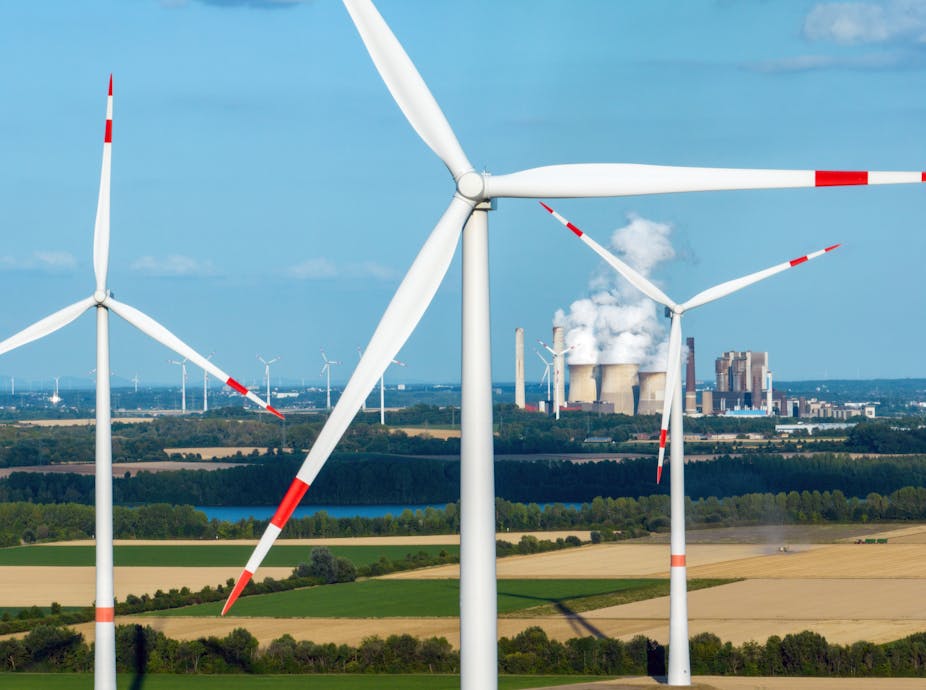
A country’s ability to pursue major energy reforms hinges on the government’s capacity to defuse political opposition. WilfriedB/Shutterstock

Russia’s invasion of Ukraine upended global energy markets. Sanctions on Russian exports and the suspension of gas deliveries to several European countries sent oil and gas prices skywards.

The magnitude of the shock is reminiscent of the 1970s oil crisis, where an embargo imposed on the sale of oil by members of the Organisation of Petrol Exporting Countries led to global fuel shortages and elevated prices. Governments sought to reduce their dependence on imported oil by transitioning their energy systems towards domestic resources. Facing the current crisis, countries are also moving away from importing energy while pursuing decarbonisation.

In both instances, some have been more successful than others in pursuing energy reform. My colleagues and I analysed the response of industrialised democracies to the 1970s crisis, climate change and to the current energy crisis. We found that a country’s ability to pursue major energy reforms hinges on the government’s capacity to defuse political opposition.

Reforms are costly for both households and businesses. For example, a tax on oil consumption increases the cost of energy for consumers while policies that require businesses to switch to renewable energy impose costs on firms and disrupt fossil fuel company profits. Politicians therefore tend to face strong opposition from both consumers and producers when embarking on energy transitions.

To defuse opposition, we find that governments have two options.

A protest in Brussels over the cost of energy, September 2022. 


1. Insulation


The first is to insulate the policymaking process from voter discontent and business interference. A country’s political institutions shape the extent to which this can be achieved.

Proportional electoral rules, where the distribution of seats corresponds with the proportion of votes for each party, can protect governments from voter backlash. The likelihood that a small change to vote shares will remove a government from power is reduced under this system.

In countries with strong bureaucracies, civil servants enjoy substantial discretion to intervene in the economy to achieve policy goals. Their long-term job security means they face less risk of termination or demotion for upsetting powerful interest groups. This insulates policymaking and can enable governments to enact reform over the wishes of entrenched business opposition.

France’s production of nuclear energy increased 14-fold between 1972 and 1985. Reforms were carried out by a strong and centralised public administration with the authority to implement policy change over the opposition of business and affected communities. The national utility, Electricité de France (EDF), was also owned by the state. This offered the French government additional insulation and granted it control over the direction of the country’s electricity sector.

Although EDF is no longer state owned, the French government holds a majority stake in the company. This allows France to pursue a similar response to the current energy crisis. The French president, Emmanuel Macron, called for the construction of 14 new nuclear reactors earlier this year.

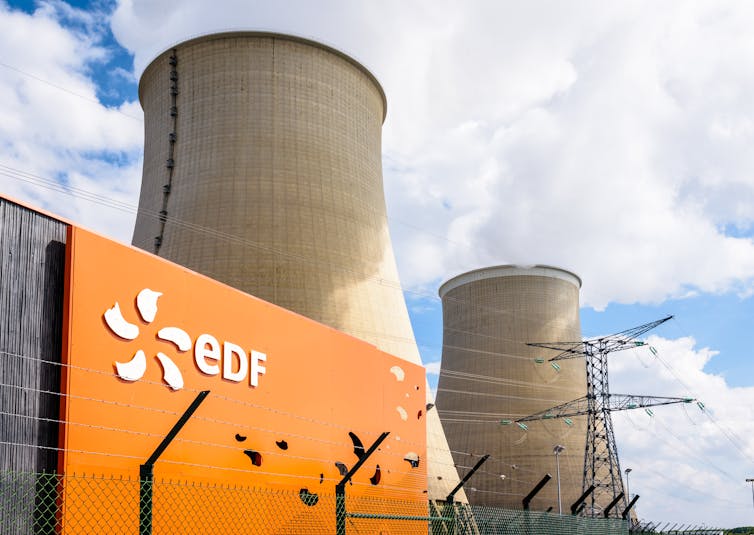
The Nogent-sur-Seine nuclear power plant, France. olrat/Shutterstock

2. Compensation

Governments can also secure support for energy reform by using compensation. Countries with developed welfare states can use existing social policy to soften the impact of energy price increases for households. Governments that enjoy close relationships with business can also negotiate with industry and exchange compensation for their support.

Compensatory bargaining with industry associations and labour unions allowed Germany to transition away from oil in the 1970s. From 1973 to 1985, subsidy schemes enabled a 30% increase in coal power and a 13-fold increase in nuclear energy generation. At the same time the government used the welfare system to ease the burden of higher energy costs for households through financial support.

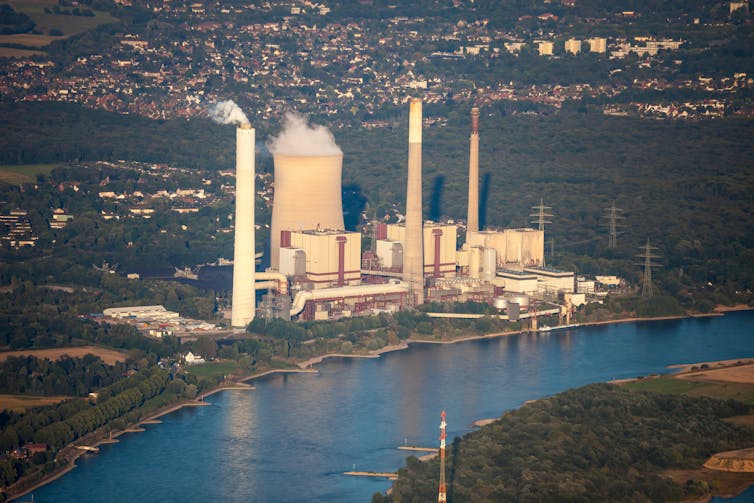
Coal-fired power station on the banks of the River Rhine, Germany. riekephotos/Shutterstock

Germany is again using compensatory strategies as it transitions away from fossil fuels. The country negotiated the “coal compromise” between 2018 and 2020. The scheme provides €40 billion (£35 billion) to coal companies and coal mining regions in return for political support for the plan to phase-out coal production by 2038.
Retreat

When governments can pursue neither insulation nor compensation, they let markets drive change.

Majoritarian electoral rules, a small welfare state and limited coordination between the state and business have restricted the ability of US governments to pass costly energy reforms.

Attempts to reduce dependence on imported oil during the 1970s – from gasoline taxes to energy efficiency regulations – withered in the face of political opposition. The case is similar for climate policy. Successive US governments have struggled to pass major reforms, whether it be an energy tax in 1993 or the then US president Barack Obama’s plan to impose emissions limits on power plants in 2015.

In response to the current energy crisis, the focus has been on markets. The US government has attempted to reduce energy prices by expanding domestic oil production and lobbying Saudi Arabia to increase its oil output.

Yet even countries with a low capacity for insulation or compensation can still pursue energy reform. To do this, policies must not impose visible and direct costs on society. A recent example is the US’s Inflation Reduction Act. Instead of reducing emissions through taxation, penalties or fines, the legislation relies on subsidies for clean technologies funded by general tax revenues. By using carrots and no sticks, many of the political difficulties associated with major energy reforms can be avoided.

Energy transitions are deeply political processes. While the current energy crisis is an opportunity to accelerate the transition towards clean energy, the scale and pace of such change will depend on the capacity of governments to defuse political opposition.


Author 
Jared Finnegan
Lecturer in Public Policy, UCL
Disclosure statement
Jared Finnegan's research has received funding from the Balzan Foundation (via Professor Robert Keohane) and the European Union.

Danielle Smith’s byelection win not as decisive as expected, experts say

Story by Demi Knight • Nov 8

United Conservative Party Leader and Premier Danielle Smith celebrates her win in a byelection in Medicine Hat, Alta., Tuesday, Nov. 8, 2022. THE CANADIAN PRESS/Jeff McIntosh© JMC

Seven years after leaving the legislature, Alberta Premier Danielle Smith has reclaimed a seat.

Smith beat out four opponents in the byelection for the constituency of Brooks-Medicine Hat on Tuesday to win her seat.

A SURE FIRE RIGHT WING MORMON, REFORM CHURCH, RIDING IN BROOKS BUT MEDICINE HAT IS A CITY AND THEY VOTED AGAINST SMITH

It was a result that political scientists across the province weren't surprised to hear.

"I think we certainly expected that Danielle Smith would win the seat," said Trevor Harrison, a political scientist at the University of Lethbridge. "It would have been a total shock and thrown the UCP into quite a conundrum had she not won."

Read more:
Alberta Premier Danielle Smith wins Brooks-Medicine Hat byelection

However, sitting just below 55 per cent of the votes at of 10:30 p.m. Tuesday evening, her win wasn't as large as some party members may have hoped for.

"I think certainly the UCP and Danielle Smith herself are breathing a sigh of relief, a win is a win. But it is very low," Harrison said.


"This was a byelection in the heart of UCP support, rural Alberta, so one is happy to win the election, but does it send a message somehow that perhaps Danielle Smith is not as saleable out there as the UCP would hope? That's something for the party itself to really mull over in the next little while."

Video: Alberta byelection win affirms uphill urban battle for Premier Danielle Smith

Premier Smith says she doesn’t want her or health minister to bottleneck health decisions

Lori Williams, a political scientist with Mount Royal University, agreed.

"This is nowhere near the decisive win that she would have wanted and probably expected," Williams said.

"She ran in this riding, she wanted to have that decisive victory, and this isn't it."


However, Harrison said there could be several reasons as to why her win was smaller than expected.

"It's also possible that some of the other parties were particularly motivated to come out and vote against Danielle Smith," Harrison said. "Hence, that might explain some of the difference in the percentages for the various candidates."

Video: Brooks-Medicine Hat byelection recap.

Winning her seat in legislature is something that poli-sci professors agree was necessary for Smith to move forward in her political career.

"It would have been very difficult to govern as a premier without sitting in the legislature," Harrison said. "(Danielle Smith) clearly has a pretty robust agenda of things that she wants to do and so presumably, she can do those things better when she's in the legislature."

"Well, it’s a win. And she will take a win. And she'll try to translate that into support in a place in the legislature and the ability to actually move her agenda, whatever that happens to be," Williams said.

Read more:
Advance voting numbers released in Brooks-Medicine Hat byelection

In advance polling, fewer eligible voters in the riding of Brooks-Medicine Hat cast their ballot when compared to the last general election.

Elections Alberta said 4,231 out of 34,060 eligible voters cast their ballots in advance polls this year, which is about 12.4 per cent of eligible voters.


Harrison said low voter turnout for byelections is nothing new, however, he added he was surprised that Premier Smith's status didn't boost numbers at this year's polls.

"Byelections generally don't get as many people out, sometimes we get as low as 35-40 per cent of people turning out," Harrison said. "In this case, however, given that you do have the premier running in the riding, you would expect that the votes should be actually pretty high, so I'm not quite sure what it says about voter apathy."

Official Results for Brooks-Medicine Hat By

Election

November 18, 2022

EDMONTON – Elections Alberta has announced the Official Results for the Brooks-Medicine Hat By-Election held on November 8, 2022.

Official Results are available on the Elections Alberta website, under “Election Results.” Results include information on the number of ballots cast, number of electors on the list of electors, which includes new registrations, and poll-by-poll results for each candidate.

The successful candidate in the Brooks-Medicine Hat By-Election is Danielle Smith, representing the United Conservative Party.

The voter turnout in the Brooks-Medicine Hat By-Election was 35.5%. The following table provides the turnout figures for the By-Election as well as the comparative numbers from the 2019 Provincial General Election.

Provincial Election Total Votes Cast
Includes valid, declined and rejected ballots
 
Brooks-Medicine Hat 2022   12,737

By-Election2019  22,470

Registered Electors 

Brooks-Medicine Hat 2022  35,872

By-Election2019 34,257

Voter Turnout 

Brooks-Medicine Hat 2022  35.5% 

By-Election2019  65.6%

Of the electors who voted, the following voting methods were used:

  • 63.8% voted on Election Day (in-person voting on Tuesday, November 8).

  • 33.2% voted in Advance (in-person voting between Tuesday, November 1, and Saturday, November 5).

  • 0.8% voted by Special Ballot (voting in the returning office and voting by mail requests).

  • 2.2% voted at a Mobile Poll (Election Day voting opportunities provided in hospitals, supportive living and long-term care facilities, homeless shelters and community support centres).

Elections Alberta is an independent, non-partisan office of the Legislative Assembly of Alberta responsible for administering provincial elections, by elections, and referenda.

For media inquiries, please contact:

Megan Narsing
Media and Communications Officer
Phone: 780.427.6698
Email: media@elections.ab.ca

Posted in: Press Releases

'Warped stance on COVID': Fired Alberta Health Services board member calls out Smith

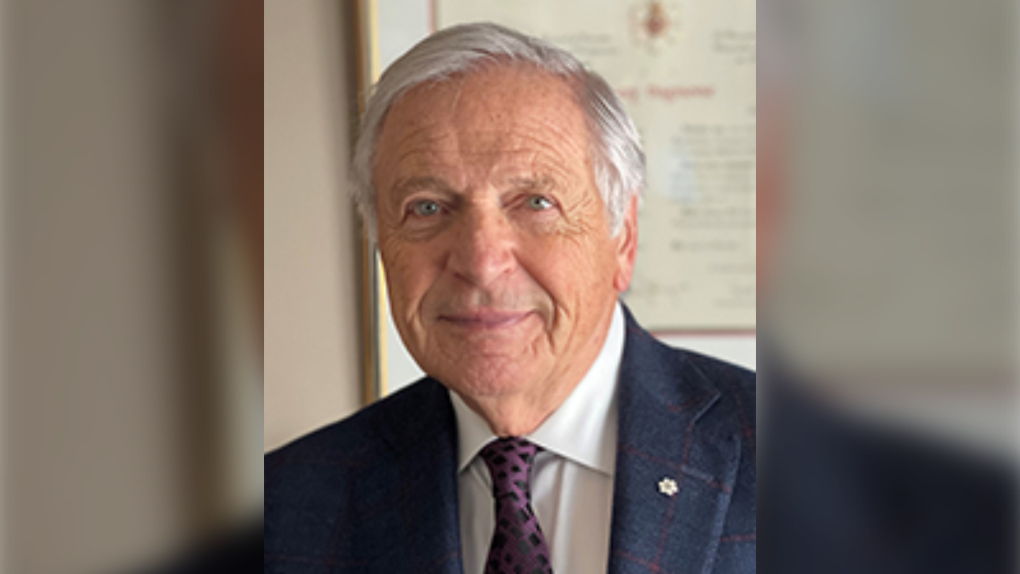
File photo of Tony Dagnone. (Source: Alberta Health Services)


Dean Bennett
The Canadian Press
Updated Nov. 18, 2022 

EDMONTON - A health system leader fired by Premier Danielle Smith has fired back in an open letter, saying her abusive, divisive attacks, blended with “warped” anti-science beliefs, make her a poor excuse for a leader and one literally putting Albertans in harm's way.

“(Albertans) are entitled to governance that is principle-based, respects decency and inspires confidence in its citizens,” Tony Dagnone said in the letter issued Friday.

He was one of 11 members of the governing board of Alberta Health Services recently fired by Smith.

“The current premier defies all those aspirations as she spews wacko accusations at Alberta Health Services and its valued workforce,” he wrote.

The premier has chosen to “play to her misguided followers who rant against science and academic medicine under the veiled guise of freedom,” Dagnone said in the letter.

“Her warped stance on COVID, which I remind the premier was and is a public health issue not a political punching bag, is nothing short of borderline dereliction when the lives of AHS staff and Albertans are at stake,” Dagnone wrote.

“In light of her unhinged public pronouncements, the premier represents the bleakest of role models for women who aspire to be accepted in positions of influence and leadership.

“Why would any self-respecting graduate pursue their health-care vocation in a province led by an anti-science premier?”

Dagnone could not be immediately reached for comment.

He and the other AHS governing board members were fired Thursday by Smith, fulfilling a promise she made in her successful summer campaign to win the leadership of the United Conservative Party and become premier.

The 12th board member, Deborah Apps, quit after Smith won the UCP leadership race in early October, citing concern for the disruption Smith promised to impose on a fragile health system.

Alberta Health Services is the agency of more than 100,000 staff tasked with delivering front-line care in the province.

Smith blamed both AHS and Dr. Deena Hinshaw, the chief medical officer of health, for bad advice and execution in the pandemic, leading to jammed hospital wards and forcing the province to impose freedom-limiting vaccine mandates and passports.

Hinshaw was removed from her job earlier this week.

The board has been replaced by Dr. John Cowell, who is charged with fixing multiple stress points in the system, including surgery wait times, ambulance bottlenecks, doctor shortages and overcrowded emergency wards.

Dagnone, an Order of Canada winner with four decades of work in hospital and health administration, said he has no political affiliations and felt compelled to defend AHS staff.

“I witnessed the extraordinary collective will of our health-care providers confronting the unimaginable COVID,” he wrote.

“All deserve our respect and gratitude, however, the premier chooses instead to vilify those who were saving Albertans.”

Smith spoke Friday at a meeting of the Calgary Chamber of Commerce but declined to speak with reporters. Her office, in a statement, said the province had to take action to address pressing issues in the health system.

“This decision (to fire the board) was not personal, this is about better outcomes for Albertans, and we are grateful for the work done by the AHS board,” reads the statement.

Smith has said there will be no health restrictions or vaccine mandates during future waves of COVID-19. And she has said there will be no mask mandates in schools currently dealing with respiratory viral illnesses that are spiking absentee rates and filling children's hospitals.

Smith has publicly embraced alternative approaches to COVID-19, including herd immunity and the since-debunked COVID-19 treatment ivermectin.

Earlier this month, she announced she wants to hear from Paul Alexander, a controversial critic of mainstream science who has characterized COVID-19 vaccines as “bioweapons.”

“The premier is taking her nonsense to a new level by inviting a former Trump adviser (Alexander) who has been universally scorned for promoting medical quackery,' wrote Dagnone.

“If (she) persists in vocalizing false, conspiratorial and unfounded claims, she will be responsible for putting health-care providers and Albertans needlessly in harm's way.

“Her loose and corrosive words appear to satisfy her need for bizarre musings that can and will ultimately impact people's lives.”

NDP health critic David Shepherd, responding to Dagnone's letter, echoed the concerns.

“(Smith) will continue to blame health-care workers for the current state of care while taking no responsibility herself for the impact of the dangerous misinformation and conspiracy theories she promotes,” Shepherd said.

“Her reckless politicization of our public health-care system will make it harder to recruit and retain health professionals and for Albertans to access care.”

This report by The Canadian Press was first published Nov. 18, 2022.

Tony Dagnone's "Open Letter to Albertans" by CTV Edmonton on Scribd