Wednesday, November 23, 2022

PURGED BY STAMERS NEW RIGHT LABOUR PARTY
Veteran Labour Activist Pete Willsman Expelled For Alleging Anti-Semitism ‘Whipped Up’ By Israel

Story by Kevin Schofield • Yesterday 

Pete Willsman arrives for a meeting of the Labour's national executive committee in April 2019.© Provided by HuffPost UK


Av eteran Labour activist has been expelled by the party for claiming anti-Semitism allegations against Jeremy Corbyn supporters had been “whipped up” by the Israeli Embassy.

Pete Willsman was a member of Labour’s ruling national executive council (NEC) when he was suspended in 2019.


He had been recorded telling American-Israeli author Tuvia Tenenbom that critics of Corbyn were using claims of anti-Semitism to “whip people up,”

Willsman said: “It’s almost certain who is behind all this anti-Semitism against Jeremy... Almost certainly it was the Israeli embassy. Because they caught somebody in the Labour party – it turns out they were an agent in the embassy.

“The thing is that the people that are in the Labour party doing it are people who are linked… one of them works indirectly for the Israeli embassy.

“I wouldn’t want to be bothered to find out anyway but my guess would be they are the ones whipping it up all the time.”

He was previously handed a warning by then Labour general secretary Jennie Formby after he accused rabbis speaking out over anti-Semitism crisis of being “Trump fanatics”.

HuffPost UK has learned that Willsman has now been expelled by the party.

At the time of his suspension, Labour MP Wes Streeting said: “If he has a shred of decency, he will resign from the NEC immediately.

“Those who celebrated his election, even after his conduct came to light, should hang their heads in shame.”

Related...
How Keir Starmer Got Serious About Winning The Next General Election
Jeremy Corbyn's Former Spokesman Joins Greens With Swipe At Keir Starmer
Keir Starmer May Be On Course For Power — But Troubles With The Trade Unions Lie Ahead
Canadian workers say they face barriers amid growing union push at Starbucks


Unionization among Canadian Starbucks employees is starting to gain traction, organizers say, but much like their U.S. counterparts, workers face barriers and alleged anti-union activity by the coffee giant.


Canadian workers say they face barriers amid growing union push at Starbucks© Provided by The Canadian Press

More than a year before the recent wave of Starbucks unionization in the U.S. began, a store in Victoria unionized with the United Steelworkers in August 2020 — and workers across the country took note.

Now, there are six unionized locations across B.C. and Alberta, and organizers say there are more in the works.

“I think the pandemic has caused people to look at their lives, their work, their community in a bit of a different way,” said Scott Lunny, USW’s director for Western Canada.

Since late last year, more than 250 stores south of the border have voted to unionize, according to the U.S. National Labor Relations Board.

But a successful certification vote is just one step in unionizing; workers don’t start paying dues until a contract has been negotiated. And though contract talks with some U.S. stores have begun, no agreements have been reached, The Associated Press has reported.

Last Thursday, workers at more than a hundred U.S. stores went on strike for the day to protest working conditions.

That makes the Victoria store the only location in North America to have a collective agreement with the company.

In some cases, stores in the same geographical area could organize in clusters as one bargaining unit, said Lunny. That's what happened for two stores in Surrey and Langley, B.C., which successfully certified as one bargaining unit. In Lethbridge, Alta., five stores held an unsuccessful certification vote.

Lunny said service workers broadly have become interested in unionization over the pandemic and especially in recent months amid higher inflation.

In deciding to unionize, the Victoria workers wanted more support regarding harassment by customers and clearer communication about COVID-19 practices, said shift supervisor and union representative Sarah Broad.

Broad said she’s noticed a big difference since the contract was ratified, with "tenfold" improvements in health and safety. The workers also got wage increases.

But it hasn't been all smooth sailing. Earlier this year, Starbucks said it would give workers across Canada and other jurisdictions raises and other improvements. However, Broad said a letter was posted in the back room of the Victoria store explaining they wouldn’t be getting the raise because of the union contract.

Starbucks spokeswoman Carly Suppa said in an email this is because the Victoria store's contract includes annual wage increases.

Related video: Starbucks Shuts Down First Unionized Seattle Location
Duration 0:28  View on Watch


USW filed a labour complaint on behalf of the Victoria store. It’s one of several labour complaints filed by the union on behalf of Starbucks stores, said Lunny, one of which — accusing the company of disciplining a union organizer in Lethbridge — is still active.

Workers in the U.S. have also been facing alleged anti-union activity, with the labour relations board asking a federal court to intervene in instances where Starbucks fired union organizers.

Suppa said Starbucks has never disciplined an employee for engaging in lawful union activity in the U.S. or Canada.

The raise announced in May was also implemented in the U.S., except for those who voted to unionize or petitioned to hold a union election, The Associated Press reported in May.

In a statement posted to one.starbucks.com, a Starbucks website launched in February, the company said U.S. labour law restricts the improvements it can make to wages and benefits during the unionization process and when a store has unionized, but said the recent improvements will likely be negotiated at the bargaining table.

York University labour law professor David J. Doorey said while Starbucks' position has some legal basis under U.S. labour law, it's also possible the labour board will see the company's actions as unlawful reprisal for unionizing.

USW's Lunny said he believes Starbucks always had the capacity to pay higher wages and invest more in health and safety, but “they really didn't get around to it until there was a threat of unionization."

“I do think (the raises are) about preventing unionization.”

Suppa said the company continues to invest in wages, benefits, policies, safety and training, and said Starbucks believes it can do more for its employees by working side-by-side instead of across a negotiating table.

On the Canadian version of its informational website, launched in July, the company urges workers to do research before signing a union card and says that if certified, workers will no longer be able to address their concerns with the company directly.

Starbucks workers in Central Canada are also interested in unionization but high turnover has been a barrier to successful drives, said Darlene Jalbert, the organizing co-ordinator for Ontario and Atlantic Canada.

It’s easier to certify in B.C. and some other jurisdictions, said economist and labour expert Jim Stanford, because they have “one-step” certification where a certain majority of signatures counts as certification.

In Alberta and Ontario, signatures are just a first step — the vote to certify can happen days, weeks or even months later, he said.

Starbucks is a mix of corporate-run locations and licensed locations, such as the ones in grocery stores. There are almost 1,000 corporate locations in Canada and almost 500 licensed locations, where the employer is not Starbucks but the licensing company.

Stanford said hospitality is difficult to unionize — and keep unionized — in part because of turnover, but also because of the often-fragmented nature of companies like Starbucks, including the mix of corporate and licensed stores.

Though the Victoria store was the only unionized one in Canada when it certified, there were a handful of unionized Starbucks locations in the past.

Stanford said though Starbucks employees are getting a lot of attention for their efforts, workers across all industries are turning to unions in the wake of the pandemic.

Broad said she thinks the movement in the U.S. is helping fuel interest in Canada.

"I'm really hoping to see it spread across all of the provinces. And just for it to be more of a norm."

— With files from The Associated Press

This report by The Canadian Press was first published Nov. 23, 2022.

Rosa Saba, The Canadian Press
Loblaw bargaining standoff a sign of heightened labour tension: expert

Tense bargaining between Loblaw Companies Ltd. and its distribution workers in Calgary is emblematic of wider labour movement trends being driven by the pandemic and high inflation, a labour expert said Tuesday.


Loblaw bargaining standoff a sign of heightened labour tension: expert© Provided by The Canadian Press

After months of contract negotiations, relations between the two sides worsened this week after the company served layoff notices for almost all of the 534 unionized workers at the distribution centre, said Teamsters Local Union 987 of Alberta.

Workers have twice rejected offers from the employer and are asking for better quality-of-life and wage increases, the union said.

Simon Black, an associate professor of labour studies at Brock University, said while wage increases are important to workers at a time of high inflation, there’s also an increased focus on working conditions in negotiations, such as scheduling, time off and breaks.

Recent strikes by education workers in Ontario are an example of this, where workers were asking for staffing guarantees, he said.

“They're not bargaining strictly around wages,” said Black. “They are bargaining about staffing levels, and how staffing levels affect stress levels … and how it affects work life balance.”

With the continued tight labour market, unionized workers are trying to seize on a moment in which they could make real gains in bargaining, said Black.

“If workers can’t exercise that extra kind of leverage and bargaining power they have in the labour market right now, then this window will close on them.”

So far in 2022, tensions in bargaining by Canadian workers have been at heightened levels, with the average length of work stoppages more than double last year, and the number of full-time equivalent days not worked up more than 43 per cent, according to Statistics Canada.

While inflation has made it difficult for workers’ pay to keep pace, Black said there’s also general frustration among the workers who were called “heroes” in the initial phases of the pandemic.

Related video: It’s more than an abstract number, these are the additional costs Albertans are facing due to inflation
Duration 5:07  View on Watch


Combine that with Loblaw’s continued profits throughout the pandemic, and workers are less likely to want to make concessions at the bargaining table, said Black.

Loblaw put forward a decent wage increase in its offer to the distribution centre workers in Calgary, said John Taylor, business agent for the Teamsters local.

But the workers rejected it because they’re looking for more guarantees around shift scheduling and seniority, such as weekend days off and consecutive days off, said Taylor.

He said the workers once had such language in their agreement and are trying to get it back in this round of bargaining.

“This is not about the money,” said Taylor. “It’s about the working conditions.”

But Loblaw wouldn’t budge, said Taylor, adding that on Tuesday morning the company informed the union it’s applied for a lockout.

“Every time we bargain with this company is difficult,” he said.

Loblaw spokesperson Catherine Thomas said in an email the company is disappointed that its offer was “narrowly rejected.” She said the wages on offer are “some of the most competitive” in the industry with some reaching more than $33 per hour.

“During negotiations, wages and the wage structure were the most important areas for the union and our colleagues, and ones we believe we’ve addressed,” she said.

Taylor said the wage increases on offer would have seen workers make between five and seven dollars more per hour by the end of the five-year contract.

Thomas said Loblaw is preparing for a work stoppage at the distribution centre, and said it’s hopeful an agreement can be reached.

Canadian Labour Congress president Bea Bruske lamented in an emailed statement how, despite the hefty profits at Loblaw, the company isn't able to meet the quality-of-life demands of workers.

"They were deemed essential – and this employer is thanking them by serving them with layoff notices."

This report by The Canadian Press was first published Nov. 22, 2022.

Companies in this story: (TSX:L)

Rosa Saba, The Canadian Press
At least 35 arrested for trafficking people for agricultural work in southern Portugal

The Portuguese Judicial Police arrested on Wednesday 35 people suspected of belonging to a criminal network that trafficked human beings to make them work in the fields of Baixo Alentejo, in the south of the country.


JORGE CASTELLANOS / ZUMA PRESS / 

The detainees, Portuguese and foreign nationals aged between 22 and 58, are accused of human trafficking, criminal association, money laundering and document forgery, the police said in a statement reported by local media.

"The suspects are part of a criminal structure dedicated to the labor exploitation of immigrants, mostly recruited in their countries of origin, such as Romania, Moldova, India, Senegal, Pakistan, Morocco, Algeria, among others, to work in agricultural facilities," says the police statement.

These agricultural facilities in which these people were exploited for labor exploitation are located in the Baixo Alentejo towns of Beja, Cuba and Ferreira, according to the Lusa agency.

Dozens of people would have been victims of this human trafficking network, according to the police investigation, which dates back to last year, the leaders of this criminal organization are members of several Romanian families, who had the support of some Portuguese.
Chile miners say trucker strike a threat to supplies

Story by Reuters •

SANTIAGO (Reuters) - Miners in Chile, the world's largest copper producer and second largest lithium producer, said on Wednesday an indefinite strike by truckers threatened supplies to operations in the north of the country.


A view of the BHP Billiton's Escondida, the world's biggest copper mine, in northern Chile, in Antofagasta

Caravans of truckers protesting over issues such as high fuel prices and the need for better security have been striking since Monday when they set up roadblocks in the mining regions of Tarapaca and Antofagasta.

In a statement on Wednesday, the truckers said the action would continue indefinitely.

Chile's National Mining Society (Sonami), which represents small, medium and large-scale miners, said the free transit of goods, especially fuel, must be guaranteed.

Jorge Riesco, president of Sonami, said in a statement that the blockades were "preventing the normal transit of trucks with supplies".

There was no indication of disruption to mine production.

Large copper mining companies have not reported changes in operations due to the roadblocks. BHP said it was operating normally while Canada's Teck said it had taken advance precautions for its operations and projects.

(Reporting by Fabian Andrés Cambero; Writing by Alexander Villegas; editing by Barbara Lewis)

Why the nation is once again close to a devastating freight railroad strike
RR WILL NOT GIVE WORKERS 56 HOURS OF  PAID SICK TIME OFF THAT THEY GOT AS EMERGENCY WORKERS DURING COVID

Story by Chris Isidore • CNN

In September, President Joe Biden, the most union friendly president in recent history, got personally involved in negotiations that reached a tentative labor deal that averted a strike at the nation’s major freight railroads. It was a deal he hailed as a “win for tens of thousands of rail workers.


US railroads 'confident' they will reach deals with all unions to avoid strike
Duration 2:20  View on Watch

But many of those workers didn’t see it that way.

And as a result, rank-and-file members of four of the 12 unions have voted no on the ratification votes, starting the clock ticking to a potentially catastrophic industry-wide strike that could start at Dec. 9 at 12:01 am ET.

While the rejected contracts would have granted workers their biggest wage increases in 50 years – immediate 14% raises with back pay and 24% raises over the course of five years, plus $1,000 cash bonuses every year – wages and economics were never the big problems in these talks.

There were scheduling rules that kept many of the workers on call seven days a week, even when they weren’t working, the lack of sick pay common for workers in other industries, and staffing shortages.


The tentative agreements made some improvements in those issues, but they didn’t come close to what the union was seeking. Anger among the rank-and-file about staffing levels and scheduling rules that could penalize them and cost them pay for for taking a sick day had been building for year. Working through the pandemic only brought the issues more front and center. And that, plus the record profits being reported by many of the railroads last year and likely again this year, prompted many workers to vote no.


“Some of this vote, I think, wasn’t necessarily a referendum vote against the contract as much as it was against their employers,” said Jeremey Ferguson, president of the transportation division of the Sheet Metal, Air, Rail Transportation union, the largest rail union which represents 28,000 conductors. Its members voted against the tentative agreement in vote results announced Monday.

“Members aren’t necessarily voting on the money issues,” he told CNN Tuesday. “It’s quality of life, and how they’re treated. When big corporations cut too deep and they expect everybody else to pick up the pace, it becomes intolerable. You don’t have family time, you don’t have time to get adequate rest.”

There was widespread opposition to the contract even at some of the unions whose members ratified the deal.

Only 54% members in the Brotherhood of Locomotive Engineers and Trainmen (BLET), the second largest rail union, voted for the deal. Union members across the industry who opposed the proposed deal did so knowing that Congress might vote to order them to stay on the job or return to work under terms of a contract that could be even worse than the ones they rejected.

Workers have a disadvantage by law


There are many reasons the nation is now on the precipice of a strike, some going back nearly a century, to the passage of the Railway Labor Act.

Passed in 1926, it was one of the nation’s first labor laws and put all types of restrictions on strikes by rail workers that don’t exist for union members at most other businesses.

While the law may allow Congress to eventually block a strike or order union members back to work once a strike begins, the unions argue that limiting the right to strike has weakened the leverage unions need to reach labor deals acceptable to the majority of their members.

“Congress staying out of it would obviously giving unions leverage,” said Dennis Pierce, president of the Brotherhood of Locomotive Engineers and Trainmen (BLET.) He said other businesses know they face costs if a union goes on strike that the railroads don’t have to pay.

A strike would be a body blow to the nation’s still-struggling supply chain, as 30% of the nation’s freight as measured by weight and distance traveled, moves by rail. It’s impossible to run a 21st century economy without this 19th century technology.

The US economy, which many think is at risk of tipping into recession, would be severely damaged by a prolonged rail strike. Shortages of everything from gasoline to food to automobiles could occur, driving up the prices of all of those products. Factories could be forced to close temporarily due to the lack of parts they need.

That is why many expect Congress to step in and impose a contract on members of the four unions that have yet to the proposed deals.

“I don’t think it’s anyone’s goal to get Congress involved, but Congress has shown a willingness historically to intervene if necessary,” said Ian Jefferies, CEO of the Association of American Railroads, the industry’s trade group.

Would a divided Lame Duck Congress be able to find bipartisan agreement to act, and act quickly, to prevent or end a strike? “This is not a political issue. This is an economic issue,” he said.

For Jefferies, the “best outcome” is for the railroads and the unions that have rejected the deals to come agree on new deals that can be ratified by the rank-and-file. One rail union, the machinists, initially rejected the deal, only to ratify a slightly revised agreement, albeit with only 52% of members voting in favor.

“There’s absolutely opportunities if a ratification fails the first time to sit down and come to additional agreements and put that out and get the [tentative agreement] ratified,” said Jefferies.

Will Congress act?

But the unions say that railroads are unwilling to negotiate on issues such as sick time because they are counting on Congress to give them a deal they want, even if the record profits (or near record profits) being reported by the railroads suggest that the companies have the resources to give the unions what they are demanding.

“They’re telegraphing they expect Congress to save them,” said Pierce, president of the engineers’ union. He and the other union leaders members are concerned that Congress will act, even though Democrats, who still control both houses in the current Lame Duck session, were reluctant to vote to block a strike in September as the strike deadline approached.

“It’s hard to say what Congress will do,” said Pierce.

Some union supporters who are not returning to Congress next year might not even attend the Lame Duck session, he added. And the railroads’ and business groups’ hope of quick action by Congress could be derailed by other items on the Congress’ busy agenda.

Still, Pierce and other union leaders worry that even some pro-union members of Congress could vote to block or end a strike rather than be blamed for the disruptions a strike would cause.

“I didn’t get sense they had stomach to let a strike upend the economy,” he said.

The unions intend to lobby Congress to try to block any legislation ordering them to keep working or return to work soon after a strike starts. But they expect to be outgunned by lobbyists for the railroads and other business interests.

“I expect they’ll have about one lobbyist for every member of Congress,” Pierce said.

A strike would once again put Biden in a tough spot, as the pro-union president would be caught between angering union allies who want to be allowed to go on strike or risking the economic upheaval that the strike would cause.

While Biden doesn’t have the authority at this point in the process to unilaterally order the railroad workers to stay on the job, as he did in July, he would need to sign off on any Congressional action for it to take effect.

Tuesday White House press secretary Karine Jean-Pierre repeated earlier White House comments that “a shutdown is unacceptable because of the harm it would inflict on jobs, families.” But she wouldn’t answer questions as to whether or not Biden is prepared to agree to Congressional action mandating a contract that workers find unacceptable.

“We are asking the parties involved, to come together in good faith and resolve this,” she said, adding that “the President is directly involved” in discussions once again.

If Congress does act, the Railway Labor Act is doing what it was designed to do, the railroads say.

“The goal of the Railway Labor Act was to reduce the likelihood of a work stoppage,” said the AAR’s Jefferies. “And it’s been remarkably effective in doing that. The last work stoppage we had was 30 years ago, and it lasted 24 hours before overwhelming bipartisan congressional [action to end the strike]. I think all parties agree that a work stoppage or a shutdown of the network is not helpful to anybody involved.”

For more CNN news and newsletters create an account at CNN.com
S. Korea braces for supply disruptions as trucker strike looms

Story by By Heekyong Yang and Ju-min Park • 

FILE PHOTO: A member of the Cargo Truckers Solidarity union stands next to a LPG lorry in Ulsan© Thomson Reuters

SEOUL (Reuters) - South Korea said on Wednesday it would consider deploying military trucks for urgent transport as it prepares for a planned strike by truckers that is stoking fears over the nation's post-pandemic recovery and global supply chains.

The nationwide strike by trucker unions, expected to start at midnight (1500 GMT), would be the second in less than six months to disrupt manufacturing and fuel supplies in the world's 10th-largest economy.

Lead organiser Cargo Truckers Solidarity Union (CTSU), which is pushing for an extension of minimum wage guarantees, has warned of stopping oil supplies at major refineries as well as transport at major ports and industrial plants.

Land Minister Won Hee-ryong said that the government would consider deploying military trucks to areas needed for urgent transport.

He also threatened to suspend the licences of striking drivers if the walkout was prolonged.

"I am asking the Cargo Truckers Solidarity Union to withdraw the plan to strike now," Won said in a video posted on the ministry's YouTube channel, adding that he is open to communications with the union to minimise the damage.

In June, an eight-day strike by truckers delayed cargo shipments for industries from autos to semiconductors in Asia's fourth-largest economy, costing more than $1.2 billion in lost output and unmet deliveries.

Industry giants including Hyundai Motor and steelmaker POSCO were forced to cut output due to the June strike, and POSCO has warned the fresh action could slow repair works at a major plant hit by floods this summer.

The Korea Oil Station Association is asking gas station owners to secure enough inventory ahead of the strike, an association official said on Wednesday.

"We learned some lessons from the last strike," said the official, who declined to be named because of the sensitivity of the issue.

CTSU has demanded that the government extend its "Safe Trucking Freight Rate", a scheme launched during the COVID-19 pandemic to guarantee a minimum annual wage that is due to expire in December.

The government and ruling party offered a three-year extension of the rate policy on Tuesday, but refused to accept the unions' demand to cover truckers in other industries, including fuel and steel. CTSU rejected that compromise deal.

The transport ministry had said some 7,000 people participated in the June strike, while the union said more than 22,000 took part.

"We had left a minimum breathing room last time but we're cornered now given the deadline, and will block as many shipments as possible," Lee Eung-joo, a union official, told Reuters.

He added that almost all of CTSU's 25,000 members would take part in the upcoming strike, joined by an unspecified number of non-union members.

The Korea International Trade Association, a shippers' body, said on Wednesday that it has created a task force to handle any disruptions and minimise trade damage.

(Reporting by Heekyong Yang, Hyonhee Shin, Soo-hyang Choi and Ju-min Park; Editing by Jamie Freed)

RMT Announced four weeks of industrial action

“Our message to the public is we are sorry to inconvenience you, but we urge you to direct your anger and frustration at the government and railway
employers during this latest phase of action.”


By the RMT

Rail union, RMT will put on a series of 48 hour strikes in December and January after industry bosses failed to offer any new deals to reach a settlement.

Over 40,000 members across Network and 14 Train Operating Companies will take strike action on 13, 14, 16 and 17 December and on January 3,4,6 and 7. There will also be an overtime ban across the railways from 18 December until 2 January, meaning RMT be taking industrial action for 4 weeks.

Despite every effort made by our negotiators, it is clear that that the government is directly interfering with our attempts to reach a settlement. The union suspended previous strike action in good faith to allow for intensive negotiations to resolve the dispute.

Yet, Network Rail have failed to make an improved offer on jobs, pay and conditions for our members during the last two weeks of talks.

At the same time Rail Delivery Group, representing the train operating companies, have also broken a promise to make a meaningful offer on pay and conditions and even cancelled negotiations that were due to take place yesterday.

We also have evidence from all 14 of the train companies denying that Rail Delivery Group has the authority to conduct negotiations on their behalf, even as the RDG urged us to come back to the table.

RMT general secretary Mick Lynch said: “This latest round of strikes will show how important our members are to the running of this country and will send a clear message that we want a good deal on job security, pay and conditions for our people.

“We have been reasonable, but it is impossible to find a negotiated settlement when the dead hand of government is presiding over these talks.

“The employers are in disarray and saying different things to different people sometimes at the same time. This whole process has become a farce that only the new Secretary of State can resolve. When I meet him later this week, I will deliver that message.

“In the meantime, our message to the public is we are sorry to inconvenience you, but we urge you to direct your anger and frustration at the government and railway employers during this latest phase of action.

“We call upon all trades unionists in Britain to take a stand and fight for better pay and conditions in their respective industries. And we will seek to coordinate strike action and demonstrations where we can.

“Working people across our class need a pay rise and we are determined to win that for our members in RMT.”This article was originally published by the National Union of Rail, Maritime and Transport Workers (RMT) on November 22nd.

Show your support for the RMT on Facebook, twitter and Instagram.

Posties reject Royal Mail’s ‘final and best offer’ as Black Friday strikes go ahead

BY:LEAH MONTEBELLO
WEDNESDAY 23 NOVEMBER 2022
(Credit: @CWUnews)

Postal workers have rejected Royal Mail’s “final and best” offer, calling the current situation an “Armageddon moment” for the company.

Over 115,000 Communication Workers Union (CWU) workers will now strike on Thursday 24 November and Black Friday 25 November.

After seven months of talks between Royal Mail and the CWU – including Acas talks over the last four weeks – the company has tabled its best and final offer, which includes an enhanced pay deal of up to nine per cent over 18 months.

“Negotiations involve give and take, but it appears that the CWU’s approach is to just take. We want to reach a deal, but time is running out for the CWU to change their position and avoid further damaging strike action tomorrow,” Royal Mail CEO Simon Thompson said in a statement this morning.

Strike action has already added £100m to Royal Mail’s losses so far this year, with more set to come during the busy Christmas period.

Meanwhile, the CWU said it is disappointed by the delivery giant’s “aggressive strategy,” calling the company’s offer a “wholly inadequate, non-backdated 3.5 per cent pay increase”.

“These proposals spell the end of Royal Mail as we know it, and its degradation from a national institution into an unreliable, Uber-style gig economy company.

Make no mistake about it: British postal workers are facing an Armageddon moment.”

Why Russia has made homophobia part of its anti-Ukraine propaganda

Russia’s war on the LGBTQ community is now part of its case for war in Ukraine.


Bree Linville; KIRILL KUDRYAVTSEV/ Bet_Noire/ FabrikaCr/ Getty Images


Stanislav Kucher
Special Contributor
November 21, 2022

The first time someone told me he was gay was during my first visit to the United States. It was the summer of 1991, and I was a student and aspiring journalist, hitchhiking across the country with a Russian colleague. One morning we stood on a country road in upstate New York for almost an hour, and were happy when a car finally pulled over and the driver offered us a ride.

His name was Ben, he was about 25 years old, and he gave us ham and cheese sandwiches, which we devoured with pleasure. We talked as we drove, and after a while, Ben told us he was heading for a picnic on a lake with his gay friends.

He must have sensed our reaction — mine in particular. “I hope you’re broad-minded enough to accept the fact that I’m gay,” Ben said. I remember his every word, because for me, thanks to my background and ignorance, this was a traumatic moment. Initially I felt both frightened and physically ill.

It was an absurd and awful reaction, I know now; but in the Soviet province where I was born and raised, we had been taught to believe that gay people were mentally ill and even dangerous. Surely there was some reason why the Soviet Union had laws that could send gay people to prison?

Fortunately, my companion was 12 years older than me, had traveled extensively in Europe, and he had learned by then that the myths of Soviet propaganda often had little to do with reality. He understood my reaction, smiled and pulled me aside to suggest I calm down and listen to Ben. It might help me understand how warped my own ideas really were.

Later that day, I met Ben and his friends, and we all laughed when I shared my initial feelings. But it would be a while before I fully realized the scale of my ignorance and really changed my attitude.

Three decades later, Putin’s version of the myth

I share this story because today my homeland is back in the same appalling rut. A new generation of young people in Putin’s Russia is likely to grow up with the same ignorance and prejudices that infected me three decades ago.


And in some ways, what’s happening now is even worse.

During the Soviet period, the topic of sexual orientation was essentially taboo. It was simply unheard of, for example, to hear the word “homosexuality” on TV. Today one hears “LGBT” and “gay” and its many synonyms constantly, blaring from TV screens and other Russian media. They are spoken in both chambers of the Russian parliament, and they are regularly referenced by Russian President Vladimir Putin himself. The taboo is gone. Because, as it turns out, today’s Russia has united around a pair of new myths: that gay people constitute an existential threat to their country; and that the war in Ukraine is also a war against that threat.

Here was Putin last month, in his annual address to the Valdai Discussion Club — a kind of “State of the Union” for the Russian president.

“Do we really want us, here in our country, in Russia, instead of ‘mom and dad,’ to have ‘parent number 1, number 2, number 3′?” Putin asked. “They’ve gone totally crazy! Do we really want perversions that lead to degradation and extinction to be imposed on children in our schools, in elementary grades? To be drummed into them that besides women and men, there are supposedly some ‘genders’?”

It’s an echo of the ongoing culture wars in the U.S., taken to extremes and articulated by the leader of the country.

“If Western elites believe that they can indoctrinate their societies with strange … newfangled trends like dozens of genders and gay Pride parades,” Putin said, “then so be it, let them do what they want. But what they certainly do not have the right to do is to require others to follow in the same direction.”
A war on the LGBTQ community

“Against us today is part of a dying world …”

“Our goal is to stop the supreme rulers of Hell …”

“Rising against them, we have acquired sacred power …”

These aren’t the words of an Iranian mullah or a conservative Bible Belt preacher. These are excerpts from a long Nov. 4 Telegram post by Dmitry Medvedev, the man who was President of Russia from 2008-2012. Medvedev once enjoyed hamburgers at McDonald’s with President Barack Obama and announced a “reset” of Russian-American relations. Today, Medvedev is deputy chairman of the Russian Security Council, and one of the most ardent supporters of prosecuting the war with Ukraine to a victorious end, by whatever means necessary.

And he has other wars on his mind.

“We are fighting against those who hate us, who ban our language, our values and even our faith,” Medvedev wrote recently on his Telegram channel, which has 910,000 subscribers. “With them is a motley pack of grunting pigs and narrow-minded inhabitants from the collapsed Western empire. … They have no faith and ideals, except for the obscene habits invented by them and the standards of double-think that they impose, denying the morality bestowed on normal people.”

Most Russians today know what Medvedev means by “obscene habits” and “denying the morality.” He’s talking about the attitudes of Europeans and Americans toward gender issues and the rights of sexual minorities.

There is of course no American or European effort to indoctrinate Russians, but never mind the facts. Putin and Medvedev and a chorus of other influential Russians have taken recently to inventing a threat and arguing that war — in Ukraine and elsewhere, if necessary — must be waged to stop it. In this same vein, the Russian parliament recently passed new laws aimed at “preventing propaganda of nontraditional sexual relations.” The legislation is actually an expansion of a 2013 ban on such “propaganda” that will now include the portrayal of gay relationships everywhere — in books, movies, newspapers, TV, radio and the internet.

“We must do everything to protect our children and those who want to live a normal life,” said Vyacheslav Volodin, speaker of the State Duma or parliament. Everything else is sin, sodomy, darkness and “our country is fighting against this.”

Volodin presented the bill to deputies of every political faction and invited them all to sign as its co-authors. Not a single parliamentarian refused.

Sergey Mironov, leader of the “Fair Russia” faction, explained his position this way:

“The propaganda of nontraditional sexual relationships is war. It’s a spiritual war of information, an ideological war.”
A war on homosexuality is now part of the war in Ukraine

While homophobia may have a long history in Russia, it’s only in recent months that it has taken center stage on Russian television, as part of conversations about the war in Ukraine.

Here, for example, is how chief Kremlin propagandist Vladimir Solovyov sees things:

“What we did on Feb. 24 (the date of the Russian invasion of Ukraine) was a counterattack!” It was necessary, Solovyov said, to beat back a Ukrainian “genocide against the Russian people, against Russian speakers, against those who don’t accept LGBT, transgender-Nazi values.” He went on to use a crude epithet for gay people, who he said “deny the very essence of humanity! Just look at [Ukrainian President Volodymyr] Zelenskyy! Even in his acting career he was constantly promoting absolutely pederastic values!”

It was a horrible rant, and one would like to think it carried no weight. But Solovyov has an almost unequaled following in Russia, with tens of millions of viewers of his television show and a huge social media following as well.

Zelenskyy has of course come in for near-constant vilification in the Russian media. He has been called everything — a US puppet, a clown, a neo-Nazi, a drug addict — but it was Solovyov who for the first time accused the Ukrainian leader of promoting LGBTQ values, and equated this with Nazism, genocide, and all the rest.

There were earlier signs. In April, Russia’s Channel One prime time talk show, broadcast a report “documenting” ways in which the West and specifically the U.S. had converted and infected the minds of the Ukrainian people:

“We can’t explain what we’re finding here,” said the Channel One correspondent, in a piece that featured books with pictures and the words “gay” and “lesbian” written in Ukrainian.

“It’s an attack on children, the most vulnerable people in society. … One of the houses we found there … was the headquarters of an organization of nontraditional sexual orientation — gays, lesbians and everything else. It was directly funded by [the United States Agency for International Development], which is controlled by the Congress and the president of the USA.”

Another iconic and popular Putin propagandist, Margarita Simonyan, said on Russian TV that America has been popularizing dangerous media content since the early 1990s. She cited “Friends” as an example

“You would have to have a very keen eye to notice that in the show “Friends,” which first came out in 1994, the first episode begins with the main character coming in looking depressed and lonely because his wife had left him for a woman. … And all this was shown rather sympathetically: ‘Good for her, the show said.’”

Fuel on the fire of Russian homophobia — if any were needed — came via the recent wedding of two Russian celebrities — Mikhail Zygar, former editor-in-chief of the opposition network TV Rain, and the actor Jean Michel Shcherbak. Both left Russia after the start of the war, and at the end of October they publicly announced their wedding in Portugal. Photos and videos from the event were too much for the TV propagandists to bear.

Simonyan commented on the wedding on her RuTube channel: “It’s a shame to look at this, what a blessing that they left the country.” For his part, Solovyov showed Zygar’s Instagram posts on his TV show and expressed his own outrage. “These two happy gays … this filth, this awfulness, wickedness, vileness!”

For Solovyov, it all adds up to an obvious conclusion: The stopping the “filth” is now part of the case for war.

“And now the whole country must grit its teeth and go to war. Because we are at war not only with this (Ukrainian) scum and fa***ts under their rule, but with the entire satanic machine of the West.”

What lies beneath the madness

Tikhon Dzyadko, editor-in-chief and anchor at TV Rain’s YouTube channel, believes that behind the vitriol is a Kremlin plan to distract public attention from setbacks on the battlefield.

“Now that Putin has begun to lose his credibility in the wake of so many strategic failures, the propaganda targets have shifted once again,” Dzyadko said last week. “Russia’s greatest enemies are now Western satanists who wrap themselves in the rainbow flag.”

As a former Russian TV journalist who has covered Russian politics for many years, I think things are simpler than that.

For the 22 years of Putin’s rule, the Kremlin has failed to come up with any clearly structured system of values, nothing to replace the ideology of the Soviet era. Today the sum-total of a Putinist ideology can be boiled down to anti-Westernism, a constant construct of “We versus They.” I believe this is why the Kremlin ideologists and propagandists feel they have no choice but to find new enemies and dig up old, vile tropes wherever they can find them.

One of these is the increasingly nasty vilification of the LGBTQ community.

Put differently, I am certain that if today’s Europe and the U.S. were publicly and openly homophobic, then Putin’s Russia would take the opposite approach: The Kremlin would position itself as vanguards of the LGBTQ rights movement. But since Europe and the U.S. stand for human rights and tolerance, the Kremlin must do everything it can to reject both.

Will it work? Will homophobia be accepted in modern Russian society? And even if it is, will people buy the idea that it justifies war with Ukraine?

While many gay people have left Russia as a direct result of the Kremlin’s campaign, a vibrant gay community is still active in Russia and isn’t going anywhere. Having said that, I fear that many other Russians may buy in. Not because Russians are especially homophobic, but because for centuries of existence under both Tsarist Russia and the Soviet Union, anything having to do with the LGBTQ population was taboo in Russian society.

A huge number of Russians are no more educated than I was when it comes to matters of gender and tolerance. And ignorance, of course, is fertile ground for this sort of nonsense — as we have seen during these nine months of war. Suggesting that Ukraine is home to some dangerous crusade to spread LGBTQ values is only the latest variety.

Russia is not Iran, and the country is unlikely to turn suddenly into a theocracy. On the other hand, 105 years ago, on the eve of the Bolshevik Revolution, it was hard to imagine that the centuries-old patriarchal Russian society would suddenly transform into the most atheistic state on the planet. But it did exactly that, in less than a decade.

Thanks to Alicia Benjamin for copy editing this article.


Stanislav Kucher
Special Contributor
Stanislav Kucher is a journalist, filmmaker and former Russian TV presenter.
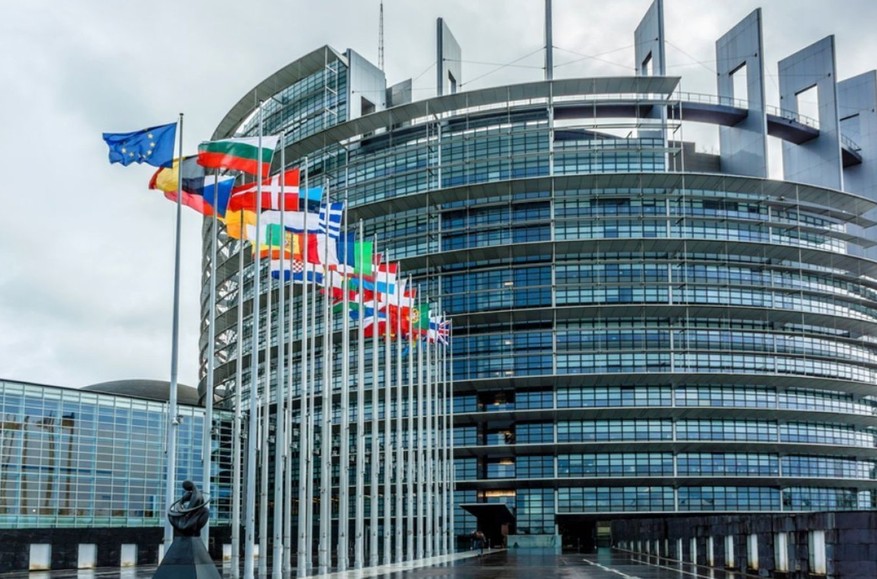
European Parliament designates Russia as state sponsor of terrorism

23 November 2022 
РЕКЛАМА
The Insider


The European Parliament has declared Russia a state sponsor of terrorism for carrying out strikes on Ukraine’s civilian facilities, energy infrastructure, hospitals, schools, and shelters, Reuters reports:
“The deliberate attacks and atrocities committed by Russian forces and their proxies against civilians in Ukraine, the destruction of civilian infrastructure, and other serious violations of international and humanitarian law amount to acts of terror and constitute war crimes.”

As The Insider explained earlier, the status has no legal ramifications.

Ukrainian president Volodymyr Zelensky commented on the European Parliament’s decision on Telegram:
“I welcome the European Parliament's decision to recognize Russia as a state sponsor of terrorism and as a state which uses means of terrorism. Russia must be isolated at all levels and held accountable in order to end its long-standing policy of terrorism in Ukraine and across the globe.”

In October, the Parliamentary Assembly of the Council of Europe (PACE) passed a resolution declaring the Russian government a terrorist regime and questioning Russia's seat on the UN Security Council. As international criminal law expert Gleb Bogush pointed out to The Insider, PACE’s decision bore no legal implications for Russia either:
“For now, the resolution is more of a political gesture, a stance issued as a guideline to 46 countries on the Council of Europe for the assessment of Russia's actions.”

Importantly, as Bogush explained, international law treats the concepts of a “terrorist state” and a “terrorist regime (government)” differently.