Friday, February 17, 2023

Israel approves law to strip Arab attackers of their citizenship

A masked Palestinian sits during a support rally for the Palestinian prisoners, outside Ofer, an Israeli military prison near the West Bank city of Ramallah,(Majdi Mohammed/AP)
  •  
  •  
  •  
  •  
  •  
  •  
Josef Federman, AP

Israel’s parliament overwhelmingly approved a law to strip Arabs convicted in nationalistic attacks or who give money to prisoners of their Israeli citizenship or residency.

The decision, which could potentially affect hundreds of Palestinian citizens and residents of Israel, was condemned as racist by Arab politicians as well as Palestinian officials in the occupied West Bank.

The internationally recognised Palestinian Authority (PA) has long provided cash to the families of Palestinians killed or imprisoned for attacks on Israelis.

Prisoners are widely seen as heroes in Palestinian society, and the PA considers these payments as a form of welfare to needy families.

But Israel says they reward violence and serve as an incentive for others to carry out attacks.

About 4,700 Palestinians are imprisoned by Israel for alleged security offences, according to Israeli rights group HaMoked.

Of those, 360 are Israeli citizens or residents of east Jerusalem, which was captured by Israel in the 1967 war and subsequently annexed.

Though Israel considers all of Jerusalem to be its undivided capital, its annexation of the eastern part of the city is not internationally recognised.

Most Palestinians in Jerusalem have Israeli residency rights, which allow them to work and travel freely and provide access to Israeli social services, but not full citizenship, which would allow them to vote.

On Wednesday, parliament voted 94-10 in favor of the law, which gives authorities the right to strip people of their citizenship or residency and deport them to either the West Bank or Gaza Strip.

The Palestinian Authority has limited autonomy in parts of the West Bank, where Israel wields overall control.

The Gaza Strip, meanwhile, is controlled by the Hamas militant group and largely closed by an Israeli-Egyptian blockade.

“It is inconceivable that Israeli citizens and residents who have not only betrayed the state and Israeli society, but have also agreed to receive payment from the PA as wages for committing the act of terrorism and continue to benefit from it – will continue to hold Israeli citizenship or residency status,” says an explanatory note to the bill.

Jewish politicians, including the opposition, voted in favor of the bill, while Arab representatives voted against it.

Arab politician Ahmad Tibi said the bill was racist because it only applies to Palestinians convicted of violence.

“An Arab who commits an offence is a conditional citizen,” he said. “If a Jew commits the same offence or a more serious one, they don’t even think of revoking his citizenship.”

Kadoura Fares, the head of the Palestinian prisoners’ club, a West Bank group that represents prisoners and their families, said the law was a “very dangerous decision that aims to transfer Palestinians from their cities and villages under the pretext of getting social assistance from the PA”.

HaMoked said 140 Arab citizens and 211 Jerusalem residents could be affected by the law.

It said the Jerusalem residents are especially vulnerable since they have fewer legal protections to fight the order.

The group also says that because east Jerusalem is considered occupied territory, transferring the population would violate international humanitarian law.

“It’s shameful that this law passed, and with an overwhelming majority of support from the opposition as well,” said Jessica Montell, HaMoked’s executive director.

“Revoking citizenship is an extreme measure – and revoking the residency of east Jerusalem Palestinians and deporting them would be a war crime.”

TO ZIONISTS ALL PALESTINIANS ARE TERRORISTS

Israel extends law to strip 'terror' convicts of citizenship

Law will also tackle payments from Palestinian Authority to families of prisoners or detainees

Israeli Prime Minister Benjamin Netanyahu leads a cabinet meeting in Jerusalem. 

AFP
Soraya Ebrahimi
Feb 15, 2023

The Israeli parliament expanded legislation on Wednesday that will introduce a policy of stripping citizenship over “terrorism” offences, aimed at those who receive funds from the Palestinian Authority.

The bill received 94 votes in favour and 10 against in the Knesset and paves the way for Israel to expel people from the country or annexed East Jerusalem.

Israeli Prime Minister Benjamin Netanyahu hailed it on Twitter as “our answer to terrorism”, while a rights group said the move was “in violation of international law”.
READ MORE
Israel's Ben-Gvir calls for more settlements despite international concern

A statement from parliament said politicians had approved “the revocation of citizenship or residency of a terrorist operative who receives compensation [from the Palestinian Authority] for committing an act of terrorism”.

The Palestinian Authority gives stipends to numerous families of prisoners, or detainees themselves, including those convicted of killing Israelis.

Israel says making payments to the families of attackers encourages further violence, but for some Palestinians, such payments are a key source of income.

The Palestinian family who live in a cemetery — in pictures


Lamis Kuhail, 12, plays with her 2-month-old brother, Ahmed, at their family home in the Sheikh Shaban cemetery, Gaza city. All photos: Reuters


Adalah, an organisation that advocates Palestinians' rights in Israel, said the law “not only creates an additional avenue for the revocation of the citizenship of residency of Palestinians … under the Israeli regime, but also facilitates their expulsion”.

“The law explicitly and exclusively targets Palestinians as part of Israel's entrenchment of two separate legal systems based on Jewish supremacy,” the group charged in a statement.

The law may affect hundreds of East Jerusalem Palestinians and dozens of Israeli citizens, according to Dani Shenhar, head of the legal department at Israeli rights group HaMoked.

“The threshold is very low, so we're very worried about it, especially the effect on East Jerusalem,” he told AFP when the bill was tabled last month.

The text approved by politicians lays out a judicial procedure for denying legal status following a request by the interior minister.

Most Palestinians living in East Jerusalem hold Israeli residency permits rather than citizenship.

Palestinians recycling plastic for fuel — in pictures


A Palestinian worker in Jabalia on the northern Gaza Strip prepares plastic for processing to extract fuel. All photos AFP

The new legislation allows deportation “to the territories of the Palestinian Authority [in the occupied West Bank] or the Gaza Strip”.

Gaza, controlled by Hamas, has been under an Israeli-led blockade since 2007.

Israel has occupied the West Bank and East Jerusalem since the 1967 war.

Ahmad Tibi, an Arab opposition lawmaker, denounced the law as discriminatory.

“When an Arab commits a crime, they are a conditional citizen, whereas when a Jew commits even a more serious crime, revoking their citizenship is unheard of,” he said during Wednesday's debate in parliament.

Politicians on Wednesday also approved in a preliminary vote a bill to allow the deportation of family members of those convicted of “terrorism”, in cases in which they are found to have supported the crime or known about it and failed to report it to the authorities.

Israel has previously stripped residency and citizenship, including that of French-Palestinian lawyer Salah Hamouri, who was deported in December.

Palestinian-Israeli clashes — in pictures


Palestinians carry a wounded man after Israeli troops raided the Nur Shams refugee camp, near Tulkarm in the occupied West Bank. AFP

The Jerusalem resident had been arrested and jailed on several occasions by Israel, which revoked his residency permit citing ties the outlawed Popular Front for the Liberation of Palestine.

In 2017, an Israeli court revoked an Arab citizen's nationality over an attack against Israelis.

That was the first time an amendment passed in 2008 had been used to revoke citizenship.

Also in 2017, Israel announced it was stripping 20 people of citizenship after they allegedly joined ISIS.

Human Rights Watch said Israel has stripped 15,000 East Jerusalem Palestinians of their right to residency since 1967, warning the practice may constitute a “war crime”.

YEP, SAME BINLADIN FAMILY

Saudi Binladin construction group fined over 2015 pilgrimage crane collapse

The Abraj Al-Bait Towers with the four-faced clocks stands over the holy Kabaa, as Muslims encircle it inside the Grand Mosque during the annual pilgrimage, known as the Hajj (Khalid Mohammed/PA)
  •  
  •  
  •  
  •  
  •  
  •  
Associated Press Reporter

A criminal court has imposed a 5.3 million dollar (£4.4m) fine on the Saudi Binladin Group and sentenced seven people to prison over the deadly collapse of a crane ahead of the 2015 Haj pilgrimage.

More than 100 people were killed in the incident, a leading Saudi daily newspaper reported.

Hit by strong winds, the 1,350-ton crane collapsed onto the Grand Mosque that houses Islam’s holiest site, the cube-shaped Kaaba, bringing down slabs of concrete on worshippers below.

Less than two weeks after the September 11 crane collapse, a stampede and crush of pilgrims killed more than 2,400 people.

The Okaz daily reported on Tuesday that the company was fined 20 million Saudi riyals, or about £4.3 million, for negligence and violation of safety regulations.

Three defendants were sentenced to six months in jail and fined 30,000 riyals (£6,660) and another four were sentenced to three months and fined 15,000 riyals (£3,330).

Okaz did not report their names or nationalities.

The court ruled that the company is not required to pay blood money to the families of those killed.

The Saudi Binladin Group did not immediately respond to a request for comment.

The Binladin family has been close to Saudi Arabia’s ruling family for decades and runs major building projects.

Al-Qaida’s late leader Osama bin Laden was a renegade son disowned by the family in the 1990s.

The verdict comes as Saudi Arabia prepares to host the first haj pilgrimage to Mecca and Medina following the lifting of pandemic restrictions.

Millions of Muslims are expected to make the pilgrimage in late June, which in normal years is among the largest gatherings of people on earth.

The twin disasters in 2015 were a source of embarrassment for the Saudi royal family.

At the time, King Salman partly blamed the crane’s collapse on the construction giant, saying its arm should not have been left up when it was not in use.

Peru reopens Machu Picchu after agreement with protesters


LIMA, Peru (AP) — Peru’s Machu Picchu, an Inca-era stone citadel nestled in its southeastern jungle, reopened on Wednesday after being closed nearly a month ago amid antigovernment protests, the culture ministry announced.

Agreements were made between authorities, social groups and the local tourism industry to guarantee the security of the famed tourist attraction and transport services.

Protests calling for the resignation of President Dina Boluarte and members of Peru’s Congress have shaken the region, including Cuzco, for more than two months. The demonstrations caused a blockade of the train tracks leading to the stone citadel.

The protests have led to 60 deaths: 48 are civilians who died in clashes with the security forces; 11 civilians killed in traffic accidents related to road blockades; and one policeman who died inside a patrol car when it was set on fire, according to data from the Ombudsman’s Office.

The closure of Machu Picchu, on Jan. 21, forced the government to airlift more than 400 tourists from Machu Picchu to the city of Cusco by helicopter.

Machu Picchu was built by the Incas in the 15th century as a religious sanctuary high in Andes Mountains.

Left: Peruvians construct a roadblock during a protest in the Andean nation's Cuzco region against a rise in the cost of living triggered by the Russian invasion of Ukraine, outside of Cuzco, Peru April 19, 2022. Photo by Alessandro Cinque/REUTERS


By Joshua Goodman, Associated Press
Analysis: What to know about Peru’s ongoing, Indigenous-led protest movement

By Eduardo Gamarra, The Conversation
House Democrats urge Biden to suspend aid to Peru over protest crackdown

By Joshua Goodman, Associated Press

Go Deeper
Two missing Australian zinc mine workers found dead
Reuters | February 16, 2023 | 

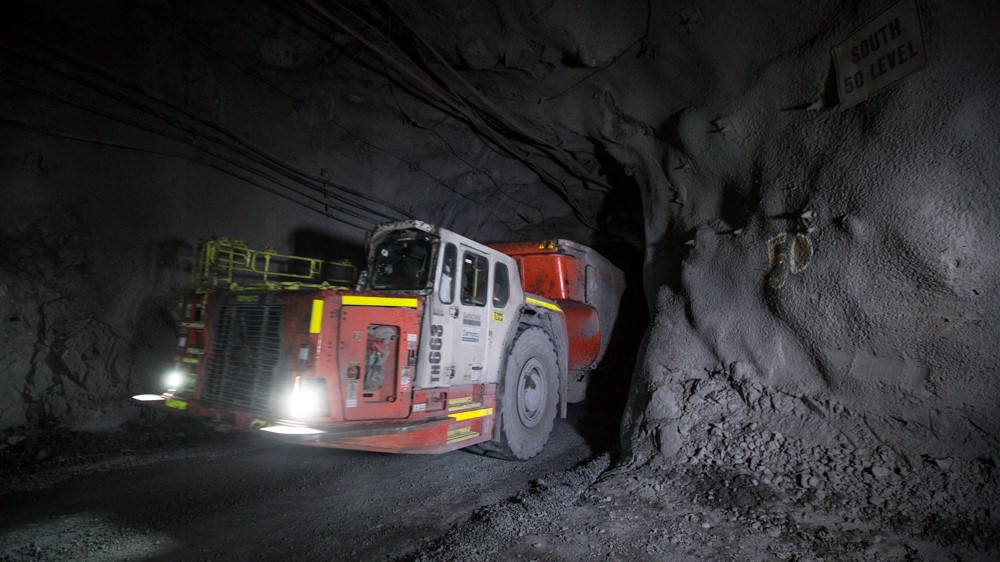
Dugald River mine in Queensland. (Image from MMG)

Australian mining services provider Perenti Ltd said on Thursday that two missing mine workers had been found dead after falling down a hole at MMG Ltd’s zinc mine in Queensland state.


China’s MMG on Wednesday halted operations at the underground mine after two people employed by contractor Barminco, owned by Perenti, fell down a holethat authorities said had happened because of a “ground collapse.”

Rescuers confirmed Trevor Davis, 36, and Dylan Langridge, 33, were fatally injured after falling about 15 metres in a previously backfilled area, Perenti said in a statement on Thursday.

A third employee was rescued with minor injuries.

Earlier on Thursday, arescue team using drones and heavy underground mining equipment found the vehicle Davis and Langridge had been using.

“This is a devastating outcome and I want to extend my deepest sympathies and condolences to the families, friends, colleagues and loved ones of Trevor and Dylan, both of whom should have come home safely from work yesterday,” said Perenti chief executive Mark Norwell.

Perenti will work with MMG and Queensland state authorities to investigate how the accident happened and what additional safeguards are needed, Norwell added.

(By Renju Jose and Lewis Jackson; Editing by Sandra Maler and Gerry Doyle)

HONG KONG

Emissions reduction a top priority for the construction industry


January 17, 2023 

The extreme weather around the world recently has forced us to think seriously about the big issue of global warming.

Buildings currently account for nearly 40% of energy-related carbon emissions globally, according to the World Green Building Council. The emissions come from two sources: The first is daily operation of households, industrial and commercial buildings, as well as shopping malls. Lighting, air conditioning, and more, account for 27% of the world’s annual carbon emissions. The other source of emissions is from building process, maintenance and demolition which account for about 10% of annual carbon emissions.

The United Nations predicted that 2.5 billion people would move to cities over the next 30 years, which according to the construction industry, will translate to building 13,000 houses every day till 2050, in order to keep pace with the global population growth. The building-related carbon emissions may double by that time.

The Hong Kong Green Building Council estimates that since Hong Kong is densely populated, buildings account for more than 60% of local carbon emissions, and up to 20% for construction projects.

As there are more than 500 new buildings in Hong Kong every year, how to construct and manage buildings in a more environmentally friendly way is an important task.

BEAM Plus is the Hong Kong’s leading initiative to offer independent assessments and certification of building sustainability performance, with an aim to make buildings more efficient and emit less carbon. Since 2011, more than 2,000 buildings have been registered with BEAM Plus (not equivalent to certification). In fact, customers in general appreciate green buildings. A study from the Hong Kong Polytechnic University found that the price of flats in BEAM Plus-certified buildings is 3.4%-6.4% higher than those in nonregistered buildings. This is also the case in other places, such as Singapore, where there is a 4-5% premium for officially certified green buildings, and about 5% in Tokyo, Japan.

However, the sales premium cannot offset the high cost. A study conducted by the Hong Kong Institute of Surveyors in 2017, referring to examples from many places around the world, including China, Hong Kong, Japan, New Zealand, Singapore, the Philippines and the Middle East, concludes that there is on average 34% increase in capital cost of green building projects which holds back many real estate developers.

Problems bring business opportunities. For example, startups, venture capital and cement manufacturers are looking for more environmentally friendly options to replace concrete. Meanwhile, in Finland, Norway and Sweden, nearly half of new homes are factory-built by assembling components in a factory before moving them on-site. The method is called prefabrication of which the advantage is much faster construction period as production of components can be carried out at the same time with the foundation works. For example, the on-site construction period of the InnoCell at Pak Shek Kok, Tai Po was shortened by 50%. The prefabrication also reduces material wastage by up to 85%, energy consumption by 5% and greenhouse gas emissions by 3%.

In fact, Hong Kong used this method to build Lower Ngau Tau Kok Estate early in the 1960s. But again, cost is an issue. Prefabrication of modules could increase unit construction cost by 17%, according to a study by the Legislative Council Secretariat. Are there any solutions? Let’s discuss this in my next article.


Environmental performance of old buildings needs to be improved


January 18, 2023 

At least 500 new buildings are constructed in Hong Kong every year which generates substantial carbon emissions. The construction industry must urgently look for more environmentally friendly construction methods, one is prefabrication of modules.

Recently, the Secretary for Housing said that this method would be adopted more frequently to speed up the construction of public housing. But using prefabrication of modules will increase the cost, what’s the choice? In addition, Hong Kong currently only adopts modular integrated construction (MiC) method in six types of government buildings, such as schools and office buildings. Is there any scope for promoting the method to private developers?

A study by the Legislative Council Secretariat cited the example of Singapore, pointing out that MiC has been extensively adopted due to labour shortage and high demand for building as many as 19,000 public housing units each year, and a number of concurrent infrastructure projects. The method is environmentally friendly, and also saves manpower. Therefore, the Singapore government mandates selected private development projects, such as hotels and residential buildings, to use MiC to build at least 65% of the total floor area. It also provides subsidies for construction companies that use the MiC method (there are similar measures in Hong Kong). At the same time, the authority also relaxed traffic regulations for transporting MiC modules. Through a multi-pronged approach, the use of MiC method doubled from 19% to 39% during 2017-2020.

I think it's worth emulating the advocacy of local production of building modules. Singapore not only allocates land to help the relevant enterprises to establish there, but also provides tax allowance to boost local production of MiC modules. Meanwhile, construction workers displaced by MiC are provided with associated training. It is expected to train 80,000 people with knowledge of latest building technologies in five years, expanding the talent pool. Will Hong Kong's re-industrialisation actively consider following Singaporean practice?

Apart from that, existing buildings are also a significant source of carbon emissions. According to government statistics, power generation is the largest source of the problem, accounting for more than 60% of total emissions. In the electricity consumption category, commercial and residential air conditioning consumes the most energy. Research and development of green technology to enable more efficient use of air conditioning and to reduce overall power consumption is of top priority.

DeepMind, a British startup company that defeated the world Go champion with artificial intelligence AlphaGo a few years ago, claimed to have developed algorithms in 2016 to cool the millions of computer servers in Google's data center with energy saving by 40%. In Hong Kong, a local company has also developed energy-saving solution by installing sensors to reduce power consumption and carbon emissions in buildings.

However, the issue of ageing buildings in Hong Kong has worsened the problem. The number of private buildings aged 50 years or above has surged to 8,600 in the past 10 years. The Operation Building Bright takes the immediate needs of the public such as fire safety, lift replacement, and drainage system repair as the primary consideration. Whether to use environmental friendly materials is not the priority. In fact, maintenance of old buildings is expensive, Italy is an example. In order to revitalise the economy under the Covid-19 epidemic, the government launched the Superbonus 110% Scheme in mid-2020. Each family can enjoy a tax credit up to 110% on the cost of upgrading their home, about €100,000 (about HK$ 850,000), for installing green facilities such as insulation system and solar panels. The Italian government has so far spent €21 billion (about HK$178 billion) over the past two years, it is staggering.

How can our similar global problem be solved? Young people and startups, I hope you can find innovative solutions for us as soon as possible.

-- Contact us at english@hkej.com


DR. WINNIE TANG
Adjunct Professor, Department of Computer Science, Faculty of Engineering;
Department of Geography, Faculty of Social Sciences; and Faculty of Architecture,
The University of Hong Kong

Smarter climate finance for the developing world


February 16, 2023 

Recent estimates suggest that the developing world will need $1 trillion of external climate finance annually by 2025, and $2.4 trillion per year by 2030, to meet the goals enshrined in the Paris climate agreement. But these targets will not be met unless international financial institutions and governments create stronger incentives, paying special attention to three key areas.

First, the world needs a more robust and consistent international process of price discovery for new offerings such as carbon offsets, green hydrogen, direct carbon capture, and battery storage. Because price-discovery mechanisms currently vary from country to country, the international community must come together to establish an overarching framework, which, by enabling offtake (pre-purchase) agreements, would help clean-energy manufacturers attract more investment, escaping the “chicken-or-egg” scenario in which many currently find themselves.

A credible international carbon price is crucial for driving greater investment toward clean-energy projects, as well as for gradually reducing – and eventually eliminating – fossil-fuel subsidies. Speaking at the United Nations Climate Change Conference (COP27) last November, the International Monetary Fund’s managing director, Kristalina Georgieva, stressed that the price of carbon should rise to $75 per ton by 2030 to impel consumers and businesses to change their behavior. But in 2021, the global average carbon price was just $3 per ton (though some regions have far exceeded that). To get to $75, policymakers will have to work closely together at the global level, finding new ways to bring detractors on board.

A second important issue is the establishment of multi-sovereign loan guarantees, which are needed to strengthen the creditworthiness of clean-energy projects and attract more private capital to developing countries. Leveraging this mechanism to its full potential will require clearer assessment standards. Equally, boosting the sums of climate finance requires better concessional rates to companies and entities involved in the shift to clean energy. The IMF and multilateral development banks (MDBs) have a significant role to play here, as do national banks at the local level.

Multi-sovereign guarantees and other climate-finance initiatives should be applied across regions and spread throughout the value chain, from the mining of minerals and equipment manufacturing to clean-energy generation and transportation. Getting to scale will require reforms to multilateral lenders’ shareholding arrangements and risk-tolerance standards, as well as faster disbursements and greater transparency concerning investment data.

Finally, the international community needs to forge a consensus on green-investment standards. A May 2022 proposal for a “green hydrogen standard” was a step in the right direction, but it remains to be seen if it will be approved and adopted by all. Even more to the point, the world still needs to agree on emissions-mitigation standards in areas such as carbon capture and “offsets” – an urgent priority that governments should take up at the G20 meetings or COP28 later this year.

My own country, India, has made huge strides in renewables in recent years, becoming the third-largest renewables market in the world. With the government having set a target of net-zero emissions by 2070, developments are now moving fast. Since COP26 in November 2021, India has introduced a national hydrogen plan and established new incentives for electric-vehicle and battery manufacturers.

My company, ReNew Power, has been able to scale up its portfolio of clean-energy assets to 13 gigawatts, as well as bringing forward its carbon-neutrality target by ten years (to 2040). Yet, as it stands, India is still the world’s third-largest emitter of greenhouse gases, and much of its clean-energy investment has come from domestic sources. As strong as our climate commitments are, developing countries like India need external support to shift away from traditional energy sources such as coal.

COP27 brought a major advance with the last-minute agreement on a “loss and damage” fund to support the developing countries that are being hit hardest by climate-related disasters. But MBDs and governments can and should be doing more to encourage climate investment in developing countries. For their part, MDBs need to make greater use of concessional finance, including grants, to mobilize investments where the benefits are shared globally. Helping middle-income countries move away from coal should be a top priority, along with offering stronger borrowing terms and de-risking clean-energy investments across the developing world.

Without a greater impetus from governments and global financial institutions, there is a risk that by the time global economic conditions improve, the window for achieving net zero by mid-century will have already closed. We must not let that happen.

Copyright: Project Syndicate
-- Contact us at english@hkej.com


SUMANT SINHA
CEO and Founder of ReNew Power

Closing the eco gender gap


February 16, 2023 

A recent Twitter spat between influencer Andrew Tate and climate activist Greta Thunberg epitomized the eco gender gap. Tweeting at the activist, Tate – the epitome of a man who views saving the planet as a threat to his masculinity – boasted about the “enormous emissions” of his luxury car collection, to which Thunberg replied with a takedown that currently ranks as the fourth most liked tweet ever. As columnist Rebecca Solnit writes, “There’s a direct association between machismo and the refusal to recognize and respond appropriately to the climate catastrophe.”

While some may laugh off an online dispute between two high-profile individuals, the differences between how women and men respond to global warming are well documented. Recent studies have shown that only 59% of men in the United Kingdom are committed to a green lifestyle, compared to 71% of women, and that men are less likely than women to recycle and consume environmentally friendly products. This gap has been attributed to some men’s perception of environmental justice as a feminine pursuit.

With air pollution from fossil fuels killing millions of people each year (many of whom live in the Global South), we have a clear ethical obligation to combat climate change. And since sexism evidently harms the capacity to act rationally in this regard, we need to clarify and transform the perceived relationship between climate change, gender stereotypes, and rationality.

Like all gender gaps, this one is the result of deceptive and biased thinking – the opposite of rationality. It is this, not emotion, that undermines reason. Emotions make us human, not irrational. Bias, whatever its cause, is what makes us incapable of objectivity, and it underlies the entrenched gender stereotype that women are emotional while men are rational. This stereotype is a well-known cause of gender inequality. But a point that is seldom addressed is how the stereotype relies on an idea of rationality that is limited in the first place.

Rationality is not simply “the ability to use knowledge to attain goals,” as the cognitive and evolutionary psychologist Steven Pinker argues in his book Rationality: What It Is, Why It Seems Scarce, Why It Matters. Nor is it merely a philosophical concept to submit to logical and metaphysical examinations. Rationality has also become an overarching moral framework with deep sociopolitical implications. Our understanding of rationality can influence political strategy, shape policy design, and inform our relationship with the natural world. We can’t change these domains without questioning our understanding of rationality.

The eco gender gap clearly demonstrates how rationality functions as a moral framework, and why it needs rethinking. A research project in Sweden found a correlation between a “sturdy belief in … science rationality” and climate skepticism among a group of influential older men in academia, indicating that the problem extends well beyond far-right influencers like Tate. The rationalism of the Enlightenment was of course at the root of industrialization and the evolution of modernity. Despite its many important contributions, however, it is also a significantly oppressive framework.

From dualism and techno-solutionism to effective altruism and international development models, our world is shaped by a scientific doctrine stemming from the idea that rationality is strictly to do with data, quantification, analytics, and methodological sense-making, and that these traits are tied to whiteness, masculine identity, and separation from nature.

There are other ways to think about rationality, and we need them desperately. The German philosopher Jürgen Habermas, for example, distinguishes between what he refers to as “communicative rationality,” which views rationality as depending on successful communication and a consensus of actors, and “cognitive-instrumental rationality,” the mechanistic type of rationality that shapes modern society.

Among the feminist, postcolonial, and pan-African spaces where I work, there are numerous important critiques of rationality. One such body of work was created by the black feminist thinker Audre Lorde, who wrote about the “non-european consciousness” that elucidates reality not only through rationalizing but also through phenomena such as the erotic and the poetic.

I experienced the latter during lockdown, when I had climate-related nightmares – perhaps the most vivid being a sudden hailstorm on a sunny summer beach. These could be described as a type of eco-poetic rationality that the political theorist Stephanie Erev refers to as “feeling the vibrations.” Sure, conventional rational thought can explain unexpected weather changes, but when I learned that many others were having climate dreams, too, I could not discard this eco-poetic way of knowing as irrelevant to the broader discussion of the planetary crisis.

To be clear, I am not a relativist when it comes to knowledge. I don’t believe that all ways of knowing are equal in every context. There are instances when objectivity and impartiality should be privileged, especially when questions concern scientific knowledge. But when it comes to knowledge itself, we need to embrace multiple perspectives and a pluralist approach to reduce normative biases. Even if all ways of knowing are not equal in every context, they are all relevant.

For as long as I can remember, my temperament has been informed by a need to break free of social norms. When I first started exploring feminism as a tool for doing so, I thought of these norms as structural: patriarchy, white supremacy, neo-colonialism. But I increasingly recognized that the prison was also intellectual, in the truest sense of the word: relating to what, why, and how we know. Thus, to break free from structures of oppression, one must fight for an intellectual revolution as well, by returning to the source of knowledge itself.

In a world confronting what many are calling a “polycrisis,” disrupting the dominant framework of rationality with an intersectional approach to knowledge is not only a feminist ideal. As the Tate-Thunberg exchange reminds us, it is necessary for humanity and the planet to flourish.

Copyright: Project Syndicate
-- Contact us at english@hkej.com


MINNA SALAMI
Founder of the blog MsAfropolitan

 Children in the Republic of Sakha (Yakutia), the largest republic of Russia, located in the Russian Far East. Photo Credit: Staselnik, Wikipedia Commons

Putin’s War In Ukraine Hitting Russia’s Numerically Smallest Nations Hardest – Analysis


By  and 

The disproportionate use of soldiers from the primarily non-ethnic Russian republics in the North Caucasus, Middle Volga and Far Eastern regions in President Vladimir Putin’s war against Ukraine has attracted widespread attention since the beginning of Russia’s campaign a year ago.

Whether this reflects poverty, ethnic discrimination or a desire by Moscow to avoid losses in major Russian cities, which might spark more serious anti-war protests, has been the subject of much debate (see EDM, March 1March 31, 2022; Idel-ural.org, April 11, 2022; Posle Media, December 4, 2022). Far less attention, however, has been devoted to the impact of Moscow’s draft and mobilization on Russia’s numerically smaller nationalities (malyye narody), including those that possess autonomous territory, such as Sakha (Yakutia), and those that do not, the latter numbering far more. It is unfortunate that such a lack of attention has persisted because it is becoming clear that Moscow’s mobilization of men from these nationalities as well as the deaths of many of them in Ukraine are not only hitting these peoples harder than anyone else but are also sparking protests, placing them on an accelerated course to disappearance.

Discussing the fate of Russia’s “indigenous small-numbered peoples” (korennyye malochislennyye narody)—the Russian state’s official designation for indigenous minorities numbering 50,000 or fewer—editor of the Russia of the Indigenous Peoples portal Dmitry Berezhkov presents five ways in which Putin’s war against Ukraine is harming these groups with particular severity (Istories Media, January 30). First of all, he says, mobilization has fallen disproportionately on them, not because they have been targeted but because they have less information and fewer resources to resist.

The resulting deaths in combat have an enormous impact because, even if they are small in absolute numbers, they touch so many people in these communities. If a nation of a million loses 100 men in combat, that is one thing, Berzhkov points out, but if a nation numbering a hundred or less loses even two, then that can cast an enormous shadow on the demographic survival of that community. And that is happening all too often among the 47 nations of the Russian Federation that number fewer than 50,000 people. Moreover, those dying are disproportionately men who are integral in keeping traditional forms of economic activity alive in the indigenous communities of the North and Far East—these forms being the basis for the limited subsidies these peoples receive.

Second, the war has had a serious negative economic impact on peoples who live far from major cities in Russia. As the economy has worsened, businesses have cut back deliveries to smaller markets, and the cash-strapped government has cut back subsidies. This means that the numerically “small peoples” now have fewer supplies than they did only a year ago.

Third, the exit of foreign firms has hit these peoples especially hard as well. When Western firms depart, standards at the remaining Russian companies invariably fall, and the employees at these firms suffer as a result.

Fourth, the Russian government has cut government subsidies to these peoples and thus is unable to compensate for the economic decline in their regions.

Fifth and final, Berezhkov says, the war has cut Russia’s northern peoples off from the chance to tell their stories in international forums and sometimes receive assistance. Earlier, representatives of these peoples could tell their stories in Geneva or New York, but now they cannot. As a result, Moscow “no longer devotes attention to international demands, letters and appeals.”

In response to this situation, ever-more representatives of the numerically small peoples are protesting. Most recently, Anvar Kurmankayev, the émigré leader of the Nogais, a 100,000-strong nation in the North Caucasus, spoke at a Brussels meeting of the Free Peoples of Post-Russia Forum about how Putin’s war is affecting his people and other numerically small peoples. He subsequently amplified his views in an interview with Kavkaz realii, in which he declares bluntly that, if Moscow carried out “two or three” more waves of mobilization, some of the smaller nations within the current borders of the Russian Federation, including the Nogais, will be at risk of disappearing altogether, as yet more unrecognized casualties of Putin’s war against Ukraine (Kavkaz.realii, February 7).

Having spoken to the European Parliament, Kurmankayev’s words have received some attention, though Moscow outlets mocked him for having delivered his remarks in Russian rather than Nogai. The Kremlin’s mockery has not stretched to a large wave of protest across the Russian North, however. The safety of the indigenous peoples there, long untouched by the Russian draft because of constitutional restrictions against drafting those engaged in traditional ways of life, ended last year in dramatic fashion.

In the aftermath of the Kremlin’s mobilization announcement, helicopters arrived in distant settlements to seize men who “are uninformed of their rights and can barely speak Russian to wage war against Ukraine,” the Sakha Pacifist Association wrote. Moreover, the letter adds, “Among those taken were people over [age] 55, full-time students and peoples with disabilities.” In response, their mothers, wives and daughters organized a large protest, only to have their second protest attempt suppressed by the police (Teletype.in, October 22, 2022).

Being so small in number (they constitute fewer than 2 or 3 percent of the country’s population), so far from Moscow and thus isolated from outside coverage, and so apparently easily suppressed, many in Moscow and in the West often view these peoples as marginal or even irrelevant. But at least two reasons underline why that is a mistake. For one, while they are few in number, these peoples dominate enormous swaths of the sparsely populated Russian North and can cause trouble for Russian firms and the Kremlin there. Sakha, for example, covers a territory larger than the entire European Union, and northern peoples have a reputation for defending their interests, often with the guns they legally have for hunting. (On that tradition, see Window on Eurasia, August 16, 2019.)

Secondly, despite Moscow’s assumption that no one pays attention to the peoples of the North, urban Russians who have been profoundly affected by environmental protests in the North and the member countries of the Arctic Council—a group Russia hopes to influence but has recently found itself isolated from due to the war in Ukraine—are two major exceptions (Publizist.ru, July 4, 2019; Window on Eurasia, March 24, 2022). Thus, the Kremlin’s mistreatment of the numerically small peoples of the Russian North will only exacerbate these situations, which in turn should make what happens to them a matter of concern for many who, up to now, may not have known they existed.

THUMBNAIL Children in the Republic of Sakha (Yakutia), the largest republic of Russia, located in the Russian Far East. Photo Credit: Staselnik, Wikipedia Commons

This article was also published at The Jamestown Foundation’s Eurasia Daily Monitor Volume: 20 Issue: 27


Paul Goble is a longtime specialist on ethnic and religious questions in Eurasia. Most recently, he was director of research and publications at the Azerbaijan Diplomatic Academy. Earlier, he served as vice dean for the social sciences and humanities at Audentes University in Tallinn and a senior research associate at the EuroCollege of the University of Tartu in Estonia. He has served in various capacities in the U.S. State Department, the Central Intelligence Agency and the International Broadcasting Bureau as well as at the Voice of America and Radio Free Europe/Radio Liberty and at the Carnegie Endowment for International Peace. Mr. Goble maintains the Window on Eurasia blog and can be contacted directly at paul.goble@gmail.com .
Earthquake could cost Turkey up to $111b: Business group

FEBRUARY 13, 2023

People look amid rubble as the search for survivors continues following an earthquake in Hatay, Turkey, on Feb 7, 2023.

Reuters

ANKARA - Turkey’s worst earthquake in almost a century has left a trail of destruction that could cost Ankara up to US$84.1 billion (S$111.96 billion), a business group said, while a government official put the figure at more than US$50 billion.

The combined death toll in Turkey and Syria from last Monday’s 7.8 magnitude quake approached 36,000 and looked set to rise, as the focus of the response switched from rescuing survivors trapped under the rubble to providing shelter, food and psychosocial care.

A report published at the weekend by the Turkish Enterprise and Business Confederation put the cost of the damage at US$84.1 billion – US$70.8 billion from the repair of thousands of homes, US$10.4 billion from loss of national income and US$2.9 billion from loss of working days.


It said the main costs would be rebuilding housing, transmission lines and infrastructure, and meeting the short-, medium- and long-term shelter needs of the hundreds of thousands left homeless.

President Recep Tayyip Erdogan has said the state will complete housing reconstruction within a year and the government was preparing a programme to “make the country stand up again”.

Some 13.4 million people live in the 10 provinces by hit by the quake, or 15 per cent of Turkey’s population, and it produces close to 10 per cent of gross domestic product

Read Earthquake death toll tops 33,000, Turkey starts legal action


The earthquake’s impact on GDP is unlikely to be as pronounced as after the 1999 earthquake in north-west Turkey, which struck the industrial heartland, International Monetary Fund executive director Mahmoud Mohieldin said on the sidelines of the Arab Fiscal Forum on Sunday.


Mr Mohieldin added that after the initial impact over the next few months, public and private sector investments in rebuilding could boost GDP growth going forward.

Nonetheless, economists and officials estimated the quake would cut economic growth by up to two percentage points in 2023.

The government forecast growth at 5 per cent in 2022 and had estimated growth at 5.5 per cent in 2023 before the quake.

Turkey is due to hold presidential and parliamentary elections this summer – the biggest challenge to Mr Erdogan during his two decades in power.

A three-month state of emergency has been declared in the 10 provinces affected and the central bank has postponed payments on some loans. The Treasury declared force majeure until the end of July and postponed tax payments for the region.

Source: Reuters


How people survive for days under earthquake rubble

Experts reveal how people can survive while trapped for days under rubble.

February 15, 2023