Friday, May 19, 2023

SPACE

Georgia Tech to lead NASA Center on Lunar Research and Exploration

Grant and Award Announcement

GEORGIA INSTITUTE OF TECHNOLOGY

Georgia Tech to Lead NASA Center on Lunar Research and Exploration 

IMAGE: RESEARCH THEMES DEFINING NASA’S CLEVER CENTER WHICH WILL BE LED BY GEORGIA TECH PROFESSOR THOMAS ORLANDO. view more 

CREDIT: GEORGIA INSTITUTE OF TECHNOLOGY

Georgia Tech researchers have been selected by NASA to lead a $7.5 million center that will study the lunar environment and the generation and properties of volatiles and dust. The Center for Lunar Environment and Volatile Exploration Research (CLEVER) will be led by Thomas Orlando, professor in the School of Chemistry and Biochemistry.

CLEVER is the successor to Orlando’s pioneering REVEALS (Radiation Effects on Volatiles and Exploration of Asteroids and Lunar Surfaces) center, and both are part of NASA’s Solar System Exploration Research Virtual Institute (SSERVI) program. 

REVEALS and CLEVER look ahead to the return of humans to the moon for sustained periods — a key part of NASA’s plan for space exploration in the coming decade. Volatiles such as water, molecular oxygen, methane, and hydrogen are crucial to supporting human activity on the moon. Dust is also important since the space-weathered particles can pose health effects to astronauts and hazards to the technology and hardware.

The interdisciplinary group of researchers supported by CLEVER will study how the solar wind and micrometeorites produce volatiles, research how ice and dust behave in the lunar environment, develop new materials to deal with potential dust buildup, and invent new analysis tools to support the upcoming crewed missions of the Artemis program.

 “The resources and knowledge that CLEVER will produce will be useful for the sustainable presence of humans on the moon,” Orlando says. “We have the correct mix of fundamental science and exploration — real, fundamental, ground-truth measurements; very good theory/modeling; and engineering — an easy mix with Georgia Tech and outside partners.” 

Orlando adds that CLEVER adopts a unique perspective on the challenges of understanding how to operate on Earth’s moon. “The atomic and molecular view of processes with angstrom distances and femtosecond time scales can help unravel what is happening on planetary spatial scales and geological time frames,” he says. “We can also translate our knowledge into materials, devices, and technology pretty quickly, and this is necessary if we want to help the Artemis astronauts.”

CLEVER includes investigators from Georgia Tech, University of Georgia, the Florida Space Institute, University of Hawaii, Auburn University, Space Sciences Institute, the Johns Hopkins University Applied Physics Laboratory, Lawrence Berkeley National Laboratory, NASA Ames, NASA Kennedy Space Center, and partners in Italy and Germany. In addition to pursuing a blend of fundamental science and mission support, CLEVER will also emphasize the research and career development of students and young investigators, another important goal of the SSERVI system.

Art: Brice Zimmerman, Georgia Institute of Technology


About Georgia Institute of Technology

The Georgia Institute of Technology, or Georgia Tech, is a public research university developing leaders who advance technology and improve the human condition. The Institute offers business, computing, design, engineering, liberal arts, and sciences degrees. Its nearly 44,000 students representing 50 states and 149 countries, study at the main campus in Atlanta, at campuses in France and China, and through distance and online learning. As a leading technological university, Georgia Tech is an engine of economic development for Georgia, the Southeast, and the nation, conducting more than $1 billion in research annually for government, industry, and society.

Academy students blast off to international space competition


Grant and Award Announcement

UNIVERSITY OF WARWICK

WMG Academy for Young Engineers is preparing for lift-off after being named UK national champions in the European Space Agency’s CanSat competition. Having launched themselves to the top spot in the UK, WMG Academy’s Team Phoenix 2 will soon blast off to the European finals.


Inspired by NASA’s Phoenix Mars Lander mission, the young space explorers from Team Phoenix 2 have designed and manufactured a suborbital satellite capable of measuring and collecting temperature and air pressure data whilst looking for signs of life on a planet by sampling surface dust – all contained within the size and shape of a soft-drinks can. Launched to a height of 1,000 feet, the satellite descends, launching an integrated parachute before transmitting data back to the team at the command centre.


As part of the competition, the students, all aged between 14 and 17 years old and studying a combination of maths, science and engineering, have produced designs and prototypes, submitted testing data and launch reports, and presented to a team of experts, setting themselves apart from over 250 other entries and 12 finalists to take the title of UK national champions.

WMG is based at the University of Warwick.


Commenting on the team’s success, WMG Academy Chief Executive, Stewart Tait, said, “Our students are clearly high-flyers with ambitions that are out of this world. We could not be more proud of Oliver, Joshua, Callum, Amneet, Timurs and George who have worked so hard to design an innovative and successful can-sized satellite.


“This year’s CanSat project was launched by Bob Hodge who has been an integral part of WMG Academy since we opened in 2014. Unfortunately, after a long illness, Bob sadly passed away just a few weeks ago and there is no better way to pay tribute to the time and energy Bob invested in the lives of our young engineers than continuing his legacy of inspiring the next generation through projects like CanSat.


“We are looking forward to taking Team Phoenix2 to the European finals to showcase the incredible engineering talent of WMG Academy students on the international stage.”

An X-ray look at the heart of powerful quasars

Peer-Reviewed Publication

ROYAL ASTRONOMICAL SOCIETY

quasar 

IMAGE: ARTIST’S IMPRESSION OF A QUASAR view more 

CREDIT: NOIRLAB/NSF/AURA/J. DA SILVA

Researchers have observed the X-ray emission of the most luminous quasar seen in the last 9 billion years of cosmic history, known as SMSS J114447.77-430859.3, or J1144 for short. The new perspective sheds light on the inner workings of quasars and how they interact with their environment. The research is published in Monthly Notices of the Royal Astronomical Society.

Hosted by a galaxy 9.6 billion light years away from the Earth, between the constellations of Centaurus and Hydra, J1144 is extremely powerful, shining 100,000 billion times brighter than the Sun. J1144 is much closer to Earth than other sources of the same luminosity, allowing astronomers to gain insight into the black hole powering the quasar and its surrounding environment. The study was led by Dr Elias Kammoun, a postdoctoral researcher at the Research Institute in Astrophysics and Planetology (IRAP), and Zsofi Igo, a PhD candidate at the Max Planck Institute for Extraterrestrial Physics (MPE).

Quasars are among the brightest and most distant objects in the known universe, powered by the fall of gas into a supermassive black hole. They can be described as active galactic nuclei (AGN) of very high luminosity that emit vast amounts of electromagnetic radiation observable in radio, infrared, visible, ultraviolet and X-ray wavelengths. J1144 was initially observed in visible wavelengths in 2022 by the SkyMapper Southern Survey (SMSS).

For this study, researchers combined observations from several space-based observatories: the eROSITA instrument on board the Spectrum-Roentgen-Gamma (SRG) observatory, the ESA XMM-Newton observatory, NASA’s Nuclear Spectroscopic Telescope Array (NuSTAR), and NASA’s Neil Gehrels Swift observatory.

The team used the data from the four observatories to measure the temperature of the X-rays being emitted from the quasar. They found this temperature to be around 350 million Kelvin, more than 60,000 times the temperature at the surface of the Sun. The team also found that the mass of the black hole at the quasar’s centre is around 10 billion times the mass of the Sun, and the rate at which it is growing to be of the order of 100 solar masses per year.

The X-ray light from this source varied on a time scale of a few days, which is not usually seen in quasars with black holes as large as the one residing in J1144. The typical timescale of variability for a black hole of this size would be on the order of months or even years. The observations also showed that while a portion of the gas is swallowed by the black hole, some gas is ejected in the form of extremely powerful winds, injecting large amounts of energy into the host galaxy.

Dr. Kammoun, lead author of the paper, says “We were very surprised that no prior X-ray observatory has ever observed this source despite its extreme power.”

He adds, “Similar quasars are usually found at much larger distances, so they appear much fainter, and we see them as they were when the Universe was only 2-3 billion years old. J1144 is a very rare source as it is so luminous and much closer to Earth (although still at a huge distance!), giving us a unique glimpse of what such powerful quasars look like.”

“A new monitoring campaign of this source will start in June this year, which may reveal more surprises from this unique source”.

First observed radio waves from a type Ia supernova


Peer-Reviewed Publication

NATIONAL INSTITUTES OF NATURAL SCIENCES

Artist’s impression of helium-rich material from a companion star accreting onto a white dwarf 

IMAGE: ARTIST’S IMPRESSION OF HELIUM-RICH MATERIAL FROM A COMPANION STAR ACCRETING ONTO A WHITE DWARF. BEFORE THE EXPLOSION, A LARGE AMOUNT OF MATERIAL IS STRIPPED FROM THE COMPANION. THE RESEARCH TEAM HOPES TO CLARIFY THE RELATIONSHIP BETWEEN THE EMITTED STRONG RADIO WAVES AND THIS STRIPPED MATERIAL. view more 

CREDIT: ADAM MAKARENKO/W. M. KECK OBSERVATORY

For the first time, astronomers have observed radio waves emitted by a Type Ia supernova, a type of explosion originating from a white dwarf star. This provides important clues to understand how white dwarfs explode.

A Type Ia (One-A) supernova is the nuclear explosion of a white dwarf star. This type of supernova is well known; these supernovae are used by astronomers to measure cosmological distances and the expansion of the Universe. But the explosion mechanism of Type Ia supernovae is not well understood. Solitary white dwarfs don’t explode, so it is thought that mass accretion from a neighboring companion star plays a role in triggering the explosion. The accreted mass is the outer layer of the companion star, so it is normally composed mostly of hydrogen, but it was thought that it should also be possible for a white dwarf to accrete helium from a companion star which had lost its outer layer of hydrogen.

As the white dwarf strips matter from its companion star, not all of the material falls onto the white dwarf; some of it forms a cloud of circumstellar material around the binary star system. When a white dwarf explodes in a cloud of circumstellar material, it is expected that the shockwaves from the explosion traveling through the circumstellar material will excite atoms, causing them to emit strong radio waves. However, although many Type Ia supernovae have been observed exploding within a cloud of circumstellar material, so far astronomers had yet to observe radio wave emissions associated with a Type Ia supernova.

An international team of researchers, including members from Stockholm University and the National Astronomical Observatory of Japan, performed detailed observations of a Type Ia supernova which exploded in 2020. They revealed that this supernova was surrounded by circumstellar material consisting mainly of helium, and also succeeded in detecting radio waves from the supernova. Comparing the observed radio wave strength with theoretical models revealed that the progenitor white dwarf star had been accreting material at a rate of about 1/1000 the mass of the Sun every year. This is the first confirmed Type Ia supernova triggered by mass accretion from a companion star with an outer layer consisting primarily of helium.

It is expected that this observation of radio waves from a helium-rich Type Ia supernova will deepen our understanding of the explosion mechanism and the conditions before a Type Ia supernova. Now the team plans to search for radio emissions from other Type Ia supernovae to elucidate the evolution which leads to the explosion.

These results appeared as Kool et al. “A radio-detected Type Ia supernova with helium-rich circumstellar material” in the journal Nature on May 17, 2023.

If the Higgs can reach the Hidden Valley, we will see new physics already in next-generation accelerators

Peer-Reviewed Publication

THE HENRYK NIEWODNICZANSKI INSTITUTE OF NUCLEAR PHYSICS POLISH ACADEMY OF SCIENCES

Exotic Higgs boson decays. 

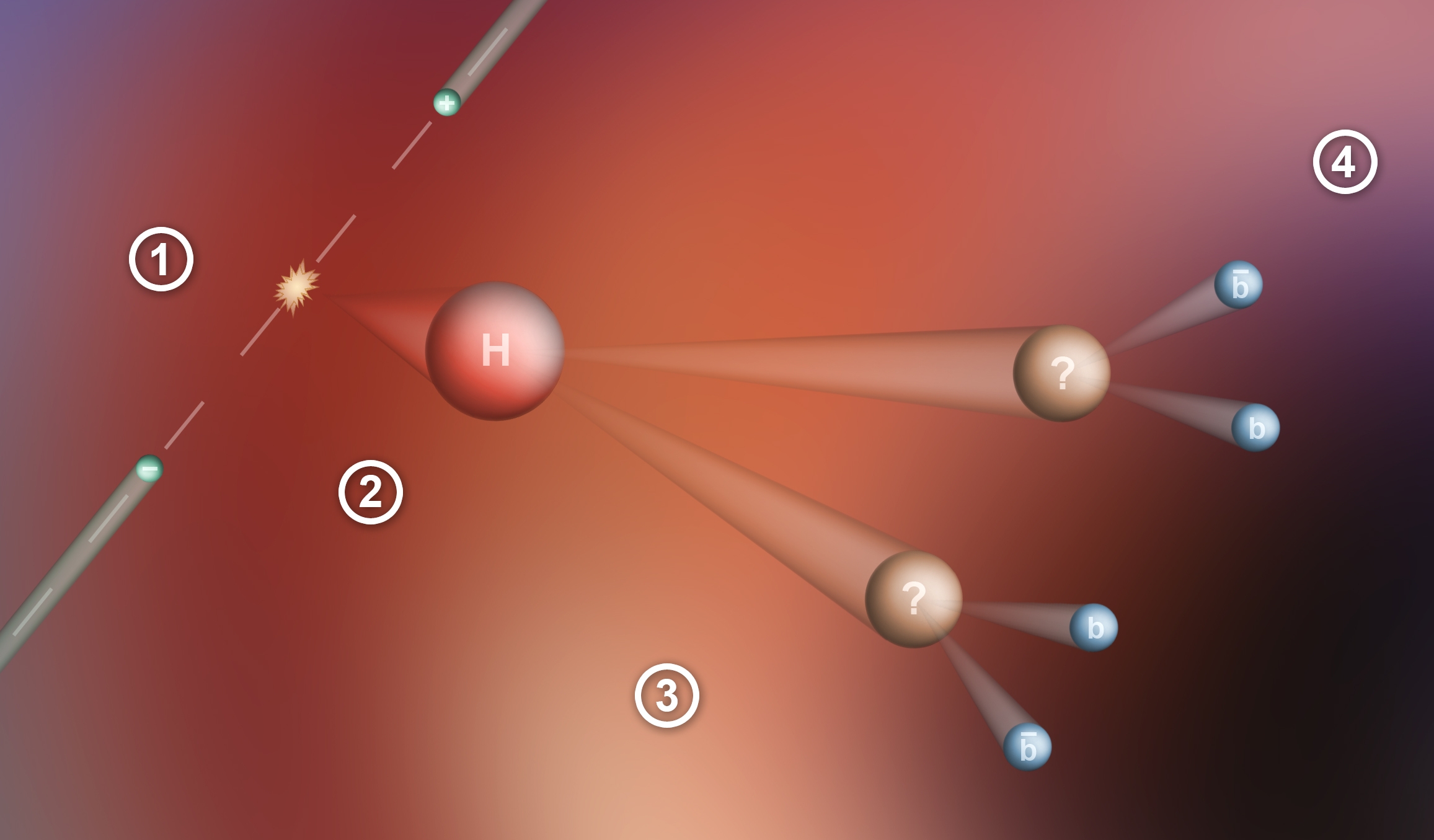
IMAGE: THE SEARCH FOR EXOTIC HIGGS BOSON DECAYS IN FUTURE LEPTON COLLIDERS: 1) AN ELECTRON AND A POSITRON FROM OPPOSING BEAMS COLLIDE; 2) THE COLLISION PRODUCES A HIGH-ENERGY HIGGS BOSON; 3) THE BOSON DECAYS INTO TWO EXOTIC PARTICLES MOVING AWAY FROM THE AXIS OF THE BEAMS; 4) EXOTIC PARTICLES DECAY INTO PAIRS OF QUARK-ANTIQUARK, VISIBLE TO DETECTORS. view more 

CREDIT: SOURCE: IFJ PAN

It may be that the famous Higgs boson, co-responsible for the existence of masses of elementary particles, also interacts with the world of the new physics that has been sought for decades. If this were indeed to be the case, the Higgs should decay in a characteristic way, involving exotic particles. At the Institute of Nuclear Physics of the Polish Academy of Sciences in Cracow, it has been shown that if such decays do indeed occur, they will be observable in successors to the LHC currently being designed.

When talking about the 'hidden valley', our first thoughts are of dragons rather than sound science. However, in high-energy physics, this picturesque name is given to certain models that extend the set of currently known elementary particles. In these so-called Hidden Valley models, the particles of our world as described by the Standard Model belong to the low-energy group, while exotic particles are hidden in the high-energy region. Theoretical considerations suggest then the exotic decay of the famous Higgs boson, something that has not been observed at the LHC accelerator despite many years of searching. However, scientists at the Institute of Nuclear Physics of the Polish Academy of Sciences (IFJ PAN) in Cracow argue that Higgs decays into exotic particles should already be perfectly observable in accelerators that are successors to the Large Hadron Collider – if the Hidden Valley models turn out to be consistent with reality.

“In Hidden Valley models we have two groups of particles separated by an energy barrier. The theory is that there could then be exotic massive particles which could cross this barrier under specific circumstances. The particles like Higgs boson or hypothetic Z’ boson would act as communicators between the particles of both worlds. The Higgs boson, one of the most massive particle of the Standard Model, is a very good candidate for such a communicator,” explains Prof. Marcin Kucharczyk (IFJ PAN), lead author of an article in the Journal of High Energy Physics, which presents the latest analyses and simulations concerning the possibility of detecting Higgs boson decays in the future lepton accelerators.

The communicator, after passing into the low energy region, would decay into two rather massive exotic particles. Each of these would, in picoseconds – that is, trillionths of a second – decay into another two particles, with even smaller masses, which would then be within the Standard Model. So what signs would be expected in the detectors of future accelerators? The Higgs itself would remain unnoticed, as would the two Hidden Valley particles. However, the exotic particles would gradually diverge and eventually decay, generally into quark-antiquark beauty pairs visible in modern detectors as jets of particles shifted from the axis of the lepton beam 

“Observations of Higgs boson decays would therefore consist of searching for the jets of particles produced by quark-antiquark pairs. Their tracks would then have to be retrospectively reconstructed to find the places where exotic particles are likely to have decayed. These places, professionally called decay vertices, should appear in pairs and be characteristically shifted with respect to the axis of the colliding beams in the accelerator. The size of these shifts depends, among other things, on masses and average lifetime of exotic particles appearing during the Higgs decay”, says Mateusz Goncerz, M.Sc. (IFJ PAN), co-author of the paper in question.

The collision energy of protons at the LHC, currently the world's largest particle accelerator, is up to several teraelectronvolts and is theoretically sufficient to produce Higgs capable of crossing the energy barrier that separates our world from the Hidden Valley. Unfortunately, protons are not elementary particles – they are composed of three valence quarks bound by strong interactions, capable of generating huge numbers of constantly appearing and disappearing virtual particles, including quark-antiquark pairs. Such a dynamic and complex internal structure produces huge numbers of secondary particles in proton collisions, including many quarks and antiquarks with large masses. They form a background in which it becomes practically impossible to find the particles from the exotic Higgs boson decays that are being sought.

The detection of possible Higgs decays to these states should be radically improved by accelerators being designed as successors to the LHC: the CLIC (Compact Linear Collider) and the FCC (Future Circular Collider). In both devices it will be possible to collide electrons with their anti-material partners, the positrons (with CLIC dedicated to this type of collision, while FCC will also allow collisions of protons and heavy ions). Electrons and positrons are devoid of internal structure, so the background for exotic Higgs boson decays should be weaker than at the LHC. Only will it be sufficiently so to discern the valuable signal?

In their research, physicists from the IFJ PAN took into account the most important parameters of the CLIC and FCC accelerators and determined the probability of exotic Higgs decays with final states in the form of four beauty quarks and antiquarks. To ensure that the predictions cover a wider group of models, the masses and mean lifetimes of the exotic particles were considered over suitably wide ranges of values. The conclusions are surprisingly positive: all indications are that, in future electron-positron colliders, the background of exotic Higgs decays could be reduced even radically, by several orders of magnitude, and in some cases could even be considered negligible.

The existence of particle-communicators is not only possible in Hidden Valley models, but also in other extensions of the Standard Model. So if the detectors of future accelerators register a signature corresponding to the Higgs decays analysed by the Cracow researchers, this will only be the first step on the road to understanding new physics. The next will be to collect a sufficiently large number of events and determine the main decay parameters that can be compared with the predictions of theoretical models of the new physics.

“The main conclusion of our work is therefore purely practical. We are not sure whether the new physics particles involved in Higgs boson decays will belong to the Hidden Valley model we used. However, we have treated this model as representative of many other proposals for new physics and have shown that if, as predicted by the model, the Higgs bosons decay into exotic particles, this phenomenon should be perfectly visible in those electron and positron colliders which are planned to be launched in the near future”, concludes Prof. Kucharczyk.

The research in question was funded by an OPUS grant from the Polish National Science Centre.

The Henryk Niewodniczański Institute of Nuclear Physics (IFJ PAN) is currently one of the largest research institutes of the Polish Academy of Sciences. A wide range of research carried out at IFJ PAN covers basic and applied studies, from particle physics and astrophysics, through hadron physics, high-, medium-, and low-energy nuclear physics, condensed matter physics (including materials engineering), to various applications of nuclear physics in interdisciplinary research, covering medical physics, dosimetry, radiation and environmental biology, environmental protection, and other related disciplines. The average yearly publication output of IFJ PAN includes over 600 scientific papers in high-impact international journals. Each year the Institute hosts about 20 international and national scientific conferences. One of the most important facilities of the Institute is the Cyclotron Centre Bronowice (CCB), which is an infrastructure unique in Central Europe, serving as a clinical and research centre in the field of medical and nuclear physics. In addition, IFJ PAN runs four accredited research and measurement laboratories. IFJ PAN is a member of the Marian Smoluchowski Kraków Research Consortium: "Matter-Energy-Future", which in the years 2012-2017 enjoyed the status of the Leading National Research Centre (KNOW) in physics. In 2017, the European Commission granted the Institute the HR Excellence in Research award. As a result of the categorization of the Ministry of Education and Science, the Institute has been classified into the A+ category (the highest scientific category in Poland) in the field of physical sciences.

SCIENTIFIC PUBLICATIONS:

“Search for exotic decays of the Higgs boson into long-lived particles with jet pairs in the final state at CLIC”

M. Kucharczyk, M. Goncerz

Journal of High Energy Physics, 131, 2023

DOI: https://doi.org/10.1007/JHEP03(2023)131

LINKS:

http://www.ifj.edu.pl/

The website of the Institute of Nuclear Physics, Polish Academy of Sciences.

http://press.ifj.edu.pl/

Press releases of the Institute of Nuclear Physics, Polish Academy of Sciences.

IMAGES:

IFJ230518b_fot01s.jpg                                 

HR: http://press.ifj.edu.pl/news/2023/05/18/IFJ230518b_fot01.jpg

The search for exotic Higgs boson decays in future lepton colliders: 1) an electron and a positron from opposing beams collide; 2) the collision produces a high-energy Higgs boson; 3) the boson decays into two exotic particles moving away from the axis of the beams; 3) exotic particles decay into pairs of quark-antiquark, visible to detectors. (Source: IFJ PAN)

Human ancestry has been shaped by mixing and matching alleles

Peer-Reviewed Publication

SMBE JOURNALS (MOLECULAR BIOLOGY AND EVOLUTION AND GENOME BIOLOGY AND EVOLUTION)

An artistic representation of African population genetics. 

IMAGE: THE EXTENSIVE ADMIXTURE FOUND IN AFRICAN GENOMES IS SYMBOLIZED BY A MARBLED PAINT EFFECT. view more 

CREDIT: JOSEPH LACHANCE ET AL.

The course of human history has been marked by complex patterns of migration, isolation, and admixture, the latter a term that refers to gene flow between individuals from different populations. Admixture results in a blending of genetic lineages, leading to increased genetic diversity within populations. In addition to admixture among modern human populations, ancient humans reproduced with other hominin groups, such as Neanderthals and Denisovans. This resulted in fragments of DNA from these ancient lineages being passed down to modern humans in a process known as introgression. Two recent studies published in Genome Biology and Evolution examine patterns of admixture in two different regions of the world—Africa and the Americas—revealing how this process has shaped the genomes of modern humans.

Africa is the birthplace of humanity, where our species originated and diversified. Because of this, Africa contains the highest levels of genetic diversity and population structure among humans, with non-African populations largely representing a subset of the genetic variation present on the African continent. Genomes of Africans contain mixtures of multiple ancestries, each of which has experienced different evolutionary histories. In the article “Evolutionary Genetics and Admixture in African Populations,” researchers from two institutes – Georgia Institute of Technology and Mediclinic Precise Southern Africa – reviewed how multiple demographic events have shaped African genomes over time (Pfennig, et al. 2023). According to Joseph Lachance, one of the review’s authors, “What stands out is the sheer complexity of human demographic history, especially in Africa. There are many examples of population divergence followed by secondary contact, the legacy of which is written in our genomes.”

For example, ancient introgression from archaic “ghost” populations of hominins that are no longer extant contributed approximately 4–6% of the ancestry of present-day Khoe-San, Mbuti, and western African populations. More recent demographic events that have occurred over the last 10,000 years have similarly resulted in admixture among modern humans, including gene flow among different click-speaking Khoe-San populations, the spread of pastoralism from eastern to southern Africa, and migrations of Bantu speakers across the continent.

Importantly, biomedical studies often fail to capture this diversity, resulting in implications for the health and disease of those with African ancestry. A better understanding of genetic architecture can help predict disease risk in a population or even inform clinical decision-making for individual patients. Such information is critical for equitable biomedical research, leading the study’s authors to call for more ethically conducted studies of genetic variation in Africa. “A critical point right now is the relative lack of African genetic data,” says Lachance. “Most genomic studies have focused on Eurasian populations, and this limitation can exacerbate existing health inequities.”

One avenue for better understanding the genetic architecture of African genomes is the study of ancient DNA: “Going forward, analysis of ancient DNA is expected to become much more common. Future studies are also likely to focus on fine-scale population structure in Africa. However, logistical and financial obstacles persist. There is a clear need for funding mechanisms that build research capacity in Africa.”

A second article recently published in GBE, titled “The impact of modern admixture on archaic human ancestry in human populations,” focuses on admixture in the Americas (Witt, et al. 2023), which were colonized by modern humans relatively recently. The first people to enter the continent were Indigenous Americans who migrated from Siberia. Subsequent migration of Europeans and Africans due to European colonization and the Transatlantic slave trade resulted in admixed populations that combine ancestries from different continents.

In the study, researchers from Brown University, the Universidad Nacional Autónoma de México, and the University of California-Merced analyzed how the resulting gene flow between modern humans redistributed archaic ancestry in admixed genomes. They used data from the 1000 Genomes Project that were acquired from several admixed populations, including Colombians from Medellin, individuals with Mexican Ancestry from Los Angeles, Peruvians from Lima, and Puerto Ricans from Puerto Rico. These genomes were compared to the high-coverage genomes of Neanderthals and Denisovans, ancient hominins that diverged from modern humans about 500,000 years ago and mated with humans in Eurasia before going extinct about 40,000 years ago.

According to one of the study’s authors, Kelsey Witt from Brown University, these admixed populations are relatively understudied compared to more homogeneous populations. “It is common in studies like this for admixed populations to be excluded because the multiple ancestry sources can make those questions harder to answer. For this work, we wanted to focus on admixed populations to determine what we could learn from them, and whether admixed populations could provide information about all of the ancestry sources that contributed to them.”

The study found that the amount of introgression from Neanderthals and Denisovans was proportional to the amount of Indigenous American or European ancestry in each population. Although European and Indigenous American tracts in these admixed genomes have approximately equal proportions of Neanderthal variants, Denisovan variants are found primarily in Indigenous American tracts. This reflects the shared ancestry between Indigenous Americans and Asian populations, which also have higher levels of Denisovan introgression.

Moreover, by searching for archaic alleles present at high frequency in admixed American populations but low frequency in East Asian populations, the study’s authors identified several genes as candidates for adaptive introgression. These genes were related to multiple pathways including immunity, metabolism, and brain development. Such findings have potential implications for the health of individuals in these admixed populations. “We’ve seen many examples of genetic mismatch in the literature,” says Witt, “where some variants were adaptive at some point in the past, but in the present environment, they have a negative impact on health. In addition, in admixed populations, genetic variants that are unique to separate populations may now interact in unexpected (sometimes negative) ways when they are present in the same individual. Our work suggests that some archaic variants are specific to some ancestry sources and not others."

Like Lachance, Witt knows that additional research is needed to continue to untangle the effects of admixture on modern humans. “In a lot of ways, admixed populations in the Americas are straightforward to study because we have a good idea of the timing and number of gene flow events,” notes Witt. “I’d like to apply this work to other admixed populations, where we may not know when admixture occurred or which populations contributed to it, or in cases where the contributing populations are more closely related. I think that the answers in those cases may not be as clear-cut, but they may contribute to a better understanding of those recent admixture events.”

These studies show admixture has played a significant role in shaping human evolution, both in Africa and in the Americas. Admixture not only reshuffles the genetic variation within and between populations, but also introduces new sources of variation that may have adaptive potential. By comparing the genomes of admixed populations with those of their ancestral groups and with those of archaic humans, these studies reveal how the mixing and matching of alleles has shaped the evolution of our species.

UAF scientists to hunt for clues about Arctic Ocean glaciation

Grant and Award Announcement

UNIVERSITY OF ALASKA FAIRBANKS

Evidence indicates a thick ice sheet, not annual sea ice and icebergs, covered the Arctic Ocean at some point during the last 140,000 years. Now, University of Alaska Fairbanks scientists will be looking for more geologic proof of the ice sheet’s existence, sources, behavior and extent.

UAF Geophysical Institute scientists will focus on the Beaufort and Chukchi seas region, both offshore and onshore. 

They hope to discover the extent of glaciation and improve understanding of the timing of glacial advances and retreats. Those cycles are thought to have occurred approximately 140,000 to 70,000 years ago, a period known as the mid- to late Pleistocene Epoch.

“The story of the Arctic Ocean is much more complicated than we may have originally thought and involves processes that we haven’t really considered before,” said Louise Farquharson, a research assistant professor at the UAF Geophysical Institute and the lead investigator.

Farquharson is working with UAF geophysics professor Bernard Coakley, who specializes in the history and formation of the Arctic Ocean, and research associate professor Andy Aschwanden, who studies glacier and ice sheet responses to atmospheric and oceanographic changes.

The National Science Foundation is funding the two-year project. 

The researchers will build a geographic information system database of existing marine and terrestrial geologic evidence that could relate to a 1-kilometer thick glacier in the Beaufort-Chukchi region. Researchers will use that database to test the hypothesis that glaciation was extensive in the western Arctic Ocean at several points during the late Pleistocene.

A second component would use that database to model what type of climate would have allowed the initial glaciation and subsequent advances and retreats. That will also give scientists information about the main ice sources that contributed to the buildup.

The scientists hope to obtain additional funding for that research.

Knowledge gained through the two research efforts can improve understanding of how climate change affects today’s high-latitude ice sheets, Farquharson said. 

Earth now has only two ice sheets, both of them high-latitude: Greenland and Antarctica. The two sheets cover 3% of Earth’s surface and 11% of the planet’s land. During glacial periods, ice sheets covered up to 8% of Earth’s surface and 25% of the land.

Offshore evidence to be included in the database includes seafloor and ridge scour marks, ocean core samples, bathymetric surveys and sonar data. Onshore evidence includes large boulders known as erratics and old shoreline ridges caused when ice pressing down on the landscape caused the ocean coast to move inland.

Finding onshore evidence is a “bit more complicated,” Farquharson said.

“That’s because we’re not really sure how far on land this Arctic Ocean glacier came, if at all,” she said. “But what we do see are these huge glacial erratics, big boulders up to the size of a car, deposited across the North Slope. There isn’t really a good mechanism for them being placed there other than through glacial transport and deposition.”

One theory states that ice streams flowing from the Canadian archipelago and feeding an Arctic Ocean glacier carried the boulders, which were left behind as the glacier retreated. An ice stream is an area of an ice sheet or ice cap that flows faster than the surrounding ice.

The new project builds on research of recent decades. 

Some of that research comes from Coakley, who co-authored a 2001 paper offering evidence of glaciation rather than the then-prevailing view that only annual sea ice and icebergs covered the Arctic Ocean. That paper described glacial scouring and shaping of the seafloor and large-scale erosion of submarine ridge crests indicative of glacier movement.

That prior work has added to the Arctic Ocean glaciation hypothesis first presented by British glaciologist John Mercer in 1970. Mercer based his hypothesis on commonalities between the modern-day Arctic Ocean and the former sea of West Antarctica now occupied by an ice sheet.

Mercer’s hypothesis has gained traction in the past decade as more Arctic Ocean data has been able to be collected due to advances in technology and the reduced presence of sea ice. Research in the mid- to late 1990s and early 2000s by others found evidence of glacial ice grounding and erosion.

A 2016 paper by Swedish marine geologist Martin Jakobsson provided new evidence of ice-shelf groundings in the central Arctic Ocean. Jakobsson concluded that new data seems to suggest that ice sheet centers existed on the Chukchi or outer East Siberian shelf or both and that the northern East Siberian Islands contained evidence of glacial impacts.

Farquharson and Coakley also hope to test the hypothesis that Arctic Ocean glaciation occurred even as glaciers at lower latitudes receded. Scientists believe, based on geologic records, that the contrasting trends arose from differences in the moisture available for snow and ice formation.

Farquharson led research that produced that finding in 2018. UAF colleagues Daniel Mann of the Department of Geosciences, Pamela Groves of the Institute of Arctic Biology and Ben Jones of the Institute of Northern Engineering, along with scientists from Utah State University and in Germany, are co-authors on that research.


CONTACTS:

• Louise Farquharson, University of Alaska Fairbanks Geophysical Institute, 907-474-5623, lmfarquharson@alaska.edu

• Rod Boyce, University of Alaska Fairbanks Geophysical Institute, 907-474-7185, rcboyce@alaska.edu

A recent investigation led by the CSIC successfully maps the shallow seabed of the Mediterranean coast using satellite images

The Institute of Marine Sciences of Andalusia (ICMAN-CSIC) conducted a study in Cala Millor (Mallorca, Spain). This research highlights the potential of the methodology in the presence of Posidonia oceanica

Peer-Reviewed Publication

SPANISH NATIONAL RESEARCH COUNCIL (CSIC)

Satellite-Derived Bathymetry (SDB) from Sentinel-2 images (2020) in Son Servera Bay. The main study area, Cala Millor beach, is located in the southern part of the image / Satellite-Derived Bathymetry (SDB) from Sentinel-2 images (2020) in Son Servera Bay. The main study area, Cala Millor beach, is located in the southern part of the image. 

IMAGE: SATELLITE-DERIVED BATHYMETRY (SDB) FROM SENTINEL-2 IMAGES (2020) IN SON SERVERA BAY. THE MAIN STUDY AREA, CALA MILLOR BEACH, IS LOCATED IN THE SOUTHERN PART OF THE IMAGE. view more 

CREDIT: SATELLITE-DERIVED BATHYMETRY (SDB) FROM SENTINEL-2 IMAGES (2020) IN SON SERVERA BAY. THE MAIN STUDY AREA, CALA MILLOR BEACH, IS LOCATED IN THE SOUTHERN PART OF THE IMAGE / SANDRA PAOLA VIAÑA-ICMAN

Satellite-derived bathymetry continues to advance and improve rapidly. A recent scientific study has confirmed the effectiveness of a methodology developed to obtain bathymetric data from satellite images in the Western Mediterranean. The results of this research, published in the prestigious International Journal of Applied Earth Observation and Geoinformation, reaffirm the value of this tool for monitoring coastal areas with varying turbidity levels and diverse seafloor characteristics.

The study was conducted in Cala Millor (Mallorca, Spain), an ecosystem of great significance due to its marine biodiversity but also its potential vulnerability to the effects of global change. The researchers successfully and accurately mapped its coastal seabed using satellite images from the Sentinel-2 twin satellites. This study represents the first attempt to test this methodology in an area with the presence of Posidonia oceanica, an endemic Mediterranean aquatic plant with significant ecological value.

This work has been carried out through a collaboration between researchers from the Institute of Marine Sciences of Andalusia (ICMAN-CSIC), the Coastal Observation System of the Balearic Islands (ICTS-SOCIB), and the National Oceanic and Atmospheric Administration (NOAA) of the United States.

"These tools are a valuable support for coastal management, as they provide up-to-date and continuous information on the morphodynamic changes occurring along the coasts. They are relevant in assisting decision-makers and defining effective adaptation measures against the impacts of global change, ultimately contributing to a more resilient coast," explains Sandra Viaña-Borja, a researcher at the ICMAN-CSIC.

Bathymetry, decisive for Marine Strategies                                       

Satellite-Derived Bathymetry (SDB) is moving a step closer towards consolidating itself as an alternative to traditional bathymetric techniques carried out by aircraft or ships. The main advantage that satellites offer is their open-access data and higher spatial coverage, eliminating the need for physical presence in the area or costly deployments. Nevertheless, despite the substantial advancements achieved in recent years, researchers are confronted with the primary challenge of substantiating the global and operational efficacy and precision of replicating these models in regions characterized by distinct features.

This methodology has already been employed with consistent results in other regions of the planet, such as the East Coast of the United States and the Caribbean. Now, it has been evaluated in a different ecosystem, the Mediterranean, where Cala Millor beach is one of the most monitored by the Comprehensive Beach Monitoring System of the ICTS-SOCIB, which has been operating since 2011. Moreover, due to its significance, the European Commission has recently approved a grant for the LIFE AdaptCalaMillor project, aiming to promote the adaptation of this beach to climate change and enhance the resilience of its infrastructure, ecosystems, and services.

Generating detailed maps of underwater topography is crucial to support a wide range of activities near the coast, such as dredging, environmental management, planning communication cable and pipeline routes, infrastructure maintenance, hydrographic applications, navigation, aquaculture and fisheries, research, tourism, and recreational sports. Moreover, bathymetry is one of the key features for the formulation of Marine Strategies, as outlined by the directives of the European Commission. This instrumental component establishes the overarching regulatory framework that guides and governs diverse sectoral policies and administrative measures pertaining to the marine environment.

"Currently, we are implementing these tools in other regions such as Galicia (NE Atlantic), South Korea, and Alaska, where we have obtained promising results. It is important to highlight that, according to the International Hydrographic Organization, more than half of the shallow seafloors in our oceans remain unmapped or are outdated. Satellite-derived bathymetry is a free and easily accessible technology. Undoubtedly, it is the future of coastal monitoring," emphasizes Isabel Caballero de Frutos, a researcher at ICMAN-CSIC.

Funding

This research was supported by the grant OAPN (Observatory TIAMAT, 2715/2021), IJC2019-039382-I and project RTI2018- 098784-J-I00 both funded by MCIN/AEI/10.13039/501100011033 and by “ERDF A way of making Europe”; grant PTA2020-018491-I funded by MCIN/AEI/10.13039/501100011033 and by “ESF Investing in your future”; and by the European Union-NextGenerationEU Agreement between MITECO, CSIC, AZTI, SOCIB, and the universities of Vigo and Cadiz, to promote research and generate scientific knowledge in the field of marine sustainability. The research was also supported by the National Oceanic and Atmospheric Administration (NOAA). This work represents a contribution to CSIC’s Thematic Interdisciplinary Platforms PTI TELEDETECT and PTI OCEANS+.


Oldest architectural plans detail mysterious desert mega structures

Peer-Reviewed Publication

UNIVERSITY OF FREIBURG

Image 1 

IMAGE: THE DIMENSIONS OF DESERT DRAGONS ONLY BECOME APPARENT FROM THE AIR: AT JEBEL AZ-ZILLIYAT IN SAUDI ARABIA, THE TRUE-TO-SCALE ENGRAVING DEPICTS NEARBY DESERT DRAGONS. view more 

CREDIT: OLIVER BARGE, CNRS

Although human constructions have modified natural spaces for millennia, few plans or maps predate the period of the literate civilizations of Mesopotamia and Ancient Egypt. Researchers from the French research organisation "Centre national de la recherche scientifique" (CNRS), together with Prof. Dr. Frank Preusser from the University of Freiburg, have now been able to identify engravings in Jordan and Saudi Arabia as the oldest known true-to-scale construction plans in human history. The 8,000 to 9,000-year-old engravings depict so-called desert dragons – kilometre long prehistoric megastructures used to trap animals. "Conclusions can be drawn from the findings about the people of the time. The ability to transfer a large space to a small, two-dimensional plan represents a milestone in intelligent behaviour," explains Preusser. The results, which were published in mid-May in the scientific journal PLOS ONE, should help to understand how desert dragons were conceived and built.

Scale plans of desert dragons discovered in Jordan and Saudi Arabia

Both finds are representations of nearby desert dragons engraved with stone tools. First sighted from aircrafts in the 1920s, desert dragons, up to five kilometres long, consist of stone walls that converge in a complex bounded by pits. As archaeologists have been able to determine in recent years, they were used for large-scale trapping of wild animals. In Jordan, there are eight desert dragons in the area of Jibal al-Khasabiyeh. There, the researchers found a depiction engraved in stone that measures 80 by 32 cm, its age is about 9,000 years. At Jebel az-Zilliyat in Saudi Arabia, two visible pairs of dragons are found three and a half kilometres apart. Here, too, a scaled engraving dating back about 8,000 years was discovered with a total length of 382 cm and a width of 235 cm.

Plans of large structures have so far only been attested by rough representations, in stark contrast to the precision of the engravings of al-Khashabiyeh and az-Zilliyat. The question of their exact use and how they were implemented, especially due to the difficulty of grasping the entire complex from the ground, remains for the time being the secret of the people by whom they were created.


The oldest known scale building plan in human history: the depiction of a nearby desert dragon in Jordan is dated to around 9,000 years ago.

CREDIT

Oliver Barge, CNRS


Overview of facts:

  • Crassard R., Abu-Azizeh W., Barge O., Brochier J.É., Preusser F., Seba H., Kiouche A.E., Régagnon E., Sánchez Priego J.A., Almalki T., Tarawneh M., 2023. The oldest plans to scale of humanmade mega-structures. PLOS ONE 18(5): e0277927. https://doi.org/10.1371/journal.pone.0277927
  • Frank Preusser is Professor for Sedimentology at the Institute for Earth and Environmental Sciences, Faculty of Environment and Natural Resources, at the University of Freiburg. His research emphasis is on the response of terrestrial sedimentary systems to climate change and human impact during the Quaternary. In particular, he is investigating the erosion and depositional history of the Alps and environmental developments on the Arabian Peninsula. A special interest is on geochronology, specifically luminescence dating.
  • The South-Eastern Badia Archaeological Project (SEBAP; research at Jibal al-Khashabiyeh) is funded by grants from the French Ministry of Foreign Affairs, Al-Hussein Bin Talal University (project No. 164/2016) and the CNRS National Institute for Humanities and Social Sciences. The GLOBALKITES project (research at Jebel az-Zilliyat) was funded by a French National Research Agency grant ANR-12-JSH3-0004-01 (RC). The Dumat al-Jandal archaeological project (research at Jebel az-Zilliyat) was funded by grants from the Saudi Heritage Commission, the French and Italian Ministries of Foreign Affairs, CNRS UMR-8167 Orient & Méditerranée, the University L’Orientale of Naples (Guillaume Charloux and Romolo Loreto).