Wednesday, June 14, 2023

EU's Nature Restoration Law: more funds, better agriculture

  • One particular European People's Party (EPP) MEP swore to 'shoot down' the Nature Restoration legislation — but the EPP have instead only shot themselves in the foot (Photo: The Left)

"The persistence of humanity". Let that sink in.

This is not a new Netflix series, but a recent study published in the Biological Reviews journal. The authors — scientists from Queens's University Belfast — determined that almost half of all the earth's species are currently in decline.

According to the UN, up to one million of the estimated eight million plant and animal species on Earth are at risk of extinction — many of them within decades.

In Europe, the European Commission estimates that more than 80 percent of habitats are in "poor" condition.

EPP 'disinformation rampage'

It is well known at this stage that the European People's Party (EPP) is on a disinformation rampage targeting the Nature Restoration Law. They are spewing dangerous propaganda about one of the most important pieces of legislation that has ever come before the European Parliament. But their disinformation campaign is backfiring and has now become counterproductive.

There are only so many times you can repeat a lie and have it exposed before people stop believing you. Their outrageous misrepresentations of this law have been repeatedly debunked — by the European Commission, by scientists, and even by business and industry.

The EPP's most recent humiliation in terms of its disinformation campaign happened this week when WindEurope emphatically welcomed the regulation, not for the first time, and put to bed any notion that the Nature Restoration Law would hamper the roll out of renewable energy.

The EPP have repeatedly insisted that the Nature Restoration Law would undermine our ability to meet our renewable energy targets. Yet, WindEurope couldn't be any clearer: EPP is "fundamentally wrong" they said.

One particular EPP MEP swore to "shoot down" this legislation, but EPP have instead only shot themselves in the foot.

As EPP slips into bed with the far-right in a more formal alliance this time, we see them adopting the same hysteria tactics we are more accustomed to with neo-fascists.

Let's be honest with ourselves — no one is coming for your children. The Nature Restoration Law is not about taking things from people or holding us back. The EPP would have you think that this law is about forcing people to do work they don't want to do, and suffering economically for it.

The opposite is true. It's actually about new opportunities, and the viability of our livelihoods as we know them. It will set the legal framework for biodiversity, which will open a myriad of new opportunities for people, including farmers.

A major addition to the draft law that the European Parliament's environment committee's rapporteur and shadow rapporteurs, myself included, have agreed to, is a new chapter on funding.

This chapter opens the door for new and predictable finance streams, for those who choose to trail blaze. A key part of this new chapter is the potential for a new permanent, dedicated nature restoration fund within the MFF — fresh money for those that lead the way in nature restoration efforts. This would be totally separate from the Common Agricultural Policy (CAP). Why are EPP, who claim to be taking the side of the farmers', opposing this new opportunity for farmers to get new, additional money?

There is also huge potential for leveraging private and joint public and private investments in relation to the Nature Restoration Law, for example through the EU taxonomy, and the Business for Biodiversity movement.

The commission is already working with the European Investment Bank and other implementing partners through the InvestEU programme and the GreenAssist initiative to build a pipeline of green investments and scale up public/private blended finance for nature restoration. The new 'Guidelines on State aid for Climate, Environmental Protection and Energy' also offer significant funding possibilities.

If EPP wants to see farmers supported and financially incentivised to restore nature, then they should support the Nature Restoration Law.

No one will be forced to do anything with this law.

This is about just transition, and those who decide themselves to lead the way will be rewarded. The uptake of measures will have to be made attractive by each national government.

There is an explicit obligation on member states to do so when it comes to restoring drained peatlands. Each member state will detail in their own nature restoration plans what they are planning to do — where, when, how and what they will restore, and public participation is built into the very core of this planning mechanism.

Compensation schemes are also explicitly part of this process. Those who choose to fully rewet their land, for example, deserve to have this option for financial compensation. We cannot allow EPP to tank this ship of new opportunities.

AUTHOR BIO

Mike Wallace is an Irish MEP for The Left, who was a shadow rapporteur on the EU Nature Restoration Law on behalf of the European Parliament.

SINGAPORE
MOM probes social enterprise Red Crowns for potentially flouting the law in hiring foreign maids

MOM’s investigations into Red Crowns Senior Living go as far back as November 2021. 
PHOTO: ST FILE

Judith Tan
Correspondent
ST
June 14,2023

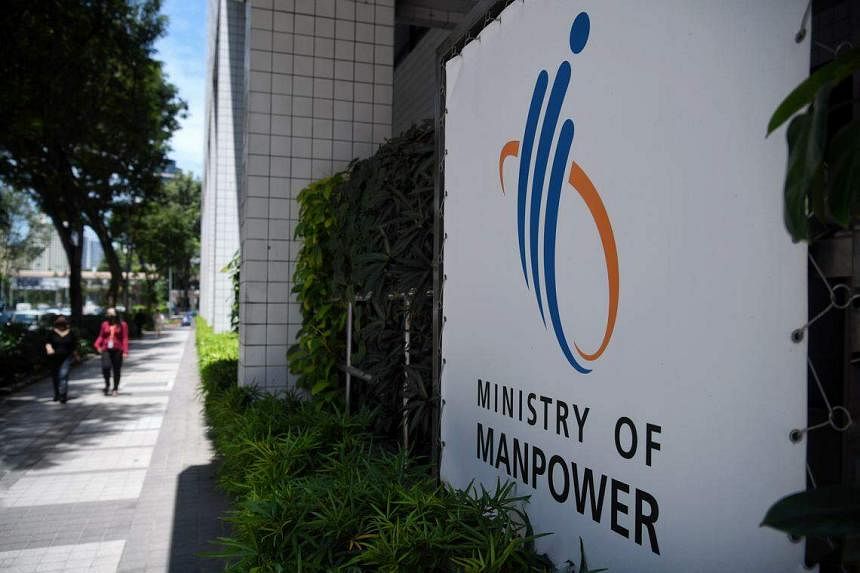
SINGAPORE - The Ministry of Manpower (MOM) is probing social enterprise Red Crowns Senior Living (RCSL) for potentially flouting the Employment of Foreign Manpower Act.

Posting on its Facebook page, the ministry said it has “serious concerns about RCSL’s operating model as it could compromise the interests of its elderly clients and well-being of the migrant domestic workers (MDWs)”.

Under its model of assisted co-living, RCSL matches four seniors to an apartment, who are then taken care of by two foreign domestic workers (FDWs). These workers are usually new hires under two of the clients in the apartment.


But under the law, the employer of a foreign maid is responsible for her food, safety, medical care, job scope, accommodation and rest arrangements. Yet MOM was informed that while the domestic workers are employed by the elderly clients, these employers do not actually have full control over all the areas of their employment.

“Notably, some of RCSL’s clients had indicated to MOM that they were unaware of their legal liabilities as employers, such as being responsible if MDWs sustained a work-related injury or failed to receive timely salary payment(s),” a spokesman for MOM told ST.

MOM’s investigations into RCSL go as far back as November 2021.

RCSL was set up in 2021 by architect Joshua Goh, 43, who saw the growing demand for assisted living facilities besides nursing care facilities, which are more appropriate for seniors who are ill and need more care than relatively healthy older people.

Mr Goh himself had trouble finding quality residential care services for his father.

The enterprise currently rents 30 Housing Board (HDB) flats and three apartments in condominiums for co-living.

Prices start at $2,900 a month for a two-bedder room in an HDB flat, inclusive of meals, utilities and 24-hour caregiving. The cost can go up to $6,300 a month for a condominium room, according to RCSL’s website.


Businessman Ahravin Sandraregaran, 34, whose 69-year-old father moved into the RCSL Hillview facility a year ago, was approached by MOM.

“One foreign domestic helper in the condo was hired by my father and I am the sponsor,” said Mr Ahravin.

Mr Ahravin said he has had no issues with the arrangements so far.

“With the rising costs of caring for an aged parent, this is the best solution. My father has companions around his age, and the maid has emotional support from the other maid. That was what I told the officers,” he said.

Agreeing, accountant Christopher Tan, 51, said: “This model is also safer than having my mother alone at home with just the foreign help.”

His 76-year-old mother suffered a stroke 12 years ago and is wheelchair-bound.

Mr Tan, who was also approached by MOM, added: “The maids here cook and clean for the seniors and are not deployed to other places. The seniors also get to age in place. They go out, shop for groceries and spend the weekend with families when the maids enjoy their days off,” he said.

Employers to provide medical insurance coverage of at least $60k for maids, migrant workers from July

But the authorities are concerned if such an unusual model for elder care has breached regulations, said labour law experts.

The head of employment and labour at TSMP Law Corp, Mr Ian Lim, told ST in a nursing home, for example, the home itself is the employer of all the help staff in the facility and not any of the residents.

“In this case, the elderly clients are the employers, which is uncommon in a centralised setting. Also, should the elderly employers be of very advanced age or suffering from dementia, would they be able to even appreciate the fact that they are the employers of these helps?” he asked.

Mr Lim said under the statute, a foreign maid may work for one household only.

“At the RCSL homes, the FDWs are looking after a group of elderly who may be unrelated but living under one roof for economies of scale. That is perhaps the concern. The statute never contemplates such a group of people living together for convenience and companionship,” he added.

When contacted, Mr Goh said RCSL is “given the authority by, and work closely with, the elderly and their families to choose and hire the MDWs, who are employed on better than market terms and work with the employers at the specified residence”.

He said: “Our mission is to provide quality, affordable cares to seniors who prefer to age-in-place in a homely environment, and we believe we are in compliance with all laws and regulations in all material respect.”

He said neither the clients nor the workers face unnecessary risks as there is a household of four seniors and two domestic workers “looking out for each other”.

“Our coordinators also visit the homes weekly to make sure everyone is fine. Family members are kept up to date and have direct communication with the help via WhatsApp. We are also putting in place incentives and training for the MDWs to help them improve themselves in their skills and encourage them to take initiatives,” he said.

Mr Goh said he is in discussions with the MOM and would work with it to resolve their concerns.

MOM said investigations are still ongoing to establish the scale of RCSL’s operations and potential employment-related offences.

“MOM is engaging the elderly clients, their next-of-kin, and the MDWs to provide our assistance. Our focus is on helping the elderly clients understand their responsibilities as employers of MDWs, and minimising disruptions to their care arrangements,” a spokesman for MOM said.


IDF cyberdefense system, three other top secret projects awarded top security prize

Gallant says classified ventures send ‘clear message to our adversaries’; officer receiving award says his team developed tools to deal with ‘the most advanced’ cyberattackers

President Isaac Herzog (2R) awards a Navy officer with the Israel Defense Prize, alongside IDF chief Herzi Halevi (right) and Defense Minister Yoav Gallant (center), June 13, 2023. (Defense Ministry)

President Isaac Herzog and Defense Minister Yoav Gallant on Tuesday awarded the Israel Defense Prize, one of the highest honors bestowed by the state, to four teams for top secret work they accomplished over the past year.

The winners, announced last month, included an army team behind a “groundbreaking” cyberdefense system aimed at giving Israel “freedom of action in the digital space,” and three other completely classified projects led by various security organizations, according to the Defense Ministry.

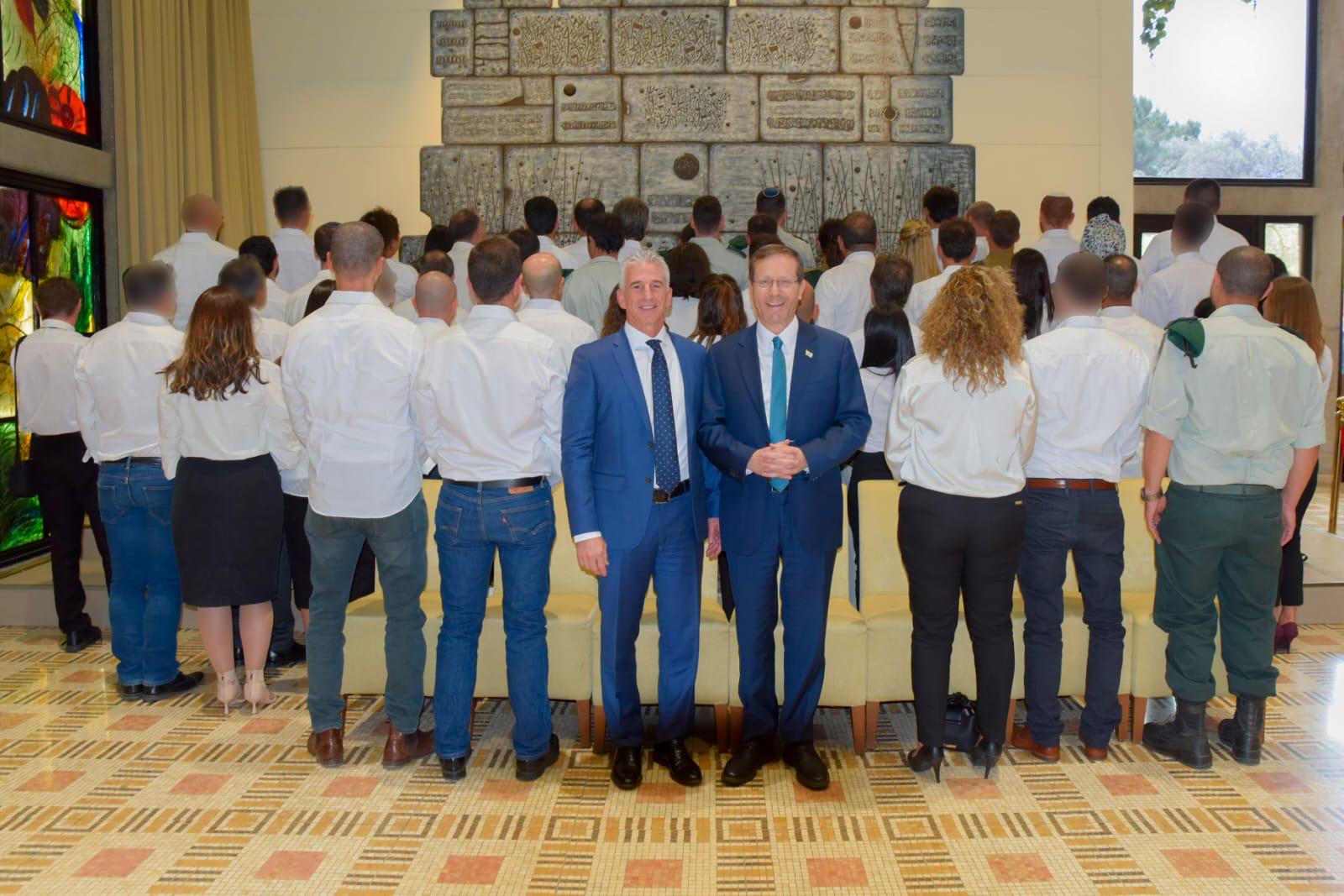
The ceremony took place at Herzog’s residence in Jerusalem, with military chief Lt. Gen. Herzi Halevi, Shin Bet head Ronen Bar, Mossad chief David Barnea, and Defense Ministry Director General Maj. Gen. (res.) Eyal Zamir in attendance.

“Officers, soldiers, and fellow citizens, the women and men of our esteemed defense establishment — your invaluable contributions to Israel’s national strength are truly remarkable. Through your accomplishments, inventions, developments, and outstanding achievements, the security of our beloved nation is safeguarded, ensuring our ability to defend ourselves independently,” said Herzog.

Gallant said the classified projects “send a clear message to our adversaries that we are always prepared for any threat.”

The Israel Defense Prize award, which is named for the commander of Israel’s pre-state Hagana militia Eliyahu Golomb, is presented each year to people and projects deemed to have made a significant contribution to the country’s security.

President Isaac Herzog (right) stands with Mossad chief David Barnea (left) in front of members of various security organizations awarded the Israel Defense Prize, at the President’s Residence in Jerusalem, June 13, 2023. (Defense Ministry)

The development of the cyberdefense system was led by the so-called Spectrum Division in the Israel Defense Force’s Computer Service Directorate, which is tasked with the defense of the electromagnetic spectrum, or radio waves. The development and deployment of the system also involved the Air Force, Military Intelligence and Navy.

“The cyber-dimension is abuzz, even when silence prevails in the physical dimensions. States, armies, criminal organizations, and terror groups clash with each other all the time. Cyber​​defense is a fascinating field with great complexity; the defender has to block all breaches, while the attacker only needs one loophole to succeed,” said Lt. Col. “Aleph,” a senior officer in the Spectrum Division, who can only be identified by his first initial in Hebrew due to security concerns.

“However, when you understand the laws of the dimension, it is possible to turn the attacker’s advantage into a disadvantage. In the project… we were able to create concepts and tools to deal with the most advanced attackers, through research and development that lasted for years and in which we reached global breakthroughs in the field,” the officer said after receiving the prize.

The Defense Ministry said the “unique” system makes “groundbreaking use of the world’s most advanced technologies in order to guarantee the IDF security and freedom of action in the digital space, in the face of advanced and developing cyberthreats.”

Illustrative. An IDF soldier from the C4I Corps types on a computer. (Israel Defense Forces)

The other three projects that won the prize this year remain largely classified.

One was a joint effort by the Shin Bet security agency and Military Intelligence’s Unit 8200. The ministry said the goal of the project was “the development and implementation of a unique technological system that enables intelligence and security superiority in many sectors.”

“The system is groundbreaking and has a significant contribution to the intelligence community’s efforts in the face of security challenges,” it added.

Another project was a joint effort between the Mossad spy agency and Unit 8200, which has a “significant and unique strategic contribution to the security of the country, embodying within it technological innovation and groundbreaking and extraordinary operational courage,” the ministry said.

The last was a project that involved Military Intelligence’s Special Operations Division, along with the Air Force, Navy, Israel Aerospace Industries and Rafael defense firms.

The ministry said that project was “an extraordinary technological solution that led to a breakthrough in operational capability… that directly contributes to maintaining the qualitative advantage of the IDF and the security of the State of Israel.”

“The project combines a number of innovative and unique technological developments made possible by the vision, determination and creativity of all project partners,” the ministry added.

Soldiers of the IDF Intelligence Unit attend a ceremony for the appointment of the new chief of Intelligence at Glilot military base, near Tel Aviv, March 28, 2018. (Miriam Alster/Flash90)

“The Military Intelligence Directorate is all over the field and achieves a unique intelligence superiority with all the means at its disposal, thanks to the people who dedicate their lives to this challenging work,” said a senior officer in the IDF Military Intelligence Directorate, who cannot be named due to security concerns.

Last year’s winners included Israel’s Ofek spy satellites. The others were also mostly classified. Among the winners in 2019 were the Mossad agents behind the operation to steal Iran’s nuclear archive the year before.

The prize has been awarded annually by the president since 1958. Though the prize is sometimes given for lifetime achievement, generally the recipients are responsible for the creation of a new piece of technology or a specific operation.

Over the years, the prize has been awarded both to individuals, like Uzi Gal who received the first Israel Defense Prize in 1958 for creating the Uzi submachine gun, and to entire teams, like the group responsible for the development of the TROPHY anti-missile system that protects Israeli tanks and armored personnel carriers, which won in 2014.


Three Tunisian opposition leaders on hunger strike in prison

Ennahdha party leaders stop eating to protest against their imprisonment on terrorism, money-laundering charges.

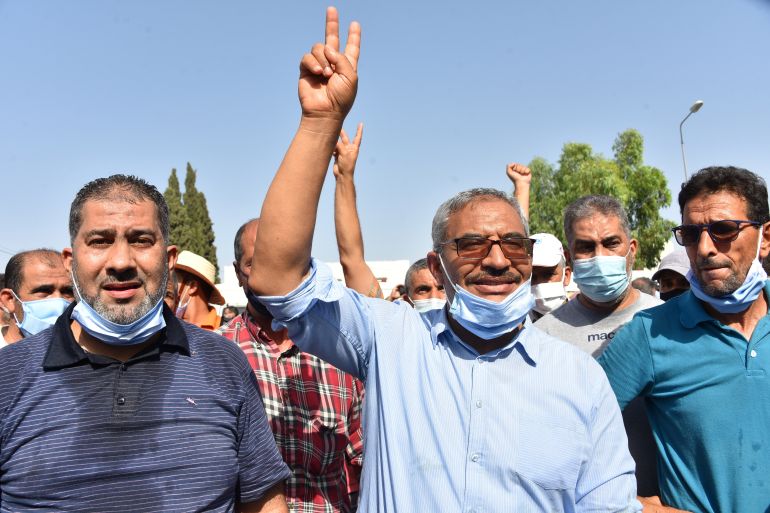
Ennahdha party MP Sahbi Atig, centre, demonstrates against President Kais Saied's suspension of parliament and dismissal of the prime minister on July 26, 2021 [Jdidi Wassim/SOPA Images/LightRocket via Getty Images]
Published On 13 Jun 202313 Jun 2023


Three leaders of Tunisia’s opposition Ennahdha party are on hunger strike in protest against their detention and stripping of fundamental rights in what is widely seen as part of a government crackdown against opponents of President Kais Saied.

Sahbi Atig, 64, has been on hunger strike for 32 days. His health has deteriorated severely, his wife, Zeineb Mraihi, said on Monday after visiting him in prison.

Atig, a member of Ennahdha’s Shura Council, was arrested on May 6 as he was on his way to attend a conference in Turkey. He has been held since on “suspicion of money laundering”.

“He has lost 17kg [37lbs], his heart rhythm is weak and he can hardly speak,” Mraihi said, adding that Atig spent several days in intensive care at a hospital a week ago.

‘Dangerous policy’

Ennahdha issued a statement on Monday after another of its leaders, Ahmed Mechergui, 54, a former member of parliament and chief of staff of the party’s leader, began a hunger strike on Sunday to protest against his incarceration since April 18.

“Forcing detainees to go on hunger strikes as a last resort to defend themselves is a dangerous policy and a great risk to the lives of Tunisians whose only fault is their disagreement with the ruling authorities,” the statement read.

It also made reference to the detention of activist and Ennahdha Shura member Youssef Nouri, who was arrested about the same time as Mechergui. Nouri has been on hunger strike since April 24 to “protest the lack of the most basic and fundamental of prisoner’s rights”, his lawyer Latifa Habbechi said on the first day of his strike.

On Saturday, Ennahdha published a petition by 52 Tunisian law professors calling on the government to release “all political detainees and prisoners of conscience who were imprisoned without justification or a fair trial”.

In March, the European Parliament, in a non-binding resolution, decried the “authoritarian drift” of Saied, who said those detained are “terrorists” involved in a “conspiracy against state security”.

The Ennahdha party was the largest in parliament before Saied dissolved the chamber in July 2021 as part of a power grab allowing him to rule by decree in the only democracy to emerge from the Arab Spring uprisings more than a decade ago.

A Tunisian court last month handed Ennahdha leader Rached Ghannouchi a one-year prison sentence on terrorism-related charges, which the party condemned as an “unjust political verdict”.

Ghannouchi and Atig are among more than 20 of Saied’s political opponents and personalities arrested since February, including former ministers and business figures.

SOURCE: AL JAZEERA AND NEWS AGENCIES

China attaches great importance to Palestinian issue, supports peace talks - Foreign Minister
June 13, 2023
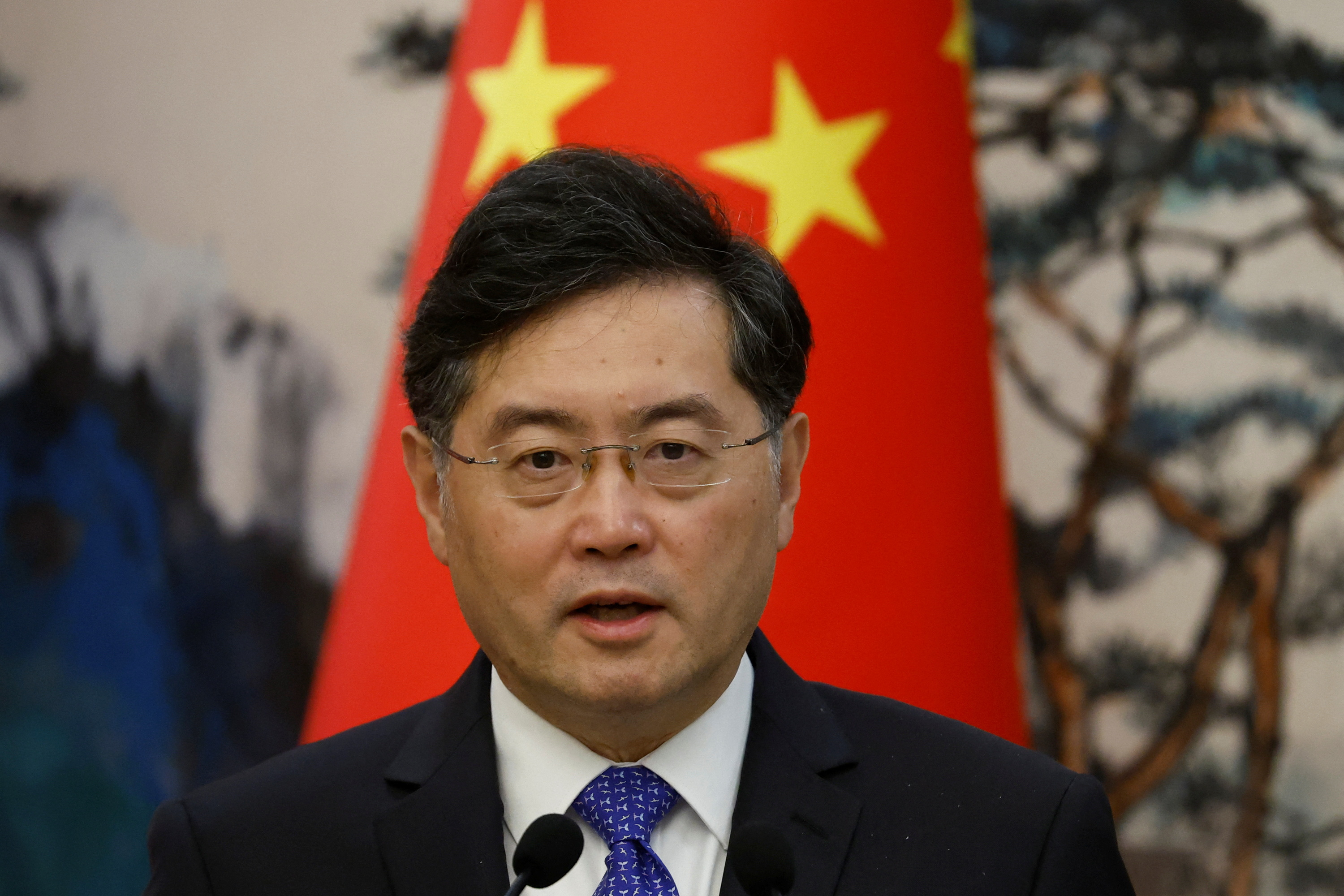
Chinese Foreign Minister Qin Gang attends a press conference after talks with his Dutch counterpart Wopke Hoekstra in Beijing, China, May 23, 2023. 
REUTERS/Thomas Peter/Pool


BEIJING, June 13 (Reuters) - China's Foreign Minister Qin Gang told his Palestinian counterpart that China attaches great importance to the Palestinian issue and will continue to support peace talks during a meeting in Beijing on Tuesday, according to a statement from his ministry.

China has always firmly supported the just cause of the Palestinian people to restore their legitimate rights and can contribute "Chinese wisdom," Qin is reported as having said.


S.A: Exhibition confronts destruction of African wildlife

Lion's Revenge, an installation by artist and photographer Roger Ballen is displayed at Inside Out Centre for the Arts in Johannesburg, South Africa, Wednesday, May 31, 2023. -

Copyright © africanewsThemba Hadebe/Copyright 2023 The AP. All rights reserved.

By Rédaction Africanews
and AP Last updated: 12/06 - 

VIDEO
https://www.africanews.com/embed/2293748


Africa's fauna is at the heart of Roger Ballen's latest exhibition. The artist explores through installations and multimedia works the troubled relationship between humans and nature.

The exhibition titled End of The Game has drawn crowds to Johannesburg's Inside Out Centre for the Arts since March 28.

"There are a lot of people who grew up in the cities in Africa and other places in the world who have no relationship to nature. They spend their lives in a city. They don't hardly know what a tree looks like anymore. Their whole life is virtual," the artist argues.

"...they have no relationship to nature itself. This exhibition also wanted to also make people familiar that there is a natural world out there and there is a crisis going on."

From the killing of elephants in the 18th century that began the ivory trade to the decimation of the rhino population from animal hunting, Ballen argues through his provocative art installations and multimedia artworks that humans remain at the forefront of the destruction of African wildlife.

The 73-year-old American-born photographer used artefacts collected from metal scrap yards, hunting farms, pawn shops and roadsides during his local and international travels over a career of more than 40 years.

"What you find here are artistic installations, and artistic installations are, in a way, putting things together in such a way that they were never seen that way before."

"So, you create a greater impact because it's not just putting things together in a way that everybody knows they should go together. It's putting things together in an imaginative, creative way that still has an impact and challenges the viewer in all sorts of ways..."

One of the centerpieces of the exhibition is the documentary section, which includes objects, texts, photographs and books documenting early years of hunting expeditions in Africa.

The section deals with the initial destruction of African wildlife around 1890, 1900 and 1910, says Ballen.

A curated display with early versions of weapons and ammunition used to kill bigger animals leads into the "Hunter’s Room" a staged installation depicting archival photographs and items in a staged safari setting.

A hunter figure made from wax is the main character in the room, surrounded by his hunting memorabilia and collectibles.
Publicized hunting expeditions

Some of the photographs include archive pictures of former U.S. president Theodore Roosevelt’s much publicized hunting expeditions in Kenya and Winston Churchill’s east African safari, both in the early 1900s.

Hunters can be seen on films towering victoriously over their trophies, mostly dead giraffes, elephants and rhino.

Others depict Africans having conquered elephants, lions and leopards.

Items on display include animal skins, rusted metal and steel beds, thick halyards and dilapidated wooden furniture.


The exhibit will remain on display indefinitely.

A typical Saturday morning at the gallery is a hive of activity as visitors come in to see what some have described as a "thought-provoking" body of work.

"I think people will walk away from here thinking about their relationship with animals and how they feel about conservation and hunting and things like that," says Shelley Drynan, a visitor to the gallery.

Sarah Wilding, another visitor who says she was familiar with Ballen's earlier works, says she is stirred by the exhibition's varied depiction of African wildlife and its destruction over many years.

"To just be here and feel the melancholy and the mystery, there are just so many emotions swelling, it is truly a fantastic experience to be here," she says.

South Africa: Wildlife Art Exhibition Opened To Public, Iconic Art Installations Can Be Seen

From the killing of elephants in the 18th century that began the ivory trade to the decimation of the rhino population from animal hunting, Ballen argues through his provocative art installations and multimedia artworks that humans remain at the forefront of the destruction of African wildlife.


UPDATED: 11 JUN 2023 

South Africa Wildlife Art Exhibit | Photos: AP/Themba Hadebe

"Carousel", an installation by artist and photographer Roger Ballen is displayed at Inside Out Centre for the Arts in Johannesburg, South Africa.

Artist and photographer Roger Ballen speaks as he takes a group of visitors on an exhibition tour at Inside Out Centre for the Arts in Johannesburg, South Africa.


Victor, an installation by artist and photographer Roger Ballen is displayed at Inside Out Centre for the Arts in Johannesburg, South Africa.


Artist and photographer Roger Ballen walks past his "Down and Out" an installation at Inside Out Centre for the Arts in Johannesburg, South Africa.


Artist and photographer Roger Ballen watches as visitors enter the "Shack" installation during an exhibition tour at Inside Out Centre for the Arts in Johannesburg, South Africa.


"The Hunter's Room", an installation by artist and photographer Roger Ballen at his Inside Out Centre for the Arts in Johannesburg, South Africa.

Artist and photographer Roger Ballen speaks as he takes a group of visitors on an exhibition tour at his Inside Out Centre for the Arts in Johannesburg, South Africa.


Artist and photographer Roger Ballen speaks during an interview with The Associated Press at Inside Out Centre for the Arts in Johannesburg, South Africa.


"Hunter", an installation by artist and photographer Roger Ballen at Inside Out Centre for the Arts in Johannesburg, South Africa.


"Shack", an installation by artist and photographer Roger Ballen is displayed at Inside Out Centre for the Arts in Johannesburg, South Africa.

China, AI and a say on world order: Why the US wants back in UNESCO

After five long years, it just couldn’t afford to be absent any longer: On Monday, the United States formally asked to rejoin the United Nations Educational, Scientific, and Cultural Organization (UNESCO). 

The US claims it needs a place back at the table, where China has had plenty of time to exert undue influence on some of the most hot-button issues of our time, including education and the future of artificial intelligence (AI).

AFP
Issued on: 13/06/2023 - 


The American readmission application capped a long list of promises made by US President Joe Biden to reverse his predecessor Donald Trump’s crusade against a string of international bodies he did not feel the US needed to be a part of, including the Paris Climate Agreement and the United Nations Human Rights Council.

The decision by the US to rejoin UNESCO was met with resounding applause at its headquarters in Paris, where Director-General Audrey Azoulay described it as an “historic moment” and “an important day for multilateralism”.

“What’s happened over the last years meant that UNESCO matters," she said. “And when you’re absent from that ... you lose something. You lose something for your influence in the world, but also for your own national interest.”

The US pulled out of UNESCO in 2018 after a long-running dispute over the organisation's decision to admit Palestine as a member in 2011, thereby giving it de facto recognition as a state. The 2011 move drew anger from the US under the Obama administration and its close ally Israel, resulting in both countries halting their contributions and eventually leaving, citing management problems and anti-Israel bias.

But when the US – which prior to the Palestine issue had been the body’s largest contributor, accounting for around 22 percent of its yearly budget – withdrew altogether, it left a vacuum that China has since been more than happy to fill.

“Since the US stopped its funding, China became the largest contributor,” said Ashok Swain, a professor in Peace and Conflict Research at Uppsala University in Sweden, pointing out that “even the garden at UNESCO’s headquarters has been co-funded by a Chinese city. China has made sure to be there”.

‘Trying to shape UNESCO’s agenda’

Meanwhile, the US, which now sees China as its biggest threat, has been watching more or less blindly on the sidelines as Beijing exerts its influence through some of UNESCO’s soft-power vehicles, including the World Heritage Committee.

Although the seemingly inoffensive committee is best known for designating and protecting cultural landmarks, Swain said it actually plays a very important role. “It has a huge impact on tourism and economics, and can cause controversy when designating [landmarks in] controversial or disputed areas,” he said. He cited as an example the body’s 2018 decision to recognise the old city of Hebron in the West Bank as a Palestinian World Heritage Site, which unsurprisingly sparked outrage from Israel.

“And when China was chair between 2021 and 2022, the commission recommended the Great Barrier Reef in Australia should be placed on the on the ‘in danger’ list,” he said, noting Sydney had loudly protested the move, saying it risked costing the country thousands of jobs and leave a huge dent in its all-important tourism revenues.

“When you chair you have a strong command on which sites should be declared heritage sites or not,” Swain said.

In a 2021 opinion piece published by the Washington DC-based media outlet The Hill, John Brian Atwood, an American diplomat and a former administrator of the US Agency for International Development, warned that countries like China and Russia “are actively engaged in trying to shape UNESCO’s agenda”.

Atwood pointed to Beijing’s efforts to move UNESCO’s International Bureau of Education to Shanghai, and have the agency sign a cooperation agreement with its massive Belt and Road initiative – a project that is aimed to stretch around the globe, which some analysts fear could significantly expand China’s power.

Atwood also highlighted Russia’s efforts to try to expel UNESCO from Crimea prior to its 2022 invasion of Ukraine. “Its last attempt to scuttle this program lost by only a few votes and America’s allies were left alone to defend the territorial sovereignty of Ukraine,” he wrote.

AI and its impact on world order

In March of this year, as the Biden administration worked on a US return to UNESCO, US Secretary of State Antony Blinken called on Congress to agree to $150 million to rejoin the organisation, articulating some of the most urgent reasons why the US needed to rejoin. Not the least being because in November it had adopted the first global standard on the ethics of AI.

“I very much believe we should be back in UNESCO again, not as a gift to UNESCO, but because things that are happening at UNESCO actually matter,” Blinken said.

“They are working on rules, norms and standards for artificial intelligence. We want to be there,” he said.

“China right now is the single largest contributor to UNESCO. That carries a lot of weight. We’re not even at the table.”

Swain said that although UNESCO’s policy papers are merely advisory, they still carry a huge importance ideologically.

“UNESCO plays a subtle, but very important role in setting the world’s education and culture,” he explained.

In the case of AI, he said the danger the US might be facing is the fact that China “has a very different take on issues like democracy and human rights”.

“The US ideological interest, and its commitment to it, will be challenged if China takes overall control on how to formulate the rules and regulations of AI. I think that makes a solid case for the US to be worried about.”

In short, it boils down to having a say on world order.

“When the world is getting divided into two ideological camps, the rules that are set in UNESCO matter,” Swain said.

The US reapplication made no mention of the still unsolved spat on the status of Palestine. Swain said that by having branded China as one of the main reasons for the US’s return, Biden is trying to dilute objections and accusations of anti-Israel bias at home – something that could otherwise have cost him important political points ahead of next year's presidential election.

In its bid to make it back into the fold, the US has agreed to pay UNESCO more than $600 million in back dues. Its reentry will also need to pass a vote by the agency's 193 members, which is expected to take place in July.

SEE