July 26, 2023


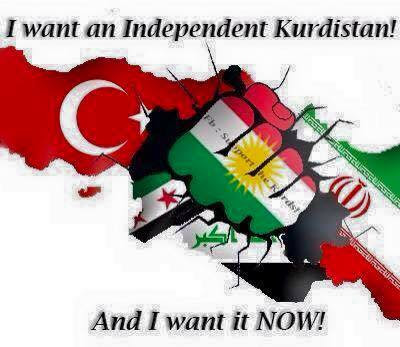
Greater Kurdistan map, Kurdish claims territory 1919-1945
Most fortunately, and due to the resilient spirit of the Kurdish people, and with help of the Western powers, particularly from the United States, this time too, the neo-Ottomans have been handed a defeat that may be considered the gradual onset of the demise of Turkey as a nation- state. As the battle against the Ottoman evil is not yet won, so will continues our determination and resilient spirit, committed to the creation of the Greater Kurdistan on the site where human civilization took roots. Many world powers and the community of faith, acknowledge this fertile crescent, the Mesopotamia, as the cradle of Civilization, the birth place of human values, spirituality, virtue and wisdom against the evil powers since the ancient history to the present time.
For this cause, the world has acknowledged the long overdue respect for the people of Kurdistan surviving against all odds, to claim their full political rights to join the community of the civilized world. The last one hundred years has brought to our nation countless tragedies and setbacks, as the result of the unjust and prejudiced Lausanne Treaty against the legitimate national rights and aspiration of our people.
Today and onward, the dreams and the sacrifices of our ancestors and countless victims for an independent Free Kurdistan continues to live in our hearts and guides our vision for the brighter future. One hundred years has passed since 1923, and yet, we may ask ourselves, how do we envision the next 100 years to be for our people? For the last hundred years we have had a mutual dependency with the external powers to help us reach our independence.
While we are deeply grateful to all the international NGOs working in Kurdistan, specifically to the UN, US, EU and all continental NGOs, before the next hundred years, we must rely on the strength and resolve of our own people and political unity and creativity within the Kurdish leadership to achieve our dream of full Independence, that includes interdependency with the rest of the world. This will require formation of a Kurdistan Sustainability Program (Barnamay Bardawami Kurdistan) in parallel to the United Nations Sustainable Development Goals. Implementation of such a long-term program will require in turn, the formation and participation of Kurdish founded NGOs by Kurds at every level of the society from grass-roots to uncorrupted and transparent leadership in governance for the management of Kurdistan resources for the benefits of cultural and economic survival and development of Kurdistan.

Author Ardishir Rashidi-Kalhur
Ardishir Rashidi Kalhur | KAES | Exclusive to Ekurd.net
Ardishir Rashidi Kalhur | KAES | Exclusive to Ekurd.net

Signing of Treaty of Lausanne, Switzerland, 1923. Photo: Ekurd.net/Creative Commons/wikimedia
On this 100 year anniversary of the Treaty of Lausanne, which has hindered the full realization of independence for Kurdistan, righteously, legitimately, and peacefully, we the people of Kurdistan appeal to the resolve of our own people and to the full moral and legal force of the International Community to recognize the political independence of Kurdistan.
The Lausanne Treaty, and its over 140 Articles no longer is a valid and a living document, but a relic of the past, since among other things, the British Empire or the Emperor of India, the Ottoman territories, or a country named “Persia” no longer exist. While the Treaty dashed the Kurdish aspiration for an independent homeland for the Kurds, each and every one article of it, became an unretractable nail in the coffin of the Ottoman Turks so that they will never again meddle with the West and become a threat to the Western civilization.
Prior to, and during the WWI, the European Powers always considered the Turks to be the Eastern Barbarians having once came to the gates of Vienna in 1683 to conquer Europe. Since, and repeatedly, the Turks have never ceased their constant attempts of stabbing their Turkish dagger in the heart of Europe to end the Western civilization in favor of the East according to the Turks. To the present day, Turkey, the remnant of the defunct Ottomans, remains to be the battleground of East-West confrontation.
In dealing with the Turks, the “woke” among the European leadership came too late as they never learnt from the Chinese history in dealing with their Northern Barbarians against which the Chinese built the China Wall to keep them out. Turkey’s capitulation to the Allied Powers by the Treaty of Lausanne, was the final outcome of the Paris Peace Treaty which codified the Sykes-Picot Agreement that divided the former Ottoman territories to be controlled mostly by and for the benefits of the British and the French nationals and political interests.
Rise of Kamal Ataturk in post-Ottoman Turkey, Reza Shah of Iran, and the British allied, Hussein Ibn Ali of Hijaz, later replaced by Ibn Saud of Arabia in 1925, forming an early version of pro-Western “Islamic Brotherhood”, were all against the formation of an Independent Kurdish State. The Turks, albeit being the loosers of the WWI, they received a consolation prize from the West under the Lausanne Treaty. This was to sacrifice the rights of the Kurdish people not to having a homeland of their own by dividing them into its current state of a divided land.
On this 100 year anniversary of the Treaty of Lausanne, which has hindered the full realization of independence for Kurdistan, righteously, legitimately, and peacefully, we the people of Kurdistan appeal to the resolve of our own people and to the full moral and legal force of the International Community to recognize the political independence of Kurdistan.
The Lausanne Treaty, and its over 140 Articles no longer is a valid and a living document, but a relic of the past, since among other things, the British Empire or the Emperor of India, the Ottoman territories, or a country named “Persia” no longer exist. While the Treaty dashed the Kurdish aspiration for an independent homeland for the Kurds, each and every one article of it, became an unretractable nail in the coffin of the Ottoman Turks so that they will never again meddle with the West and become a threat to the Western civilization.
Prior to, and during the WWI, the European Powers always considered the Turks to be the Eastern Barbarians having once came to the gates of Vienna in 1683 to conquer Europe. Since, and repeatedly, the Turks have never ceased their constant attempts of stabbing their Turkish dagger in the heart of Europe to end the Western civilization in favor of the East according to the Turks. To the present day, Turkey, the remnant of the defunct Ottomans, remains to be the battleground of East-West confrontation.
In dealing with the Turks, the “woke” among the European leadership came too late as they never learnt from the Chinese history in dealing with their Northern Barbarians against which the Chinese built the China Wall to keep them out. Turkey’s capitulation to the Allied Powers by the Treaty of Lausanne, was the final outcome of the Paris Peace Treaty which codified the Sykes-Picot Agreement that divided the former Ottoman territories to be controlled mostly by and for the benefits of the British and the French nationals and political interests.
Rise of Kamal Ataturk in post-Ottoman Turkey, Reza Shah of Iran, and the British allied, Hussein Ibn Ali of Hijaz, later replaced by Ibn Saud of Arabia in 1925, forming an early version of pro-Western “Islamic Brotherhood”, were all against the formation of an Independent Kurdish State. The Turks, albeit being the loosers of the WWI, they received a consolation prize from the West under the Lausanne Treaty. This was to sacrifice the rights of the Kurdish people not to having a homeland of their own by dividing them into its current state of a divided land.

Mustafa Kemal Ataturk, Turkey, January 17, 1923.
Photo: Ekurd.net/Creative Commons/wikimedia
In addition, Turkey under the Western prepped Kamal Ataturk who became a well-known racist and a practitioner of eugenic ideas who inspired Hitler (Ref. “Ataturk in the Nazi Imagination”), became the ideal leader of a strategically important country in the Middle East called Turkey. Furthermore, to contain the expansion of the Soviet Communists into the Middle East, membership of Turkey in the NATO Alliance became of paramount importance to the Western security. Today, after all the velvet glove treatment of Turkey, with billions in financial aid and military support, it remains an untrustworthy partner in NATO. In fact, among the NATO members, Turkey is referred to as the “Judas Iscariot” among the Alliance, selling secrets and everything to anyone who pays.
Iran and the Saudi Arabia on the other hand, found their foothold within the Western Powers because of the discovery of immense amounts of oil and gas in their lands. Furthermore, these countries, on the basis of their religious dogmatism and mindless devotion to radical Islam (to the present day), made great candidates to fight the godless soviet communists who ideologically were against the Western way of life especially Capitalism, right after the Bolshevik Revolution of 1917.
The Treaty of Lausanne should be remembered as a time in world’s affairs when the Allied powers, threw a lifeline to the successors of the decrepit and dying “Sick man of Europe”, the Ottomans, so they may continue their existence in the form of the modern-day Turkey. A country that since, has become even sicker in regard to respect for human rights, and committing acts of terrorism and aggression under the “neo-Ottomans” to regain its old territories. A country run by an immoral and criminal man and his dictatorial regime trying to resurrect the wicked ghost of the old Ottomans. The rise of ISIS and Daesh is the manifestation of this ugly resurrection of the Ottoman Turks against the Kurdish people, and indeed against humanity and the civilized world.
It is not a far-fetched theory that Erdogan political aim was to become the new caliph or sultan of the Islam world. He had to exert his control over Hijaz and the holey lands of Islam as was during the Ottomans. Therefore, he chose a personal ambassador named Jamal Khashoggi to deliver an order of capitulation to the Saudi Arabian leadership to come under the fold of the neo-Ottoman order. We all know how brutally and mercilessly the Saudis responded by receiving and treating Khashoggi in the Saudi Consulate in Istanbul.
In addition, Turkey under the Western prepped Kamal Ataturk who became a well-known racist and a practitioner of eugenic ideas who inspired Hitler (Ref. “Ataturk in the Nazi Imagination”), became the ideal leader of a strategically important country in the Middle East called Turkey. Furthermore, to contain the expansion of the Soviet Communists into the Middle East, membership of Turkey in the NATO Alliance became of paramount importance to the Western security. Today, after all the velvet glove treatment of Turkey, with billions in financial aid and military support, it remains an untrustworthy partner in NATO. In fact, among the NATO members, Turkey is referred to as the “Judas Iscariot” among the Alliance, selling secrets and everything to anyone who pays.
Iran and the Saudi Arabia on the other hand, found their foothold within the Western Powers because of the discovery of immense amounts of oil and gas in their lands. Furthermore, these countries, on the basis of their religious dogmatism and mindless devotion to radical Islam (to the present day), made great candidates to fight the godless soviet communists who ideologically were against the Western way of life especially Capitalism, right after the Bolshevik Revolution of 1917.
The Treaty of Lausanne should be remembered as a time in world’s affairs when the Allied powers, threw a lifeline to the successors of the decrepit and dying “Sick man of Europe”, the Ottomans, so they may continue their existence in the form of the modern-day Turkey. A country that since, has become even sicker in regard to respect for human rights, and committing acts of terrorism and aggression under the “neo-Ottomans” to regain its old territories. A country run by an immoral and criminal man and his dictatorial regime trying to resurrect the wicked ghost of the old Ottomans. The rise of ISIS and Daesh is the manifestation of this ugly resurrection of the Ottoman Turks against the Kurdish people, and indeed against humanity and the civilized world.
It is not a far-fetched theory that Erdogan political aim was to become the new caliph or sultan of the Islam world. He had to exert his control over Hijaz and the holey lands of Islam as was during the Ottomans. Therefore, he chose a personal ambassador named Jamal Khashoggi to deliver an order of capitulation to the Saudi Arabian leadership to come under the fold of the neo-Ottoman order. We all know how brutally and mercilessly the Saudis responded by receiving and treating Khashoggi in the Saudi Consulate in Istanbul.

Greater Kurdistan map, Kurdish claims territory 1919-1945
Most fortunately, and due to the resilient spirit of the Kurdish people, and with help of the Western powers, particularly from the United States, this time too, the neo-Ottomans have been handed a defeat that may be considered the gradual onset of the demise of Turkey as a nation- state. As the battle against the Ottoman evil is not yet won, so will continues our determination and resilient spirit, committed to the creation of the Greater Kurdistan on the site where human civilization took roots. Many world powers and the community of faith, acknowledge this fertile crescent, the Mesopotamia, as the cradle of Civilization, the birth place of human values, spirituality, virtue and wisdom against the evil powers since the ancient history to the present time.
For this cause, the world has acknowledged the long overdue respect for the people of Kurdistan surviving against all odds, to claim their full political rights to join the community of the civilized world. The last one hundred years has brought to our nation countless tragedies and setbacks, as the result of the unjust and prejudiced Lausanne Treaty against the legitimate national rights and aspiration of our people.
Today and onward, the dreams and the sacrifices of our ancestors and countless victims for an independent Free Kurdistan continues to live in our hearts and guides our vision for the brighter future. One hundred years has passed since 1923, and yet, we may ask ourselves, how do we envision the next 100 years to be for our people? For the last hundred years we have had a mutual dependency with the external powers to help us reach our independence.
While we are deeply grateful to all the international NGOs working in Kurdistan, specifically to the UN, US, EU and all continental NGOs, before the next hundred years, we must rely on the strength and resolve of our own people and political unity and creativity within the Kurdish leadership to achieve our dream of full Independence, that includes interdependency with the rest of the world. This will require formation of a Kurdistan Sustainability Program (Barnamay Bardawami Kurdistan) in parallel to the United Nations Sustainable Development Goals. Implementation of such a long-term program will require in turn, the formation and participation of Kurdish founded NGOs by Kurds at every level of the society from grass-roots to uncorrupted and transparent leadership in governance for the management of Kurdistan resources for the benefits of cultural and economic survival and development of Kurdistan.

30,000 Kurds protest against Turkey’s Erdogan in Cologne, Germany, September 2016. Photo: Reuters
Let us for a moment imagine 100 years from now, undoubtedly by then, most of the now living generation of Kurds will not be here to mark the 200-year anniversary of Lausanne Treaty. Fortunately, and most assuredly, 100 years from today, there will be 80 to 100 million bright and educated Kurds who will have replaced us all by then. The question for us the living, is, how do we want our generation to be remembered by the coming future generation? What will we be doing for them as the next 100 years proceeds? We want them to be proud of our generation for keeping the faith and achieving peacefully and successfully, our commitment to the creation of a Free and Independent and Democratic Greater Kurdistan.
A Kurdistan that will be on par with the leading nations of the world in promotion of education, more united, more sustainable, more prosperous, more tolerant, with respect for human rights, dignity and freedom for all, and specifically, with respect and commitment to include full rights for Women. Zhen, Zhyan, Azadi will be the stamp of Kurdish identity on every Kurdish issued Passport.
Finally, for the remembrance of this historical event and the burial ceremony of the Lausanne Treaty, let us invite every Kurd around the world to plant a tree within the community of our living, A Kurdish Tree that will remind us of the continuity of the Tree of Life of Kurdistan.
Ardishir Rashidi-Kalhur, the President of Kurdish American Education Society, Los Angeles, U.S.
The opinions are those of the writer and do not necessarily represent the views of Ekurd.net or its editors.
Copyright © 2023 Ekurd.net. All rights reserved
Let us for a moment imagine 100 years from now, undoubtedly by then, most of the now living generation of Kurds will not be here to mark the 200-year anniversary of Lausanne Treaty. Fortunately, and most assuredly, 100 years from today, there will be 80 to 100 million bright and educated Kurds who will have replaced us all by then. The question for us the living, is, how do we want our generation to be remembered by the coming future generation? What will we be doing for them as the next 100 years proceeds? We want them to be proud of our generation for keeping the faith and achieving peacefully and successfully, our commitment to the creation of a Free and Independent and Democratic Greater Kurdistan.
A Kurdistan that will be on par with the leading nations of the world in promotion of education, more united, more sustainable, more prosperous, more tolerant, with respect for human rights, dignity and freedom for all, and specifically, with respect and commitment to include full rights for Women. Zhen, Zhyan, Azadi will be the stamp of Kurdish identity on every Kurdish issued Passport.
Finally, for the remembrance of this historical event and the burial ceremony of the Lausanne Treaty, let us invite every Kurd around the world to plant a tree within the community of our living, A Kurdish Tree that will remind us of the continuity of the Tree of Life of Kurdistan.
Ardishir Rashidi-Kalhur, the President of Kurdish American Education Society, Los Angeles, U.S.
The opinions are those of the writer and do not necessarily represent the views of Ekurd.net or its editors.
Copyright © 2023 Ekurd.net. All rights reserved
Kurds and the Lausanne Treaty: A Century On, UN & International Roles
One Hundred Years after Lausanne Treaty, what Kurds, the UN, and International Community can do?
One Hundred Years after Lausanne Treaty, what Kurds, the UN, and International Community can do?
July 26, 2023
Author Dr. Saman Shali

Turkish delegation after having signed the Treaty of Lausanne in Switzerland, July 24, 1923. Photo: Creative Commons/wikimedia
The problem is so complex that even after 100 years, it remains a significant challenge. Solving this problem once and for all and stopping 100 years of Kurdish bloodshed will require the efforts of all shareholders and the efforts of the United Nations and the international community. This problem can be addressed from three angles:
1. What effect it has on Kurdistan:
The Treaty of Lausanne, signed in 1923, did not directly address the concept of Kurdistan or the aspirations of the Kurdish people for an independent Kurdish state. As a result, the treaty did not establish a recognized Kurdistan state or address the Kurdish question in the region. Here are some key points regarding the effect of the Treaty of Lausanne on Kurdistan:
1. Absence of Kurdish Statehood: The treaty did not acknowledge or grant statehood to the Kurds, an ethnic group spread across multiple countries, including Turkey, Iraq, Iran, and Syria. The borders defined by the treaty divided the Kurdish-inhabited regions, leaving them fragmented among these states. This absence of Kurdish statehood has been a central issue for the Kurdish people and their struggle for self-determination.
2. Political Fragmentation: The Treaty of Lausanne contributed to the political fragmentation of the Kurdish population. Kurds were divided by borders, resulting in separate Kurdish communities falling under different countries’ jurisdictions. This division made it challenging for the Kurds to unite collectively and pursue their political goals.
3. Repression and Marginalization: The Kurdish population in various countries, including Turkey, Iraq, Iran, and Syria, has historically faced varying degrees of repression, marginalization, and denial of cultural and political rights. The lack of recognition of the Kurdish identity and aspirations in the treaty contributed to these challenges, as it provided a legal framework that did not acknowledge the specific needs and demands of the Kurdish people.

Kurdistan map. Map: Kohaviv publications
4. Kurdish Nationalism and Struggles for Autonomy: The absence of Kurdish statehood and the challenges faced by the Kurdish population in the aftermath of the treaty have fueled Kurdish nationalism and various movements for autonomy and self-rule. Kurdish political organizations and armed groups have emerged in different regions, seeking greater rights, cultural recognition, and political autonomy.
It is important to note that despite the lack of explicit recognition in the Treaty of Lausanne, the Kurdish people have continued to assert their identity, pursue their political aspirations, and engage in struggles for greater rights and self-determination throughout the 20th and 21st centuries. The Kurdish question remains a significant issue in the region, with ongoing debates and conflicts related to the rights and status of the Kurdish people in the countries they inhabit.
2. What Kurds can do:
After 100 years since the signing of the Treaty of Lausanne, the Kurds have continued to assert their cultural identity and pursue their political aspirations for justice and independence. Here are some actions and possibilities for the Kurds to work on to gain their rights:
1. Diplomatic Efforts: Kurds can continue their diplomatic efforts to raise awareness about their cultural rights, self-determination, and political aspirations on the international stage. The diplomatic efforts include engaging with governments, international organizations, and human rights bodies to advocate for recognition, support, and peaceful resolutions to the Kurdish question.
2. Political Mobilization: Kurds can continue to organize and mobilize politically to express their demands and aspirations. Political mobilization includes forming political parties, participating in elections, and engaging in peaceful activism to advocate for Kurdish rights, representation, and autonomy within the countries they inhabit.
3. Cultural Preservation and Revitalization: Kurds can focus on preserving and promoting their cultural heritage, language, and traditions. Strengthening cultural institutions, education, media, and community initiatives can ensure the preservation and revitalization of Kurdish identity across generations.
4. Peaceful Dialogue and Negotiations: Kurds can engage in peaceful dialogue and negotiations with the governments of the countries they inhabit to address the Kurdish question. Dialogue and Negotiations include advocating for reforms, constitutional recognition, decentralization, and political autonomy within existing state frameworks.
5. International Support and Solidarity: Kurds can seek support and solidarity from the international community, including civil society organizations, human rights advocates, and other marginalized groups facing similar challenges. Building alliances and coalitions can amplify their voices and increase international pressure for recognition and rights.
6. Nonviolent Resistance: Some Kurdish groups and individuals may choose nonviolent resistance methods, such as civil disobedience, protests, and noncooperation, to draw attention to their cause and pressure governments to address their grievances.
It is important to note that the strategies and actions pursued by the Kurds may vary depending on the specific context and circumstances in each country where they reside. The Kurdish question remains complex and multifaceted, requiring long-term efforts, dialogue, and negotiation to address the aspirations and rights of the people of Kurdistan.
3. What the United Nations and International Communities can do:

Flags of Countries in front of the United Nations Office at Geneva, Switzerland, 2023. Photo: Creative Commons/Pexels
After 100 years since the signing of the Lausanne Treaty, the United Nations (UN) and the international community can take various actions to support the rights and aspirations of the people of Kurdistan. Here are some critical steps they can take collectively:
1. Recognition and Inclusion: The UN and international community can advocate for recognizing Kurdish identity, cultural rights, and autonomy within the countries where Kurds reside. They can encourage governments to adopt inclusive policies, granting Kurds equal citizenship, cultural rights, and political representation. Efforts can be made to ensure the Kurdish language and culture are respected, promoted, and protected.
2. Conflict Resolution and Peacebuilding: The UN and international community can actively engage in conflict resolution and peacebuilding efforts in regions affected by conflicts involving Kurdish communities. This peacebuilding can involve supporting mediation processes, facilitating stakeholder dialogue, and promoting peaceful negotiations to address grievances and seek sustainable solutions.
3. Human Rights Protection: The UN and the international community should prioritize protecting Kurdish human rights. They can monitor and report on human rights abuses, promote accountability for violations, and support initiatives ensuring the Kurdish people’s safety and well-being. This protection includes addressing arbitrary arrests, forced displacements, and discrimination against Kurds. Moreover, prevent and stop all types of aggression against the people of Kurdistan.
4. Political Dialogue and Negotiations: The UN and international community can facilitate political dialogue and negotiations between Kurdish representatives and the governments of the countries where Kurds reside. They can provide a neutral platform for discussions, encourage constructive engagement, and support efforts to find peaceful and equitable solutions to the Kurdish question, including the right to self-determination.
5. Humanitarian Assistance and Development: The UN and international community can provide humanitarian assistance to address the immediate needs of Kurdish communities affected by conflicts, displacement, and marginalization. They can also support long-term development programs that promote socio-economic opportunities, education, healthcare, and infrastructure development in Kurdish-inhabited regions.
6. Support for Democracy and Governance: The UN and international community can promote democratic processes, good governance, and inclusive institutions in regions with Kurdish populations. This aid includes supporting free and fair elections, strengthening democratic institutions and independent justice, and ensuring that Kurds have meaningful political representation and participation at all levels of decision-making.
7. International Solidarity and Advocacy: The UN and international community can support the Kurdish people and advocate for their rights globally. This advocacy can involve raising awareness about the Kurdish question, fostering international cooperation, and encouraging member states to address the Kurdish issue within international law, human rights, and self-determination principles.
In conclusion, it is essential to note that the actions and initiatives undertaken by the UN and the international community would require cooperation and forceful engagement from both the governments of the countries where Kurds reside and the Kurdish community itself. The approach should be based on respect for sovereignty, human rights, and the principles of peaceful resolution of conflicts.
The United Nations and the international community must also stop the genocide against the Kurds and prohibit using military force and chemical weapons against them. However, the countries where the Kurds reside must stop the forced expulsion of the Kurdish people from their homeland for the sake of demographic change in Kurdistan.
Saman Shali, Ph.D., Political Analyst and former president of Kurdish National Congress (KNCNA), see below. Read more by Saman Shali.
The opinions are those of the writer and do not necessarily represent the views of Ekurd.net or its editors.
Copyright © 2023 Ekurd.net. All rights reserved
Author Dr. Saman Shali
Dr. Saman Shali | Exclusive to Ekurd.net

Turkish delegation after having signed the Treaty of Lausanne in Switzerland, July 24, 1923. Photo: Creative Commons/wikimedia
The problem is so complex that even after 100 years, it remains a significant challenge. Solving this problem once and for all and stopping 100 years of Kurdish bloodshed will require the efforts of all shareholders and the efforts of the United Nations and the international community. This problem can be addressed from three angles:
1. What effect it has on Kurdistan:
The Treaty of Lausanne, signed in 1923, did not directly address the concept of Kurdistan or the aspirations of the Kurdish people for an independent Kurdish state. As a result, the treaty did not establish a recognized Kurdistan state or address the Kurdish question in the region. Here are some key points regarding the effect of the Treaty of Lausanne on Kurdistan:
1. Absence of Kurdish Statehood: The treaty did not acknowledge or grant statehood to the Kurds, an ethnic group spread across multiple countries, including Turkey, Iraq, Iran, and Syria. The borders defined by the treaty divided the Kurdish-inhabited regions, leaving them fragmented among these states. This absence of Kurdish statehood has been a central issue for the Kurdish people and their struggle for self-determination.
2. Political Fragmentation: The Treaty of Lausanne contributed to the political fragmentation of the Kurdish population. Kurds were divided by borders, resulting in separate Kurdish communities falling under different countries’ jurisdictions. This division made it challenging for the Kurds to unite collectively and pursue their political goals.
3. Repression and Marginalization: The Kurdish population in various countries, including Turkey, Iraq, Iran, and Syria, has historically faced varying degrees of repression, marginalization, and denial of cultural and political rights. The lack of recognition of the Kurdish identity and aspirations in the treaty contributed to these challenges, as it provided a legal framework that did not acknowledge the specific needs and demands of the Kurdish people.

Kurdistan map. Map: Kohaviv publications
4. Kurdish Nationalism and Struggles for Autonomy: The absence of Kurdish statehood and the challenges faced by the Kurdish population in the aftermath of the treaty have fueled Kurdish nationalism and various movements for autonomy and self-rule. Kurdish political organizations and armed groups have emerged in different regions, seeking greater rights, cultural recognition, and political autonomy.
It is important to note that despite the lack of explicit recognition in the Treaty of Lausanne, the Kurdish people have continued to assert their identity, pursue their political aspirations, and engage in struggles for greater rights and self-determination throughout the 20th and 21st centuries. The Kurdish question remains a significant issue in the region, with ongoing debates and conflicts related to the rights and status of the Kurdish people in the countries they inhabit.
2. What Kurds can do:
After 100 years since the signing of the Treaty of Lausanne, the Kurds have continued to assert their cultural identity and pursue their political aspirations for justice and independence. Here are some actions and possibilities for the Kurds to work on to gain their rights:
1. Diplomatic Efforts: Kurds can continue their diplomatic efforts to raise awareness about their cultural rights, self-determination, and political aspirations on the international stage. The diplomatic efforts include engaging with governments, international organizations, and human rights bodies to advocate for recognition, support, and peaceful resolutions to the Kurdish question.
2. Political Mobilization: Kurds can continue to organize and mobilize politically to express their demands and aspirations. Political mobilization includes forming political parties, participating in elections, and engaging in peaceful activism to advocate for Kurdish rights, representation, and autonomy within the countries they inhabit.
3. Cultural Preservation and Revitalization: Kurds can focus on preserving and promoting their cultural heritage, language, and traditions. Strengthening cultural institutions, education, media, and community initiatives can ensure the preservation and revitalization of Kurdish identity across generations.
4. Peaceful Dialogue and Negotiations: Kurds can engage in peaceful dialogue and negotiations with the governments of the countries they inhabit to address the Kurdish question. Dialogue and Negotiations include advocating for reforms, constitutional recognition, decentralization, and political autonomy within existing state frameworks.
5. International Support and Solidarity: Kurds can seek support and solidarity from the international community, including civil society organizations, human rights advocates, and other marginalized groups facing similar challenges. Building alliances and coalitions can amplify their voices and increase international pressure for recognition and rights.
6. Nonviolent Resistance: Some Kurdish groups and individuals may choose nonviolent resistance methods, such as civil disobedience, protests, and noncooperation, to draw attention to their cause and pressure governments to address their grievances.
It is important to note that the strategies and actions pursued by the Kurds may vary depending on the specific context and circumstances in each country where they reside. The Kurdish question remains complex and multifaceted, requiring long-term efforts, dialogue, and negotiation to address the aspirations and rights of the people of Kurdistan.
3. What the United Nations and International Communities can do:

Flags of Countries in front of the United Nations Office at Geneva, Switzerland, 2023. Photo: Creative Commons/Pexels
1. Recognition and Inclusion: The UN and international community can advocate for recognizing Kurdish identity, cultural rights, and autonomy within the countries where Kurds reside. They can encourage governments to adopt inclusive policies, granting Kurds equal citizenship, cultural rights, and political representation. Efforts can be made to ensure the Kurdish language and culture are respected, promoted, and protected.
2. Conflict Resolution and Peacebuilding: The UN and international community can actively engage in conflict resolution and peacebuilding efforts in regions affected by conflicts involving Kurdish communities. This peacebuilding can involve supporting mediation processes, facilitating stakeholder dialogue, and promoting peaceful negotiations to address grievances and seek sustainable solutions.
3. Human Rights Protection: The UN and the international community should prioritize protecting Kurdish human rights. They can monitor and report on human rights abuses, promote accountability for violations, and support initiatives ensuring the Kurdish people’s safety and well-being. This protection includes addressing arbitrary arrests, forced displacements, and discrimination against Kurds. Moreover, prevent and stop all types of aggression against the people of Kurdistan.
4. Political Dialogue and Negotiations: The UN and international community can facilitate political dialogue and negotiations between Kurdish representatives and the governments of the countries where Kurds reside. They can provide a neutral platform for discussions, encourage constructive engagement, and support efforts to find peaceful and equitable solutions to the Kurdish question, including the right to self-determination.
5. Humanitarian Assistance and Development: The UN and international community can provide humanitarian assistance to address the immediate needs of Kurdish communities affected by conflicts, displacement, and marginalization. They can also support long-term development programs that promote socio-economic opportunities, education, healthcare, and infrastructure development in Kurdish-inhabited regions.
6. Support for Democracy and Governance: The UN and international community can promote democratic processes, good governance, and inclusive institutions in regions with Kurdish populations. This aid includes supporting free and fair elections, strengthening democratic institutions and independent justice, and ensuring that Kurds have meaningful political representation and participation at all levels of decision-making.
7. International Solidarity and Advocacy: The UN and international community can support the Kurdish people and advocate for their rights globally. This advocacy can involve raising awareness about the Kurdish question, fostering international cooperation, and encouraging member states to address the Kurdish issue within international law, human rights, and self-determination principles.
In conclusion, it is essential to note that the actions and initiatives undertaken by the UN and the international community would require cooperation and forceful engagement from both the governments of the countries where Kurds reside and the Kurdish community itself. The approach should be based on respect for sovereignty, human rights, and the principles of peaceful resolution of conflicts.
The United Nations and the international community must also stop the genocide against the Kurds and prohibit using military force and chemical weapons against them. However, the countries where the Kurds reside must stop the forced expulsion of the Kurdish people from their homeland for the sake of demographic change in Kurdistan.
Saman Shali, Ph.D., Political Analyst and former president of Kurdish National Congress (KNCNA), see below. Read more by Saman Shali.
The opinions are those of the writer and do not necessarily represent the views of Ekurd.net or its editors.
Copyright © 2023 Ekurd.net. All rights reserved